Author: CHISEN Battery Team

A 12V 50Ah motorcycle battery in the CHISEN range is not one product but two honest answers to two different questions: the 6-EVF-50, a sealed 50 Ah AGM block at 230 × 140 × 180 mm and 15.25 ± 0.2 kg whose published applications are sightseeing vehicles, golf carts, electric forklifts, floor scrubbers, AGV platforms and electric boats, and the 6-DMF-52, a 52 Ah VRLA block at 224 × 135 × 175 mm and 13.7 ± 0.2 kg that the manufacturer publishes for electric tricycles, electric motorcycles and electric mopeds, with the 6-DMF-45 at 45 Ah as the lighter option. Both charge at 13.5 V float and 14.1 V equalisation across six cells, both are rated at the three-hour rate, and this guide sets out the published figures for all four 12V cells in this class so the pack you fit to a frame can be defended at the goods-in dock.

Key Takeaways

  • The published motorcycle and moped duty belongs to the 6-DMF series: 6-DMF-45 at 45 Ah, 6-DMF-52 at 52 Ah, 6-DMF-38 at 38 Ah. The exactly-50 Ah 6-EVF-50 is published for mobility and industrial applications, not for motorcycles.
  • The 6-EVF-50 gives 12 V × 50 Ah = 600 Wh at 15.25 ± 0.2 kg, which is 600 Wh ÷ 15.25 kg = 39.3 Wh/kg; the 6-DMF-52 gives 624 Wh ÷ 13.7 kg = 45.5 Wh/kg and the 6-DMF-45 gives 540 Wh ÷ 12.3 kg = 43.9 Wh/kg.
  • Weight is the decision that matters on a two-wheeler: a 48 V pack of four 6-EVF-50 cells is 4 × 15.25 kg = 61.0 kg, against 4 × 13.7 kg = 54.8 kg for the 6-DMF-52 and 4 × 12.3 kg = 49.2 kg for the 6-DMF-45.
  • Float 13.5 V and equalisation 14.1 V for the block — 2.25 V and 2.35 V per cell — are the setpoints to fix in writing; the published charge currents are 10.0 A, 10.4 A, 9.0 A and 7.6 A for the four cells.
  • Capacity is published at the C3 rate down to a cut-off of 1.75 V per cell, cycle life at 350–600 cycles to 50–80 % depth of discharge and design life at 2–5 years; a quotation that gives Ah without the rate basis is incomplete.

§1 — 12V 50Ah Motorcycle Battery Specifications

The table below reproduces the published specification for the 6-EVF-50 and the three 6-DMF cells that sit around it in the 12V VRLA range. Every cell figure is taken from the manufacturer model page; the pack figures are derived and shown with their formulas.

Specification6-EVF-506-DMF-456-DMF-526-DMF-38Source
Nominal voltage12 V12 V12 V12 VModel page
Rated capacity50 Ah45 Ah52 Ah38 AhModel page
Discharge rate basisC3 (3 h)C3 (3 h)C3 (3 h)C3 (3 h)Model page
Dimensions L × W × H230 × 140 × 180 mm224 × 121 × 175 mm224 × 135 × 175 mm224 × 106 × 175 mmModel page
Weight15.25 ± 0.2 kg12.3 ± 0.2 kg13.7 ± 0.2 kg10.45 ± 0.2 kgModel page
Terminalφ11.8-M6φ11.8-M5φ11.8-M6φ9.8-M5Model page
Maximum charge current10.0 A9.0 A10.4 A7.6 AModel page
Float charge voltage13.5 V13.5 V13.5 V13.5 VModel page
Equalisation voltage14.1 V14.1 V14.1 V14.1 VModel page
Cycle life (DoD 50–80 %)350–600 cycles350–600 cycles350–600 cycles350–600 cyclesModel page
Cut-off voltage1.75 V/cell1.75 V/cell1.75 V/cell1.75 V/cellModel page
Self-discharge≤ 3 %/month at 25 °C≤ 3 %/month at 25 °C≤ 3 %/month at 25 °C≤ 3 %/month at 25 °CModel page
Working temperature−15 °C to 50 °C−15 °C to 50 °C−15 °C to 50 °C−15 °C to 50 °CModel page
Design life2–5 years2–5 years2–5 years2–5 yearsModel page
Published applicationsSightseeing vehicles, golf carts, electric forklifts and stackers, floor scrubbers, AGV platforms, electric boatsElectric tricycles, electric motorcycles, electric mopeds, sanitation trucks, sightseeing vehiclesElectric tricycles, electric motorcycles, electric mopedsElectric tricycles, electric motorcycles, electric mopedsModel page
Energy per cell12 V × 50 Ah = 600 Wh12 V × 45 Ah = 540 Wh12 V × 52 Ah = 624 Wh12 V × 38 Ah = 456 WhArithmetic
Specific energy600 Wh ÷ 15.25 kg = 39.3 Wh/kg540 Wh ÷ 12.3 kg = 43.9 Wh/kg624 Wh ÷ 13.7 kg = 45.5 Wh/kg456 Wh ÷ 10.45 kg = 43.6 Wh/kgArithmetic
Series build published4 = 48 V, 5–6 = 60–72 V, 8 = 96 V4 = 48 V4 = 48 V4 = 48 VModel page

One ordering note belongs here rather than in the footer: several of these model pages also list alternative weight variants in a horizontal comparison table, because the same capacity can be built in a different case or terminal configuration. Whichever variant you specify, have it confirmed on the order acknowledgement before the container is sealed, because a one-kilogram difference per cell becomes four kilograms per four-cell pack and a different terminal means a different lead.

§2 — The Pain

Three failures account for almost every 12V 50Ah motorcycle battery complaint that reaches a distributor’s help desk in Hamburg, Durban or Mombasa.

The first is the label. A carton marked “50 Ah 12V motorcycle battery” tells you nothing about the case, the terminals, the rate basis of the capacity or the charge setpoints. Two suppliers can both print “12V 50Ah” and deliver two different products — one a 50 Ah AGM block weighing 15.25 kg, the other a 52 Ah plate cell weighing 13.7 kg with a completely different case. A buyer who orders on the label alone receives a battery that may not fit the frame bracket, and the mismatch is discovered after the cartons are open.

The second is the charger. A 12 V block contains six cells in series, so the published float voltage of 13.5 V is 2.25 V per cell and the published equalisation voltage of 14.1 V is 2.35 V per cell. Controllers left on a generic lead-acid default of 14.4 V over-charge the pack; controllers that never enter equalisation at all under-charge it and build sulphate within the first year. Neither shows up on the invoice.

The third is weight and mounting. A 48 V pack of four 6-EVF-50 cells weighs 4 × 15.25 kg = 61.0 kg. On a passenger electric motorcycle or a cargo tricycle that mass sits directly in the centre of gravity and it changes how the vehicle handles and how far it can travel. The 6-DMF-52 gives the same 48 V string at 4 × 13.7 kg = 54.8 kg, a saving of 6.2 kg per pack, and the 6-DMF-45 at 4 × 12.3 kg = 49.2 kg saves 11.8 kg. On a fleet of ten vehicles that is 62 kg and 118 kg of payload recovered.

Underneath all three sits a sourcing problem. Buyers in Lagos, Chennai, Cairo and Jakarta regularly receive a quotation listing “12V 50Ah motorcycle battery, heavy duty, competitive price” with no datasheet reference, which makes the order impossible to compare between suppliers and impossible to re-order next season.

§3 — The Choice

Choosing between these four cells is a trade between three published quantities: the case footprint, the weight per amp-hour, and the charge current your charger has to deliver. The table below sets the four cells against each other and then shows the packs they build.

Cell comparison6-EVF-506-DMF-456-DMF-526-DMF-38Source
Rated capacity50 Ah45 Ah52 Ah38 AhModel page
Weight per cell15.25 kg12.3 kg13.7 kg10.45 kgModel page
Energy per cell600 Wh540 Wh624 Wh456 WhArithmetic
Specific energy39.3 Wh/kg43.9 Wh/kg45.5 Wh/kg43.6 Wh/kgArithmetic
Charge current per cell10.0 A9.0 A10.4 A7.6 AModel page
Charger for a 4-cell 48 V pack4 × 10.0 A = 40.0 A4 × 9.0 A = 36.0 A4 × 10.4 A = 41.6 A4 × 7.6 A = 30.4 AArithmetic
48 V pack energy48 V × 50 Ah = 2,400 Wh48 V × 45 Ah = 2,160 Wh48 V × 52 Ah = 2,496 Wh48 V × 38 Ah = 1,824 WhArithmetic
48 V pack weight4 × 15.25 kg = 61.0 kg4 × 12.3 kg = 49.2 kg4 × 13.7 kg = 54.8 kg4 × 10.45 kg = 41.8 kgArithmetic
Recharge window at the published current50 Ah ÷ 10.0 A = 5.0 h45 Ah ÷ 9.0 A = 5.0 h52 Ah ÷ 10.4 A = 5.0 h38 Ah ÷ 7.6 A = 5.0 hArithmetic

Read the table as four answers to four different questions.

If the vehicle on your order sheet is a motorcycle, a moped or a tricycle, the 6-DMF-52 is the cell the manufacturer publishes for that duty: 52 Ah, 13.7 kg, 10.4 A charge current, with the full specification on the 6-DMF-52 model page. It also carries the best specific energy of the four at 45.5 Wh/kg, which means the lightest pack per unit of energy.

If the frame has a hard weight limit and the range target can come down, the 6-DMF-45 gives 540 Wh at 12.3 kg, or 43.9 Wh/kg, and the 48 V pack drops to 49.2 kg with a 36.0 A charger. The complete 6-DMF and 6-DZF range sits on the CHISEN 12V VRLA product index.

If the application is instead a golf cart, a scrubber, an AGV platform or a sightseeing vehicle, the 6-EVF-50 is the cell published for that duty, and it is the exact 50 Ah the search term implies. Its published 39.3 Wh/kg is the lowest of the four, which is the price of a 230 × 140 × 180 mm footprint with a larger case volume.

If the duty is a light tricycle or a smaller platform where every kilogram counts, the 6-DMF-38 gives 456 Wh at 10.45 kg, 43.6 Wh/kg, and a 48 V pack of 41.8 kg with a 30.4 A charger — the smallest charger requirement in the set.

For the exactly-50 Ah size with no model code attached, the 6-EVF-50 model page carries the published figure set: 50 Ah at C3, 230 × 140 × 180 mm, 15.25 ± 0.2 kg, float 13.5 V, equalisation 14.1 V, 10.0 A maximum charge current and 350–600 cycles at 50–80 % depth of discharge.

§4 — The Framework

Seven checks turn a vague enquiry into an order a factory can fill correctly.

1. Demand the published figure set, not the label. Ask for capacity with its rate basis, dimensions in millimetres, weight with tolerance, terminal type, float and equalisation voltage, maximum charge current, cycle rating and cut-off voltage. A supplier that answers all nine is not guessing. A supplier that answers with “50 Ah heavy duty” is.

2. Match the cell to the published duty. The 6-DMF series is published for electric tricycles, motorcycles and mopeds; the 6-EVF-50 is published for sightseeing vehicles, golf carts, forklifts, scrubbers, AGV platforms and boats. Ask the supplier to state which published application list the cell sits on. If the answer does not appear on the model page, the cell is being described rather than specified.

3. Fix the charge setpoints in writing. 13.5 V float and 14.1 V equalisation for the block; 2.25 V and 2.35 V per cell once you do the arithmetic. Confirm the controller can be configured to both and confirm the equalisation period. If the answer is “it is automatic”, ask which controller models are tested.

4. Size the charger from the published charge current. The 6-DMF-52 accepts 10.4 A, so a 48 V pack of four needs 4 × 10.4 A = 41.6 A. A smaller charger stretches the recharge window and leaves the pack in a partially discharged state, which is the condition that damages plates fastest.

5. Check the case, the terminal and the lead length in the frame. 230 × 140 × 180 mm, 224 × 135 × 175 mm, 224 × 121 × 175 mm and 224 × 106 × 175 mm are four different mouldings. The terminal changes with them, from φ11.8-M6 through φ11.8-M5 to φ9.8-M5, so the connector and the cable gauge change too. Measure the bracket before the order, not after the arrival.

6. Verify the temperature envelope. The published working range is −15 °C to 50 °C, capacity is quoted at 25 °C and self-discharge is ≤ 3 % per month at 25 °C. A fleet parked outside through a Hamburg winter or a Santos summer does not see 25 °C for most of its life; ask what capacity remains at the extremes.

7. Agree the acceptance test. For shipments into Santos, Jebel Ali, Lagos or Port Said, specify what happens on arrival: a sample capacity check at the C3 rate, a float voltage check across the block, and the rule that a failing sample is settled by re-inspection at an agreed laboratory rather than by argument.

§5 — The Trust

These cells are built on a VRLA line inside a manufacturer operating 8 production bases with an annual capacity of 70 million kVAh, under a certified quality management system with ISO 9001 and ISO 14001 certification, with CE, UL and IEC conformity for the markets each cell ships into, and with GB/T 32620.1-2016 and GB/T 32620.2-2016 cited as the VRLA standards on the product pages. Every figure in this article comes from an individual model page rather than from a catalogue summary.

Two points deserve emphasis for a buyer who is being asked to pay for assurance. First, a certificate covers a system, a scope and a date — ISO 9001 certifies that the quality management system is documented and that corrective action happens; it does not certify that one cell holds 52 Ah. That is what the published capacity, the type test and the acceptance test are for. Ask for the certificate number, the scope statement, the registered address and the validity dates, and then check the cell on its own merits.

Second, the difference between a published specification and a marketing line is the whole value of this exercise. A supplier who quotes “12V 50Ah motorcycle battery, top grade” is telling you nothing. A supplier who quotes “6-DMF-52, 52 Ah at C3, 224 × 135 × 175 mm, 13.7 ± 0.2 kg, float 13.5 V, equalisation 14.1 V, 10.4 A maximum charge current” is telling you everything you need to engineer the pack, write the charger setting and defend the claim at the goods-in dock.

For importers who buy through a distributor rather than direct, ask the distributor for the manufacturer’s model page URL and the batch reference. Both can be checked before the container is opened, and both remove the single largest source of dispute in this category.

§6 — FAQ

Q1. Which 12V 50Ah battery does CHISEN publish for motorcycles? The manufacturer publishes the electric tricycle, electric motorcycle and electric moped duty on the 6-DMF series — the 6-DMF-45, 6-DMF-52 and 6-DMF-38. The exactly-50 Ah cell is the 6-EVF-50, and its published application list covers sightseeing vehicles, golf carts, electric forklifts and stackers, floor scrubbers, AGV platforms and electric boats rather than motorcycles.

Q2. What is the difference between 6-EVF-50 and 6-DMF-52? Both are 12V VRLA blocks in the same capacity class. The 6-EVF-50 is published at 230 × 140 × 180 mm and 15.25 ± 0.2 kg, the 6-DMF-52 at 224 × 135 × 175 mm and 13.7 ± 0.2 kg, and the 6-DMF-52 carries the higher specific energy at 45.5 Wh/kg against 39.3 Wh/kg. The terminal dimension stays at φ11.8-M6 on both, but they are different mouldings, so check the lead length and the retaining hardware.

Q3. Can I put two 12V 50Ah batteries on a 24V motorcycle? In series, yes: two 12 V blocks give 24 V at 50 Ah, which is 24 V × 50 Ah = 1,200 Wh, and the pair weighs 2 × 15.25 kg = 30.5 kg for the 6-EVF-50 or 2 × 13.7 kg = 27.4 kg for the 6-DMF-52. The charger must then be a 24 V unit set to 13.5 V float and 14.1 V equalisation for the whole string. In parallel the voltage stays at 12 V and the capacity doubles, which is a different duty.

Q4. What charger do I need for a 48 V pack of four 12V 50Ah batteries? A 48 V charger with a 40.0 A output for the 6-EVF-50, because the published maximum charge current is 10.0 A per cell and 4 × 10.0 A = 40.0 A. Set float at 13.5 V and equalisation at 14.1 V for the string, which is 2.25 V and 2.35 V per cell.

Q5. How long will a 12V 50Ah motorcycle battery last? The published design life is 2–5 years in float standby and the published cycle rating is 350–600 cycles at 50–80 % depth of discharge. For a vehicle on daily use the binding factor is usually the number of deep cycles rather than the calendar, and a motorcycle that is recharged every evening at the service point will consume cycles faster than a standby installation.

Q6. Does the 50 Ah rating hold all day on a motorcycle? No. Capacity is published at the C3 rate down to a cut-off of 1.75 V per cell. On a longer, five-hour discharge the usable figure is lower and on a two-hour discharge it is higher. Any quotation that gives 50 Ah without the rate basis is incomplete, and sizing a range target on the headline number is the most common way a two-wheeler comes up short.

Q7. What terminal and lead do these cells use? The 6-EVF-50 and 6-DMF-52 use φ11.8-M6 terminals, the 6-DMF-45 uses φ11.8-M5 and the 6-DMF-38 uses φ9.8-M5. The connector, the cable gauge and the crimp all follow the terminal, so specify the terminal in the order line and have the lead length confirmed on the packing list.

Q8. Can I substitute the 6-DMF-52 for the 6-EVF-50 in an existing 48 V pack? Usually yes, and it is usually an improvement on weight: 48 V × 52 Ah = 2,496 Wh at 4 × 13.7 kg = 54.8 kg against 48 V × 50 Ah = 2,400 Wh at 4 × 15.25 kg = 61.0 kg. Before you do, confirm the case footprint fits the tray — 224 × 135 × 175 mm against 230 × 140 × 180 mm — and confirm the charger can deliver 4 × 10.4 A = 41.6 A.

Q9. What should be on the purchase order for a 12V 50Ah motorcycle battery? The model code and the case and weight variant, the float and equalisation voltages, the maximum charge current, the capacity and its rate basis, the cycle rating and depth of discharge, the terminal type and lead length, the batch reference, the test certificate and the acceptance procedure on arrival. If the order ships to a port such as Rotterdam, Santos or Mombasa, name the agreed laboratory for a failing-sample inspection.

Q10. Is there a lithium alternative worth considering for the same duty? Lithium packs change the weight arithmetic entirely and remove the charge-setpoint question, because the management electronics hold the profile. They also change the quotation structure, the certification file and the shipping classification. Compare them on published weight, published warranty terms and delivered cost per cycle over the intended service life rather than on price per unit.

Expert Summary

A 12V 50Ah motorcycle battery is a specification exercise, not a product search. The published figures behind the choice are: 50 Ah at C3, 230 × 140 × 180 mm, 15.25 ± 0.2 kg, float 13.5 V, equalisation 14.1 V, 10.0 A maximum charge current, 350–600 cycles at 50–80 % depth of discharge and 2–5 years design life for the 6-EVF-50; and 52 Ah at C3, 224 × 135 × 175 mm, 13.7 ± 0.2 kg, 10.4 A and the same 13.5 V / 14.1 V setpoints for the 6-DMF-52, which is the cell published for electric motorcycles and mopeds.

The commercial value of specifying precisely is larger than the price difference between the cells. A quotation built on a published figure set can be compared across three suppliers in ten minutes and defended at the goods-in dock. A quotation built on a label cannot be compared at all, and the difference shows up three months later as a warranty claim.

Two figures deserve a final emphasis for buyers working outside Europe. First, the 40.0 A charger requirement for a 48 V pack of four cells is set by the published maximum charge current, not by marketing; a smaller charger stretches the recharge window and leaves the pack half-discharged, which is exactly the condition that sulphates a plate. Second, the 6.2 kg per pack saved by the 6-DMF-52 over the 6-EVF-50 is payload recovered on every vehicle, and on a ten-vehicle fleet it is 62 kg — a number that belongs in the same conversation as the unit price.

For importers into markets served from Rotterdam, Jebel Ali, Santos, Lagos or Chennai, the sequence that works is simple: fix the published specification first, then let suppliers compete on it. The one-page figure set in §1 is enough to run that process.

Contact CHISEN

Send the vehicle type and duty, the required capacity, the frame or tray dimensions you need to fit and the quantity to the CHISEN export desk, and you will receive a quotation against the published specification, the datasheet and the current lead time.

  • Email: jack@chisen.cn or sales@chisen.cn
  • WhatsApp: +86 131 6622 6999
  • 6-EVF-50 model page: https://www.chisen.cn/en/6-EVF-50/12V50Ah.html
  • 6-DMF-52 model page: https://www.chisen.cn/en/6-DMF-52/12V52Ah.html
  • 12V VRLA product index: https://www.chisen.cn/en/Leadacidbattery/DZF-DMF.html

Related reading on the CHISEN knowledge centre: 12V VRLA selection guidance, deep-cycle charge setpoints, and pack-sizing method for electric motorcycle, tricycle and mobility applications.

CHISEN Battery — lead-acid cells and systems for telecom, solar, UPS, AGV and traction applications. 8 production bases, 70 million kVAh annual capacity, ISO 9001 and ISO 14001 certified.
Related CHISEN Buyer Guides

  • Forklift Battery 48V: AGM Pack Sizing for Electric Forklifts (2026)

    Forklift Battery 48V: AGM Pack Sizing for Electric Forklifts (2026)

    Answer First

    A forklift battery 48V pack is four 12V traction batteries connected in series, and every commercial decision about it follows from that single fact: energy, weight, charger size and charge time are all set by which 6-EVF unit you repeat four times. The CHISEN 6-EVF line publishes six capacities for that build — 60 Ah, 80 Ah, 100 Ah, 120 Ah, 135 Ah and 150 Ah at the 3-hour rate to a 1.75 V/cell cut-off — and each publishes its own dimensions, weight and maximum charge current. A 48V pack built from four 6-EVF-150 units delivers 48 V × 150 Ah = 7,200 Wh and weighs 4 × 48.5 kg = 194.0 kg; the same 48V pack built from four 6-EVF-60 units delivers 2,880 Wh and weighs 4 × 18.8 kg = 75.2 kg. Float across the string is 4 × 13.5 V = 54.0 V and equalisation is 4 × 14.1 V = 56.4 V. This guide sizes those packs from published data only, so the truck class, the shift pattern and the charger can be fixed before a quotation is requested.

    Key Takeaways

    • A 48V forklift pack is 4 × 12V in series: 48 V × Ah equals the pack energy, so four 6-EVF-150 units give 48 V × 150 Ah = 7,200 Wh.
    • Published weights make the pack heavy: 4 × 18.8 kg = 75.2 kg for the 60 Ah build, rising to 4 × 48.5 kg = 194.0 kg for the 150 Ah build — a 118.8 kg difference that changes the counterweight balance and the floor loading.
    • The 6-EVF range is rated at the 3-hour rate to a 1.75 V/cell cut-off, so 60 Ah means 60 Ah at C3, not at C10.
    • Every published maximum charge current is 0.2 C: 12.0 A for the 6-EVF-60, 20.0 A for the 6-EVF-100, 24.0 A for the 6-EVF-120, 27.0 A for the 6-EVF-135 and 30.0 A for the 6-EVF-150. In a series pack the string charges at the cell rating, so the 48V charger is a 48V/30 A unit, not 120 A.
    • Float is 13.5 V and equalisation 14.1 V for a 12V unit, which is 54.0 V and 56.4 V across a 48V pack and 2.25 V per cell in float.
    • Published cycle life is 350-600 cycles at 50-80% depth of discharge, and float design life is 2-5 years — these are separate numbers and a buyer quoting only the cycle figure is quoting the wrong one for a standby duty.
    • Working range is −15 °C to 50 °C and storage −20 °C to 45 °C, which puts a container-side warehouse in Rotterdam or Durban inside the published window but a dock in Chennai in summer close to the upper limit.

    §1 — Forklift Battery 48V Specifications

    All values below are read from the manufacturer model pages for each 6-EVF unit, or derived from them by arithmetic. The 6-EVF range is the AGM valve-regulated traction series: high-strength AGM grids, cadmium-free and mercury-free plates, and the published compliance set is GB/T 32620.1-2016 and GB/T 32620.2-2016 for electric road vehicle lead-acid batteries, with JB/T 2599 referenced, alongside CE, RoHS, REACH, MSDS and IMDG sea freight documentation.

    Specification6-EVF-606-EVF-806-EVF-1006-EVF-1206-EVF-1356-EVF-150Source
    Nominal voltage12V12V12V12V12V12VModel page
    Rated capacity at C3 (1.75 V/cell)60 Ah80 Ah100 Ah120 Ah135 Ah150 AhModel page
    Dimensions L × W × H258 × 170 × 160 mm259 × 170 × 218 mm330 × 170 × 218 mm407 × 170 × 240 mm338 × 172 × 280 mm483 × 170 × 240 mmModel page
    Total height with terminals160 mm218 mm218 mm240 mm280 mm240 mmModel page
    Weight18.8 ± 0.2 kg25.7 kg31.5 ± 0.2 kg40 ± 0.2 kg45 ± 0.2 kg48.5 kgModel page
    Terminalφ14-M6φ16-M6φ20-M8φ20-M8φ20-M8φ20-M8Model page
    Maximum charge current12.0 Anot published20.0 A24.0 A27.0 A30.0 AModel page
    Charge current as a fraction of capacity12.0 A ÷ 60 Ah = 0.2 Cnot published20.0 A ÷ 100 Ah = 0.2 C24.0 A ÷ 120 Ah = 0.2 C27.0 A ÷ 135 Ah = 0.2 C30.0 A ÷ 150 Ah = 0.2 CArithmetic
    Float charge voltage13.5 V13.5 V13.5 V13.5 V13.5 V13.5 VModel page
    Equalisation charge voltage14.1 V14.1 V14.1 V14.1 V14.1 V14.1 VModel page
    Float voltage per cell13.5 V ÷ 6 = 2.25 V2.25 V2.25 V2.25 V2.25 V2.25 VArithmetic
    Float design life2-5 years2-5 years2-5 years2-5 years2-5 years2-5 yearsModel page
    Cycle life at 50-80% DoD350-600 cycles350-600 cycles350-600 cycles350-600 cycles350-600 cycles350-600 cyclesModel page
    Working temperature−15 °C to 50 °C−15 °C to 50 °C−15 °C to 50 °C−15 °C to 50 °C−15 °C to 50 °C−15 °C to 50 °CModel page
    Storage temperature−20 °C to 45 °C−20 °C to 45 °C−20 °C to 45 °C−20 °C to 45 °C−20 °C to 45 °C−20 °C to 45 °CModel page
    Self-discharge≤ 3% per month at 25 °C≤ 3% per month at 25 °C≤ 3% per month at 25 °C≤ 3% per month at 25 °C≤ 3% per month at 25 °C≤ 3% per month at 25 °CModel page
    TechnologyVRLA AGMVRLA AGMVRLA AGMVRLA AGMVRLA AGMVRLA AGMModel page
    Energy per 12V unit12V × 60 Ah = 720 Wh12V × 80 Ah = 960 Wh12V × 100 Ah = 1,200 Wh12V × 120 Ah = 1,440 Wh12V × 135 Ah = 1,620 Wh12V × 150 Ah = 1,800 WhArithmetic

    Two details in that table change how a 48V quote should be read.

    The first is the capacity rate. The 6-EVF range publishes capacity at the 3-hour rate to a 1.75 V/cell cut-off, not at the 10-hour rate. That is correct practice for a traction duty, where the truck draws close to its rated current during a lift, but it means a “120 Ah” unit on this list is not directly comparable to a “120 Ah” VRLA quoted at C10 for standby duty. Ask for the rate and the cut-off on the order line, and compare like with like.

    The second is the charge current. Every published value is exactly 0.2 C, which tells the buyer the charger’s amperage before any arithmetic: a 48V pack from four 6-EVF-150 units takes a 48V/30 A charger, and a 48V pack from four 6-EVF-100 units takes a 48V/20 A charger. Because the four units are in series, current passes through all of them, so the pack rating is the cell rating — the pack current is not the sum of the four.

    §2 — The Pain

    Three specification failures account for most of the unusable 48V forklift quotations a buyer receives.

    The first is a 48V pack described only by voltage and amp-hours. “48V 150Ah forklift battery” describes an energy quantity and nothing about the physical pack. The four 6-EVF-150 units that hold 7,200 Wh occupy 4 × 483 mm of length in the truck bay, weigh 194.0 kg and split across two rows. The same energy in a different case format — six 8V 150 Ah units — weighs 6 × 34.8 kg = 208.8 kg and occupies 6 × 260 mm. A buyer who specifies only volts and amp-hours cannot control the bay envelope, the floor loading or the counterweight balance, and by the time the pallet arrives the frame will not take it.

    The second is a charger sized on the sum of the battery ratings. Four units rated 30 A each do not accept 120 A. A 120 A charger on a 48V pack charges each unit at 120 A, which is 0.8 C on a 150 Ah cell — roughly four times the published maximum. The damage is not immediate; it is elevated temperature on charge, electrolyte loss in the AGM separators and a shortened service life across the whole pack. The correct charger is 48V at the published cell rating.

    The third is cycle life quoted where float life is needed. The 6-EVF range publishes two different lifetimes, and they are not interchangeable. The float design life is 2-5 years. The cycle life is 350-600 cycles at 50-80% depth of discharge, and the same model pages also carry a 400-650 cycle figure in their detailed table, which is why the two numbers circulate in parallel in the market. A warehouse running one charge cycle a day is buying cycles; a fleet vehicle parked at the dock for four hours between shifts is buying float standby capability, and the reserve margin for that duty comes from the 2-5 year float design life and from sizing the pack against the load, not from the cycle figure.

    There is a fourth, quieter problem. A forklift battery spends its life in a bay that is either open to the dock or in a charging alcove with poor ventilation, and the published working range of −15 °C to 50 °C is a wide band. A pack charged at 50 °C in a closed alcove in Chennai or Jebel Ali is outside the comfortable middle of that band, and the published guidance is explicit that charging should be carried out on a cooled battery and not in hot sun or an enclosed high-temperature space. That is a charger siting decision, and it belongs in the enquiry.

    §3 — The Choice

    The table below is the actual selection: the same 48V pack, built from the four published 6-EVF units. Every weight and energy figure is derived from the unit values in §1.

    48V pack build4 × 6-EVF-604 × 6-EVF-804 × 6-EVF-1004 × 6-EVF-1204 × 6-EVF-1354 × 6-EVF-150Source
    Units in series4 × 12V = 48V4 × 12V = 48V4 × 12V = 48V4 × 12V = 48V4 × 12V = 48V4 × 12V = 48VArithmetic
    Pack energy48 V × 60 Ah = 2,880 Wh48 V × 80 Ah = 3,840 Wh48 V × 100 Ah = 4,800 Wh48 V × 120 Ah = 5,760 Wh48 V × 135 Ah = 6,480 Wh48 V × 150 Ah = 7,200 WhArithmetic
    Pack weight4 × 18.8 kg = 75.2 kg4 × 25.7 kg = 102.8 kg4 × 31.5 kg = 126.0 kg4 × 40 kg = 160.0 kg4 × 45 kg = 180.0 kg4 × 48.5 kg = 194.0 kgArithmetic
    Specific energy2,880 Wh ÷ 75.2 kg = 38.3 Wh/kg3,840 Wh ÷ 102.8 kg = 37.4 Wh/kg4,800 Wh ÷ 126.0 kg = 38.1 Wh/kg5,760 Wh ÷ 160.0 kg = 36.0 Wh/kg6,480 Wh ÷ 180.0 kg = 36.0 Wh/kg7,200 Wh ÷ 194.0 kg = 37.1 Wh/kgArithmetic
    Longest unit in the pack258 mm259 mm330 mm407 mm338 mm483 mmModel page
    Charger rating48V / 12 A48V / 16 A or below (0.2 C pattern)48V / 20 A48V / 24 A48V / 27 A48V / 30 AArithmetic
    Float set point4 × 13.5 V = 54.0 V54.0 V54.0 V54.0 V54.0 V54.0 VArithmetic
    Equalisation set point4 × 14.1 V = 56.4 V56.4 V56.4 V56.4 V56.4 V56.4 VArithmetic
    Charge acceptance80% charge in ≤ 4 hours80% charge in ≤ 4 hours80% charge in ≤ 4 hours80% charge in ≤ 4 hours80% charge in ≤ 4 hours80% charge in ≤ 4 hoursModel page
    Published cycle life350-600 cycles at 50-80% DoD350-600 cycles at 50-80% DoD350-600 cycles at 50-80% DoD350-600 cycles at 50-80% DoD350-600 cycles at 50-80% DoD350-600 cycles at 50-80% DoDModel page
    Pack documentation6-EVF-60 model page6-EVF-80 model page6-EVF-100 model page6-EVF-120 model page6-EVF-135 model page6-EVF-150 model pageModel page

    Read across the rows and the pattern is clear. The specific energy sits in a narrow band of 36.0 to 38.3 Wh/kg for every build, so a bigger pack is heavier in proportion to what it stores rather than being efficiently or inefficiently designed. The 4 × 6-EVF-60 build is the lightest per unit of energy at 38.3 Wh/kg; the 4 × 6-EVF-120 build carries the same 36.0 Wh/kg as the 135 Ah build, because the 120 Ah case is long at 407 mm and the 135 Ah case is tall at 280 mm with a smaller footprint of 338 × 172 mm. If the bay is short and narrow, the 6-EVF-135 may be the only unit that physically fits, and that constraint should override the energy comparison.

    The 6-EVF-100 build at 126.0 kg and 4,800 Wh is the common middle choice for 1 to 3 tonne trucks working a single shift, and its 20 A charger is also the most widely deployed 48V charger size. The 6-EVF-150 build at 194.0 kg is a two-shift or high-utilisation pack, and it is the heaviest item that a 1 tonne counterbalance truck is designed to carry as battery — which is why the truck’s own lift and counterweight calculation has to be done with the published 194.0 kg figure and not with a generic “150 Ah battery” weight.

    For a warehouse in Rotterdam or a distribution centre in Durban running single-shift operation, the 4 × 6-EVF-100 build at 4,800 Wh and 126.0 kg is usually the correct starting point; for a two-shift operation in Chennai or São Paulo with a fast turn-around charge window, the 4 × 6-EVF-150 build with a 48V/30 A charger keeps the published ≤ 4 hour charge acceptance intact. The wider AGM range behind these units is indexed on the CHISEN AGM battery page.

    §4 — The Framework

    Seven checks turn a 48V forklift battery enquiry into a pack that fits the bay, the charger and the duty cycle.

    1. State the unit model, not just the pack voltage. Write “4 × 6-EVF-100 in series” rather than “48V 100Ah forklift battery”. The unit code determines the case dimensions, the weight, the terminal type and the published charge current, and none of those can be derived from the pack label.

    2. Confirm the capacity rate and cut-off. The published rating is C3 to 1.75 V/cell. A second table on the same pages quotes 400-650 cycles against the 350-600 cycle figure, so ask which figure is being quoted and on which basis before comparing two suppliers.

    3. Derive the charger from the cell, not the pack. The pack current equals the unit current because the units are in series. 48V/20 A for the 6-EVF-100 build, 48V/30 A for the 6-EVF-150 build.

    4. Check the physical envelope against the truck bay. Longest unit per build runs from 258 mm to 483 mm, and the 6-EVF-135 is 338 × 172 × 280 mm against the 6-EVF-150 at 483 × 170 × 240 mm. Measure the bay, not the catalogue.

    5. Do the weight arithmetic against the truck. 75.2 kg, 102.8 kg, 126.0 kg, 160.0 kg, 180.0 kg and 194.0 kg for the six builds. The 118.8 kg spread between the smallest and the largest pack is the difference between a truck that stays within its rated envelope and one that loses stability with a raised load.

    6. Write the set points to the volt. 54.0 V float and 56.4 V equalisation across the 48V pack, which is 13.5 V and 14.1 V per 12V unit and 2.25 V per cell in float. Put them in the charger configuration table and in the maintenance schedule.

    7. Plan the charging environment. The published working range is −15 °C to 50 °C and storage is −20 °C to 45 °C. Charge on a cooled battery, out of direct sun, in a ventilated alcove, and agree a named laboratory for the arrival capacity test on shipments into Santos, Jebel Ali, Lagos or Port Said.

    §5 — The Trust

    The 6-EVF range is produced inside a manufacturer that operates 8 production bases with an annual capacity of 70 million kVAh, under a quality management system certified to ISO 9001 with ISO 14001 covering the environmental system, and with CE, RoHS, REACH, MSDS and IMDG documentation for the destination market. The product pages for these units carry the full physical data and the GB/T 32620.1-2016 and GB/T 32620.2-2016 compliance references for lead-acid batteries for electric road vehicles, with JB/T 2599 referenced, and the wider AGM range is indexed on the CHISEN AGM battery page.

    Two things deserve emphasis before a fleet purchase is committed.

    First, the standards quoted here are checkable, and they are more useful than a generic CE mark. GB/T 32620.1-2016 and GB/T 32620.2-2016 are the Chinese national standards for lead-acid batteries used in electric road vehicles, and they set the technical conditions and product-type definitions a traction battery is built against. Ask for the test report that references them, with the report number, the unit model and the date. A supplier who publishes a range, a certificate index and a per-model datasheet is answering a different question from one who publishes only a product listing.

    Second, a float design life of 2-5 years and a cycle life of 350-600 cycles describe two different services, and a fleet’s real replacement interval is whichever is reached first under the actual duty. A truck that charges overnight and works one shift consumes float standby capability; a truck on two shifts with an opportunity charge consumes cycles. Write the duty pattern into the enquiry and ask the supplier which figure they will stand behind for it, because that is the number a fleet manager will be held to.

    A third point is about the arrival of the goods. Published data is published data, but a delivered pack is also a physical assembly: four units of the same model and batch, matched at the terminals, with a float voltage check across all four and a capacity check on one unit from the pack before it goes into service. For shipments into Santos, Jebel Ali, Lagos or Port Said, agree that inspection and the laboratory that will repeat it before the truck goes onto the floor.

    §6 — FAQ

    Q1. What does a 48V forklift battery consist of? Four 12V traction batteries connected in series. Four 6-EVF-150 units give 48 V × 150 Ah = 7,200 Wh; four 6-EVF-100 units give 48 V × 100 Ah = 4,800 Wh; four 6-EVF-60 units give 48 V × 60 Ah = 2,880 Wh. Because the four units are in series, the pack voltage is 48 V and the pack amp-hour rating equals the rating of one unit, not the sum of four.

    Q2. What size charger does a 48V forklift battery need? One rated at the unit’s published maximum charge current, because in a series pack the current passes through every unit. The published maximum charge current is 0.2 C on every unit in the range: 12.0 A for the 6-EVF-60, 20.0 A for the 6-EVF-100, 24.0 A for the 6-EVF-120, 27.0 A for the 6-EVF-135 and 30.0 A for the 6-EVF-150. A 48V/30 A charger therefore suits a pack of four 6-EVF-150 units. A charger rated at the sum of the four unit ratings would deliver four times the published maximum to every unit.

    Q3. How much does a 48V forklift battery weigh? It depends entirely on the unit repeated four times: 4 × 18.8 kg = 75.2 kg for the 6-EVF-60 build, 4 × 25.7 kg = 102.8 kg for the 6-EVF-80, 4 × 31.5 kg = 126.0 kg for the 6-EVF-100, 4 × 40 kg = 160.0 kg for the 6-EVF-120, 4 × 45 kg = 180.0 kg for the 6-EVF-135 and 4 × 48.5 kg = 194.0 kg for the 6-EVF-150. Use those figures for the truck’s balance and the floor loading, not for a generic 48V pack.

    Q4. How long does a 48V forklift battery take to charge? The published charge acceptance is 80% charge in ≤ 4 hours, with a charger at the unit’s maximum charge current, and the charger itself should have a pulse function and temperature compensation, adjusting the float charge time seasonally against a 25 °C reference. The full float set point is 54.0 V and equalisation 56.4 V across the 48V pack. Charging a battery that has just come off a warm truck is not recommended: the published guidance is to charge on a cooled battery and to keep charging out of direct sun and out of enclosed high-temperature spaces.

    Q5. What is the difference between a C3 rating and a C10 rating? The rate at which the capacity is measured. The 6-EVF range publishes capacity at the 3-hour rate to a 1.75 V/cell cut-off, so the 6-EVF-100 delivers 100 Ah at C3. A C10 figure would be measured over ten hours to a lower cut-off and would normally read higher for the same cell. For a traction duty the 3-hour rate is the relevant number because the truck lifts under high current; for a standby duty the 10-hour rate is the relevant one. Never compare two quotations without the rate and the cut-off on both.

    Q6. Can different capacities be mixed in one 48V pack? Not in a pack that has to be charged and balanced as one unit. Each unit in a series pack must be the same model, and ideally from the same production batch, because the units age together and the pack’s usable capacity is set by the weakest unit. Mix a 6-EVF-100 with a 6-EVF-120 and the pack will be limited by the smaller unit for the rest of its life, with the larger unit repeatedly over- or under-charged depending on which end of the string is being measured.

    Q7. What temperature range can a 48V forklift battery work in? The published working range is −15 °C to 50 °C and the storage range is −20 °C to 45 °C. Self-discharge is ≤ 3% per month at 25 °C. A warehouse in Rotterdam or Durban sits comfortably inside that window; a covered dock in Chennai in May sits close to the upper end of the working range, and a bay in a cold store in Scandinavia approaches the lower end. Capacity falls outside the comfortable middle of the band, so the usable reserve in those conditions is lower than the nameplate figure and belongs in the sizing.

    Q8. What should be on the purchase order for a 48V forklift battery? The unit model and quantity, the series connection, the capacity rate and cut-off voltage, the published maximum charge current, the charger rating and the float and equalisation set points in volts for the pack, the case dimensions and terminal type, the weight per unit and the derived pack weight, the duty pattern the fleet intends to run, the batch reference, the test report referencing GB/T 32620.1-2016 and GB/T 32620.2-2016, and the arrival inspection procedure with the named laboratory.

    Expert Summary

    A forklift battery 48V pack is four 12V units in series, and every number that matters is published unit by unit. The 6-EVF-60 publishes 60 Ah at C3 to 1.75 V/cell, 258 × 170 × 160 mm, 18.8 ± 0.2 kg and 12.0 A maximum charge current; the 6-EVF-100 publishes 100 Ah, 330 × 170 × 218 mm, 31.5 ± 0.2 kg and 20.0 A; the 6-EVF-120 publishes 120 Ah, 407 × 170 × 240 mm, 40 ± 0.2 kg and 24.0 A; the 6-EVF-135 publishes 135 Ah, 338 × 172 × 280 mm, 45 ± 0.2 kg and 27.0 A; the 6-EVF-150 publishes 150 Ah, 483 × 170 × 240 mm, 48.5 kg and 30.0 A. All of them float at 13.5 V and equalise at 14.1 V, which is 54.0 V and 56.4 V across the pack and 2.25 V per cell in float, and all of them publish a 2-5 year float design life with a 350-600 cycle life at 50-80% depth of discharge.

    Four derived numbers settle most of the decisions. The pack energy is 48 V × Ah: 2,880 Wh for the 60 Ah build up to 7,200 Wh for the 150 Ah build. The pack weight is 4 × unit weight: 75.2 kg, 102.8 kg, 126.0 kg, 160.0 kg, 180.0 kg and 194.0 kg. The charger is 48V at the unit rating — 48V/20 A for the 6-EVF-100 build, 48V/30 A for the 6-EVF-150 build — because a series pack passes the same current through every unit. And the specific energy stays inside a narrow 36.0 to 38.3 Wh/kg band, which tells the buyer that a larger pack is heavier in proportion to what it stores rather than inefficient.

    The buyer who writes the unit model, the capacity rate, the charger rating, the set points and the pack weight onto the order line has a specification that any qualified factory can quote against and any workshop can check at the dock in Rotterdam, Jebel Ali, Santos, Lagos or Chennai. That is a short document, and it is what separates a fleet purchase that fits the truck from one that arrives and does not.

    Contact CHISEN

    Send the truck class, the shift pattern, the bay dimensions, the required runtime per shift and the quantity to the CHISEN export desk, and you will receive a quotation built on the published model data, the current lead time and the certification documents for your destination market.

    • Email: jack@chisen.cn or sales@chisen.cn
    • WhatsApp: +86 131 6622 6999
    • AGM range index: https://www.chisen.cn/en/AGMBattery/QTF.html
    • 6-EVF-60 model page: https://www.chisen.cn/en/6-EVF-60/12V60Ah.html
    • 6-EVF-100 model page: https://www.chisen.cn/en/6-EVF-100/12V100Ah.html
    • 6-EVF-120 model page: https://www.chisen.cn/en/6-EVF-120/12V120Ah.html
    • 6-EVF-135 model page: https://www.chisen.cn/en/6-EVF-135/12V135Ah.html
    • 6-EVF-150 model page: https://www.chisen.cn/en/6-EVF-150/12V150Ah.html

    Related reading on the CHISEN knowledge centre: traction battery duty-cycle sizing, AGM charge acceptance and equalisation scheduling, battery bay ventilation and temperature control, and fleet spare-unit matching procedures.

    CHISEN Battery — AGM valve-regulated lead-acid traction batteries for electric forklifts, stackers, AGVs, golf carts and sightseeing vehicles. 8 production bases, 70 million kVAh annual capacity, ISO 9001 and ISO 14001 certified.

    Related CHISEN Buyer Guides

  • 2V 100Ah Battery: OPzS2 Flooded vs OPzV2 Gel Tubular for Telecom, UPS and Solar (2026)

    2V 100Ah Battery: OPzS2 Flooded vs OPzV2 Gel Tubular for Telecom, UPS and Solar (2026)

    Answer First

    A 2V 100Ah battery is a single 2V tubular cell delivering 100 amp-hours at the C10 rate, and it is the smallest cell in the stationary tubular class that still carries a serious engineering footprint: 103 mm × 206 mm in plan, a total height of 409 mm for the flooded OPzS2-100 and 390 mm for the gel OPzV2-100, and 12.6 kg with electrolyte against 13.2 kg sealed. Twenty-four of them in series produce a 48V string of 48 V × 100 Ah = 4,800 Wh — the working voltage of nearly every telecom DC plant, most mid-size UPS cabinets and the smaller solar storage strings. The two chemistries are not interchangeable. The flooded OPzS2-100 needs filling, density setting, watering and ventilation; the gel OPzV2-100 arrives sealed with no service step and a published 30 A maximum charge current against 20 A for the flooded cell. This guide compares the two on published data only — capacity, geometry, weight, charge settings, internal resistance, temperature behaviour and string arithmetic — so the chemistry decision is made before a factory quotation is requested.

    Key Takeaways

    • A 2V 100Ah battery is one 2V cell, not a 12V block; a 48V string needs 24 cells and gives 48 V × 100 Ah = 4,800 Wh.
    • The OPzS2-100 flooded cell publishes 8.0 kg without electrolyte and 12.6 kg with electrolyte, so a 24-cell string weighs 192.0 kg dry and 302.4 kg filled.
    • The OPzV2-100 gel cell publishes 13.2 kg supplied filled and sealed, so the same 24-cell string weighs 316.8 kg — 14.4 kg more than the flooded string, with no filling step at all.
    • Maximum charge current is 20 A for the flooded cell (20 A ÷ 100 Ah = 0.2 C) and 30 A for the gel cell (30 A ÷ 100 Ah = 0.3 C). In a series string the current passes through every cell, so the string charges at the cell rating — not at the sum of the ratings.
    • Float is 2.23 V @25 °C and equalisation is 2.35 V @25 °C for both cells, with −3 mV/°C/cell compensation and a 20+ year design float life at 20 °C.
    • Internal resistance differs and so does its reference temperature: the flooded cell is published at ~1.0 mΩ @20 °C, the gel cell at ~1.1 mΩ @20 °C, which puts a 24-cell string at 24.0 mΩ and 26.4 mΩ respectively.
    • The flooded cell’s capacity falls to 85% at 0 °C and 65% at −15 °C on the 10-hour rate; the gel cell’s curve is published at about 80% at 0 °C and about 60% at −20 °C. Cold-climate sites cannot ignore either number.

    §1 — 2V 100Ah Battery Specifications

    Every row is read from the manufacturer datasheet for the cell named in the column, or derived by arithmetic from those values. Rows marked Datasheet (range setpoint) are the published charge and life setpoints that apply across the CHISEN tubular range; all other rows are taken from the individual cell datasheet.

    SpecificationOPzS2-100 (flooded)OPzV2-100 (gel)Source
    Nominal voltage2V2VDatasheet
    Rated capacity at C10 (1.80 Vpc, 20 °C)100 Ah100 AhDatasheet
    Dimensions L × W × H103 × 206 × 354 mm103 × 206 × 390 mmDatasheet
    Total height with terminals409 mm390 mmDatasheet
    Weight without electrolyte8.0 kgnot applicable — gel cells are supplied filledDatasheet
    Weight with electrolyte12.6 kg13.2 kgDatasheet
    Electrolyte mass per cell12.6 kg − 8.0 kg = 4.6 kgnoneArithmetic
    Maximum charge current20 A30 ADatasheet
    Charge current as a fraction of capacity20 A ÷ 100 Ah = 0.2 C30 A ÷ 100 Ah = 0.3 CArithmetic
    Float charge voltage2.23 V @25 °C2.23 V @25 °CDatasheet (range setpoint)
    Equalisation charge voltage2.35 V @25 °C2.35 V @25 °CDatasheet (range setpoint)
    Temperature compensation−3 mV/°C/cell−3 mV/°C/cellDatasheet (range setpoint)
    Design float life20+ years @20 °C20+ years @20 °CDatasheet (range setpoint)
    Internal resistance (fully charged)0.001 Ω @20 °C0.0011 Ω @20 °CDatasheet
    Self-discharge rate3% per month @20 °C2% per month @20 °CDatasheet
    Maximum discharge current (5 s)not published — request from factory1000 ADatasheet
    Short circuit currentnot published — request from factory1700 ADatasheet
    Discharge temperature rangenot published — request from factory−40 °C to 65 °CDatasheet
    Charge temperature rangenot published — request from factory−30 °C to 65 °CDatasheet
    Storage temperature rangenot published — request from factory−25 °C to 45 °CDatasheet
    TerminalCopper post M8, ø20 mm outer diameterFemale copper insert M8, 10-12 N·mDatasheet
    Container materialMolded case with sulfuric acid electrolyteABS container, UL94-V0 optionalDatasheet
    Electrolyte typeSulfuric acid, liquidImmobilised gelDatasheet
    StandardsDIN 40736-1IEC 60896-21/22, DIN 40472, IEC 61427, YD/T 1360, BS 6290 part 4, UL 1989Datasheet
    CertificationsEIC ISO 9001, CE, RU (UL recognised component)ISO 9001, ISO 14001, GB/T 28001, OHSAS 18001:2007, CE, UR (RU)Datasheet
    Energy per cell2 V × 100 Ah = 200 Wh2 V × 100 Ah = 200 WhArithmetic

    Two rows in that table carry more weight than they look. The first is the electrolytic mass: a flooded cell is 4.6 kg heavier filled than dry, which is 4.6 kg of sulfuric acid that a rack in Hamburg, Rotterdam or Durban has to carry, and that has to be added on site by a controlled procedure. The second is the operating temperature range, which the flooded datasheet does not publish at all. Where a cell datasheet does not state a value, the correct procurement action is to request it in writing from the factory rather than to substitute a number from a generic lead-acid chart.

    The OPzS2-100 datasheet also prints a discharge rate table measured at 20 °C to a 1.80 V cut-off, and that table is worth reading in full because it explains most capacity disputes. At the 1.80 V cut-off the cell returns 60 Ah at the 1-hour rate, 75 Ah at 3 hours, 85 Ah at 5 hours, 100 Ah at 10 hours, 107 Ah at 24 hours, 111 Ah at 48 hours, 115 Ah at 72 hours, 120 Ah at 100 hours, 122 Ah at 120 hours and 130 Ah at 240 hours. The C10 rating of 100 Ah sits inside that curve, and any comparison against a supplier who quotes “130 Ah” is a comparison against the 240-hour rate, not a better cell.

    §2 — The Pain

    Four failures recur on 2V 100Ah orders, and all four begin with a purchase order line that is too short.

    The first is a missing chemistry statement. “2V 100Ah tubular battery” is not a specification. It can be the OPzS2-100 flooded cell at 8.0 kg dry and 12.6 kg filled, or the OPzV2-100 gel cell at 13.2 kg sealed. The two have different installation steps, different vent requirements, different charge acceptance and different published cycle life curves. A quotation that carries no model code cannot be re-ordered against the same specification two years later, which means the real cost of the missing line is paid at the second shipment.

    The second is the charge current written as a sum instead of a limit. In a series string, the current that enters the first cell passes through all of them. Twenty-four cells rated at 20 A each do not accept 480 A; the string accepts 20 A. Any charger proposal that adds the per-cell ratings together describes a charger that would destroy the cells in a single cycle. The published numbers to write on the order are the per-cell maximum and the resulting string rating: 20 A for the flooded string, 30 A for the gel string.

    The third is the capacity figure quoted without its rate. A 2V 100Ah cell returns 100 Ah at the 10-hour rate and 130 Ah at the 240-hour rate, and returns 60 Ah if it is drawn in one hour. A buyer comparing two quotations — one quoting 100 Ah, one quoting 130 Ah — is comparing two discharge rates. The comparison only works when both cells are stated at the same rate and the same cut-off voltage, and when the cut-off is written down: 1.80 V per cell for a capacity rating.

    The fourth is the float setpoint left to the charger’s default. Float is 2.23 V @25 °C and equalisation is 2.35 V @25 °C, with −3 mV/°C/cell compensation. A string of 24 cells floating at the wrong setpoint drifts across the pack, the cells at the warm end age faster than the cells at the cool end, and the string develops a capacity spread that is invisible until a single cell fails to hold the string voltage.

    Buyers sourcing for Rotterdam, Jebel Ali, Santos, Lagos, Chennai, Port Said or Mombasa regularly receive quotations for “2V 100Ah tubular” with no datasheet reference, no chemistry statement and no charge settings. Such a quotation cannot be compared between two factories and cannot be defended at a technical audit.

    §3 — The Choice

    The decision between a flooded and a gel 2V 100Ah battery is a set of operating consequences, not a preference. The string arithmetic below is what each choice costs and delivers in a 24-cell 48V installation.

    48V string buildOPzS2-100 floodedOPzV2-100 gelSource
    Cells in series24 × 2 V = 48 V24 × 2 V = 48 VArithmetic
    String energy48 V × 100 Ah = 4,800 Wh48 V × 100 Ah = 4,800 WhArithmetic
    String weight, as delivered24 × 12.6 kg = 302.4 kg24 × 13.2 kg = 316.8 kgArithmetic
    String weight before filling24 × 8.0 kg = 192.0 kgnot applicableArithmetic
    Electrolyte mass to be added on site24 × 4.6 kg = 110.4 kgnoneArithmetic
    String internal resistance24 × 1.0 mΩ = 24.0 mΩ24 × 1.1 mΩ = 26.4 mΩArithmetic
    Maximum string charge current20 A (cell rating, not 24 × 20 A)30 A (cell rating, not 24 × 30 A)Datasheet
    Charge rate at 0.1 C10 A, roughly 10 hours to full10 A, roughly 10 hours to fullArithmetic
    Float set point across the string24 × 2.23 V = 53.52 V24 × 2.23 V = 53.52 VArithmetic
    Equalisation set point across the string24 × 2.35 V = 56.40 V24 × 2.35 V = 56.40 VArithmetic
    Installation stepfilling, density setting and ventilation requirednoneDatasheet
    Ongoing servicewatering on a published schedulenoneDatasheet
    Published cycle life at 100% DoDapproximately 750-800 cyclesapproximately 1,500 cyclesDatasheet
    Published cycle life at 80% DoDapproximately 1,100 cyclesapproximately 2,000 cyclesDatasheet
    Published cycle life at 50% DoDapproximately 1,800 cyclesapproximately 2,800 cyclesDatasheet
    Published full specificationOPzS2-100 model pageOPzV2-100 model pageModel page

    Read the two columns against each other and the trade becomes concrete.

    The flooded OPzS2-100 is 14.4 kg lighter as delivered across a 24-cell string — 302.4 kg against 316.8 kg — because the electrolyte travels separately and is added on site. That saving is real for a coastal installation where freight is billed by weight, and it is paid for with a filling procedure, a density measurement on every cell, a watering schedule and a ventilation requirement. On self-discharge the gel cell wins outright: the flooded cell is published at 3% per month at 20 °C against 2% per month for the gel cell, which matters for a cell stored off-line through a rainy season or shipped to site a month early.

    The gel OPzV2-100 wins on the cycle side. Its datasheet curve gives approximately 1,500 cycles at 100% depth of discharge against approximately 750-800 for the flooded cell, and approximately 2,000 cycles at 80% depth of discharge against approximately 1,100. For a site that cycles daily — a solar plant with a seasonal storage shift, a telecom site with frequent generator start-stop, an off-grid microgrid in a mining camp — that difference is the whole life of the installation. The gel cell also publishes a short circuit current of 1700 A and a 5-second maximum discharge current of 1000 A, which are the figures a protective device has to be set against.

    For a telecom DC plant in Jebel Ali or Chennai, where floor space and maintenance access are constrained and the room is often sealed, the gel route removes an entire service operation from the asset: there is no filling and no watering on any cell in the string. For a ground-mounted solar site in Santos or Durban where ventilation is available and the budget is tighter, the flooded route is a legitimate, well-understood choice.

    The wider flooded tubular range, covering 2V cells from 100 Ah to 3000 Ah, is indexed on the CHISEN flooded tubular battery page.

    §4 — The Framework

    Seven checks turn a 2V 100Ah enquiry into an order that can be built, shipped, installed and defended.

    1. Name the model and the chemistry. Write “OPzS2-100 flooded” or “OPzV2-100 gel”. Never “2V 100Ah tubular”, which is an instruction to buy whichever the factory has that month.

    2. State the weight basis. For the flooded cell, write 8.0 kg without electrolyte and 12.6 kg with electrolyte. For the gel cell, write 13.2 kg. Then apply the string factor: 24 cells gives 192.0 kg and 302.4 kg for the flooded string, or 316.8 kg for the gel string. Structural checks should be made on the filled figure.

    3. Write the charge settings to three decimals of a volt. Float 2.23 V @25 °C, equalisation 2.35 V @25 °C, compensation −3 mV/°C/cell. Across a 24-cell string that is 53.52 V float and 56.40 V equalisation, and for solar and wind service the OPzV2-100 datasheet moves to a regulation setting of 2.40 ± 0.01 V/cell @25 °C with float at 2.27 ± 0.005 V/cell @25 °C, an over-voltage disconnect at 2.45 ± 0.01 V/cell, a low-voltage alarm at 1.95 ± 0.005 V/cell, a low-voltage disconnect at 1.90 ± 0.005 V/cell and a load reconnect at 2.09 ± 0.01 V/cell. Put these in the charger configuration table, not in a general note.

    4. Rate the charger from the cell, not from the arithmetic sum. The flooded cell accepts 20 A, the gel cell 30 A; a series string charges at that current. A 30 A charger on a 24-cell gel string is correct. A charger sized on the sum of the per-cell ratings is not.

    5. Ask for the rate table, not just the headline capacity. For the OPzS2-100 that table is published at 20 °C to a 1.80 V cut-off, running from 60 Ah at the one-hour rate to 130 Ah at the 240-hour rate. For the OPzV2-100 the constant current table gives 15.0 A at ten hours, 26.8 A at five hours, 39.4 A at three hours and 65.0 A at one hour, to the same 1.80 V cut-off. If a supplier will not supply the rate table, the capacity claim cannot be verified.

    6. Confirm the case, the terminal and the rack. 103 × 206 × 354 mm flooded with a 409 mm total height against 103 × 206 × 390 mm gel. The footprint is identical and the height differs by 19 mm, which matters in a stacked rack with limited clearance. The flooded cell uses a copper M8 post with a ø20 mm outer diameter; the gel cell uses a female copper M8 insert at 10-12 N·m.

    7. Agree the arrival test. A sample capacity check at C10 to 1.80 Vpc, a float voltage check across the string, and for flooded cells an electrolyte density check on every cell, with a named laboratory for re-inspection. For long sea routes to Santos, Jebel Ali, Lagos, Port Said or Mombasa, agree the state-of-charge at shipment, because self-discharge at 3% per month for the flooded cell is real money on a 4,800 Wh string.

    §5 — The Trust

    The OPzS2 and OPzV2 tubular ranges are produced inside a manufacturer that operates 8 production bases with an annual capacity of 70 million kVAh, under a quality management system certified to ISO 9001, with ISO 14001 covering the environmental system, and CE, UL and IEC conformity for the destination markets. Every figure in this article is taken from the individual datasheet for each cell rather than from a marketing summary, and the complete flooded tubular range is indexed on the CHISEN flooded tubular page. Two points deserve emphasis for a buyer who will be asked to pay for assurance.

    First, a certificate covers a management system, a scope and a date. ISO 9001 confirms that the plant runs documented procedures and acts on non-conformity; it does not confirm that a particular cell holds 100 Ah at C10. That is the job of the datasheet, the type test and the acceptance test. Ask for the certificate number, the scope statement, the registered address and the validity dates, then verify the cell on its own published data.

    Second, the 20+ year float life figure has a precise condition attached to it: it is a design life at 20 °C. A string operated in a container in Jebel Ali or a plant room in Chennai sees a higher average temperature, and the life figure moves with temperature even though the label does not. That is not a weakness in the cell; it is the reason the datasheet states the temperature. Use the figure as a design input, and state the operating temperature on the order so the supplier can confirm what they stand behind.

    A third point is specific to this pair of cells, and it is a disclosure rather than an objection. The flooded OPzS2-100 datasheet publishes its maximum charge current, internal resistance, dimensions, weights and rate tables, but it does not publish an operating temperature range for discharge, charge or storage. The gel OPzV2-100 datasheet publishes all three. Where a datasheet is silent, the correct action is to ask the factory for the missing range in writing and to record the answer on the order, not to carry a figure across from a different cell or a generic chart. That single discipline — asking for the number that is missing rather than assuming the number that is convenient — is what separates a buyer who can verify a cell from one who can only accept a claim.

    §6 — FAQ

    Q1. Is a 2V 100Ah battery the same as a 12V 100Ah battery? No, and this is a frequent source of confusion. A 2V 100Ah battery is a single 2V cell, and a 12V 100Ah battery is normally six 2V cells in series with a common case and a common set of terminals. The six-cell version carries 12V × 100 Ah = 1,200 Wh against 2 V × 100 Ah = 200 Wh for one cell, and it cannot be opened for individual cell maintenance. For stationary strings, engineers normally specify the 2V cell so that individual cells can be replaced; for small enclosures, the 12V block is more convenient.

    Q2. How many 2V 100Ah batteries do I need for a 48V system? Twenty-four. 24 × 2 V = 48 V, and the string capacity is 48 V × 100 Ah = 4,800 Wh. The string weight is 24 × 12.6 kg = 302.4 kg for the flooded OPzS2-100 and 24 × 13.2 kg = 316.8 kg for the gel OPzV2-100. For a 72V system, use 36 cells for 72 V × 100 Ah = 7,200 Wh; for a 96V system, use 48 cells for 96 V × 100 Ah = 9,600 Wh and a string weight of 48 × 13.2 kg = 633.6 kg with the gel cell.

    Q3. What is the difference between a flooded OPzS2-100 and a gel OPzV2-100? Chemistry and installation. The flooded cell is published at 8.0 kg without electrolyte and 12.6 kg with electrolyte, needs filling and density setting on site, needs watering on a published schedule, and needs ventilation. The gel cell is published at 13.2 kg supplied filled and sealed, needs no filling and no watering, and can be installed in an enclosed room. The flooded cell accepts 20 A of charge current and publishes a cycle life of approximately 750-800 cycles at 100% depth of discharge; the gel cell accepts 30 A and publishes approximately 1,500 cycles at the same depth. Both float at 2.23 V @25 °C, equalise at 2.35 V @25 °C with −3 mV/°C/cell compensation, and carry a 20+ year design float life at 20 °C.

    Q4. Why does the datasheet show both 100 Ah and 130 Ah for the same cell? Because the discharge rate differs. The C10 rating of 100 Ah is measured to a 1.80 V cut-off. The OPzS2-100 rate table, also measured at 20 °C to 1.80 V, returns 60 Ah at the one-hour rate, 75 Ah at 3 hours, 85 Ah at 5 hours, 100 Ah at 10 hours, 107 Ah at 24 hours, 111 Ah at 48 hours, 115 Ah at 72 hours, 120 Ah at 100 hours, 122 Ah at 120 hours and 130 Ah at 240 hours. A supplier quoting 130 Ah is quoting the 240-hour rate. Always compare two cells at the same rate and the same cut-off voltage.

    Q5. What charge voltage should I set for a 2V 100Ah battery? For standby service, float 2.23 V @25 °C with 2.35 V @25 °C equalisation and −3 mV/°C/cell compensation, which is 53.52 V float and 56.40 V equalisation across a 24-cell string. For solar and wind service the OPzV2-100 datasheet moves the regulation setting to 2.40 ± 0.01 V/cell @25 °C with float at 2.27 ± 0.005 V/cell @25 °C, an over-voltage disconnect at 2.45 ± 0.01 V/cell, a low-voltage alarm at 1.95 ± 0.005 V/cell, a low-voltage disconnect at 1.90 ± 0.005 V/cell and a load reconnect at 2.09 ± 0.01 V/cell. Confirm the setting against the datasheet for the exact cell on your order rather than against a general lead-acid chart.

    Q6. What charger do I need for a 48V string of 2V 100Ah batteries? A 48V charger rated at the cell’s maximum charge current, because current in a series string passes through every cell. For the flooded OPzS2-100 that is 20 A, which is 0.1 C on a 4,800 Wh string and gives roughly 10 hours to full at the 0.1 C rate. For the gel OPzV2-100 that is 30 A. Sizing the charger by adding the per-cell ratings together is a common specification error, and it will over-drive the cells.

    Q7. Can I mix flooded and gel cells in the same string? No. A series string must be built from cells of the same chemistry, the same model and ideally one production batch. A flooded cell and a gel cell have different internal resistance, different self-discharge rates, different equalisation behaviour and different gas output, so no single charge setpoint serves both. Build the string from one chemistry and keep spare cells of the same model and batch for replacement.

    Q8. Does a 2V 100Ah battery lose capacity in cold climates? Yes, and the published figures differ by chemistry. On the 10-hour rate the OPzS2-100 returns 108% at 40 °C, 100% at 20 °C, 85% at 0 °C and 65% at −15 °C. The OPzV2-100 curve is published at approximately 80% at 0 °C and approximately 60% at −20 °C. For a container site in Rotterdam or an unheated plant room in Mombasa, the usable capacity in winter is lower than the nameplate figure, and that belongs in the sizing calculation.

    Q9. What should be on the purchase order for a 2V 100Ah battery? The exact model and chemistry, the terminal and torque, the float and equalisation voltages with their reference temperature, the temperature compensation coefficient, the maximum charge current, the design float life and its reference temperature, the case dimensions, the weight basis and tolerance, the batch reference, the required test certificate, and the acceptance procedure on arrival. For container shipments to Santos, Jebel Ali, Lagos or Port Said, add the agreed laboratory and the state-of-charge requirement at shipment.

    Expert Summary

    A 2V 100Ah battery is fully specified in public. The OPzS2-100 flooded cell publishes 103 × 206 × 354 mm with a 409 mm total height, 8.0 kg without electrolyte and 12.6 kg with electrolyte, 20 A maximum charge current, 2.23 V float at 25 °C, 2.35 V equalisation, −3 mV/°C/cell compensation, 0.001 Ω @20 °C internal resistance and a 20+ year design float life at 20 °C. The OPzV2-100 gel cell publishes 103 × 206 × 390 mm, 13.2 kg, 30 A maximum charge current, the same charge setpoints, 0.0011 Ω @20 °C internal resistance, a 1700 A short circuit current and the same 20+ year float life. Twenty-four of either give 48 V × 100 Ah = 4,800 Wh.

    Three numbers decide most of the projects, and all three follow directly from the published cell data. The 110.4 kg of electrolyte in a flooded 24-cell string — 24 × 4.6 kg — decides whether the site has the filling capability, the drainage and the ventilation to take it. The 24.0 mΩ and 26.4 mΩ string internal resistance figures, from 24 × 1.0 mΩ and 24 × 1.1 mΩ, decide the cable and busbar design at the plant in Hamburg or the substation in Chennai. And the 20 A versus 30 A cell charge rating decides the charger: a series string charges at the cell rating, not at the sum of twenty-four of them.

    The buyer who writes those three numbers, the charge setpoints and the batch reference onto the order line has a specification that any qualified factory can quote against and any inspector can check at the port. That is a short document, and it is the whole difference between a defensible purchase and a dispute.

    Contact CHISEN

    Send the application, the string voltage and cell count, the required capacity, the installation environment and the quantity to the CHISEN export desk, and you will receive a quotation built on the published datasheet, the current lead time and the certification documents for your destination market.

    • Email: jack@chisen.cn or sales@chisen.cn
    • WhatsApp: +86 131 6622 6999
    • Flooded tubular index: https://www.chisen.cn/en/Tubularfloodedbattery/OPzS.html
    • Gel tubular index: https://www.chisen.cn/en/TubularGelBattery/OPzV.html
    • OPzS2-100 model page: https://www.chisen.cn/en/OPzS2-100/2V100Ah.html
    • OPzV2-100 model page: https://www.chisen.cn/en/OPzV2-100/2V100Ah.html

    Related reading on the CHISEN knowledge centre: tubular cell charge setpoints, electrolyte filling and density procedures, string-level cell matching, and reserve capacity calculation for telecom DC plants.

    CHISEN Battery — flooded and gel tubular lead-acid cells for telecom, solar, UPS, railway and substation applications. 8 production bases, 70 million kVAh annual capacity, ISO 9001 and ISO 14001 certified.

    Related CHISEN Buyer Guides

  • CHISEN Factory: How to Audit a Lead-Acid Battery Manufacturer (2026)

    CHISEN Factory: How to Audit a Lead-Acid Battery Manufacturer (2026)

    Answer First

    The CHISEN factory is a manufacturing operation, not a trading desk: the CHISEN brand was established in 2002 and has specialised in lead-acid tubular batteries for 20+ years, it operates 8 production bases with an annual capacity of 70 million kVAh, it publishes a product line of 200+ models spanning 2V, 6V, 8V and 12V from 4Ah to 3000Ah, and it exports to 60+ countries. More useful to a buyer than any of those figures is the evidence behind them — 610 English product pages, 69 model codes with a dedicated specification page each, 100% factory inspection before shipment covering capacity, internal resistance, voltage and appearance, statistical process control on plate pasting, group assembly, formation and sealing, and third-party pre-shipment inspection through SGS, TUV, BV or CTI on customer request. This guide turns that evidence into the seven checks a buyer can run on any lead-acid battery factory, including CHISEN, before an order is signed.

    Key Takeaways

    • A factory claim is only worth what a buyer can verify. Per-model datasheets, batch references and inspection records are evidence; “factory direct” on a quotation header is not.
    • CHISEN publishes 8 production bases and 70 million kVAh of annual capacity, and also publishes the physical data that capacity has to produce: 610 English product pages covering 69 model codes, each with its own specification page.
    • The product line spans 2V, 6V, 8V and 12V from 4Ah to 3000Ah across 200+ models, which means a buyer can hold the supplier to a second source on a specific model rather than accepting a range-level promise.
    • Charge settings are published per product range, not per marketing page: 2.23 V float and 2.35 V equalisation at 25 °C with −3 mV/°C/cell compensation and a 20+ year design float life at 20 °C for the tubular classes, and 13.5 V float with 14.1 V equalisation for the 12V VRLA classes.
    • 100% factory inspection before shipment covers four tests — capacity, internal resistance, voltage and appearance — and the same manufacturer supports third-party pre-shipment inspection by SGS, TUV, BV or CTI on customer requirement.
    • Statistical process control is applied to the four processes that actually decide cell consistency: plate pasting, group assembly, formation and sealing. A sample that passes and a production batch that drifts usually differ in one of those four.
    • 100,000+ units of mainstream models are held for immediate shipment, which is the single most useful logistical fact in a supply agreement for a buyer who cannot wait on a production slot.

    §1 — What the CHISEN Factory Publishes

    Every row below is a published figure taken from the manufacturer’s own material — the company profile, the product pages, the individual datasheets and the English site index — and the source is stated in each case.

    ItemPublished figureSource
    Brand established2002Company profile
    Years specialising in tubular batteries20+ yearsCompany profile
    Production bases8 production basesCompany profile
    Annual production capacity70 million kVAhCompany profile
    Complete product line200+ modelsCompany profile
    Voltage levels covered2V / 6V / 8V / 12VCompany profile
    Capacity range covered4Ah to 3000AhCompany profile
    Export reach60+ countriesCompany profile
    Mainstream models held in stock100,000+ units, immediate shipmentCompany profile
    English catalogue pages610 indexed URLs on the English siteEnglish site index
    Model codes with a dedicated specification page69English site index
    Tubular charge setpoints2.23 V float, 2.35 V equalisation, −3 mV/°C/cellDatasheet
    Tubular design float life20+ years at 20 °CDatasheet
    12V VRLA charge setpoints13.5 V float, 14.1 V equalisationModel page
    Pre-shipment inspection100% of units: capacity, internal resistance, voltage, appearanceCompany profile
    Process control appliedSPC on plate pasting, group assembly, formation, sealingCompany profile
    Third-party pre-shipment inspectionSGS, TUV, BV or CTI, per customer requirementCompany profile
    Quality management systemISO 9001Datasheet and company profile
    Environmental management systemISO 14001Datasheet and company profile
    Occupational health and safetyGB/T 28001, OHSAS 18001:2007Datasheet
    Tubular product standardsIEC 60896-11, IEC 60896-21/22, DIN 40736-1, DIN 40472, IEC 61427, YD/T 1360, BS 6290 part 4, UL 1989, Eurobat long-life guideDatasheet
    12V VRLA traction standardsGB/T 32620.1-2016, GB/T 32620.2-2016, JB/T 2599Model page
    Market and environmental complianceCE, UR (RU), RoHS, REACH, WEEE, MSDS, IMDG sea freightDatasheet and company profile

    Two rows in that table carry the most weight in a first audit, and neither is a capacity figure.

    The first is the third-party pre-shipment inspection row. A manufacturer that will let SGS, TUV, BV or CTI inspect the goods before loading is making a different commitment from one that only signs its own paperwork, because the inspection body is hired by the buyer’s side and reports to the buyer’s side. That single service converts a good-faith factory claim into a checkable event with a date on it.

    The second is the process control row. Plate pasting, group assembly, formation and sealing are the four stages where cell-to-cell variation is actually created — the pasting line controls the grid mass, the group assembly controls plate alignment and inter-cell distance, the formation stage controls the initial oxide structure, and the sealing step controls the seal integrity that determines whether a cell loses water in service. A supplier that names those four stages has named the four places where a delivered batch can drift from the sample the buyer approved. Suppliers who cannot name them are describing a warehouse, not a factory.

    §2 — The Pain

    Four failure patterns account for most of the disappointment that follows an unverified factory claim.

    The first is the label with nothing behind it. “Factory direct” appears on the header of quotations from trading companies, from agents who own no production equipment, and from manufacturers. The label is identical in all three cases because it costs nothing to print. What separates them is not the label but the depth of published data: a manufacturer publishes a specification page for each model with dimensions, weight, terminal type, internal resistance and charge current, and the documents carry the standards the cell was built against. A trading desk can copy a catalogue; it cannot produce 69 model-specific pages and the type-test reports behind them.

    The second is a capacity claim without a number, or with a number that cannot be checked. “Large scale manufacturer” and “annual output 100 million units” are both common. The second one is worse than the first, because it invites a buyer to assume that a high output figure means the model in question is actually produced. The check is simple: ask what share of the claimed capacity is the specific model you are buying, and ask for the mainstream stock position on that model. A published answer of 100,000+ units of mainstream models in stock is a better commercial commitment than any capacity claim, because it is a statement about goods that exist.

    The third is a certificate without a scope. ISO 9001 is issued to a legal entity, against a scope statement, for a set of sites, with a validity period. A certificate held by a sales company in another country, or covering a different product line, says nothing about the plant that will make your cells. Buyers routinely accept a scan of a certificate without checking the name, the address, the scope, the issuing body or the expiry date, and then treat a factory audit question as closed. It is not closed; it is unanswered.

    The fourth is the gap between the approved sample and the production batch. A sample that passes a capacity test proves that one cell can meet the datasheet. It does not prove that the four thousand cells in the pallet will. The gap is created in the four controlled processes, which is why a supplier’s answer to “how do you control consistency” is either specific — plate pasting, group assembly, formation, sealing — or it is not an answer at all. This is also why batch references matter: a batch reference on every cell and on the packing list is what allows a mismatch to be resolved at the port without a laboratory argument.

    §3 — The Choice

    The practical question is not whether to buy from a factory, but which factory documentation to demand. The table below lists the seven documents that carry the evidence, what each one proves, and what the CHISEN example looks like.

    Document to demandWhat it provesMinimum acceptable contentCHISEN published example
    Per-model specification sheetThat the model exists as a physical productDimensions, weight, terminal type, capacity rate and cut-off, internal resistance, maximum charge current, charge setpoints with reference temperature, design life with its temperature69 model codes, each with a dedicated specification page; for example 103 × 206 × 390 mm and 13.2 kg for the OPzV2-100 at 2V 100Ah
    Cell-level charge setpointsThat the factory controls its own chemistryFloat, equalisation, compensation coefficient and design life, each with a reference temperature2.23 V float and 2.35 V equalisation at 25 °C with −3 mV/°C/cell and a 20+ year design float life at 20 °C for tubular; 13.5 V float and 14.1 V equalisation for the 12V VRLA range
    Management system certificatesThat documented procedures exist and are auditedCertificate number, scope statement, registered address, issuing body, issue and expiry datesISO 9001 and ISO 14001, with GB/T 28001 and OHSAS 18001:2007 for occupational safety, and CE, UR (RU), RoHS, REACH, WEEE, MSDS and IMDG documentation
    Product standard complianceThat the cell was built to a named specificationThe standard numbers with the part they coverIEC 60896-11, IEC 60896-21/22, DIN 40736-1, DIN 40472, IEC 61427, YD/T 1360, BS 6290 part 4, UL 1989, plus GB/T 32620.1-2016 and GB/T 32620.2-2016 for traction
    Pre-shipment inspection recordThat every unit, not a sample, was tested before loadingWhich tests, on what proportion, recorded per shipment100% factory inspection before shipment: capacity test, internal resistance test, voltage test and appearance inspection
    Process control statementThat variation is managed rather than inspected outThe specific controlled processes and the control methodSPC statistical process control on plate pasting, group assembly, formation and sealing
    Batch and traceability recordThat a delivered unit can be traced to its productionBatch reference on every cell and on the packing list, with a re-inspection routeBatch references carried per cell and per shipment, with third-party pre-shipment inspection available through SGS, TUV, BV or CTI on customer requirement

    Read the last two rows again, because they are the difference between a supplier and a vendor. Inspection finds defects after they exist. Process control prevents them from being created in the first place. A factory that tests 100% of units and controls none of its processes is shipping a measured version of whatever its four uncontrolled processes produce; a factory that controls four named processes can then measure 100% of units and get a meaningful result.

    There is a practical corollary for procurement. If a supplier cannot produce the seven documents above for the model you are buying, the commercial conversation is about a distribution relationship, not a manufacturing one, and the two have different pricing, different lead times and different remedies when something arrives wrong. Deciding which one you are in is cheaper than discovering it at the port.

    The technical depth behind these documents is browsable directly: the flooded tubular range is indexed on the CHISEN flooded tubular battery page, the gel tubular range on the CHISEN gel tubular page, and the company profile on the CHISEN about page.

    §4 — The Framework

    Seven checks run in sequence will separate a manufacturer from a trading desk in under an hour, and they can be run from a laptop before anyone travels.

    1. Test the catalogue depth, not the catalogue size. Ask for the specification sheet of the exact model on your order — a single model, not a range. Then ask for a second model in a different voltage class. A manufacturer answers both from its own documentation; a trading desk answers the first from a PDF and stalls on the second.

    2. Check that the charge setpoints are published with a reference temperature. “Float 2.23 V” is half an answer; “float 2.23 V @25 °C, equalisation 2.35 V @25 °C, −3 mV/°C/cell compensation, 20+ year design float life at 20 °C” is a specification a charger can be programmed from. The same discipline applies to the 12V VRLA range, where the published figures are 13.5 V float and 14.1 V equalisation per 12V unit.

    3. Ask what the factory makes, in units. Require the number of production bases, the annual capacity, the number of models, the voltage and capacity span, the export reach and the stock position on your model. A manufacturer answers with figures: 8 production bases, 70 million kVAh annually, 200+ models across 2V, 6V, 8V and 12V from 4Ah to 3000Ah, 60+ countries, and 100,000+ units of mainstream models held for immediate shipment.

    4. Read the certificates properly. Certificate number, scope statement, registered address, issuing body, issue date and expiry date. ISO 9001 and ISO 14001 are the management system baseline; the product compliance set is what actually connects the cell to the market, and it is a different document set entirely.

    5. Ask how every unit is checked before loading, and by whom. The answer should name the tests and the proportion, and should tell you whether an independent body can be appointed. The CHISEN published position is 100% inspection before shipment covering capacity, internal resistance, voltage and appearance, with SGS, TUV, BV or CTI available on customer requirement.

    6. Ask which processes are statistically controlled, and require the four to be named. Plate pasting, group assembly, formation and sealing. If the answer is general rather than specific, you have learned that variation is being inspected out rather than prevented.

    7. Close the loop with traceability and a re-inspection route. Require a batch reference on every cell and on the packing list, and agree in advance which laboratory will repeat the acceptance test on arrival. For shipments into Santos, Jebel Ali, Lagos or Port Said, add the agreed state-of-charge at shipment, because a lead-acid cell’s self-discharge over a 30-day voyage is a measurable cost.

    §5 — The Trust

    The CHISEN factory’s own published position is the evidence above: established in 2002, 20+ years specialising in lead-acid tubular batteries, 8 production bases, 70 million kVAh of annual capacity, 200+ models from 4Ah to 3000Ah, exported to 60+ countries, with 100,000+ units of mainstream models available for immediate shipment and 610 indexed English catalogue pages covering 69 model codes. Management systems are certified to ISO 9001 and ISO 14001, occupational safety to GB/T 28001 and OHSAS 18001:2007, and market compliance runs through CE, UR (RU), RoHS, REACH, WEEE, MSDS and IMDG sea freight documentation. Every unit is inspected before shipment, four key processes are under statistical process control, and an independent inspection body can be appointed on buyer request.

    The reason that matters to a buyer is not the list itself. It is that the list is verifiable by someone who is not the supplier. The certification bodies are named, the standards are numbered, the model pages are public, the charge setpoints are public, the inspection regime is public, and the stock position is stated in units. A buyer in Rotterdam or Chennai can check every one of those without a factory visit and without a commercial relationship. That is what separates a manufacturer from a trading desk, and it is the reason the seven checks in §4 work on any supplier: they are all answerable in writing, and a refusal to answer one of them is itself an answer.

    §6 — FAQ

    Q1. How do I verify that a battery supplier is a real factory? Run the seven checks in this guide: demand a specification sheet for the exact model, then for a second model in a different voltage class; require charge setpoints with reference temperatures; require capacity, model count and stock figures in units; read the certificates for number, scope, address and validity dates; ask how every unit is inspected before loading and whether an independent body may be appointed; ask which processes are statistically controlled and require the specific ones to be named; and require batch traceability with a re-inspection route. A manufacturer answers all seven from its own documents. A trading desk stalls on the second or the sixth.

    Q2. What is the practical difference between buying from a factory and from a trading company? Three things. First, price: the factory’s quotation is built on its own published cell data, so it can be checked against the datasheet. Second, lead time: a factory with 8 production bases, 70 million kVAh of annual capacity and 100,000+ units of mainstream models in stock can commit to a shipping date from stock rather than from a production slot. Third, recourse: when a cell arrives out of specification, the factory that made it can trace the batch, and a trading company cannot.

    Q3. How big is the CHISEN factory? The published figures are 8 production bases, 70 million kVAh of annual capacity, a product line of 200+ models spanning 2V, 6V, 8V and 12V from 4Ah to 3000Ah, and export to 60+ countries since the brand was established in 2002. The company also reports 100,000+ units of mainstream models held in stock for immediate shipment, and the English site carries 610 indexed pages covering 69 model codes.

    Q4. Which certifications should I require from a lead-acid battery factory? The management system baseline is ISO 9001 for quality and ISO 14001 for the environment; occupational health and safety certification is worth asking for on any line with manual handling. The more decisive set is product compliance, because it is what connects a specific cell to a specific market: IEC 60896-11 for flooded stationary lead-acid batteries, IEC 60896-21 and -22 for valve-regulated types, DIN 40736-1 and DIN 40472 for tubular construction, IEC 61427 for renewable-energy storage, UL 1989 and BS 6290 part 4 for market access, and GB/T 32620.1-2016 and GB/T 32620.2-2016 for traction applications.

    Q5. How do I check that the battery I receive matches the datasheet? Agree the acceptance procedure before the goods ship, not after they arrive. The minimum is a capacity test at the stated rate to the stated cut-off voltage, an internal resistance check, a float voltage check, and an appearance inspection, with the proportion stated — the CHISEN published position is 100% inspection before shipment on all four tests. Add a named laboratory that may repeat the test on arrival, and require a batch reference on every cell and on the packing list so that a deviation can be investigated rather than argued about.

    Q6. What does 100% factory inspection actually cover on a lead-acid battery? Four tests: a capacity test, an internal resistance test, a voltage test and an appearance inspection. The internal resistance test is the one buyers most often overlook, and it is the one that detects a cell with poor inter-cell connections or a sealing problem before it fails on site. Appearance inspection catches the case damage, terminal deformation and contamination that cause early failures in handling.

    Q7. Why should I care about batch traceability for batteries? Because lead-acid cells vary within a production run, and because the variation is created in four specific processes — plate pasting, group assembly, formation and sealing — rather than uniformly across the pallet. A batch reference on every cell and on the packing list is what allows a buyer to determine whether an underperforming cell belongs to an isolated unit or to a run, and it is the difference between a warranty claim that is processed and one that is disputed.

    Q8. What should be in the supply agreement with a battery manufacturer? The model code and chemistry, the published specification sheet attached as an annex, the charge setpoints with their reference temperatures, the temperature compensation coefficient, the design life and the temperature it is rated at, the weight basis and tolerance for a flooded cell, the terminal type and torque, the agreed production batch practice, the pre-shipment inspection scope, the third-party inspection arrangement, the acceptance test and laboratory, the agreed state-of-charge at shipment, the delivery term against the published stock position, and the documents to accompany the shipment — type-test reports, the certificate set and the packing list with batch references.

    Expert Summary

    A CHISEN factory enquiry is auditable before anyone travels, because the manufacturer publishes what an audit would ask for. Established in 2002 with 20+ years in tubular lead-acid, the company operates 8 production bases at 70 million kVAh of annual capacity and publishes 200+ models across 2V, 6V, 8V and 12V from 4Ah to 3000Ah, exported to 60+ countries, with 100,000+ units of mainstream models in stock for immediate shipment and 610 English catalogue pages covering 69 model codes.

    Three of those published facts do the real work in an audit. The per-model specification pages, with 2.23 V float and 2.35 V equalisation at 25 °C, −3 mV/°C/cell compensation and a 20+ year design float life at 20 °C for the tubular classes and 13.5 V float with 14.1 V equalisation for the 12V VRLA classes, prove that the supplier controls its own chemistry rather than reselling someone else’s. The 100% pre-shipment inspection regime covering capacity, internal resistance, voltage and appearance, with SGS, TUV, BV or CTI available on buyer request, proves that the goods are checked before they are loaded. And the statistical process control over plate pasting, group assembly, formation and sealing proves that cell consistency is produced rather than inspected for after the fact.

    Those three are the checklist to carry to any factory, in any country, on any quotation. Apply them to CHISEN and to every other supplier on the same enquiry, and the comparison stops being a matter of who answered more confidently and becomes a matter of what was answered in writing. A factory that answers all three has shown you how it makes the cell; a supplier that answers none has shown you something else entirely.

    Contact CHISEN

    Send the models, the quantities, the destination market and the required documentation to the CHISEN export desk, and you will receive a quotation built on the published specification data, the current stock position and the certification package for your market.

    • Email: jack@chisen.cn or sales@chisen.cn
    • WhatsApp: +86 131 6622 6999
    • Company profile: https://www.chisen.cn/en/about.html
    • Flooded tubular index: https://www.chisen.cn/en/Tubularfloodedbattery/OPzS.html
    • Gel tubular index: https://www.chisen.cn/en/TubularGelBattery/OPzV.html
    • Knowledge centre: https://www.chisen.cn/en/sys-nr/knowledge

    Related reading on the CHISEN knowledge centre: incoming battery inspection procedures, type-test report reading, batch traceability and warranty claims, and charge setpoint configuration for tubular and VRLA installations.

    CHISEN Battery — lead-acid tubular, VRLA and traction manufacturing across 8 production bases, 70 million kVAh annual capacity, ISO 9001 and ISO 14001 certified, exporting to 60+ countries.

  • 12V 150Ah Battery: Deep-Cycle Sizing for Solar Storage, AGV Fleets and Telecom Backup (2026)

    12V 150Ah Battery: Deep-Cycle Sizing for Solar Storage, AGV Fleets and Telecom Backup (2026)

    Answer First

    A 12V 150Ah battery is a sealed valve-regulated lead-acid block that delivers 150 amp-hours at the C3 discharge rate from a 12V unit, and it is the standard building block for 48V and 72V deep-cycle installations in telecom backup, solar storage and automated guided vehicle fleets. The published specification that governs every decision is short and specific: 150 Ah at C3, a 483 × 170 × 240 mm case, 48.5 ± 0.2 kg, float at 13.5 V, equalisation at 14.1 V, maximum charge current 30.0 A, and 350–600 cycles at 50–80% depth of discharge with a 2–5 year design life. Four 12V 150Ah cells in series give a 48V bank of 48 V × 150 Ah = 7,200 Wh weighing 4 × 48.5 kg = 194.0 kg. This guide works through those figures, compares the 6-EVF-150 against the 6-EVF-120, 6-EVF-100, 6-EVF-80 and 6-EVF-60, and sets out the checks a buyer should complete before ordering into Lagos, Jebel Ali, Chennai, Santos or Durban.

    Key Takeaways

    • A 12V 150Ah battery is rated 150 Ah at the C3 rate and 13.5 V float across the six cells of the block — capacity quoted without the rate basis is not a specification.
    • The 6-EVF-150 publishes 483 × 170 × 240 mm and 48.5 ± 0.2 kg, the largest case in the EVF range, which is what makes it a bank product rather than a mobility product.
    • Four cells give a 48V bank of 48 V × 150 Ah = 7,200 Wh at 4 × 48.5 kg = 194.0 kg; six cells give a 72V bank of 72 V × 150 Ah = 10,800 Wh at 6 × 48.5 kg = 291.0 kg.
    • The published maximum charge current is 30.0 A per cell, so a 48V bank needs a 120 A charger and a 72V bank needs a 180 A charger.
    • Cell-level specific energy is 1,800 Wh ÷ 48.5 kg = 37.1 Wh/kg for the 6-EVF-150, against 38.1 Wh/kg for the 6-EVF-100 — the larger case is slightly less dense.
    • Cycle life of 350–600 cycles applies at 50–80% depth of discharge; running deeper invalidates the headline figure and must be discussed with the supplier.
    • Design life is 2–5 years. The 20-year figure that circulates in the industry belongs to 2V tubular cells, not to a 12V VRLA block.

    §1 — 12V 150Ah Battery Specifications

    Every value below is taken from the manufacturer model page. The derived rows show their formulas so a buyer can re-derive them independently.

    Specification6-EVF-1506-EVF-1206-EVF-1006-EVF-806-EVF-60Source
    Nominal voltage12V12V12V12V12VModel page
    Rated capacity150 Ah120 Ah100 Ah80 Ah60 AhModel page
    Discharge rate basisC3 (3 h)C3C3C3C3Model page
    Dimensions L × W × H483 × 170 × 240 mm407 × 170 × 240 mm330 × 170 × 218 mm259 × 170 × 218 mm258 × 170 × 160 mmModel page
    Weight48.5 ± 0.2 kg40 ± 0.2 kg31.5 ± 0.2 kg25.7 ± 0.2 kg18.8 ± 0.2 kgModel page
    Terminalφ20-M8φ20-M8φ20-M8φ16-M6φ14-M6Model page
    Float charge voltage13.5 V13.5 V13.5 V13.5 V13.5 VModel page
    Equalisation voltage14.1 V14.1 V14.1 V14.1 V14.1 VModel page
    Maximum charge current30.0 A24.0 A20.0 A16.0 A12.0 AModel page
    Cycle life350–600 cycles (DoD 50–80 %)350–600 cycles350–600 cycles350–600 cycles350–600 cyclesModel page
    Cut-off voltage1.75 V/cell1.75 V/cell1.75 V/cell1.75 V/cell1.75 V/cellModel page
    Self-discharge≤3 %/month at 25 °C≤3 %/month≤3 %/month≤3 %/month≤3 %/monthModel page
    Working temperature−15 °C to 50 °C−15 °C to 50 °C−15 °C to 50 °C−15 °C to 50 °C−15 °C to 50 °CModel page
    Design life2–5 years2–5 years2–5 years2–5 years2–5 yearsModel page
    Energy per cell12 V × 150 Ah = 1,800 Wh12 V × 120 Ah = 1,440 Wh12 V × 100 Ah = 1,200 Wh12 V × 80 Ah = 960 Wh12 V × 60 Ah = 720 WhArithmetic
    Cell specific energy1,800 Wh ÷ 48.5 kg = 37.1 Wh/kg1,440 Wh ÷ 40 kg = 36.0 Wh/kg1,200 Wh ÷ 31.5 kg = 38.1 Wh/kg960 Wh ÷ 25.7 kg = 37.4 Wh/kg720 Wh ÷ 18.8 kg = 38.3 Wh/kgArithmetic

    Note the shape of the table. The case grows in length as capacity rises — 483 mm for the 6-EVF-150 against 258 mm for the 6-EVF-60 — but width stays at 170 mm across the 100 Ah, 120 Ah and 150 Ah cells. That means the three largest cells share a tray width while a 60 Ah cell does not, and it is the reason the 6-EVF-150 is usually installed on a bank rack rather than in a vehicle tray.

    §2 — The Pain

    Three recurring failures sit behind most of the returns on 12V 150Ah orders, and each one traces back to an incomplete specification at the point of purchase.

    The first is capacity quoted without a rate. A block marked “150 Ah” tells a buyer nothing about the discharge rate behind the figure. At C3 the cell delivers 150 Ah; at C10 it delivers less, and the same cell behaves differently again when the duty cycle is one deep discharge a month. A quotation that omits the rate cannot be compared with another quotation, and the comparison is usually made in the wrong direction — the cheaper cell appears to be the better one when it is simply a smaller cell.

    The second is the charger. A 48V bank of four 12V 150Ah cells accepts 4 × 30.0 A = 120 A. A charger sized at 60 A will charge the bank without tripping anything, but it will take roughly twice as long: 150 Ah ÷ 30.0 A = 5 hours is the theoretical minimum at the published current, while 150 Ah ÷ 15.0 A = 10 hours is the same bank on a half-size charger. In a solar site without a generator, that difference is the difference between reaching float before dusk and not.

    The third is vented space. At 483 × 170 × 240 mm and 48.5 kg, four of these cells occupy roughly 0.19 cubic metres and 194.0 kg of rack weight. Cabinets designed for the 6-EVF-100 (330 × 170 × 218 mm) are 153 mm too short per cell. Nothing in the product changes; the cabinet does.

    Underneath those three sits a sourcing problem. Buyers in Lagos, Mombasa, Chennai, Cairo and São Paulo frequently receive quotations that say only “150 Ah VRLA, 12V, deep cycle” with no case reference, no weight and no charge setpoints — which makes the order impossible to re-order, impossible to compare and impossible to defend when the container arrives.

    §3 — The Choice

    Five capacities are available inside the EVF series at 12V. The table below converts each into a 48V bank so that the comparison happens in the units the installer actually works in.

    48V bank buildCells usedBank voltageBank energyBank weightBank specific energyCharger outputSource
    Four 6-EVF-1504 × 12V 150Ah12 V × 4 = 48 V48 V × 150 Ah = 7,200 Wh4 × 48.5 kg = 194.0 kg7,200 Wh ÷ 194.0 kg = 37.1 Wh/kg4 × 30.0 A = 120 AArithmetic
    Four 6-EVF-1204 × 12V 120Ah12 V × 4 = 48 V48 V × 120 Ah = 5,760 Wh4 × 40 kg = 160.0 kg5,760 Wh ÷ 160.0 kg = 36.0 Wh/kg4 × 24.0 A = 96.0 AArithmetic
    Four 6-EVF-1004 × 12V 100Ah12 V × 4 = 48 V48 V × 100 Ah = 4,800 Wh4 × 31.5 kg = 126.0 kg4,800 Wh ÷ 126.0 kg = 38.1 Wh/kg4 × 20.0 A = 80.0 AArithmetic
    Four 6-EVF-804 × 12V 80Ah12 V × 4 = 48 V48 V × 80 Ah = 3,840 Wh4 × 25.7 kg = 102.8 kg3,840 Wh ÷ 102.8 kg = 37.4 Wh/kg4 × 16.0 A = 64.0 AArithmetic
    Four 6-EVF-604 × 12V 60Ah12 V × 4 = 48 V48 V × 60 Ah = 2,880 Wh4 × 18.8 kg = 75.2 kg2,880 Wh ÷ 75.2 kg = 38.3 Wh/kg4 × 12.0 A = 48.0 AArithmetic

    For 72V installations — common in telecom DC plants, larger solar systems and heavy traction — the same cell is simply multiplied out: 12 V × 6 = 72 V, 72 V × 150 Ah = 10,800 Wh, 6 × 48.5 kg = 291.0 kg, and a charger of 6 × 30.0 A = 180 A.

    The choice reads as a shortlist rather than a ranking, because the right answer depends on which constraint binds.

    If runtime is the constraint — a deep-cycle solar site, a telecom site with a long autonomy window, a warehouse AGV fleet that charges once per shift — the 6-EVF-150 is the correct cell, and the 7,200 Wh bank is the unit that makes the autonomy calculation work. The published 6-EVF-150 model page carries the full figure set.

    If floor loading is the constraint, the 6-EVF-120 is usually the answer: 160.0 kg against 194.0 kg per bank, at 5,760 Wh rather than 7,200 Wh. That is a 34.0 kg saving per bank, and on a raised floor in a Rotterdam or Hamburg plant the structural limit is frequently the real limit. The 6-EVF-120 model page publishes the 407 × 170 × 240 mm case and 40 ± 0.2 kg.

    If the cabinet is already built for a shorter cell, the 6-EVF-100 fits inside 330 × 170 × 218 mm and still delivers 38.1 Wh/kg, the best bank specific energy of the five.

    The complete 12V VRLA range, covering the 6-DZF, 6-DMF and 6-EVF series from 12 Ah to 150 Ah, is indexed on the CHISEN 12V VRLA product page.

    §4 — The Framework

    Seven checks separate a workable 12V 150Ah order from a problematic one.

    1. Pin the discharge rate. Require the capacity to be stated at C3, and require the same rate basis from every supplier you are comparing. If a supplier quotes at C10 and another at C3, convert before comparing.

    2. Write the charge setpoints into the order. 13.5 V float and 14.1 V equalisation for the block. Across the six cells of a 12V unit that is 2.25 V per cell floating and 2.35 V per cell in equalisation. Confirm your charger controller can hold both, and confirm the equalisation interval — a controller that never equalises will sulphate a deep-cycle bank well before the published cycle count is reached.

    3. Size the charger from the published charge current, not from habit. 30.0 A per cell for the 6-EVF-150 means a 120 A charger for a 48V bank and 180 A for a 72V bank. Halving the charger doubles the recharge window to 150 Ah ÷ 15.0 A = 10 hours.

    4. Fix the depth-of-discharge envelope. The 350–600 cycle rating is published at 50–80% depth of discharge. A telecom site that runs to 90% on a bad month is outside that window, and the supplier should say so on the datasheet.

    5. Confirm the case and the cabinet before the order is placed. 483 × 170 × 240 mm and 48.5 kg are the numbers to take to the rack designer. Also confirm the terminal: φ20-M8 on the 6-EVF-150 and 6-EVF-120, but φ16-M6 on the 6-EVF-80 and φ14-M6 on the 6-EVF-60, so the cable lug changes with the capacity step.

    6. Confirm the thermal envelope in the installed location. The published working range is −15 °C to 50 °C and capacity is quoted at 25 °C. A containerised cabinet in Jebel Ali or Chennai can exceed 50 °C in the upper half, and a bank in a Bangkok or Durban machine room needs forced ventilation, not just a published range.

    7. Agree the arrival test. For shipments landing at Santos, Jebel Ali, Lagos, Port Said or Mombasa, write the acceptance procedure into the contract: a sample capacity check at C3, a float voltage check across the bank, and a named laboratory for re-inspection if a sample fails.

    §5 — The Trust

    The 6-EVF-150 and the rest of the EVF series are produced on VRLA lines inside a manufacturer that operates 8 production bases with an annual capacity of 70 million kVAh, under a quality management system certified to ISO 9001, with ISO 14001 for the environmental system, and CE, UL and IEC conformity for the destination markets. Every figure quoted in this article is taken from the individual model page rather than from a catalogue summary, and the full range is maintained on the CHISEN 12V VRLA index.

    Two distinctions matter to a buyer who is being asked to pay for assurance.

    First, a certificate covers a management system, a scope and a date. ISO 9001 confirms that the plant runs documented procedures and acts on non-conformity; it does not confirm that a particular block holds 150 Ah. That is the job of the published capacity figure, the type test and the acceptance test. Ask for the certificate number, the scope statement, the registered address and the validity dates, then verify the cell separately.

    Second, and more commercially important, the difference between a published specification and a marketing line determines whether a tender can be run properly. “12V 150Ah, heavy duty, best quality” cannot be compared across three suppliers and cannot be re-ordered in two years. “6-EVF-150, 150 Ah at C3, 483 × 170 × 240 mm, 48.5 ± 0.2 kg, float 13.5 V, equalisation 14.1 V, 30.0 A maximum charge current” can be compared line by line, engineered into a charger setting, and defended at the goods-in dock.

    For buyers working through a distributor, ask for the manufacturer’s model page URL and the batch reference on the packing list. Both can be verified before the container is opened, and together they remove the most common source of dispute in deep-cycle VRLA supply.

    §6 — FAQ

    Q1. How many 12V 150Ah batteries make a 48V bank? Four. 12 V × 4 = 48 V, and the bank capacity is 48 V × 150 Ah = 7,200 Wh. The four cells share the same charge current, so the bank needs a charger of 4 × 30.0 A = 120 A, and the bank weight is 4 × 48.5 kg = 194.0 kg. Always match cells of the same model and the same age in a series bank.

    Q2. What is the difference between a 12V 150Ah AGM battery and a 12V 150Ah gel battery? Both are 12V VRLA products with the same nominal voltage and comparable cycle ratings, but they use different electrolyte and different plate construction, which changes gas recombination behaviour, thermal profile and the charge regime they tolerate. For a telecom DC plant, a solar site or a deep-cycle AGV application, the deciding factor is the published specification of the cell you are actually offered, not the label. Ask for the model code, the published capacity at C3, the float and equalisation voltages and the cycle rating at your depth of discharge, then compare those figures directly.

    Q3. How long does it take to charge a 48V bank of 12V 150Ah batteries? At the published maximum charge current of 30.0 A per cell, the theoretical minimum is 150 Ah ÷ 30.0 A = 5 hours. In practice, absorption and equalisation add two to four hours, so a realistic figure for a full charge from a deep discharge is seven to nine hours on a 120 A charger. A 60 A charger stretches the bulk stage to 150 Ah ÷ 15.0 A = 10 hours, which in a solar-only site can push the bank past the useful part of the day.

    Q4. Can I run a 72V bank with 12V 150Ah batteries? Yes. Six cells in series give 12 V × 6 = 72 V, 72 V × 150 Ah = 10,800 Wh, a bank weight of 6 × 48.5 kg = 291.0 kg, and a charger requirement of 6 × 30.0 A = 180 A. The float and equalisation setpoints remain 13.5 V and 14.1 V per 12V unit, which is 2.25 V and 2.35 V per cell. Because the series string is longer, cell matching matters more — require the supplier to supply cells from one production batch.

    Q5. How many cycles will a 12V 150Ah deep cycle battery give? The published figure is 350–600 cycles at 50–80% depth of discharge. The spread is not a tolerance on one number; it reflects discharge rate, temperature and the depth of discharge you actually use. Running consistently at the shallow end of that window gives more cycles than the lower figure; running deep or hot gives fewer. Ask the supplier for the cycle rating at your specific depth of discharge and your site temperature rather than accepting the headline range.

    Q6. What is the difference between the 6-EVF-150 and the 6-EVF-120? Capacity, case length and weight. The 6-EVF-150 publishes 483 × 170 × 240 mm and 48.5 ± 0.2 kg for 150 Ah; the 6-EVF-120 publishes 407 × 170 × 240 mm and 40 ± 0.2 kg for 120 Ah. Both share the 170 mm width, the φ20-M8 terminal, the 13.5 V float and 14.1 V equalisation setpoints, so a rack built for either can take the other provided the length and load rating are checked. A 48V bank of four 6-EVF-120 cells weighs 160.0 kg against 194.0 kg for four 6-EVF-150 cells.

    Q7. What is the correct float voltage for a 12V 150Ah battery? 13.5 V for the block, which is 2.25 V per cell across the six cells, with equalisation at 14.1 V, or 2.35 V per cell. Do not set the charger to a generic lead-acid default of 14.4 V; on a VRLA block that is 2.40 V per cell and it will shorten service life without adding usable capacity. If the bank sits in a hot climate, use the charger’s temperature-compensation input rather than changing the base setpoint.

    Q8. How should a 12V 150Ah battery be shipped and received? VRLA cells are shipped at a partial state of charge and self-discharge at no more than 3 % per month at 25 °C, so a long sea voyage reduces what you receive. Record the open-circuit voltage of every block on arrival, keep the blocks at 20–25 °C until they are put on charge, and put them on float promptly. For shipments to Santos, Jebel Ali, Lagos or Port Said, specify in the contract that the batch reference and the model page revision must appear on the packing list, and agree the sample capacity check at C3 before the balance is released.

    Expert Summary

    A 12V 150Ah battery is fully specified in public: 150 Ah at C3, 483 × 170 × 240 mm, 48.5 ± 0.2 kg, 13.5 V float, 14.1 V equalisation, 30.0 A maximum charge current, 350–600 cycles at 50–80% depth of discharge, 2–5 years design life, −15 °C to 50 °C working range. Four cells give a 48V bank of 7,200 Wh at 194.0 kg; six cells give a 72V bank of 10,800 Wh at 291.0 kg.

    The engineering consequence of that figure set is short. The charger is sized from the published charge current — 120 A for a 48V bank, 180 A for 72V — and the depth-of-discharge window must be agreed in writing because the cycle rating is only valid inside it. Everything else in the ordering process is administrative, and it is the administrative part that is usually missing.

    For importers serving Lagos, Jebel Ali, Chennai, Santos, Durban or Hamburg, the sequence that works is the same: fix the published specification first, then let suppliers compete against it. The figure set in §1 is enough to run that comparison in a single afternoon, and it is enough to hold the winner to it at the port.

    Contact CHISEN

    Send the duty cycle, the required autonomy, the cabinet or rack dimensions and the quantity to the CHISEN export desk, and you will receive a quotation built on the published specification, the datasheet and the current lead time.

    • Email: jack@chisen.cn or sales@chisen.cn
    • WhatsApp: +86 131 6622 6999
    • 12V VRLA product index: https://www.chisen.cn/en/LeadacidBattery/EVF.html
    • 6-EVF-150 model page: https://www.chisen.cn/en/6-EVF-150/12V150Ah.html
    • 6-EVF-120 model page: https://www.chisen.cn/en/6-EVF-120/12V120Ah.html

    Related reading on the CHISEN knowledge centre: deep-cycle charge setpoints, VRLA bank layout and cell matching, and pack-sizing method for solar, telecom and AGV duty.

    CHISEN Battery — lead-acid cells and systems for telecom, solar, UPS, AGV and traction applications. 8 production bases, 70 million kVAh annual capacity, ISO 9001 and ISO 14001 certified.
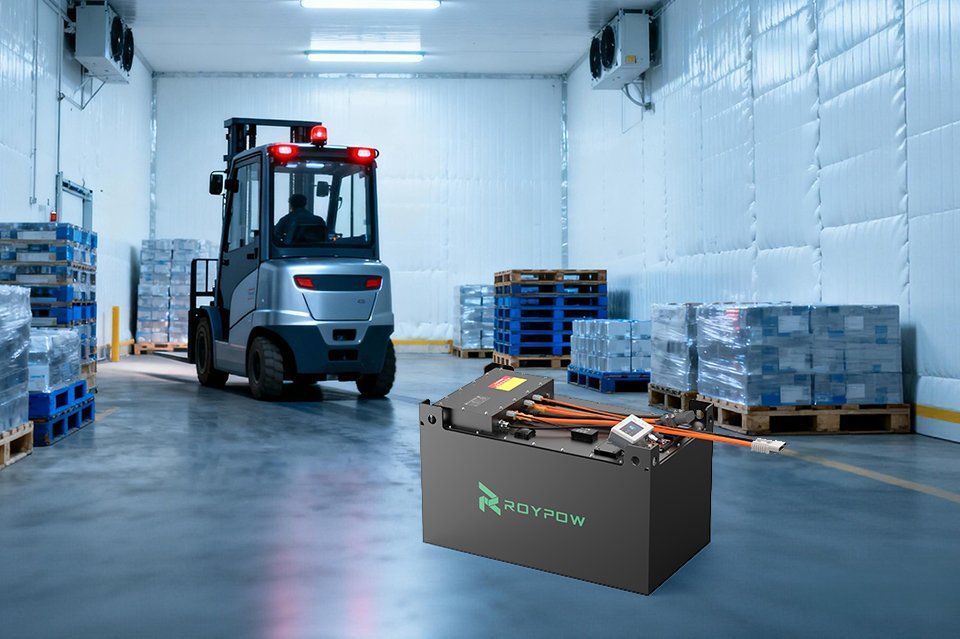
    Related CHISEN Buyer Guides

  • 12V 50Ah Battery: How to Specify a 12V 50Ah Cell for AGVs, Golf Carts and Small Solar Systems (2026)

    12V 50Ah Battery: How to Specify a 12V 50Ah Cell for AGVs, Golf Carts and Small Solar Systems (2026)

    Answer First

    A 12V 50Ah battery is a sealed valve-regulated lead-acid (VRLA) cell that delivers 50 amp-hours at the C3 discharge rate from a 12V block, and it is the default building block for 48V mobility packs in resorts, golf clubs, warehouse AGV fleets and small off-grid solar systems. The specification that matters is not the label on the carton but the published figure set: 50 Ah at C3, a 230 × 140 × 180 mm case, 15.25 ± 0.2 kg, float at 13.5 V and equalisation at 14.1 V across the six cells of the block. Those five numbers decide whether the cell fits your bay, your charger and your budget. This guide sets out the published specifications of the 6-EVF-50 against its three closest siblings, shows how a 48V pack is built from them with the arithmetic written out, and gives the seven checks a buyer should run before issuing a purchase order to a supplier in Hangzhou, Rotterdam, Jebel Ali, Lagos or Chennai.

    Key Takeaways

    • A 12V 50Ah battery is rated 50 Ah at the C3 rate (three-hour discharge) and 13.5 V float across six cells, not at the cell level — the block is the sellable unit.
    • The 6-EVF-50 publishes 230 × 140 × 180 mm and 15.25 ± 0.2 kg, which is what determines whether it physically fits a battery tray designed around the 6-DMF-45.
    • A 48V pack of four 12V 50Ah cells gives 48 V × 50 Ah = 2,400 Wh and weighs 4 × 15.25 kg = 61.0 kg — the weight, not the energy, is usually the constraint.
    • The closest sibling, the 6-DMF-52, gives 48 V × 52 Ah = 2,496 Wh at 4 × 13.7 kg = 54.8 kg, which is 6.2 kg lighter for 96 Wh more energy per pack.
    • Float 13.5 V and equalisation 14.1 V are the correct setpoints for these VRLA cells; a charger set to 14.4 V will shorten service life without adding usable capacity.
    • Cycle life is published at 350–600 cycles to 50–80% depth of discharge, and design life is 2–5 years — a different figure from the 20-year float life quoted for 2V tubular cells.
    • The published charge current of 10.0 A means a 48V pack of four cells needs a 40 A charger, and a 50 Ah cell accepting that current replenishes in roughly 5 hours.

    §1 — 12V 50Ah Battery Specifications

    The table below reproduces the published specification for the 6-EVF-50 and its three nearest neighbours in the 12V VRLA range. Every value is taken from the manufacturer model page; the pack figures are derived and shown with their formulas.

    Specification6-EVF-506-DMF-456-DMF-526-EVF-60Source
    Nominal voltage12V12V12V12VModel page
    Rated capacity50 Ah45 Ah52 Ah60 AhModel page
    Discharge rate basisC3 (3 h)C3C3C3Model page
    Dimensions L × W × H230 × 140 × 180 mm224 × 121 × 175 mm224 × 135 × 175 mm258 × 170 × 160 mmModel page
    Weight15.25 ± 0.2 kg12.3 ± 0.2 kg13.7 ± 0.2 kg18.8 ± 0.2 kgModel page
    Terminalφ11.8-M6φ11.8-M5φ11.8-M6φ14-M6Model page
    Float charge voltage13.5 V13.5 V13.5 V13.5 VModel page
    Equalisation voltage14.1 V14.1 V14.1 V14.1 VModel page
    Maximum charge current10.0 A9.0 A10.4 A12.0 AModel page
    Cycle life350–600 cycles (DoD 50–80 %)350–600 cycles350–600 cycles350–600 cyclesModel page
    Cut-off voltage1.75 V/cell1.75 V/cell1.75 V/cell1.75 V/cellModel page
    Self-discharge≤3 %/month at 25 °C≤3 %/month≤3 %/month≤3 %/monthModel page
    Working temperature−15 °C to 50 °C−15 °C to 50 °C−15 °C to 50 °C−15 °C to 50 °CModel page
    Design life2–5 years2–5 years2–5 years2–5 yearsModel page
    Energy per cell12 V × 50 Ah = 600 Wh12 V × 45 Ah = 540 Wh12 V × 52 Ah = 624 Wh12 V × 60 Ah = 720 WhArithmetic
    Specific energy600 Wh ÷ 15.25 kg = 39.3 Wh/kg540 Wh ÷ 12.3 kg = 43.9 Wh/kg624 Wh ÷ 13.7 kg = 45.5 Wh/kg720 Wh ÷ 18.8 kg = 38.3 Wh/kgArithmetic

    One practical note on ordering: several of these model pages also list alternative weight variants in a horizontal comparison table — the 6-DMF-45 is additionally published at 13.1 kg and the 6-DMF-52 at 14.5 kg. Those reflect different case or terminal builds. Whichever variant you specify, have it confirmed on the order acknowledgement before the container is sealed, because a 1 kg difference per cell becomes 4 kg per four-cell pack.

    §2 — The Pain

    Three failures account for almost every 12V 50Ah battery complaint that reaches a distributor’s help desk in Hamburg, Durban or Mombasa.

    The first is the label. A carton marked “50 Ah” tells you nothing about the case, the terminals, the cycle rating or the charge setpoints. Two cells from two factories can both print “12V 50Ah” and differ by 8 kg, by two years of design life and by 150 cycles. A buyer who quotes capacity alone will receive a cell that does not fit the tray and does not match the charger.

    The second is the charger. A 12V VRLA block contains six cells in series, so the published float voltage of 13.5 V is 2.25 V per cell and the published equalisation voltage of 14.1 V is 2.35 V per cell. A common failure in the field is a charger left on its lead-acid default of 14.4 V, or a controller that never enters equalisation at all. Over-charge shortens life; under-charge causes sulphation and capacity loss within the first year. Neither shows up on the invoice.

    The third is weight and tray geometry. A 48V pack of four 6-EVF-50 cells weighs 61.0 kg. Golf carts and AGV chassis have weight limits and, more often, have a battery tray designed for a specific case footprint. Swapping a 6-EVF-50 for a 6-DMF-52 without re-measuring the tray is how a 6.2 kg per-pack saving turns into a returns problem.

    There is also a sourcing problem underneath all three. Buyers in Lagos, Chennai, Cairo and Jakarta often receive a quotation that lists “12V 50Ah AGM” with no datasheet reference at all, which makes the order impossible to compare across suppliers and impossible to re-order.

    §3 — The Choice

    Choosing between the four cells above is not a matter of taste. It is a trade between three published quantities: the case footprint, the cell weight, and the Ah per kilogram that follows from them. The pack table below shows the four possible 48V builds.

    48V pack buildCells usedPack voltagePack energyPack weightPack specific energyCharger outputSource
    Four 6-EVF-504 × 12V 50Ah12 V × 4 = 48 V48 V × 50 Ah = 2,400 Wh4 × 15.25 kg = 61.0 kg2,400 Wh ÷ 61.0 kg = 39.3 Wh/kg4 × 10.0 A = 40 AArithmetic
    Four 6-DMF-524 × 12V 52Ah12 V × 4 = 48 V48 V × 52 Ah = 2,496 Wh4 × 13.7 kg = 54.8 kg2,496 Wh ÷ 54.8 kg = 45.5 Wh/kg4 × 10.4 A = 41.6 AArithmetic
    Four 6-DMF-454 × 12V 45Ah12 V × 4 = 48 V48 V × 45 Ah = 2,160 Wh4 × 12.3 kg = 49.2 kg2,160 Wh ÷ 49.2 kg = 43.9 Wh/kg4 × 9.0 A = 36.0 AArithmetic
    Four 6-EVF-604 × 12V 60Ah12 V × 4 = 48 V48 V × 60 Ah = 2,880 Wh4 × 18.8 kg = 75.2 kg2,880 Wh ÷ 75.2 kg = 38.3 Wh/kg4 × 12.0 A = 48.0 AArithmetic

    Read the table as a set of four answers to four different questions.

    If your chassis has weight headroom and you want the largest footprint with a published weight tolerance, the 6-EVF-50 is the sensible default. It is also the only one of the four whose 230 × 140 × 180 mm footprint is matched by a published 6-EVF-50 model page with a full weight tolerance, which matters when you are holding a supplier to a tolerance.

    If weight is the binding constraint, the 6-DMF-52 wins on both published weight and specific energy: 54.8 kg for the pack against 61.0 kg, and 45.5 Wh/kg against 39.3 Wh/kg. The 6.2 kg saved per pack is 24.8 kg across a ten-vehicle fleet. The 6-DMF-52 model page carries the full specification for that cell.

    If you need the lightest pack of all and can live with less energy, the 6-DMF-45 gives 49.2 kg and 2,160 Wh, which suits smaller AGV platforms and towable carts where gross vehicle weight is capped.

    If the duty cycle demands more runtime per charge rather than less weight, the 6-EVF-60 gives 2,880 Wh per pack and needs a 48.0 A charger, so the charger is the constraint rather than the battery.

    The wider 12V VRLA range, including the 6-DZF and 6-DMF series that cover everything from 12 Ah to 58 Ah, is set out on the CHISEN 12V VRLA product index.

    §4 — The Framework

    Seven checks turn a vague enquiry into an order a factory can fill correctly.

    1. Demand the published figure set, not the label. Ask for capacity with its rate basis (C3), dimensions in millimetres, weight with tolerance, terminal type, float voltage, equalisation voltage, maximum charge current, cycle life and cut-off voltage. A supplier that answers all ten cannot be guessing.

    2. Fix the charge setpoints in writing. 13.5 V float and 14.1 V equalisation for the block; 2.25 V per cell and 2.35 V per cell once you do the arithmetic. Confirm that your charger controller can be configured to both, and confirm the equalisation period. If the answer is “it is automatic”, ask which controller models are tested.

    3. Match the charger to the published charge current. The 6-EVF-50 accepts 10.0 A, so a four-cell 48V pack needs a 40 A charger. A 30 A charger extends the recharge window: 50 Ah ÷ 10.0 A = 5 hours is the theoretical minimum at the published current, and a 30 A charger stretches that to 50 Ah ÷ 7.5 A = 6.7 hours before losses.

    4. Check the depth-of-discharge window you are buying. The published 350–600 cycle figure holds at 50–80% depth of discharge. If your duty cycle runs to 100% depth, the cycle rating in the table does not apply to you, and you should size up rather than accept the headline figure.

    5. Verify the temperature envelope. The published working range is −15 °C to 50 °C, and capacity is quoted at 25 °C. Self-discharge is ≤3 % per month at 25 °C. A fleet parked outdoors through a Hamburg winter or a Santos summer does not see 25 °C for most of its life; ask the supplier what capacity remains at the extremes.

    6. Fix the variant on the acknowledgement. Because the model pages carry alternate weight variants, the order line must state the case, the terminal and the weight tolerance — not just the model code. Add the requirement that the batch matches the datasheet revision on the packing list.

    7. Agree the acceptance test. For container shipments to Santos, Jebel Ali, Lagos or Port Said, specify what happens on arrival: a sample capacity check at the C3 rate, a float voltage check across the block, and the rule that a failing sample is settled by re-inspection at an agreed laboratory rather than by argument.

    §5 — The Trust

    The 6-EVF-50 and its siblings are built on a VRLA line inside a manufacturer operating 8 production bases with an annual capacity of 70 million kVAh, under a certified quality management system with ISO 9001 and ISO 14001 certification, with CE, UL and IEC conformity for the markets each cell ships into. The full 12V VRLA battery index is maintained on the manufacturer site, and every figure in this article comes from the individual model page rather than from a catalogue summary.

    Two things deserve emphasis for a buyer who is being asked to pay for assurance.

    First, a certification covers a system, a scope and a date — not a particular carton. ISO 9001 certifies that the quality management system is documented and that corrective action happens; it does not certify that one cell holds 50 Ah. That is what the published capacity, the type test and the acceptance test are for. Ask for the certificate number, the scope statement, the registered address and the validity dates, and then check the cell on its own merits.

    Second, the difference between a published specification and a marketing line is the whole value of this exercise. A supplier who quotes “12V 50Ah AGM, top grade” is telling you nothing. A supplier who quotes “6-EVF-50, 50 Ah at C3, 230 × 140 × 180 mm, 15.25 ± 0.2 kg, float 13.5 V, equalisation 14.1 V, 10.0 A maximum charge current” is telling you everything you need to engineer the pack, write the charger setting and defend the claim at the goods-in dock.

    For importers who buy through a distributor rather than direct, ask the distributor for the manufacturer’s model page URL and the batch reference. Both can be checked before the container is opened, and both remove the single largest source of dispute in this category.

    §6 — FAQ

    Q1. What does 50 Ah actually mean on a 12V 50Ah battery? It means 50 amp-hours delivered at the C3 discharge rate — the three-hour rate — down to the cut-off voltage of 1.75 V per cell, at 25 °C. It does not mean 50 Ah for the whole day. On a longer, five-hour discharge the usable figure is lower, and on a two-hour discharge it is higher. Any quotation that gives capacity without the rate basis is incomplete.

    Q2. Can I substitute a 6-DMF-52 for the 6-EVF-50 in an existing 48V pack? Usually yes, and it is often an improvement on weight: the 6-DMF-52 gives 48 V × 52 Ah = 2,496 Wh at 4 × 13.7 kg = 54.8 kg, against 48 V × 50 Ah = 2,400 Wh at 4 × 15.25 kg = 61.0 kg. Before you do, confirm the case footprint fits the tray — 224 × 135 × 175 mm against 230 × 140 × 180 mm — and confirm the charger can deliver 4 × 10.4 A = 41.6 A. The terminal dimension stays at φ11.8-M6, but it is a different moulding, so check the lead length and the retaining hardware.

    Q3. What charger do I need for a 48V pack of four 12V 50Ah batteries? A 48V charger with a 40 A output, because the published maximum charge current is 10.0 A per cell and 4 × 10.0 A = 40 A. Set the float at 13.5 V and the equalisation at 14.1 V for the 48V string, which is 2.25 V and 2.35 V per cell respectively. Give the charger a temperature-compensation input if the pack sits in a hot climate, because a 25 °C setpoint in a 45 °C bay is an over-charge condition.

    Q4. How long will a 12V 50Ah battery last in a solar application? In float standby with solar charging the published design life is 2–5 years and the published cycle life is 350–600 cycles at 50–80% depth of discharge. In a solar duty cycle the binding factor is usually the number of cycles the site sees, not the calendar. If the site is in Jebel Ali or Chennai, expect the temperature side of the envelope to matter as much as the cycle count; if it is in Valencia or Durban, confirm the cabinet ventilation, because the working range stops at 50 °C.

    Q5. Is 13.5 V the correct float voltage, or should it be 13.6–13.8 V? For a VRLA block, 13.5 V is the published float voltage for these cells, which is 2.25 V per cell across the six cells of the block. A setting of 13.8 V is 2.30 V per cell and pushes the cell above its intended float point. Over a year that difference shows up as shortened service life and more frequent water loss, and it does not add usable capacity. Ask the supplier to confirm the setpoint against the model page rather than against a generic lead-acid chart.

    Q6. What is the difference between a 6-EVF-50 and a 6-DMF-50? Both are 12V VRLA cells in the same capacity class, and the EVF and DMF series differ in plate construction and case format rather than in chemistry. The 6-EVF-50 is published at 230 × 140 × 180 mm and 15.25 kg; the closest DMF equivalent in this range is the 6-DMF-52 at 224 × 135 × 175 mm and 13.7 kg. If you are qualifying a new supplier, compare the published dimensions and weights side by side rather than relying on the series name, because the case geometry is what determines whether the cell physically fits your application.

    Q7. Can a 12V 50Ah battery be used for an AGV in an e-commerce warehouse? Yes — the manufacturer lists automated guided vehicles in e-commerce warehousing and smart factory environments among the applications for the 6-EVF series, alongside 4–8 seat electric sightseeing vehicles at resorts and theme parks, golf carts, 1–3 tonne electric forklifts and floor-scrubber platforms. The specification to check is the cycle rating: a warehouse AGV that runs two shifts with deep recoveries will consume cycles faster than a standby application, so confirm the 350–600 cycle figure at your actual depth of discharge.

    Q8. What should be on the purchase order for a 12V 50Ah battery? The model code and the case and weight variant, the float and equalisation voltages, the maximum charge current, the cycle rating and depth of discharge, the terminal type, the batch reference, the test certificate and the acceptance procedure on arrival. Include the requirement that the shipped batch matches the published model page revision. If the order will be shipped to a port such as Rotterdam, Santos or Mombasa, state the agreed laboratory for a failing-sample inspection.

    Expert Summary

    A 12V 50Ah battery is a well-understood component, and the specification is public: 50 Ah at C3, 230 × 140 × 180 mm, 15.25 ± 0.2 kg, 13.5 V float, 14.1 V equalisation, 10.0 A maximum charge current, 350–600 cycles at 50–80% depth of discharge, 2–5 years design life. The 6-EVF-50 is the reference cell, and the 6-DMF-52 is the sensible alternative when weight matters more than footprint, delivering 45.5 Wh/kg at the pack level against 39.3 Wh/kg.

    The commercial value of specifying precisely is larger than the price difference between the cells. A quotation built on a published figure set can be compared across three suppliers in ten minutes and defended at the goods-in dock. A quotation built on a label cannot be compared at all, and the difference shows up three months later as a warranty claim.

    Two figures deserve a final emphasis for buyers working outside Europe. First, the 40 A charger requirement for a 48V pack of four cells is set by the published maximum charge current, not by marketing; if your charger is sized below it, the recharge window stretches and the pack spends more of its life in a partially discharged state. Second, the published cycle rating assumes 50–80% depth of discharge, so if your AGV or cart runs deeper than that, ask for the rating at your actual depth before you commit to a volume.

    For importers into markets served from Rotterdam, Jebel Ali, Santos, Lagos or Chennai, the sequence that works is simple: fix the published specification first, then let suppliers compete on it. The one-page figure set in §1 is enough to run that process.

    Contact CHISEN

    Send the target application, the required capacity, the case dimensions you need to fit and the quantity to the CHISEN export desk, and you will receive a quotation against the published specification, the datasheet and the current lead time.

    • Email: jack@chisen.cn or sales@chisen.cn
    • WhatsApp: +86 131 6622 6999
    • 12V VRLA product index: https://www.chisen.cn/en/LeadacidBattery/EVF.html
    • 6-EVF-50 model page: https://www.chisen.cn/en/6-EVF-50/12V50Ah.html
    • 6-DMF-52 model page: https://www.chisen.cn/en/6-DMF-52/12V52Ah.html

    Related reading on the CHISEN knowledge centre: 12V VRLA selection guidance, deep-cycle charge setpoints, and pack-sizing method for AGV and traction applications.

    CHISEN Battery — lead-acid cells and systems for telecom, solar, UPS, AGV and traction applications. 8 production bases, 70 million kVAh annual capacity, ISO 9001 and ISO 14001 certified.
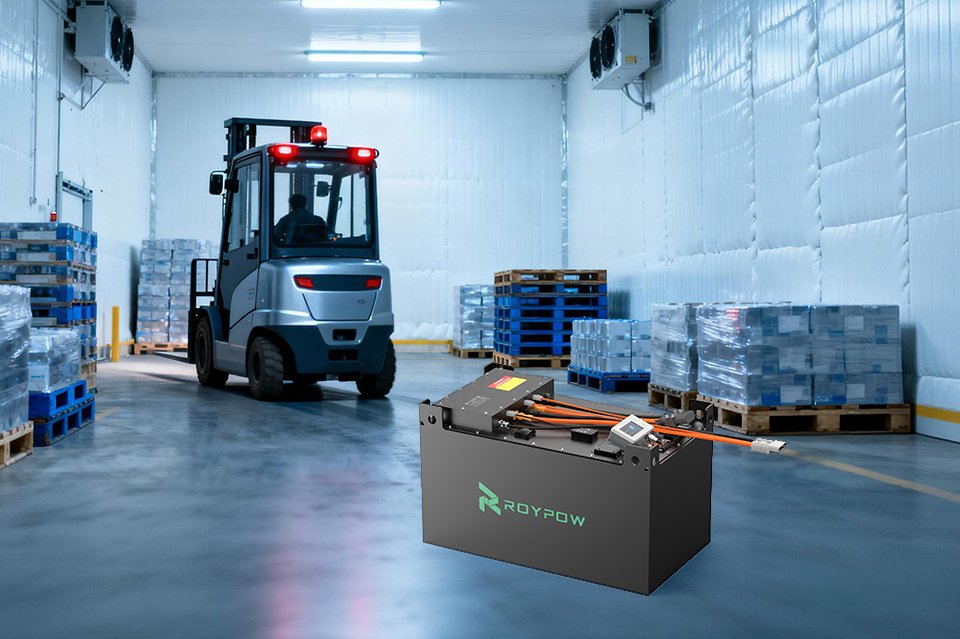
    Related CHISEN Buyer Guides

  • CHISEN ISO 9001: What the Certification Covers, What It Doesn’t, and How to Verify a Battery Supplier

    CHISEN ISO 9001: What the Certification Covers, What It Doesn’t, and How to Verify a Battery Supplier

    Answer First

    CHISEN ISO 9001 is the certification attached to CHISEN Battery, a Hangzhou manufacturer of lead-acid cells and systems that runs 8 production bases with an annual capacity of 70 million kVAh and ships into Europe, Africa, Asia and Latin America. What that certification actually tells a procurement manager is narrower than most quotations imply: ISO 9001 certifies a documented quality management system — procedures, records, internal audits and corrective action — over a defined scope at a stated address, for a stated period. It does not certify that any particular cell holds a particular number of amp-hours, and it does not replace a datasheet, a type test or an acceptance check at your warehouse. CHISEN holds ISO 9001 and ISO 14001, with CE, UL and IEC conformity for the markets each cell ships into. This guide separates what each of those certificates proves from what it does not, and gives the seven-step routine CHISEN recommends to any buyer — whether the supplier is CHISEN or a competitor in Hamburg, Lagos or Chennai.

    Key Takeaways

    • CHISEN ISO 9001 certifies the management system, the scope and the validity period — not the performance of a specific cell, and never a specific amp-hour figure.
    • CHISEN operates 8 production bases with an annual capacity of 70 million kVAh, which averages 8,750,000 kVAh per base — a scale figure you can check against the plant you are actually buying from.
    • CHISEN holds ISO 9001 for quality, ISO 14001 for the environmental system, plus CE, UL and IEC conformity; each covers something different and none of them substitutes for the others.
    • A 2 V cell from CHISEN carries a 20+ year design float life at 20 °C, and a 12 V block carries a 2–5 year design life — certification does not change a chemistry limit, and a supplier claiming otherwise is overreaching.
    • The verification routine that actually protects a buyer is short: certificate number and scope, the published datasheet for the exact model, batch traceability, the test certificate, and an acceptance test on arrival.
    • For a container landing at Rotterdam, Santos, Jebel Ali, Lagos or Chennai, the acceptance test and the laboratory agreement are worth more than any certificate in the file.
    • CHISEN publishes the full specification for every model it sells, which is the practical test of whether a supplier’s quality system reaches the product you are buying.

    §1 — Certification Scope and Specification Checklist

    The table below is the single most useful page in a supplier file. It states what each certificate covers, what it does not, and the practical step a buyer takes to verify it. The CHISEN column reflects the certifications CHISEN holds.

    CertificationWhat it actually certifiesWhat it does NOT certifyHow a buyer verifies itCHISEN
    ISO 9001A documented quality management system: defined procedures, controlled records, internal audit, corrective action, over a stated scope and siteThe capacity, cycle life, safety or consistency of any individual cell or batchCertificate number, scope statement, registered address, issuing body, validity datesHeld
    ISO 14001An environmental management system: waste, emissions, recycling and resource handling across the manufacturing operationProduct performance, or that any specific recycled content claim is accurateSame check as ISO 9001, plus the scope’s environmental exclusionsHeld
    CEConformity with the applicable EU directives and regulations covering safety, EMC and hazardous substances; the economic responsibility sits with the EU importerThird-party quality of the plant; CE is largely a self-declaration for many battery categoriesAsk for the EU Declaration of Conformity and the importer’s name and addressHeld for the European market
    ULSafety standard certification for the product as evaluated for the North American marketPerformance beyond the tested conditions, or suitability for a duty the evaluation did not coverUL file number and the category on the certificateHeld for the North American market
    IECThe international standards series used to qualify stationary lead-acid cells against a stated performance and test methodA general quality claim about the manufacturer; the buyer must identify the exact part numberAsk which IEC 60896 part applies to the cell type, flooded tubular or gel, and require the test report against that partHeld; ask for the part number applicable to your cell

    Two rows deserve emphasis because they are the ones most often confused.

    First, the IEC row. For stationary lead-acid cells the relevant standards sit in the IEC 60896 series, and the part number differs between flooded and gel tubular cells. A buyer who asks for “the IEC certificate” without a part number will receive a general conformity statement that proves nothing about the cell. The useful request is specific: which part of IEC 60896 applies to the OPzS2 flooded line, which applies to the OPzV2 gel line, and the test report for the exact model ordered.

    Second, the ISO 9001 row. Certification confirms that the plant runs a documented system with records, internal audits and corrective action. It does not confirm that a cell holds 150 Ah at C3. Only the published specification, the type test and the acceptance test do that. A supplier who presents an ISO 9001 certificate as proof of capacity is misusing it — and a buyer who accepts it that way has skipped the only verification that matters.

    §2 — The Pain: Certification Language That Misleads Buyers

    Battery sourcing has a documentation problem. The certificate file grows, the pages multiply, and somewhere in the middle the distinction between “the system is certified” and “this cell performs as specified” quietly disappears. Buyers in Rotterdam, Lagos, Cairo and São Paulo are routinely asked to approve a supplier on the strength of a certificate scan.

    The first distortion is scope. ISO 9001 certificates carry a scope statement that names what the system covers. A plant whose scope reads “manufacture of lead-acid batteries” covers the cell operation. A scope that reads “trading, assembly and distribution” does not cover cell manufacture at all, and the certificate tells you which case you are in. Always read the scope line. It costs nothing and it settles the question.

    The second distortion is the certificate that covers the wrong site. A group with eight production bases may hold a certificate issued for one address, while another address operates outside that scope. Because CHISEN runs 8 production bases, the question “which address is on the certificate, and which address is making my cells” is not pedantic — it is the first question. The same applies to UL file numbers and to the EU importer named on the Declaration of Conformity.

    The third distortion is that certification is treated as a performance guarantee. It is not. A chemistry limit does not move because a certificate exists. The CHISEN published specification states a 20+ year design float life at 20 °C for the 2 V tubular OPzS2 and OPzV2 ranges and a 2–5 year design life for the 12 V VRLA blocks — a difference of a factor of four, caused by chemistry and construction, not by paperwork. The 20-year figure belongs to the 2 V tubular class; the 12 V VRLA blocks are 2–5 years. Any supplier telling you the warranty scales with the certificate is describing a marketing position, not an engineering one.

    The fourth distortion is paperwork substitution for traceability. A batch reference is dull and it is worth more than a framed certificate, because it is the only document that connects a specific pallet in a specific container to a specific production date. If the supplier cannot give you the batch reference, you cannot investigate a failure, and an investigation you cannot run is an investigation you will not run.

    §3 — The Choice: How to Evaluate a Supplier You Cannot Visit

    Most buyers of industrial batteries cannot visit the plant. That makes the document set the substitute for the site visit, and it makes the structure of that file the thing worth comparing between suppliers. The evaluation table below scores the three approaches a buyer normally encounters.

    Evaluation routeWhat it establishesWhat it missesPractical costCHISEN’s position
    Certificate file onlyThat a management system and the relevant market approvals existCell performance, batch traceability, whether your model is in the scopeLowestProvided on request, but not sufficient on its own
    Certificate file plus published model specificationThat the system exists AND that the exact model has a documented specification you can checkWhether the shipped batch matches the specificationLow, and it is the best valueEvery CHISEN model has a published page with capacity, dimensions, weight and charge setpoints
    Certificate file, published specification, batch traceability and an arrival acceptance testThat the system exists, the specification is documented, your units are traceable, and the shipment is verified against the specificationNothing material at the purchasing stageModerate, and it is the only route that resolves a disputeSupported; the batch reference appears on the packing list and the acceptance procedure can be written into the contract

    The middle row is where most good buying happens, and it costs nothing beyond asking. The requirement is specific: a URL or a document for the exact model you are ordering, with nominal voltage, rated capacity and its rate basis, dimensions, weight, terminal, float voltage, equalisation voltage, maximum charge current, cycle life and working temperature. A supplier who cannot produce that set for your model is telling you something important about how their quality system reaches the product.

    The third row is where risk is actually retired, and it is the row CHISEN recommends for buyers shipping containers to Rotterdam, Santos, Jebel Ali, Lagos or Chennai. It adds two things to the middle row: a batch reference that ties the shipment to a production date, and an acceptance procedure agreed before the goods ship. The acceptance procedure should name the test, the sample size, the laboratory and what happens if the sample fails.

    §4 — The Framework: Seven Verification Steps

    Seven steps, in order, take a supplier from “plausible” to “verified”. Each one produces a document you can keep.

    1. Verify the certificate itself. Take the certificate number, the scope statement, the registered address, the issuing body and the validity dates, and check them with the issuing body. An unverifiable certificate number is a worse signal than no certificate, because it shows the supplier is not expecting the check.

    2. Verify the scope covers the product. Read the scope line against what you are buying. A “manufacture of lead-acid batteries” scope covers a cell operation. A “trading and distribution” scope does not. If the cell is made at a site other than the certified address, ask for the certificate that covers that site.

    3. Verify the market approval for your destination. For Europe, the EU Declaration of Conformity and the name and address of the EU importer. For North America, the UL file number and category. For a specific standard-based qualification, the IEC 60896 part number that matches the cell type and the test report against it.

    4. Verify the specification of the exact model. Obtain the published datasheet or model page for the model on your order line, with all ten of the fields listed in §3. Cross-check it against the quotation line by line. If the quotation and the datasheet disagree, stop there.

    5. Verify traceability. Ask that every cell or pallet carries a batch reference, that the batch appears on the packing list, and that the batch date falls inside the stated warranty period. Add the requirement that cells within one series string come from one batch.

    6. Verify the factory’s consistency with the specification. A published figure set that is identical across every model page is itself evidence of a controlled documentation process, because it means the values come from a data system rather than from a per-request document. CHISEN maintains published pages for 69 product models across its ranges, including the OPzV2-1000 2V1000Ah tubular gel cell, and the same field set appears on each of them.

    7. Verify the shipment. Agree, in the contract, the acceptance test on arrival: a sample capacity check at the published rate, a float voltage check across the bank, an electrolyte density check for flooded cells, and a named laboratory for re-inspection. For arrivals through Rotterdam, Santos, Jebel Ali, Lagos, Port Said or Mombasa, write the laboratory into the contract rather than agreeing it after a dispute starts.

    §5 — The Trust: What the CHISEN Footprint Actually Delivers

    CHISEN’s verifiable position is this. The company operates 8 production bases in China with an annual capacity of 70 million kVAh, which works out at 70,000,000 kVAh ÷ 8 bases = 8,750,000 kVAh average per base. It holds ISO 9001 for the quality management system and ISO 14001 for the environmental system, with CE, UL and IEC conformity for the markets it ships into. Its range covers flooded tubular cells (OPzS2, 2 V, 100–3000 Ah), gel tubular cells (OPzV2, 2 V, 100–3000 Ah), 12 V VRLA blocks in three ranges (6-DZF at 12–20 Ah, 6-DMF at 21–58 Ah and 6-EVF at 24–150 Ah), 6 V and 8 V EVF cells (3-EVF at 180–225 Ah and 4-EVF at 150 Ah), solar storage systems and lithium storage systems.

    The arithmetic below shows what that footprint produces, using the published specifications of individual cells. It is worth doing, because it converts an abstract capacity claim into figures a buyer can check against an incoming pallet.

    Product lineVoltageModel spanVerified examplePublished specification of that exampleEnergy per cellSpecific energy
    OPzV2 gel tubular2 V100–3000 AhOPzV2-200200 Ah @ C10, 103 × 206 × 390 mm, 17.0 kg, 40 A max charge, 2.23 V float, 2.35 V equalise, −3 mV/°C/cell, ~1.0 mΩ @25 °C, 20+ years @20 °C2 V × 200 Ah = 400 Wh400 Wh ÷ 17.0 kg = 23.5 Wh/kg
    OPzV2 gel tubular2 V100–3000 AhOPzV2-10001000 Ah @ C10, 233 × 210 × 681 mm, 73.2 kg, 200 A max charge, 2.23 V float, 2.35 V equalise, −3 mV/°C/cell, ~0.50 mΩ @25 °C, 20+ years @20 °C2 V × 1,000 Ah = 2,000 Wh2,000 Wh ÷ 73.2 kg = 27.3 Wh/kg
    OPzV2 gel tubular2 V100–3000 AhOPzV2-25002500 Ah @ C10, 487 × 212 × 807 mm, 181 kg, 500 A max charge, 2.23 V float, 2.35 V equalise, −3 mV/°C/cell, ~0.30 mΩ @25 °C, 20+ years @20 °C2 V × 2,500 Ah = 5,000 Wh5,000 Wh ÷ 181.0 kg = 27.6 Wh/kg
    6-EVF 12 V VRLA12 V24–150 Ah6-EVF-5050 Ah @ C3, 230 × 140 × 180 mm, 15.25 kg, 10.0 A max charge, 13.5 V float, 14.1 V equalise, 350–600 cycles, 2–5 years12 V × 50 Ah = 600 Wh600 Wh ÷ 15.25 kg = 39.3 Wh/kg
    6-EVF 12 V VRLA12 V24–150 Ah6-EVF-150150 Ah @ C3, 483 × 170 × 240 mm, 48.5 kg, 30.0 A max charge, 13.5 V float, 14.1 V equalise, 350–600 cycles, 2–5 years12 V × 150 Ah = 1,800 Wh1,800 Wh ÷ 48.5 kg = 37.1 Wh/kg

    Read the last two columns and a reasonable question follows: why is a 12 V block more energy-dense per kilogram than a 2 V tubular cell? The answer is in the published figures themselves. The 6-EVF construction uses thinner plates and a tighter case format, which raises gravimetric density and lowers cycle life and float life in exchange — 39.3 Wh/kg against 23.5 Wh/kg, against 2–5 years of design life against 20+ years. Neither is better. They are different products for different duties, and the specification set is what tells them apart.

    For scale, a 48 V string built from 24 OPzV2-200 cells gives 24 × 2 V = 48 V, 48 V × 200 Ah = 9,600 Wh, a string weight of 24 × 17.0 kg = 408 kg, and a charger rating of 24 × 40 A = 960 A. If a supplier cannot tell you those four numbers for the cell it is quoting, the quality system has not reached the product.

    Further detail on CHISEN’s operation, product lines and export process is on the CHISEN company page, and the technical questions that come up in almost every enquiry are answered in the CHISEN FAQ.

    §6 — FAQ: Certification Questions Buyers Ask

    Q1. What does the CHISEN ISO 9001 certification actually guarantee? That CHISEN’s quality management system — documented procedures, controlled records, internal audits and corrective action — is certified over a stated scope, at a stated site address, for a stated validity period, by a named certification body. It does not guarantee the amp-hour capacity of any particular cell, and it is not a performance certificate. The performance of a specific model is established by its published datasheet, its type test and your acceptance test on arrival.

    Q2. Does CHISEN ISO 9001 mean the batteries come with a warranty? No. Certification and warranty are separate things. A warranty is a commercial commitment on specific terms, and it is set out in the sales contract; a management system certification is a statement about how the plant is managed. Read them separately. A reputable supplier publishes both, and neither substitutes for the other.

    Q3. Which certifications does CHISEN hold? CHISEN holds ISO 9001 for the quality management system and ISO 14001 for the environmental system, and its products carry CE, UL and IEC conformity for the destination markets. For a stationary lead-acid cell bought against a performance standard, ask for the specific IEC 60896 part number that matches the cell type — flooded tubular or gel — and the test report against it, rather than a general reference to IEC.

    Q4. Is ISO 14001 relevant to a battery buyer? It is relevant to a corporate buyer with a supply-chain or environmental reporting obligation, and to buyers in markets where environmental management expectations are part of the supplier qualification process. ISO 14001 certifies the environmental management system — waste, emissions, recycling and resource handling across the operation. It says nothing about the cell’s performance, and a buyer who presents it as a quality argument has misunderstood it.

    Q5. How many production bases does CHISEN operate and how do I check the scale claim? CHISEN operates 8 production bases with an annual capacity of 70 million kVAh, an average of 8,750,000 kVAh per base. You can sanity-check any capacity claim against the product itself: the published specifications of the OPzV2-200, OPzV2-1000 and OPzV2-2500 cells give you cell weights, case dimensions and charge currents, and from those you can estimate the annual output of a line. If a supplier’s capacity claim cannot be reconciled with the specifications of the models it sells, ask why.

    Q6. What should I demand on the order acknowledgement beyond the model code? The exact model and chemistry, the case dimensions and the weight with its tolerance, the terminal type and torque, the float and equalisation voltages with their reference temperature, the temperature compensation coefficient, the maximum charge current, the cycle rating with its depth of discharge, the design life with its reference temperature, the batch reference, the test certificate, and the acceptance procedure on arrival including the laboratory and the sample size. That list takes one page and it is the difference between a shipment you can accept and a shipment you can only argue about.

    Q7. Does ISO 9001 mean the same cell will be delivered every time? It means the process that produces, tests, records and releases the cell is documented and audited, which is the practical form of consistency. It does not mean two cells are dimensionally identical — a published weight tolerance of ±0.2 kg on the 6-EVF-50 or ±0.2 kg on the OPzV2-200 is how a real factory expresses the variation that remains. Accept the tolerance, then control the variation by checking the incoming batch against the specification rather than by expecting zero deviation.

    Q8. Where should a buyer in Rotterdam, Lagos or Chennai start? With the published specification of the exact model, on the manufacturer’s own site, and with the certificate numbers and scope statements. CHISEN publishes a page for each of its 69 product models with the same field set — voltage, capacity with the rate basis, dimensions, weight, terminal, float and equalisation voltages, charge current, cycle life and working temperature — so the comparison between suppliers becomes a line-by-line comparison of numbers. Everything after that, from the batch reference to the acceptance test, follows from what the specification makes checkable.

    Expert Summary

    CHISEN ISO 9001 is a real, checkable certificate attached to a manufacturer with 8 production bases and 70 million kVAh of annual capacity, and it is worth having in the supplier file. It is also worth exactly what it says: a certified management system over a stated scope, at a stated address, for a stated period. It does not certify a cell’s capacity, it does not extend a chemistry limit, and it does not replace a datasheet.

    The distinction matters because the alternatives are worse. A 20+ year design float life at 20 °C for the 2 V tubular OPzS2 and OPzV2 cells and a 2–5 year design life for the 12 V VRLA blocks are chemistry facts, published on the model page, and no certificate changes them. The 23.5 Wh/kg of the OPzV2-200 against the 39.3 Wh/kg of the 6-EVF-50 is a construction trade-off, not a quality statement. A supplier willing to write those numbers on the datasheet is telling you more about the reliability of your supply than any certificate scan.

    So the verification routine is short: certificate, scope, site address, market approval, published model specification, batch traceability, acceptance test. Seven items, most of them free, and every one of them a document you keep. For a buyer shipping containers to Rotterdam, Santos, Jebel Ali, Lagos, Port Said or Chennai, the last item is worth more than the other six, because it is the only one that settles a question while the pallet is still on the dock.

    Contact CHISEN

    Send the model codes, the quantity and the destination market to the CHISEN export desk, and you will receive a quotation built on the published datasheet, the certification documents for your market and the current lead time.

    • Email: jack@chisen.cn or sales@chisen.cn
    • WhatsApp: +86 131 6622 6999
    • Company profile and product lines: https://www.chisen.cn/en/about.html
    • Technical FAQ: https://www.chisen.cn/en/h-faq.html
    • OPzV2-1000 2V1000Ah model page: https://www.chisen.cn/en/OPzV2-1000/2V1000Ah.html

    Related reading on the CHISEN knowledge centre: how to read a lead-acid datasheet, battery acceptance testing on arrival, and batch traceability for warranty claims.

    CHISEN Battery — lead-acid cells and systems for telecom, solar, UPS, AGV and traction applications. 8 production bases, 70 million kVAh annual capacity, ISO 9001 and ISO 14001 certified.

  • 2V 200Ah Battery: OPzS2 Flooded vs OPzV2 Gel for Telecom, Solar and UPS (2026 Buyer Guide)

    2V 200Ah Battery: OPzS2 Flooded vs OPzV2 Gel for Telecom, Solar and UPS (2026 Buyer Guide)

    Answer First

    A 2V 200Ah battery is a single 2V tubular cell that delivers 200 amp-hours at the C10 rate, and it is the cell on which almost every serious stationary installation is built: telecom DC plants, solar storage strings, railway and substation backup, and large UPS installations. Two chemistries dominate the class, and they are not interchangeable. The OPzS2-200 is a flooded tubular cell published at 103 × 206 × 409 mm and 13.0 kg without electrolyte or 17.5 kg with electrolyte; the OPzV2-200 is a gel tubular cell published at 103 × 206 × 390 mm and 17.0 kg. Both charge at 2.23 V float and 2.35 V equalisation with −3 mV/°C/cell compensation and both carry a 20+ year design float life at 20 °C. Twenty-four cells in series give a 48V string of 48 V × 200 Ah = 9,600 Wh. This guide compares the two on published data only — capacity, geometry, weight, charge settings, internal resistance and string arithmetic — so that a buyer can decide between them before asking a factory for a quotation.

    Key Takeaways

    • A 2V 200Ah battery is one 2V cell, not a 12V block; a 48V string needs 24 of them, and a 24-cell string gives 48 V × 200 Ah = 9,600 Wh.
    • The OPzS2-200 flooded cell publishes 13.0 kg without electrolyte and 17.5 kg with electrolyte, so a 24-cell string weighs 312 kg dry or 420 kg filled.
    • The OPzV2-200 gel cell publishes 17.0 kg with no filling step, so the same 24-cell string weighs 408 kg — 12 kg lighter than the flooded string and far simpler to install.
    • Both cells accept a 40 A maximum charge current, which is 40 A ÷ 200 Ah = 0.2 C, and a 24-cell string therefore needs 24 × 40 A = 960 A.
    • Float is 2.23 V @25 °C and equalisation is 2.35 V @25 °C for both; in solar and wind service the equalisation setting moves to 2.40 ± 0.01 V/cell.
    • Internal resistance differs and so does its reference temperature: the flooded cell is published at ~0.95 mΩ @20 °C, the gel cell at ~1.0 mΩ @25 °C.
    • Design float life is 20+ years at 20 °C — the figure is tied to 20 °C, not to 25 °C, and it belongs to the tubular class only.

    §1 — 2V 200Ah Battery Specifications

    All values in this table are taken from the manufacturer datasheets for the two cells. Derived rows carry their formulas.

    SpecificationOPzS2-200 (flooded)OPzV2-200 (gel)Source
    Nominal voltage2V2VDatasheet
    Rated capacity at C10 (1.80 Vpc)200 Ah200 AhDatasheet
    Dimensions L × W × H103 × 206 × 409 mm103 × 206 × 390 mmDatasheet
    Weight without electrolyte13.0 kgnot applicable — gel cells are supplied filledDatasheet
    Weight with electrolyte17.5 kg17.0 kgDatasheet
    Maximum charge current40 A40 ADatasheet
    Float charge voltage2.23 V @25 °C2.23 V @25 °CDatasheet
    Equalisation charge voltage2.35 V @25 °C2.35 V @25 °CDatasheet
    Temperature compensation−3 mV/°C/cell−3 mV/°C/cellDatasheet
    Internal resistance~0.95 mΩ @20 °C~1.0 mΩ @25 °CDatasheet
    Design float life20+ years @20 °C20+ years @20 °CDatasheet
    TerminalFemale copper insert M8, 10-12 N·mFemale copper insert M8, 10-12 N·mDatasheet
    Solar and wind equalisation2.40 ± 0.01 V/cell @25 °C2.40 ± 0.01 V/cell @25 °CDatasheet
    Solar and wind float2.25 ± 0.005 V/cell @25 °C2.27 ± 0.005 V/cell @25 °CDatasheet
    Solar and wind compensation−4 mV/cell/°C−3 to −5 mV/cell/°CDatasheet
    Charge current as a fraction of capacity40 A ÷ 200 Ah = 0.2 C40 A ÷ 200 Ah = 0.2 CArithmetic
    Energy per cell2 V × 200 Ah = 400 Wh2 V × 200 Ah = 400 WhArithmetic

    One datasheet detail deserves to be flagged because it changes how the capacity figure is read. The OPzS2-200 publishes a discharge-rate table measured to a 1.85 V final voltage: C24 = 226 Ah, C48 = 248 Ah, C72 = 260 Ah, C100 = 270 Ah, C120 = 274 Ah and C240 = 280 Ah. Those are higher than the 200 Ah C10 figure because the C10 rating is measured down to 1.80 Vpc while the rate table is measured to a higher cut-off. A buyer comparing a 2V 200Ah battery against a quoted “260 Ah” figure is almost always comparing two different cut-off voltages, not two different cells.

    §2 — The Pain

    Three problems recur on 2V 200Ah orders, and each of them starts with an incomplete line on a purchase order.

    The first is weight stated without electrolyte. A flooded 2V 200Ah cell is published at 13.0 kg without electrolyte and 17.5 kg with electrolyte. Quote the 13.0 kg figure to a structural engineer and the rack design is 108 kg light across a 24-cell string, because 24 × 4.5 kg = 108 kg of electrolyte has not been counted. Quote 17.5 kg to an installer who is planning a manual handling lift and you have promised the wrong thing in the other direction. The order line must state which figure applies.

    The second is the charge setpoint. A 2V cell floats at 2.23 V @25 °C and equalises at 2.35 V @25 °C, with −3 mV/°C/cell compensation. These are tight tolerances and they are not the same as the 2.27 V and 2.35 V bands printed on generic lead-acid literature. A 48V string of 24 cells floating at 2.27 V/cell is sitting 0.96 V above the intended float across the string, which over years is a material loss of life on a cell that was specified for 20+ years of float at 20 °C.

    The third is chemistry mismatch inside a string. A series string of 2V cells must be built from cells of the same chemistry, the same model and, ideally, one production batch. Fitting a gel OPzV2-200 and a flooded OPzS2-200 into the same 24-cell string is a genuine engineering error, not a saving: the cells have different electrolyte, different self-discharge behaviour, different internal resistance and different equalisation behaviour, and a string cannot be charged for both.

    There is a commercial dimension too. Buyers sourcing for Rotterdam, Jebel Ali, Santos, Lagos or Chennai often receive quotations for “2V 200Ah tubular” with no datasheet reference, no chemistry statement and no charge settings — which makes it impossible to compare two factories properly and impossible to re-order against the same specification two years later.

    §3 — The Choice

    The decision between a flooded and a gel 2V 200Ah battery is not a preference; it is a set of operating consequences. The string arithmetic below shows what each choice costs and delivers in a 24-cell 48V installation.

    48V string buildOPzS2-200 floodedOPzV2-200 gelSource
    Cells in series24 × 2 V = 48 V24 × 2 V = 48 VArithmetic
    String energy48 V × 200 Ah = 9,600 Wh48 V × 200 Ah = 9,600 WhArithmetic
    String weight with electrolyte24 × 17.5 kg = 420 kg24 × 17.0 kg = 408 kgArithmetic
    String weight before filling24 × 13.0 kg = 312 kgnot applicableArithmetic
    Electrolyte mass per string24 × 4.5 kg = 108 kgnoneArithmetic
    String internal resistance24 × 0.95 mΩ = 22.8 mΩ24 × 1.0 mΩ = 24.0 mΩArithmetic
    Maximum charge current24 × 40 A = 960 A24 × 40 A = 960 AArithmetic
    Charger rating960 A960 AArithmetic
    Float set point2.23 V/cell2.23 V/cellDatasheet
    Equalisation set point2.35 V/cell2.35 V/cellDatasheet
    Installation stepelectrolyte filling and density setting requirednoneDatasheet
    Published full specificationOPzS2-200 model pageOPzV2-200 model pageModel page

    Read the two columns against each other and the trade becomes concrete.

    The flooded OPzS2-200 is lighter to handle before filling and cheaper to ship, because the electrolyte travels separately and is added on site. It demands a controlled filling procedure, a density measurement of every cell, a watering routine on a published schedule, and ventilation, because it is designed to release gas during charge. It also publishes a slightly lower internal resistance, 0.95 mΩ against 1.0 mΩ, which matters marginally in a high-current string.

    The gel OPzV2-200 arrives filled and sealed, needs no watering and no on-site filling step, and can be installed in an enclosed room without the same gas-evacuation requirement. Its string is 12 kg lighter — 420 kg against 408 kg across 24 cells — because the electrolyte is held in gel rather than as free liquid. Its datasheet also carries the solar and wind float setting of 2.27 ± 0.005 V/cell and compensation of −3 to −5 mV/cell/°C, which is a wider, more forgiving adjustment band than the −4 mV/cell/°C published for the flooded cell.

    For a telecom DC plant in Jebel Ali or Chennai, where space and maintenance access are constrained, the gel route removes a whole service operation from the asset, because there is no filling or watering step on any 2V cell in the string. For a ground-mounted solar site in Santos or Durban where ventilation is available and the budget is tighter, the flooded route is a legitimate choice with a well-understood service regime.

    The wider flooded tubular range, including the 2V cells from 100 Ah to 3000 Ah, is indexed on the CHISEN flooded tubular battery page.

    §4 — The Framework

    Seven checks turn a 2V 200Ah enquiry into an order that can be built, shipped and defended.

    1. State the chemistry on the order line. “OPzS2-200 flooded” and “OPzV2-200 gel” are different products with different part numbers. Never order them as “2V 200Ah tubular”, which is an instruction to buy whichever the factory has that week.

    2. State the weight basis. For a flooded cell, write both 13.0 kg without electrolyte and 17.5 kg with electrolyte. For a gel cell, write 17.0 kg. Then apply the string factor: 24 cells gives 312 kg and 420 kg for the flooded string, or 408 kg for the gel string.

    3. State the charge settings to three decimals of a volt. Float 2.23 V @25 °C, equalisation 2.35 V @25 °C, compensation −3 mV/°C/cell, and for solar and wind service the equalisation at 2.40 ± 0.01 V/cell @25 °C with float 2.25 ± 0.005 V/cell (flooded) or 2.27 ± 0.005 V/cell (gel). Put these in the charger configuration table, not in a general note.

    4. Confirm the charger rating from the published charge current. 40 A per cell gives 24 × 40 A = 960 A for the string. A 960 A charger is a real specification item with real consequences for the rectifier, the cable sizing and the switchgear.

    5. Require batch consistency. Ask for cells from one production batch within a string, and require the batch reference on every cell and on the packing list. For shipments into Santos, Jebel Ali, Lagos, Port Said or Mombasa, this is the document that resolves a mismatch without a laboratory argument.

    6. Confirm the case and the rack. 103 × 206 × 409 mm flooded against 103 × 206 × 390 mm gel. The footprint is the same and the height differs by 19 mm, which matters in a stacked rack with limited clearance. The M8 female copper insert at 10-12 N·m is common to both.

    7. Agree the arrival test. A sample capacity check at C10 to 1.80 Vpc, a float voltage check across the string, and for flooded cells an electrolyte density check, with a named laboratory for re-inspection. For long sea routes, agree the state-of-charge at shipment, because self-discharge over a 30-day voyage is real money on a 9,600 Wh string.

    §5 — The Trust

    The OPzS2 and OPzV2 tubular ranges are produced inside a manufacturer that operates 8 production bases with an annual capacity of 70 million kVAh, under a quality management system certified to ISO 9001, with ISO 14001 covering the environmental system, and CE, UL and IEC conformity for the destination markets. Every figure in this article is taken from the individual datasheet for each cell rather than from a marketing summary, and the complete flooded tubular range is indexed on the CHISEN flooded tubular page.

    Two points deserve emphasis for a buyer who will be asked to pay for assurance.

    First, a certificate covers a management system, a scope and a date. ISO 9001 confirms that the plant runs documented procedures and acts on non-conformity; it does not confirm that a particular cell holds 200 Ah at C10. That is the job of the datasheet, the type test and the acceptance test. Ask for the certificate number, the scope statement, the registered address and the validity dates, then verify the cell on its own published data.

    Second, the 20+ year float life figure has a precise condition attached to it: it is a design life at 20 °C. A string operated in a container in Jebel Ali or a plant room in Chennai sees a higher average temperature, and the life figure moves with temperature even though the label does not. That is not a weakness in the cell; it is the reason the datasheet states the temperature. Use the figure as a design input, and state the operating temperature on the order so the supplier can confirm what they stand behind.

    §6 — FAQ

    Q1. Is a 2V 200Ah battery the same as a 12V 200Ah battery? No, and this is a frequent source of confusion. A 2V 200Ah battery is a single 2V cell, and a 12V 200Ah battery is normally six 2V cells in series with a common case and a common set of terminals. The six-cell version weighs 12V × 200 Ah = 2,400 Wh against 2 V × 200 Ah = 400 Wh for one cell, and it cannot be opened for individual cell maintenance. For stationary strings, engineers normally specify the 2V cell so that individual cells can be replaced; for small enclosures, the 12V block is more convenient.

    Q2. How many 2V 200Ah batteries do I need for a 48V system? Twenty-four. 24 × 2 V = 48 V, and the string capacity is 48 V × 200 Ah = 9,600 Wh. The string needs a charger rated at 24 × 40 A = 960 A. For a 72V system, use 36 cells for 72 V × 200 Ah = 14,400 Wh, and a charger of 36 × 40 A = 1,440 A.

    Q3. What is the difference between a flooded OPzS2-200 and a gel OPzV2-200? Chemistry and installation. The flooded cell is published at 13.0 kg without electrolyte and 17.5 kg with electrolyte, needs filling and density setting on site, needs watering on a published schedule, and needs ventilation. The gel cell is published at 17.0 kg supplied filled and sealed, needs no filling and no watering, and can be installed in an enclosed room. Both are 2V 200 Ah cells at 103 mm × 206 mm in plan, both float at 2.23 V @25 °C and equalise at 2.35 V @25 °C with −3 mV/°C/cell compensation, and both carry a 20+ year design float life at 20 °C.

    Q4. Why does the datasheet show both 200 Ah and 280 Ah for the same cell? Because the discharge rate and the final voltage differ. The C10 rating of 200 Ah is measured down to 1.80 Vpc. The rate table on the OPzS2-200 datasheet is measured to a 1.85 V final voltage, which returns more: C24 = 226 Ah, C48 = 248 Ah, C72 = 260 Ah, C100 = 270 Ah, C120 = 274 Ah and C240 = 280 Ah. Always compare two cells at the same rate and the same cut-off voltage, or the comparison is meaningless.

    Q5. What charge voltage should I set for a 2V 200Ah battery? For standby service, 2.23 V @25 °C float with 2.35 V @25 °C equalisation and −3 mV/°C/cell compensation. For solar and wind service, the datasheet moves equalisation to 2.40 ± 0.01 V/cell @25 °C, with float at 2.25 ± 0.005 V/cell for the flooded cell and 2.27 ± 0.005 V/cell for the gel cell. Confirm the setting against the datasheet for the exact cell on your order rather than against a general lead-acid chart.

    Q6. How much does a 48V string of 2V 200Ah batteries weigh? For the flooded OPzS2-200, 24 × 17.5 kg = 420 kg with electrolyte, or 24 × 13.0 kg = 312 kg before filling, with 24 × 4.5 kg = 108 kg of electrolyte to add. For the gel OPzV2-200, 24 × 17.0 kg = 408 kg delivered filled. The structural check for a rack in Hamburg, Rotterdam or Durban should be made on the filled figure, not on the shipping figure.

    Q7. Can I mix flooded and gel cells in the same string? No. A series string must be built from cells of the same chemistry, the same model and ideally one production batch. A flooded cell and a gel cell have different internal resistance, different self-discharge rates, different equalisation behaviour and different gas output, so the string cannot be charged correctly for both. Build the string from one chemistry and keep spare cells of the same model and batch for replacement.

    Q8. What should be on the purchase order for a 2V 200Ah battery? The exact model and chemistry, the terminal and torque, the float and equalisation voltages with their reference temperature, the temperature compensation coefficient, the maximum charge current, the design float life and its reference temperature, the case dimensions, the weight basis and tolerance, the batch reference, the required test certificate, and the acceptance procedure on arrival. For container shipments to Santos, Jebel Ali, Lagos or Port Said, add the agreed laboratory and the state-of-charge requirement at shipment.

    Expert Summary

    A 2V 200Ah battery is fully specified in public. The OPzS2-200 flooded cell publishes 103 × 206 × 409 mm, 13.0 kg without electrolyte and 17.5 kg with electrolyte, 40 A maximum charge current, 2.23 V float at 25 °C, 2.35 V equalisation, −3 mV/°C/cell compensation, ~0.95 mΩ @20 °C and 20+ years of design float life at 20 °C. The OPzV2-200 gel cell publishes 103 × 206 × 390 mm, 17.0 kg, the same charge settings, ~1.0 mΩ @25 °C and the same 20+ year float life. Twenty-four of either give 48 V × 200 Ah = 9,600 Wh.

    Three numbers decide most of the projects, and all three follow directly from the published 2V cell data. The 960 A charger requirement follows directly from the 40 A cell rating. The 420 kg versus 408 kg string weight difference decides whether a rack in Rotterdam or a raised floor in Hamburg passes its structural check. And the electrolyte figure — 24 × 4.5 kg = 108 kg of acid per flooded string — decides whether the site has the filling capability and the drainage to take it.

    The buyer who writes those three numbers onto the order line, together with the charge setpoints and the batch reference, has a specification that any qualified factory can quote against and any inspector can check at the port. That is a short document, and it is the whole difference between a defensible purchase and a dispute.

    Contact CHISEN

    Send the application, the string voltage and cell count, the required capacity, the installation environment and the quantity to the CHISEN export desk, and you will receive a quotation built on the published datasheet, the current lead time and the certification documents for your destination market.

    • Email: jack@chisen.cn or sales@chisen.cn
    • WhatsApp: +86 131 6622 6999
    • Flooded tubular index: https://www.chisen.cn/en/Tubularfloodedbattery/OPzS.html
    • OPzS2-200 model page: https://www.chisen.cn/en/OPzS2-200/2V200Ah.html
    • OPzV2-200 model page: https://www.chisen.cn/en/OPzV2-200/2V200Ah.html

    Related reading on the CHISEN knowledge centre: tubular cell charge setpoints, electrolyte filling and density procedures, string-level cell matching, and reserve capacity calculation for telecom DC plants.

    CHISEN Battery — flooded and gel tubular lead-acid cells for telecom, solar, UPS, railway and substation applications. 8 production bases, 70 million kVAh annual capacity, ISO 9001 and ISO 14001 certified.
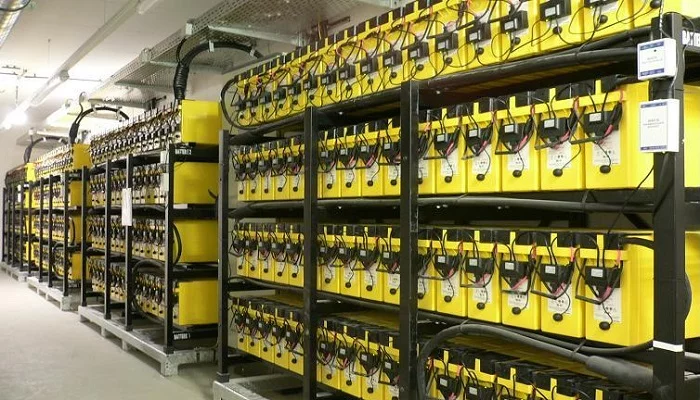
    Related CHISEN Buyer Guides

  • OPzS battery China: Flooded Tubular 2V Cells for Telecom Backup and Stationary Power

    OPzS battery China: Flooded Tubular 2V Cells for Telecom Backup and Stationary Power

    Answer First

    OPzS battery China refers to the supply of flooded tubular stationary lead-acid cells built to the OPzS2 dimensional and performance standard, manufactured in China and shipped worldwide for telecom backup, substations, railway signalling and off-grid renewable projects. Buyers searching for an “OPzS battery China supplier” are usually past the chemistry debate and asking something concrete: who can build a 48-cell string that passes a witnessed capacity test at my port, and at what point in the container does the paperwork get signed.

    Many of the same buyers request “OPzS2 2V tubular flooded wholesale” terms, because one telecom project can consume hundreds of cells and the unit economics only work with palletised, mixed-model shipments rather than sample quantities.

    This article covers the flooded tubular line only. If you have already shortlisted an OPzV gel supplier, stop reading: gel and flooded are different products with different charge regimes, different maintenance and different delivered economics, and blending their datasheets is the most common technical error in this category.

    In short: the OPzS2-200 is the volume model, rated 200 Ah at C10 to 1.80 V per cell at 20 °C in an L103 × W206 × H409 mm envelope. Its datasheet float voltage is 2.23 V per cell at 25 °C, equalisation at 2.35 V, designed floating life 20+ years @ 20 °C, and temperature compensation −3 mV per °C per cell. A 48-cell string stores 19.2 kWh nominal, weighs 840 kg with electrolyte and needs 216 kg of dilute sulphuric acid. Those numbers, not the marketing language, decide whether a Chinese supplier can serve your project.

    Key Takeaways

    • The flooded/gel split is the first filter. A flooded tubular OPzS2 cell is more reliable than a sealed VRLA cell in a hot, poorly ventilated telecom shelter because it tolerates a wide operating temperature band and does not fail from electrolyte starvation under float conditions.
    • Capacity is quoted at a rate. The OPzS2-200 gives 200 Ah at C10 to 1.80 V per cell at 20 °C, 226 Ah at C24, 248 Ah at C48 and 280 Ah at C240. Quoting “200 Ah” without the rate is how projects end up short on runtime.
    • Float control is fixed. 2.23 V per cell at 25 °C, equalise 2.35 V, compensation −3 mV per °C per cell. A charger that cannot hold those setpoints shortens cell life regardless of build quality.
    • Site filling is a real logistics and safety item. A 48-cell string of OPzS2-200 cells needs 216 kg of electrolyte delivered, added and density-checked, which is why many buyers specify dry-filled cells and require the acid grade in writing.
    • Supplier verification matters more than unit price. A witnessed capacity test on a production-lot cell is more trustworthy than a scan of a certificate, because the certificate describes a document while the test describes the cell that ships.

    §1 — OPzS2 2V Quick Specifications Table

    The table below reflects the OPzS2-200, the volume model of the range, unless a row is marked otherwise. Every value comes from that model’s own datasheet; nothing is generalised to another cell.

    SpecificationValueSource
    Nominal voltage2 VDatasheet
    Capacity (C10 to 1.80 V/cell @ 20 °C)200 AhDatasheet
    Float charge voltage2.23 V @ 25 °CDatasheet
    Equalise charge voltage2.35 V @ 25 °CDatasheet
    Designed floating life20+ years @ 20 °CDatasheet
    Temperature compensation−3 mV/°C/cellDatasheet
    Dimensions (printed)L103 × W206 × H409 mmDatasheet
    Container / total height354 / 409 mmDatasheet
    Terminal centre spacing108 mmDatasheet
    TerminalOD 20 mm, M8, depth 7 mm, copper insertDatasheet
    Terminal torque10–12 N·mDatasheet
    Weight without electrolyte13.0 kg (28.7 lbs)Datasheet
    Weight with electrolyte17.5 kg (38.6 lbs)Datasheet
    ElectrolyteDiluted sulphuric acid 1.240 g/cm³ @ 20 °C, 4.5 kgDatasheet
    Internal resistanceapprox. 0.95 mΩ fully charged @ 20 °CDatasheet
    Max charge current40 ADatasheet
    Max discharge (5S)1000 ADatasheet
    Short circuit current2600 ADatasheet
    Self dischargeapprox. 4 % per month @ 20 °CDatasheet
    Ambient (discharge / charge / storage)−25~65 / −20~65 / −15~40 °CDatasheet
    Container materialSANDatasheet
    StandardsIEC 60896-11, DIN 40736, IEC 61427, Eurobat long-life guide, BS 6290 part 4, UL 1989Datasheet
    CertificationsISO 9001 (EIC), ISO 14001 (UKAS/UCC), OHSAS 18001:2007 / GB/T 28001 (UCC), CE, UL Recognized Component (cURus / RU)Datasheet
    Constant charge current0.15 CA to 2.40 V (20 °C)Datasheet
    Cycle life at 10 %–100 % DoDup to 7000 cyclesDatasheet
    Long-time discharge C24 to C240 @ 1.85 V226 / 248 / 260 / 270 / 274 / 280 AhDatasheet
    Solar/wind disconnect thresholdsOV disconnect 2.47 ± 0.01 V/cell; LV alarm 1.95 ± 0.005 V/cell; LV disconnect 1.90 ± 0.005 V/cell @ 25 °CDatasheet (solar/wind page 2)
    Solar/wind charge setpointsRegulation/equalise 2.40 ± 0.01 V/cell; float setting 2.25 ± 0.005 V/cell @ 25 °CDatasheet (solar/wind page 2)
    Solar/wind reconnectionArray reconnection 2.23 ± 0.005 V/cell; load reconnect 2.09 ± 0.01 V/cell @ 25 °CDatasheet (solar/wind page 2)
    Solar/wind temperature compensation−4 mV/cell/°CDatasheet (solar/wind page 2)

    The solar and wind setpoints belong to the OPzS2-200 datasheet only. They describe the controller configuration used with renewable charging, where regulation and equalise sit above the standby float setting, and they use a different compensation coefficient. Do not copy them into another model’s file.

    §2 — The Pain

    The buyer’s real problem here is not finding a Chinese manufacturer. It is proving, after the container has left, that the cells in it are the cells described in the paperwork. Specification sheets circulate freely, get retyped, and drift away from their source: a brochure may print a capacity at a different discharge rate than the datasheet, or a slightly different envelope, and a reader who does not check the source will size the cabinet, the cable run and the charger on the wrong numbers.

    Three pressures make this harder in 2026. Battery demand is being pulled in two directions at once, with grid-side and telecom storage investment expanding while utility-scale project timing keeps moving, so buyers hold tender documents open longer and revisit standby specifications before issuing a purchase order. Raw material and cell cost assumptions are being reshaped continuously, with research from IEA, BloombergNEF and Benchmark Minerals giving the market a live view of critical materials, manufacturing investment and price direction, and buyers now expect quotations to hold for a defined window. And the tender itself has become stricter: a request for quotations that asks for a witnessed capacity test, a stated production base and a written warranty is no longer unusual across Europe, the Gulf, South Asia and the Americas.

    Transport is the fourth pressure, and the one most often missed at specification stage. A flooded tubular cell is heavy and fragile in a specific way: the container is SAN, the cell may be shipped filled with electrolyte, and the terminals are M8 with a defined insertion depth and a 10–12 N·m torque requirement. Shipment to Rotterdam, Jebel Ali, Singapore, Hamburg, Busan, Mumbai, Durban, Santiago, Valencia or Tampa involves container space planning, weight distribution, and the question of whether the buyer or the supplier handles site filling and initial charge.

    A fourth trap is chemistry confusion. A buyer who wants flooded tubular OPzS cells and receives a quotation for OPzV gel cells has received a product with a different charge regime, voltage setpoints, equalisation logic and maintenance regime, with electrolyte density recorded at every site visit. The two are often priced within a narrow band, which makes the substitution easy to miss on a spreadsheet.

    §3 — The Choice

    Three models cover most flooded tubular OPzS2 demand: the OPzS2-150, the OPzS2-200 and the OPzS2-250. All three share the 206 mm width and 409 mm total height.

    OPzS2-150OPzS2-200OPzS2-250
    Capacity @ C10 to 1.80 V @ 20 °C150 Ah200 Ah250 Ah
    Dimensions (printed)L103 × W206 × H409 mmL103 × W206 × H409 mmL124 × W206 × H409 mm
    Weight w/o electrolyte10.5 kg (23.2 lbs)13.0 kg (28.7 lbs)15.5 kg (34.2 lbs)
    Weight with electrolyte14.5 kg (32.0 lbs)17.5 kg (38.6 lbs)20.5 kg (45.2 lbs)
    Acid weight4.0 kg4.5 kg5.0 kg
    Max charge current30 A40 A50 A
    Internal resistanceapprox. 1.2 mΩ @ 20 °Capprox. 0.95 mΩ @ 20 °Capprox. 0.88 mΩ @ 20 °C
    Short circuit current2400 A2600 A2750 A
    Float / equalise2.23 V / 2.35 V @ 25 °Csamesame
    Floating life20+ yr @ 20 °C20+ yr @ 20 °C20+ yr @ 20 °C

    The dimensional detail matters for installation, and it is easy to misread. The OPzS2-150 and the OPzS2-200 print the same L103 × W206 × H409 mm envelope, while the OPzS2-250 is 21 mm longer at L124 × W206 × H409 mm. Dry weight differs too, at 10.5 kg, 13.0 kg and 15.5 kg, so a mixed string must allow for two distinct footprints in the rack layout. A cabinet designed for the 150 and 200 will not accept the 250 without a revised shelf and rail pitch.

    The arithmetic below is what a buyer uses when answering a request for quotations.

    CalculationWorkingSource
    48-cell string nominal energy48 × 2 V × 200 Ah = 19.2 kWhArithmetic
    48-cell string mass with electrolyte48 × 17.5 kg = 840 kgArithmetic
    48-cell string mass without electrolyte48 × 13.0 kg = 624 kgArithmetic
    48-cell string internal resistance48 × 0.95 mΩ = 45.6 mΩArithmetic
    48-cell string max charge current48 × 40 A = 1,920 AArithmetic
    Electrolyte per 48-cell string48 × 4.5 kg = 216 kgArithmetic
    C10 current for the 200 Ah cell200 Ah ÷ 10 h = 20 AArithmetic
    Energy density, 150 Ah cell300 Wh ÷ 14.5 kg = 20.7 Wh/kgArithmetic
    Energy density, 200 Ah cell400 Wh ÷ 17.5 kg = 22.9 Wh/kgArithmetic
    Energy density, 250 Ah cell500 Wh ÷ 20.5 kg = 24.4 Wh/kgArithmetic

    Read together, those figures describe the flooded-versus-sealed argument in physical form. A flooded string needs 216 kg of acid-laden electrolyte handled on site, with density checks, ventilation and a controlled initial charge, whereas a sealed string arrives ready to connect. That labour is a real cost, but so are float life and tolerance for repeated deep discharge, and the decision belongs to the maintenance model the buyer actually has. The 250 Ah cell is better suited to a long-string site than the 150 Ah cell because fewer strings carry the same load, and fewer strings mean fewer interconnects, fewer points of failure and less floor area.

    §4 — The Framework

    Seven numbers decide whether a Chinese supplier can serve a flooded tubular OPzS2 project properly.

    1. Capacity at the rate that matters. Ask for the discharge curve, not a headline figure: 200 Ah at C10 to 1.80 V at 20 °C, 226 Ah at C24, 280 Ah at C240 to 1.85 V. If the design assumes a 10-hour discharge, use C10. A 100-hour discharge yields more than the headline, so the cabinet can be smaller than the catalogue suggests.
    2. Voltage window and controller match. Float at 2.23 V per cell at 25 °C, equalise at 2.35 V, compensation −3 mV per °C per cell. Confirm the charger holds float across a full string and that its tolerance band is centred on the datasheet value, not at its edge.
    3. Thermal environment. Discharge −25 to 65 °C, charge −20 to 65 °C, storage −15 to 40 °C. At 40 °C ambient the compensation must be active: across 24 cells an uncompensated float runs 45 mV per cell high and accelerates water loss.
    4. Internal resistance and voltage drop. At 0.95 mΩ per cell a 48-cell string presents 45.6 mΩ, which sets cable size for a given run length. Terminal centre spacing of 108 mm, M8 terminals with 7 mm insertion depth and 10–12 N·m torque decide whether standard busbars and a standard wrench work on site.
    5. Mechanical footprint. Two envelopes, not one: 103 mm and 124 mm long, both 206 mm wide and 409 mm high. Confirm rack, plinth, door clearance and lifting access against both.
    6. Float life at the real ambient. The published 20+ years is a 20 °C figure. The gap between 20 °C and the ambient inside a cabinet in Chennai, Durban or Santiago is where published lifetime and field lifetime part company.
    7. Documentation depth. Standards reference, certification scope, production base, capacity test method and warranty terms should arrive with the quotation, not six weeks later.

    §5 — The Trust

    Supplier verification here is less about corporate due diligence and more about documentary discipline. Six checks separate a credible flooded tubular OPzS2 supplier from a marketing intermediary.

    A certificate that is not a factory certificate. A document saying the supplier is “certified” or “authorised” is not a factory certificate issued against the production base that actually makes your cells. A factory certificate is more useful than a distributor’s letter of authorisation because it names the plant, the model and the testing body. Ask for the certificate number and scope, and confirm the named entity matches the bill of lading.

    A brochure spec that differs from the datasheet. Brochures get retyped and condensed, and retyping introduces drift: a different discharge rate, a rounded envelope, a modified tolerance. Treat the datasheet as the only contractual document and require the order acknowledgement to quote the datasheet revision number.

    Which production base actually makes the cells. A supplier with several plants may quote from one catalogue and ship from another. Ask for the plant address, the model and the production line, and require it on the order acknowledgement and the packing list. Request lot identification on the case labels.

    A witness capacity test on a production-lot cell, not a sample. A sample sent to your laboratory is usually a best-case cell chosen by the supplier. A cell drawn from the shipment and tested to the C10 method, with recorded temperature and electrolyte density, is evidence about the goods you are buying. Make that test a condition of final payment.

    Payment terms tied to test evidence. Retain a meaningful share against the witnessed test report and the document pack on a first order. This is the mechanism that converts a promise about quality into an obligation with a date attached.

    What a written warranty must state. A written warranty is more reliable than a verbal assurance because it fixes the remedy, the period and the evidence the supplier must accept: the period in years, the covered failure modes including capacity below the rated figure at the specified rate and temperature, the exclusions such as physical damage, incorrect float voltage or unauthorised equalisation, the remedy and its limits, the claim procedure and required evidence, and how defective cells are handled. “Quality guaranteed” is not a warranty.

    §6 — FAQ

    Q1. What is the difference between a flooded tubular OPzS cell and an OPzV gel cell? A flooded OPzS cell uses liquid diluted sulphuric acid at 1.240 g/cm³ and requires the level and density to be checked periodically, which is why the datasheet lists electrolyte weight as a separate line. An OPzV cell uses gel electrolyte, needs no topping-up and no density readings on site. A flooded cell tolerates a wider temperature band and repeated deep discharge better; a gel cell has lower self-discharge and no site filling. Compare them against the maintenance model your project actually has.

    Q2. Why are these cells 2 V rather than 12 V blocks? Tubular plates are made and tested at cell level, so the 2 V format lets a weak cell be identified and replaced instead of scrapping a 12 V block, and it lets string voltage be set precisely for the DC bus: 24 cells for 48 V, 48 for 96 V, more for 240 V systems. The trade-off is the number of interconnects, which is why terminal centre spacing, torque and connection quality belong in tender documents.

    Q3. How much usable capacity should I design around? The headline figure is quoted at a rate. The OPzS2-200 is 200 Ah at C10 to 1.80 V per cell at 20 °C, and at longer rates the same cell delivers more: 226 Ah at C24, 248 Ah at C48, 260 Ah at C72, 270 Ah at C100, 274 Ah at C120 and 280 Ah at C240, all to a 1.85 V final voltage. Design on the rate your load imposes, and use the low-temperature figure on a cold site.

    Q4. Can OPzS2 flooded cells be charged from solar or wind? Yes, and the OPzS2-200 datasheet carries a dedicated solar and wind setpoint page: over-voltage disconnect 2.47 ± 0.01 V per cell at 25 °C, regulation and equalise 2.40 ± 0.01 V, array reconnection 2.23 ± 0.005 V, float voltage setting 2.25 ± 0.005 V, low-voltage alarm 1.95 ± 0.005 V, low-voltage disconnect 1.90 ± 0.005 V, load reconnect 2.09 ± 0.01 V, and compensation at −4 mV per cell per °C. These values belong to this model’s page 2.

    Q5. What does −3 mV per °C per cell actually change? It is the correction the charger applies to the float setpoint as cell temperature moves away from 25 °C. In a 24-cell 48 V string, each degree below 25 °C adds 3 mV per cell and each degree above reduces it. Running an uncompensated string at 40 °C ambient pushes actual cell voltage above the datasheet float value, driving water loss and drying — the most common cause of shortened float life in warm climates.

    Q6. How do I choose between the 150 Ah, 200 Ah and 250 Ah cells? Start from the string architecture, not the cell. If the site allows 48-cell strings on a 96 V bus, the 250 Ah cell cuts the number of strings and the floor area needed. If cabinet depth is fixed at the 103 mm footprint, the 250 Ah cell will not fit, and the choice is between the 150 Ah and 200 Ah cells, which differ in dry weight by 2.5 kg and in capacity by 50 Ah per position.

    Q7. How are shipments routed and what affects lead time? Lead time is a function of cell allocation, filling configuration and destination. For Europe the usual routing is by sea to Rotterdam or Hamburg; for the Gulf and South Asia, Jebel Ali and Mumbai; for South-East Asia, Singapore and Busan; for South America, Santiago; for Southern Africa, Durban; for the Americas, Valencia and Tampa depending on the service. Pre-filled and dry-filled configurations carry different handling requirements, so confirm the configuration before the booking is placed.

    Q8. What documents should arrive with the battery, and what should the warranty say? Expect the datasheet for the exact model; the certificate set covering ISO 9001, ISO 14001, OHSAS 18001:2007 or GB/T 28001, CE and the UL Recognized Component listing; a standards declaration covering IEC 60896-11, DIN 40736, IEC 61427, the Eurobat long-life guide, BS 6290 part 4 and UL 1989; a test report for the production lot; and a warranty stating period, covered failure modes, exclusions, remedy, procedure and required evidence. A document pack that arrives with the goods means you accepted the risk early.

    Expert Summary

    An OPzS battery China sourcing decision is a documentary decision before it is a commercial one. The flooded tubular OPzS2 range is well defined and easy to verify: the OPzS2-200 gives 200 Ah at C10 to 1.80 V per cell at 20 °C in an L103 × W206 × H409 mm envelope, weighing 13.0 kg dry and 17.5 kg filled, with a datasheet float of 2.23 V per cell at 25 °C, equalise at 2.35 V, a designed floating life of 20+ years @ 20 °C and −3 mV per °C per cell compensation, backed by IEC 60896-11, DIN 40736, IEC 61427, BS 6290 part 4 and UL 1989, with ISO 9001, ISO 14001, CE and UL Recognized Component certification. The 150 Ah and 250 Ah cells sit either side of it in the same width and height but with different lengths and dry weights, so two footprints must be planned. A 48-cell string stores 19.2 kWh, weighs 840 kg filled, presents 45.6 mΩ, accepts 1,920 A of charge current and needs 216 kg of electrolyte, which is the flooded-versus-sealed argument expressed in kilograms. Ask for the certificate that names the production base, the datasheet revision behind every quoted figure, a witnessed capacity test on a production-lot cell, payment terms tied to that evidence, and a warranty that states period, remedy and procedure. With those answers in writing before the purchase order, a Chinese flooded tubular supplier can be assessed on facts rather than on price.

    Contact CHISEN — 24-Hour Response

    CHISEN replies to technical and commercial enquiries within 24 hours, and delivers a sizing sheet and quotation against your actual duty data.

    Send us the information below and we will return a written recommendation with the published data for the cell and the pack configuration that matches it:

    • DC bus voltage and string configuration, or the duty you want to size
    • Backup autonomy target and the load profile in kW
    • Ambient temperature range at the deployment site
    • Whether the strings are maintained in-house or by a local service partner
    • Annual volume and destination port for the first shipment

    Email: sales@chisen.cn WhatsApp: +86 131 6622 6999 Call: +86 131 6622 6999

    Related reading: OPzS2-200 2V200Ah flooded tubular cell · OPzS2-500 2V500Ah flooded tubular cell · OPzS flooded tubular battery range

    Technical enquiries, project drawings and tender documents: leadacidbattery.cn

    Related CHISEN Buyer Guides