
Battery Sulfation: Why Your Lead-Acid Battery Died Before Its Time — And How to Bring It Back
Every year, thousands of lead-acid batteries are replaced unnecessarily. In most cases, the underlying cause is sulfation — and early-stage sulfation is often reversible. Here is what the industry doesn’t tell you.
The Battery That Should Have Lasted 8 Years
A solar installer in Kenya shared a story that illustrates the problem perfectly. His client had installed a 48V OPzV battery bank for an off-grid clinic in 2023. By mid-2024 — just 18 months later — runtime had dropped to less than 60% of original specification. The clinic manager assumed the batteries were worn out and budgeted for a replacement.
The actual diagnosis: chronic sulfation from systematic undercharging.
The fix: 72 hours of controlled desulfation charging.
Cost to fix: approximately $80 in electricity.
The batteries delivered another 3 years of service.
What Is Sulfation, Exactly?
Inside a lead-acid battery, the chemical reaction during discharge converts lead dioxide (positive plate) and lead (negative plate) into lead sulfate crystals. During charging, this reaction reverses — lead sulfate converts back to active materials.
The problem occurs when batteries sit in a partially discharged state for extended periods. The lead sulfate crystals don’t fully reconvert — they harden and grow, eventually forming a permanent insulating layer on the plate surface. This is called hard sulfation or crystalline sulfation.
Once hard sulfation is established, those cells cannot be recovered. But soft sulfation — the precursor stage — is reversible.
The Primary Cause: PSOC Operation
The single biggest driver of sulfation is not abuse or poor quality — it is Partial State of Charge (PSOC) operation.
In most real-world solar applications, batteries experience exactly this pattern:
- Partial discharge during nighttime hours (40-70% DoD)
- Incomplete recharge the following day due to cloud cover or limited solar input
- Accumulated deficit over days or weeks without a full bulk-absorption cycle
- Chronic deficit becoming the normal operating state
This is not a failure mode — it is the expected operating condition for most off-grid solar installations. Yet most buyers are never told this at purchase time.
Warning Signs Your Battery Is Sulfating
Recognize these symptoms early:
- Runtime noticeably shorter than when the battery was new, with no obvious cause
- Charging voltage rises higher than normal during bulk charging
- Specific gravity of electrolyte remains low after equalization (flooded batteries)
- Individual cells consistently weaker than others in the string
- Battery bank reaches “full charge” but capacity is clearly reduced
How to Prevent Sulfation
Prevention is straightforward and inexpensive — but it requires knowing what to do:
1. Weekly full charging (at minimum) Every 7 days, the battery bank should receive a full bulk-absorption charge cycle — bringing all cells to 2.40-2.45V per cell. This reverses soft sulfation automatically.
2. Monthly equalization (flooded batteries) Controlled overcharging at elevated voltage (2.50-2.55V/cell) breaks down soft sulfate crystals and remix stratified electrolyte. Monthly equalization extends battery life by 30-50% in PSOC applications.
3. Float charge maintenance When the system is not cycling (storage, seasonal shutdown), maintain float voltage at 2.25-2.28V/cell. This prevents the stationary discharge that leads to sulfation.
4. Solar charge controller settings For solar installations, configure the charge controller with a weekly forced equalization cycle. Many controllers have this as an automated option — use it.
How to Recover a Sulfated Battery
If sulfation is caught early, recovery is often possible:
Method 1: Extended Overcharge (Light Sulfation)
For AGM, VRLA, and Gel batteries:
- Set charger to equalization mode (14.4-14.8V for 12V AGM)
- Charge for 24-48 hours at C/20 rate (1/20th of capacity)
- Monitor temperature — stop if battery exceeds 50°C
- Test capacity after recovery
For Flooded batteries:
- Perform equalization charge at manufacturer-specified voltage
- Continue for 2-4 hours after specific gravity stabilizes
- Repeat 2-3 times if needed
Method 2: Pulse Desulfation (Moderate Sulfation)
Pulse desulfation chargers use high-frequency AC pulses to break down sulfate crystals. Effective for moderate sulfation where hard crystallization has not occurred. Quality desulfators cost $30-150 and can extend battery life by 1-3 years when applied correctly.
Method 3: Chemical Desulfation Additives
For flooded batteries, EDTA-based desulfating additives can be added to electrolyte to dissolve soft sulfate. This is a professional procedure — incorrect concentrations can damage plates.
Note: If a battery has been in PSOC operation for more than 6 months without any equalization cycles, the probability of successful recovery drops significantly.
When Recovery Is Not Possible
These conditions indicate permanent, irreversible sulfation — replace the battery:
- Battery accepts no charge at all (voltage rises instantly to high values with no current acceptance)
- Specific gravity does not respond to equalization after 3+ cycles
- Physical inspection reveals white/grey crystalline deposits visible on plate tops (flooded)
- Cell voltage below 1.8V after rest period
The Economics of Prevention vs. Replacement
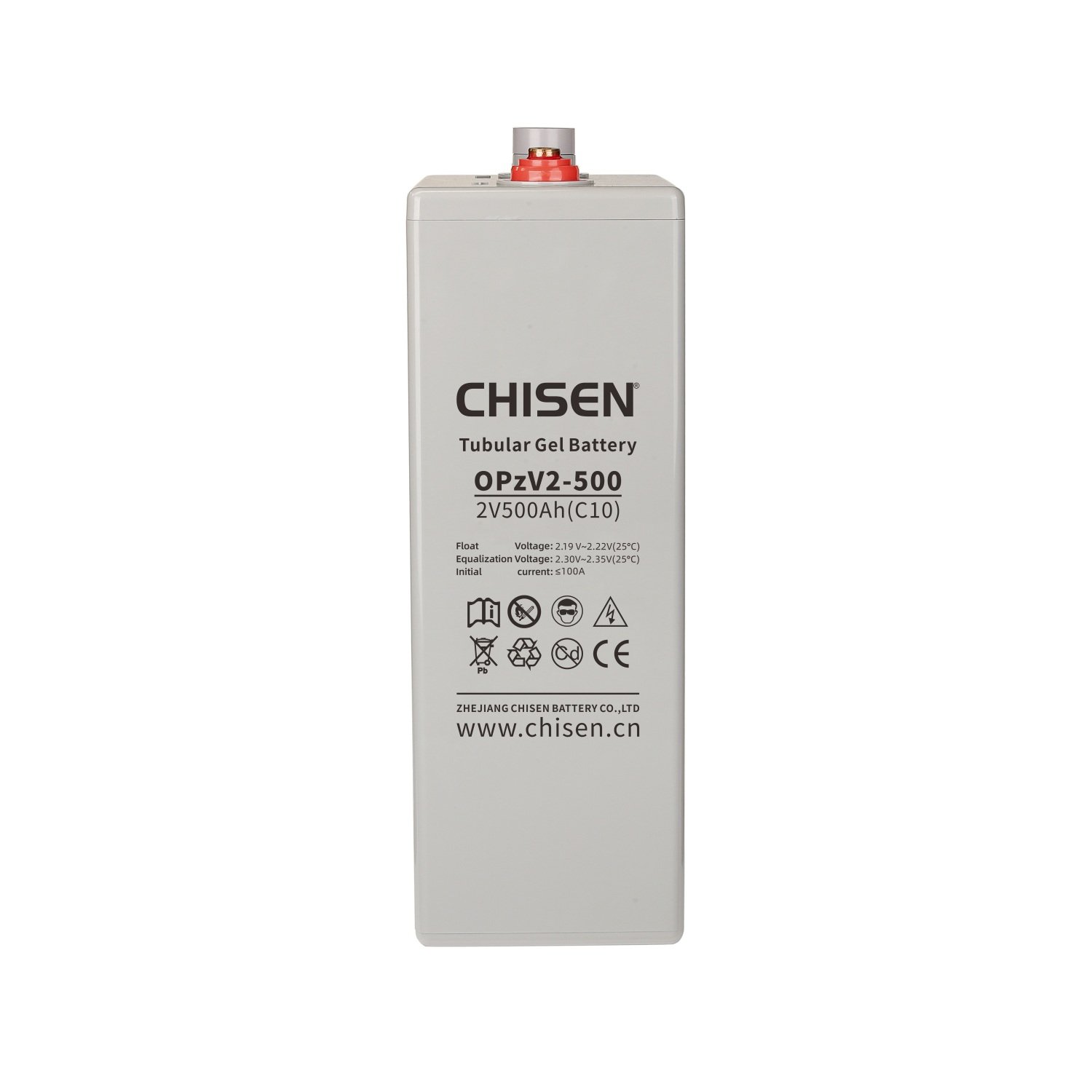
A 48V 400Ah OPzV battery bank costs $4,000-6,000. With proper equalization maintenance, it lasts 10-12 years. Without maintenance, it fails at 3-5 years — a difference of $2,000-3,000 in annual depreciation.
The annual cost of proper maintenance:
- Equalization charging: 12 cycles/year, approximately $50-80 in electricity
- Monthly inspection: 15 minutes of technician time
- Annual check of connections and torque
Total annual maintenance cost: approximately $150-300
Annual savings from extended battery life: $1,500-3,000 per bank
The math is clear. Yet most buyers are never given this information at purchase time.
CHISEN Battery: Preventing Sulfation from Day One
Every CHISEN Battery shipment includes detailed equalization protocols and charge controller setting recommendations specific to the ordered battery model. Our technical team provides:
- Customized charging algorithms for your specific application profile
- PSOC operating guidelines for solar installations in hot climates
- Remote technical support for distributors whose end customers experience battery performance issues
Before recommending a battery replacement for a sulfated bank, we always first assess whether recovery is possible — and provide the recovery protocol at no additional cost.
Contact: sales@chisen.cn | WhatsApp: +86 131 6622 6999 | Website: www.chisen.cn
CHISEN Battery provides sulfation assessment and recovery consultation for all battery types, not just CHISEN products. Contact our technical team for application-specific guidance.
Need help selecting the right battery for your application?
CHISEN Battery provides free sizing consultation and technical support for distributors and EPC contractors worldwide. Response within 24 hours.
Email: sales@chisen.cn |
WhatsApp: +86 131 6622 6999 |
Website: www.chisen.cn
About the Author
Prepared by the CHISEN Battery technical writing team. CHISEN Battery is a professional lead-acid and lithium battery manufacturer in China, ISO 9001 / CE / UL certified, exporting to 50+ countries worldwide.
Contact: sales@chisen.cn |
Website: www.chisen.cn |
WhatsApp: +86 131 6622 6999


 >
> >
> >
> >
> >
> >
> >
> >
> >
> >
> >
> >
>