分类: Industry News

  • Battery DoD Explained: Why Depth of Discharge Determines Battery Life

    Depth of discharge (DoD) is the single most important factor in battery cycle life. Understanding and managing DoD can triple the effective life of your battery investment.
    Battery DoD Explained: Why Depth of Discharge Determines Bat>
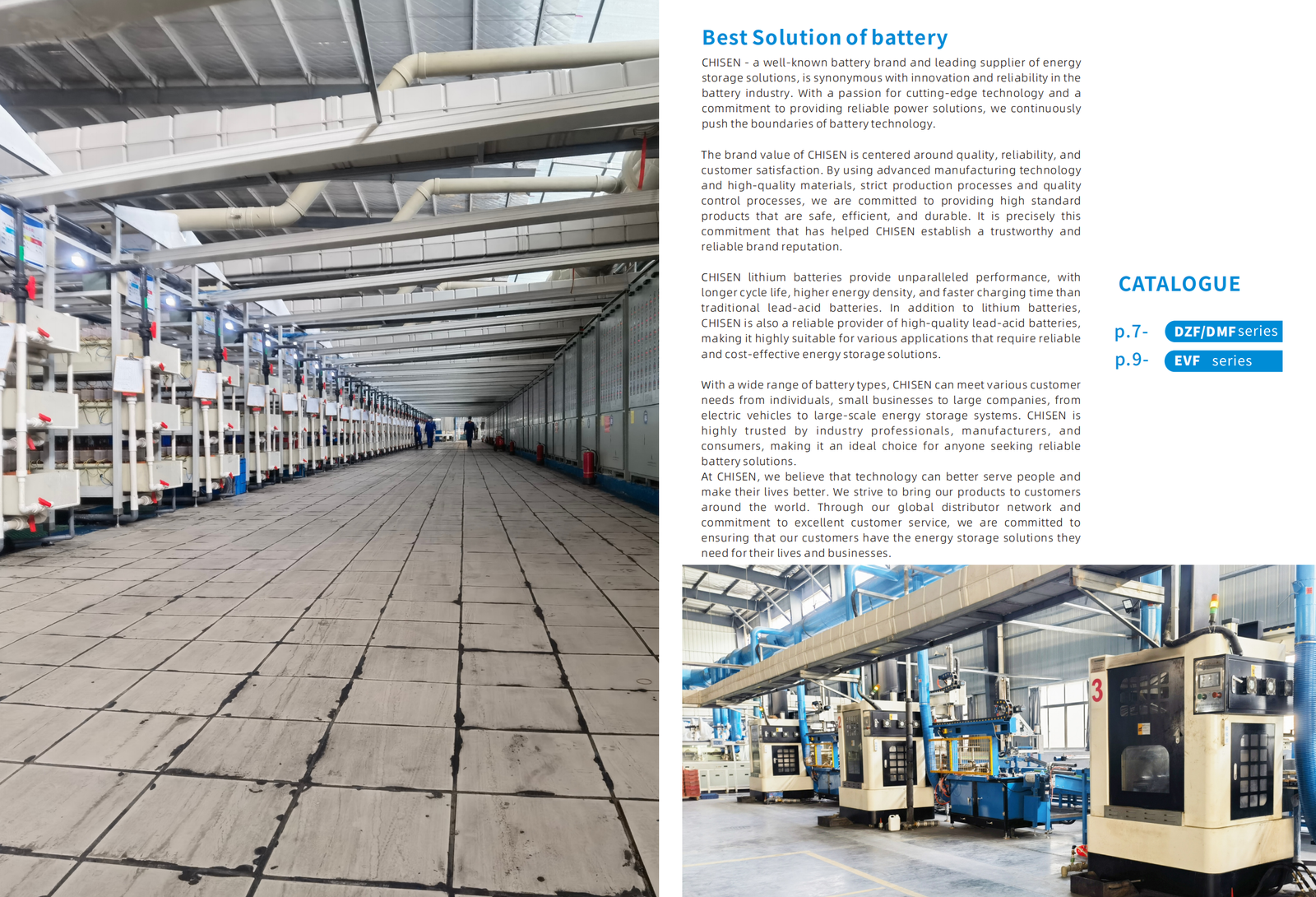
    Lead-acid battery manufacturing and quality inspection — Battery DoD Explained: Why Depth of Discharge Determines Bat

    What Is DoD

    Depth of Discharge = how much of the battery capacity you actually use before recharging.

    Example: A 100Ah battery discharged to 50Ah remaining = 50% DoD.

    DoD vs Cycle Life: The Data

    OPzV batteries at different depths of discharge:

    • 100% DoD: ~800 cycles
    • 80% DoD: ~1,500 cycles
    • 50% DoD: ~3,000 cycles
    • 30% DoD: ~6,000 cycles

    At 1 cycle/day: 80% DoD = 4.1 years. 50% DoD = 8.2 years. 30% DoD = 16.4 years.

    Why Deep Discharge Damages Batteries

    At high DoD, more active material (lead sulfate) forms on the plates during discharge. If left in a discharged state, lead sulfate crystallizes and becomes permanent (sulfation).

    High DoD also causes more grid corrosion on the positive plates during recharge.

    How to Limit DoD in Your System

    • Set inverter low-voltage disconnect to 20% SOC (80% DoD for OPzV, 50% DoD for AGM)
    • Size your battery bank larger than minimum requirement
    • Monitor DoD in real time with a battery monitor
    • Use a generator or grid backup for extended cloudy periods rather than over-discharging

    About the Author

    This article was prepared by the CHISEN Battery technical writing team. CHISEN Battery is a professional lead-acid and lithium battery manufacturer based in China, ISO 9001 / CE / UL certified, exporting to 50+ countries worldwide.

    Contact: sales@chisen.cn  |  Website: www.chisen.cn  |  WhatsApp: +86 131 6622 6999

  • AGM Battery Technology: Advantages, Applications, and Sizing Guide

    AGM (Absorbent Glass Mat) batteries offer a compelling combination of sealed maintenance-free operation, good deep cycle performance, and competitive pricing. Here is the complete guide.

    AGM Battery Technology: Advantages, Applications, and Sizing>
    Lead-acid battery manufacturing and quality inspection — AGM Battery Technology: Advantages, Applications, and Sizing

    How AGM Works

    The electrolyte is absorbed into a fiberglass mat sandwiched between the lead plates. The mat is >90% saturated with acid — the battery is effectively ‘dry’ in the sense that no liquid can spill.

    AGM Advantages

    • Sealed, spill-proof: Can be installed at any angle. No acid spills.
    • No maintenance: No water top-up ever required
    • Low self-discharge: 1-3% per month — stores well for seasonal use
    • Low internal resistance: High discharge current capability
    • Fast charging: Accepts higher charge current than flooded batteries
    • No gas emission ( recombination): VRLA design recombines 99% of hydrogen gas internally

    AGM Limitations

    • Lower cycle life vs GEL or OPzV: 400-700 cycles @ 50% DoD
    • Sensitive to overcharging: Even more sensitive than flooded — requires precise voltage control
    • Temperature sensitive: Performance degrades above 40C
    • Not ideal for hot climates: GEL or OPzV preferred

    Better-suited AGM Applications

    • UPS systems (10-30 minute backup)
    • Emergency lighting
    • RVs and marine (vibration-resistant)
    • Solar with reliable grid backup (occasional cycling)
    • Remote sites with no maintenance access

    AGM Sizing for Solar

    Size at 50% DoD maximum. At 50% DoD, AGM achieves ~700 cycles.


    About the Author

    This article was prepared by the CHISEN Battery technical writing team. CHISEN Battery is a professional lead-acid and lithium battery manufacturer based in China, ISO 9001 / CE / UL certified, exporting to 50+ countries worldwide.

    Contact: sales@chisen.cn  |  Website: www.chisen.cn  |  WhatsApp: +86 131 6622 6999

  • Battery Round Trip Efficiency: Why It Matters for Solar Energy Storage Economics

    Round trip efficiency (RTE) is the ratio of energy discharged from a battery to the energy required to charge it. It is one of the most important factors in energy storage economics.

    How RTE Works

    Example: You put 10kWh into a battery, but only get 8kWh back out. Round trip efficiency = 8/10 = 80%.

    The missing 2kWh is lost as heat during the charge and discharge process.

    RTE by Battery Technology

    • Lead-acid (flooded, AGM, GEL): 75-90% depending on charge rate and depth of discharge
    • OPzV tubular GEL: 80-88% typical
    • LiFePO4: 90-95% — significantly more efficient

    Factors Affecting RTE

    • Charge rate: Very slow or very fast charging reduces efficiency
    • Temperature: Cold reduces chemical efficiency; optimal is 20-30C
    • Depth of discharge: Deeper cycles have slightly lower RTE
    • Battery age: Older batteries have lower RTE due to plate degradation
    • System design: Inverter/charger efficiency, cable losses, and BMS consumption all affect overall system RTE

    Why RTE Matters for Solar Economics

    On a 10kWh battery cycling daily at 80% RTE vs 90% RTE:

    Difference: 1kWh/day x 365 days = 365kWh/year lost to inefficiency

    At $0.15/kWh: $55/year wasted. Over 10 years: $550 on a single small battery bank.

    For commercial systems (100kWh+), the annual cost of inefficiency is $550-5,500/year.

  • Water Requirements for Lead-Acid Batteries: Distilled vs Deionized vs RO

    Water quality is critical for flooded lead-acid battery maintenance. Using the wrong water can cause battery failure within months. Here is what you need to know.

    Why Water Quality Matters

    Impurities in water (chlorides, iron, organic matter, silica) contaminate the electrolyte, accelerate self-discharge, promote grid corrosion, and reduce cycle life. Even small amounts of contamination accumulate over hundreds of charge cycles.

    Acceptable Water Types

    • Distilled water: Purified by boiling and condensation. Removes virtually all impurities. The standard for battery watering.
    • Deionized (DI) water: Passed through ion exchange resin. Equally pure, sometimes cleaner than distilled. Fully acceptable.
    • Reverse osmosis (RO) water: Membrane-filtered. Acceptable if TDS below 10 ppm. Check with battery manufacturer.

    Unacceptable Water Types

    • Tap water: Contains chlorine, fluoride, minerals — will damage batteries
    • Well water: May contain iron, bacteria, minerals — not recommended
    • Rainwater: Collects atmospheric contaminants — not recommended without testing

    Water Filling Best Practices

    • Always fill after a full charge, never before (electrolyte expands during charging)
    • Fill to the level indicator (usually 1/2 inch above plates)
    • Never overfill — electrolyte expands during discharge and can spill
    • Use a battery watering gun or filling tube for safety
    • Check monthly — evaporation and electrolysis consume water, especially in hot climates
  • Solar Battery Fire Safety: Causes, Prevention, and Response

    While lead-acid batteries are generally safe, improper installation or abuse can create fire hazards. Understanding and preventing these risks is essential for every solar installation.

    What Causes Battery Fires

    • Hydrogen gas explosion: Lead-acid batteries emit hydrogen during charging. If concentration exceeds 4% in a confined space, any spark causes explosion. Prevention: adequate ventilation.
    • Thermal runaway: Overcharging causes heating, which accelerates charging, creating a feedback loop. Can cause fire in extreme cases. Prevention: temperature-compensated charging, proper voltage settings.
    • Electrical arcs: Loose connections cause arcing, igniting hydrogen. Prevention: proper torque on all connections.
    • External fire: Batteries can contribute to, rather than cause, fire in building emergencies.

    Ventilation Requirements

    Hydrogen release rate = 0.000016 x n x I (liters/second per cell)

    For a 48V bank with 200A charging: 24 cells x 0.000016 x 200 = 0.077 L/s = 277 L/hour of hydrogen at full charge rate. Room must be sized accordingly with natural or mechanical ventilation.

    Fire Suppression

    • ABC powder extinguisher within 3 meters of battery bank
    • CO2 extinguishers are safe for electrical fires and won’t damage batteries
    • Water is acceptable for flooded lead-acid but not preferred for electrical fires
    • Install smoke detectors in battery rooms

    Emergency Response

    1. Evacuate area immediately
    2. Call fire services
    3. Do not attempt to extinguish unless trained and equipped
    4. If safe to do so: disconnect battery bank from all sources and loads
    5. For acid spills: use baking soda to neutralize
  • What Is a Deep Cycle Battery and Why Does It Matter for Solar

    A deep cycle battery is specifically engineered to be regularly discharged to 50-80% of its capacity and then recharged, hundreds or thousands of times. This is fundamentally different from starting batteries.

    The Critical Difference from Starting Batteries

    Starting batteries deliver brief, high-current bursts (hundreds of amps for 5-10 seconds). They are destroyed by repeated deep discharge.

    Deep cycle batteries deliver sustained moderate current (at 0.1-0.3C rate) over hours. They are designed to tolerate this pattern.

    Never use car/starting batteries for solar storage.

    Deep Cycle Battery Technologies

    • Flooded lead-acid: True deep cycle. Thick tubular plates. Best cycle life for lead-acid. Requires maintenance. Best value for most applications.
    • AGM: Sealed deep cycle. Spill-proof. Good for enclosed spaces. Moderate cycle life.
    • GEL: Sealed deep cycle. Excellent for solar. Better cycle life than AGM. Premium price.
    • OPzV tubular GEL: Premium deep cycle. Longest lead-acid cycle life (1,200-1,500 @ 80% DoD). Best for industrial and mission-critical applications.
    • LiFePO4: Best deep cycle energy density. Longest cycle life (3,000-6,000 cycles). Higher upfront cost.

    DoD and Cycle Life Relationship

    The depth of each discharge directly determines total cycle life:

    • At 100% DoD: ~400 cycles (AGM)
    • At 50% DoD: ~1,200 cycles (AGM)
    • At 30% DoD: ~3,000 cycles (AGM)
    • At 80% DoD: ~1,500 cycles (OPzV)
  • Forklift Battery Guide: Warehouse and Industrial Material Handling Energy

    Forklift batteries are among the most demanding deep cycle applications. Getting the right battery and maintenance plan is critical for warehouse operations and equipment longevity.

    Forklift Battery Types

    • Traction batteries (lead-acid): Designed for repeated deep cycling. Heavy-duty tubular plate construction. 8-10 year design life with proper maintenance.
    • Lithium-ion forklift batteries: Fast charge (1-2 hours), opportunity charging, no watering. Higher upfront cost but lower TCO in high-use operations.

    Battery Sizing for Forklifts

    Calculate based on shift length and usage pattern:

    • Single-shift operations: Battery capacity should last full shift with 20% reserve
    • Multi-shift operations: Extra batteries or opportunity charging required
    • Heavy-duty operations (outdoor, container handling): Oversize battery bank

    Forklift Battery Charging Best Practices

    • Charge after each shift — never let battery sit discharged below 20% SOC
    • Equalization charge weekly (flooded)
    • Keep charging area ventilated — hydrogen gas emitted during charging
    • Equalize monthly (flooded batteries)
    • Use automatic water filling system for easier maintenance

    CHISEN for Forklift Applications

    The CHISEN DZF/DMF series traction batteries are designed for industrial material handling applications, with models from 2V 200Ah to 2V 1000Ah configured in 24V, 36V, 48V, 72V, and 80V strings for all major forklift brands.

  • Battery Bank Maintenance Schedule: Monthly, Quarterly, and Annual Checklist

    A systematic maintenance schedule prevents 80% of battery failures and can extend battery life by 3-7 years. This guide provides a complete maintenance calendar.

    Monthly Tasks

    • Visual inspection: swelling, leaks, terminal corrosion
    • Check all cable connections are tight
    • Measure and record resting voltage of each string
    • Clean battery tops of dust and debris
    • Check battery room temperature (target 18-25C)
    • Verify ventilation is unobstructed

    Quarterly Tasks

    • Full bank voltage check under charge (all strings equal)
    • Individual cell voltage check (flooded batteries)
    • Specific gravity check — flooded batteries only
    • Water level check and top-up — flooded batteries only (distilled water only, after full charge)
    • Equalization charge — flooded batteries only
    • Terminal cleaning with baking soda solution
    • Apply petroleum jelly to clean terminals

    Annual Tasks

    • Full capacity load test (discharge to 50% DoD, measure actual vs rated)
    • Infrared thermal scan of all connections during peak charge/discharge
    • Review 12 months of monitoring data for trends
    • Plan battery replacement if capacity below 80%
    • Inspect battery rack for corrosion or structural issues
    • Calibrate battery monitor or BMV if installed

    Maintenance Log Template

    Keep a battery maintenance log. Record: Date, technician name, voltage readings (per string), specific gravity readings (flooded), water level notes, equalization performed, any corrective actions taken.

  • Battery Recycling and Environmental Guide: Lead-Acid Is 99% Recyclable

    Lead-acid batteries are the most recycled consumer product in the world. Over 99% of lead-acid battery material is recoverable, making them one of the most environmentally responsible energy storage choices.

    The Recycling Rate

    • Lead-acid: 99.3% recycling rate (highest of any battery type)
    • Lithium-ion: 5-10% recycling rate (rapidly improving)
    • Nickel-cadmium: 75% recycling rate

    What Gets Recycled

    • Lead grids and terminals: Melted and refined back to virgin quality
    • Plastic case: Ground and recycled into new battery cases
    • Sulfuric acid: Neutralized to sodium sulfate (used in glass/textile production)
    • Lead paste: Processed for lead recovery

    Environmental Benefits of Lead-Acid

    • Closed-loop recycling means very low environmental footprint
    • No conflict minerals (unlike lithium from certain regions)
    • Established collection infrastructure in virtually every country
    • No thermal runaway or fire risk at end of life

    Legal Requirements

    Most countries legally require battery recycling. In the EU, the Battery Directive mandates 95% collection rate for lead-acid. Similar regulations exist in the US, Australia, and many Asian markets. Always use certified battery recyclers.


    CHISEN Battery — 8 factories, 70M kVAh/year. OPzV/OPzS 100-3000Ah. Tel: +86 131 2666 8999 | jack@chisen.cn | www.chisen.cn

  • The Complete Battery Testing Guide: 5 Essential Tests

    Regular battery testing prevents unexpected failures. Here are the five essential tests.

    Test 1: Open Circuit Voltage

    Disconnect 1 hour. Fully charged 12V = 12.7-12.9V. 2V cell = 2.10-2.15V.

    Test 2: Load Test

    Discharge at C20 rate to 10.5V. Healthy = 100% rated capacity. Below 80% = replace soon.

    Test 3: Specific Gravity (Flooded Only)

    Hydrometer: fully charged = 1.265-1.280. Variation of 0.030 between cells = problem.

    Test 4: Internal Resistance Test

    Battery impedance tester. 20%+ increase vs baseline = investigate.

    Test 5: Thermal Imaging

    IR camera during charge/discharge. 5C+ difference between adjacent cells = warning.


    CHISEN Battery — 8 factories, 70M kVAh/year. OPzV/OPzS 100-3000Ah. Tel: +86 131 2666 8999 | jack@chisen.cn | www.chisen.cn