OPzV tubular GEL batteries are the premium choice for stationary solar energy storage. Understanding their technical characteristics helps you specify, install, and maintain them correctly.
 >
> >
>What Makes OPzV Different
- Tubular positive plates: Instead of flat grids, the positive plate is a series of tubes (gauntlets) filled with active material. This prevents shedding — the main failure mode of flat-plate batteries in deep cycling.
- Gelled electrolyte: Sulfuric acid is gelled with silica, preventing stratification and eliminating liquid movement.
- Starved electrolyte design: The mat between plates contains sole enough electrolyte for the chemical reaction, reducing weight and improving performance.
Key Specifications
- Voltage: 2V per cell (standard), 6V and 12V available in smaller sizes
- Capacity range: 50Ah to 3,000Ah per cell
- Design life: 15-20 years float life at 25C
- Cycle life: 1,200-1,500 cycles @ 80% DoD
- Operating temperature: -40C to +60C
- Self-discharge: 1-2% per month
- Float voltage: 2.25-2.30V per cell at 25C
CHISEN OPzV Range
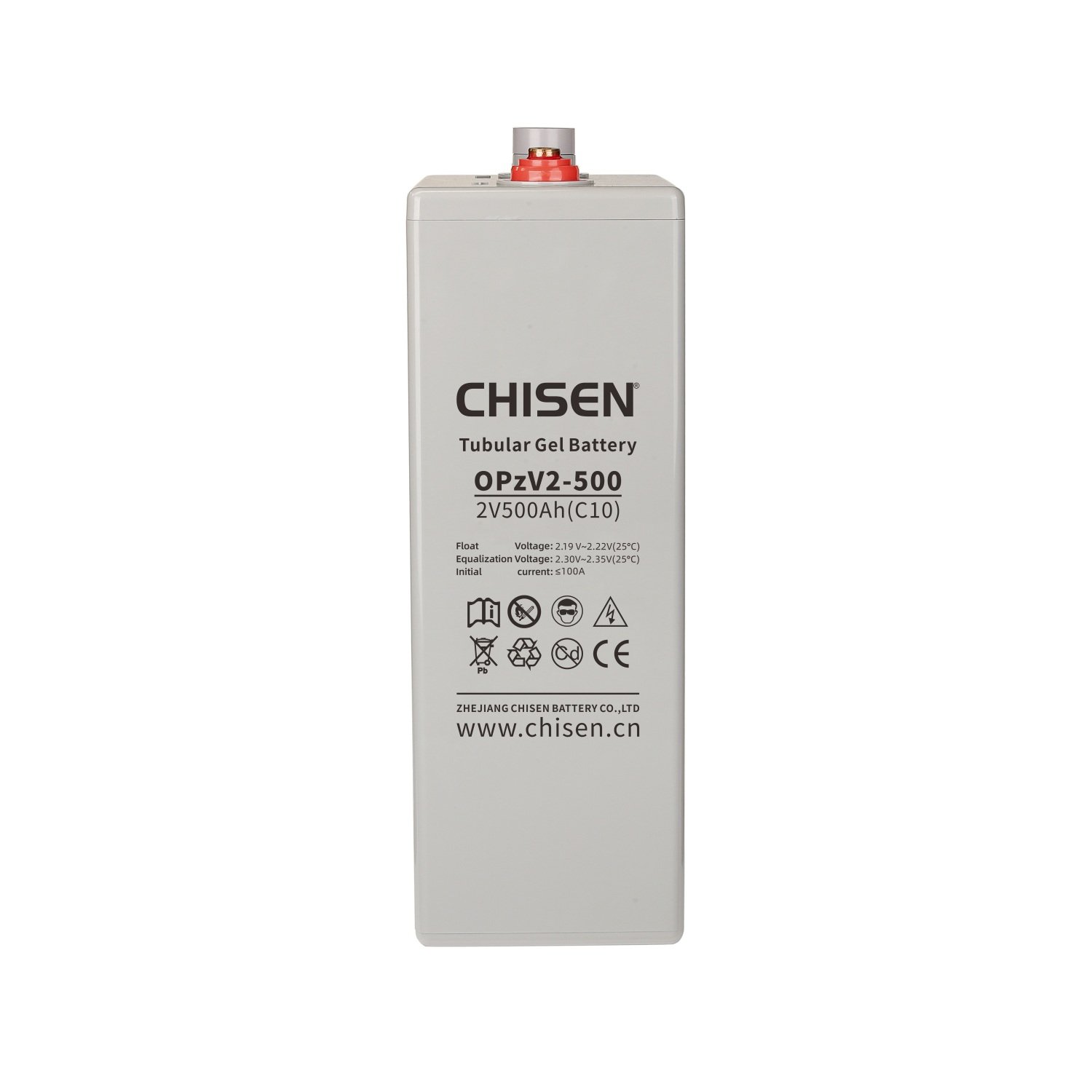
CHISEN OPzV2 series covers all standard capacities from 100Ah to 3000Ah per cell. All cells are 2V. Configure in series for your system voltage (24V, 48V, 96V, 192V, etc.).
OPzV vs OPzS: Which to Choose
Choose OPzV when: Indoor installation, hot climate (above 35C), maintenance-free requirement, maximum reliability needed.
Choose OPzS when: Large outdoor utility-scale installation, maintenance staff available, competitive cost per kWh cycle required.
