分类: Industry News

  • Hybrid Solar Inverter vs Off-Grid Inverter: Which Do You Need

    Choosing the right inverter type determines what your solar system can do — and what it cannot. The difference between hybrid and off-grid inverters has major implications for system design and cost.
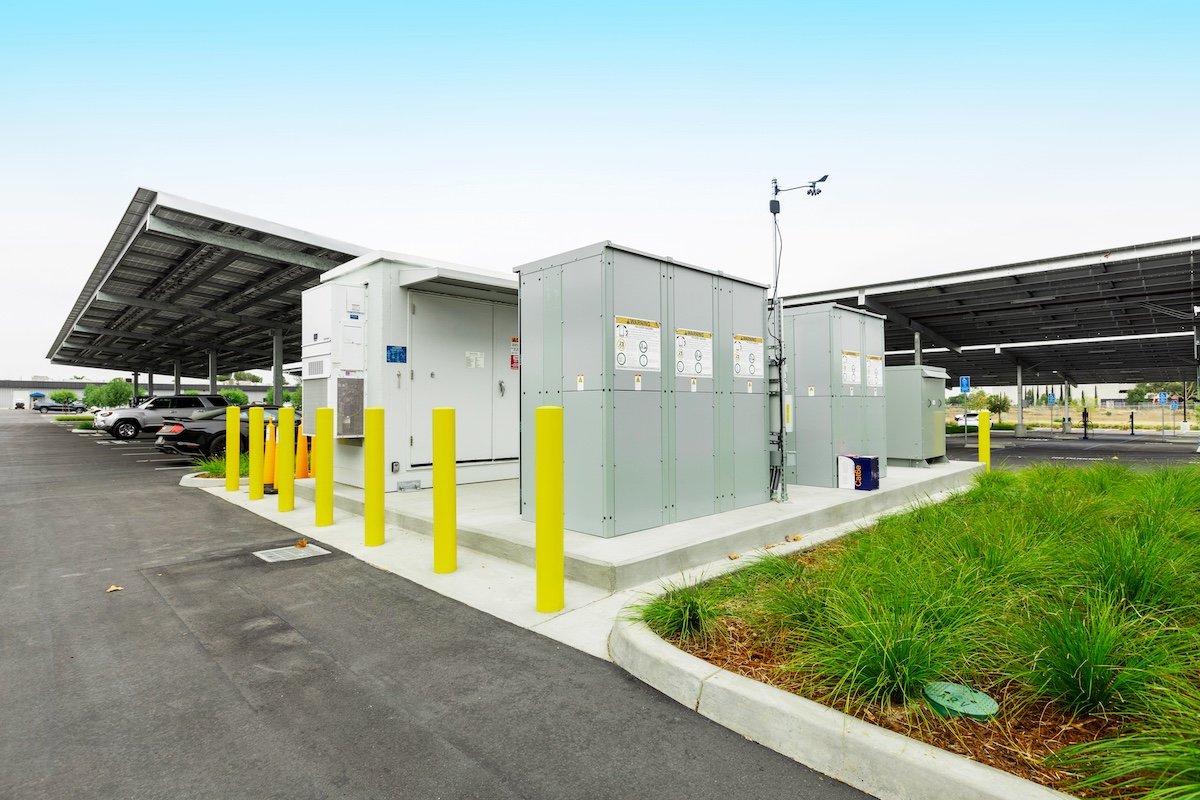
    Hybrid solar inverter vs off-grid inverter battery system comparison>
    Hybrid solar inverter vs off-grid inverter battery system comparison
    Hybrid solar inverter vs off-grid inverter battery system>
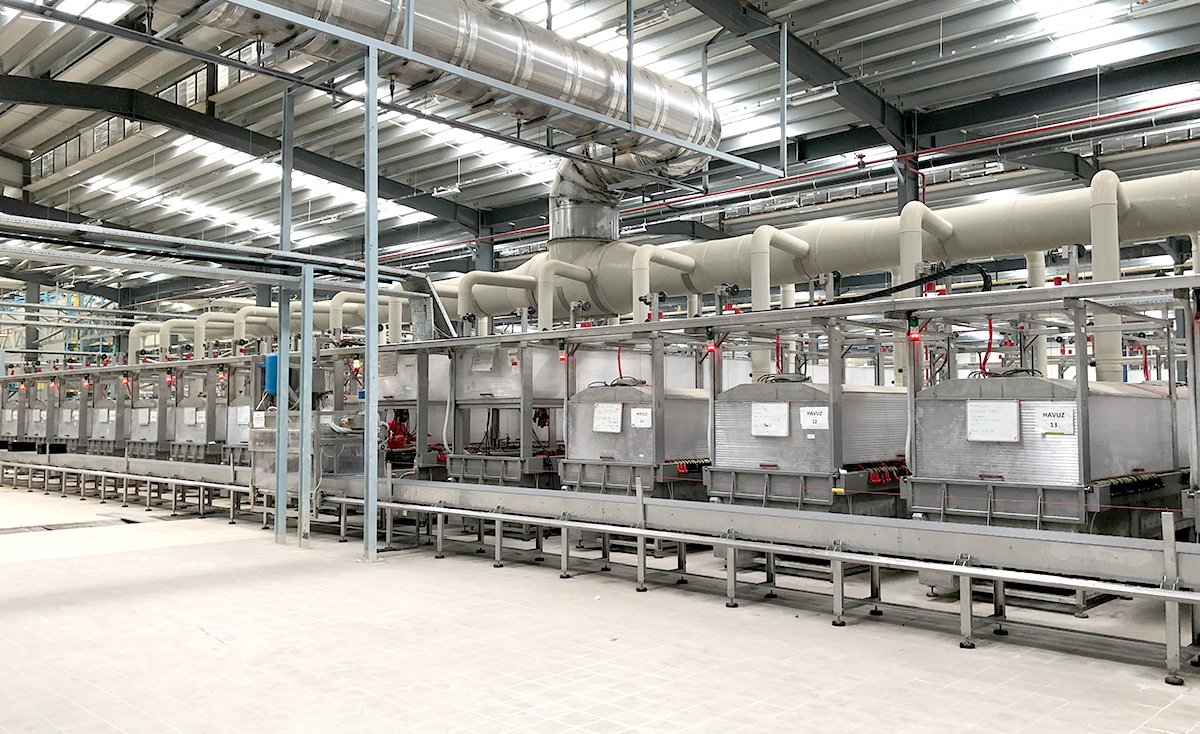
    Lead-acid battery manufacturing and quality inspection — Hybrid solar inverter vs off-grid inverter battery system

    Off-Grid Inverter

    Converts battery DC to AC. No grid connection. System is fully islanded from the electricity grid.

    Features: Battery input required. Cannot export to grid. Typically larger battery charger section.

    Better-suited for: Remote properties with no grid access. Completely standalone systems.

    Grid-Tie Inverter (Standard)

    Converts solar panel DC directly to AC for grid export. No battery. Cannot operate during grid outages (safety requirement).

    Features: No battery input. Highest efficiency. Lowest cost. Anti-islanding protection.

    Better-suited for: Properties with reliable grid that want to export solar and sell back to utility.

    Hybrid Inverter

    Combines grid-tie and off-grid capabilities. Can work with batteries, can export to grid, and can provide backup during outages.

    Features: Battery input for charging and discharging. Grid connection for export. Automatic transfer switch for backup. Bidirectional (charges and discharges battery).

    Better-suited for: Most residential and commercial solar + storage applications. The most versatile option.

    Which to Choose

    • Grid available, want backup: Hybrid inverter
    • Grid available, no backup needed: Grid-tie inverter (add batteries later if needed)
    • No grid access: Off-grid inverter + large battery bank
    • Want to go off-grid gradually: Start with hybrid, can add battery later
    About the Author

    This article was prepared by the CHISEN Battery technical writing team. CHISEN Battery is a professional lead-acid and lithium battery manufacturer based in China, ISO 9001 / CE / UL certified, exporting to 50+ countries worldwide.

    Contact: sales@chisen.cn  |  Website: www.chisen.cn  |  WhatsApp: +86 131 6622 6999

  • Battery Bank Configuration: 2V Cells vs 12V Batteries — Pros and Cons

    The choice between using individual 2V cells or pre-assembled 12V batteries significantly affects system cost, flexibility, and longevity. Here is the complete comparison.

    Battery bank configuration 2V cells vs 12V batteries pros cons>
    Battery bank configuration 2V cells vs 12V batteries pros cons
    Battery bank configuration 2V cells vs 12V batteries comparison>
    Lead-acid battery manufacturing and quality inspection — Battery bank configuration 2V cells vs 12V batteries comparison

    2V Cells (Individual)

    Each cell is a single 2V unit. Configure by wiring cells in series to reach your system voltage.

    Example 48V bank: 24x 2V cells in series = 48V

    12V Batteries (Pre-Assembled)

    Each battery is 6 cells (2V each) pre-assembled at the factory into a 12V unit.

    Example 48V bank: 4x 12V batteries in series = 48V

    Key Differences

    • Flexibility: 2V cells: unlimited flexibility in voltage and capacity combinations. 12V: discrete steps sole.
    • Parallel expansion: 2V: Can add multiple identical strings easily. 12V: Same, but fewer manufacturers make high-quality 12V deep cycle batteries.
    • Quality: 2V: Most industrial batteries (OPzV, OPzS) come as 2V cells. Highest quality options. 12V: More consumer-grade options, variable quality.
    • Cost: 2V cells: More economical for large systems (100Ah+). 12V: Convenient for small systems but price-per-Ah increases rapidly above 200Ah.
    • Replacement: 2V: Replace individual cells. 12V: Replace entire battery (even if sole one cell fails).
    • Monitoring: 2V: Easier to monitor individual cell voltages. 12V: Can sole monitor whole battery voltage.

    When to Use 2V Cells

    Any system above 48V 200Ah. All industrial and commercial installations. Telecom BTS sites. Solar farms. Hospitals and data centers.

    When 12V Batteries Are Acceptable

    Small systems under 48V 200Ah. RVs and marine. Residential 12V or 24V systems. Temporary or portable installations.


    About the Author

    This article was prepared by the CHISEN Battery technical writing team. CHISEN Battery is a professional lead-acid and lithium battery manufacturer based in China, ISO 9001 / CE / UL certified, exporting to 50+ countries worldwide.

    Contact: sales@chisen.cn  |  Website: www.chisen.cn  |  WhatsApp: +86 131 6622 6999

  • China Solar Battery Industry Report 2026: Market, Manufacturers, and Export

    China dominates global lead-acid battery production, accounting for over 60% of worldwide output. Understanding the Chinese solar battery industry is essential for international buyers and project developers.

    China Solar Battery Industry Report 2026: Market, Manufactur>
    Lead-acid battery manufacturing and quality inspection — China Solar Battery Industry Report 2026: Market, Manufactur

    Market Overview

    The Chinese lead-acid battery market reached $18.5 billion in 2025, with solar energy storage being the fastest-growing segment. China’s 8 major battery industrial clusters are located in Zhejiang, Jiangsu, Hubei, Anhui, Shandong, Henan, Hebei, and Liaoning provinces.

    Top Chinese Solar Battery Manufacturers

    • CHISEN (昌盛电池): 8 factories, 70M kVAh/year capacity. OPzV, OPzS, EVF, DZF/DMF series. Global export to 140+ countries. CE, ISO9001, ISO14001, TUV certified.
    • Narada Power: Listed company. Telecom and energy storage focus. Strong in utility-scale projects.
    • Shuangdeng (CGB): Large manufacturer. UPS and solar batteries. Multiple production bases.
    • Ritar Power: Budget and mid-market AGM/GEL batteries. Large export volume.
    • Victory Technology: Specialist in OPzV tubular GEL batteries.

    Why Source from China

    • 40-60% lower manufacturing cost vs Western equivalents
    • Large-scale, automated production ensures consistent quality
    • Most manufacturers hold international certifications (CE, UL, TUV, IEC)
    • Full range of chemistries and capacities available
    • Established export logistics infrastructure

    Key Considerations When Buying Chinese Batteries

    • Verify certifications independently (request test reports, not just certificates)
    • Clarify warranty terms and after-sales support
    • Request sample orders before large volume purchases
    • Verify shipping and import logistics costs
    • Use letters of credit for first orders

    About the Author

    This article was prepared by the CHISEN Battery technical writing team. CHISEN Battery is a professional lead-acid and lithium battery manufacturer based in China, ISO 9001 / CE / UL certified, exporting to 50+ countries worldwide.

    Contact: sales@chisen.cn  |  Website: www.chisen.cn  |  WhatsApp: +86 131 6622 6999

  • Battery Cable Sizing Guide: Correct Wire Gauge for Solar Installations

    Undersized battery cables cause efficiency losses, overheating, voltage drop, and fire risk. Correct cable sizing is essential for safety and performance in any battery installation.

    Battery Cable Sizing Guide: Correct Wire Gauge for Solar Ins>
    Lead-acid battery manufacturing and quality inspection — Battery Cable Sizing Guide: Correct Wire Gauge for Solar Ins

    The Key Formula

    Voltage Drop = (Current x Cable Length x 0.019) / Cross-sectional Area (mm2)

    Where: Current in amps, Cable Length in meters (one way), 0.019 = resistivity of copper.

    Recommended Maximum Voltage Drop

    • Battery to inverter DC cables: Maximum 1-2% voltage drop
    • Solar panel to charge controller: 2-3% acceptable
    • Grounding conductors: Sized per local electrical codes

    Cable Size Examples (48V System)

    • 3kW inverter (62A at 48V): 3m distance, 1% drop = (62 x 3 x 2 x 0.019) / 0.01 = 70.7mm2. Use 70mm2 cable or 2x35mm2 in parallel.
    • 5kW inverter (104A at 48V): 3m, 1% = (104 x 3 x 2 x 0.019) / 0.01 = 118.6mm2. Use 120mm2 or 2x70mm2.
    • 10kW inverter (208A at 48V): 5m, 1% = (208 x 5 x 2 x 0.019) / 0.01 = 395.2mm2. Use 400mm2 bus bars.

    Standard Cable Sizes

    • 16mm2: Up to 70A over short distances
    • 25mm2: Up to 100A
    • 35mm2: Up to 125A
    • 50mm2: Up to 150A
    • 70mm2: Up to 200A
    • 95mm2: Up to 250A
    • 120mm2: Up to 300A

    Always consult local electrical codes for minimum cable sizing requirements.


    About the Author

    This article was prepared by the CHISEN Battery technical writing team. CHISEN Battery is a professional lead-acid and lithium battery manufacturer based in China, ISO 9001 / CE / UL certified, exporting to 50+ countries worldwide.

    Contact: sales@chisen.cn  |  Website: www.chisen.cn  |  WhatsApp: +86 131 6622 6999

  • Battery Shelf Life and Storage: How to Store Batteries Correctly

    Proper storage extends battery life and prevents the most common cause of ‘new battery’ failure. Here is how to store batteries correctly for short and long-term storage.

    Battery Shelf Life and Storage: How to Store Batteries Corre>
    Lead-acid battery manufacturing and quality inspection — Battery Shelf Life and Storage: How to Store Batteries Corre

    Short-Term Storage (Under 6 Months)

    • Store at room temperature (18-25C)
    • Charge to 100% SOC before storage
    • Check voltage monthly — recharge if below 12.4V (12V battery)
    • Keep clean and dry
    • Store in ventilated area away from flammable materials

    Long-Term Storage (6+ Months)

    • Fully charge before storage
    • Apply a maintenance float charger if available (smart charger with float mode)
    • If no float charger: recharge every 2-3 months
    • Store at 10-15C if possible — cold slows self-discharge and sulfation
    • Never store below 0C for flooded batteries (electrolyte can freeze)

    Battery Self-Discharge Rates

    • Flooded lead-acid: 3-6% per month at 25C
    • AGM: 1-3% per month
    • GEL: 1-3% per month
    • OPzV: 1-2% per month
    • LiFePO4: 1-3% per month

    At 3% monthly self-discharge, a fully charged battery will reach 50% SOC in about 7 months. At 50% SOC, sulfation begins to accelerate.

    Temperature Effects on Storage

    Every 10C increase in storage temperature doubles self-discharge rate. Store batteries in the coolest practical location — but never below freezing for flooded batteries.

    Optimal storage: 10-15C, 50% SOC for LiFePO4. 25C, 100% SOC for lead-acid.


    About the Author

    This article was prepared by the CHISEN Battery technical writing team. CHISEN Battery is a professional lead-acid and lithium battery manufacturer based in China, ISO 9001 / CE / UL certified, exporting to 50+ countries worldwide.

    Contact: sales@chisen.cn  |  Website: www.chisen.cn  |  WhatsApp: +86 131 6622 6999

  • Battery Sulfation: Causes, Prevention, and Reversal

    Sulfation is the number one cause of premature lead-acid battery death. Understanding it — and preventing it — can add years to your battery investment.

    Battery sulfation causes prevention and reversal guide>
    Battery sulfation causes prevention and reversal guide
    Battery Sulfation: Causes, Prevention, and Reversal>
    Lead-acid battery manufacturing and quality inspection — Battery Sulfation: Causes, Prevention, and Reversal

    What Is Sulfation

    During discharge, lead (Pb) and lead dioxide (PbO2) on the plates react with sulfuric acid to form lead sulfate (PbSO4) crystals on the plate surfaces. During normal charging, these crystals dissolve back into the electrolyte.

    Sulfation occurs when lead sulfate crystals harden and grow too large to dissolve during normal charging. These permanent crystals block plate surface area and reduce capacity permanently.

    What Causes Sulfation

    • Chronic undercharging: Battery never reaches full charge — sulfate crystals accumulate and harden
    • Extended discharge: Battery left in partially discharged state for days or weeks
    • High temperature: Heat accelerates both sulfation and the hardening of lead sulfate crystals
    • Low electrolyte level: Plates exposed to air sulfate rapidly
    • Storage in discharged state: Any battery stored below 100% SOC will sulfate

    How to Prevent Sulfation

    1. Always fully charge batteries after use — never leave discharged
    2. Store batteries at 100% SOC in a cool location (below 25C)
    3. Apply a float charge if storage exceeds 2 weeks
    4. Perform monthly equalization charges (flooded batteries)
    5. Use temperature-compensated charging in hot climates
    6. Never let batteries sit below 80% SOC for extended periods

    Can You Reverse Sulfation?

    Partial reversal is possible using a desulfation charger that applies high-frequency pulsing or controlled overcharge. Significant sulfation cannot be fully reversed — prevention is the sole reliable strategy.


    About the Author

    This article was prepared by the CHISEN Battery technical writing team. CHISEN Battery is a professional lead-acid and lithium battery manufacturer based in China, ISO 9001 / CE / UL certified, exporting to 50+ countries worldwide.

    Contact: sales@chisen.cn  |  Website: www.chisen.cn  |  WhatsApp: +86 131 6622 6999

  • VRLA Battery Technology: Valve-Regulated Lead-Acid Explained

    VRLA (Valve-Regulated Lead-Acid) batteries are the dominant battery technology in UPS, telecom, and solar applications globally. Understanding them is essential for any energy storage professional.

    VRLA Battery Technology: Valve-Regulated Lead-Acid Explained>
    Lead-acid battery manufacturing and quality inspection — VRLA Battery Technology: Valve-Regulated Lead-Acid Explained

    What Makes VRLA Different

    VRLA batteries are sealed — they do not allow user access to the electrolyte. A pressure valve releases gas sole if internal pressure exceeds safe limits (hence ‘valve-regulated’).

    Two main VRLA technologies:

    • AGM: Electrolyte absorbed in glass fiber mat between plates
    • GEL: Electrolyte thickened with silica gel into a paste-like consistency

    The Recombinant Reaction

    During charging, oxygen gas (O2) is produced at the positive plate. In a sealed VRLA, this oxygen migrates to the negative plate where it recombines with lead (Pb) to form lead oxide (PbO) — the reverse of discharge. This ‘recombinant’ reaction prevents water loss and allows the battery to be sealed.

    VRLA vs Flooded: Key Differences

    • VRLA: No maintenance, sealed, can be installed anywhere
    • Flooded: Requires water top-up, must be upright, needs ventilation
    • VRLA: Slightly lower cycle life than flooded equivalent
    • VRLA: More sensitive to high temperature — degrades faster above 30C
    • VRLA: Higher initial cost but lower maintenance cost

    VRLA Limitations

    • Cannot add water — sealed for life
    • Shorter float life at high temperatures vs flooded
    • Deep cycle VRLA still not as durable as flooded for daily cycling applications
    • OPzV (tubular GEL) is the premium VRLA tier for demanding applications

    About the Author

    This article was prepared by the CHISEN Battery technical writing team. CHISEN Battery is a professional lead-acid and lithium battery manufacturer based in China, ISO 9001 / CE / UL certified, exporting to 50+ countries worldwide.

    Contact: sales@chisen.cn  |  Website: www.chisen.cn  |  WhatsApp: +86 131 6622 6999

  • UPS Battery Sizing: How to Calculate Runtime and Capacity

    UPS battery sizing ensures your critical systems stay powered during outages. This guide covers both runtime calculation and battery capacity sizing for all UPS applications.

    UPS battery sizing calculate runtime and capacity guide>
    UPS battery sizing calculate runtime and capacity guide
    UPS Battery Sizing: How to Calculate Runtime and Capacity>
    Lead-acid battery manufacturing and quality inspection — UPS Battery Sizing: How to Calculate Runtime and Capacity

    Understanding UPS Runtime

    UPS runtime depends on battery capacity, load, and system efficiency. Most UPS systems provide 10-30 minutes at full load — enough to start a generator or gracefully shut down equipment.

    Runtime formula: Runtime (minutes) = (Battery Ah x System Voltage x DoD x 0.8) / Load Watts

    Example Calculations

    Small UPS (1kVA, 700W load):

    With 1x 12V 7Ah internal battery: (7 x 12 x 0.50 x 0.8) / 700 = 33.6 / 700 = 0.048 hours = 2.9 minutes

    To get 15 minutes runtime at 700W: Required Ah = (700 x 15) / (12 x 0.50 x 0.8 x 60) = 10,500 / 288 = 36.5Ah. Need 3x 12V 12Ah in parallel = 36Ah 12V.

    Large industrial UPS (100kVA):

    At 80kW load, 2-hour runtime at 48V, 80% DoD: Required = (80,000 x 120) / (48 x 0.80 x 0.95 x 60) = 9,600,000 / 2,736 = 3,509Ah. Use 24x OPzV2-4000 (2V 4000Ah) = 48V 4000Ah.

    N+1 Redundancy for Critical UPS

    Design for N+1: calculate required capacity for full load, then add one extra parallel string. This ensures continued protection if one string fails.


    About the Author

    This article was prepared by the CHISEN Battery technical writing team. CHISEN Battery is a professional lead-acid and lithium battery manufacturer based in China, ISO 9001 / CE / UL certified, exporting to 50+ countries worldwide.

    Contact: sales@chisen.cn  |  Website: www.chisen.cn  |  WhatsApp: +86 131 6622 6999

  • Equalization Charging: When, Why, and How to Equalize Flooded Batteries

    Equalization is a deliberate overcharge that corrects cell imbalances and prevents stratification in flooded lead-acid batteries. Done correctly and regularly, it extends battery life significantly.

    Equalization Charging: When, Why, and How to Equalize Floode>
    Lead-acid battery manufacturing and quality inspection — Equalization Charging: When, Why, and How to Equalize Floode

    Why Equalization Is Needed

    Over time, flooded batteries develop two problems:

    1. Cell imbalance: Not all cells age at the same rate. Some self-discharge faster. Equalization brings all cells to full charge together.

    2. Stratification: The sulfuric acid in electrolyte settles in layers — more concentrated at the bottom. This causes uneven plate wear. The gassing during equalization stirs the electrolyte back to uniform concentration.

    When to Equalize

    • Monthly: Standard flooded batteries in daily use
    • After adding water: Equalize to remix electrolyte
    • If specific gravity variation exceeds 0.030 between cells
    • If battery seems weak or voltages are imbalanced
    • Before winter (prepare batteries for cold season)

    How to Equalize

    1. Fully charge the battery bank first
    2. Set charge voltage to equalization level (typically 2.4-2.5V/cell above float)
    3. Continue applying equalization charge for 2-4 hours
    4. Monitor: all cells should gas freely by the end
    5. Check water levels during equalization (will need topping up)
    6. Return to normal float charge when complete

    Warning: Equalization is for flooded batteries ONLY. Do NOT equalize sealed AGM or GEL batteries — this will damage them.


    About the Author

    This article was prepared by the CHISEN Battery technical writing team. CHISEN Battery is a professional lead-acid and lithium battery manufacturer based in China, ISO 9001 / CE / UL certified, exporting to 50+ countries worldwide.

    Contact: sales@chisen.cn  |  Website: www.chisen.cn  |  WhatsApp: +86 131 6622 6999

  • Float Charging Explained: How to Keep Batteries Ready Without Overcharging

    Float charging is the final stage of lead-acid battery charging — a reduced voltage applied indefinitely to maintain a full charge without overcharging. It is essential for standby and backup battery applications.

    Float Charging Explained: How to Keep Batteries Ready Withou>
    Lead-acid battery manufacturing and quality inspection — Float Charging Explained: How to Keep Batteries Ready Withou

    The Three Stages of Lead-Acid Charging

    1. Bulk/Absorb: Maximum constant current until voltage reaches absorb level. Battery recovers 80% of capacity rapidly.
    2. Absorb (topping): Constant voltage, current tapers. Fills last 20% of capacity. Critical for full charge.
    3. Float: Reduced voltage maintains 100% SOC indefinitely. Compensates for self-discharge.

    Correct Float Voltage Settings

    • 12V flooded: 13.5-13.8V
    • 12V AGM: 13.5-13.8V
    • 12V GEL: 13.5-13.6V
    • 12V OPzV: 13.5-13.8V (verify with spec sheet)
    • 2V cell: 2.25-2.30V per cell

    Always verify with your specific battery manufacturer’s specification sheet.

    Effects of Wrong Float Voltage

    Too high: Accelerated grid corrosion, water loss, gassing, reduced life. Signs: excessive topping-up requirement, warm battery surface.

    Too low: Gradual sulfation from chronic undercharging. Signs: battery never reaching full voltage, progressive capacity loss.

    Float vs Equalize

    • Float: Continuous maintenance charge. Always on.
    • Equalize: Periodic controlled overcharge (for flooded batteries sole). Typically monthly. Corrects cell imbalances.

    About the Author

    This article was prepared by the CHISEN Battery technical writing team. CHISEN Battery is a professional lead-acid and lithium battery manufacturer based in China, ISO 9001 / CE / UL certified, exporting to 50+ countries worldwide.

    Contact: sales@chisen.cn  |  Website: www.chisen.cn  |  WhatsApp: +86 131 6622 6999