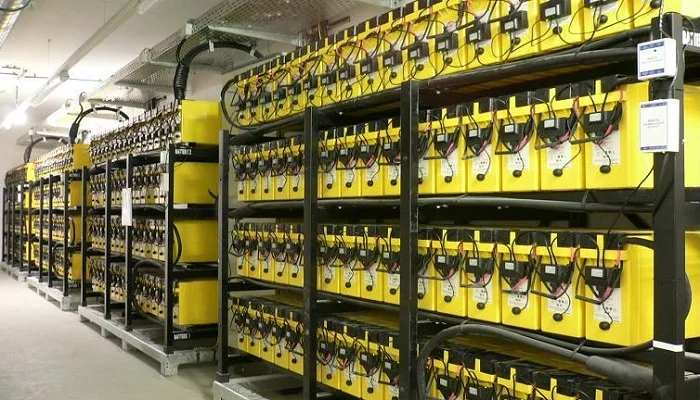
Lead acid Battery

  • Chisen Soft 12

    Electric Scooter Battery Deep Discharge: Why It Happens and How to Stop It

    Running your electric scooter until it barely makes it home is a habit that feels thrifty — you’re using every last bit of energy you paid for. But that habit is quietly destroying your lead-acid battery with every cycle. Deep discharge is one of the most damaging conditions for electric scooter batteries, causing irreversible chemical changes inside the cells that no charger or desulfator can fully reverse. Understanding what deep discharge means, what it does to your battery, and how to prevent it is essential knowledge for any electric scooter owner who wants their battery to last more than 12–18 months.

    What Is Deep Discharge — and Why 20% SOC Is the Critical Threshold

    Deep discharge occurs when a lead-acid battery is discharged below 50% of its rated capacity, with severe deep discharge defined as discharge below 20% state of charge (SOC). Below 20% SOC, lead sulfate crystals — which form normally during discharge — begin to harden and grow in size on the battery plates. These large crystals are far more difficult to dissolve during the next charge cycle than the fine, porous lead sulfate that forms at higher SOC levels. A lead-acid battery that consistently operates between 20–50% SOC will experience mild, reversible sulfation. A battery that regularly dips below 20% SOC, or worse, below 10% SOC (a condition called over-discharge), will accumulate permanent sulfation that progressively reduces capacity with every cycle.

    The specific damage thresholds are well-documented. Between 20% and 50% SOC, sulfation is mild and largely reversible through periodic equalization charging. Between 10% and 20% SOC, sulfation becomes progressive — each deep discharge event causes 0.3–0.5% permanent capacity loss as some lead sulfate crystals convert to hard, non-conductive forms. Below 10% SOC, irreversible damage accelerates rapidly. At 0% SOC (fully discharged to the BMS or controller low-voltage cutoff), the battery plates are heavily sulfated and may undergo positive grid corrosion from the low electrolyte levels caused by complete discharge. A battery that has been consistently over-discharged will show 20–40% reduced capacity within the first 100 cycles.

    How Deep Discharge Damages Electric Scooter Battery Plates

    During normal discharge, lead dioxide (positive plate) and lead (negative plate) react with sulfuric acid in the electrolyte to form lead sulfate and water. This reaction is reversible — during charging, lead sulfate converts back to active materials. However, during deep discharge, the lead sulfate crystals grow too large to fully dissolve during normal charging. These large crystals physically block the pores in the active material, reducing the surface area available for future charge acceptance. The result is a battery that charges more slowly, discharges more quickly, and delivers less range with each passing cycle.

    Deep discharge also causes stratification in flooded lead-acid batteries. During discharge, sulfuric acid is consumed near the plates, producing water. The electrolyte becomes less dense near the electrodes and more dense in the lower portion of the battery. This density gradient means that during recharging, some regions of the electrolyte experience higher current density than others, leading to uneven plate degradation. Stratification also means the specific gravity in the upper portion of the battery drops below safe levels, increasing the risk of sulfation in the top portion of the plates. A stratified battery will show uneven cell voltages, with the bottom cells appearing healthier than the top cells on voltage measurement.

    Real-World Range Numbers and Warning Signs to Watch For

    Most electric scooters with lead-acid batteries fall into three common configurations: 36V 12Ah (range approximately 20–30 km), 48V 20Ah (range approximately 35–50 km), and 60V 20Ah or 30Ah (range approximately 45–70 km). These ranges are based on moderate riding conditions (70 kg rider, flat terrain, 20–25 km/h average speed). Aggressive acceleration, hills, headwinds, and cold temperatures can reduce range by 20–40%, meaning a scooter rated for 40 km might only deliver 24–32 km in real conditions. This is where deep discharge becomes tempting — riders push to the low battery warning and beyond, believing they have more capacity than they do.

    The low-voltage cutoff on most electric scooter controllers is set between 31.5V (for 36V packs) and 42V (for 48V packs), representing approximately 5–10% SOC. This cutoff is a safety feature for the controller and motor, not a battery protection mechanism. Your battery has already suffered significant stress by the time the cutoff engages. Watch for these early warning signs of over-discharge stress: the scooter’s top speed drops noticeably as the battery depletes (more than the normal gradual slowdown), the battery indicator drops rapidly from one bar to the last bar in a short distance, or the battery takes significantly longer to charge than it used to. Any of these symptoms indicates your battery is being pushed into deep discharge territory regularly.

    Prevention Strategies That Actually Work

    The most effective prevention is awareness and planning. Before each ride, estimate your required range conservatively — add a 20% safety margin to your expected distance and charge accordingly. If your commute is 20 km each way (40 km round trip), use a 48V 20Ah pack rated for at least 50 km under your conditions, not a 36V 12Ah rated for exactly 30 km. Carry your charger if possible, or invest in a lightweight portable charger for emergency top-ups. A 10-minute charge at a coffee stop can add 3–5 km of range and prevent a deep discharge event that would cost far more in battery longevity.

    For flooded lead-acid batteries, perform a monthly equalization charge: charge to full, then continue charging at 2.4–2.5V per cell (14.4–15.0V for a 12V battery) for 2–4 hours. This elevated voltage helps dissolve stubborn lead sulfate crystals that regular cycling doesn’t reach. Keep a spreadsheet or use a battery voltage meter to track your resting voltage before each ride — a fully charged 12V lead-acid battery should read 12.7–12.9V at rest. If your battery reads 12.3V or below before you start riding, you are beginning your ride below 70% SOC, which means your available range is already reduced and you’re closer to the danger zone than your indicator suggests.


    Need the right replacement battery for your electric scooter?

    📧 Email: sales@chisen.cn

    🌐 www.chisen.cn

    📱 WhatsApp: +86 131 6622 6999

  • Chisen Soft 11

    Electric Scooter Battery Overcharging Risks: Smart Habits to Prevent Damage

    If you’ve ever left your electric scooter charger plugged in overnight — or forgotten about it for a few extra hours — you may have noticed the battery getting warm to the touch. That warmth is a warning signal your electric scooter battery overcharging is occurring, and the damage starts long before the battery feels hot. Overcharging is one of the leading causes of premature lead-acid battery failure in electric scooters, responsible for avoidable capacity loss, electrolyte depletion, and in extreme cases, safety hazards. Understanding how to prevent overcharge electric scooter battery damage can add years to your battery’s service life and save you hundreds of dollars in replacement costs.

    What Overcharging Does to Lead-Acid Electric Scooter Batteries

    Lead-acid batteries are particularly vulnerable to overcharging because of their electrochemical design. When a lead-acid battery reaches full charge — typically around 14.4–14.8V for a 12V unit in bulk/absorption mode — the charging voltage must be reduced to a float level of approximately 13.5–13.8V. If the charger continues to apply bulk charge voltage, the battery enters a sustained overcharge condition. Every overcharge event causes 0.1–0.3% permanent capacity loss due to grid corrosion on the positive plate and electrolyte decomposition. After just 50 overcharge events, that’s 5–15% of your battery’s original capacity gone — irreversible damage that no equalization cycle can reverse.

    The primary mechanism of damage is electrolysis. When the charging voltage exceeds the gassing threshold (approximately 14.4V at 25°C for a 12V flooded lead-acid cell), water in the electrolyte breaks down into hydrogen and oxygen gas. This process, called “gassing,” causes the electrolyte level to drop. In sealed AGM batteries, outgassing creates pressure that can deform the cell plates and eventually cause seal failure. For flooded batteries, the water loss means the plates become partially exposed to air, accelerating positive grid corrosion. Grid corrosion is progressive and cumulative — once the positive grid is damaged, it cannot regenerate. The negative plate fares slightly better but suffers from sulfation if the overcharge drives the voltage too high for too long.

    Thermal runaway is the most dangerous consequence of prolonged overcharging. As the battery enters sustained overcharge, internal temperatures rise. Lead-acid batteries have a temperature coefficient of approximately −0.0005 V/°C per cell, meaning higher temperatures require lower charging voltage to avoid overcharge. A charger without temperature compensation will push the same voltage regardless of rising battery temperature, accelerating the damage cycle. When internal temperature exceeds 50°C (122°F), the rate of grid corrosion doubles, and the battery can swell, vent, or in rare cases, leak electrolyte. For electric scooter riders who store their scooter indoors, a charger left plugged in overnight in a poorly ventilated area can easily push the battery into this danger zone.

    Float Charge vs. Bulk Charge: Knowing the Difference

    A quality electric scooter charger uses a multi-stage charging profile, cycling through bulk, absorption, and float stages. Bulk charging delivers maximum current (typically C/10 to C/5 rate) until the battery reaches approximately 80% state of charge. Absorption mode holds the voltage constant (14.4–14.8V for 12V lead-acid) while current gradually decreases as the battery fills. Float mode then drops voltage to 13.5–13.8V, maintaining a full charge indefinitely without gassing. This three-stage profile is the standard for quality chargers because it maximizes charge acceptance during bulk while preventing the electrolyte loss and grid damage that occur during prolonged high-voltage charging.

    Not all chargers include float mode. Many inexpensive electric scooter chargers are “dumb” chargers that apply a fixed voltage of approximately 14.4–14.8V indefinitely. If your charger has no automatic shutoff or voltage step-down after 4–8 hours, it is operating in a constant-voltage mode that is not true float charging. The solution is to use a timer-based approach: plug the charger into a mechanical or digital timer set to cut power after the estimated full charge time. For a 20Ah battery at C/10 charge rate (2A), full charge takes approximately 10–12 hours including absorption stage. Setting a timer for 12–14 hours provides a safety margin without sustained overcharge.

    electric-scooter-lithium-battery-pack-close-up.jpg

    Smart Charging Habits That Eliminate Overcharging Risk

    The most effective habit is simple: charge your battery to full and disconnect it promptly. For a lead-acid battery, “full” means when the charger indicator turns green or when the charging current drops below C/50 (for a 20Ah battery, below 0.4A). Leaving the charger connected for more than 1–2 hours after reaching full charge begins the overcharge cycle. If you charge overnight, use a timer to disconnect power after 12–14 hours for a standard 20Ah pack. For flooded batteries, check the electrolyte level monthly — if water loss is consistently excessive, your charger voltage may be set too high (above 14.6V absorption voltage at 25°C).

    Invest in a smart charger with microprocessor-controlled multi-stage charging. CHISEN smart chargers include automatic float mode, temperature compensation, and desulfation cycles that can actually reverse mild sulfation from partial overdischarges. A quality smart charger costs $30–$60 and protects a $150–$300 battery — a worthwhile investment. Finally, never charge a frozen battery. Charging a frozen lead-acid battery causes rapid electrolyte expansion and cell damage. Store and charge batteries at temperatures between 10°C and 30°C (50°F–86°F) for optimal longevity and safety.


    Need the right replacement battery for your electric scooter?

    📧 Email: sales@chisen.cn

    🌐 www.chisen.cn

    📱 WhatsApp: +86 131 6622 6999

  • Chisen Soft 10

    Electric Scooter Battery Charging in Extreme Weather: Safe Guidelines

    Riding your electric scooter through a scorching summer afternoon or commuting in freezing winter temperatures places your battery under real stress that most riders completely overlook. Extreme temperatures don’t just reduce your range — they can permanently damage battery cells, accelerate degradation, and in some cases create genuine safety risks. The good news is that understanding the specific temperature thresholds and adjusting your charging behavior accordingly can protect your battery through virtually any weather condition you encounter.

    Cold Weather Charging: The Freezing Threshold Is Critical

    Lead-acid batteries are fundamentally chemistry-based, and chemical reaction rates slow dramatically as temperature drops. Below 0°C (32°F), the electrochemical processes inside a lead-acid battery become significantly impaired. More critically for long-term battery health, charging a lead-acid battery at sub-freezing temperatures is genuinely dangerous: the charging process can cause metallic lithium plating on the negative plate if the battery is charged while frozen, permanently destroying its capacity. This phenomenon, called lithium plating, occurs because the charging voltage required to push current into a cold battery exceeds the decomposition voltage of the electrolyte, causing metallic lead to deposit on the plate surface instead of the normal electrochemical cycling.

    The practical rule is straightforward: never charge your electric scooter lead-acid battery when the ambient or battery temperature is below 0°C. In practice, this means bringing your scooter indoors to charge during winter months. If you commute in freezing temperatures, plan to ride your scooter to your destination, then wait for the battery to warm to at least 5°C (41°F) before connecting the charger. A battery that has been left in a cold garage overnight at -10°C should be brought into a room-temperature space for at least 2–3 hours before charging.

    Heated storage is an excellent investment for cold-climate riders. A insulated battery box with a small 12V heating element can maintain the battery above 5°C during winter storage, allowing safe charging even in unheated garages. CHISEN’s recommended storage temperature for lead-acid batteries is 10–25°C, and keeping your battery within this range during winter extends its effective cycle life by preventing the plate sulfation that occurs when batteries are stored in cold conditions at partial charge.

    Hot Weather Charging: Heat Is the Enemy of Longevity

    The relationship between temperature and lead-acid battery degradation is exponential, not linear. At an elevated temperature of 25°C (77°F), a lead-acid battery’s expected cycle life is its rated value — typically 300–500 cycles for an electric scooter deep-cycle lead-acid battery. Raise the ambient temperature to 35°C (95°F), and the same battery will degrade approximately twice as fast, delivering roughly half its rated cycle life. At 45°C (113°F), degradation is four times faster than at 25°C. This means a battery that might last three years in a temperate climate could fail in under one year in a consistently hot environment.

    The mechanism behind this accelerated failure is increased grid corrosion and electrolyte loss. At higher temperatures, the charging voltage required to reach full charge rises, which means chargers connected to batteries in hot environments often push voltage levels that trigger excessive gassing and electrolyte evaporation. The plates also experience accelerated corrosion of the positive grid structure.

    Practical hot-weather charging guidelines are specific: always charge in the shade or indoors, never in direct sunlight. The surface temperature of a scooter left in full summer sun can reach 60°C or higher, and a battery at 60°C being charged is under severe stress. The optimal charging window in hot climates is early morning (before 8 AM) or evening (after 8 PM) when ambient temperatures are at their daily minimum. If you must charge during the day, bring the scooter indoors to an air-conditioned space. Never charge immediately after riding in hot weather — wait 30–60 minutes for the battery to cool.

    Humid and Wet Conditions: Protecting Connectors and Terminals

    Humidity and direct rain present a different set of challenges for electric scooter batteries, primarily around electrical connections and terminal corrosion rather than the battery chemistry itself. Sealed lead-acid (SLA) batteries and valve-regulated lead-acid (VRLA) batteries used in most electric scooters are designed to tolerate occasional water exposure to the battery case, but prolonged moisture at the terminals and connectors causes corrosion that increases resistance and reduces charging efficiency.

    The safe temperature range for charging a lead-acid electric scooter battery spans from just above freezing (5°C) to approximately 40°C. Below 5°C, lithium plating risk makes charging unsafe. Above 40°C, the accelerated degradation from heat begins to outweigh any benefits. For altitude effects: at elevations above 3,000 meters (10,000 feet), air pressure is significantly lower, which means gassing from overcharge is more aggressive because gas bubbles escape more readily. This requires slightly lower float voltages — approximately 0.03V lower per cell for every 1,000 meters above sea level. If you regularly charge at altitude, use a charger with altitude compensation or reduce float voltage by 0.1–0.2V from the standard 13.5–13.8V setting.

    When riding in rain, dry your scooter’s battery compartment and charge port thoroughly before connecting the charger. Wipe the terminals with a dry cloth and apply a thin layer of petroleum jelly or terminal protectant spray to prevent corrosion. Never charge your scooter outdoors in the rain. Store it in a dry location and check terminal connections monthly during humid seasons. With these simple adjustments to your charging routine based on real-time weather conditions, you can maintain your electric scooter battery’s performance and extend its service life across all four seasons.


    Need the right replacement battery for your electric scooter?

    📧 Email: sales@chisen.cn

    🌐 www.chisen.cn

    📱 WhatsApp: +86 131 6622 6999

  • Chisen Soft 07

    Electric Scooter Battery Life Hacks: Make Yours Last 2–3 Years or More

    Most electric scooter owners replace their battery once and never think about why it died early. The ones who get 3, 4, or even 5 years from the same battery aren’t riding different scooters — they’re doing a handful of simple things differently. These are not theoretical suggestions. They’re practical, tested habits that measurably extend the cycle life and capacity retention of lead-acid batteries in real-world conditions.

    If you’re commuting daily on an electric scooter powered by lead-acid batteries, you have more control over your battery’s lifespan than you probably realize. Here’s the complete playbook — 10 specific actions, each with a clear explanation of why it works.

    Hack 1: Charge for 8–12 Hours, No More — and Use a Timer

    Lead-acid batteries charge in three phases: bulk (constant current until voltage reaches ~14.4V), absorption (constant voltage while current tapers), and float (maintenance voltage at ~13.5V). The absorption phase — the period when the charger is held at 14.4–14.7V — is what fully replenish the battery’s electrolyte after a discharge. Cutting this phase short by removing the charger early means the battery is never truly full and sulfation begins to accumulate on plates that never completed their charging cycle.

    The sweet spot for most 12V 10–14Ah electric scooter batteries is 8–12 hours at a C/10 charging rate. Invest in a simple mechanical timer ($5–$10) and set it to 10 hours. This ensures the battery gets the full absorption charge it needs without the chronic overcharging that happens when people leave chargers connected overnight for 14–18 hours.

    Hack 2: Store Your Battery at 50% State of Charge — Not Full, Not Empty

    This is the most counterintuitive hack for new battery owners. You’d think a fully charged battery stores better than a half-charged one. In fact, the opposite is true for lead-acid chemistry. A fully charged lead-acid battery at rest develops a slightly elevated float voltage that accelerates grid corrosion on the positive plate. A battery at 50% SoC sits at a resting voltage where corrosion rates are minimized.

    For storage periods of more than two weeks — winter storage, extended travel, seasonal scooter use — charge to approximately 50–60% SoC before putting the battery away. Check it monthly. If the resting voltage drops below 12.4V (indicating below 50% SoC), recharge. A battery stored at 50% SoC at 15°C will typically self-discharge to 40% SoC after 3–4 months, which is still safe. One stored at 100% SoC at 30°C may reach the sulfation zone in 6–8 weeks.

    Hack 3: Never Park Your Scooter in Direct Sunlight

    On a 30°C summer day, a scooter parked in direct sunlight can develop battery compartment temperatures of 45–55°C. At 45°C, lead-acid battery grid corrosion runs at approximately 2.5 times the rate at 25°C. A battery that would last 3 years in a shaded parking spot might fail in 14 months if routinely baked in the sun.

    This is especially critical for sealed AGM batteries, which have no ability to add electrolyte if it evaporates. Flooded lead-acid batteries at least have the option of water level maintenance, but AGM batteries must be protected from heat by behavioral choices. Always park in shade, indoors, or under a cover. If outdoor parking is unavoidable, a simple reflective sun cover over the battery compartment can reduce peak temperatures by 10–15°C.

    Hack 4: Charge After Every Ride — Even Short Ones

    This was covered earlier but it’s worth repeating as a core habit: partial charges are not harmful to lead-acid batteries and are better than deep charges. Charging after every ride, regardless of distance, keeps the battery in a shallow cycling pattern that maximizes total cycle count.

    The math is simple. Two charges at 25% DoD per day (two short trips) equals one 50% DoD cycle per day — much gentler on the battery than one 50% DoD cycle from a single longer trip. For delivery riders and couriers making multiple stops, charging between deliveries is one of the most impactful battery life habits available.

    Hack 5: Use a Smart Charger with Automatic Voltage Detection

    A smart charger does what a timer does automatically — it monitors the battery’s acceptance current and switches from absorption to float mode when the battery is full. The best smart chargers for lead-acid electric scooter batteries include a microprocessing controller that adjusts the absorption voltage based on temperature, preventing the overcharging that occurs when a room heats up during a long charge.

    Look for chargers with these specifications: absorption voltage 14.4–14.7V at 25°C, automatic temperature compensation of -20mV/°C per cell (or -0.12V per 12V pack), float voltage 13.5–13.8V, and a maximum initial current of C/10. CHISEN can recommend compatible smart charger models for their specific battery ranges.

    Hack 6: Keep Battery Terminals Clean and Tight

    Corrosion on battery terminals — the white or green powdery deposits that accumulate around the terminals over time — increases contact resistance and causes voltage drops during discharge. This means the battery works harder to deliver the same power, generates more heat, and cycles less efficiently. Cleaning terminals with a baking soda solution and a wire brush once every 3–6 months, followed by a thin coating of petroleum jelly or terminal protector spray, restores optimal contact.

    Equally important is terminal torque. Loose terminals cause arcing during current flow, which generates heat and accelerates terminal post corrosion. Tighten terminals to the manufacturer’s specified torque (typically 8–10 Nm for standard 12V lead-acid battery posts) without over-tightening, which can crack the lead terminal posts.

    Hack 7: Check Water Levels Monthly on Flooded Batteries

    If your electric scooter uses flooded (wet) lead-acid batteries rather than sealed AGM or gel types, water level maintenance is essential. During the charging process, electrolyte electrolysis releases hydrogen and oxygen gases, which slowly deplete the water content of the electrolyte. Without periodic water addition, the electrolyte level drops below the top of the plates — exposed plate surfaces sulfate rapidly and irreversibly.

    Check water levels monthly. Only add distilled water — never add electrolyte solution, which increases specific gravity and can cause overcharging. Add water to the recommended fill line (typically 10–15mm above the plates) after charging, never before, to prevent overflow during the gassing phase. Under normal use, flooded batteries may require water addition every 4–8 weeks. CHISEN’s flooded deep-cycle batteries use low-antimony grid alloys that minimize water loss compared to older high-antimony designs, extending the maintenance interval.

    Hack 8: Perform a Monthly Equalization Charge

    An equalization charge is a deliberate overcharge — a sustained period at 15–16V (approximately 2.50–2.60V per cell) that serves two purposes: it equalizes the charge level across all cells in the battery, and it reverses mild sulfation by driving sulfate crystals back into solution. Without periodic equalization, individual cells drift out of balance over months of cycling, with the weakest cell progressively weakening.

    Perform an equalization charge monthly (or every 20–25 cycles, whichever comes first). Most smart chargers with a “recondition” or “equalize” mode will handle this automatically. If doing it manually, apply 15–16V to a fully charged 12V battery for 2–4 hours while monitoring the battery temperature (stop if it exceeds 50°C). The battery will gas actively — this is normal and expected.

    battery-warehouse-export-shipping-pallets.jpg

    Hack 9: Adjust Your Riding Style for Battery Longevity

    Aggressive riding — rapid starts from stops, constant maximum acceleration, high-speed operation on inclines — draws high current from the battery, increasing heat generation and accelerating the electrochemical reactions that drive degradation. The impact is not dramatic, but over thousands of cycles it compounds.

    Smoother riding at moderate acceleration extends battery life in two ways: by reducing peak current draw (which reduces internal heating and voltage stress on the plates), and by encouraging a gentler DoD profile where regenerative braking (if equipped) can recapture some energy. Riders who adopt a smooth, anticipatory style — reading traffic ahead and coasting to stops rather than braking hard — often report 10–15% longer total range per charge cycle.

    Hack 10: Match Your Charger Voltage to Your Battery Chemistry

    This seems obvious but mismatched chargers are more common than most riders realize. A charger designed for AGM batteries may apply 14.7–14.9V absorption voltage, while a gel battery should be charged at 14.1–14.4V. Using an AGM charger on a gel battery over the long term accelerates grid corrosion and electrolyte loss. Using a flooded battery charger on an AGM battery may undercharge it, leading to sulfation.

    Always verify that your charger is specifically matched to your battery type. CHISEN’s electric scooter batteries are labeled by type (AGM, Gel, or flooded) and their technical datasheets specify the exact charging voltage profile. Matching the charger to the battery is one of the easiest and most effective hacks available.

    The CHISEN Advantage in Battery Life

    CHISEN’s AGM and gel lead-acid batteries incorporate all of these longevity factors into their engineering: corrosion-resistant calcium-tin grid alloys, high-density active material pastes, compression-held plate construction, and factory-controlled formation charging. The result is a battery that performs well across a wider range of conditions and tolerates the occasional lapses in ideal care that are inevitable in real-world use.

    For specific maintenance guidance for your CHISEN battery model, contact the technical support team with your battery’s model number and application details.


    Need the right replacement battery for your electric scooter?

    📧 Email: sales@chisen.cn

    🌐 www.chisen.cn

    📱 WhatsApp: +86 131 6622 6999

  • Chisen Soft 06

    The Truth About Electric Scooter Battery Degradation Over Time

    If you’ve noticed your electric scooter doesn’t go as far as it used to, you’re not imagining it. Battery degradation is real, measurable, and follows predictable patterns — especially in lead-acid batteries, which degrade through specific, well-understood mechanisms. Understanding exactly what’s happening inside your battery as it ages helps you separate the normal from the alarming, and gives you the knowledge to intervene early when intervention is still possible.

    Battery degradation is not a smooth, linear decline. Most lead-acid electric scooter batteries follow an “S-curve” pattern: a slow initial capacity fade during the first 50–100 cycles, a long stable period where capacity remains relatively flat, and then an accelerating decline as the battery approaches its cycle limit. This pattern reflects the underlying chemical and physical processes at work, and recognizing it helps you anticipate when replacement is approaching.

    The Three Primary Degradation Mechanisms in Lead-Acid Batteries

    Lead-acid batteries degrade through three distinct processes, each with different symptoms and timelines. Understanding all three gives you a complete picture of what’s happening to your electric scooter battery over months and years of use.

    Sulfation is the most well-known degradation mechanism and the primary culprit in most premature lead-acid battery failures. During discharge, lead sulfate (PbSO₄) forms on both the positive and negative plates. During normal charging, this lead sulfate is converted back into lead and lead dioxide. But under conditions of low state of charge, incomplete charging, or elevated temperature, some of the lead sulfate crystals grow too large to fully dissolve. These large crystals accumulate as a non-conductive coating, progressively reducing the active surface area of the plates.

    The math is stark: a lead-acid battery that has developed moderate sulfation may have lost 15–20% of its plate surface area — permanently. That translates directly into 15–20% less capacity. Severe sulfation can reduce active surface area by 50% or more, rendering the battery essentially useless. The good news is that sulfation is largely preventable through the charging habits described throughout this series.

    Grid corrosion affects the positive plate — the structural lead framework that holds the lead dioxide active material. During float and overcharge conditions, the lead grid slowly oxidizes at the positive plate surface, converting lead metal into lead dioxide. This process thickens the grid corrosion layer over time, increasing electrical resistance and consuming active material. Grid corrosion is irreversible and cumulative; every overcharge event, every degree of temperature above 25°C, and every day of float charge at elevated voltage adds to it.

    Grid corrosion progresses slowly at first — measurable only in millivolts of increased internal resistance per month — but accelerates as the corrosion layer thickens. By the time a battery shows obvious symptoms of grid corrosion (elevated charging voltage, reduced runtime, excessive heat during discharge), the damage is extensive. At 25°C, grid corrosion might consume 2–3% of the positive plate per year. At 35°C, that rate doubles to 4–6% per year.

    Active material shedding occurs when the lead dioxide on the positive plate gradually loosens and falls away from the grid structure. This is a mechanical process accelerated by repeated expansion and contraction of the active material during charge-discharge cycles, and by physical shock or vibration. Shed active material falls to the bottom of the battery cell and accumulates. If it builds up high enough to contact the bottom of the plates, it can cause an internal short — catastrophic and irreversible battery failure.

    AGM batteries like CHISEN’s AGM electric scooter batteries are significantly more resistant to active material shedding than flooded lead-acid designs because the compressed glass mat separator holds the plates in place and absorbs the shed material without creating shorts. AGM construction typically extends the shedding-tolerant life of a lead-acid battery by 30–50% compared to flooded designs.

    Capacity Fade Curves: What to Expect at Every Stage

    Battery researchers and manufacturers typically plot capacity fade curves using cycle number on the horizontal axis and remaining capacity percentage on the vertical axis. A typical curve for a well-maintained sealed lead-acid battery shows: 100% at delivery (or 100–105% after formation), 95–98% after 20–50 cycles (the “break-in” stabilization period), 88–92% after 100 cycles, 75–82% after 200 cycles, 60–68% after 300 cycles, and 50% or below after 400–500 cycles.

    These numbers assume cycling at 50% depth of discharge at 25°C with proper charging. At shallower DoD, the curve is shallower — a battery cycled at 25% DoD might show 80% capacity after 300 cycles instead of 60%. At deeper DoD, the curve steepens faster. At elevated temperatures, the entire curve shifts downward — a battery at 35°C might show 75% capacity after 200 cycles instead of 80%.

    What does this look like in real-world terms? A 20 km range electric scooter with a fresh battery might deliver 19–20 km in its first months. After 100 cycles (roughly 4–6 months of daily commuting), expect 17–18 km. After 200 cycles (8–12 months), approximately 15–16 km. After 300 cycles (12–18 months of daily use), the range may have dropped to 12–13 km. Once it drops to 11–12 km (55–60% of original), the battery has reached its practical end of life for most riders.

    Signs Your Battery Is Entering the Degradation Phase

    Early signs of battery degradation are subtle and easy to miss. The first symptom most riders notice is a slight reduction in range — perhaps 5–10% less than they remember getting a year ago. This is normal and not necessarily a sign of impending failure. The second symptom is a longer charging time to reach full charge, even though the battery hasn’t been used more than usual. This indicates rising internal resistance.

    More alarming symptoms that indicate accelerated degradation include: charging the battery takes 14+ hours instead of the usual 8–12 hours (suggesting reduced charge acceptance due to sulfation or corrosion); the battery gets noticeably warm during charging (normal batteries stay slightly warm, but hot-to-the-touch indicates problems); and the battery voltage drops rapidly under load — a fully charged battery that shows 11V or lower under acceleration has high internal resistance.

    The most definitive test for battery health is a capacity test. Fully charge the battery, then discharge it through a known load (or simply ride until the low-battery cutoff activates) while measuring the elapsed time or distance. A battery delivering less than 60% of its rated capacity is considered end-of-life. A battery delivering 60–80% is in the “fade zone” and will need replacement within 3–6 months.

    Can Degradation Be Reversed? The Honest Answer

    Mild sulfation — which accounts for the majority of recoverable capacity loss in lead-acid batteries — can often be partially reversed through an equalization charge procedure. This involves charging the battery at 15–16V (well above the normal absorption voltage) for 2–4 hours after a full charge, which drives a controlled overcharge that dissolves softer sulfate crystals. A battery that has lost 15–20% capacity to mild sulfation might recover 8–12% through equalization.

    Severe sulfation, grid corrosion, and active material shedding are not reversible. Once the grid structure has corroded or active material has shed from the plates, no charging procedure can restore it. This is why prevention — through proper charging habits, temperature management, and regular equalization — is so much more effective than remediation.

    CHISEN’s AGM batteries use premium-grade materials and precision manufacturing to minimize all three degradation mechanisms. Their corrosion-resistant grid alloys, high-density active material formulations, and compression-held plate stacks deliver consistent capacity throughout a longer cycle life than budget alternatives. For riders who want a battery that degrades slowly and predictably rather than suddenly failing, factory quality makes a measurable difference.

    lead-acid-battery-manufacturing-factory-line.jpg

    Setting Realistic Expectations for Your Electric Scooter Battery

    Here’s the honest summary for electric scooter owners: expect your lead-acid battery to deliver excellent performance for the first 150–200 cycles (6–12 months of moderate daily use), gradual but manageable fade from cycle 200 to 350 (adding another 6–12 months of reduced-range service), and replacement around cycle 400–500 (1.5–3 years total, depending on usage).

    The key to managing battery degradation is not to fear it but to monitor it. Check your range monthly by noting how far you typically ride between charges. When the range drops by 30% or more from what you remember getting when the battery was new, start planning for replacement. This gives you time to shop, compare options, and install a new battery before you’re stranded.

    For replacement batteries that meet or exceed original specifications, contact CHISEN with your scooter’s voltage, amp-hour rating, and physical dimensions. Their technical team can recommend the optimal replacement and discuss bulk pricing for fleet operators.


    Need the right replacement battery for your electric scooter?

    📧 Email: sales@chisen.cn

    🌐 www.chisen.cn

    📱 WhatsApp: +86 131 6622 6999

  • Chisen Soft 05

    How Many Years Can Your Electric Scooter Battery Survive with Proper Care?

    One of the most common questions from electric scooter owners is straightforward: how many years will my battery last? It’s a fair question, and the answer deserves more than a vague “it depends.” In reality, the expected lifespan of an electric scooter battery follows predictable patterns based on usage frequency, chemistry type, and care quality. Understanding these patterns helps you plan for replacement, adjust your riding habits, and ultimately get more value from your investment.

    Lead-acid batteries — the most common type in budget and mid-range electric scooters — typically last between 1 and 5 years depending on how they are used. Daily commuters can expect 1–2 years; occasional riders can stretch that to 3–5 years. These aren’t optimistic estimates — they’re based on cycle-life data, real-world usage surveys, and manufacturer performance records. Let’s break down exactly how these numbers come together.

    The Usage-to-Years Conversion: A Practical Framework

    Battery life is measured in cycles, not calendar time. The conversion from cycles to years depends entirely on how many cycles you consume per year. A daily commuter who charges their battery every day (365 full or partial cycles per year) will consume the 300–500 rated cycles of a lead-acid battery in 10–14 months of daily use. A weekend rider who charges twice per week (roughly 100 cycles per year) will get 3–5 years from the same battery.

    The key variable is the depth of discharge per cycle. A commuter who rides 8 km daily on a 20 km range scooter uses approximately 40% of the battery per day. At 40% DoD cycling, a quality lead-acid battery might deliver 700–800 equivalent full cycles. At 365 cycles per year, that’s nearly 2 years of service. A heavier user doing 15 km per day at 75% DoD might consume the same battery in under a year.

    Here’s a practical table showing usage patterns and expected battery life for a 12V 12Ah lead-acid electric scooter battery rated at 400 cycles at 50% DoD:

    Usage PatternDaily DistanceDoD per DayCycles Consumed/YearExpected Battery Life
    Heavy daily commute20 km75–100%365–4001–1.3 years
    Moderate daily commute10 km40–50%200–2501.5–2 years
    Light daily use5 km20–25%100–1253–4 years
    Weekend only10–15 km/weekend40–60%60–805–6 years
    Occasional use5–10 km/week20–30%30–506–8 years

    Note that “occasional use” below 50 cycles per year can genuinely extend lead-acid battery life toward 6–8 years in some cases, though by that point capacity fade means the battery may still need replacement even if it technically still functions.

    What “Battery Life” Actually Means: Capacity Fade vs. Complete Failure

    It’s important to distinguish between two types of battery end-of-life. A battery that has “died” no longer accepts charge or delivers useful capacity — it fails catastrophically, typically from an internal short, case rupture, or total sulfation. A battery that has “aged out” still technically functions but delivers insufficient capacity to be useful — typically below 60% of its original rated capacity.

    Most lead-acid batteries for electric scooters reach end-of-life as capacity fade rather than sudden failure. After 300–500 cycles, a lead-acid battery may still charge to 100% voltage but will only deliver 40–60% of its original amp-hour capacity. The scooter will feel sluggish, range will drop dramatically, and the battery may struggle to deliver the current demanded during acceleration or climbing hills.

    For most riders, this 60% capacity threshold is the practical replacement point. A scooter that originally did 20 km per charge delivering only 12 km is still technically functional but is past its useful service life. CHISEN’s quality control standards ensure that their batteries maintain above 80% rated capacity through at least 200 cycles and above 60% through the full rated cycle count — providing consistent, predictable performance throughout the battery’s lifespan.

    Seasonal and Climate Effects on Years of Service

    Geography dramatically affects battery lifespan for electric scooter riders. A rider in a temperate climate (15–25°C average) will get significantly more years from the same battery than a rider in a hot tropical or desert climate. As established earlier, every 10°C above 25°C roughly doubles the rate of grid corrosion — the chemical process that gradually destroys the positive grid structure.

    A rider in Phoenix, Arizona or Bangkok, Thailand operating at an average annual temperature of 30°C might see their battery lifespan cut by 40–50% compared to the same usage pattern in a cooler climate. Conversely, riders in northern Europe, northern Japan, or mountain communities — where average temperatures are 10–15°C — often report lead-acid batteries lasting 30–50% longer than the rated specification.

    The practical implication: climate should inform your maintenance intensity. Riders in hot climates should be more aggressive about avoiding over-discharge, charging in shaded areas, and monitoring for signs of early degradation. Seasonal adjustments help too — a battery that is ridden lightly through a hot summer and stored partially charged during peak heat months will last longer than one that is pushed hard year-round.

    solar-lead-acid-battery-maintenance-kit.jpg

    How CHISEN’s Manufacturing Quality Extends Years of Service

    CHISEN’s factory-quality lead-acid batteries incorporate design and manufacturing features that directly translate into more years of reliable service. Key differentiators include: die-cast lead-calcium-tin grid alloys that resist corrosion 30–40% better than standard antimony-lead alloys used by many competitors; premium AGM separator material with optimal porosity and compression to retain active material even under vibration; and rigorous 100% factory formation testing that ensures every cell meets its rated capacity before leaving the factory.

    These manufacturing advantages compound over time. A battery that starts life 5% above its rated capacity (due to quality manufacturing) maintains above 60% of original rated capacity for more cycles than one that starts at exactly rated capacity and degrades faster. For riders, this means CHISEN batteries tend to feel “stronger” for longer and deliver more consistent range throughout their lifespan.

    Planning for Replacement: When to Buy a Spare Battery

    For heavy daily commuters, it makes economic sense to purchase a spare battery 12–18 months into the original battery’s life. By the time the original battery fades to replacement-level capacity, the spare is ready to install — minimizing scooter downtime. Keeping a spare battery stored at 50% SoC in a cool location preserves it for this purpose.

    For occasional riders, monitoring is more important than stockpiling. Check your battery’s resting voltage monthly. A 12V lead-acid battery that reads below 12.0V at rest (after no load for 1 hour) has dropped below 20% SoC and should be recharged immediately. A battery that consistently requires recharging more frequently than before — for the same usage pattern — is beginning its capacity fade trajectory.

    CHISEN offers volume pricing for fleet operators and multiple-unit purchasers. Whether you’re maintaining a personal scooter or a delivery fleet, the CHISEN team can help you plan battery inventory based on usage patterns and replacement cycles.


    Need the right replacement battery for your electric scooter?

    📧 Email: sales@chisen.cn

    🌐 www.chisen.cn

    📱 WhatsApp: +86 131 6622 6999

Before an OPzV battery China supplier can be judged on price, you should be able to verify six things on the supplier’s own datasheet: a float charge voltage of 2.23 V per cell at 25 °C, an equalise charge voltage of 2.35 V per cell at 25 °C, a temperature compensation coefficient of −3 mV/°C/cell, a design float life of 20+ years @ 20 °C, capacity measured at more than one discharge rate, and a certification trail that includes IEC 60896-21/22 and IEC 61427. A quotation that cannot be matched to those six items is not a quotation for a defined product, it is a quotation for a cell of unknown provenance.

Five numbers decide most tubular gel evaluations: 2.23 V per cell at 25 °C for float, 2.35 V per cell at 25 °C for equalisation, −3 mV/°C/cell for temperature compensation, 20+ years @ 20 °C for design float life, and 0.56 mΩ for the internal resistance of a 2 V 500 Ah cell measured at 25 °C. Every one of them is published on the manufacturer datasheet. Every one of them should match, line for line, before a purchase order is raised.

Key Takeaways

  1. A tubular gel order is a specification order, not a catalogue order. The datasheet is the contract, and the quotation is only an offer against it.
  2. Float voltage of 2.23 V per cell at 25 °C and equalise voltage of 2.35 V per cell at 25 °C are non-negotiable. A supplier quoting a different float voltage is selling a different chemistry.
  3. Temperature compensation of −3 mV/°C/cell is what makes a 20+ years @ 20 °C float life claim credible in a hot climate. Check that the value is printed, not merely promised.
  4. A single headline amp-hour figure hides the real deliverable. Ask for the capacity at several discharge rates, because a C10 number and a C100 number differ by 10 to 15 percent on the same cell.
  5. Verification is cheap before the order and expensive after it. Ask for the capacity curve, the cycle certification and the charge-voltage recipe in writing, then hold the shipment to the same document.

§1 — Quick Specifications Table

The table below is the published rating for the 2 V 500 Ah tubular gel cell, taken from the manufacturer datasheet. Every other figure in this article is either copied from the same document or derived from it by arithmetic, and each derived value is labelled as such.

ParameterValueSource
ModelOPzV2-500, 2 V tubular gelDatasheet
Nominal voltage2 VDatasheet
Nominal capacity500 Ah at C10 to 1.80 V per cellDatasheet
Dimensions166 x 206 x 506 mmDatasheet
Weight36.3 kg (80.0 lbs)Datasheet
Float charge voltage2.23 V @ 25 °CDatasheet
Equalise charge voltage2.35 V @ 25 °CDatasheet
Design float life20+ years @ 20 °CDatasheet
Temperature compensation−3 mV/°C/cellDatasheet
Internal resistanceapprox. 0.56 mΩ at 25 °CDatasheet
Max. charge current100 ADatasheet
Max. discharge current, 5 s2,000 ADatasheet
Short circuit current2,600 ADatasheet
Self-dischargeapprox. 2 % per month at 20 °CDatasheet
Discharge temperature range−40 to 65 °CDatasheet
Charge temperature range−30 to 65 °CDatasheet
Storage temperature range−25 to 45 °CDatasheet
TerminalFemale copper insert M8, 10 to 12 N·mDatasheet
StandardsIEC 60896-21/22, DIN 40472, IEC 61427, YD/T 1360, BS 6290 part 4, UL 1989, EurobatDatasheet
24-cell string weight at 48 V24 x 36.3 kg = 871.2 kgArithmetic
24-cell string internal resistance24 x 0.56 mΩ = 13.44 mΩArithmetic
24-cell string charge capacity24 x 100 A = 2,400 AArithmetic
24-cell string nominal energy24 x 2 V x 500 Ah = 24,000 WhArithmetic

For solar and wind duty the same datasheet carries a separate parameter set, and this is where most quotations diverge. The float setting rises to 2.27 ± 0.005 V per cell at 25 °C and the regulation and equalise voltage rises to 2.40 ± 0.01 V per cell at 25 °C. The over-voltage disconnect sits at 2.47 ± 0.01 V per cell, the array reconnection voltage at 2.23 ± 0.005 V, the low voltage alarm at 1.95 ± 0.005 V, the low voltage disconnect at 1.90 ± 0.005 V and the load reconnect voltage at 2.09 ± 0.01 V. The temperature compensation coefficient widens to a range of −3 to −5 mV per cell per degree Celsius. A supplier who quotes the telecom float values for a solar installation is telling you they have never configured a controller against these settings.

The OPzV2-500 tubular gel model page carries the same published figures, which is a useful cross-check: a manufacturer whose product page and datasheet disagree has a documentation problem, and a documentation problem becomes a warranty problem.

§2 — The Pain

The pattern is always the same. A buyer asks for a quotation on 2 V gel cells for a 48 V DC bus in Mombasa or Durban, receives three responses inside a day, and finds that only one of them answers the question. The other two quote a cell, a price per unit and a delivery window, and leave the technical content undefined.

That leaves the buyer with a de facto choice between two risks. Accept the undefined quotation and carry the risk of a cell whose float behaviour, temperature compensation and actual capacity are unknown, then discover the shortfall during the first hot season in service. Or spend the next three weeks demanding datasheets, capacity curves and certification documents, and lose the schedule while the shipment sits in a port in Ningbo or Jebel Ali.

The deeper problem is that tubular gel cells look interchangeable on paper. Every 2 V 500 Ah gel cell has the same nominal voltage, roughly the same headline capacity and a terminal that fits the same busbar. The differences that decide service life are printed on page two of the datasheet, in a table of long-term discharge capacity and cycle life, and they are almost never included in a quotation email. A cell with 5,500 cycles at 20 % depth of discharge and one with 3,000 cycles at the same depth are the same object to a purchasing system and completely different objects over a ten year life.

There is a second trap in the quoting process itself. A supplier will often quote the C10 capacity because that is the headline figure on the catalogue page. But a telecom DC plant in Chennai or a solar site in Ho Chi Minh does not run at a ten hour discharge rate. On the same cell, the capacity at C100 is lower and the capacity at C24 is higher, and the manufacturer publishes the whole curve so that the buyer can select on the duty cycle rather than on the label. When a quotation quotes one number with no rate attached, it is not quoting capacity, it is quoting a label.

Third, the certification trail is where most unverifiable suppliers give themselves away. IEC 60896-21/22 and IEC 61427 are not decorations on a datasheet. IEC 60896-21 and 22 cover stationary lead-acid valve regulated batteries and their methods of test, and IEC 61427 covers the cycling test that produces a cycle life figure. DIN 40472, BS 6290 part 4 and UL 1989 sit alongside them, and YD/T 1360 is the Chinese telecom standard for the same class of product. A supplier who lists none of these, or who lists a certificate number that cannot be produced on request, is not qualified to supply a DC plant.

The final voltage table above is the second half of that discipline, and the long-term discharge and cycle life curves on page two of the same datasheet are the third.

§3 — The Choice

Once the datasheet is in front of you, the choice narrows quickly, because the OPzV range is graded by capacity and the differences between grades are published rather than negotiable.

ModelVoltageCapacityDimensions (mm)WeightInternal resistanceMax. charge currentSource
OPzV2-5002 V500 Ah166 x 206 x 50636.3 kg0.56 mΩ at 25 °C100 ADatasheet
OPzV2-7002 V700 Ah254 x 210 x 50651.0 kg0.55 mΩ at 25 °C140 ADatasheet
OPzV2-10002 V1,000 Ah233 x 210 x 68173.2 kg0.5 mΩ at 25 °C200 ADatasheet
OPzV2-15002 V1,500 Ah275 x 210 x 831102 kg0.45 mΩ at 25 °C300 ADatasheet
OPzV2-25002 V2,500 Ah487 x 212 x 807181 kg0.3 mΩ at 25 °C500 ADatasheet

Two features of that table decide a lot in practice. The first is internal resistance. It falls from 0.56 mΩ on the 500 Ah cell to 0.3 mΩ on the 2,500 Ah cell, which means the larger cell delivers a short circuit with less voltage collapse and needs a smaller busbar. The second is mass. A 48 V string of the 500 Ah cell weighs 871.2 kg, while the same busbar built from the 1,500 Ah cell weighs 2,448.0 kg. If the battery room floor was designed around a particular cell height, the cell count changes the answer, and the height does change across the range from 506 mm to 807 mm.

The string arithmetic is worth setting out on paper before the quotation arrives, because it is the part a buyer can check without opening a datasheet.

Model24-cell string weightString internal resistanceString charge capacityNominal energySource
OPzV2-50024 x 36.3 kg = 871.2 kg24 x 0.56 mΩ = 13.44 mΩ24 x 100 A = 2,400 A24 x 2 V x 500 Ah = 24,000 WhArithmetic
OPzV2-70024 x 51.0 kg = 1,224.0 kg24 x 0.55 mΩ = 13.20 mΩ24 x 140 A = 3,360 A24 x 2 V x 700 Ah = 33,600 WhArithmetic
OPzV2-100024 x 73.2 kg = 1,756.8 kg24 x 0.5 mΩ = 12.0 mΩ24 x 200 A = 4,800 A24 x 2 V x 1,000 Ah = 48,000 WhArithmetic
OPzV2-150024 x 102 kg = 2,448.0 kg24 x 0.45 mΩ = 10.8 mΩ24 x 300 A = 7,200 A24 x 2 V x 1,500 Ah = 72,000 WhArithmetic
OPzV2-250024 x 181 kg = 4,344.0 kg24 x 0.3 mΩ = 7.2 mΩ24 x 500 A = 12,000 A24 x 2 V x 2,500 Ah = 120,000 WhArithmetic

Capacity is also a function of the discharge rate, and the manufacturer publishes the whole curve so the buyer can select on the duty cycle. The final voltage setting that goes with each rate is fixed rather than negotiable.

Discharge currentFinal voltage per cellSource
Below 0.05 C1.90 VDatasheet
0.05 C to 0.08 C1.85 VDatasheet
0.08 C to 0.2 C1.80 VDatasheet
0.2 C to 0.6 C1.75 VDatasheet
0.6 C to 1.0 C1.70 VDatasheet
1 C to 2 C1.60 VDatasheet

A DC plant at a site in Chennai typically runs a backup discharge between 0.2 C and 0.6 C, which means the 1.75 V cutoff applies and the usable capacity sits below the C10 headline. An installation in Karachi running a shallow daily cycle reads the C100 figure instead. Any OPzV battery China quotation that quotes one capacity number without a rate has not been built around either duty cycle.

Cycle life is the third published curve, and it is where the gel construction earns its place next to a flooded cell, because the gel cell can be cycled far more often without losing plate capacity.

ModelDepth of dischargePublished cycle lifeSource
OPzV2-50020 %approx. 5,500 cyclesDatasheet
OPzV2-50040 %approx. 3,500 cyclesDatasheet
OPzV2-50060 %approx. 2,500 cyclesDatasheet
OPzV2-50080 %approx. 1,800 cyclesDatasheet
OPzV2-500100 %approx. 1,400 cyclesDatasheet
OPzV2-70020 %approx. 5,500 cyclesDatasheet
OPzV2-70050 %approx. 2,400 cyclesDatasheet
OPzV2-100020 %approx. 5,500 cyclesDatasheet
OPzV2-100040 %approx. 3,100 cyclesDatasheet
OPzV2-150020 %approx. 5,700 cyclesDatasheet
OPzV2-150040 %approx. 3,100 cyclesDatasheet
OPzV2-250020 %approx. 5,500 cyclesDatasheet
OPzV2-250050 %approx. 3,000 cyclesDatasheet

One further point belongs in the comparison, because it is the first question a European or North American buyer asks and the one most often answered with a marketing sentence rather than a number. Tubular gel and tubular flooded are not the same product in a different case. The gel cell measures 166 x 206 x 506 mm and weighs 36.3 kg for 500 Ah, and it loses roughly 2 % of capacity per month at 20 °C in open circuit. A flooded 500 Ah cell of the same nominal capacity measures 104 x 206 x 399 mm, carries 4.5 kg of acid on top of a 13.0 kg dry mass, and loses roughly 4 % per month. The gel cell is taller, heavier and needs no watering, and it operates from −40 to 65 °C on discharge against −25 to 65 °C for the flooded cell. Those are published differences on two datasheets, and they are the reason a site in Port Said or Santos and a site in Warsaw do not buy the same cell.

§4 — The Framework

Seven criteria will settle a tubular gel sourcing decision faster than any price comparison, and all seven can be answered from documents rather than from a sales conversation.

1. The charge recipe, printed on the datasheet. Float at 2.23 V per cell at 25 °C, equalise at 2.35 V per cell at 25 °C, compensation at −3 mV/°C/cell, and a design float life of 20+ years @ 20 °C. If any one of these is absent, the cell is not qualified for a DC plant and the 20 year claim is not supported.

2. Capacity at the duty rate. Demand the long-term discharge table and select on the rate that matches your site, not the C10 label. Ask which final voltage is used at each rate and expect the table of final voltages to be consistent with it.

3. Internal resistance and short circuit current. These determine the busbar cross-section, the fuse rating and the protection coordination. A 2 V 500 Ah cell publishes 0.56 mΩ at 25 °C, 100 A of maximum charge current, 2,000 A at five seconds and 2,600 A of short circuit current. Nothing about those four numbers may be left to a catalogue.

4. The certification trail. IEC 60896-21/22 for the cell and the valve-regulated construction, IEC 61427 for the cycling test behind the cycle life figure, DIN 40472, BS 6290 part 4, UL 1989, YD/T 1360 for Chinese telecom installations and Eurobat for the long life classification. Ask for the certificate numbers, not for the words.

5. Ambient and self-discharge against the site. Confirm the discharge, charge and storage ranges cover your worst month, not your average month. For a DC plant in Apapa or Tema the storage range of −25 to 45 °C is the relevant constraint during a shipping delay, and self-discharge decides how much standby loss the site accepts in the weeks before load is connected.

6. Physical fit. Check the cell dimensions against the rack, the battery room door and the handling equipment at the port of discharge. The shells in this range are not interchangeable, and they are not a single platform, so a drawing taken from a different model is not a substitute for the dimension line on the datasheet.

7. The documentation that must travel with the shipment. Test certificates, the capacity curve at the specified rates, the charge-voltage recipe, the warranty terms and the failure-analysis route. This is the set that converts a quotation into a specification, and it is also the set that settles a claim three years later. A supplier that cannot produce it on request has already told you how the claim will be handled.

§5 — The Trust

The market for 2 V tubular gel from China is not a scam market, and the reputable factories in Ningbo, Shenzhen and Shanghai are not hiding anything. But the quoting process rewards vagueness, and vagueness is the actual risk.

The float voltage that drifts. Ask three suppliers for the float voltage and you will commonly receive 2.23 V, a value a hundredth of a volt higher, and a figure expressed as a range. Only the first is correct for this product range. A float voltage a hundredth of a volt above the rating is about 2.4 volts across a 24-cell string, which is enough to hold the cell in equalisation for a large part of every day and therefore enough to shorten plate life materially over a decade. This is not a rounding difference that can be corrected in the controller, because the controller will be set once and left alone.

The capacity that is quoted at the wrong rate. C10 is the catalogue number and it is the easiest number to copy. Ask for the capacity at the rate your site will actually discharge at, and for the final voltage that goes with it.

The certification that cannot be produced. Certificate references are cheap to include in an email. Ask for the issuing document and for the test report behind the cycle life figure. The IEC 61427 cycling test is what turns a cycle life claim into a measured number.

The warranty that excludes the case it was sold for. Read the exclusion list. Exclusions for physical damage, for operation outside the published charge voltage window and for cells operated without temperature compensation are standard in the industry, and all three will apply if the site settings are wrong.

The cell that arrives out of tolerance. A delivered batch should arrive with a voltage spread within the manufacturer’s tolerance and intact terminals. At a receiving point in Santos, Manzanillo or Gdansk, measure before the pallet is broken down and record it, because the receiving record is the evidence that supports a later claim.

The most useful single test is a capacity challenge. Ask the supplier to state, in writing, the capacity they will guarantee at a stated discharge rate, a stated final voltage and a stated temperature, and to accept that figure into the warranty. A supplier who answers will also give you the datasheet you needed in the first place. A supplier who declines has told you the head number on the catalogue page is the only figure they will stand behind.

For scale, the 1,000 Ah tubular gel cell in the same OPzV range publishes 0.5 mΩ at 25 °C, 200 A of maximum charge current and a 48,000 Wh 24-cell string, documented to the same standard as the 500 Ah cell. Consistency of documentation across a range is itself evidence of a controlled factory.

§6 — FAQ

Q1. What is the minimum a supplier must publish before I place a tubular gel order? Six items: float charge voltage of 2.23 V per cell at 25 °C, equalise charge voltage of 2.35 V per cell at 25 °C, temperature compensation of −3 mV/°C/cell, a design float life of 20+ years @ 20 °C, capacity stated at more than one discharge rate with the final voltage for each rate, and a certification trail that includes IEC 60896-21/22 and IEC 61427. If a quotation is missing any of them, it is not yet a quotation for a defined product.

Q2. Why does a gel cell cost more than a flooded cell of the same capacity? Because the construction is different and the manufacturing steps are different. The gel cell at 500 Ah measures 166 x 206 x 506 mm and weighs 36.3 kg, while a flooded 500 Ah cell measures 104 x 206 x 399 mm with a 13.0 kg dry mass plus 4.5 kg of acid. The gel cell contains no free liquid electrolyte, needs no watering on site, loses about 2 % of capacity per month at 20 °C against 4 % for flooded, and operates on discharge from −40 to 65 °C against −25 to 65 °C. Those differences are the reason for the price and the reason the cell suits sites with no maintenance access.

Q3. Does the float life of 20+ years @ 20 °C apply to my site? It applies at 20 °C, which is the reference temperature on the datasheet. The float life curve on the same page shows approximately 10 years at 30 °C. If the annual average at your site is 30 °C or above, the design figure should be read from the 30 °C curve instead. In a container port such as Rotterdam or Gdansk the average may be close to the reference; in a hot installation at Port Said or Chennai it will not be.

Q4. How many cells do I need for a 48 V bus, and what does that weigh? Twenty-four cells. At 500 Ah each, 24 x 36.3 kg = 871.2 kg, 24 x 0.56 mΩ = 13.44 mΩ of string resistance and 24 x 100 A = 2,400 A of maximum charge current, with 24 x 2 V x 500 Ah = 24,000 Wh of nominal energy. At 1,000 Ah each the same bus weighs 1,756.8 kg and delivers 48,000 Wh.

Q5. Which charge settings do I programme into the controller for a solar site? The solar and wind parameter set on the datasheet, not the telecom float set. Float at 2.27 ± 0.005 V per cell at 25 °C, regulation and equalise at 2.40 ± 0.01 V, over-voltage disconnect at 2.47 ± 0.01 V, array reconnection at 2.23 ± 0.005 V, low voltage alarm at 1.95 ± 0.005 V, low voltage disconnect at 1.90 ± 0.005 V and load reconnect at 2.09 ± 0.01 V, with compensation widened to a range of −3 to −5 mV per cell per degree Celsius. The charge condition is constant charge at 0.15 CA up to 2.40 V at 20 °C.

Q6. What does cycle life mean when the same cell also has a 20+ year float life? They describe two different duties. Float life is calendar life on a continuous float charge with shallow cycling, and it is roughly 20 years at 20 °C. Cycle life counts full charge and discharge cycles at a stated depth of discharge, and on the 500 Ah cell it runs from approximately 5,500 cycles at 20 % depth of discharge down to approximately 1,400 cycles at 100 %. A site that cycles daily should size against the cycle curve; a site on float standby should size against the float curve.

Q7. Should I accept a lower price from a supplier that will not provide the test documents? No. The reduction you gain applies to a cell whose actual capacity, actual charge behaviour and actual cycle life are unknown, and the cost of that uncertainty falls on you at the first hot season and at the first warranty claim. The documents take hours to provide and cost the supplier almost nothing, so a refusal to provide them is information about how the claim will be handled later.

Q8. How do I check a delivered batch? Measure the open circuit voltage of every cell and compare the spread across the batch against the manufacturer’s tolerance, inspect the terminals for damage, confirm the cell count and the model designation against the order, and for flooded cells confirm the electrolyte level. Record the results at the point of unloading, whether that is Santos, Durban, Nhava Sheva or Chattogram, because the receiving record is the evidence that supports a later claim.

Expert Summary

A tubular gel sourcing decision from an OPzV battery China supplier should be made against published data, not against a price per unit, and the published data is short enough to hold in your head. Float charge voltage 2.23 V per cell at 25 °C. Equalise charge voltage 2.35 V per cell at 25 °C. Temperature compensation −3 mV/°C/cell. Design float life 20+ years @ 20 °C, which becomes roughly 10 years at 30 °C on the published curve. Capacity published at several discharge rates, each with its own final voltage, from 1.90 V per cell below 0.05 C down to 1.60 V per cell between 1 C and 2 C. Cycle life published against depth of discharge, from approximately 5,500 cycles at 20 % down to approximately 1,400 cycles at 100 % on the 500 Ah cell. Internal resistance published per model and per reference temperature, from 0.56 mΩ at 25 °C on the 500 Ah cell down to 0.3 mΩ on the 2,500 Ah cell. A certification trail naming IEC 60896-21/22, DIN 40472, IEC 61427, YD/T 1360, BS 6290 part 4, UL 1989 and Eurobat, with the test reports available on request. String arithmetic that you can check without a datasheet, such as 24 x 36.3 kg = 871.2 kg and 24 x 100 A = 2,400 A for a 48 V bus built from 500 Ah cells. And a solar-specific charge recipe that differs from the telecom float settings, with float at 2.27 ± 0.005 V, regulation at 2.40 ± 0.01 V and compensation between −3 and −5 mV per cell per degree Celsius. A supplier who publishes all of that, on one document, from one factory, is a supplier whose warranty will mean something. A supplier who publishes one capacity number and a delivery window is selling you an object, not a specification.

Contact CHISEN — 24-Hour Response

Send us the duty cycle, the bus voltage, the string configuration, the ambient temperature at the site and the discharge profile, and you will receive a sizing sheet with the cell grade, the string arithmetic and the charge settings calculated for your installation, within 24 hours.

  • Sales: sales@chisen.cn
  • General enquiries: jack@chisen.cn
  • WhatsApp: +86 131 6622 6999
  • Product reference: OPzV2-500 tubular gel, 2 V 500 Ah

Related reading: the OPzV tubular gel battery range.

Related CHISEN Buyer Guides

  • Chisen Soft 04

    Electric Scooter Battery Cycles: Real-World Tips to Reach the Upper Limit

    If you’re getting 300 cycles from your electric scooter battery when the spec sheet says 500, you’re leaving significant money on the table. The difference between a battery that barely survives its warranty period and one that delivers years of reliable service often comes down to habits — charging practices, storage discipline, and a handful of low-effort maintenance actions that add up to months of extra battery life.

    This article cuts through the theory and focuses purely on what works in practice. Every tip here is backed by battery chemistry fundamentals, real-world data from electric scooter fleet operators, and CHISEN’s manufacturing experience with lead-acid batteries. Implement even half of these and you’ll notice the difference.

    Never Go Below 20% State of Charge — This Is Your Non-Negotiable Floor

    The single most effective habit for extending lead-acid electric scooter battery cycles is straightforward: never let the battery discharge below 20% state of charge. Every percentage point below this threshold accelerates sulfation and shortens cycle life in a predictable, measurable way.

    Battery cycle-life curves for deep-cycle lead-acid batteries show a steep cliff below 20% SoC. At 10% SoD, a battery may deliver only 200–250 cycles before falling below 60% capacity. At 50% DoD, the same battery delivers 500–600 cycles. That’s a 2–2.5x difference in total service life from one behavioral change.

    For daily commuters, the practical implication is to charge every evening regardless of remaining range. Don’t wait until the battery indicator shows one bar or “low battery” warning. By the time the warning activates, the battery is already at or below 20% SoC. Charging at 40–50% SoC — which typically means after every 5–8 km of a 15 km range — keeps the battery in the optimal zone and adds a meaningful number of cycles over time.

    If you have a commute that regularly pushes your battery below 30%, consider carrying a lightweight portable charger or planning a mid-day charging stop. The marginal cost of electricity for an extra charge is negligible compared to the cost of premature battery replacement.

    Charge After Every Ride — The Small Charge Is a Big Win

    Modern smart charging technology means that partial charges do not harm lead-acid batteries. Unlike older nickel-cadmium batteries, which had a “memory effect” that penalized partial charging, lead-acid batteries are indifferent to charge frequency. In fact, charging more often — keeping the battery topped up between shallow discharges — is beneficial.

    Each charge cycle at a shallow DoD extends the total number of cycles the battery can deliver. A 10Ah battery cycled at 20% DoD per charge (using 2Ah each time) will theoretically deliver 50 charges before depleting the 1,000Ah total throughput it can accept over its lifetime. That same battery cycled at 80% DoD delivers only about 12.5 cycles before the same throughput limit. The shallow-cycle approach delivers four times as many individual charges.

    For urban commuters making multiple short trips per day, this means charging between every trip is better than waiting until the end of the day. A rider who makes two 5 km trips and recharges after each one is doing more for their battery than a rider who makes one 10 km trip and charges once.

    Use a Timer Charger or Smart Charger — Avoid Overnight Overcharging

    Leaving a lead-acid battery on a standard charger for 14+ hours is one of the most common and most damaging charging mistakes. A quality smart charger monitors the battery’s acceptance current and switches to float mode (typically 13.5–13.8V) when the battery reaches full charge. A standard charger continues applying absorption voltage indefinitely, accelerating grid corrosion and electrolyte loss.

    For lead-acid batteries, the standard charging profile is: bulk charge at constant current until voltage reaches 14.4–14.7V, then absorption phase at constant voltage until current drops to a set threshold (typically below 3% of capacity), then float phase at 13.5–13.8V. A complete charge for a 12V 10Ah battery typically takes 8–12 hours at a charging current of 1A. At 2A charging current, the bulk and absorption phases complete faster, but the battery still requires the full absorption time to fully replenish the electrolyte.

    A simple mechanical timer set to 10–12 hours is an effective low-cost solution if your charger lacks automatic shutoff. Connect the charger, set the timer, and the circuit breaks automatically when the charge is complete. This prevents the chronic mild overcharging that silently shortens battery life by 20–30%.

    lead-acid-battery-manufacturing-factory-line.jpg

    Avoid Fast Chargers on Lead-Acid Batteries

    Fast charging is designed for lithium-ion chemistry and can be genuinely harmful to lead-acid batteries. A fast charger delivering 5A or more to a 12V 10Ah lead-acid battery forces current into the cells faster than the electrochemical conversion process can safely absorb. The result is excessive gassing, electrolyte heating, and increased grid corrosion on the positive plate.

    For lead-acid, the recommended charging current is C/10 — one-tenth of the battery’s amp-hour capacity. For a 12V 12Ah battery, that’s 1.2A. Charging at 2–3A (C/5 to C/4) is acceptable but will generate more heat and reduce cycle life compared to C/10 charging. Anything above 0.5C (6A for a 12Ah battery) should be considered fast charging and avoided for routine charging of lead-acid batteries.

    The exception is occasional emergency fast charges — if you need to get moving and don’t have time for a full charge, a 30-minute boost at moderate current (2–3A) will add meaningful range without causing significant damage. Just don’t make it a daily habit.

    Perform a Monthly Equalization Charge to Prevent Capacity Imbalance

    Lead-acid batteries are composed of multiple cells connected in series, and over time, these cells can become unbalanced. One cell may charge and discharge at a slightly different rate than its neighbors, leading to a situation where the strongest cell is undercharged while the weakest cell is overcharged during normal charging cycles. Left unchecked, this imbalance progressively worsens, with the weak cell eventually becoming the limiting factor for the entire battery pack.

    An equalization charge applies a controlled, elevated voltage (typically 15–16V for a 12V battery) for 2–4 hours after the battery has completed a full charge. This excess voltage drives a gentle overcharge that equalizes the charge level across all cells and reverses mild sulfation. Most smart chargers designed for deep-cycle lead-acid batteries have an automatic equalization mode; otherwise, it can be performed manually with a well-regulated power supply.

    Monthly equalization charges are especially important for batteries that are regularly cycled at higher DoD (above 50%), for batteries that are more than 12 months old, and for multi-battery packs where cell matching may not be perfect. CHISEN’s AGM batteries benefit from monthly equalization particularly during the first year, as the formation process continues to mature the active materials.

    Store at 50% SOC and Check Monthly

    For periods of non-use longer than two weeks, charge the battery to 50–60% SoC before storing. At this charge level, the self-discharge rate for a quality AGM lead-acid battery is approximately 3–5% per month at 20°C. A battery stored at 50% SoC in a cool location (10–15°C) will still be above the 20% sulfation threshold after 6 months with no intervention.

    Check the battery voltage monthly with a multimeter. A resting voltage below 12.4V for a 12V nominal battery indicates the SoC has dropped below 50% and a recharge is needed. Any battery that drops below 12.0V resting voltage during storage is at immediate risk of sulfation damage.

    Temperature during storage also matters. Every 10°C reduction in storage temperature halves the self-discharge rate. A battery stored at 5°C loses charge at roughly one-quarter the rate of the same battery stored at 25°C. For seasonal storage (winter), keeping the battery in a cool, dry basement or garage (above 0°C) is far better than a heated room.

    Summary: The Cycle-Extension Checklist

    Putting it together, here’s the real-world protocol for maximizing your electric scooter battery cycles: charge when the battery reaches 50% SoC (not below 20%), use a C/10 charging current, never fast-charge lead-acid batteries, use a timer or smart charger, perform monthly equalization charges, and store at 50% SoC in a cool location when not riding. These habits will reliably push your battery toward the upper end of its rated cycle range — 500 cycles or more — instead of watching it fade in half that time.

    CHISEN’s technical team can advise on optimal charging parameters for specific battery models and configurations. Contact them for detailed specifications and charging guidance.


    Need the right replacement battery for your electric scooter?

    📧 Email: sales@chisen.cn

    🌐 www.chisen.cn

    📱 WhatsApp: +86 131 6622 6999

  • Chisen Soft 03

    What Shortens Your Electric Scooter Battery Life – And How to Avoid It

    Most electric scooter owners don’t think about their battery until something goes wrong. Then comes the telltale sign — a scooter that barely makes it 5 km when it used to do 15, or a charger that seems to run forever without ever quite reaching full. By that point, irreversible damage has usually already been done. The good news is that every major cause of premature electric scooter battery failure is entirely preventable, once you know what to watch for.

    Lead-acid batteries, the most common type powering budget and mid-range electric scooters, are rugged but unforgiving. They tolerate abuse for a while, masking the damage until the capacity cliff arrives suddenly. This article covers eight specific factors that kill electric scooter battery life early — with the exact mechanisms involved and the numbers that show why they matter.

    Over-Discharge: The Most Common Electric Scooter Battery Killer

    Over-discharging a lead-acid battery below 20% state of charge (SoC) triggers rapid sulfation — the formation of hard lead sulfate crystals on the battery’s negative plates. Sulfation is the primary degradation mechanism in lead-acid batteries, and it accelerates dramatically when the battery sits at low SoC. At 0% SoC (a completely dead battery), sulfation can begin within 24–48 hours. At 20% SoC, the process is slower but still significant — measurable capacity loss can occur within 1–2 weeks of continuous low-charge storage.

    The practical threshold: never let your electric scooter battery sit below 20% SoC. If you’ve accidentally run the battery completely flat, charge it immediately — within hours, not days. Every day of neglect at 0% SoC permanently destroys some of the battery’s capacity. A battery that has been deeply discharged and left uncharged for a week may have lost 20–30% of its rated capacity permanently, even if it appears to take a charge later.

    For riders who regularly push their scooter’s range to the limit, this is the single most impactful habit change. Carrying a portable charger or planning routes with charging stops can prevent the range anxiety that leads to habitual over-discharge.

    Overcharging: When Too Much Charge Becomes Battery Damage

    Overcharging a lead-acid battery is just as damaging as over-discharge, though through a different mechanism. When a lead-acid battery is held at float charge voltage above 13.8V for extended periods, the electrolyte begins to break down, releasing hydrogen and oxygen gases (in sealed AGM batteries, these recombine internally). More critically, overcharging accelerates grid corrosion on the positive plates — the structural lead framework that holds the active material.

    Grid corrosion is particularly insidious because it is irreversible and cumulative. Unlike sulfation, which can sometimes be partially reversed with a controlled equalization charge, corroded grid metal cannot be restored. Each episode of overcharging — even mild, chronic overcharging from leaving the scooter on the charger overnight every night — eats into the battery’s design life. A battery subjected to regular overcharging at 15V instead of the correct 14.4V absorption voltage may lose 30–50% of its expected lifespan.

    The fix is simple: use the charger that came with your scooter or one with identical specifications. Never use a charger with a higher voltage output than your battery’s rated voltage. And set a timer if your charger lacks an automatic shutoff — 8 to 12 hours is sufficient for most 12V 10–14Ah lead-acid packs.

    Heat: The Silent Accelerant of Electric Scooter Battery Failure

    Temperature above 25°C dramatically accelerates both of the primary degradation mechanisms in lead-acid batteries. For every 10°C increase in operating temperature, the rate of grid corrosion roughly doubles. At 35°C — a common temperature in parked cars, south-facing balconies, or hot garages in summer — a lead-acid battery may lose 40–50% of its design lifespan compared to the same battery at 25°C.

    Heat damage is especially dangerous because it is invisible and cumulative. A battery that has spent three summers baking in a hot garage may appear to function normally, holding a full charge, but its total remaining capacity may have dropped by half. The degradation is not apparent until the battery is placed under load — then the capacity shortfall becomes dramatic.

    Storage location matters enormously. Parking your scooter in direct sunlight when ambient temperatures exceed 30°C creates a microclimate under the seat or in the battery compartment that can easily reach 45–50°C. That’s hostile territory for lead-acid chemistry. Always park in the shade, and if possible, remove the battery for indoor storage in extreme heat.

    Cold Temperatures: Capacity Loss and Charging Hazards

    Cold weather presents a double risk for electric scooter batteries. At 0°C, a fully charged lead-acid battery loses approximately 20–25% of its rated capacity — your 15 km range scooter might suddenly deliver only 11–12 km. At -20°C, the loss can exceed 50%. This is not permanent damage; capacity recovers when the battery warms up. But cold temperatures create a secondary hazard when charging.

    Charging a frozen or near-freezing lead-acid battery can cause permanent damage. The electrolyte’s viscosity changes at low temperatures, leading to uneven current distribution across the plates. In extreme cases, ice crystals forming in the electrolyte can physically damage the internal plates or the battery case. Never charge a lead-acid battery when the ambient or battery temperature is below 0°C. Bring a cold battery indoors and let it warm to at least 10°C before connecting the charger.

    Vibration, Shock, and Physical Stress

    Lead-acid batteries contain liquid electrolyte between plates inside a case. Physical impact — from riding over rough terrain, dropping the battery, or even sustained high-vibration environments — can cause the internal plates to warp, shed active material prematurely, or short against each other. AGM (absorbed glass mat) batteries are significantly more resistant to vibration damage than flooded lead-acid types because the electrolyte is immobilized in a glass fiber separator.

    For electric scooters used on rough roads or cobblestone streets, an AGM battery provides better vibration resistance. CHISEN’s AGM electric scooter batteries use compressed glass mat separators rated to withstand vibration levels up to 4G rms, making them more durable for real-world riding conditions than standard flooded batteries.

    agm-gel-lead-acid-battery-comparison.jpg

    Wrong Charger: Voltage Mismatch and Cell Damage

    Using a charger with the wrong voltage or current specifications is a surprisingly common cause of premature battery failure. A charger with too high a voltage will overcharge and damage the battery as described above. A charger with too low a voltage may never fully charge the battery, leading to chronic undercharging and sulfation.

    For 12V lead-acid batteries, the absorption charge voltage should be 14.4–14.7V (2.40–2.45V per cell) at 25°C. Float charge voltage should be 13.5–13.8V. Any charger that regularly exceeds these values will shorten battery life. Always verify your charger’s output specifications match your battery’s requirements.

    Long-Term Storage at Low State of Charge

    If you’re not riding your scooter for more than two weeks, the battery’s state of charge matters critically. A lead-acid battery stored at 50% SoC will lose roughly 3–5% of its charge per month due to self-discharge. This is normal. But a battery stored at 10–20% SoC enters the sulfation danger zone quickly — within 2–4 weeks, measurable sulfation will begin to accumulate.

    Before storing your scooter for more than a few weeks, fully charge the battery. Check it monthly and recharge if it drops below 50% SoC. For seasonal riders (winter storage), a full charge followed by monthly top-up charges is the standard best practice.

    Sulfation: The Cumulative Effect of Neglect

    Sulfation is not a single event — it’s a cumulative process that begins the moment a lead-acid battery’s plates are exposed to discharge. Small sulfate crystals form during discharge and are normally dissolved during charging. But under conditions of low SoC, incomplete charging, or elevated temperature, these crystals grow larger and harder. Over time, they form an insulating layer that prevents the plate from fully participating in the electrochemical reaction.

    Light sulfation can be partially reversed through an equalization charge — a controlled overcharge at 15–16V that drives the sulfate crystals back into solution. However, severe sulfation is permanent. Preventing sulfation is far easier than reversing it: avoid deep discharges, charge promptly after use, and perform a monthly equalization charge if your charger supports it.


    Need the right replacement battery for your electric scooter?

    📧 Email: sales@chisen.cn

    🌐 www.chisen.cn

    📱 WhatsApp: +86 131 6622 6999

  • Chisen Soft 02

    Electric Scooter Battery Lifespan: 300–500 Cycles Explained for Everyday Riders

    If you’ve ever been told your electric scooter battery will last “300 to 500 cycles,” you probably had questions. What exactly counts as a cycle? Does charging it twice from 50% down to 0% equal one cycle or two? And what does this mean in practical terms — how far can I actually ride before replacing the battery? These are exactly the right questions to ask, and the answers are more nuanced than the spec sheet suggests.

    Understanding battery cycles is essential for anyone who wants to budget for battery replacements, maximize their scooter’s resale value, or simply know when to start shopping for a new battery. In this article, we’ll break down what a cycle actually is, how depth of discharge changes the math, and what CHISEN’s factory-quality lead-acid batteries bring to the table.

    What Exactly Is One Battery Cycle — And Why Does It Matter?

    A battery cycle is one complete discharge of the battery’s rated capacity, followed by one complete recharge. But here’s the critical detail most people miss: partial discharges count proportionally. If you use 25% of your battery today and charge it back to 100%, that’s only one-quarter of a cycle. Four such partial discharges in a week add up to one full cycle — not four.

    This matters because lead-acid batteries are extremely sensitive to how deeply they are discharged each cycle. A battery that consistently undergoes 100% depth of discharge (DoD) — running from full to empty every time — will deliver far fewer total cycles than one that is cycled to only 50% DoD. This is why the “300–500 cycles” specification is always given at a specific test DoD, typically 50% or 80%.

    To make this concrete: if you have a 48V 12Ah lead-acid battery pack and you run it from 100% down to 0% every single day, you might get 300–350 usable cycles before capacity drops below 60% of the original rating — effectively end-of-life for most electric scooter applications. But if you instead run it from 100% down to 50% (using only half its capacity per ride) and recharge each night, you could stretch that same battery to 500–700 cycles. That’s roughly double the total energy delivered, simply by managing depth of discharge.

    The DoD Math: Why 50% DoD Cycles Are Worth Twice What You Think

    The relationship between depth of discharge and cycle life is not linear — it’s exponential. Battery research and manufacturer cycle-life curves for sealed lead-acid (SLA) batteries consistently show that halving the DoD roughly doubles the cycle count. At 100% DoD, expect 300–400 cycles. At 80% DoD, 400–500 cycles. At 50% DoD, 600–900 cycles. At 25% DoD, some premium lead-acid batteries can exceed 1,200 cycles.

    What does this mean in practical distance? Let’s use a real example. A 12V 10Ah lead-acid battery (120Wh capacity) powering a scooter that averages 15 km per full charge. At 80% DoD: 300 cycles × 12 km average = 3,600 km total. At 50% DoD: 600 cycles × 7.5 km average = 4,500 km total. The rider using half the battery per trip actually gets 25% more total range from the same battery over its lifetime.

    For commuters who ride the same route daily, this translates directly into years of service. A rider doing 10 km per day (round trip) on a 20 km range scooter recharges when the battery hits 50% — one 50% DoD cycle per day. At 50% DoD cycling, a quality lead-acid battery delivers approximately 600 cycles, which means roughly 1,640 days of commuting — or about 4.5 years of weekday commuting. That same rider running to empty daily might need a new battery in under two years.

    Lead-Acid vs. Lithium: The Honest Comparison for Electric Scooter Battery Cycles

    Lithium-ion batteries typically offer 500–1,000 cycles at 80% DoD, and some premium cells claim 2,000+ cycles at shallow depths. By the raw numbers, lithium seems to win decisively. But there’s more to the story for everyday electric scooter riders.

    Cost is the primary factor. A quality lead-acid battery pack for an electric scooter typically costs $50–$150 depending on voltage and capacity. A comparable lithium replacement can cost $200–$500 or more. For many riders — especially casual users, students, and daily commuters on a budget — lead-acid delivers more cycles per dollar than any other technology. A $100 lead-acid battery delivering 500 cycles at 50% DoD is genuinely excellent value.

    Weight is another consideration. Lead-acid batteries are heavier — a 48V 12Ah lead-acid pack might weigh 15–18 kg, while a lithium equivalent could be 3–5 kg. For portable scooters that need to be carried upstairs, lithium’s advantage is real. But for fixed-route commuters who leave their scooter parked, the weight difference is irrelevant. CHISEN’s lead-acid batteries use optimized grid designs and AGM technology to maximize energy density within the lead-acid format, giving riders the best possible balance of cost, performance, and cycle life.

    How CHISEN’s Factory Quality Translates Into Real-World Cycle Performance

    Not all lead-acid batteries are created equal. The difference between a premium factory-manufactured CHISEN battery and a budget generic equivalent can be 100–200 additional cycles — a full 30–40% longer lifespan. CHISEN’s manufacturing process controls several variables that directly impact cycle life: plate thickness (thicker plates resist corrosion longer), electrolyte specific gravity (precisely calibrated for the application), grid alloy composition (affecting grid corrosion rate), and cell equalization (ensuring all cells age at the same rate).

    Each CHISEN battery undergoes formation charging at the factory — a controlled first charge that conditions the active materials and establishes the battery’s baseline performance. This process, sometimes skipped by lower-cost manufacturers, makes a measurable difference in initial capacity and long-term stability. The result is a battery that not only meets its rated cycle specification but often exceeds it under real-world conditions.

    electric-scooter-lithium-battery-pack-close-up.jpg

    Putting It All Together: Planning Your Electric Scooter Battery Investment

    For most urban electric scooter riders, a quality lead-acid battery delivers 400–600 full equivalent cycles with good care — that’s 1.5 to 3 years of typical use. The key variables are within your control: keep discharge depth below 50% per charge cycle, charge after every ride rather than waiting for low battery, store at 50% SoC if not riding for weeks, and use a properly regulated charger.

    CHISEN produces a full range of sealed lead-acid and AGM electric scooter batteries in certified manufacturing facilities. Whether you need a direct replacement or want to stock up for fleet operations, the team can provide technical specifications, cycle-life data, and volume pricing. Reach out via email or WhatsApp for a fast response.


    Need the right replacement battery for your electric scooter?

    📧 Email: sales@chisen.cn

    🌐 www.chisen.cn

    📱 WhatsApp: +86 131 6622 6999