Answer First
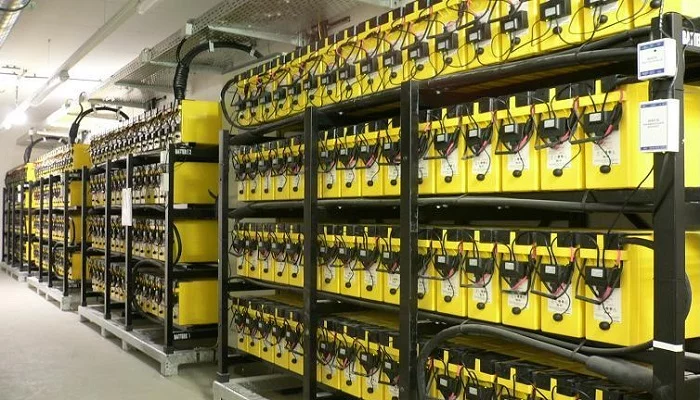
A 12V 100Ah LiFePO4 search is usually a replacement request: a telecom cabinet in Lagos, a UPS room in Lima, an AGV charging bay in Chennai, and a bank that has reached the end of its service life. Both chemistries answer the same headline — 12 V × 100 Ah = 1,200 Wh nominal — and they diverge on everything else. A lithium iron phosphate module typically delivers 3,000–5,000 cycles at 80 % depth of discharge at 25 °C, against 400–800 cycles for lead acid, needs no watering and no ventilation, and requires a battery management system and a charging profile that a lead-acid charger does not provide. A sealed lead-acid block costs roughly 30–40 % of the lithium initial cost, tolerates partial state of charge without damage, and is the default answer for float duty in telecom and UPS rooms.
The honest summary is that the decision is not chemistry, it is duty. Deep cycling favours lithium; standing float duty with an operator and a long service life favours lead acid. This article sets the two options side by side and fills in the published figures for the CHISEN 12 V 100 Ah sealed lead-acid block, the 6-EVF-100 12V100Ah model page, so the comparison rests on numbers rather than on reputation.
Key Takeaways
- The energy is identical. 12 V × 100 Ah = 1,200 Wh nominal for either chemistry (Arithmetic). Chemistry changes how many times you can use that energy, not how much there is.
- Cycle life is the dividing line. Lithium iron phosphate: 3,000–5,000 cycles at 80 % DoD at 25 °C. Lead acid: 400–800 cycles under the same discipline. The CHISEN 6-EVF-100 publishes 350–600 cycles at 50–80 % DoD (Model page).
- The published lead-acid block: 31.5 kg, 330 × 170 × 218 mm, 20.0 A maximum charging current, float 13.5 V, equalising 14.1 V, φ20-M8 terminals (Model page).
- Specific energy of that block: 1,200 Wh ÷ 31.5 kg = 38.1 Wh/kg (Arithmetic) — a useful benchmark to hold any lithium module against.
- Payback is a cycle question. With lead-acid initial cost typically at 30–40 % of the lithium equivalent, lithium pays back only if the site genuinely performs thousands of cycles rather than hundreds.
Side-by-Side: The Two 12V 100Ah Options
| Criterion | 12V 100Ah LiFePO4 | 12V 100Ah sealed lead acid (CHISEN 6-EVF-100) | Source |
|---|---|---|---|
| Nominal energy | 1,200 Wh | 1,200 Wh | Arithmetic |
| Rated capacity | 100 Ah | 100 Ah at C3 to 1.75 V/cell | Model page / Arithmetic |
| Cycle life | 3,000–5,000 cycles at 80 % DoD, 25 °C | 350–600 cycles at 50–80 % DoD | Lithium market data 2026 / Model page |
| Float / standby voltage | BMS-regulated; charger profile specific to lithium | 13.5 V (2.25 V/cell) | Model page |
| Equalising voltage | BMS-regulated; charger profile specific to lithium | 14.1 V | Model page |
| Maximum charging current | Set by the module datasheet and BMS | 20.0 A | Model page |
| Block weight | Module datasheet required | 31.5 kg | Model page |
| Dimensions | Module datasheet required | 330 × 170 × 218 mm | Model page |
| Watering or topping up | None | None | Model page |
| Hydrogen venting in float service | None | None | Model page |
| Battery management system | Required | Not required | Lithium market data 2026 |
| Charge at low temperature | BMS-controlled cutoff required | Restricted below the published limit | Lithium market data 2026 / Industry practice |
| Initial cost relative to lead acid | 100 % (reference) | 30–40 % | Lithium market data 2026 |
| Standards normally quoted | IEC 62619, UN 38.3, UL 2580 | GB/T 32620.1-2016, GB/T 32620.2-2016, JB/T 2599 | Model page / Lithium market data 2026 |
Two rows deliberately say “module datasheet required” instead of a number. For a lithium module, weight, dimensions and maximum charging current depend on the enclosure, the cell format and the busbar design, and any figure supplied without a module datasheet is an estimate. Ask the supplier for the datasheet; if the figure is not in it, it does not exist.
§1 — 6-EVF-100 12V100Ah Published Specifications
The reference point on the lead-acid side is the 6-EVF-100, and every figure below is published.
| Parameter | 6-EVF-100 published value | Source |
|---|---|---|
| Nominal voltage | 12 V | Model page |
| Nominal capacity | 100 Ah at C3 (3-hour rate) | Model page |
| Discharge end voltage | 1.75 V/cell | Model page |
| Nominal energy | 1,200 Wh (12 V × 100 Ah) | Arithmetic |
| Float voltage | 13.5 V (2.25 V/cell) | Model page |
| Equalising voltage | 14.1 V | Model page |
| Maximum charging current | 20.0 A | Model page |
| Cycle life | 350–600 cycles at 50–80 % DoD | Model page |
| Dimensions L × W × H | 330 × 170 × 218 mm | Model page |
| Total height | 218 mm | Model page |
| Weight | 31.5 kg (± 0.2 kg) | Model page |
| Specific energy | 38.1 Wh/kg (1,200 Wh ÷ 31.5 kg) | Arithmetic |
| Terminal | φ20-M8 | Model page |
| Standards | GB/T 32620.1-2016, GB/T 32620.2-2016, JB/T 2599 | Model page |
| Certifications | CE, RoHS, REACH, MSDS | Model page |
For context within the same range: the 6-EVF-80 is 25.7 kg at 259 × 170 × 218 mm with a 16.0 A charging limit, the 6-EVF-120 is 40.0 kg at 407 × 170 × 240 mm with a 24.0 A limit, and the 6-EVF-150 is 48.5 kg at 483 × 170 × 240 mm with a 30.0 A limit (Model page). Charging current scales with capacity, so the charger decision is made once for a whole site.
§2 — The Pain: Where the Drop-In Replacement Claim Breaks
The phrase “12V 100Ah LiFePO4 replacement for lead acid” appears in almost every enquiry, and it is the phrase that causes the most expensive mistakes. The nameplate matches — 12 V, 100 Ah, 1,200 Wh — and everything behind the nameplate does not.
The charger. A sealed lead-acid bank floats at 13.5 V and equalises at 14.1 V (Model page). A lithium iron phosphate bank is charged with a lithium-specific profile that includes a controlled bulk stage, a regulated float and a BMS-managed cutoff. If the existing telecom rectifier or solar controller keeps running the lead-acid profile, a lithium bank will sit chronically undercharged, will report a misleading state of charge, and will age in a way that has nothing to do with its cycle rating. This is the single most common failure in chemistry swaps.
The battery management system. A lead-acid bank has no electronics; a lithium module has balancing, over- and under-voltage protection, temperature sensing and usually a communications output that the site’s monitoring layer has to read. If the cabinet has no controller that can accept those signals, the lithium option loses the visibility that makes it attractive in the first place.
Cold charging. Lithium charging below freezing must be managed by the BMS; a lead-acid bank has its own, different, published limits. A site in Scandinavia, inland Canada or a high-altitude site in the Andes needs this checked before the module is ordered, not after it is installed.
Weight and structure. The published lead-acid block weighs 31.5 kg (Model page) and a 12V 100Ah LiFePO4 module’s weight depends on the enclosure and the cell format. Any lithium weight quoted without a module datasheet is an estimate, and it is usually an optimistic one. Ask for the datasheet.
Partial state of charge. Lead acid is tolerant of being left partially discharged and recharged; lithium is more sensitive to being parked deep. For a bank that spends weeks at low state of charge because the mains is stable, that tolerance is worth real money.
End of life economics. Lead-acid blocks are routinely replaced on a fixed calendar at a known cost. Lithium modules carry a cycle and throughput warranty instead. Those two cost models must be compared over the same period — five years, ten years — not against each other’s purchase price.
§3 — The Choice: Which Chemistry for Which Duty
| Application | Recommended route | Why |
|---|---|---|
| Telecom DC plant, float duty, permanent operator | Sealed lead acid block (6-EVF-100 class) | 350–600 cycles at 50–80 % DoD is enough for float service; lowest installed cost; no BMS to integrate |
| Telecom cabinet with frequent grid failures | Lithium iron phosphate | Thousands of cycles remove the calendar replacement; no watering; telemetry through the BMS |
| UPS room in a hospital or data room | Depends on discharge frequency | Lead acid for rare deep events; lithium for frequent deep events |
| Solar cabinet with no site access | Either, with the access factor weighted | Both sealed; lithium wins on cycle count, lead acid wins on installed cost and on partial-charge tolerance |
| Daily deep cycling, AGV and light forklift duty | Lithium iron phosphate | Cycle life is the deciding factor; this is outside the 12 V 100 Ah class and needs a duty-rated product |
| Retrofit onto an existing lead-acid charger | Sealed lead acid block | A lithium bank on a lead-acid profile is a warranty and safety problem |
Two operational facts anchor this table. In a fleet application, a forklift standing idle for a shift can cost $350–600 a day in lost production, which is why cycle life is valued so differently there than in a fixed float installation. And the industrial lithium battery market passed US$8 billion in 2026, which is why the cost gap has narrowed — but the 30–40 % relative initial cost of lead acid still means payback requires thousands of real cycles, not the headline cycle number.
§4 — The Framework: Seven Checks Before You Replace a Bank
Q1. Match usable energy, not nameplate capacity. Both chemistries here are 1,200 Wh nominal (Arithmetic). Compare what each can deliver to the load before the low-voltage cutoff, at the site’s temperature, at the discharge rate you actually impose.
Q2. Check the charger and the controller before the chemistry. Confirm the rectifier’s float, equalising and bulk stages, and confirm the controller can read a BMS output if lithium is chosen.
Q3. Count the real cycles. Multiply deep discharges per year by years of service and compare that number with each option’s cycle rating. A site with 30 deep discharges a year cannot amortise a 3,000-cycle battery; a site with 250 can.
Q4. Establish the temperature envelope. Both products have limits; lithium has the stricter cold-charge rule. Log the minimum site temperature, not the average.
Q5. Verify the weight and the mounting. The 6-EVF-100 is 31.5 kg at 330 × 170 × 218 mm (Model page). For lithium, require the module datasheet with weight, dimensions and the maximum charging current before the purchase order is released.
Q6. Budget the monitoring. Lithium means BMS data, and that means a controller, a communications route and an alarm policy. Price it in.
Q7. Write the warranty terms into the contract. For lead acid, calendar years and capacity retention at the end of that period; for lithium, cycles, throughput in Wh, and the ambient temperature band the warranty assumes.
§5 — The Trust: How to Qualify a 12V 100Ah LiFePO4 Supplier
Ask for six documents, in writing, before the deposit. The module datasheet — cell manufacturer, rated capacity and test rate, cycle test curve with temperature and depth of discharge stated, weight and dimensions. The BMS specification — balancing method, over-charge and over-discharge thresholds, temperature sensor count, and the communications protocol. The certification package — IEC 62619, UN 38.3 and UL 2580 certificates for the module and the cells inside it. The charger curve — bulk, absorption, float and low-temperature cutoff values, matched to the module. The warranty — years, cycles, throughput in Wh, and the temperature band it assumes. The recycling and take-back route — end-of-life handling is a logistics question with a real cost attached.
Then test the answers against what a published lead-acid datasheet looks like. The 6-EVF-100 12V100Ah publishes capacity rate, end voltage, float and equalising voltage, maximum charging current, cycle life with depth of discharge, dimensions, weight with tolerance, terminal type, standards and certifications (Model page). A lithium supplier who cannot match that level of disclosure is not quoting a product, they are quoting a chemistry.
One last check on the manufacturing side. CHISEN runs eight production bases with roughly 70 million kVAh of annual capacity under ISO 9001 and ISO 14001 management systems and supplies more than 60 countries, which is the difference between a cell that can be traced to a production batch and one that cannot. The CHISEN company profile publishes the manufacturing scale, and the sealed range is listed under AGM batteries.
§6 — FAQ
Q1. How much energy is a 12V 100Ah battery? 1,200 Wh nominal for either chemistry, calculated as 12 V × 100 Ah (Arithmetic). Real usable energy depends on the cutoff voltage, the temperature and the discharge rate.
Q2. How many cycles does a 12V 100Ah LiFePO4 battery give? Typically 3,000–5,000 cycles at 80 % depth of discharge at 25 °C, against 400–800 cycles for lead acid under the same discipline (Lithium market data 2026). The published CHISEN 6-EVF-100 lead-acid rating is 350–600 cycles at 50–80 % DoD (Model page).
Q3. Can I replace a lead acid battery with lithium one-for-one? Not as a drop-in. The energy matches at 1,200 Wh nominal, but the charging profile, the BMS, the monitoring and the cold-charge rule all differ, and the existing controller has to be checked first.
Q4. What does the CHISEN 6-EVF-100 12V100Ah weigh? 31.5 kg, ± 0.2 kg, in a 330 × 170 × 218 mm case (Model page). Specific energy is 38.1 Wh/kg (1,200 Wh ÷ 31.5 kg, Arithmetic).
Q5. What float and equalising voltage does the 6-EVF-100 use? 13.5 V float (2.25 V per cell) and 14.1 V equalising, with a 20.0 A maximum charging current (Model page).
Q6. Is a 12V 100Ah LiFePO4 module lighter than the lead acid block? It depends entirely on the enclosure and the cell format, so the answer must come from the module datasheet. Do not accept a weight figure without one.
Q7. Which is cheaper to buy? A lead-acid bank typically starts at 30–40 % of the lithium initial cost (Lithium market data 2026). Lithium pays back only where the site performs thousands of cycles.
Q8. Do either of them need watering or ventilation? Neither, in normal float service — both products are sealed, which is exactly why the 6-EVF-100 class is specified for roadside cabinets in Indonesia, Chile and Nigeria.
Q9. Which one for a telecom DC plant? A sealed lead acid block such as the 6-EVF-100 for float duty with a permanent operator, and lithium iron phosphate where grid failures are frequent enough to justify thousands of cycles and where BMS telemetry can be integrated.
Q10. What standards should I see? For the lead-acid block: GB/T 32620.1-2016, GB/T 32620.2-2016 and JB/T 2599, with CE, RoHS and REACH documentation (Model page). For a lithium module: IEC 62619, UN 38.3 and UL 2580.
Expert Summary
A 12V 100Ah LiFePO4 battery and a 12V 100Ah sealed lead-acid battery both deliver 1,200 Wh nominal (12 V × 100 Ah). Lithium iron phosphate is rated for 3,000–5,000 cycles at 80 % depth of discharge at 25 °C against 400–800 cycles for lead acid, requires a battery management system and a lithium charging profile, and costs roughly 2.5 to 3.3 times more up front. The published CHISEN 6-EVF-100 12V100Ah sealed AGM block delivers 100 Ah at the 3-hour rate to 1.75 V per cell, floats at 13.5 V (2.25 V per cell), equalises at 14.1 V, accepts 20.0 A maximum charging current, is rated at 350–600 cycles at 50–80 % DoD, weighs 31.5 kg ± 0.2 kg in a 330 × 170 × 218 mm case with φ20-M8 terminals, and is documented to GB/T 32620.1-2016, GB/T 32620.2-2016 and JB/T 2599 with CE, RoHS, REACH and MSDS. Specific energy is 38.1 Wh/kg (1,200 Wh ÷ 31.5 kg). Standby float duty in telecom and UPS installations is still served best by sealed lead acid, while daily deep cycling and sites with frequent outages are where lithium earns its premium.
Contact CHISEN
If you are replacing a 12 V 100 Ah bank in a telecom cabinet, a UPS room or a solar enclosure, send us the discharge profile, the ambient temperature range, the backup time and the existing charger model, and we will return the block configuration, the float and equalising setpoints, the string arithmetic and the alternative within the sealed range: email sales@chisen.cn, or message the export desk on WhatsApp at +86 131 6622 6999 (https://wa.me/8613166226999).
Browse the full CHISEN lead-acid range and technical data at https://leadacidbattery.cn.
Related CHISEN Product Pages
- 6-EVF-100 12V100Ah model page — full published specification set
- 6-EVF-150 12V150Ah model page — the next capacity step
- AGM battery range — sealed VRLA options across capacities
