Should You Convert to Lithium? What to Consider Before Swapping Your Lead-Acid
The idea of upgrading an existing lead-acid electric scooter to lithium battery power has obvious appeal. Less weight, longer range, faster charging, and thousands of additional cycles — the performance gains are real and substantial. But the conversion process is far more complex and expensive than simply unplugging one battery and plugging in another, and many riders who undertake a conversion without understanding what it actually involves end up spending significantly more than they anticipated, encountering compatibility issues that compromise performance, or discovering that their existing scooter is not worth upgrading in the first place. This guide provides a complete, honest assessment of what a lead-acid to lithium conversion actually involves, so you can make an informed decision before spending a dollar.
What a Lithium Conversion Actually Costs
The most common misconception about lithium conversion is that it involves purchasing only a new battery. In reality, a complete and safe lead-acid to lithium conversion typically involves four to five separate purchases and potentially significant technical labor.
The lithium battery pack itself is the largest expense. A quality 48V 20Ah LiFePO4 battery pack suitable for electric scooter conversion — featuring quality branded cells, an integrated battery management system, and a properly rated discharge connector — costs between $400 and $800 depending on cell brand, capacity, and supplier. A 60V 20Ah LiFePO4 pack for higher-voltage systems costs $500 to $900. These prices have moderated from the 2021-2022 peaks but remain firmly in the range where they represent a major investment relative to the value of the scooter being converted.
The lithium-compatible charger is the second required purchase. Lead-acid chargers operate on a different charging algorithm — constant current followed by constant voltage — than lithium chargers, which use a multi-stage profile including pre-charge, constant current, constant voltage, and balance stages. Using a lead-acid charger on a lithium battery can cause overcharging, cell damage, and potentially dangerous thermal events. A quality lithium-compatible smart charger with the correct output voltage and current rating costs $40 to $80.
The battery management system integration is the third consideration. Many quality lithium battery packs include a built-in battery management system that handles cell balancing, overcharge protection, over-discharge protection, and temperature monitoring. However, the scooter’s existing controller may need firmware updates or hardware modifications to communicate correctly with the new battery management system. Some scooters have a pre-charge circuit specifically designed for lead-acid batteries that must be bypassed or replaced when installing lithium. In some cases, the scooter’s controller must be replaced entirely — typically a $50 to $150 expense — to ensure correct lithium battery management.
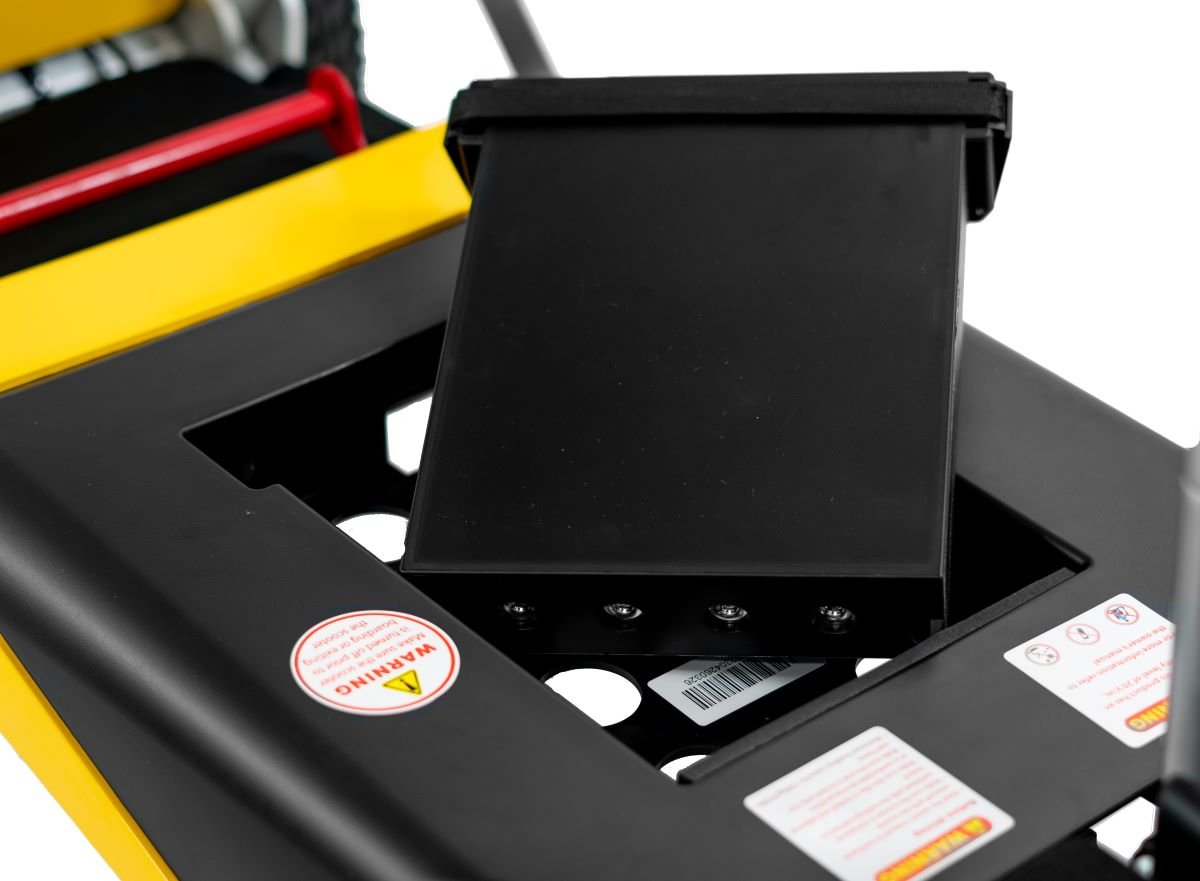
Physical mounting modifications are the fourth potential expense. Lead-acid batteries in electric scooters are typically housed in large rectangular enclosures sized for the bulkier lead-acid form factor. Lithium battery packs are considerably smaller and may require custom mounting brackets, foam padding to prevent movement, or wiring harness modifications to connect the new pack’s discharge terminals to the scooter’s existing wiring. Depending on the scooter model, these modifications may be simple or may require drilling, fabrication, or professional installation.
Adding these costs together — lithium battery pack at $400 to $800, lithium-compatible charger at $40 to $80, potential controller replacement at $50 to $150, and mounting materials or professional installation labor at $20 to $100 — the total conversion cost range is $510 to $1,130, with most conversions falling in the $600 to $900 range when all components and labor are accounted for.
When the Conversion Makes Financial Sense
The critical question for any potential converter is whether the performance gains from lithium justify the expenditure in the context of the scooter’s remaining useful life. The math only works under specific conditions.
You ride more than 30 kilometers per day. At this usage level, the lithium battery’s higher cycle count — potentially 2,000 to 3,000 cycles versus 300 to 500 for quality lead-acid — means the lithium battery will outlast multiple lead-acid replacements. If you would otherwise spend $260 to $390 on two lead-acid battery replacements over four years, the lithium battery’s longer life reduces that ongoing cost to zero for the conversion period. Over four years of heavy daily use, a quality lithium conversion may break even with repeated lead-acid replacements when total cost of ownership is considered.
Your existing scooter is mechanically sound. A conversion on a scooter with a worn motor, failing bearings, degraded suspension, or corroded wiring is poor economics. Spending $700 to convert a scooter that will need a $150 motor replacement or a complete electrical system overhaul within 18 months wastes the lithium investment. Before converting, have the scooter’s mechanical condition assessed honestly. If the frame, motor, suspension, and electrical connectors are in good condition, the conversion investment is protected.
You genuinely need the weight savings. If you regularly carry your battery indoors for charging, perform multiple battery swaps per shift, or need to reduce the scooter’s total weight for regulatory or handling reasons, the lithium conversion delivers tangible practical benefits that justify the cost regardless of pure financial return.
You can afford the upfront investment without financial strain. Lithium conversion is not a budget decision. It is a premium investment in performance. If spending $600 to $900 would create financial hardship or require delaying other necessary expenses, the conversion is not right for your situation, regardless of its technical merits.
When the Conversion Does Not Make Sense
Your scooter is more than three years old with significant wear. After three years of daily use, most electric scooters have accumulated meaningful wear on their motors, controllers, brakes, and structural components. The remaining mechanical life of the scooter may be only one to two years, and spending $700 on a lithium conversion for a scooter that will be retired in 18 months wastes the lithium investment.
Your daily riding distance is under 20 kilometers. At lower usage levels, the cycle-life advantage of lithium has less time to amortize over the ownership period. The $600 to $900 conversion cost will take longer to recover through avoided battery replacements, and the financial case weakens significantly.
Your budget is limited. If the conversion would require you to postpone other necessary expenses, go into debt, or sacrifice financial reserves, the stress and risk outweigh the performance gains. A well-maintained lead-acid battery system serving a moderate daily commute costs only $130 to $160 per replacement and delivers reliable service for 18 to 24 months at typical usage levels.
The Compatibility Checklist Before You Buy
Before purchasing any components for a conversion, work through this checklist to assess compatibility. First, determine your scooter’s nominal voltage — most are 36V, 48V, 60V, or 72V — and ensure the lithium battery pack you are considering matches exactly. Second, check the scooter’s controller maximum current rating — if the controller is rated for 25A continuous, a lithium battery capable of 40A discharge will work safely, but a lithium battery with a 15A maximum discharge will create performance limitations. Third, verify that the scooter’s battery compartment dimensions can accommodate a lithium pack, or plan for external mounting. Fourth, confirm that a lithium-compatible charger is available for your chosen battery’s voltage and chemistry. Fifth, determine whether your scooter’s existing controller has a pre-charge circuit that may need modification for lithium compatibility. Sixth, check whether your scooter’s battery management system display or app is compatible with lithium battery communication protocols, or whether you will need a separate battery monitoring solution.
!electric-scooter-lithium-battery-pack-close-up.jpg

The Bottom Line on Conversion
Converting from lead-acid to lithium can deliver genuinely transformative performance improvements — range increases of 50 to 100 percent, weight reductions of 60 to 75 percent, and cycle life improvements of four to six times. But these gains come with an upfront cost of $500 to $1,500, significant technical complexity, and the requirement that the underlying scooter be in sufficient mechanical condition to justify the investment. For riders who meet all the criteria above — heavy daily use, sound mechanical condition, genuine need for weight savings, and adequate financial reserves — the conversion can be an excellent decision. For riders whose usage patterns and financial situations are more modest, the discipline of maintaining a quality lead-acid battery system with proper charging habits will serve them better at a fraction of the cost.

发表回复