Is Lead-Acid Really Outdated? Where It Still Wins Against Lithium in 2026
The narrative that lead-acid batteries are obsolete has become so pervasive that many riders, and even some industry professionals, accept it as settled fact. Headlines announce the lithium revolution in electric vehicles; flagship smartphones, laptops, and power tools all run on lithium cells; and electric car manufacturers compete to pack more kilowatt-hours of lithium battery capacity into increasingly expensive vehicles. In this context, it is easy to conclude that lead-acid technology belongs in a museum alongside the cathode-ray tube monitor and the rotary telephone. But that conclusion is wrong, and understanding why requires setting aside marketing narratives and examining the actual performance characteristics, economic realities, and practical use cases that define the electric scooter market in 2026.
Lead-Acid’s Genuine Advantages
Upfront cost remains the most powerful argument for lead-acid batteries. A quality 48V 14Ah sealed lead-acid battery pack costs $110 to $165 at retail, while an equivalent lithium pack costs $400 to $600. For a rider in Southeast Asia, Africa, South America, or India — markets that collectively represent the majority of the world’s electric scooter purchases — this price gap is not a minor convenience factor but a decisive barrier. A delivery rider in Bangkok or Nairobi who earns $10 to $20 per day cannot save the $400 difference between a lithium battery and a lead-acid battery in a single month. The lead-acid option at $130 is the option that enables them to start earning immediately. This economic reality has not changed with the calendar year, and it will not change simply because lithium technology has become more sophisticated.
Safety characteristics give lead-acid a decisive edge in specific applications. Lithium batteries, particularly those using NMC or cobalt-oxide chemistries, carry a nonzero risk of thermal runaway — a rapid, self-sustaining increase in temperature that can result in fire. While LiFePO4 batteries are substantially more thermally stable than NMC, the fire risk associated with lithium batteries — however small in absolute terms — creates genuine liability concerns in indoor storage environments. Apartment buildings, covered parking garages, shared residential complexes, and commercial delivery depots where dozens of scooters are stored charging simultaneously represent environments where the thermal runaway risk profile of lithium batteries is a meaningful concern. Lead-acid batteries cannot experience thermal runaway. They may vent gas if severely overcharged, and they require ventilation in enclosed spaces, but they do not ignite spontaneously or propagate fires. For fleet operators managing large numbers of scooters in Singapore’s high-rise residential buildings, South Korea’s dense urban apartment complexes, or Japan’s compact indoor parking facilities, this safety characteristic alone justifies the continued specification of lead-acid battery systems.
Global availability and replaceability is a third advantage that receives insufficient attention in technology-forward analyses written from the perspective of well-resourced consumers in wealthy countries. A rider in Lagos, Nairobi, or Dhaka who needs a battery replacement can typically source a 12V lead-acid battery from a local automotive parts supplier within hours, often at competitive prices, and install it without specialized tools or technical expertise. The same rider seeking a replacement lithium battery pack for their specific scooter model would face a multi-week wait for international shipping, a price tag that reflects those shipping costs, and the need for a technician with BMS diagnostic equipment to verify the replacement pack’s compatibility. The infrastructure for lead-acid battery distribution is mature, global, and deeply embedded in local economies in a way that lithium battery distribution simply is not in most of the world.
Operational forgiveness — the ability of lead-acid batteries to tolerate abuse without immediate catastrophic failure — makes them more practical for non-technical users. A lead-acid battery that is occasionally overcharged, left sitting at a low state of charge for days, or operated in high ambient temperatures will degrade faster than one that is carefully maintained, but it will typically provide warning signs before failing completely. Lithium batteries, particularly NMC chemistries, are more sensitive to operating extremes and can degrade significantly faster when subjected to the irregular charging patterns common among working riders who charge opportunistically at public charging points, borrowed outlets, or makeshift stations.
Where Lithium Genuinely Wins
This balanced assessment requires acknowledging where lithium technology holds genuine, uncontested advantages. Energy density is the most significant: a lithium battery pack stores two to three times more energy per kilogram than an equivalent lead-acid pack. A 48V 20Ah lithium pack weighs approximately 5 to 7 kilograms, while a 48V 20Ah lead-acid pack weighs 25 to 32 kilograms. For a scooter rider who must carry the battery up multiple flights of stairs for charging, or who manually lifts the battery pack to swap it during a delivery shift, this weight difference is transformative. A delivery rider in Metro Manila or Ho Chi Minh City who performs three battery swaps per shift will vastly prefer a 6-kilogram lithium pack over a 28-kilogram lead-acid equivalent.
Cycle life is the second genuine lithium advantage. Quality LiFePO4 cells deliver 2,000 to 3,000 full charge cycles before reaching 80 percent capacity, compared to 300 to 500 cycles for quality sealed lead-acid batteries. For a rider who covers 10,000 or more kilometers per year and can afford the upfront lithium investment, the lithium battery’s longer life may justify its higher initial cost over a four-to-five-year ownership period.
Deep discharge tolerance gives lithium an edge in demanding applications. Lead-acid batteries should not be regularly discharged below 50 percent state of charge if maximum cycle life is desired, whereas lithium batteries tolerate regular discharges to 20 percent or even 10 percent state of charge with minimal impact on cycle life. For riders who regularly push their batteries to the limit during long shifts, this tolerance provides practical advantages.
The 2026 Market Reality
Despite lithium’s genuine technical advantages, the global market share of lead-acid batteries in the electric scooter segment has not declined in proportion to the technology’s superior specifications. In 2026, sealed lead-acid batteries still power approximately 60 to 65 percent of the world’s electric scooters by unit volume, with lithium accounting for the remaining 35 to 40 percent concentrated heavily in premium, urban, and high-income market segments.
This market reality persists because the technology choice for most of the world’s riders is not made in a vacuum of pure performance specifications. It is made in the context of real income constraints, real infrastructure limitations, and real risk tolerances. A motorcycle-taxi driver in Kampala, Uganda who earns $8 to $15 per day is not optimizing for energy density or cycle life. He is optimizing for the battery that enables him to start earning today at a price he can afford. Lead-acid technology, precisely because it is cheap, safe, globally available, and forgiving, is the technology that serves this use case better than any alternative available in 2026.
CHISEN’s position within this market context is clear: by focusing on the highest possible quality within the lead-acid segment — thicker plates, higher-purity lead, rigorous formation testing — CHISEN extends the cycle life advantage of its batteries to the maximum degree the chemistry allows, giving riders who choose lead-acid the best possible version of that technology. For the majority of the world’s electric scooter riders, the choice is not between a CHISEN lead-acid battery and a premium lithium battery. It is between a CHISEN lead-acid battery and a cheap, thin-plated lead-acid battery that will fail in six months. CHISEN’s quality-first manufacturing makes that choice an easy one.
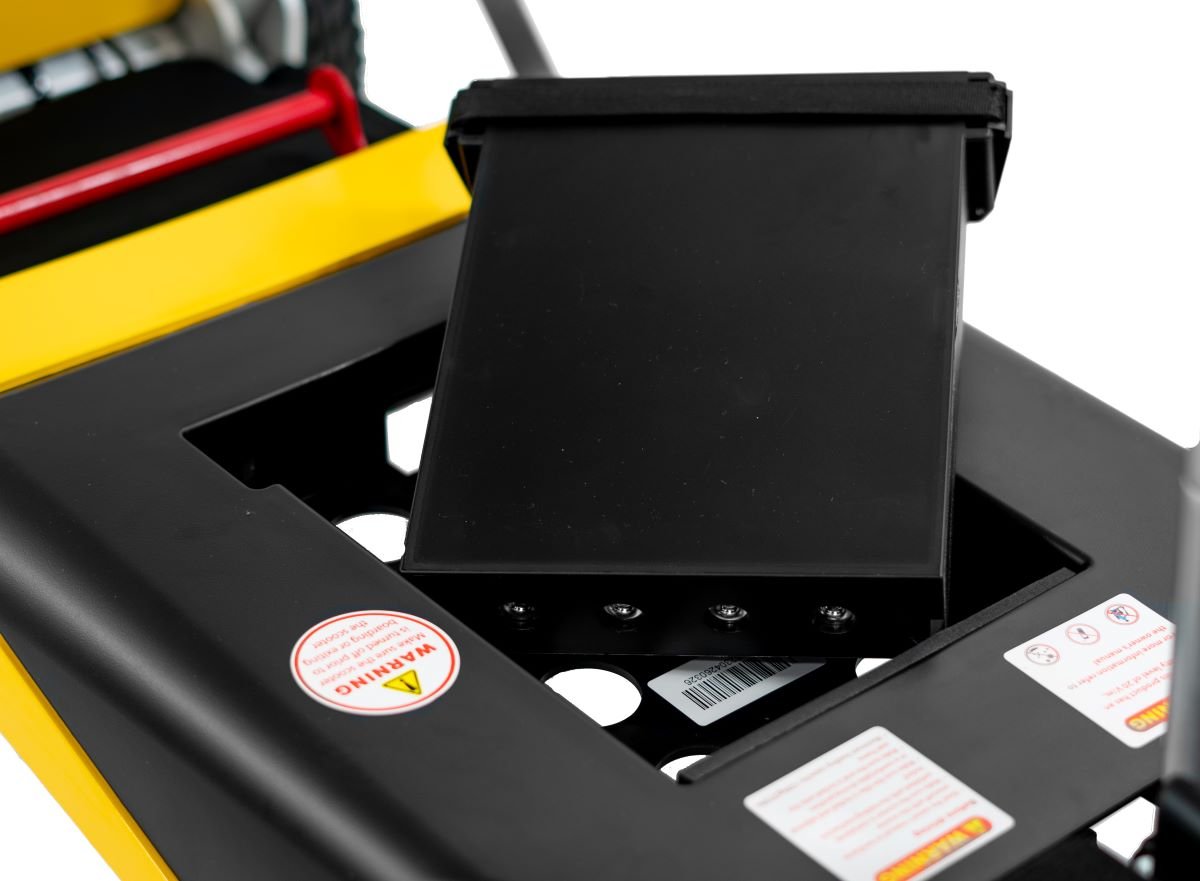
!electric-scooter-lithium-battery-pack-close-up.jpg

The Honest Summary Table
When evaluating the lead-acid vs lithium comparison, riders should consider the following real-world performance characteristics: upfront cost favors lead-acid by 60 to 80 percent; safety (fire risk) favors lead-acid; global availability of replacements favors lead-acid; weight and energy density favor lithium by a factor of three to four; cycle life favors lithium by a factor of four to six; operational forgiveness favors lead-acid for non-technical users; and total cost of ownership over three years favors lead-acid for moderate daily usage. No single chemistry dominates universally, and the context of the rider’s income, infrastructure, and use case must guide the decision rather than technology hype.

发表回复