Charger Stays Red and Won’t Turn Green — What’s Wrong With the Battery?
You plug in your scooter before bed. The charger indicator is red — good, it’s charging, current is flowing. You wake up, check the charger, and it’s still red. You wait another hour. Still red. You check the manual; it says the light should turn green in 6–8 hours. It’s been 12 hours. Something is wrong. But what?
A charger that stays red indefinitely is one of the most common battery charging problems reported by electric scooter owners worldwide, and it can be caused by several different issues — some rooted in the battery itself, some in the charger, and some in the electrical connection between them. Understanding which one it is will save you from either replacing a perfectly functional battery or continuing to ride on a dangerously faulty one. In this article, we walk through every major cause and the specific diagnostic steps to isolate each one, whether you’re troubleshooting in a workshop in Lagos, São Paulo, or Berlin.
Why Chargers Change Color in the First Place
To understand why a charger might stay red, it helps to understand how modern multi-stage lead-acid battery chargers work. Most electric scooter chargers operate in three distinct stages:
Stage 1 — Bulk Charging: The charger delivers its maximum rated current (typically 10–20% of the battery’s Ah rating — so a 1.5A charger for a 12Ah battery, or 3A for a 20Ah battery) and the voltage rises steadily from the battery’s resting voltage up toward the absorption voltage threshold. During this stage, the battery accepts nearly all the current the charger can deliver, and the indicator light is typically red.
Stage 2 — Absorption (Constant Voltage): The charger holds the voltage steady at the absorption level (approximately 14.4–14.8V per 12V unit at 25°C, with temperature compensation of about –20mV/°C per cell) and the current gradually tapers down as the battery approaches 100% state of charge. The indicator light may remain red or begin to flash during this stage.
Stage 3 — Float Maintenance: When the current drops to a preset threshold — typically around 1–3% of the battery’s Ah rating (e.g., 120–360mA for a 12Ah battery) — the charger switches to float mode, reducing voltage to approximately 13.5–13.8V per 12V unit. In float mode, the indicator turns green, signalling that the battery is fully charged and is being maintained at optimal storage voltage.
A charger that never reaches green either cannot get the battery to accept charge (battery problem), cannot deliver charge effectively (charger problem), or has a faulty voltage sensing circuit that prevents it from recognizing a full battery (charger indicator problem). Here’s how to determine which.
Test 1: Measure the Battery Voltage Directly
The single most important diagnostic step is to measure the actual battery pack voltage with a digital multimeter while the charger is connected and running. Do NOT disconnect the charger for this test — measuring at the battery terminals with the charger plugged in tells you what the charger is actually delivering versus what the battery is accepting.
If the battery voltage is below 39V on a 36V system (or below 48V on a 48V system) after 8+ hours of charging, the battery is not accepting charge effectively. This is a strong indicator of sulfation, one or more damaged cells with high internal resistance, or a battery that has developed a significant capacity deficit. A healthy battery in bulk charging mode should reach near its full-charge absorption voltage within 3–5 hours from a deeply discharged state.
If the voltage reads correctly — approximately 41–43V for a healthy 36V pack under charge — but the charger still shows red, the charger is almost certainly faulty. Specifically, its current detection circuit has likely failed. The charger may still be delivering current (you can verify this by feeling the battery casing for warmth — a charging lead-acid battery generates slight heat), but it is not recognizing when the battery is full.
Sulfation: The Most Common Cause of a Stuck Charger Indicator
When a lead-acid battery is left in a partially discharged state for an extended period — typically more than 7 days below 50% state of charge — lead sulfate (PbSO₄) crystals begin to form on the plate surfaces. These crystals are a normal byproduct of discharge, but when the battery isn’t recharged promptly, the crystals grow larger and harder (a process called “hard sulfation”). Hard sulfation permanently reduces the active surface area of the plates and dramatically increases internal resistance.
When you attempt to charge a sulfated battery, the terminal voltage rises quickly during the initial bulk phase — faster than it would on a healthy battery — which can trick the charger into thinking the battery is nearly full. However, because the sulfated plates cannot actually accept the full current, the charger never sees the characteristic voltage plateau and steady current taper that normally triggers the transition to absorption and float stages. In severe cases, a heavily sulfated battery might accept only 10–20% of its rated charging current. A charger designed to deliver 2A to a 12Ah battery might find only 0.2–0.4A actually being accepted — so the charger remains in bulk mode indefinitely, never reaching the current threshold for stage transition. You can leave it connected for 24 hours and still see the red light.
Light to moderate sulfation can sometimes be partially reversed with a controlled desulfation charge — a low-current charge (typically 3–5% of Ah rating, so 0.3–0.6A for a 12Ah battery) at a slightly elevated voltage of around 14.4–14.8V per 12V unit, maintained over 12–24 hours. This process gradually dissolves softer sulfate crystals and restores some active surface area. However, severe sulfation — typically occurring in batteries that have sat below 10V for more than a month — is generally beyond recovery and requires replacement.
Sulfation is especially common in seasonal-use scooters. Riders in temperate climates like northern Europe, Canada, or the northeastern United States who store their scooters over winter without disconnecting and trickle-charging the batteries are almost guaranteed to encounter sulfation by spring. A battery left sitting at 12.2–12.4V (approximately 40–50% state of charge) for four months of winter storage will have developed moderate sulfation by the time riding season resumes.
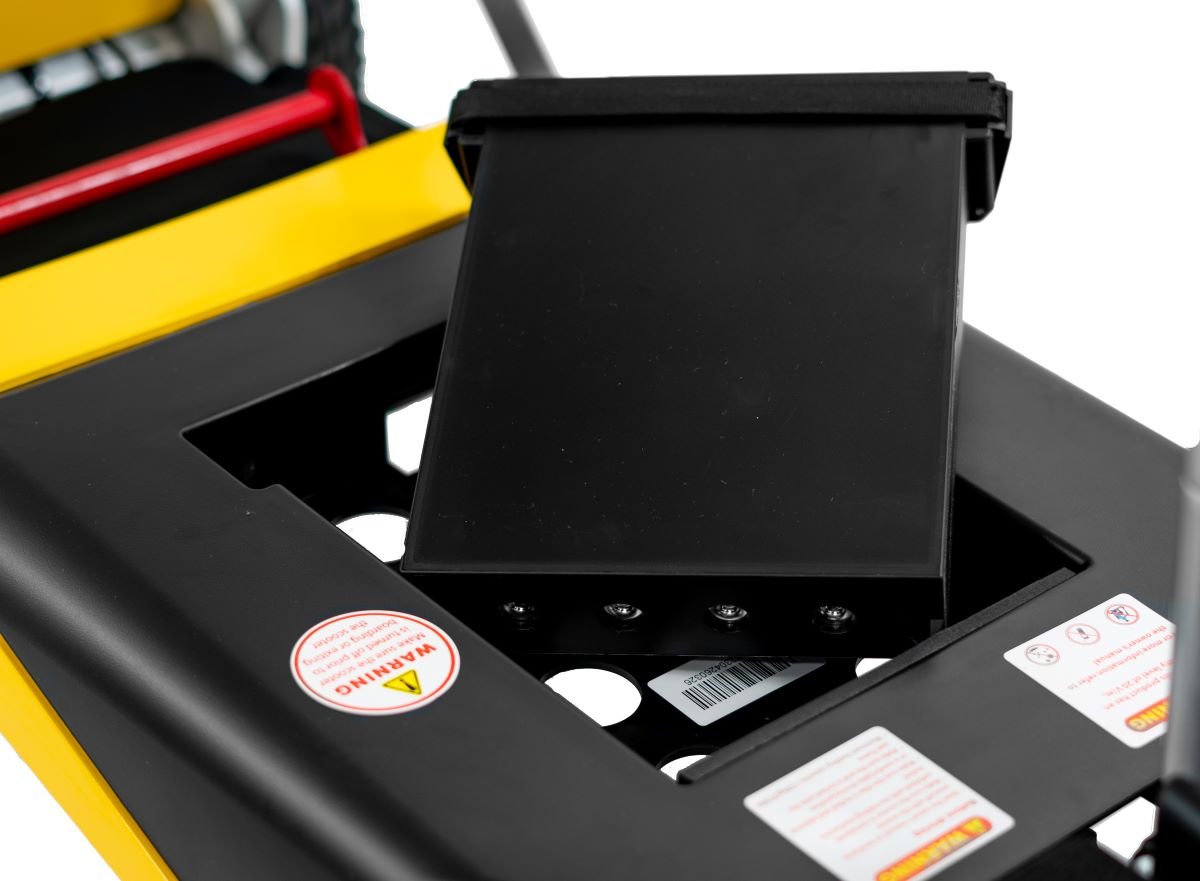
!electric-scooter-lithium-battery-pack-close-up.jpg

Connection Problems: The Easy Fix Nobody Thinks About
Before you assume the worst, check the connections. A loose, corroded, or dirty connection between the charger and the battery will prevent the charger from accurately sensing the battery’s terminal voltage, keeping it locked in bulk charge mode and unable to transition to the next stage.
Start by inspecting the charging port on the scooter body. Is the port dirty, bent, or contaminated with moisture and debris? Road dust, rainwater residue, and lint can accumulate in charging ports, especially on scooters used in wet climates or poorly maintained vehicles common in monsoon-affected regions like southern India, the Philippines, and coastal West Africa. Clean the port with a dry, lint-free cloth and, if available, a contact cleaner spray. Avoid using water or abrasive materials.
Next, inspect the charger plug’s pins. Are they clean and straight? Is the spring tension on the barrel connector still firm? Even a thin layer of oxidation or dust on the charging pins can introduce enough contact resistance (0.5–2Ω) to create a voltage drop of 0.5–2V at typical charging currents, enough to fool the charger’s voltage sensor into misinterpreting the battery’s state.
Also check the internal connections inside the battery compartment if your scooter provides access. The wires connecting the individual batteries in a series string to the discharge and charging terminals can loosen over time due to vibration from rough roads — a common issue on cobblestone streets in European cities, unpaved roads in rural areas of Latin America and Sub-Saharan Africa, and speed bumps throughout Asia. A loose positive terminal on one battery in a series string creates a high-resistance connection point that prevents proper charging of the entire pack. That single weak connection can cause the entire battery string to be undercharged by 1–3V, enough to keep the charger from reaching its full-charge detection threshold.
The Charger Itself May Be the Problem
Chargers fail, and the failure mode is often exactly this: they continue delivering bulk charge current indefinitely but never transition to the absorption/float stage. The charger remains in red-light mode, and if left connected for many hours beyond the normal charge time, it can actually overcharge and thermally stress the battery, accelerating electrolyte loss and grid corrosion.
A simple test: if you have access to a second charger with the correct voltage and current specifications for your system, try using it to charge the battery. If the second charger completes a normal charge cycle and turns green within the expected time window (typically 6–10 hours for a full charge from deeply discharged), the original charger is faulty. If both chargers exhibit the same behavior — stuck on red indefinitely — the battery is the problem.
Most electric scooter chargers are relatively inexpensive and are among the most commonly replaced components on electric scooters. If your charger is more than three years old, consider replacing it proactively, especially if you frequently charge in dusty, humid, or high-temperature environments. The cost of a new charger (typically $15–35 depending on voltage and amperage) is far less than the cost of a replacement battery (typically $60–150 for a complete pack). Many professional e-scooter repair shops in Nairobi, Ho Chi Minh City, and Mexico City specifically recommend charger replacement as the first line of defense whenever a battery fails prematurely — because the charger that caused the damage is likely still in use.

发表回复