Why Does a Brand New Electric Scooter Battery Die After Just 3 Months?
It is one of the most frustrating experiences in electric mobility: you buy a brand new scooter, ride it for a few weeks, and then watch the range collapse. One month the battery takes you 25 kilometers. Three months later, you are lucky to get 10. The battery did not wear out naturally. It failed prematurely, and the culprit is usually hiding somewhere in the manufacturing process, not in how you ride or charge.
Understanding Early Battery Failure: What Goes Wrong at the Factory
Even in the most disciplined factories, a small percentage of batteries leave the production line with latent defects that do not show up immediately. These are called early-life failures, and they are the primary reason a brand new battery can die within its first three months of use. The three most common manufacturing defects are formation failures, plate impurity issues, and separator defects, each capable of killing a battery long before its expected lifespan of 300 to 500 cycles.
Formation failure occurs during the initial charging process that every lead-acid battery undergoes after assembly. During formation, the lead dioxide plates are created through electrochemical conversion, and the electrolyte is given time to penetrate fully into the active material. If the formation charge is cut short, performed at the wrong voltage, or skipped entirely by a rushed budget manufacturer, the plates do not develop their full capacity. A battery that has been improperly formed may show normal voltage readings initially but will lose capacity rapidly under load. In quality factories with automated formation testing, the defect rate from formation failures sits between 0.5 and 2 percent. In budget manufacturing facilities that skip or abbreviate the formation process to cut costs, that rate climbs to 8 or even 15 percent.
Plate impurity is a subtler problem. If the lead alloy used in the battery’s positive plates contains elevated levels of contaminants such as iron, copper, or antimony beyond specification, localized galvanic cells form within the plate structure. These micro-short circuits drain the battery internally, cause self-discharge far above the normal rate of 3 to 5 percent per month, and progressively destroy active material. A battery suffering from plate impurity may charge fully, show correct resting voltage, and still fail under load because the plate surface area available for discharge has been compromised by parasitic corrosion reactions.
Separator defects are mechanical in nature. The polyethylene or AGM separator between the positive and negative plates must maintain consistent thickness and porosity across the entire plate surface. If a separator sheet is thinner than specification at any point, Dendrites of lead can grow through the gap during cycling, creating an internal short circuit. Alternatively, a separator that has been compressed or damaged during assembly will allow plate contact, also causing an internal short. Either way, the result is a cell that appears charged but delivers no useful current.
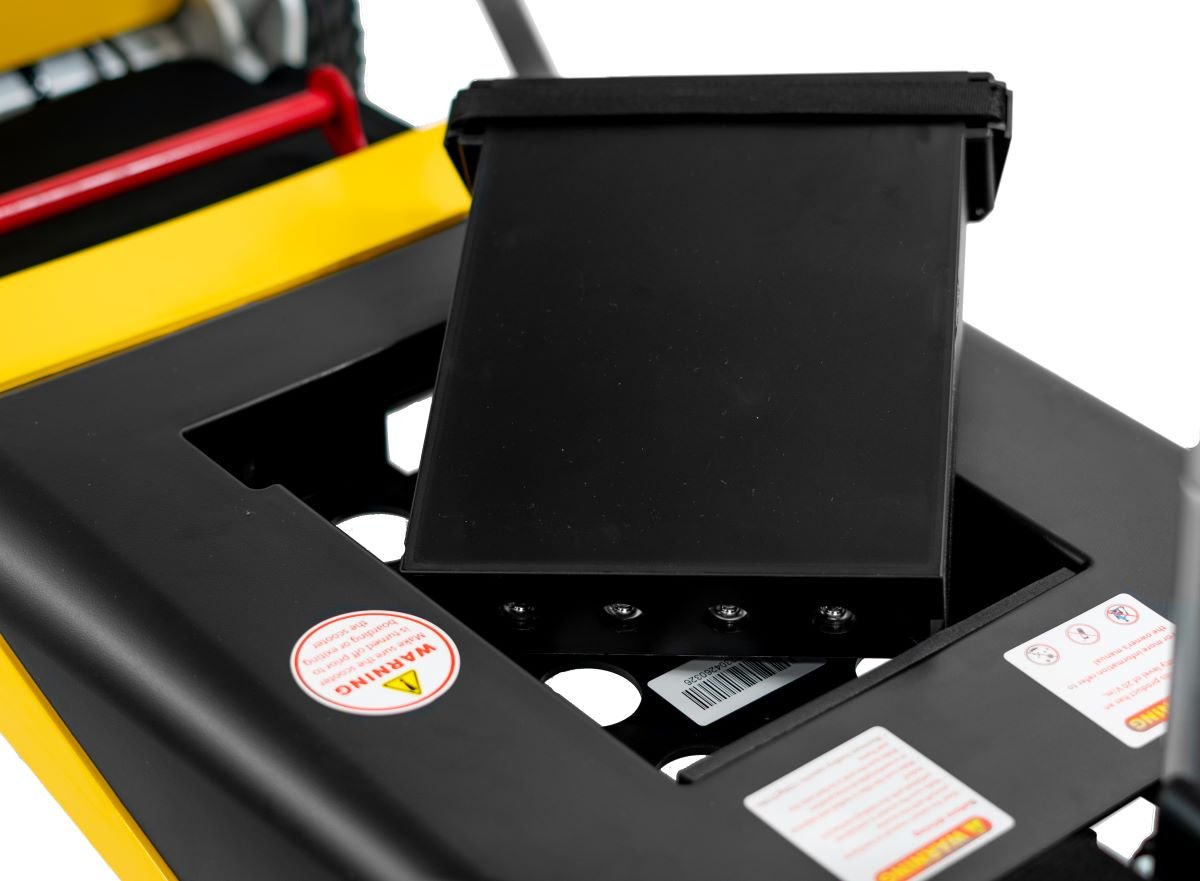
!electric-scooter-lithium-battery-pack-close-up.jpg

Spotting Early Failure Signs Within the First Ten Cycles
The first ten charge-discharge cycles of a lead-acid battery are a diagnostic window. A healthy new battery should deliver at least 90 percent of its rated capacity within those first ten cycles, with performance gradually settling to its nominal value by cycle twenty. If your new battery shows any of the following warning signs during this window, you are likely dealing with a manufacturing defect rather than normal wear.
The most telling early failure symptom is voltage sag under load. Place the scooter under a moderate load, such as riding at half throttle on flat ground, and use a multimeter to monitor the battery voltage in real time. A healthy 48-volt battery pack composed of four 12-volt units should maintain above 47 volts under this load. If the voltage drops below 44 volts with moderate current draw in the first ten cycles, at least one cell is failing to hold its charge. Another clear signal is rapid self-discharge: if you charge the battery to 100 percent in the evening, park it unused, and measure below 12.6 volts per cell (75.6 volts for a 48-volt pack) the next morning, internal self-discharge is consuming the charge faster than it should.
Physical inspection also reveals early defects. Swelling of the battery case, even slight, indicates gas generation inside the cells, which points to overcharging during formation or an unstable cell. Discoloration at the terminals, a sulfurous smell, or any warmth at the battery case during a full charge cycle are all red flags that demand immediate investigation. Riders who catch these signs within the first month are in the strongest position for warranty claims.
The Warranty Claim Process: What You Need to Know
Battery warranties for electric scooters typically range from six months to two years, with the terms varying significantly by manufacturer. The warranty coverage usually breaks down into two periods: a full replacement period covering the first three to six months, and a prorated period after that. During the full replacement period, a confirmed battery failure triggers a complete replacement with no cost to the consumer. During the prorated period, the manufacturer covers only a percentage of the replacement cost, calculated as a fraction of the remaining warranty period.
To file a successful warranty claim, you need to document the failure thoroughly. This means retaining the original purchase receipt, taking photographs of the battery label showing the serial number and specifications, and recording the voltage readings that confirmed the failure. Most reputable manufacturers require a voltage test performed by a technician or submitted via a data-logging device before approving a warranty replacement. Batteries that have been physically damaged, have corroded terminals beyond the case, or show signs of overcharging from an incompatible charger are typically excluded from warranty coverage regardless of age.
The process at CHISEN begins with contacting the authorized distributor from whom the battery was purchased. The distributor arranges a battery voltage test, and if the test confirms capacity below 60 percent of rated value within the warranty period, a replacement unit is dispatched within five to seven business days. Keeping your purchase records and maintaining your battery properly during the warranty period is the simplest way to protect your investment.
Why Factory Quality Control and Formation Testing Are Non-Negotiable
When you purchase a lead-acid battery from a manufacturer that performs rigorous formation testing on every unit before shipping, you are paying for a defect screening process that catches the large majority of early-life failures before the battery ever reaches your hands. Formation testing involves placing every assembled battery through a full charge-discharge formation cycle while monitoring cell voltage curves, temperature rise, and gassing rates. Batteries whose formation curves deviate from specification are automatically flagged, reworked, or scrapped.
Manufacturers like CHISEN that operate automated formation lines achieve defect rates of 1 to 3 percent, which means that 97 to 99 out of every 100 batteries shipped perform within specification. By contrast, batteries sourced from unverified marketplaces in Southeast Asia, Africa, and South America frequently originate from facilities that either skip formation testing entirely or perform it manually with no data logging. In these cases, defect rates of 8 to 15 percent mean that roughly one in eight batteries sold will fail within the first few months of use. While the lower upfront price of these batteries is attractive, the true cost emerges when riders in Nigeria, Kenya, Brazil, Indonesia, and the Philippines find themselves paying for a second battery replacement within a year.
Buying from manufacturers with documented QC processes, ISO 9001 quality management certification, and traceable formation testing records is the single most effective way to avoid early battery failure. The slight premium you pay upfront for a quality battery translates directly into years of reliable service rather than months of frustration and unexpected expense.

发表回复