分类: Battery Knowledge

Battery Knowledge

  • AGM vs Flooded Lead-Acid Batteries: The 2026 Practical Comparison for Solar and UPS

    AGM vs Flooded Lead-Acid Batteries: The 2026 Practical Comparison for Solar and UPS

    AGM vs Flooded Lead-Acid Batteries: The 2026 Practical Comparison for Solar and UPS

    The question we get most from distributors is: AGM or flooded? The answer is never simple — it depends on application, budget, maintenance capacity, and climate. This is the most practical comparison guide available.

    How the Two Technologies Differ

    Before comparing applications, understand the structural difference:

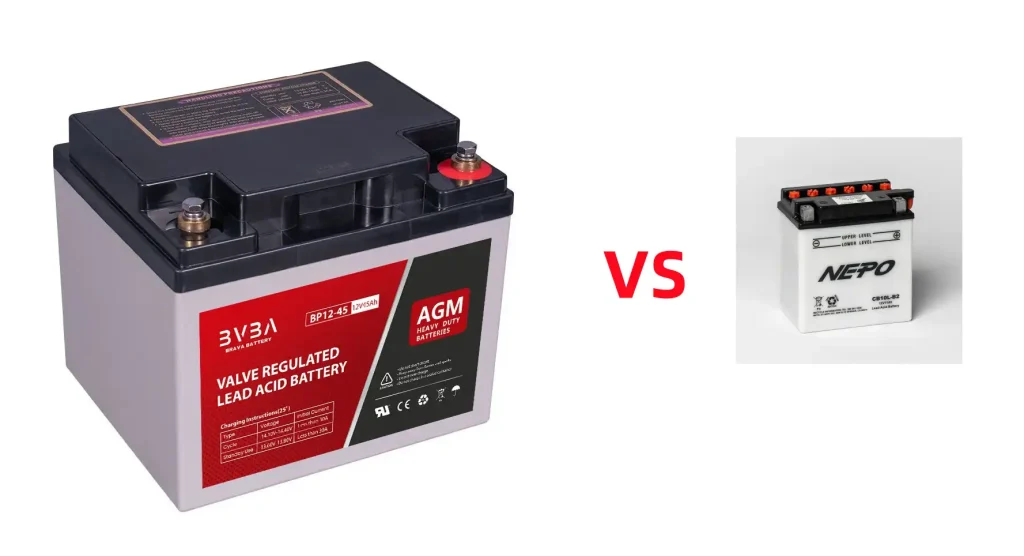
    Flooded (wet cell) batteries have liquid electrolyte that freely moves between the plates. They require periodic watering, must be installed upright, and can emit gas during charging. In exchange, they offer superior heat tolerance and the lowest cost per cycle.

    AGM (Absorbed Glass Mat) batteries have electrolyte absorbed in a glass fibre separator. They are sealed, spill-proof, can be installed in any orientation, and emit minimal gas. They cost more per cycle but require essentially zero maintenance.

    Side-by-Side Comparison

    !agm-vs-gel-lead-acid-battery-comparison.jpg

    FactorFlooded Lead-AcidAGM VRLA

    |

  • UPS Battery Sizing Guide 2026: Calculate Runtime, Capacity, and Never Under-Spec Again

    UPS Battery Sizing Guide 2026: Calculate Runtime, Capacity, and Never Under-Spec Again

    UPS Battery Sizing Guide 2026: Calculate Runtime, Capacity, and Never Under-Spec Again

    A UPS system is only as good as its battery bank. Get it wrong and you either overspend or leave your critical equipment exposed. This guide gives you the exact formulas to size any lead-acid UPS battery correctly — with a worked example you can use immediately.

    Why UPS Battery Sizing Goes Wrong

    The most common sizing mistake: engineers use the UPS’s rated VA or kW as the load, then divide by the battery voltage to get Ah — without accounting for the inverter efficiency, the battery’s discharge characteristics, and the desired runtime.

    The result is batteries that last 18 months instead of 5 years, or UPS systems that deliver 8 minutes instead of the 30 minutes required for orderly shutdown.

    The Correct Sizing Formula

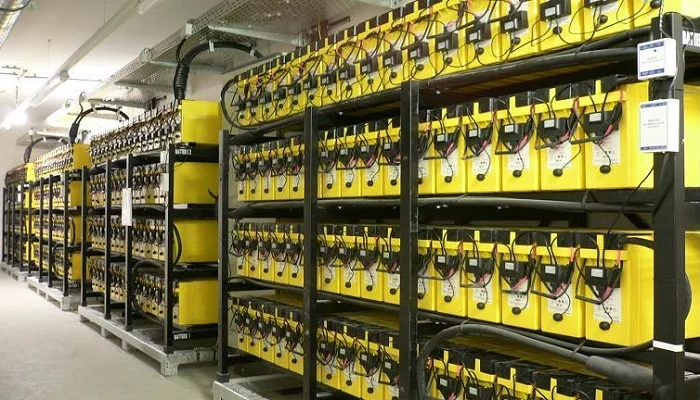
    !ups-data-center-battery-room-lead-acid-banks.jpg

    Step 1: Establish the Actual Load

    True Load (W) = UPS Capacity (VA) × Power Factor × Utilisation Rate
    

    Example: A 10kVA UPS with 0.8 power factor running at 70% load:

    True Load = 10,000 × 0.8 × 0.70 = 5,600W 

    Step 2: Account for Inverter Efficiency

    Effective Load (W) = True Load (W) ÷ Inverter Efficiency
    

    Most UPS inverters operate at 88–94% efficiency. Use 90% as a conservative estimate:

    Effective Load = 5,600W ÷ 0.90 = 6,222W 

    Step 3: Calculate Required Battery Capacity

    Battery Capacity (Ah) = (Effective Load × Runtime hours) ÷ (Battery Voltage × DoD Limit)
    

    For lead-acid UPS batteries, limit Depth of Discharge to 50% to maximise cycle life:

    Battery Capacity = (6,222W × 0.5 hours) ÷ (480V × 0.50) Battery Capacity = 3,111Wh ÷ 240V = 12.96Ah → Round up to 20Ah 

    For a 480V system (standard for large UPS), this requires a 40-cell string at 12V per cell.

    Step 4: Calculate the Number of Battery Strings

    Number of Strings = Required Capacity ÷ Selected Battery Capacity
    

    If using 12V 100Ah batteries (each battery = 100Ah at the 10-hour rate):

    Number of Strings = 12,960Wh ÷ (12V × 100Ah × 0.90) = 12,960Wh ÷ 1,080Wh = 12 strings 

    Runtime Estimation Formula

    Once battery capacity is determined, estimate actual runtime:

    Runtime (hours) = (Battery Ah × Battery Voltage × DoD × Inverter Efficiency) ÷ Load (W)
    

    Example: 100Ah, 480V battery bank (40 × 12V batteries) at 5,600W load:

    Runtime = (100 × 480 × 0.50 × 0.90) ÷ 5,600W Runtime = 21,600Wh ÷ 5,600W = 3.86 hours 

    Temperature Derating — The Factor Most People Miss

    Battery capacity decreases as temperature rises above 25°C. For every 1°C above 25°C, lead-acid capacity decreases by approximately 0.6% per hour.

    If your UPS battery room operates at 35°C:

    Derating Factor = 1 - (10°C × 0.006) = 1 - 0.06 = 0.94 Adjusted Capacity = 100Ah × 0.94 = 94Ah 

    CHISEN UPS AGM batteries are rated for operation up to 40°C with published temperature derating curves — demand these curves from your supplier.

    Battery Type Selection for UPS Applications

    FactorFlooded Lead-AcidAGM VRLALithium LiFePO4

    |

  • Southeast Asia Solar Battery Market 2026: Why Lead-Acid Still Dominates — and How Distributors Can Win

    Southeast Asia Solar Battery Market 2026: Why Lead-Acid Still Dominates — and How Distributors Can Win

    Southeast Asia Solar Battery Market 2026: Why Lead-Acid Still Dominates — and How Distributors Can Win

    The Southeast Asian solar energy storage market is growing at 23% per year. But not every battery technology is winning equally. Here is the data-driven analysis that should shape your sourcing strategy for 2026.

    The $27.4 Billion Question

    According to Alibaba.com seller data, Southeast Asia represents a $27.4 billion residential solar battery opportunity in 2026. The region’s governments are actively promoting renewable energy — Thailand through feed-in tariffs, the Philippines through net metering reforms, Vietnam through its nationally determined contributions, and Indonesia through its new energy transition fund.

    Yet for most distributors in this region, the question is not whether solar batteries will sell — it is which technology and which supplier will give them the best margins.

    Why Lead-Acid Is Winning in Southeast Asia Right Now

    !industrial-solar-energy-storage-system.jpg

    The dominant battery chemistry in Southeast Asia’s solar storage market is not lithium. It is lead-acid — specifically tubular plate OPzV and AGM batteries. Here is why:

    1. Price Sensitivity Is Paramount

    Southeast Asian consumers and businesses are intensely price-sensitive. A typical residential solar installation in the Philippines costs $1,500–3,000. A comparable lithium installation starts at $4,000–6,000. The premium is not justified for most household budgets.

    Lead-acid batteries deliver usable solar storage at a fraction of the lithium price. For a 5kWh residential system: AGM batteries cost $600–900. Lithium LiFePO4 costs $2,500–4,000 for the same usable capacity.

    For distributors, this means: lead-acid batteries are selling. Lithium requires significant customer education and a higher-trust relationship.

    2. Heat Tolerance — Designed for Southeast Asian Climates

    Southeast Asia’s ambient temperatures routinely exceed 35°C, and battery rooms in industrial settings can reach 45°C+. Lead-acid OPzV batteries with tubular plate technology are specifically engineered for high-temperature operation.

    CHISEN Battery OPzV batteries are rated for operation at temperatures up to 45°C without significant capacity derating — a critical specification for distributors selling into Philippine, Thai, and Indonesian markets.

    3. Maintenance Networks Already Exist

    One of the most underappreciated factors in Southeast Asian battery distribution is the maintenance ecosystem. Auto electricians and battery specialists exist in every city and town across the region. These technicians understand lead-acid batteries intimately — they can test specific gravity, add water, perform equalization charges, and diagnose sulfation.

    The same network does not exist for lithium batteries. A lithium battery failure typically requires OEM-level diagnostics and replacement — a capability that does not yet exist outside major cities in most of Southeast Asia.

    For distributors, this means: lead-acid batteries have a built-in aftermarket support network that lithium cannot match.

    4. Repurposing and Recycling Infrastructure

    Lead-acid batteries have a well-established recycling infrastructure throughout Southeast Asia. Used lead-acid batteries are collected, refurbished, and recycled at rates above 95% in most developed Southeast Asian markets. This reduces the total cost of ownership and eliminates end-of-life liability for distributors.

    The Market Picture by Country

    Philippines

    The Philippines leads Southeast Asia in residential solar adoption, driven by the highest electricity costs in the region and frequent grid instability. The Philippines’ net metering reforms (NEP 2024) have accelerated residential solar uptake. Solar batteries for residential backup are in high demand.

    Key products: AGM batteries for residential UPS, OPzV for larger commercial installations.

    Vietnam

    Vietnam’s government has set a target of 31% renewable energy by 2030. Industrial solar installations are growing rapidly. However, Vietnam’s market is highly price-competitive, and Chinese-imported batteries dominate.

    Key products: DZF/DMF series for electric vehicle charging stations, OPzV for industrial solar.

    Thailand

    Thailand’s Egat feed-in tariff program has driven significant investment in solar farms and commercial rooftop installations. Thailand is increasingly a hub for regional distribution.

    Key products: OPzV for commercial solar + storage, AGM for industrial UPS.

    Indonesia

    Indonesia’s energy transition is constrained by geography — thousands of islands make grid extension expensive, driving demand for off-grid solar + battery systems. This is one of the fastest-growing battery markets in Southeast Asia.

    Key products: OPzV for telecom tower backup (essential for Indonesian telecom operators), solar home systems with AGM batteries.

    What Distributors Are Actually Buying

    Based on CHISEN Battery’s 15+ years serving Southeast Asian distributors, the fastest-growing product categories for 2026 are:

    ProductApplicationWhy It Is Growing

    |

  • How to Read a Battery Data Sheet: The Specs That Actually Matter

    Battery datasheets are full of technical specifications — some useful, others misleading. Here is which specs to focus on and how to interpret them correctly.

    Battery data sheet technical specifications guide — how to read battery specs>
    Battery data sheet technical specifications guide — how to read battery specs
    Battery technical specifications data sheet guide>
    Lead-acid battery manufacturing and quality inspection — Battery technical specifications data sheet guide

    Capacity: The C-Rate Dependency

    Battery capacity is always measured at a specific discharge rate, typically C20 or C10. A 100Ah battery at C20 delivers 5A for 20 hours. At C1 (1 hour rate), the same battery may deliver sole 60-65Ah. Always recalculate for your actual application discharge rate.

    Cycle Life: Test Conditions Matter

    Look for: Depth of Discharge (most ratings are at 50% DoD, not 100%), test temperature (20-25C optimal), charging protocol (ideal lab vs real-world), and end-of-life threshold (typically 80% of original capacity).

    Self-Discharge: Critical for Seasonal Storage

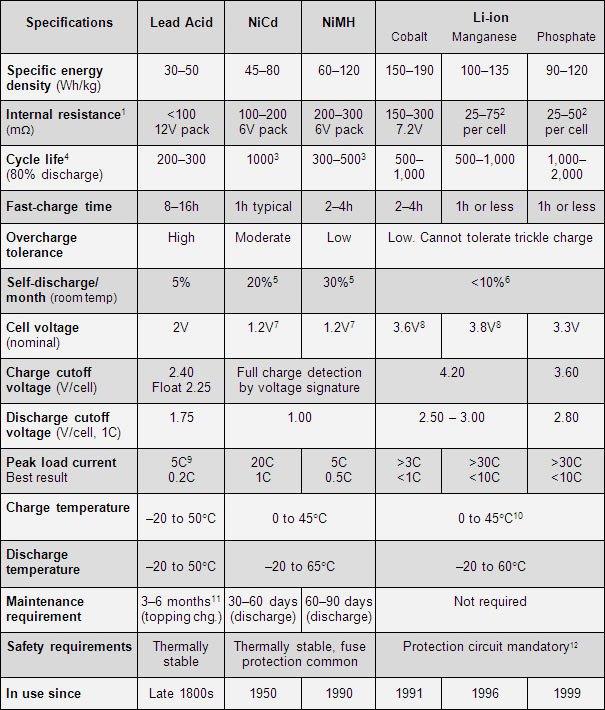
    VRLA AGM self-discharges 1-3%/month; Flooded 4-6%/month. Essential for seasonal applications: solar street lights, marine, winter toys. A fully charged battery stored 6 months without recharging will be significantly discharged.

    Internal Resistance: Key Performance Indicator

    Lower internal resistance = better high-current performance and higher charge acceptance. For solar applications, low IR is critical for capturing energy during brief sun windows.

    Temperature Range

    Optimal temperature for lead acid: 20-25C. Every 10C above 25C halves expected cycle life. Design battery enclosures to stay within rated temperature range.

    For technical datasheets: sales@chisen.cn


    About the Author

    This article was prepared by the CHISEN Battery technical writing team. CHISEN Battery is a professional lead-acid and lithium battery manufacturer based in China, ISO 9001 / CE / UL certified, exporting to 50+ countries worldwide.

    Contact: sales@chisen.cn  |  Website: www.chisen.cn  |  WhatsApp: +86 131 6622 6999

  • OPzV2-200 vs Standard Gel vs AGM: Which 200Ah 2V Battery Lasts Longer in 2026?

    Featured Snippet Answer (Direct Response)

    Short Answer: The OPzV2-200 tubular gel battery delivers 3,000+ cycles at 50% depth of discharge and a 20-year float life at 25C — approximately 3x the cycle life and 2x the float life of standard gel batteries, and 5-6x the cycle life of AGM batteries. The trade-off is a 15-30% higher upfront cost, which the OPzV2-200 recovers within 3-4 years in daily-cycling solar and telecom applications through avoided replacement costs.

    Specifications Comparison Table

    SpecificationOPzV2-200Standard GelAGM
    Capacity200Ah @ C10200Ah @ C10200Ah @ C20
    Voltage2V2V2V
    Plate TypeTubular (OPzV)Flat PastedFlat Pasted
    ElectrolyteGel (fumed silica)GelAbsorbed Glass Mat
    Cycle Life @ 50% DoD3,000+ cycles800-1,000 cycles400-600 cycles
    Float Life @ 25C20 years8-12 years5-7 years
    Max Operating Temp50C45C40C
    Weight13.5 kg12.5-14.0 kg11.0-13.0 kg
    Upfront Cost$$$$$$

    What Is OPzV Technology — and Why Does It Outlast Standard Gel and AGM?

    The OPzV designation stands for the German standard for valve-regulated lead acid batteries using a gel electrolyte — but the OPzV2-200 goes beyond the standard gel definition by using tubular positive plates rather than the flat pasted plates found in standard gel and AGM batteries.

    In a flat pasted plate, the lead oxide active material sits loosely on a flat grid. During each discharge cycle, the expansion and contraction of this material causes it to shed from the plate surface — gradually reducing capacity until the battery fails. In a tubular plate, the active material is contained within a woven polyester gauntlet surrounding a lead-antimony alloy spine. The gauntlet physically prevents shedding, allowing the OPzV2-200 to survive 3,000+ full discharge cycles versus 800-1,000 for standard gel.

    The electrolyte in the OPzV2-200 is gelled using fumed silica. CHISEN’s manufacturing process controls the gel density precisely, ensuring consistent performance across the cell’s 20-year design life. AGM batteries, by contrast, use absorbed electrolyte in a fiberglass mat — which delivers good high-current performance but limits cycle life to 400-600 cycles.

    OPzV2-200 vs Standard Gel — Where the 3x Cycle Life Difference Comes From

    The cycle life gap between the OPzV2-200 and standard gel batteries is not a marketing claim — it is a consequence of fundamental design differences in the positive plate construction.

    Why standard gel batteries wear out faster: Flat pasted plates lose active material through a process called positive plate shedding. After each discharge cycle, the lead sulfate formed on the positive plate expands in volume. When it reconverts during charging, it does not fully return to its original position. Over hundreds of cycles, this gradually reduces the active material available. In the OPzV2-200, the tubular gauntlet prevents this migration entirely.

    Temperature sensitivity: The OPzV2-200’s maximum operating temperature of 50C versus 45C for standard gel is significant in telecom cabinet and solar installations where ambient temperatures regularly exceed 35C. At 35C ambient, standard gel typically achieves only 40-50% of their rated cycle life. The OPzV2-200 at the same temperature achieves approximately 60-70% of rated cycle life — delivering 1,800-2,100 cycles versus 320-400 cycles for standard gel.

    OPzV2-200 vs AGM — When the Price Premium Makes Sense

    AGM batteries are the lowest-cost option for 200Ah 2V cells, with prices approximately 40-60% below the OPzV2-200. In some applications, this price advantage justifies the choice. In others, it creates a false economy.

    Where AGM makes sense: Standby power with infrequent discharges (UPS applications where batteries discharge 50-100 hours per year), high discharge current requirements (engine starting, inverter surge), and weight-constrained mobile or aviation applications.

    Where AGM creates a false economy: Daily solar cycling (in an off-grid solar system with daily 50% DoD, AGM lasts 13-20 months vs 8-10 years for OPzV2-200), and remote telecom sites where battery replacement involves site visits costing $2,000-5,000 per occurrence.

    Real Sizing Example — Building a 48V 800Ah Solar Battery Bank

    Requirement: An off-grid solar home in Southeast Asia requires 9.6 kWh of usable energy per day, with 2 days of autonomy, using OPzV2-200 cells.

    Step 1: Required capacity = 9,600Wh / (48V x 0.50 DoD) = 400Ah per string.

    Step 2: Battery bank = 24 cells in series (48V/2V) x 2 strings in parallel (400Ah/200Ah) = 48 x OPzV2-200 cells. Total capacity: 48V x 400Ah = 19.2 kWh. Usable at 50% DoD: 9.6 kWh.

    Step 3: Charge controller = 100A MPPT (2 strings x 0.25C x 200Ah). Solar array: 6kW recommended for 2-peak-sun-hours to account for losses.

    OPzV2-200 Procurement Checklist — 8 Things to Verify Before You Buy

    1. Tubular plate construction: Request a cross-section photo confirming tubular (not flat) positive plates. Some suppliers market flat-plate gel batteries as “OPzV” — these are not equivalent products.
    2. Capacity test report: Request a C10 capacity test report from the shipping batch. Minimum: 200Ah at the 10-hour rate.
    3. UN38.3 transport test report: Mandatory for all international battery shipments. Without this, your shipment may be held at the destination port.
    4. Float life warranty: CHISEN provides a 3-year warranty. Confirm terms in writing before ordering.
    5. Terminal specification: M10 copper insert terminals. Torque: 20-25 Nm.
    6. State of charge on delivery: Minimum 80% SoC with OCV above 2.10V per cell.
    7. 20ft container quantity: 2,520pcs per container. Calculate landed cost including freight, duties, and insurance.
    8. ISO 9001 certificate: Verify the certificate matches the actual manufacturing facility.

    Frequently Asked Questions

    What is the difference between OPzV and standard gel battery? The key difference is the plate design. OPzV batteries use tubular positive plates that prevent active material shedding, achieving 3,000+ cycle life. Standard gel batteries use flat pasted plates with 800-1,000 cycle life.

    How long does the OPzV2-200 last in a solar system? At 50% daily depth of discharge in a temperate climate, the OPzV2-200 delivers approximately 3,000+ cycles — translating to 8-10 years of service life. In hot climates (35C+), approximately 5-7 years.

    What size solar system works with the OPzV2-200? For a 48V system, configure 24x OPzV2-200 cells in series. Each string provides 9.6kWh at 50% DoD. Add parallel strings for more capacity.

    How much does an OPzV2-200 cost in 2026? FOB China pricing for container orders (2,000+ cells): USD 70-100 per cell. For single-box orders (10-50 cells): USD 90-130 per cell.

    Can OPzV2-200 batteries be installed indoors? Yes. The OPzV2-200 is sealed VRLA with minimal hydrogen emission under normal float charging. Install in ventilated enclosures away from sparks. No acid handling required.

    Contact CHISEN Export Team

    About CHISEN Battery: CHISEN is a professional OPzV tubular gel battery manufacturer in China with 20+ years of production experience. ISO 9001/CE/UL certified. Exporting to 50+ countries worldwide.

    For OPzV2-200 specifications, 2026 volume pricing, or a solar system sizing consultation, contact our export team or visit www.chisen.cn. Our team responds within 24 hours with a tailored quotation for your project.
  • OPzV2-500 OPzV Battery Sizing Guide for Solar Energy Storage

    Selecting the correct capacity for a solar energy storage battery bank is one of the most consequential decisions in any off-grid or grid-tied solar project. The CHISEN OPzV2-500 OPzV tubular gel battery — a 2V 500Ah cell — offers a compelling combination of deep-cycle capability, exceptional float life, and proven reliability for solar applications worldwide.

    About the OPzV2-500 OPzV Tubular Gel Battery

    The OPzV2-500 is part of CHISEN’s OPzV series, featuring tubular positive plates and advanced nano-gel electrolyte technology. Key specifications:

    • Nominal Voltage: 2V
    • Rated Capacity: 500Ah (C10 rate)
    • Dimensions: 166×206×471mm mm (L × W × H)
    • Weight: 37.30kg kg
    • Terminal: φ20-M8
    • Float Life: 20+ years @ 25°C
    • Operating Temperature: -40°C to +60°C
    • Self-Discharge: <2% per month

    How Many OPzV2-500 Cells Do You Need for a Solar System?

    Solar energy storage systems are typically configured at 48V, requiring 24 cells in series (24 × 2V = 48V). For a 48V bank using OPzV2-500 cells:

    • Total capacity: 500Ah × 48V = 24.0kWh per string
    • For a 100kWh system: approximately 100 cells (100P 24S configuration)
    • For a 200kWh system: approximately 200 cells (200P 24S configuration)

    Why OPzV Tubular Gel for Solar?

    Unlike AGM batteries, the OPzV2-500’s tubular positive plate design provides significantly longer cycle life under the regular partial state-of-charge (PSOC) operation common in solar applications. The nano-gel electrolyte eliminates electrolyte drying out and provides superior deep-discharge recovery — critical when sunny days are followed by several overcast days requiring deeper discharges.

    Charging Parameters for OPzV2-500 in Solar Applications

    • Float charge voltage: 2.23V per cell @ 25°C
    • Temperature compensation: -3mV/°C per cell
    • Boost/equalize voltage: 2.35V per cell @ 25°C
    • Cyclic charge voltage: 2.40–2.45V per cell @ 25°C
    • Maximum charge current: 0.20C10 (100A for this model)

    Total Cost of Ownership Advantage

    While the OPzV2-500’s upfront cost is higher than equivalent AGM batteries, its 20+ year float life versus 3–5 years for AGM in solar applications means the OPzV2-500 delivers a significantly lower total cost of ownership over a 20-year project lifecycle.

    Contact sales@chisen.cn for OPzV2-500 OPzV specifications, volume pricing for solar projects, and OEM partnership programs. www.chisen.cn

  • Why OPzV2-420 OPzV Tubular Gel Battery Delivers 20+ Year Float Life

    What gives the CHISEN OPzV2-420 OPzV tubular gel battery its industry-leading 20+ year float life? The answer lies in a combination of materials science, electrochemical engineering, and manufacturing precision that distinguishes genuine OPzV technology from ordinary flat-plate VRLA batteries.

    The Core Problem: Positive Plate Corrosion

    In all lead acid batteries, the positive grid (the structure holding the active material) gradually corrodes during float charging. This corrosion is electrochemical — the lead alloy reacts with the electrolyte under the influence of the positive plate’s elevated potential. As the grid corrodes, it expands, cracks the active material, and eventually loses electrical continuity. This is the primary failure mechanism in VRLA batteries.

    The rate of positive grid corrosion depends on three factors: grid alloy composition, grid design (tubular versus flat), and operating temperature. The OPzV2-420 OPzV addresses all three.

    Tubular Positive Plate: The Structural Advantage

    The OPzV2-420 uses die-cast Pb-Ca alloy tubular positive plates — the defining feature of OPzV technology. Unlike flat-plate designs where the active material sits against a planar grid, tubular plates consist of lead spines enclosed in fiberglass gauntlet tubes. The active material is packed inside the tubes, in intimate contact with the spine but prevented from shedding by the tube structure.

    • Result: Positive active material can never shed from the plate — the primary failure mode of flat-plate batteries is eliminated
    • Result: The lead spine maintains electrical continuity with the active material throughout the battery’s life
    • Result: The battery can sustain float charging at elevated potentials that would destroy flat-plate batteries

    Nano-Gel Electrolyte: Preventing Dry-Out

    Water loss from electrolyte drying is the second major cause of VRLA battery failure. The OPzV2-420 uses high-purity nano-gel electrolyte — sulfuric acid immobilized in a silica gel matrix. This gel structure:

    • Maintains electrolyte saturation throughout the battery’s life — no stratification
    • Prevents water loss through the safety valve — minimal dry-out over 20+ years
    • Provides oxygen recombination path, minimizing water loss during float
    • Absorbs volume changes during charge/discharge without cracking

    Pb-Ca Alloy Grid Composition

    The OPzV2-420’s positive plate uses Pb-Ca alloy rather than Sb-Ca or pure Sb alloy. Pb-Ca alloys corrode at significantly lower rates than Sb-containing alloys — approximately 5–10x slower under float conditions. This is why Pb-Ca grid alloys have been the standard for VRLA batteries since the 1970s.

    Manufacturing Precision: The Quality Factor

    The theoretical float life of OPzV technology is well understood. What distinguishes premium manufacturers like CHISEN is manufacturing consistency — tight control of alloy composition, precise die-casting of tubular spines, controlled gelling processes, and rigorous quality testing that ensures every OPzV2-420 cell meets its 20-year design specification.

    Why the OPzV2-420 Outlives AGM by 4–5x

    Standard AGM batteries use flat Pb-Ca positive plates — no tubular gauntlet, no anti-shedding protection. Under float conditions at 25°C, quality AGM batteries are typically rated for 8–12 years. The OPzV2-420’s tubular plate and nano-gel technology extend this to 20+ years — making OPzV the cost-effective choice for any project with a 10+ year operational horizon.

    For OPzV2-420 OPzV technical specifications and engineering support: sales@chisen.cn

  • OPzV2-420 OPzV Battery Procurement Checklist for Industrial Energy Storage Projects

    Procuring OPzV tubular gel batteries for large-scale energy storage projects requires careful verification of technical specifications, manufacturing credentials, and supply chain capability. This checklist covers everything buyers need to verify before placing an order for CHISEN OPzV2-420 OPzV batteries.

    Step 1: Verify Technical Specifications

    The OPzV2-420 OPzV meets the following specifications. Confirm these match your project requirements:

    • Capacity: 420Ah @ C10 rate (confirm at your expected discharge rate)
    • Voltage: 2V nominal — requires series configuration for system voltage
    • Float Life: 20+ years @ 25°C — request the manufacturer’s design life certificate
    • Cycle Life: 1,200+ cycles at 50% DoD @ 25°C — request cycle test data
    • Dimensions: 145×206×471mm mm (±2mm tolerance)
    • Weight: 32.50kg kg (±5% tolerance)
    • Terminal: φ20-M8 — confirm connector compatibility

    Step 2: Request Required Test Reports

    Reputable OPzV suppliers should provide these documents with every shipment:

    • Capacity test report: Individual cell capacity test at C10 rate, signed and dated
    • Float test data: Acceleration test data supporting 20-year float life claim
    • IEC 60896 compliance certificate: Third-party testing or manufacturer declaration
    • UN 38.3 transport certification: Required for international shipping of lead acid batteries
    • ISO 9001 certificate: From the manufacturing facility

    Step 3: Evaluate Manufacturing Capability

    • Production capacity: Confirm the supplier can meet your volume and delivery timeline
    • Manufacturing location: China-based manufacturing typically offers best cost/quality balance for OPzV technology
    • Lead time: Typical lead time for OPzV cells is 3–8 weeks depending on order size
    • Custom configurations: Confirm availability of your specific cell count and connector requirements

    Step 4: Negotiate Terms

    • Payment terms: L/C at sight, T/T, or negotiate credit terms for established relationships
    • Warranty: CHISEN offers 3-year full replacement warranty on OPzV cells — confirm warranty terms in writing
    • Packaging: Confirm whether wooden pallet/carton export packaging is included
    • Shipping: FOB, CIF, or DDP — clarify who manages export/import clearance

    Step 5: Quality Verification on Delivery

    Upon receipt, verify: individual cell voltages match test reports (±0.05V tolerance), physical dimensions and weight within tolerance, terminal integrity and torque specification, documentation completeness (test reports, warranty card, handling instructions).

    To initiate a procurement inquiry for CHISEN OPzV2-420 OPzV batteries: sales@chisen.cn

  • OPzV2-420 OPzV Battery for Telecom Backup Power: Technical Guide

    Telecommunications infrastructure depends on continuous power. Every cell tower, base station, and data relay site requires reliable battery backup to maintain service during grid outages. The CHISEN OPzV2-420 OPzV tubular gel battery delivers the 20+ year reliability that modern telecom networks demand — significantly outperforming AGM and flooded alternatives in the demanding telecom environment.

    OPzV2-420 OPzV Battery Specifications for Telecom

    • Capacity: 420Ah @ C10 | Voltage: 2V
    • Dimensions: 145×206×471mm mm | Weight: 32.50kg kg
    • Float Life: 20+ years @ 25°C | Cycle Life: 1,200+ @ 50% DoD
    • Temperature Range: -40°C to +60°C
    • Terminal: φ20-M8 | Housing: High-strength ABS

    Why OPzV Tubular Gel Is the Telecom Standard

    The global telecom industry has converged on OPzV tubular gel technology for backup power at cell tower and transmission sites. This technology choice reflects OPzV’s unique combination of features that match telecom requirements:

    • Maintenance-free: Telecom sites are often in remote locations — the OPzV2-420 requires no electrolyte watering or regular maintenance visits
    • Extended float life: 20+ years at 25°C ambient means a single battery installation spans multiple generations of telecom equipment
    • Wide temperature range: From -40°C to +60°C — operates in every climate zone on Earth
    • Low self-discharge: <2% per month — batteries on extended float standby maintain charge for over a year without boost charging
    • Deep discharge recovery: Unlike AGM, OPzV tubular gel recovers fully from deep discharges that can occur during extended grid outages

    Sizing a Telecom Battery Backup System with OPzV2-420

    Telecom backup systems are sized for runtime requirements, not daily cycling. Standard configurations for OPzV2-420 cells:

    • 48V telecom system: 24 cells × 2V = 48V string (420Ah @ 48V)
    • Runtime at 42A discharge: approximately 10 hours at 48V
    • Common telecom config: Multiple parallel strings for extended runtime

    Charging the OPzV2-420 in Telecom Applications

    • Float voltage: 2.23V per cell @ 25°C (27.5V for 48V system)
    • Equalize voltage: 2.35V per cell @ 25°C (28.2V for 48V system)
    • Temperature compensation: -3mV/°C per cell
    • Maximum charge current: 0.20C10 = 84A

    Certifications and Standards

    CHISEN OPzV2-420 OPzV batteries meet international standards including IEC 60896-21/22 for stationary VRLA batteries, DIN 40739 for OPzV type specifications, and UN 2800 transportation requirements.

    For telecom backup power specifications using the OPzV2-420: contact sales@chisen.cn — we supply telecom operators and tower companies globally. www.chisen.cn

  • OPzV2-420 OPzV vs AGM Battery: Which Is Better for Solar Energy Storage?

    When selecting a battery for solar energy storage, photovoltaic professionals and project developers face a critical technology choice: traditional AGM (Absorbent Glass Mat) VRLA batteries, or OPzV tubular gel batteries like the CHISEN OPzV2-420. This comparison examines the actual performance and lifecycle cost differences that matter for your project.

    OPzV2-420 OPzV Tubular Gel: Key Specifications

    • Capacity: 420Ah @ C10 rate
    • Voltage: 2V (cells must be configured in series)
    • Float Life: 20+ years @ 25°C
    • Dimensions: 145×206×471mm mm | Weight: 32.50kg kg
    • Temperature Range: -40°C to +60°C
    • Positive Plate: Pb-Ca alloy die-cast tubular
    • Electrolyte: High-purity nano-gel

    Cycle Life: The Fundamental Difference

    The most significant performance difference between OPzV tubular gel and AGM batteries is cycle life under PSOC (Partial State of Charge) operation — the normal condition in solar storage applications.

    • AGM battery: 400–800 cycles at 50% DoD, typically 3–5 years useful life in solar PSOC cycling
    • OPzV2-420 OPzV tubular gel: 1,200+ cycles at 50% DoD, 20+ year design life at float

    In solar applications where batteries rarely cycle to full DoD but experience regular partial cycling, OPzV tubular gel outperforms AGM by a factor of 3–5x in terms of annual cycle degradation.

    Tubular Plate Technology: Why It Matters

    The tubular positive plate in the OPzV2-420 consists of lead spines enclosed in a gauntlet of fiberglass tubes filled with active material. This design prevents shedding of active material from the positive plate — the primary failure mode in flat-plate VRLA batteries. The result is a battery that can sustain deep cycling for decades without capacity fade.

    Temperature Performance

    For solar installations in hot climates (Middle East, South Asia, Sub-Saharan Africa), the OPzV2-420’s operating range of -40°C to +60°C and superior high-temperature float life give it a decisive advantage. AGM batteries typically lose 50% of their design life for every 10°C above 25°C; OPzV tubular gel maintains significantly better performance at elevated temperatures.

    Total Cost of Ownership: 20-Year Project Analysis

    For a 48V 100kWh solar storage system (using OPzV2-420 cells), the 20-year total cost of ownership comparison:

    • AGM system: Requires 3–4 battery replacements over 20 years at current pricing — total replacement cost rivals the original OPzV investment
    • OPzV2-420 OPzV system: Single installation, 20+ year design life, minimal maintenance

    When to Choose AGM

    AGM remains the appropriate choice for budget solar installations with 3–5 year horizons, applications where weight and footprint are the overriding constraints, and small systems where the cycle count is genuinely low (fewer than 100 cycles per year).

    For a detailed OPzV2-420 vs AGM comparison for your specific solar project: contact sales@chisen.cn