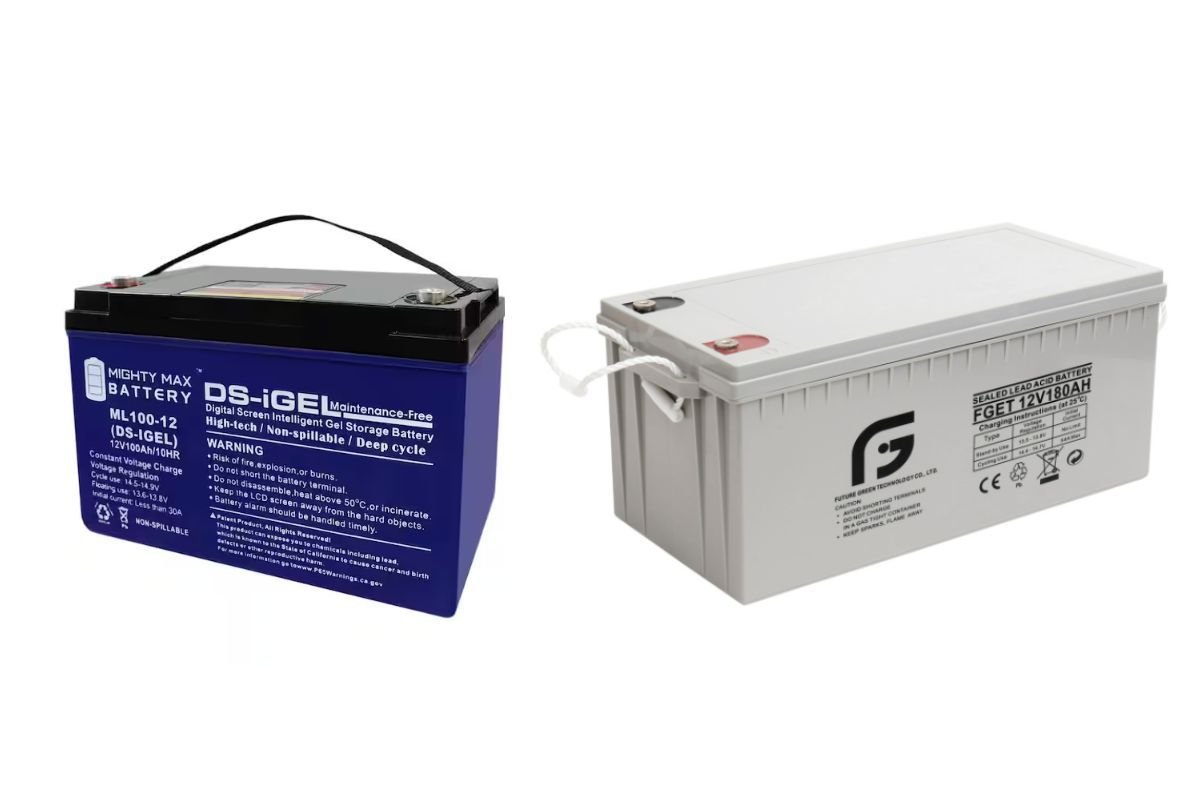
Lead acid Battery

  • State Arizona

    CHISEN Battery Supplier Arizona 2026: Complete Product Line for Arizona Distributors, Solar Installers and Industrial Companies

    Arizona represents one of the most compelling solar-plus-storage battery markets in the United States, driven by the state’s exceptional solar irradiance of 5.5-7.0 kWh per square metre per day, its rapidly growing population, and the most aggressive distributed solar and battery storage regulatory framework in the country. The Arizona Corporation Commission has established net metering and distributed generation rules that actively encourage residential and commercial solar-plus-storage adoption, and Arizona’s major utilities — Arizona Public Service, Salt River Project, and Tucson Electric Power — have all launched battery storage incentive programmes.

    Arizona’s manufacturing and industrial base, concentrated in the Phoenix metropolitan area (the fifth-largest US city), the Tucson basin, and the copper mining districts of Pima, Pinal, and Gila counties, creates sustained demand for industrial motive power batteries, UPS systems, and backup power applications. The Arizona-Mexico border region, including Nogales and the Douglas industrial zones, serves as a significant logistics and light manufacturing corridor with cross-border supply chain connections.

    The state’s e-mobility sector is expanding rapidly, supported by Arizona’s favourable climate for year-round electric vehicle use, Arizona State University’s research programmes in electric transportation, and the presence of Lucid Motors’ manufacturing facility in Casa Grande — one of only two luxury EV manufacturing plants in the United States.

    Arizona Market Overview: Why Lead-Acid Batteries Are in Demand Now

    Arizona’s battery market spans four primary segments. Residential solar-plus-storage has experienced double-digit annual growth, driven by the combination of Arizona’s exceptional solar resource, high summer electricity prices of USD 0.13-0.20 per kWh, and increasing grid reliability concerns during monsoon season storm events. Commercial and industrial solar installations in the Phoenix-Mesa-Gilbert corridor and Tucson require large battery banks for peak demand management, demand charge reduction, and backup power during grid outages.

    The Arizona mining sector, centred on the Morenci-McMoRan copper complex in Greenlee County, the Freeport-McMoRan mine in Bagdad, and the Resolution Copper project in Pinal County, operates electric haul trucks, underground loaders, and materials handling equipment requiring heavy-duty traction batteries. Arizona’s telecom infrastructure, serving a rapidly growing population and the significant tourist traffic through Sedona, Flagstaff, and the Grand Canyon region, requires reliable backup power for base station sites.

    The Arizona Department of Environmental Quality administers state regulations for battery recycling, with Arizona’s Advanced Recycling Fee programme providing funding for household battery collection and recycling infrastructure. Arizona also participates in the RCRA cradle-to-grave hazardous waste management system for commercial quantities of lead-acid batteries.

    Key Arizona Cities and Logistics Hubs

    Phoenix in Maricopa County is Arizona’s capital and largest city, the fifth-largest US city, and the primary logistics and distribution hub for the Southwest. The Phoenix Sky Harbor International Airport is the busiest cargo airport in the Southwest, and the Union Pacific and BNSF rail terminals handle intermodal container traffic. Dense concentration of industrial distributors, roofing and solar installers, and commercial battery users.

    Mesa in Maricopa County is Arizona’s second-largest city and one of the fastest-growing municipalities in the United States, with significant residential solar adoption and a growing technology and manufacturing sector.

    Tucson in Pima County is Arizona’s second-largest city and the commercial centre of southern Arizona, home to the University of Arizona, the Arizona State Prison Complex, and significant defence contractor operations at Davis-Monthan AFB.

    Scottsdale and Gilbert in Maricopa County are among the wealthiest municipalities in the United States, with very high residential solar and battery storage adoption rates driven by high property values and a demographics skewed toward tech-aware affluent homeowners.

    Chandler in Maricopa County is Arizona’s technology corridor, home to Intel, NXP Semiconductor, and other semiconductor fabrication facilities requiring ultra-reliable UPS power with high-quality VRLA battery systems.

    Casa Grande in Pinal County is home to the Lucid Motors manufacturing facility, Arizona’s only luxury EV assembly plant, and associated automotive supplier operations.

    Nogales in Santa Cruz County is the primary US-Mexico border crossing for produce and light manufacturing goods, with significant cross-border logistics and distribution operations.

    Import Process for Arizona Buyers

    Step 1. Share your requirements. Contact CHISEN with your target model numbers, quantity, destination city, and application. We respond within 24 hours with FOB, CIF Phoenix, CIF Tucson, and DDP pricing options.

    Step 2. Evaluate with samples. We ship samples by DHL in 3-5 days to Phoenix or Tucson, or by sea freight in 28-35 days to the Port of Long Beach for transloading to Arizona via the I-10 corridor.

    Step 3. Place your order. 30% deposit by T/T to lock price, 70% balance before shipment. Production lead time: 15-21 days.

    Step 4. Full export documentation. Commercial Invoice, Packing List, Bill of Lading, Certificate of Origin, and Pre-shipment Inspection Report provided at no additional charge.

    Step 5. Arizona delivery. Complete shipping documents sent before vessel departure. Container delivery to your warehouse in Phoenix, Mesa, Tucson, or Chandler.

    Arizona Import Regulations and Compliance

    Lead-acid batteries imported into Arizona from China are subject to US Harmonised Tariff Schedule Chapter 85, with USITC duty rates of 3.4-3.5% ad valorem for most industrial lead-acid batteries. Arizona follows all federal EPA Universal Waste Rule provisions. The Arizona Department of Environmental Quality administers the state’s Advanced Recycling Fee programme. CHISEN batteries carry CE, ISO 9001, IEC 62133, and UN38.3 certifications, meeting all applicable US federal safety requirements. Arizona’s Proposition 207 consumer protection requirements are addressed through CHISEN’s documented quality management system.

    CHISEN Product Range for Arizona Applications

    The CHISEN 6-CNF and CNFJ series from 12V 38Ah to 12V 250Ah serves Arizona’s dominant solar storage market, with Gel technology preferred for high-temperature rooftop installations where ambient temperatures can reach 45-50C in summer.

    The CHISEN CNFJ Gel 2V series from 200Ah to 3000Ah serves large commercial solar installations and utility-scale projects across Arizona’s solar farms in Yuma, Gila Bend, and Eloy.

    The CHISEN OPzV Sealed 2V series from 100Ah to 3000Ah provides long-life maintenance-free storage for Arizona telecom tower sites and commercial UPS applications.

    The CHISEN GFM UPS series from 12V 4.5Ah to 12V 250Ah in VRLA AGM provides critical backup power for Arizona semiconductor fabrication facilities, data centres, and healthcare systems.

    The CHISEN 48V LT series from 30Ah to 400Ah serves Arizona telecom and commercial solar storage applications.


    Contact CHISEN for Arizona market pricing today.

    Email: sales@chisen.cn

    Website: www.chisen.cn

    WhatsApp: +86 131 6622 6999

  • State Alaska

    CHISEN Battery Supplier Alaska 2026: Complete Product Line for Alaska Distributors, Mining Operators and Remote Energy Companies

    Alaska’s lead-acid battery market is unlike any other US state — defined by extreme geographic isolation, sub-zero winter temperatures, permafrost infrastructure constraints, and a resource extraction economy that operates in some of the world’s harshest operating environments. From the North Slope oil fields to the Inside Passage coastal communities, Alaska’s electricity infrastructure is characterised by extreme variability: urban centres with relatively reliable grid power, remote communities entirely dependent on diesel generation, and mining operations in some of the most inaccessible locations on earth. This diversity creates a structurally complex but highly rewarding battery market for suppliers who understand Alaska’s unique requirements.

    The State of Alaska’s Energy Policy, administered by the Alaska Energy Authority, has prioritised renewable energy and battery storage to reduce diesel dependence across the Railbelt grid (Anchorage to Fairbanks) and the rural village microgrids. The Alaska Village Electric Cooperative and the Alaska Power and Telephone company have deployed solar-plus-storage systems across dozens of off-grid communities, creating sustained and growing demand for deep-cycle batteries that can perform reliably at temperatures ranging from -45C in Interior Alaska winter to +30C in the summer.

    Alaska’s mining sector — operating in the Brooks Range, the Tintina Gold Province, and the Pebble copper-gold-molybdenum deposit region — is one of the most significant drivers of industrial battery demand in the state. Mining operations in these locations require heavy-duty traction batteries, backup power systems, and emergency power supplies that can operate in extreme cold without failure.

    Alaska Market Overview: Why Lead-Acid Batteries Are in Demand Now

    Alaska’s battery market is dominated by three distinct demand categories. Remote community microgrids in the Yukon-Kuskokwim Delta, the North Slope, the Aleutian Islands, and the Southeast Alaska archipelago depend on solar-plus-storage and diesel-battery hybrid systems, with typical battery specifications requiring operation at temperatures down to -40C and capacity ratings for multi-day autonomy during extended cloudy periods. The Alaska mining sector operates electric vehicles, underground materials handling equipment, and emergency backup power systems in locations where ambient temperatures can reach -45C and where any equipment failure has extremely high consequence costs. And Alaska’s telecommunications infrastructure, expanding to serve oil pipeline communications, rural Alaska communities, and defence installations, requires highly reliable backup power that can survive extreme cold.

    The Alaska Department of Environmental Conservation (ADEC) administers the state’s hazardous waste regulations, including specific provisions for lead-acid battery handling and recycling. The Alaska DEC has adopted federal EPA Universal Waste Rule provisions, and Alaska’s extensive rural recycling infrastructure makes responsible battery disposal an important consideration for Alaska buyers.

    Key Alaska Cities and Logistics Hubs

    Anchorage in Anchorage County is Alaska’s largest city and the primary logistics hub for the entire state. The Port of Anchorage handles the majority of Alaska’s consumer goods and industrial imports, with the Alaska Marine Highway System distributing goods to coastal communities. The JBER and Elmendorf AFB defence installations require backup power systems.

    Fairbanks in Fairbanks North Star Borough is the commercial centre of Interior Alaska, gateway to Denali National Park and the North Slope oil fields. Dense demand from mining support operations, telecommunications relay stations, and Interior Alaska communities.

    Juneau in Juneau Borough is Alaska’s capital city, accessible primarily by air and sea, with Juneau’s Gastineau Channel port handling consumer goods and supplies for Southeast Alaska communities.

    Wasilla in Matanuska-Susitna Borough is Alaska’s fastest-growing municipality, a bedroom community for Anchorage with significant residential solar adoption driven by long summer daylight hours and the MSB’s support for renewable energy.

    Kenai-Soldotna in Kenai Peninsula Borough is the centre of Alaska’s oil and gas activity on the Kenai Peninsula, with associated industrial battery requirements.

    Barrow (Utqiagvik) in North Slope Borough is the largest North Slope community and the logistics hub for Arctic oil and gas operations, with extreme cold battery requirements and limited supply chain access.

    Dutch Harbor-Unalaska in Aleutians West Census Area is one of North America’s busiest fishing ports, with cold storage, processing facilities, and marine logistics requiring reliable power.

    Import Process for Alaska Buyers

    Step 1. Share your requirements. Contact CHISEN with your target model numbers, quantity requirements, destination city or community, and application. We respond within 24 hours with FOB, CIF Anchorage, and DDP pricing options.

    Step 2. Evaluate with samples. We ship samples by air freight in 3-5 days to Ted Stevens Anchorage International Airport, or by sea freight in 28-35 days to the Port of Anchorage for bulk orders.

    Step 3. Place your order. 30% deposit by T/T, 70% balance before shipment. Production lead time: 15-21 days. We lock your quoted price for 7 days from quotation date.

    Step 4. Full export documentation. Commercial Invoice, Packing List, Bill of Lading, Certificate of Origin, and Pre-shipment Inspection Report provided at no additional charge.

    Step 5. Alaska delivery. Complete shipping documents sent before vessel or aircraft departure. For remote Alaska communities, we can arrange barge delivery to coastal villages and air freight to inland communities.

    Alaska Import Regulations and Compliance

    Lead-acid batteries imported into Alaska from China are subject to US Harmonised Tariff Schedule Chapter 85, with USITC duty rates of 3.4-3.5% ad valorem for most industrial lead-acid batteries. Alaska follows federal EPA Universal Waste Rule provisions administered by ADEC. The Consumer Product Safety Commission and DOT Hazardous Materials Regulations (49 CFR) govern the transportation of batteries. CHISEN batteries carry CE, ISO 9001, IEC 62133, and UN38.3 certifications, meeting all applicable US federal safety and transport requirements.

    CHISEN Product Range for Alaska Applications

    The CHISEN OPzS Flooded 2V series from 100Ah to 3000Ah is designed for extreme cold applications in Alaska’s mining and oil and gas operations, with proper cold-weather installation including battery housing insulation.

    The CHISEN CNFJ Gel 2V series from 200Ah to 3000Ah provides superior cold-temperature performance for Alaska’s remote community solar-plus-storage microgrids, with gel electrolyte that does not freeze above -40C.

    The CHISEN 6-CNFJ Gel 12V series from 38Ah to 200Ah serves residential and commercial solar installations in Alaska communities from Juneau to Fairbanks.

    The CHISEN GFM UPS series in 12V from 4.5Ah to 250Ah provides reliable backup power for Alaska’s telecommunications infrastructure, defence installations, and healthcare facilities.

    The CHISEN 48V LT series from 30Ah to 400Ah serves Alaska telecom tower backup and remote solar applications.

    All CHISEN batteries shipped to Alaska include cold-temperature insulation options and temperature-compensated charging specifications for Arctic and sub-Arctic operating conditions.


    Contact CHISEN for Alaska market pricing today.

    Email: sales@chisen.cn

    Website: www.chisen.cn

    WhatsApp: +86 131 6622 6999

  • South America Battery Market 2026

    South America Battery Market: Brazil, Chile & Colombia — Mining Energy Storage, Telecom & Solar Opportunities 2026

    Introduction: Why South America Is the Most Exciting Frontier for Industrial Battery Demand in 2026

    South America is at an inflection point. Chile holds 40% of the world’s known lithium reserves and is pursuing a strategy of becoming a global lithium battery manufacturing hub — but the more immediate opportunity for battery distributors is the demand side of the equation. Brazil’s mining sector is the largest in Latin America, deploying battery systems for underground ventilation, electric haul trucks, and backup power at remote sites. Chile’s mining sector (the world’s largest copper producer, generating 5.7 million tonnes annually) is actively electrifying its mobile fleet. Colombia is deploying its first utility-scale BESS projects. Peru’s renewable energy buildout is creating demand for C&I storage. The region consumed approximately 1.8 GWh of industrial battery capacity in 2025 and is projected to grow at 25–35% CAGR through 2030. This article maps the specific battery opportunities across Brazil, Chile, and Colombia, and explains the procurement pathways that work in each market.

    The energy transition in South America is accelerating faster than most analysts predicted three years ago. Driven by a combination of climate commitments, improving economics of solar-plus-storage, and hard regulatory mandates in the telecom sector, the region’s battery market is transitioning from a niche opportunity into a mainstream industrial supply category. For battery distributors and manufacturers, South America offers a rare combination: high-growth demand, multiple large end-users with 3–5 year procurement pipelines, and a genuine shortage of qualified battery suppliers in the supply chain.

    Section 1: Chile — The Global Lithium Hub and Its Industrial Battery Opportunity

    Chile’s mining sector (Codelco, BHP Spence/Escondida, Antofagasta Minerals) is the world’s most demanding buyer of industrial batteries. The electrification of mining haul trucks — from diesel to battery-electric or hybrid — is the single largest industrial battery demand driver in South America. Codelco has committed to net-zero mining operations by 2050, with intermediate targets of 30% electric fleet by 2030. Battery-electric haul trucks from manufacturers (ABB, Caterpillar, Williams Advanced Engineering) use LFP batteries in 600V–1,200V configurations, with per-truck battery packs of 500–1,500kWh. The Chilean mining electrification market alone is projected at $1.5–2.5 billion in battery demand by 2030.

    Chile’s Atacama Desert hosts the world’s most productive copper mines and one of the most challenging operating environments for batteries. Daytime temperatures reach 35–40°C, dropping to -5°C at night — a 40°C diurnal temperature swing that stresses battery thermal management systems. Altitudes of 2,200–4,500m above sea level create additional performance challenges for NMC chemistries, while LFP batteries handle high-altitude conditions with minimal performance degradation.

    The procurement pipeline for Chilean mining electrification is substantial. Codelco’s Radomiro Tomic and Chuquicamata mines are actively trialing battery-electric equipment. BHP’s Spence mine has announced a major electrification program. Antofagasta Minerals’ Centinela and Zaldívar operations are evaluating battery systems. Each mine site represents a potential 50–200 battery-electric vehicle fleet requirement by 2028, creating a multi-GWh pipeline of battery demand concentrated in a handful of procurement decisions.

    Beyond mobile equipment, Chilean underground mines require stationary battery systems for underground ventilation (VFD-driven fans), emergency lighting, and UPS applications. These stationary applications favor LFP or OPzV battery technologies with deep-cycle capability and reliable performance at altitude. IEEE 1189 testing compliance is mandatory for stationary battery systems in Chilean mining, and batteries must be supplied with full documentation packages in Spanish.

    Section 2: The Choice — Battery Chemistry Comparison for South American Applications

    ApplicationLocationBest ChemistryKey ReasonMarket Condition
    Battery-Electric Haul Truck (480–600 tonne)Chile (Atacama)LFP1,500V systems, 2,000+ cycles, cold-crankingMining electrification boom
    Underground Mining Backup (UPS/Ventilation)Peru, BoliviaLFP or VRLA-10°C operation in high-altitude minesRemote, high altitude, unreliable grid
    Telecom Tower Backup (off-grid)Brazil (Amazonas), ColombiaLFP or Hot AGMDaily cycling, 35°C+ ambientOff-grid, diesel displacement
    C&I Solar+Storage (Andean Region)Chile, ColombiaLFP6,000+ cycles, high altitude PSoC toleranceGrowing C&I solar market
    Residential Solar+Storage (Brazil)Brazil (Northeast, off-grid)LFPCompact, 10–15kWh, remote monitoringGrid parity achieved
    Data Center UPS (São Paulo/Bogotá)Brazil, ColombiaLFPHigh density, 92–96% efficiency30%+ annual market growth

    LFP’s Competitive Position Across South American Applications

    The LFP chemistry dominates across virtually every South American application segment. In Chilean mining, LFP’s cycle life (2,000+ cycles at 80% DoD for haul truck packs) aligns with the demanding duty cycle of battery-electric mining vehicles. In Brazilian telecom, LFP’s compact footprint and long float life reduce tower load requirements. In Colombian data centers, LFP’s high round-trip efficiency reduces cooling loads — a significant operational cost advantage in hot-climate facilities.

    Lead-acid (VRLA AGM and OPzV tubular gel) retains relevance in budget-constrained applications, particularly for underground mining backup where upfront capital cost remains the primary decision driver. However, the total cost of ownership advantage of LFP over a 5–10 year operating period is increasingly compelling, even in price-sensitive Latin American markets.

    Section 3: The Framework — Market Entry by Country

    Chile: The Mining Electrification Pathway

    Chile’s mining market is concentrated among five major mining houses (Codelco, BHP, Antofagasta Minerals, SQM, Anglo American) and their tier-1 contractors. Battery supply to this market requires: (1) IEC 62619 and UL 1973 certification; (2) participation in mining house vendor registration processes (typically 3–6 month onboarding); (3) Spanish-language technical documentation. The procurement culture in Chilean mining is highly technical and formal — batteries are specified by engineering firms contracted to the mining houses, not by procurement teams directly. The entry strategy is through engineering specification, not sales calls.

    The practical pathway for international battery suppliers into Chilean mining follows a structured sequence. First, engage with the engineering firms that write battery specifications for the mining houses (companies like Ausenco, Wood Group, and Fluor serve this function). Second, submit batteries for testing under realistic Atacama operating conditions (temperature, altitude, vibration). Third, achieve vendor registration with the mining house through the formal registration portal (each mining house has its own system). Fourth, respond to RFQs issued by the EPC contractor or the mining house directly.

    Spanish-language documentation is non-negotiable in Chile. Product datasheets, safety data sheets (SDS), test reports, and commercial terms must all be available in Spanish. English-only submissions are typically disqualified at the initial screening stage.

    Brazil: The Distributed Market Entry

    Brazil’s battery market is driven by three segments: (1) telecom tower backup (Anatel mandate for 4-hour backup at 100% of active sites by 2026); (2) C&I solar-plus-storage (net metering framework under Lei 14.300); (3) mining (Vale, Samarco, Anglo American Brazil). Brazil’s INMETRO certification is mandatory for electrical equipment. ANATEL certification is required for telecom equipment. Brazilian market entry also requires local representation — a Brazilian legal entity or a registered local agent.

    The ANATEL telecom mandate is the single most predictable demand driver in the Brazilian battery market. The 2026 deadline requires all active Brazilian telecom towers to have a minimum of 4-hour battery backup — this is a hard regulatory requirement with enforcement penalties. The practical implication: Brazilian tower operators (like SBA Communications, American Tower, and IHS Towers) are in active procurement mode through 2026. Battery suppliers with ANATEL-certified products and competitive pricing have a clear window.

    Brazil’s INMETRO certification process typically requires product testing at INMETRO-accredited laboratories, review of factory quality systems documentation, and an initial factory audit. Timeline: 3–6 months for products with existing IEC 62619 test reports from accredited international laboratories. INMETRO certificates are valid for varying periods and require renewal through periodic surveillance audits.

    Local representation is mandatory for INMETRO and ANATEL certification, and for commercial operations in Brazil. International battery suppliers should establish a representative relationship with a Brazilian trading company or appoint an exclusive distributor with the necessary regulatory registrations before entering the market.

    Colombia: The Emerging BESS Market

    Colombia’s renewable energy framework (Ley 1715 and associated Resolution 060) provides tax incentives for renewable energy projects including battery storage. The first utility-scale BESS projects are under development as part of Colombia’s energy transition plan. Colombia uses US/North American standards (UL, NEMA) in many procurement specifications, making US-certified batteries easier to qualify. Colombia’s location on the Caribbean coast also makes it a logistics hub for cross-border trade with Venezuela, Ecuador, and Peru.

    The Colombian energy market is at an earlier stage of development than Brazil or Chile, but momentum is building. UPME (Unidad de Planeación Minero-Energética) has published BESS procurement guidelines, and several pilot projects are under development. For battery suppliers, Colombia represents a medium-term opportunity with lower competitive intensity than the established Brazilian and Chilean markets. The tax incentives under Ley 1715 (accelerated depreciation for renewable energy assets) improve project economics and create a favorable environment for C&I solar-plus-storage.

    Colombia’s logistics advantage is significant. The ports of Cartagena and Barranquilla provide efficient ocean freight access from Asia, with shorter transit times than Brazilian southern ports. For battery distributors serving the Andean region (Colombia, Ecuador, Peru), Colombian logistics infrastructure is the most efficient entry point from Chinese manufacturing bases.

    Section 4: The Trust — 5 Market Realities for South American Industrial Battery Projects

    1. Chilean Mining Specifies IEEE 1189 for Battery Testing

    The Instituto Nacional de Normalización (INN) has adopted IEEE 1189 for stationary battery testing in mining applications. Any battery supplied to Chilean mining operations must come with IEEE 1189 test reports from an accredited laboratory. IEEE 1189 covers the recommended procedures for testing stationary valve-regulated lead-acid and lithium-ion batteries for commercial applications — it is the foundational testing standard for the Chilean mining battery specification process.

    Battery suppliers should commission IEEE 1189 testing from an internationally accredited laboratory (ILAC member laboratories) before submitting products to Chilean mining procurement processes. Test reports should be in Spanish or accompanied by certified Spanish translations.

    2. Brazilian Import Duties on Lithium Batteries

    Brazil imposes import duties of 12–18% on batteries depending on HS code classification. Working with a local distributor who can handle customs clearance and has existing import licenses significantly reduces the landed cost complexity. The HS code classification matters significantly: misclassification can result in penalties and duty assessments that invalidate原本有利的价格竞争力.

    Brazil’s tariff structure for batteries ranges from 12% (HS 8507.60 for lithium-ion batteries for EVs) to 18% (HS 8507.80 for other lithium-ion batteries). For telecom tower batteries (typically classified under HS 8507.60 or HS 8507.80), the applicable duty is in the 12–15% range. Local content requirements for certain government procurement may also apply, favoring distributors with Brazilian assembly operations.

    3. Altitude Derating is Critical for Andean Mining

    Above 3,000m elevation, battery performance derates significantly for NMC chemistries. LFP batteries perform more consistently at high altitude due to their stable thermal profile. Specify for actual altitude, not sea-level conditions. Chilean mining operations at Chuquicamata (2,840m), El Teniente (2,300m), and Centinela (3,200m) all operate at significant altitude, and battery specifications must account for this.

    NMC battery performance at altitude is affected by reduced air density (impacting thermal management system fans and heat dissipation) and lithium plating during high-rate charging. LFP batteries are inherently more tolerant of altitude conditions due to their stable thermal characteristics and lower charging voltage requirements. For battery-electric haul truck applications above 3,000m, LFP is effectively the only viable chemistry for demanding duty cycles.

    4. Chilean Copper Mine Electrification is Faster Than Projected

    Codelco’s electrification timeline has accelerated from 2035 to 2030 targets. This means battery procurement pipelines for Chilean mining are active NOW, not 2030. Early engagement with specification engineers is the competitive advantage. The window for getting LFP battery specifications adopted into Chilean mining vehicle programs is 2026–2028; once vehicles are deployed with specific battery configurations, changing suppliers becomes significantly more difficult.

    5. Brazilian Telecom Battery Mandate Creates Guaranteed Demand

    ANATEL’s 2026 backup power mandate requires 100% of Brazilian telecom towers to have minimum 4-hour battery backup by end of 2026. This is a hard regulatory deadline with significant enforcement penalties — creating a non-negotiable procurement timeline for Brazilian telecom tower operators. The mandate covers approximately 80,000–100,000 active Brazilian telecom tower sites, each requiring battery replacement or installation. This represents one of the most predictable and time-bound battery demand opportunities globally.

    Section 5: FAQ

    Q1: What is the ANATEL certification process for telecom batteries in Brazil, and how long does it take?

    ANATEL (Agência Nacional de Telecomunicações) certification is mandatory for telecom equipment sold or used in Brazil. The process for battery certification requires product testing at ANATEL-accredited laboratories, technical documentation review, and factory inspection. Timeline: 3–6 months for standard products. For batteries with existing IEC 62619 test reports, the technical review portion can be expedited. ANATEL certificates are valid for 3 years and require renewal.

    Q2: How does Chile’s national lithium strategy affect battery procurement costs for non-lithium chemistries?

    Chile’s push to develop domestic lithium manufacturing (primarily LFP and NMC chemistries using Chilean lithium carbonate) is expected to reduce local battery production costs by 15–25% by 2028–2030. However, this affects only finished battery cells. Battery system integration, BMS development, and mechanical assembly will likely remain import-dependent for the near term. For battery distributors, the key implication is that Chilean industrial battery prices may decline 5–10% as domestic production scales, creating pricing pressure on imports from 2028 onward.

    Q3: What battery specifications are required for battery-electric haul trucks in Chilean mines?

    The key specifications for battery-electric mining haul trucks (240-tonne payload class) are: system voltage 600–1,200V DC; battery capacity 1,000–1,500kWh per truck; cycle life minimum 2,000 cycles at 80% DoD; charge rate 1C continuous, 2C peak (for opportunity charging during shift changes); thermal management for ambient temperatures of -5°C to +45°C (Atacama Desert diurnal temperature range); IP67 minimum; UN38.3 transport certification for lithium battery transport to remote mine sites.

    Q4: What are the most important trade agreements affecting battery imports into South America?

    For imports from China into South America: Mercosur (Brazil-Argentina-Uruguay-Paraguay) has variable import duties on batteries (12–18% in Brazil, 12% in Argentina). Colombia and Chile have bilateral trade agreements with China that reduce import duties on batteries to 0–5% under specific HS codes. Peru’s bilateral agreement with China (TPP-11) also provides reduced tariff access. Brazil, however, maintains higher import duties for strategic industry protection. Colombia’s Pacific Alliance trade framework (with Mexico, Chile, Colombia) also provides preferential tariff access.

    Q5: What is the typical procurement timeline for a battery supply agreement with a Chilean mining house?

    Procurement timelines for Chilean mining battery supply agreements are long: vendor registration (3–6 months), technical specification and engineering approval (3–6 months), commercial negotiation (1–3 months), and legal review (1–2 months). Total: 8–17 months from first engagement to contract signature. Once qualified, however, battery supply agreements with Chilean mining houses typically run 3–5 years with annual volume commitments and price review mechanisms. This makes the upfront qualification investment worthwhile for quality suppliers.

    Section 6: Contact CHISEN

    Contact CHISEN for South American battery market specification support — including ANATEL documentation, Chilean mining IEEE 1189 test data packages, and C&I solar-plus-storage system designs tailored for Brazilian and Colombian grid standards.

    📧 Email: sales@chisen.cn

    📱 WhatsApp: +86 131 6622 6999

    🌐 www.chisen.cn

  • Solar Street Light Battery Guide 2026

    Solar Street Light Battery Guide: Technical Selection and Municipal Procurement 2026

    When Nairobi’s City Council began replacing its sodium-vapour street lighting with solar LED systems in 2023, engineers faced a deceptively complex decision: which battery chemistry would reliably power 8,000 lumens of LED lighting through Kenya’s rainy season, when overcast conditions reduce solar panel output by 40–60% for days at a time? The answer required sizing batteries not just for average night-time discharge, but for worst-case autonomy — the multi-day low-sun period that kills underspecified solar street light batteries within 18–24 months. That engineering challenge, played out across hundreds of municipal projects in Nairobi, Manila, Ho Chi Minh City, Chennai, and São Paulo, illustrates why solar street light battery selection is one of the most technically demanding decisions in the outdoor solar industry.

    The Global Solar Street Light Market: Scale and Growth Drivers

    The global solar street lighting market is expanding at 18–24% annually, driven by the convergence of LED cost reduction, government rural electrification commitments, and municipal decarbonisation targets. Over 12 million solar street light units were installed globally in 2025, and projections point to 28–35 million cumulative installations by 2030. Each unit requires a battery sized for 5–12 hours of nightly discharge with 1–5 nights of autonomy, creating a battery demand that scales directly with installation volume.

    The battery cost in a solar street light represents 15–25% of total system cost. For a complete 60W solar street light system (including pole, solar panel, battery, and LED fixture) priced at USD 350–550, the battery component costs USD 55–120 depending on chemistry and capacity. At 20 million annual installations, this represents a battery market of USD 1.1–2.4 billion per year — and the replacement market, as batteries in the first generation of mass solar street light deployments from 2018–2022 reach end of life, adds a further USD 400–800 million annually.

    India leads globally in solar street light deployment: the Ministry of New and Renewable Energy (MNRE) has funded over 3.5 million solar street lights under its Off-Grid Solar PV Programme since 2014, with state government programmes adding substantially to this figure. Tamil Nadu, Karnataka, and Gujarat have each deployed 200,000+ units through dedicated state schemes. The battery chemistry predominantly used in these mass deployments has been lead-acid ( AGM and gel types) due to the lower upfront cost and established supply chain — but premature battery failures in field deployments have increasingly driven specification upgrades toward higher-quality deep-cycle AGM and OPzV types.

    Battery Chemistry Options for Solar Street Lighting

    The three viable battery chemistries for solar street light applications each occupy a distinct position in the cost-performance spectrum, and the right choice depends on climate, autonomy requirement, and budget.

    Flooded lead-acid (not commonly used in solar street lights due to maintenance requirements) can be found in the lowest-cost off-grid lighting systems deployed in rural South Asia and Sub-Saharan Africa. The electrolyte watering requirement makes flooded batteries impractical for pole-mounted installations where maintenance access is limited and service intervals are measured in years rather than months. Flooded batteries in solar street light applications typically last 12–18 months in tropical climates before capacity loss becomes significant.

    AGM lead-acid is the dominant chemistry for solar street light applications in the 40–100W system range. AGM batteries are sealed, maintenance-free, tolerate partial state of charge operation, and accept charge at rates that match typical solar panel output without risk of electrolyte drying. For a 60W solar street light in Manila (average 5.5 peak sun hours per day, 12V system), a 12V 40–50Ah AGM battery provides 8–10 hours of nightly discharge at approximately 40–50W average load, with 1–2 nights of autonomy. AGM batteries in this application typically achieve 3–5 year service lives in tropical climates when properly sized (limiting depth of discharge to 50–60% per cycle).

    Gel electrolyte lead-acid batteries offer superior deep-cycle performance compared to AGM, with a gelified electrolyte that resists stratification and provides better tolerance of high-temperature operation. Gel batteries are preferred for solar street light applications in the Middle East (Dubai, Saudi Arabia, UAE) where ambient temperatures of 35–45°C accelerate all battery chemistries. A quality 12V 50Ah gel battery operating at 40°C ambient typically achieves 4–6 year service life in solar street light duty, compared to 2–4 years for equivalent AGM.

    LFP lithium is the premium choice for solar street lighting, delivering 5,000–8,000 cycle life at 80% DoD — equivalent to 10–15 years of nightly cycling in most operating conditions. LFP batteries are approximately 40–60% lighter than equivalent lead-acid configurations, reducing structural load on the pole and solar arm mounting. The flat discharge voltage curve of LFP also enables more accurate state-of-charge monitoring, reducing the risk of premature cutoff. For municipal projects in cities like Copenhagen, Amsterdam, and Singapore — where ESG commitments drive specification quality — LFP has become the standard battery chemistry for new solar street light deployments.

    Sizing the Battery: The Autonomy Calculation

    Battery sizing for solar street lights follows a two-step process that must account for worst-case solar availability, not average conditions.

    Step 1 — Calculate nightly energy consumption. A 60W LED fixture running at 70% drive power (42W average) for 10 hours consumes 420Wh per night. With a 12V system voltage, this is 35Ah per night from the battery.

    Step 2 — Apply depth of discharge constraint and autonomy multiplier. To achieve a 3-year design life with nightly cycling, the battery should be sized to limit DoD to 50–60% per cycle. For 420Wh nightly consumption with 50% maximum DoD: required battery capacity = 420Wh ÷ 0.50 = 840Wh. At 12V, this is 70Ah — meaning a 12V 70Ah AGM battery is the minimum specification for reliable 3-year operation in this application.

    Autonomy (the number of nights the battery can sustain the load without solar charging) is determined by oversizing beyond the minimum nightly DoD. For a 12V 100Ah battery delivering 420Wh per night (35Ah DoD): DoD per night = 35Ah ÷ 100Ah = 35%, and autonomy = 100Ah × 12V ÷ 420W = approximately 2.9 nights. For locations with extended rainy seasons — coastal West Africa, the Philippines during monsoon season, Chennai during northeast monsoon (October–December) — a minimum of 3–4 nights of autonomy is recommended, which requires a 12V 120–150Ah battery for the same 60W fixture.

    The All-in-One Solar Street Light Trap

    The proliferation of all-in-one (AIO) solar street lights — integrated units combining solar panel, battery, LED fixture, and controller in a single weatherproof housing — has created a quality trap in municipal procurement. AIO units at the USD 80–150 price point typically contain small-format lithium-polymer or pouch-cell lithium batteries with cycle lives of 500–1,000 cycles — equivalent to 1.5–3 years of nightly operation in tropical climates. When these batteries fail, the entire light fixture must be replaced, rather than just the battery, adding USD 80–150 per point to maintenance costs and generating electronic waste.

    For municipal procurement departments in Jakarta, Lagos, and Bangkok — cities that have each deployed 50,000–200,000 solar street lights under national electrification programmes since 2020 — the AIO quality trap is now manifesting as a wave of premature failures in the 2024–2026 replacement cycle. Indonesian government data suggests that 30–45% of solar street lights installed under the 国家Grid program between 2019 and 2022 are no longer operational, with battery failure as the primary cause. The lesson for procurement specification: separate-component systems (where the battery is in an accessible ground-level enclosure or easily replaceable battery pack) offer lower total cost of ownership than all-in-one units, despite higher initial cost.

    Case Studies: Cities Getting Solar Street Lighting Right

    Nairobi’s solar street light programme, managed by the Nairobi City County Government with World Bank funding through the Kenya Urban Support Programme, has deployed 15,000+ solar street lights since 2021 with a specification that mandates: minimum 60W LED fixture, 12V 80Ah sealed AGM battery in ground-level enclosure (IP65), 400W solar panel, and minimum 5 nights of autonomy. The battery specification was deliberately conservative — 80Ah for a 60W fixture provides approximately 4 nights of autonomy — reflecting lessons from earlier deployments in Mombasa and Kisumu where underspecified batteries failed within 18 months.

    Manila’s local government units have adopted a different approach: many barangays (districts) have installed AIO solar street lights through a national DOST (Department of Science and Technology) programme, but the quality variance between units has been significant. Quezon City and Makati have begun specifying separate-component systems for new deployments and have established battery replacement contracts with local solar installers, budgeting PHP 2,500–4,000 (USD 45–72) per pole for battery replacement every 3–4 years.

    In Chennai, the Tamil Nadu Energy Development Agency (TEDA) has deployed over 120,000 solar street lights with a mix of AGM and gel batteries, with the specification requiring minimum 5-year warranty on battery components. Field monitoring data from TEDA’s 2024 performance review indicates that gel batteries in Chennai’s climate are achieving average service lives of 4.5–5.5 years, compared to 2.5–3.5 years for AGM in the same installation conditions.

    Procurement Checklist for Municipal and Government Buyers

    When issuing tender specifications for solar street light projects, the following battery parameters must be specified precisely to avoid the quality failures documented in the case studies above:

    Battery chemistry: specify AGM, gel, or LFP rather than generic “lead-acid battery.” Specify minimum cycle life at 50% DoD (AGM: 1,200 cycles; gel: 1,500 cycles; LFP: 5,000 cycles).

    Battery capacity: calculate from fixture wattage × nightly hours ÷ system voltage ÷ 0.50 (maximum DoD for 3+ year design life), then multiply by the required autonomy nights.

    Autonomy: minimum 3 nights for tropical monsoon climates; minimum 4 nights for coastal West Africa, Bay of Bengal, and South China Sea coastal regions.

    Battery enclosure: IP65 minimum for ground-level enclosures; IP67 required for pole-top or fixture-integrated battery compartments.

    Warranty: minimum 3 years for AGM; minimum 4 years for gel; minimum 5 years for LFP.

    Battery must be independently certified to IEC 60529 (enclosure IP rating), IEC 60896-21/22 (VRLA safety), and UN 38.3 (transport testing).

    CHISEN Solar Street Light Battery Solutions

    CHISEN Battery supplies solar street light battery solutions across all common system voltages and chemistries. Our solar street light range includes: 12V 40–100Ah sealed AGM batteries for standard tropical installations, 12V and 24V gel batteries for high-temperature and coastal deployments, and 12V/24V LFP battery packs for premium municipal specifications. All CHISEN solar street light batteries are tested for cycle life at elevated temperature (35°C ambient, 50% DoD, per IEC 60896-21) and carry CE, IEC, and RoHS certification.

    Contact us for solar street light battery specifications and volume pricing:

    📧 Email: sales@chisen.cn

    🌐 www.chisen.cn | www.leadacidbattery.cn

    📱 WhatsApp: +86 131 6622 6999

  • Solar Soft 47

    Cold Storage Solar Power: Reliable Battery Solutions for Refrigeration

    Cold storage is one of the most energy-intensive applications in the modern economy, and it is also one of the most underserved by conventional grid electricity in the developing world. From India’s vast agricultural heartland where 30–40% of fresh produce spoils before reaching consumers due to inadequate refrigeration, to Kenya’s life-saving vaccine cold chain that must maintain temperatures between 2°C and 8°C without interruption for even a single hour, to Australian mining camps in the outback where refrigerated accommodation modules consume 3–5 kW of continuous power around the clock, the demand for reliable cold storage power is both enormous and acutely underserved. Solar energy, combined with robust battery storage, is uniquely positioned to address this challenge: the sun shines brightest precisely when refrigeration demand is highest (during hot summer afternoons), solar panel costs have fallen by over 90% since 2010, and battery technology has matured to the point where 24/7 cold storage operation is economically viable without diesel backup in most world regions. Understanding the specific design requirements for solar-powered cold storage is essential for anyone considering an investment in this rapidly growing application segment, because the battery system for refrigeration duty faces a uniquely demanding combination of continuous cycling, high ambient temperatures, and zero-tolerance reliability requirements.

    The Energy Mathematics of Walk-In Cold Storage

    A typical commercial walk-in cold room or cold storage chamber maintains internal temperatures between -5°C and +5°C in a volume of 20–50 cubic meters, with insulation levels typically rated at R-20 to R-30 in North American and Australian specifications, or U-values of approximately 0.3–0.4 W/m²K in European and Asian standards. The refrigeration load for such a unit consists of three primary components: the transmission load through walls, floors, and ceilings; the infiltration load from air exchange during door openings; and the product load from cooling newly introduced warm goods. For a 30 m³ cold room operating at +3°C internal temperature in a +35°C ambient environment, the total refrigeration demand typically falls between 3 and 10 kWh per day, with the exact figure depending on insulation quality, door opening frequency, and the thermal mass of goods being stored. A potato cold storage facility in India’s Uttar Pradesh state, where ambient summer temperatures regularly exceed 42°C, may require 8–12 kWh per day per tonne of stored product during the peak loading season, driving total facility consumption into the hundreds of kilowatt-hours per day.

    Sizing a solar-plus-battery system for 24/7 cold storage operation requires accounting for the seasonal variation in both solar availability and refrigeration demand simultaneously, a calculation that frequently produces counterintuitive results. In India’s Rabi season (winter wheat storage from November to March), refrigeration demand may drop to just 20–30% of summer levels, but so does solar availability in regions affected by winter fog and reduced daylight hours. In Australia’s tropical north, the dry season (May through October) brings ideal solar conditions but also significant cooling demand from refrigeration of mining camp provisions and agricultural produce. A properly engineered system must be sized for the worst-case scenario — typically the combination of highest refrigeration load and lowest solar production — without excessive overinvestment in panels and batteries that sit underutilized for the majority of the year. CHISEN’s technical team uses a 12-month solar resource and load profile methodology to optimize system sizing for each specific installation, balancing capital cost against reliability performance.

    industrial-solar-energy-storage-system-farm.jpg

    Temperature Considerations and Battery Performance in Cold Environments

    Cold storage facilities present a unique thermal management challenge for battery systems because the very characteristic that defines the application — sustained low internal temperatures — works against the battery’s optimal operating temperature range. Lead-acid batteries achieve their maximum cycle life and efficiency at approximately 25°C, with each 10°C rise in temperature roughly halving the expected float life due to accelerated grid corrosion and chemical reaction rates. Conversely, each 10°C drop below 25°C reduces the battery’s effective capacity by approximately 10–15% due to slowed electrochemical kinetics, meaning that a battery bank installed in an unheated equipment room attached to a cold storage facility in Kenya’s highlands (where ambient temperatures may average 15°C at night) may deliver only 75–80% of its rated capacity. At -20°C, a lead-acid battery may retain only 40–50% of its rated capacity, a characteristic that must be factored into battery sizing calculations for cold storage applications in temperate and high-altitude regions.

    The solution is thermal management of the battery installation space, which in cold storage solar systems typically means isolating the battery compartment from the cold storage chamber itself and providing either dedicated heating or strategic positioning within the solar system’s thermal envelope. In Australian mining cold room installations, battery enclosures are frequently installed in shaded but thermally isolated shelters that maintain interior temperatures between 15°C and 30°C year-round through a combination of solar thermal gains during the day and modest electrical resistance heating during cold nights. In India’s cold chain facilities, where ambient temperatures in Punjab and Gujarat regularly exceed 45°C in summer, battery enclosures incorporate forced-air ventilation, reflective external surfaces, and above-ground mounting to maximize convective cooling and prevent the thermal runaway risks associated with sustained high-temperature operation. Brazilian agricultural cold storage cooperatives in São Paulo state have pioneered insulated battery rooms that maintain 20–25°C internal temperatures using the thermal mass of the surrounding cold storage structure as a passive heat buffer, reducing active heating energy consumption to less than 0.5 kWh per day for a 100 kWh battery installation.

    Reliability Requirements and Zero-Compromise Applications

    For most commercial cold storage applications, a battery failure means hours of elevated temperature before product spoilage becomes significant — inconvenient and costly, but recoverable. For vaccine cold chain storage, the calculus is entirely different, because any temperature excursion beyond the 2–8°C storage range can render temperature-sensitive vaccines ineffective or potentially harmful, and there is no practical way to determine whether a partially warmed vaccine retains its immunogenic properties without expensive laboratory testing. The World Health Organization estimates that 50–60% of vaccines are wasted globally due to cold chain failures, a statistic that underlines both the scale of the challenge and the non-negotiable reliability requirements that solar-powered vaccine storage systems must meet. In Kenya’s national immunization program, supported by Gavi and UNICEF cold chain infrastructure, solar-powered refrigerator installations have been deployed at over 3,000 health facilities since 2015, with battery specifications requiring a minimum of 5 days autonomous operation (based on the WHO Effective Vaccine Volume calculation methodology) and battery failure rates below 2% over a 5-year operational period.

    CHISEN’s sealed AGM solar batteries have been selected by cold chain implementation partners in Kenya, Ethiopia, and Myanmar for WHO-prequalified solar refrigerator installations, where their zero-maintenance sealed construction eliminates the risk of electrolyte leakage, their low self-discharge rate of 2–3% per month at 25°C ensures minimal autonomous capacity loss during periods of low solar irradiance, and their proven cycle life of 600+ cycles at 60% depth of discharge provides reliable multi-year service in demanding tropical environments. For commercial cold storage applications in Australia and Brazil where battery autonomy requirements are less stringent, CHISEN’s flooded deep-cycle range provides superior cycle life at lower cost, with regular watering maintenance accepted as a manageable operational requirement in professionally staffed commercial facilities. System configuration examples from CHISEN’s project portfolio include a 48 kWh AGM battery bank serving a 6-tonne potato cold storage in India’s Gujarat state, providing 18 hours of autonomous refrigeration backup at the design load; and a 96 kWh flooded battery system supporting a pharmaceutical cold room cluster in Kenya’s Rift Valley province, delivering 72+ hours of autonomous operation at the WHO-required autonomous runtime for regional health facilities.

    Planning a solar cold storage project?

    📧 Email: sales@chisen.cn

    🌐 www.chisen.cn

    📱 WhatsApp: +86 131 6622 6999

  • Solar Soft 45

    Solar Battery Failure Modes: The 10 Most Common Problems and Solutions

    Every solar battery, regardless of chemistry or price point, eventually fails. What distinguishes a quality battery from a poor one is not whether it fails — it is how it fails, how predictably, and how early in its expected life the failure occurs. Understanding the specific failure mechanisms that affect lead-acid solar batteries is not merely an academic exercise; it is a practical skill that separates homeowners who get 12 years of reliable service from those who replace their battery bank every three years, paying five times more over a 15-year period than they should have. Across solar installations in Germany’s residential rooftops, Australia’s remote off-grid properties, the Philippines’ island micro-grids, and South Africa’s commercial facilities, the same ten failure patterns recur with remarkable consistency, and every solar professional and informed homeowner should be able to recognize, diagnose, and address each of them. This guide provides that knowledge in a systematic, technically grounded way that will transform how you maintain and troubleshoot your solar battery installation.

    Sulfation: The Number One Killer of Lead-Acid Solar Batteries

    Sulfation is responsible for the majority of premature lead-acid battery failures in solar applications, accounting for an estimated 80% of batteries returned under warranty that are opened and inspected by technicians. The process begins when a lead-acid battery remains at a partial state of charge for extended periods, allowing lead sulfate crystals to form on the negative plate surfaces and gradually grow in size and hardness. Unlike the small, soft lead sulfate crystals that form during normal discharge and dissolve readily during charging, these large crystalline formations are extremely difficult to break down, progressively reducing the active surface area available for electrochemical reactions and permanently diminishing the battery’s capacity and charge acceptance. A solar battery that sits at 40% state of charge for three consecutive weeks during a cloudy period in Germany’s winter months develops sulfation damage that will reduce its capacity by 10–20% permanently, even after fully recharging.

    The prevention protocol for sulfation is straightforward in principle but demands consistent execution: never allow any lead-acid battery in a solar system to remain below 50% state of charge for more than 48 hours, and perform a full equalization charge (a controlled overcharge at 2.4–2.5V per cell for 2–4 hours) at least monthly for flooded batteries, or equivalent desulfation cycles for sealed AGM and gel batteries using appropriate desulfation chargers. In tropical climates such as the Philippines and Nigeria, where high ambient temperatures accelerate sulfation kinetics and simultaneously increase the battery’s self-discharge rate by 2–3% per month, the maintenance vigilance required to prevent sulfation must be correspondingly higher. CHISEN’s solar battery range incorporates carbon-enhanced negative plates in selected models specifically designed to suppress sulfation by increasing charge acceptance at partial states of charge, extending sulfation-free operation by a factor of 2–3x compared to standard flooded lead-acid designs. Investing in a quality battery monitor that tracks state of charge continuously and triggers an alarm when SOC drops below 50% is one of the highest-return maintenance investments available for any solar installation using lead-acid batteries.

    Stratification in Flooded Batteries and the Equalization Fix

    Stratification is a failure mode that affects only flooded (wet-cell) lead-acid batteries and results from the density difference between the sulfuric acid electrolyte and water in the battery’s electrolyte solution. During charging, electrolysis produces gas bubbles that rise through the electrolyte, but in tall battery cells the lighter water-rich electrolyte at the top of the cell gradually separates from the heavier acid-rich electrolyte at the bottom, creating a vertical density gradient that can exceed 0.03 specific gravity units between the top and bottom of a single cell. This stratified condition causes the lower portion of the plates to operate in an excessively concentrated electrolyte that accelerates grid corrosion and active material loss, while the upper portion of the plates experiences electrolyte starvation that promotes sulfation in the upper plate regions. The net effect is uneven aging across the plate height, reduced overall capacity, and in severe cases, visible stratification symptoms such as higher-than-normal water consumption concentrated in the upper cell regions.

    The standard treatment for stratification is equalization charging, a deliberate controlled overcharge that promotes vigorous gassing throughout the electrolyte volume, physically mixing the stratified layers back into a homogeneous solution. A proper equalization charge applies 2.4–2.5 volts per cell (approximately 14.4–15.0V for a 12V battery) for 2–4 hours while monitoring water level and electrolyte temperature, with the endpoint determined by cell voltage stabilization and the observation of consistent, even gassing across all cells. This process should be performed monthly for flooded batteries in cyclic solar applications, or whenever the specific gravity variation between the top and bottom of any cell exceeds 0.015 as measured with a calibrated hydrometer. In Germany’s solar installations, where flooded batteries remain popular for off-grid applications due to their superior cycle life and lower cost, professional installers routinely include equalization charging protocols in their commissioning documentation and customer training programs. CHISEN provides detailed equalization procedure guides with all flooded solar battery shipments, including voltage thresholds adjusted for both temperate climate (25°C reference) and tropical climate (30°C reference) installations, recognizing that temperature corrections of 0.005V per cell per degree Celsius above 25°C are essential for accurate equalization voltage targeting.

    Grid Corrosion, Dry-Out, and Thermal Runaway in Sealed Batteries

    Grid corrosion is the electrochemical degradation of the positive plate’s lead alloy grid structure, which is accelerated by elevated temperature, high charging voltages, and electrolyte depletion. At normal operating temperatures of 25°C, a quality solar battery grid might corrode at a rate that consumes 5–8% of the grid thickness over a 10-year design life, leaving 92–95% of the original grid integrity intact at the end of the warranted period. At 35°C — a common temperature in Australia’s northern territories, India’s Rajasthan desert, or an unshaded battery enclosure in the Philippines — the corrosion rate roughly doubles, consuming 10–16% of the grid in the same 10-year period and potentially reaching end-of-life earlier than warranted. Grid corrosion is irreversible and cannot be treated or reversed; once a positive grid has lost more than 20% of its cross-sectional area, the cell will exhibit progressively higher internal resistance, reduced capacity, and eventually open-circuit failure.

    Dry-out failure occurs exclusively in sealed battery types — AGM and gel — and results from electrolyte loss through valve venting or through water loss at the negative plate during charging. In sealed batteries, the electrolyte is immobilized within the glass mat separator or silica gel matrix, and while the recombination chemistry inside the battery reclaims most of the water released during charging, a small fraction is permanently lost through the pressure relief valve during episodes of overcharge or elevated temperature. When a sealed battery loses more than 15–20% of its electrolyte volume, the reduced ion conduction pathways cause increased internal resistance, elevated charging temperatures, and reduced capacity that progressively worsens. Dry-out is almost always caused by overcharging, which generates excessive hydrogen and oxygen gas that vents the valve, consuming water faster than the recombination cycle can replace it. Installing a quality charge controller with temperature compensation and voltage regulation accuracy within ±0.1V prevents the chronic overcharging that causes dry-out, and in regions like South Africa where ambient temperatures routinely exceed 35°C, choosing a charge controller with active temperature derating is a critical design requirement for sealed battery longevity.

    Physical Damage, Connector Failures, and BMS Misdiagnosis

    Physical damage to solar batteries typically results from vibration, mechanical impact, or improper mounting rather than from inherent product defects, and it is particularly common in mobile solar installations, vehicle-mounted systems, and industrial solar arrays where heavy equipment operates nearby. Battery casings cracked by impact allow electrolyte leakage and rapid failure, while excessive vibration can loosen plate connections inside the battery and create intermittent internal shorts. In Australia’s mining sector and the African telecom tower industry, where solar batteries are frequently mounted on structures exposed to wind loads and equipment vibration, specifying batteries with enhanced vibration resistance ratings (meeting the IEC 60068-2-6 vibration standard for industrial equipment) is essential for maintaining battery integrity over multi-year deployments.

    Connector failure — caused by corrosion at battery terminals, loose cable connections, or undersized interconnect cables that overheat under high charge and discharge currents — is frequently misdiagnosed as battery failure because the symptoms are identical: reduced apparent capacity, voltage drops under load, and intermittent system performance. The diagnostic distinction is critical: a battery that measures correct open-circuit voltage but exhibits excessive voltage sag under load is almost certainly suffering from a high-resistance connection rather than an internal battery fault. Regular terminal inspection, cleaning with a baking soda solution to neutralize acid deposits, and application of anti-corrosion terminal grease every 6–12 months prevents connector failures in the vast majority of cases. In the high-humidity environments common to coastal regions of Nigeria, the Philippines, and Australia’s Queensland coast, terminal corrosion can develop within 3–4 months without preventive maintenance, making quarterly inspection intervals the practical minimum for tropical coastal installations. CHISEN’s technical support team assists customers worldwide with battery diagnostic procedures via WhatsApp, helping installers and end-users distinguish between genuine battery failures requiring warranty service and connection or configuration problems that can be resolved on-site without battery replacement.

    Need help diagnosing a battery performance issue with your solar system?

    📧 Email: sales@chisen.cn

    🌐 www.chisen.cn

    📱 WhatsApp: +86 131 6622 6999

  • Solar Soft 43

    Solar Battery Warranty Guide: What to Look For and What It Actually Covers

    A solar battery warranty is more than a piece of paper — it is a contractual commitment from the manufacturer about how long your investment will perform, and reading the fine print can mean the difference between a battery that delivers 12 years of reliable service and one that fades to 60% capacity after just three years of operation. Yet across the United States, Germany, Australia, and the Philippines, most solar installers report that fewer than one in three customers actually reads the warranty document before purchase, and fewer still understand the critical distinctions between full replacement coverage, pro-rated coverage, and the long list of conditions that can void a warranty claim entirely. This guide demystifies solar battery warranties, explains the technical terms in plain language, and equips you to compare warranty offers from different manufacturers with the same rigor that engineers apply to spec sheets. Because a battery is only as good as the promise behind it, and understanding that promise is the first step toward making a smart, risk-managed investment in your solar future.

    Decoding Warranty Types: Full Replacement Versus Pro-Rated Coverage

    Solar battery warranties come in two fundamental structures, and conflating them is one of the most costly mistakes that buyers make. A full replacement warranty commits the manufacturer to replacing any battery that fails due to manufacturing defects or premature capacity loss below the warranted threshold with a brand-new unit of equivalent capacity at no cost to the owner during the warranty period. This type of warranty is rare in the solar battery industry and is typically only offered by premium manufacturers who have extensive confidence in their product design and manufacturing process. A pro-rated warranty, by contrast, covers only a fraction of the replacement cost, with the covered amount decreasing on a linear schedule as the battery ages — for example, a 10-year pro-rated warranty might cover 100% of replacement cost in year one, 90% in year two, 80% in year three, and so on until the coverage reaches 10% in year ten. Most budget-tier solar batteries sold in markets across Nigeria, the Philippines, and rural Australia are backed only by pro-rated warranties, which can leave owners paying $200–$600 out of pocket for replacement batteries that arrive in years five through eight of a 10-year system life.

    The warranty type matters enormously because it interacts directly with the battery’s expected cycle life and the usage pattern of the system it is installed in. A battery installed in a hybrid solar system in South Africa, where daily cycling is moderate and partial state-of-charge operation is common, may last 8–10 years but may experience gradual capacity fade that triggers the pro-rated warranty formula in year four, resulting in a replacement partially subsidized by the manufacturer. A battery installed in a commercial peak-shaving application in Germany, where deep daily discharge to 80% depth of discharge is the operational norm, may reach end-of-life in just 3–4 years — precisely the scenario where a full replacement warranty would provide maximum financial protection. CHISEN offers warranty terms ranging from 3 years full replacement to 10-year pro-rated coverage depending on the battery model, and their technical sales team works with installers to match warranty structures to specific application requirements, ensuring that customers in every market segment receive coverage appropriate to how the battery will actually be used.

    What a Solar Battery Warranty Covers — and the Specific Thresholds

    Industry-standard solar battery warranties cover two primary failure modes: manufacturing defects and premature capacity loss. Manufacturing defects include failures caused by faulty plate grids, defective separators, poor welds, cracked casings, and valve failures in sealed batteries — in short, anything that causes the battery to fail within the warranty period due to a fault introduced during production rather than through use. These defects are typically identified within the first 12–24 months of operation, which is why many manufacturers offer a separate “manufacturing defect” period of 2 years that provides full replacement regardless of capacity performance, before transitioning to the capacity-based warranty regime for the remainder of the coverage period.

    Premature capacity loss is the more nuanced coverage trigger, and it is defined by specific performance thresholds that vary between manufacturers but cluster around a common standard. Most reputable solar battery warranties specify that the battery must retain at least 60% of its rated capacity (measured in amp-hours or kilowatt-hours at the C20 discharge rate) at any point during the warranty period, with capacity testing conducted under standardized conditions at 25°C ambient temperature after a full charge and 20-hour discharge cycle. If a battery drops below this 60% threshold within the warranty period, the manufacturer is obligated to provide a replacement or pro-rated credit under the terms of the warranty agreement. In the United States, where the California Energy Commission and various state consumer protection laws regulate solar product warranties, the 60% capacity floor is backed by state-level Lemon Laws for consumer goods in several jurisdictions, providing additional consumer protection beyond the manufacturer’s own warranty document. Australian customers benefit from statutory warranties under the Australian Consumer Law that provide a minimum 2-year guarantee for goods of that value, supplemented by manufacturer warranties that can extend to 10 years for premium battery products.

    industrial-solar-energy-storage-system-farm.jpg

    What Is NOT Covered: The Warranty Void Conditions

    Understanding warranty exclusions is equally important as understanding what is covered, and this is where many consumers discover that their battery warranty provides far less protection than they assumed. Physical damage caused by improper installation, mechanical impact, falling objects, flooding, or fire is almost universally excluded from solar battery warranties, which is why professional installation by a licensed electrician is not merely a best practice but a warranty condition in most manufacturers’ documentation. In regions prone to flooding such as parts of the Philippines and Nigeria’s coastal cities, installing batteries in elevated, dry locations is essential not only for safety but also for warranty preservation.

    Sulfation damage resulting from chronic undercharging or prolonged storage in a discharged state is explicitly excluded by virtually every lead-acid battery warranty, which makes sense from the manufacturer’s perspective because sulfation is a user-inflicted failure mode rather than a manufacturing defect. When a lead-acid battery sits at a low state of charge for extended periods, lead sulfate crystals grow on the plate surfaces and become difficult to dissolve during subsequent charging, permanently reducing the battery’s capacity and charge acceptance. Preventing sulfation requires maintaining regular charging cycles and ensuring that no battery in a solar installation sits below 50% state of charge for more than 48–72 hours, a practice that automated battery management systems and quality charge controllers can enforce reliably. Unauthorized modifications, including opening sealed battery casings, adding third-party water for flooded batteries, installing batteries in orientations not approved by the manufacturer, or operating batteries outside their specified temperature ranges, will void most warranties immediately and comprehensively. In Germany’s strict product liability environment, manufacturers like CHISEN maintain detailed installation checklists as warranty conditions, ensuring that warranty claims are adjudicated based on documented compliance rather than disputed verbal claims.

    How to Evaluate Warranty Claims and Choose Coverage Wisely

    The warranty claim process varies significantly between manufacturers, and understanding the requirements before purchase can prevent expensive surprises when a claim actually becomes necessary. Most manufacturers require documentation including the original purchase invoice, installation certificates from a licensed electrician, periodic battery voltage and specific gravity logs (for flooded batteries), and capacity test results performed by an authorized service technician. In the United States, the Warranty Deed requirements under the Magnuson-Moss Warranty Act mean that manufacturers cannot require professional installation as a condition of coverage unless they also provide that professional installation service free of charge — a legal protection that has been successfully invoked in several class-action cases involving solar battery warranty disputes.

    When comparing warranty offers from different brands, the duration and type of coverage should be weighted alongside the battery’s technical specifications rather than considered in isolation. A battery with a 5-year full replacement warranty from a well-established manufacturer with a global service network may be worth more in practice than a 10-year pro-rated warranty from a startup with uncertain long-term viability, because the probability of the manufacturer still being in business and honoring warranty claims in year eight is a real economic consideration that the nominal warranty period alone does not capture. In the Philippines and other emerging markets where some battery brands enter and exit the market frequently, buying from established manufacturers with regional service centers and documented long-term market presence is a prudent risk management strategy that protects the investment far beyond the paper warranty itself. CHISEN’s global warranty support network ensures that customers in over 40 countries can access authorized warranty service without returning batteries to China, a logistical advantage that adds genuine practical value to every warranty claim.

    Have questions about warranty terms for CHISEN solar batteries?

    📧 Email: sales@chisen.cn

    🌐 www.chisen.cn

    📱 WhatsApp: +86 131 6622 6999

  • Solar Soft 42

    Why Lead-Acid Batteries Are Making a Comeback in Solar Storage in 2026

    For several years, the narrative in solar energy was settled: lithium-ion batteries — specifically Lithium Iron Phosphate (LFP) chemistry — were the future of solar storage, and lead-acid was a legacy technology destined for obsolescence. This narrative was reinforced by plunging lithium prices between 2018 and 2023, by the growth of home battery products like Tesla Powerwall and BYD Blade batteries, and by enthusiastic coverage in the renewable energy media. The reality of 2026 is more nuanced — and for a significant segment of the solar storage market, it is a story of lead-acid’s quiet but undeniable comeback.

    Three specific developments have driven the renewed relevance of lead-acid batteries in solar storage. First, the lithium supply chain crisis of 2022–2024 — triggered by surging EV demand, geopolitical tensions affecting cobalt and lithium supply routes, and concentrate processing bottlenecks — caused lithium battery prices to spike by 30–50% in 2022, resetting the economics for many solar storage applications and exposing the vulnerability of lithium-dependent supply chains. Second, the global fire safety movement — catalyzed by high-profile lithium BESS fires in Australia, South Korea, and the United States — has caused regulators, insurers, and system designers to reconsider the fire risk profile of lithium batteries in residential and urban installations. Third, the scale of the rural electrification challenge — connecting nearly a billion people who remain without electricity — has re-focused attention on the cost, reliability, and supply chain advantages that lead-acid batteries offer for exactly this application.

    The Cost Arithmetic Has Shifted Back Toward Lead-Acid

    In 2020, lithium LFP batteries for residential solar storage cost $150–200 per kWh installed. By early 2026, after the post-2022 price correction and continued manufacturing scale-up, costs have stabilized at $120–180 per kWh for quality LFP residential systems. This is genuinely impressive cost reduction from $600–800 per kWh in 2018 — but it has not eliminated lead-acid’s cost advantage for specific applications.

    For utility-scale BESS projects at 2-hour discharge duration — the dominant grid storage application globally — installed lead-acid costs of $180–280 per kWh versus lithium LFP at $250–350 per kWh means lead-acid retains a 25–40% cost advantage at this discharge duration. BloombergNEF’s 2025 energy storage cost outlook confirms that for storage durations below 4 hours, lead-acid remains cost-competitive at the system level, not just the battery-cell level.

    For rural electrification and developing market applications — where financial resources are constrained, technical support is limited, and the ability to manage and maintain complex lithium battery systems is genuinely limited — the total-cost-of-ownership case for lead-acid is compelling. Lead-acid batteries tolerate poor charging practices, high temperatures, and irregular maintenance cycles that would rapidly destroy lithium batteries. In the harsh conditions of rural Sub-Saharan Africa, this resilience is not a luxury — it is a prerequisite for reliable power.

    Fire Safety: The Hidden Advantage

    The residential lithium BESS fire risk has become a significant practical and regulatory challenge. In South Korea, which experienced a wave of residential battery storage fires in 2022–2023 (with more than 30 documented incidents), consumer confidence in home battery storage was severely damaged and regulatory standards were dramatically tightened. In Australia, where residential solar+battery penetration is among the highest in the world, insurers have begun charging higher premiums or declining to cover properties with certain lithium battery systems, citing fire risk.

    Lead-acid batteries do not experience thermal runaway in the manner of lithium-ion batteries. The worst-case failure mode for a lead-acid battery — a vented hydrogen explosion in an enclosed space — is dangerous but requires specific conditions (inadequate ventilation, ignition source) and is far less energetic than a lithium thermal runaway event. Lead-acid fires are suppressible with standard ABC dry chemical extinguishers or CO2; lithium fires require specialized Class D extinguishing agents and may reignite hours after apparent extinguishment.

    For residential installations where occupants sleep within metres of the battery bank, for multi-unit dwellings with shared walls, and for any installation where fire brigade response time is extended, the fire safety profile of lead-acid is a genuine and significant advantage that deserves serious weight in system specification decisions.


    Need the right solar battery for your project?

    📧 Email: sales@chisen.cn

    🌐 www.chisen.cn

    📱 WhatsApp: +86 131 6622 6999

  • Solar Soft 40

    The Complete Solar Battery Buying Guide 2026: Everything You Need to Know

    This is the definitive guide to buying lead-acid solar batteries for 2026. Whether you are a homeowner in Germany’s Bavaria installing your first solar system, an installer in Nigeria’s Lagos specifying batteries for 50 off-grid homes, a telecom engineer in Kenya’s Rift Valley selecting batteries for a rural mast, or a project developer in Australia’s Queensland designing a 500kWh community microgrid, this guide gives you the complete technical foundation to make the right battery choices and avoid the expensive mistakes that cost solar system owners billions of dollars every year globally.

    Solar batteries are the most expensive single component of most solar energy storage systems, and the choice you make today will determine your system’s performance, reliability, and total cost of ownership for the next 5–15 years. A battery that is wrong for your application — even if it is technically excellent — will fail early, deliver poor performance, or simply be unnecessarily expensive. A battery that is correct for your application will outlast your panels, deliver reliable power, and represent one of the best investments in your solar energy system.

    How Lead-Acid Batteries Work for Solar Storage

    A lead-acid battery stores energy through a reversible electrochemical reaction between two types of lead compound — lead dioxide on the positive plate and sponge lead on the negative plate — suspended in diluted sulfuric acid electrolyte. When the battery discharges, both plates convert to lead sulfate and the electrolyte becomes more watery. When the battery is charged, the reaction reverses: lead sulfate converts back to lead dioxide and sponge lead, and the electrolyte regains its acidity.

    The voltage of a single lead-acid cell is determined by chemistry and is essentially constant regardless of cell size: approximately 2V per cell. A 12V battery contains six 2V cells in series. A 48V battery system requires 24 cells in series. This is why 12V, 24V, and 48V are the standard system voltages — they correspond to 6, 12, and 24 cells in series.

    The capacity of a lead-acid battery — expressed in amp-hours (Ah) — is determined by the size and amount of active material on the plates. A larger plate with more active material stores more energy but is heavier and more expensive. The rated capacity is measured under specific conditions: 25°C ambient temperature, a 20-hour discharge rate (C/20), and discharge to a specified cutoff voltage. At higher discharge rates (discharging faster), at lower temperatures, and as the battery ages, actual capacity decreases from the rated value.

    Types of Solar Batteries Compared

    Flooded lead-acid (FLA) batteries — the traditional wet-cell design with removable vent caps — offer the lowest upfront cost and the longest cycle life of any lead-acid type when properly maintained. The electrolyte is liquid sulfuric acid, and water loss through gassing during charging requires periodic refilling with distilled water. FLA batteries are preferred for large off-grid systems where maintenance access is available and regular maintenance can be performed.

    AGM (Absorbed Glass Mat) batteries encase the electrolyte in a fiberglass mat pressed between the plates, making them sealed, spill-proof, and maintenance-free. AGM batteries tolerate higher discharge rates and lower temperatures than flooded batteries, making them the preferred choice for most residential solar applications in temperate and cold climates. Cycle life at 80% depth of discharge is 300–500 cycles for quality AGM products — approximately 5–8 years of daily cycling.

    Gel batteries suspend the electrolyte in a silica gel, creating a semi-solid paste that cannot leak and tolerates deep discharge better than AGM. Gel batteries are preferred for solar applications in hot climates (where the immobilized electrolyte reduces water loss) and for applications requiring deep discharge to 80–100% DoD regularly. The cycle life of gel batteries at 50% DoD is approximately 800–1,200 cycles, making them suitable for demanding solar cycling applications.

    OPzS (flooded tubular plate) and OPzV (sealed valve-regulated tubular plate) batteries represent the premium tier of lead-acid technology, with tubular plate construction that prevents active material shedding and delivers 1,200–1,800 cycles at 80% DoD — approximately 10–15 years of daily cycling. The higher upfront cost is justified for large off-grid systems, commercial solar installations, and any application where battery replacement cost is a significant planning consideration.

    Battery Sizing: The 5-Step Calculation

    Step 1 — Calculate your daily energy consumption in kWh. Review 12 months of electricity bills or use an energy audit to determine your average daily consumption, noting that winter months in temperate climates can require 2–4× more energy for heating than summer months.

    Step 2 — Determine your required days of autonomy. In regions with reliable grid power and solar backup: 1–2 days. In temperate climates with unreliable grid: 3–5 days. In remote off-grid locations: 5–7 days minimum, up to 14 days for extreme climates.

    Step 3 — Select your battery system voltage. For systems below 2kW: 12V is adequate. For 2–5kW systems: 24V. For systems above 5kW: 48V. Higher system voltages reduce cable sizing requirements and current, improving efficiency and safety.

    Step 4 — Calculate required Ah capacity: (Daily kWh × Days of Autonomy × 1000) ÷ (System Voltage × Maximum DoD). Example for 10kWh/day, 3-day autonomy, 48V system, 80% DoD: (10 × 3 × 1000) ÷ (48 × 0.80) = 30,000 ÷ 38.4 = 781Ah. A 48V 800Ah battery bank is required.

    Step 5 — Add a 20% safety margin. (781 × 1.2) = 937Ah. Select the nearest standard battery bank capacity above this — typically 48V 1000Ah for availability.

    Maintenance Schedule

    Monthly for all types: measure resting voltage of each battery, inspect terminals for corrosion and tightness, check for physical damage or swelling, verify charge controller settings.

    Quarterly for flooded batteries: check electrolyte levels in each cell and add distilled water as needed (top up after charging, not before), measure specific gravity of electrolyte in each cell with a hydrometer (cells should be within 0.05 SG of each other), perform an equalization charge if specific gravity variation exceeds 0.05 between cells.

    Annually: perform a full capacity discharge test (measure actual Ah delivered versus rated Ah — below 80% of rated = replacement threshold), inspect and replace terminal hardware and cables showing wear, verify grounding and electrical safety systems.

    CHISEN Solar Battery Range

    CHISEN offers a complete range of lead-acid solar batteries covering all applications from small residential systems to utility-scale BESS projects:

    • CHISEN GEL series (2V 200–3000Ah): Sealed valve-regulated gel technology, 800–1,200 cycles at 80% DoD, 10-year design life, ideal for residential and commercial solar in tropical and temperate climates. Available in 12V, 24V, and 48V configurations.
    • CHISEN AGM series (2V 100–3000Ah): Premium AGM technology, 400–600 cycles at 80% DoD, 8–10 year design life, maintenance-free operation, ideal for residential solar backup systems.
    • CHISEN OPzV series (2V 200–3000Ah): Tubular valve-regulated premium technology, 1,200–1,500 cycles at 80% DoD, 12–15 year design life, engineered for off-grid and rural electrification projects.
    • CHISEN Telecom series (2V 100–200Ah): Heavy-duty 2V cells rated for telecom base station applications with 10+ year design life under float conditions, available in standard telecom form factors.

    All CHISEN solar batteries are certified CE, UN38.3, and IEC 62133, with full test reports available on request. Contact our technical team to specify the correct battery for your project.


    Need the right solar battery for your project?

    📧 Email: sales@chisen.cn

    🌐 www.chisen.cn

    📱 WhatsApp: +86 131 6622 6999

A tubular gel battery supplier earns the award on one document, not on a presentation: the manufacturer datasheet, complete, with values that can be checked against an independent source. Before you accept any tubular gel battery supplier’s quotation, require six published items, each carrying a source label and a reference temperature. Float charge voltage of 2.23 V per cell at 25 °C. Equalise charge voltage of 2.35 V per cell at 25 °C. Temperature compensation of −3 mV/°C/cell. A design float life of 20+ years @ 20 °C. Capacity stated at several discharge rates rather than one headline figure. And a certification trail naming IEC 60896-21/22, IEC 61427 and the rest.

If a tubular gel battery supplier cannot produce those six items within one working day, the reason is not a translation problem or a database problem. It is a process problem, and you will meet that process again during the warranty claim.

Key Takeaways

  1. Qualify on documentation, not on the factory presentation. A datasheet with reference temperatures, discharge rates and source labels is the only artefact that survives an audit.
  2. The four charge parameters travel together. Float at 2.23 V per cell at 25 °C, equalise at 2.35 V per cell at 25 °C, compensation at −3 mV/°C/cell and a float life of 20+ years @ 20 °C are one specification, and a supplier who changes one without changing the others is quoting a different cell.
  3. Capacity must be quoted with its rate. A single amp-hour number is a catalogue label; a long-time discharge table is a product.
  4. Certification is a chain, not a list. IEC 60896-21/22 covers the cell, IEC 61427 covers the cycling test, and the certificate numbers must be producible on request.
  5. Judge the warranty by its exclusions. Exclusions for operation outside the published charge voltage window, and for cells run without temperature compensation, are standard and are exactly the cases a site will hit.

§1 — Quick Specifications Table

The table below is the published rating for the reference 2 V 500 Ah tubular gel cell in the OPzV range. Every figure is taken from the manufacturer datasheet, and every figure in this article is either copied from that document or derived from it by arithmetic.

ParameterValueSource
ModelOPzV2-500, 2 V tubular gelDatasheet
Nominal voltage2 VDatasheet
Nominal capacity500 Ah at C10 to 1.80 V per cellDatasheet
Dimensions166 x 206 x 506 mmDatasheet
Weight36.3 kg (80.0 lbs)Datasheet
Float charge voltage2.23 V @ 25 °CDatasheet
Equalise charge voltage2.35 V @ 25 °CDatasheet
Design float life20+ years @ 20 °CDatasheet
Temperature compensation−3 mV/°C/cellDatasheet
Internal resistanceapprox. 0.56 mΩ at 25 °CDatasheet
Max. charge current100 ADatasheet
Max. discharge current, 5 s2,000 ADatasheet
Short circuit current2,600 ADatasheet
Self-dischargeapprox. 2 % per month at 20 °CDatasheet
Discharge temperature range−40 to 65 °CDatasheet
Charge temperature range−30 to 65 °CDatasheet
Storage temperature range−25 to 45 °CDatasheet
TerminalFemale copper insert M8, 10 to 12 N·mDatasheet
StandardsIEC 60896-21/22, DIN 40472, IEC 61427, YD/T 1360, BS 6290 part 4, UL 1989, EurobatDatasheet
24-cell string weight at 48 V24 x 36.3 kg = 871.2 kgArithmetic
24-cell string internal resistance24 x 0.56 mΩ = 13.44 mΩArithmetic
24-cell string charge capacity24 x 100 A = 2,400 AArithmetic

A qualification checklist for a tubular gel battery supplier can be built directly from that table. Each line below is something you ask for, the reason it matters, and what a refusal tells you.

CheckWhat to ask forWhy it mattersSource
Charge voltageFloat 2.23 V and equalise 2.35 V per cell at 25 °CSets the controller limits and the plate lifeDatasheet
Compensation−3 mV/°C/cell with its reference temperatureDetermines behaviour across a 45 °C site swingDatasheet
Float life20+ years @ 20 °C, with the curve at 30 °CFixes the replacement date in the business caseDatasheet
CapacityTable at C10, C24, C48, C72, C100, C120 and C240Selects the cell on the duty cycleDatasheet
Cycle lifeCurves against depth of dischargeSizes the cell where the site cycles dailyDatasheet
Internal resistanceValue per model with its reference temperatureSets busbar section and fuse ratingDatasheet
ConstructionContainer material, terminal type and torqueDetermines handling and maintenance methodDatasheet
StandardsCertificate numbers, not namesUnderpins the warrantyDatasheet

The range itself is graded by capacity, and each grade publishes its own values. That is the first place to look for a supplier who is careful.

ModelVoltageCapacityDimensions (mm)WeightInternal resistanceMax. charge currentSource
OPzV2-5002 V500 Ah166 x 206 x 50636.3 kg0.56 mΩ at 25 °C100 ADatasheet
OPzV2-7002 V700 Ah254 x 210 x 50651.0 kg0.55 mΩ at 25 °C140 ADatasheet
OPzV2-10002 V1,000 Ah233 x 210 x 68173.2 kg0.5 mΩ at 25 °C200 ADatasheet
OPzV2-15002 V1,500 Ah275 x 210 x 831102 kg0.45 mΩ at 25 °C300 ADatasheet
OPzV2-25002 V2,500 Ah487 x 212 x 807181 kg0.3 mΩ at 25 °C500 ADatasheet

The OPzV2-500 tubular gel model page carries the same published figures, which gives you a free cross-check: if a supplier’s datasheet and product page disagree, you have found the quality problem before you have placed the order.

§2 — The Pain

Buyers in telecom, solar and industrial power rarely report that a battery failed because the supplier was dishonest. The failures are almost always administrative, and they are always the same three.

The quotation that arrives before the specification. A request for 2 V gel cells for a 48 V DC bus in Nairobi or Lima produces three responses in a day, and none of them contains a float voltage. The buyer now has three prices and no way to compare them, because a price per unit is meaningless without the charge regime, the capacity rate and the certification status of the cell behind it. The practical consequence is a negotiation conducted on price alone, which is precisely the negotiation a factory that cuts corners will want.

The specification that is produced to order. In the second case the datasheet does arrive, and it has been assembled rather than published. The float voltage reads 2.23 V but the equalise voltage is stated as a range, the compensation coefficient appears without a reference temperature, and the capacity appears as a single number with no rate. Nothing here is a lie. Everything here is unusable, because the buyer must now decide what the supplier actually means, and the only person who can decide is the supplier.

The certificate that cannot be produced. IEC 60896-21/22, DIN 40472, IEC 61427, YD/T 1360, BS 6290 part 4 and UL 1989 are named on the quotation. Ask for the test reports behind them and the answer becomes vague. The IEC 61427 cycling test is the document that turns a cycle life figure into a measured number, and a supplier unwilling to produce it is asking you to accept an unmeasured claim on a ten year asset.

Underneath those three sits a fourth issue that only appears once the first shipment has been installed: consistency between grades. A supplier will quote 500 Ah and 2,500 Ah cells, and both datasheets will be complete and internally consistent, and yet the two will use different conventions. One will state internal resistance at 20 °C and the other at 25 °C, one will publish capacity at C10 and the other at C20, one will state a float life at 20 °C and the other will state a design life in years with no reference temperature at all. A buyer who has only ever seen one grade cannot see the inconsistency, and a buyer comparing two grades can see nothing else.

The fifth issue is commercial and structural. A tubular gel cell is a mature product with a published price band, so the spread between quotations comes from somewhere: from the cell, from the documentation, from the certification, from the warranty, or from the factory. When the quotation is thin on documentation, the spread is usually being taken out of the cell. The buyer who understands this can price the risk instead of accepting it.

§3 — The Choice

The first choice a buyer makes is not between manufacturers. It is between two constructions, because the construction decides the site handling, the freight terms and the operating temperature window, and those three things decide which suppliers can serve the site at all.

AttributeTubular gel, OPzV2-500Tubular flooded, OPzS2-500Source
Nominal voltage2 V2 VDatasheet
Nominal capacity500 Ah at C10500 Ah at C10Datasheet
Dimensions166 x 206 x 506 mm104 x 206 x 399 mmDatasheet
Weight without electrolyte36.3 kg (80.0 lbs)13.0 kg dry massDatasheet
Weight as shipped36.3 kg (80.0 lbs)17.5 kg with 4.5 kg acidDatasheet
ElectrolyteGelled, no free liquid4.5 kg diluted sulphuric acidDatasheet
Internal resistance0.56 mΩ at 25 °C0.95 mΩ at 20 °CDatasheet
Max. charge current100 A100 ADatasheet
Self-discharge at 20 °Capprox. 2 % per monthapprox. 4 % per monthDatasheet
Discharge temperature range−40 to 65 °C−25 to 65 °CDatasheet
Storage temperature range−25 to 45 °C−15 to 40 °CDatasheet
Site maintenanceNonePeriodic watering and inspectionDatasheet

The comparison is more useful to a buyer than any single number in it. A tubular gel cell is a heavier, larger object than a flooded cell of the same nominal capacity, and the reason is the construction: the gelled electrolyte and the separator assembly occupy volume that a free liquid electrolyte does not. In exchange the buyer gets no watering, roughly half the self-discharge, a wider discharge range and a storage range that tolerates a shipping delay in a hot port.

This is why the choice of tubular gel battery supplier is also a choice of freight and handling method. A flooded cell arrives with acid and is subject to dangerous goods rules for the sea leg, while a gel cell is not. That difference frequently moves the total landed cost more than the unit price does, and it is worth asking a tubular gel battery supplier to state the shipping classification on the quotation so that the freight forwarder and the customs broker are working from the same document.

The second choice is the capacity grade, and the published values make it straightforward. The internal resistance falls as the capacity rises, which reduces the busbar section and the voltage collapse during a high current discharge, while the cell mass and height rise sharply.

ModelCapacityDimensions (mm)Weight24-cell string weightInternal resistanceSource
OPzV2-500500 Ah166 x 206 x 50636.3 kg24 x 36.3 kg = 871.2 kg0.56 mΩ at 25 °CDatasheet
OPzV2-700700 Ah254 x 210 x 50651.0 kg24 x 51.0 kg = 1,224.0 kg0.55 mΩ at 25 °CDatasheet
OPzV2-10001,000 Ah233 x 210 x 68173.2 kg24 x 73.2 kg = 1,756.8 kg0.5 mΩ at 25 °CDatasheet
OPzV2-15001,500 Ah275 x 210 x 831102 kg24 x 102 kg = 2,448.0 kg0.45 mΩ at 25 °CDatasheet
OPzV2-25002,500 Ah487 x 212 x 807181 kg24 x 181 kg = 4,344.0 kg0.3 mΩ at 25 °CDatasheet

The third choice is the discharge rate, and this one is settled by published curves rather than by opinion. The final voltage that applies to each rate is fixed, and the capacity follows from it.

Discharge currentFinal voltage per cellSource
Below 0.05 C1.90 VDatasheet
0.05 C to 0.08 C1.85 VDatasheet
0.08 C to 0.2 C1.80 VDatasheet
0.2 C to 0.6 C1.75 VDatasheet
0.6 C to 1.0 C1.70 VDatasheet
1 C to 2 C1.60 VDatasheet

A DC plant at a site in Chennai or Port Said typically runs its backup discharge between 0.2 C and 0.6 C, so the 1.75 V cutoff applies and the usable capacity sits below the C10 headline. A solar installation in Johannesburg running a shallow daily cycle reads the C100 figure instead. Any tubular gel battery supplier that quotes one capacity number without a rate has not engineered the duty cycle at all.

Cycle life is the published curve that separates a gel cell from a flooded cell over a decade, because the gel construction tolerates deep cycling without the same loss of plate capacity.

ModelDepth of dischargePublished cycle lifeSource
OPzV2-50020 %approx. 5,500 cyclesDatasheet
OPzV2-50040 %approx. 3,500 cyclesDatasheet
OPzV2-50060 %approx. 2,500 cyclesDatasheet
OPzV2-50080 %approx. 1,800 cyclesDatasheet
OPzV2-500100 %approx. 1,400 cyclesDatasheet
OPzV2-100020 %approx. 5,500 cyclesDatasheet
OPzV2-100040 %approx. 3,100 cyclesDatasheet
OPzV2-150020 %approx. 5,700 cyclesDatasheet
OPzV2-150040 %approx. 3,100 cyclesDatasheet
OPzV2-250020 %approx. 5,500 cyclesDatasheet
OPzV2-250050 %approx. 3,000 cyclesDatasheet

§4 — The Framework

Seven steps settle a tubular gel battery supplier evaluation, and each step has an artefact that proves it.

1. Obtain the manufacturer datasheet. Not a catalogue page, not a photograph of a label. The datasheet carries the ratings table on page one and the long-time discharge, cycle life and solar application tables on page two. If it is not available, the evaluation stops there.

2. Check the four charge parameters as one block. Float 2.23 V per cell at 25 °C, equalise 2.35 V per cell at 25 °C, compensation −3 mV/°C/cell, float life 20+ years @ 20 °C. These four belong together, and the solar parameter set belongs with them: float 2.27 ± 0.005 V, regulation 2.40 ± 0.01 V, over-voltage disconnect 2.47 ± 0.01 V, array reconnection 2.23 ± 0.005 V, low voltage alarm 1.95 ± 0.005 V, low voltage disconnect 1.90 ± 0.005 V, load reconnect 2.09 ± 0.01 V, compensation −3 to −5 mV per cell per degree Celsius.

3. Confirm the capacity table and the final voltage table. A datasheet that publishes one but not the other is incomplete. You need both, because the final voltage sets the usable capacity at the rate your site runs.

4. Verify the certification chain. IEC 60896-21/22 for the stationary valve regulated cell, IEC 61427 for the cycling test, DIN 40472, BS 6290 part 4, UL 1989, YD/T 1360 for Chinese telecom deployments and Eurobat for the long life classification. Ask for the reports, not for the names.

5. Establish the construction. Container material, terminal format with its torque, whether the cell ships with electrolyte, the electrolyte specific gravity for flooded cells at 1.240 g/cm3, and the discharge, charge and storage ranges.

6. Do the string arithmetic yourself. For a 48 V bus of 500 Ah tubular gel cells: 24 x 36.3 kg = 871.2 kg, 24 x 0.56 mΩ = 13.44 mΩ and 24 x 100 A = 2,400 A. A supplier who will not let you check the arithmetic has not done it either.

7. Read the warranty exclusions against your site. Exclusions for operation outside the published charge voltage window, for cells operated without temperature compensation and for physical damage are standard. If your site does not run compensation, the warranty does not cover the failure that compensation prevents.

§5 — The Trust

Three failure patterns show up repeatedly when buyers qualify a tubular gel battery supplier, and all three are visible in the first exchange if you know what to look at.

The datasheet that is nearly right. This is the most common pattern and the most expensive one. The float voltage is correct, the capacity is correct, and the equalise voltage is stated as a range rather than a single figure, or the compensation coefficient is given without a reference temperature, or the float life is expressed in years with no temperature attached. Each of these omissions changes what you would configure. Ask for the reference temperature on every electrical parameter, and if it is missing, treat the value as unverified.

The certificate list with nothing behind it. IEC 60896-21/22, DIN 40472 and UL 1989 on the letterhead are easy. The IEC 61427 cycling report, which is the document behind the cycle life number, is the one that costs the factory real test time. Ask for it by name and by date.

The warranty written around the specification. Exclusions are normal, but a warranty that excludes operation outside the published charge voltage window is effectively a statement that the cell will only perform as specified. That is correct and fair, and it is also a reason to confirm that the controller settings match the datasheet before the shipment lands, because the enforcement of that exclusion will happen on your site rather than in the factory.

One test is worth running on every supplier you are serious about. Ask them to commit in writing to a guaranteed capacity at a stated discharge rate, a stated final voltage and a stated temperature, and to write that figure into the warranty. A supplier who accepts is telling you that its own production control is consistent enough to stand behind. A supplier who declines is telling you the number on the catalogue page is all it will support, and you can price that into the selection.

For a mid-range comparison, the 1,500 Ah tubular gel cell in the same range publishes 0.45 mΩ at 25 °C, 300 A of maximum charge current, 3,000 A at five seconds and 6,200 A of short circuit current, documented to the same standard as the 500 Ah cell. A supplier whose documentation holds across the range is a supplier with a controlled factory.

§6 — FAQ

Q1. How do I tell a qualified tubular gel battery supplier from a trading company? Ask for the manufacturer datasheet with the test reports behind the IEC 61427 cycling figures and the IEC 60896-21/22 certification. A factory produces those documents and knows the test dates and the specimen ratings. A trading company forwards a brochure and cannot.

Q2. What are the six things a quotation should contain before I award supply? Float charge voltage of 2.23 V per cell at 25 °C, equalise charge voltage of 2.35 V per cell at 25 °C, temperature compensation of −3 mV/°C/cell, a design float life of 20+ years @ 20 °C, capacity at several discharge rates with the matching final voltage, and the certification references.

Q3. Should I insist on the same reference temperature across all quoted parameters? Yes. Internal resistance for a gel cell is referenced to 25 °C and for a flooded cell to 20 °C, and comparing a quoted value against a different reference temperature produces an error of roughly five percent per ten degrees. Ask for the reference temperature on every parameter.

Q4. What does the 20+ years @ 20 °C float life mean for a site in a hot climate? It is the calendar life at the reference temperature on the datasheet. The published float life curve shows approximately 10 years at 30 °C, so a site with an annual average near 30 °C should plan on the curve rather than on the headline.

Q5. Is a gel cell worth the price difference over a flooded cell of the same capacity? That depends on the site. The gel cell needs no watering, loses about 2 % of capacity per month against 4 %, operates on discharge from −40 to 65 °C against −25 to 65 °C, and is not subject to dangerous goods restrictions on the sea leg. Against that it is larger and heavier, and for a site with scheduled maintenance and mild conditions the flooded cell is often the lower cost answer.

Q6. Why does the supplier’s certification list contain so many standards? Because the cell is sold into several markets with different rules. IEC 60896-21/22 covers the stationary valve regulated cell and its test methods, DIN 40472 is the German requirement, BS 6290 part 4 the British one, UL 1989 the North American listing, YD/T 1360 the Chinese telecom standard and Eurobat the long life classification. A single certificate is not sufficient for a global programme.

Q7. What documentation should travel with the shipment? Test certificates, the capacity curve at the specified rates, the charge-voltage recipe, the warranty terms and the failure-analysis route. Record the cell count and model designation against the packing list and confirm it at the point of unloading.

Q8. How long should qualification take? One working day for the documentation, and two to three weeks for the commercial and technical exchange. If a supplier cannot assemble six published parameters in a day, the delay will not be in the documentation but in the cell.

Expert Summary

Qualifying a tubular gel battery supplier is a documentary exercise, and the discipline is to demand one artefact rather than many impressions. The artefact is the manufacturer datasheet, and it has to carry six things. Float charge voltage of 2.23 V per cell at 25 °C. Equalise charge voltage of 2.35 V per cell at 25 °C. Temperature compensation of −3 mV/°C/cell, with its reference temperature stated. Design float life of 20+ years @ 20 °C, with the curve at 30 °C alongside it. Capacity published at several discharge rates, each with the final voltage that applies at that rate, running from 1.90 V per cell below 0.05 C down to 1.60 V per cell between 1 C and 2 C. And a certification chain naming IEC 60896-21/22, DIN 40472, IEC 61427, YD/T 1360, BS 6290 part 4, UL 1989 and Eurobat, with the cycling report behind the cycle life figure available on request. Behind those six items sit the values that decide the installation: internal resistance published per grade from 0.56 mΩ at 25 °C on the 500 Ah cell down to 0.3 mΩ on the 2,500 Ah cell, maximum charge current from 100 A to 500 A, short circuit current from 2,600 A to 6,200 A, self-discharge of about 2 % per month at 20 °C for a gel cell against about 4 % for a flooded cell, and string arithmetic the buyer can check without a datasheet, such as 24 x 36.3 kg = 871.2 kg for a 48 V bus of 500 Ah tubular gel cells. Add the construction decision, because a gel cell at 166 x 206 x 506 mm and 36.3 kg is a different object from a flooded cell at 104 x 206 x 399 mm with 13.0 kg of dry mass and 4.5 kg of acid, and it carries a different freight classification and a different maintenance regime. A supplier who publishes all of this on one document, from one factory, and who will commit a guaranteed capacity at a stated rate into the warranty, is a supplier whose warranty will mean something in year seven.

Contact CHISEN — 24-Hour Response

Send us the duty cycle, the bus voltage, the string configuration, the ambient temperature at the site and the discharge profile, and you will receive a sizing sheet with the cell grade, the string arithmetic and the charge settings calculated for your installation, within 24 hours.

  • Sales: sales@chisen.cn
  • General enquiries: jack@chisen.cn
  • WhatsApp: +86 131 6622 6999
  • Product reference: OPzV2-500 tubular gel, 2 V 500 Ah

Related reading: the OPzV tubular gel battery range.

Related CHISEN Buyer Guides