Answer First
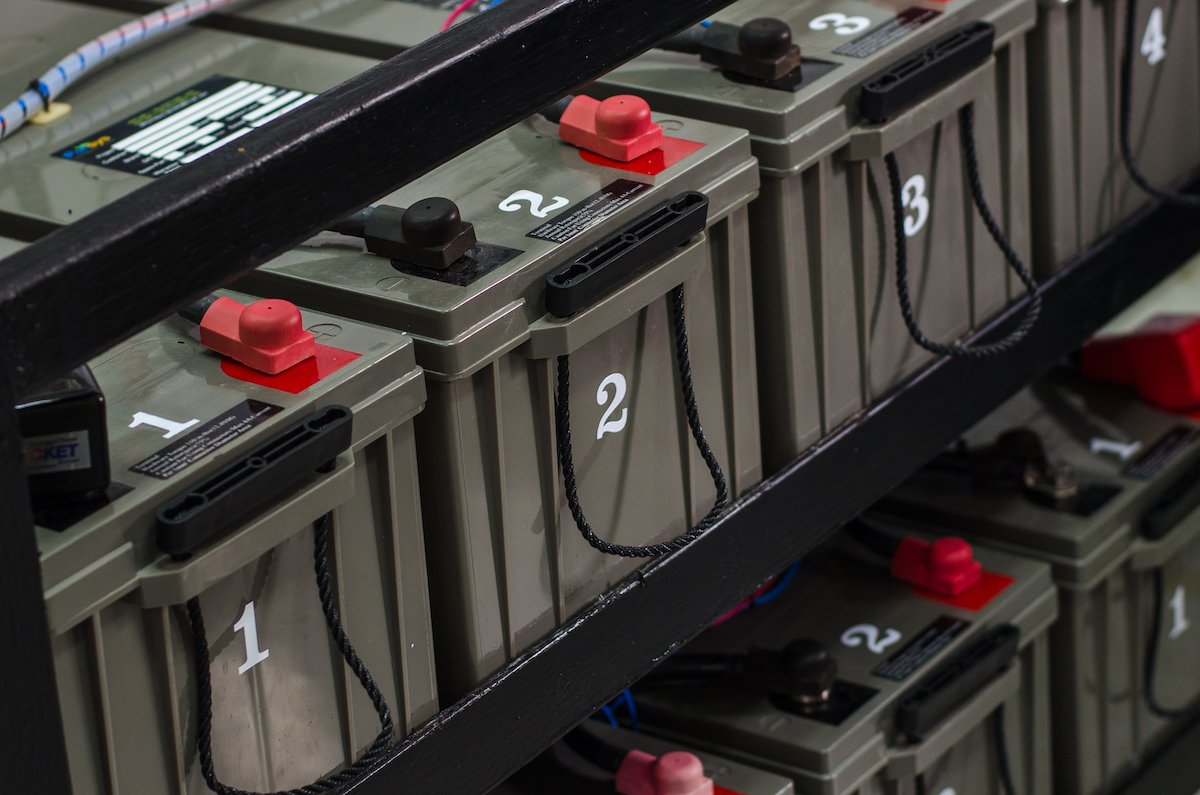
The 6-EVF-60 12V60Ah is a 12 V, 60 Ah AGM VRLA battery built for stand-alone solar street lighting cabinets where the battery box sits in the field and nobody is on site to intervene. The published Model page values are 258×170×160 mm, 18.8 ± 0.2 kg, float 13.5 V, equalise 14.1 V, maximum charge current 12.0 A, cutoff 1.75 V/cell, self-discharge ≤3 %/month at 25 °C, working range −15…50 °C, and a design life of 2–5 years. Every figure quoted below is taken from that published page; anything derived is labelled Arithmetic.
For a solar street lighting run, the numbers that decide the design are the 60 Ah C3 rating and the 12.0 A charge current. A 60 Ah C3 battery delivers 60 Ah ÷ 3 h = 20 A for three hours (Arithmetic), so a 40 W LED head drawing 40 W ÷ 12 V = 3.33 A at the string terminals can be supported through a full 10-hour night from one 6-EVF-60 12V60Ah string with reserve left in the bank (Arithmetic). At 720 Wh nominal — 60 Ah × 12 V = 720 Wh (Arithmetic) — the 6-EVF-60 12V60Ah is the practical centre of the EVF ladder for 30–60 W heads.
Specify it correctly and it ships from the CHISEN 12 V VRLA line with CE, ISO 9001, ISO 14001, UL and IEC certification, built in eight production bases with an annual capacity of 70 million kVAh.
Key Takeaways
- Published output: 12 V, 60 Ah at the C3 rate; case 258×170×160 mm; weight 18.8 ± 0.2 kg — the 6-EVF-60 12V60Ah is a 60 Ah VRLA, not a tubular gel unit.
- Charge control setpoints: float 13.5 V per string, equalise 14.1 V per string, maximum charge current 12.0 A (≈0.20 C, since 12.0 A ÷ 60 Ah = 0.20 C — Arithmetic).
- String arithmetic: 6 cells × 2.25 V/cell = 13.5 V float bus; 6 cells × 2.35 V/cell = 14.1 V equalise bus; 6 cells × 1.75 V/cell = 10.5 V end-of-discharge cutoff — all Arithmetic from the published cell values.
- Temperature envelope: −15…50 °C working, self-discharge ≤3 %/month at 25 °C, so the cabinet needs ventilation in hot climates rather than active cooling.
- Service life: design life 2–5 years, cycle life 350–600 cycles at 50–80 % depth of discharge — cycle figures assume the string is cycled, not held on float for years.
- Sourcing: eight CHISEN production bases, 70 million kVAh annual capacity, CE / ISO 9001 / ISO 14001 / UL / IEC certification, shipped to importers and OEM programmes worldwide.
§1 — 6-EVF-60 Quick Specifications
The table below is the verified Model page for the 6-EVF-60 12V60Ah. Rows marked Model page are published values; rows marked Arithmetic are computed from those published values and are shown with their working.
| Parameter | Value | Source |
|---|---|---|
| Nominal voltage | 12 V | Model page |
| Capacity | 60 Ah | Model page |
| Rate | C3 | Model page |
| Dimensions L×W×H | 258×170×160 mm | Model page |
| Weight | 18.8 ± 0.2 kg | Model page |
| Terminal | φ14-M6 | Model page |
| Float voltage | 13.5 V | Model page |
| Equalise voltage | 14.1 V | Model page |
| Cycle life | 350–600 cycles (DoD 50–80 %) | Model page |
| Maximum charge current | 12.0 A | Model page |
| Cutoff voltage | 1.75 V/cell | Model page |
| Self-discharge | ≤3 %/month @25 °C | Model page |
| Working temperature | −15…50 °C | Model page |
| Design life | 2–5 years | Model page |
| Cell count in string | 6 × 2.0 V = 12.0 V nominal | Arithmetic |
| Float bus voltage | 6 × 2.25 V = 13.5 V | Arithmetic |
| Equalise bus voltage | 6 × 2.35 V = 14.1 V | Arithmetic |
| End-of-discharge cutoff | 6 × 1.75 V = 10.5 V | Arithmetic |
| C3 discharge current | 60 Ah ÷ 3 h = 20 A | Arithmetic |
| Nominal energy | 60 Ah × 12 V = 720 Wh | Arithmetic |
| Charge rate | 12.0 A ÷ 60 Ah = 0.20 C | Arithmetic |
| Energy density | 720 Wh ÷ 18.8 kg = 38.3 Wh/kg | Arithmetic |
§2 — The Pain: Why Solar Street Lighting Batteries Fail in the Field
A solar street lighting cabinet is a hostile place for a battery. It sits at the pole base, in direct sun during the day, in a metal box that can reach 55–60 °C in summer, and it is opened by a technician only once or twice a year. Every failure mode below comes from that combination, not from a bad cell.
Thermal derating. The published working range for the 6-EVF-60 12V60Ah is −15…50 °C (Model page). Above 50 °C the VRLA chemistry ages faster, and float life shortens in proportion to the time spent hot. A cabinet in Chennai, Karachi or Lagos that is never shaded will run the bank above its rated window for months every year.
Chronic undercharge. Solar charging is intermittent by nature. When the panel is undersized, or the first days of the rains arrive before the controller has equalised the bank, the string drifts into a shallow-cycled state and stays there. The published equalise setpoint of 14.1 V per string (Model page) is what restores the string after deep discharge; if the controller never reaches that voltage, capacity fades silently.
Floating charge current mistakes. The published maximum charge current is 12.0 A (Model page). A controller set to push 25–30 A into a 60 Ah bank forces excessive heat and electrolyte loss. Buyers who specify the current rather than only the panel wattage avoid this entirely.
Terminal and enclosure problems. The published terminal is φ14-M6 (Model page) and the case is 258×170×160 mm (Model page). A cabinet designed around a 180×76×170 mm battery will not accept the 6-EVF-60 12V60Ah, and a layout that leaves no room for the cable bend radius of an M6 post will cause terminal damage in the field — the single most common cause of warranty returns on VRLA installations.
Deep discharge during consecutive cloudy nights. Set-and-forget installations with only one day of autonomy fail after the first overcast week. The bank reaches the 1.75 V/cell cutoff (Model page) and, in a series string of six cells, the pack sits at 6 × 1.75 V = 10.5 V (Arithmetic) until the sun returns.
§3 — The Choice: Matching the 6-EVF-60 12V60Ah to the Lighting Load
Choosing a VRLA battery for solar street lighting is a four-way match: the LED head power, the autonomy target, the controller setpoints, and the cabinet geometry.
Step 1 — size against the night load. A 40 W LED head on a 12 V string draws 40 W ÷ 12 V = 3.33 A (Arithmetic). Across a 10-hour night that is 3.33 A × 10 h = 33.3 Ah (Arithmetic). With a 20 % reserve for ageing and cold nights: 33.3 Ah ÷ 0.8 = 41.6 Ah of usable capacity (Arithmetic). The 6-EVF-60 12V60Ah at 60 Ah covers that with margin, and the margin is what carries the installation through two consecutive cloudy nights. Lower it to a 50 Ah unit and the reserve disappears; raise it to 80 Ah and you buy autonomy you do not need at this head size.
Step 2 — size against the panel. The 6-EVF-60 12V60Ah accepts a 12.0 A charge current (Model page). In practice that means a controller with a 12–15 A charge stage, and a panel array sized so that the daily harvest replaces the night load plus the standby loss. With a 720 Wh nominal bank (60 Ah × 12 V = 720 Wh, Arithmetic) and an average of 4 peak-sun hours, a 120 W array delivers roughly 480 Wh per clear day — enough to restore the 33.3 Ah night load with margin for conversion losses.
Step 3 — set the controller correctly. Float 13.5 V, equalise 14.1 V, charge current capped at 12.0 A, and an end-of-discharge cutoff at 10.5 V for the six-cell string (all Arithmetic from Model page cell values). Set the controller to the published values and the 6-EVF-60 12V60Ah performs exactly as the datasheet describes; set it generically and you lose the warranty argument.
Step 4 — size the cabinet. At 258×170×160 mm and 18.8 ± 0.2 kg, the 6-EVF-60 12V60Ah needs a mounting cradle with clearance for the M6 terminals and the interconnects. Two units side by side fit a standard 400 mm wide pole box; the full EVF ladder, from the 12 Ah 6-DZF-12 to the 150 Ah 6-EVF-150, is listed on the full product range for planners who need one supplier across a whole lighting programme.
§4 — The Framework: A Commissioning Routine That Protects the 6-EVF-60 12V60Ah
The published specification on this model page tells you what the 6-EVF-60 12V60Ah is. The framework below tells you how to keep it performing for the design life instead of losing it in the first wet season.
Stage 1 — specification freeze (before order). Record the four numbers that drive everything else: 12 V nominal, 60 Ah, 13.5 V float, 14.1 V equalise, and cap the charge stage at 12.0 A. Confirm the case footprint of 258×170×160 mm against the cabinet drawing and confirm the φ14-M6 terminal against the busbar and cable lug. If a drawing and a datasheet disagree, the datasheet wins — the 6-EVF-60 12V60Ah ships as specified.
Stage 2 — incoming inspection (at the distributor). Check the case for impact marks and the terminals for bending; confirm the weight against 18.8 ± 0.2 kg (Model page) as a quick proxy for correct product and correct shipping configuration. Check the manufacturing date on the case label — VRLA stored at 25 °C loses no more than 3 %/month (Model page), so shelf age is a predictable variable. Record the terminal torque used; the sibling model page for the 6-EVF-50 shows the same M6-post connection practice and the same case-drawing conventions.
Stage 3 — commissioning (day one). Measure the open-circuit voltage of each cell and the string. A new 6-EVF-60 12V60Ah string should sit near 12.6–12.8 V open circuit (Arithmetic from six cells at 2.1 V/cell). Then charge: set float to 13.5 V, equalise to 14.1 V, charge current 12.0 A maximum, and run the first full equalisation before the panel is connected to the load.
Stage 4 — seasonal checks. In the hot season, read the string voltage at the end of the charge day; anything persistently below 13.2 V means the array is undersized or the controller is in a reduced mode. In the wet season, confirm the controller never discharges below 10.5 V (Arithmetic: 6 × 1.75 V). Check the vent of the cabinet and the cable gland seals — a cabinet that draws moist air raises self-discharge above the published ≤3 %/month.
Stage 5 — annual health check. Record string voltage, the number of deep discharges, and the ambient temperature. A bank that has been through 150 cycles still has more than half its published 350–600 cycle life ahead of it; a bank that has been chronically undercharged will already be well down that range. Plan the replacement against the design life of 2–5 years rather than waiting for a failure.
§5 — Sibling Model Comparison: 6-DZF-20 to 6-EVF-120
When a lighting programme mixes head sizes, the same VRLA platform scales with the load. The table lists published values for the neighbouring models in the 12 V AGM range; the energy and runtime columns are Arithmetic derived from the published capacity and weight, at a 10 A night load (120 W ÷ 12 V = 10 A, Arithmetic), using 80 % of rated capacity as usable energy.
| Model | Capacity | Rate | L×W×H (mm) | Weight | Max charge current | Nominal energy (Arithmetic) | Runtime at 10 A (Arithmetic) | Source |
|---|---|---|---|---|---|---|---|---|
| 6-DZF-20 | 20 Ah | C2 | 180×76×170 | 6.1 ± 0.2 kg | 4.0 A | 20 × 12 = 240 Wh | 16 Ah ÷ 10 A = 1.6 h | Model page |
| 6-DMF-45 | 45 Ah | C3 | 224×121×175 | 12.3 ± 0.2 kg | 9.0 A | 45 × 12 = 540 Wh | 36 Ah ÷ 10 A = 3.6 h | Model page |
| 6-DMF-52 | 52 Ah | C3 | 224×135×175 | 13.7 ± 0.2 kg | 10.4 A | 52 × 12 = 624 Wh | 41.6 Ah ÷ 10 A = 4.2 h | Model page |
| 6-EVF-50 | 50 Ah | C3 | 230×140×180 | 15.25 ± 0.2 kg | 10.0 A | 50 × 12 = 600 Wh | 40 Ah ÷ 10 A = 4.0 h | Model page |
| 6-EVF-60 (this article) | 60 Ah | C3 | 258×170×160 | 18.8 ± 0.2 kg | 12.0 A | 60 × 12 = 720 Wh | 48 Ah ÷ 10 A = 4.8 h | Model page |
| 6-EVF-80 | 80 Ah | C3 | 259×170×218 | 25.7 ± 0.2 kg | 16.0 A | 80 × 12 = 960 Wh | 64 Ah ÷ 10 A = 6.4 h | Model page |
| 6-EVF-120 | 120 Ah | C3 | 407×170×240 | 40 ± 0.2 kg | 24.0 A | 120 × 12 = 1,440 Wh | 96 Ah ÷ 10 A = 9.6 h | Model page |
§6 — The Trust: Factory Capacity, Certification and Delivery
The 6-EVF-60 12V60Ah comes from a manufacturer with eight production bases and an annual capacity of 70 million kVAh, built on three product lines: flooded tubular OPzS2, gel tubular OPzV2 and the 12 V VRLA 6-DZF / 6-DMF / 6-EVF series that contains this model. Certification is held for CE, ISO 9001, ISO 14001, UL and IEC, and the factory operates from Hangzhou, China.
Quality control. Every published value in this article — 258×170×160 mm, 18.8 ± 0.2 kg, 13.5 V float, 14.1 V equalise, 12.0 A charge current, 1.75 V/cell cutoff, −15…50 °C, 2–5 years design life — comes from the same verified Model page, so an importer can check the specification against one document instead of reconciling several datasheet versions.
Delivery into export markets. Solar street lighting programmes move in container volumes, and each unit moves at 18.8 ± 0.2 kg (Model page), so container loading is planned by weight and pallet plan per shipment rather than by a fixed unit count. CHISEN ships to distributors and OEM lighting programmes in India, Nigeria, Kenya, Vietnam, the Philippines, Brazil, Egypt, Mexico, Indonesia, Pakistan, Bangladesh, the UAE, Saudi Arabia, Turkey, South Africa and Thailand, with ex-works loading from Ningbo and Shanghai and project cargo routed through Shenzhen, Jebel Ali, Karachi, Mumbai, Chennai, Lagos, Mombasa, Durban, Cairo, Hamburg, Rotterdam, Antwerp, Santos, Callao, Port Said, Colombo, Singapore and Port Adelaide. Timing, packing and freight terms are confirmed per order rather than assumed.
Application engineering. CHISEN supports the full 12 V VRLA ladder — 12 V 12 Ah to 12 V 150 Ah in sealed AGM, plus the tubular gel OPzV2 series for larger sites — so a lighting tender can be quoted on one bill of materials. Specifications not published on the Model page, such as terminal torque figures in newton-metres or cell-level test certificates, are to be requested from the factory.
§7 — FAQ
Q1: What are the published nominal voltage and capacity of the 6-EVF-60? 12 V nominal and 60 Ah at the C3 rate (Model page). The C3 rating means 60 Ah is delivered over three hours, which equals 60 Ah ÷ 3 h = 20 A (Arithmetic).
Q2: What float and equalise setpoints does the manufacturer publish for the 6-EVF-60? Float 13.5 V and equalise 14.1 V per 12 V string (Model page). Across six cells that is 6 × 2.25 V = 13.5 V and 6 × 2.35 V = 14.1 V (Arithmetic).
Q3: What is the maximum charging current for the 6-EVF-60? 12.0 A (Model page), which is 12.0 A ÷ 60 Ah = 0.20 C (Arithmetic). Solar charge controllers for this application should be set to that value or lower.
Q4: What are the case dimensions and weight of the 6-EVF-60? 258×170×160 mm and 18.8 ± 0.2 kg (Model page). These figures fix the cabinet cradle, the vent layout and the cable bend radius.
Q5: What terminal type and torque does the 6-EVF-60 use? The published terminal is φ14-M6 (Model page). Torque values in newton-metres are not published and are to be requested from the factory.
Q6: How many cells does a 12V60Ah string contain and what bus voltage does it give? Six cells at 2.0 V nominal each, giving 6 × 2.0 V = 12.0 V on the bus (Arithmetic). Float runs at 13.5 V and equalise at 14.1 V across the same six cells.
Q7: What is the published design life of the 6-EVF-60 and at what temperature? 2–5 years design life with a self-discharge rate of ≤3 %/month at 25 °C (Model page). The working temperature range is −15…50 °C (Model page), so float life shortens in cabinets that run above 50 °C.
Q8: How should an importer verify the 6-EVF-60 on delivery? Confirm case dimensions and weight against 258×170×160 mm and 18.8 ± 0.2 kg (Model page), inspect terminals for damage on the φ14-M6 posts, record the manufacturing date, and measure open-circuit voltage per cell and per string before installation.
Q9: Which certifications does the CHISEN factory behind the 6-EVF-60 hold? CE, ISO 9001, ISO 14001, UL and IEC, from a manufacturing base of eight plants with an annual capacity of 70 million kVAh.
Q10: How do I request a quotation or samples for the 6-EVF-60? Send the target quantity, destination port, required certifications and the delivery schedule to sales@chisen.cn or jack@chisen.cn. Sample units and the full Model page specification can be supplied on request.
Expert Summary
The 6-EVF-60 12V60Ah is a sealed AGM VRLA battery in the 12 V EVF series, specified for solar street lighting cabinets: 12 V, 60 Ah at C3, 258×170×160 mm, 18.8 ± 0.2 kg, φ14-M6 terminals, float 13.5 V, equalise 14.1 V, maximum charge current 12.0 A (0.20 C), cutoff 1.75 V/cell, self-discharge ≤3 %/month at 25 °C, working −15…50 °C, design life 2–5 years, cycle life 350–600 at 50–80 % depth of discharge (Model page). For a 40 W head on a 10-hour night the string needs 33.3 Ah, or 41.6 Ah with a 20 % reserve (Arithmetic), which one 6-EVF-60 12V60Ah covers with useful cloudy-night margin; the 720 Wh nominal bank (60 Ah × 12 V, Arithmetic) charges at 12.0 A from a 120 W array. Commission it against the published setpoints, size the cabinet from 258×170×160 mm, and the unit delivers its design life in the field.
Contact CHISEN — 24-Hour Response
- Email: sales@chisen.cn
- Export desk: jack@chisen.cn
- WhatsApp: +86 131 6622 6999
- Website: www.chisen.cn
For the verified specification of the 6-EVF-60 12V60Ah, see this model page.
Related CHISEN Buyer Guides
- 6-EVF-50 12V50Ah AGM VRLA Battery for Solar Street Lighting
- 12V 50Ah Battery: How to Specify a 12V 50Ah Cell for AGVs, Golf Carts and Small Solar Syst
- 6-EVF-120 12V120Ah AGM VRLA Battery for UPS: Specs, Float Charging
- 6-EVF-150 12V150Ah AGM Battery: Published Specs, Parallel String Sizing and EVF Range Comp
- OPzV2-100 2V100Ah Tubular GEL VRLA Battery for Telecom Access, Small UPS and Off-Grid Sola
