12V vs 24V vs 36V vs 48V Lead-Acid Batteries: What Actually Changes?
If you’re shopping for an electric scooter battery, you’ve seen these numbers everywhere. 12V, 24V, 36V, 48V. They’re describing voltage — and understanding what changes when you move between these levels is fundamental to making the right purchase, getting the right performance, and keeping your scooter running safely. Many riders in emerging markets across Southeast Asia, Africa, and South Asia are upgrading their e-scooter fleets and need to make these decisions with limited technical support. This guide gives you the knowledge to choose confidently.
Voltage is not a measure of battery size or capacity. It’s a measure of electrical potential — the “pressure” at which electricity flows through a circuit. Think of it like water pressure in a pipe: higher pressure (voltage) pushes more water (current) through even when the pipe diameter (resistance) stays the same. In an electric scooter, voltage determines how “hard” the battery pushes electrons through the motor windings.
What Voltage Actually Does in an Electric Scooter
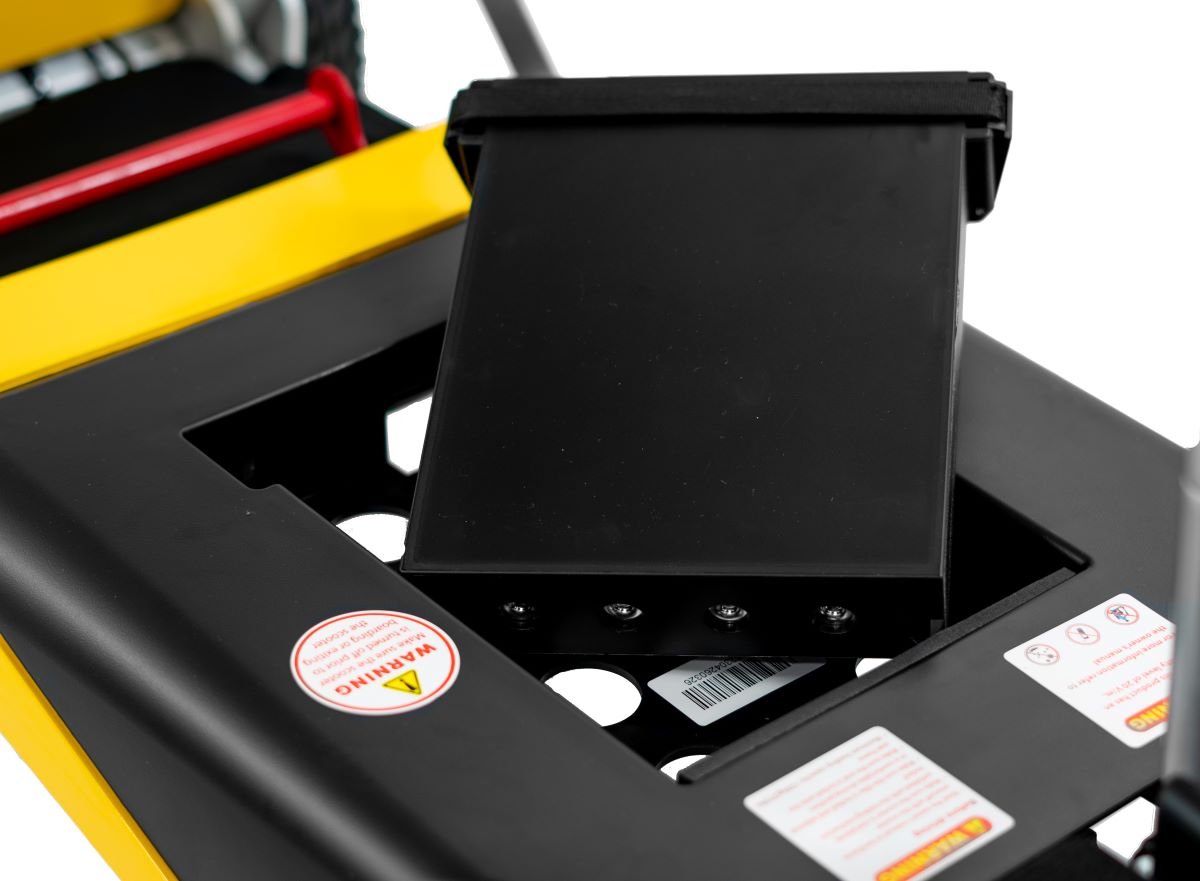
!electric-scooter-lithium-battery-pack-close-up.jpg

The motor in your electric scooter has a rated voltage window, typically with a minimum (low voltage cutoff) and maximum safe operating voltage. The voltage you feed into the controller determines two things:
- Maximum speed: Higher voltage allows the motor to spin at higher RPMs, which translates directly to higher top speed. A 36V system on the same motor will have a lower top speed than a 48V system. Roughly, doubling the voltage increases speed by about 30-40% (the relationship isn’t perfectly linear due to motor efficiency curves).
- Power delivery feel: Higher voltage systems deliver power more responsively and feel more powerful at the same current. A 48V system at 15A delivers 720W of power. A 36V system at 15A delivers only 540W. The extra 180W may not sound dramatic, but it translates to noticeably quicker acceleration off the line — a critical factor for delivery riders weaving through traffic in cities like Lagos, Nairobi, Bangkok, or Mumbai.
The motor itself is usually rated for a range of voltages. A motor designed for 36-72V input can often run on any of these voltages, but the controller must match the system voltage. You cannot simply plug a 48V battery into a scooter designed for 36V without also upgrading the controller. The controller’s MOSFETs (metal-oxide-semiconductor field-effect transistors) have a maximum voltage rating — exceeding it causes immediate and catastrophic failure.
What 12V, 24V, 36V, and 48V Actually Mean in Practice
12V is the base unit — the building block of all lead-acid battery systems. A single 12V lead-acid battery typically consists of six 2V cells connected in series internally, each cell producing 2.0-2.1V when fully charged. By itself, 12V is not enough voltage to run an adult electric scooter (most scooter motors need at least 24V). However, multiple 12V batteries are combined in series to create higher system voltages. In the Philippines, Vietnam, and Indonesia, many budget e-scooter models use 24V systems because they offer the lowest cost entry point for commuters traveling 5-10 km daily.
24V (two 12V batteries in series): Entry-level voltage for small electric scooters, folding bikes, and children’s vehicles. Typical top speed: 20-25 km/h on flat ground with a 250W motor. Range is limited by the low voltage, as the controller must draw higher current to produce the same power — and higher current means more heat loss in the wiring and controller. At 24V 10A, you get 240W. At 36V 10A, you get 360W from the same current draw. This is why 24V systems feel sluggish on hills.
36V (three 12V batteries in series): The most common voltage for mid-range electric scooters globally. In Europe and the Americas, the majority of consumer-grade e-scooters from brands like Xiaomi, Ninebot, and their regional equivalents use 36V systems. Typical top speed: 30-35 km/h. Most 36V systems use 10-15Ah of lead-acid capacity, giving 360-540Wh of energy. This is sufficient for most urban commutes up to 25 km per charge on flat terrain. For a delivery rider in Nairobi or Kampala doing 40-60 km per day, a 36V system with good 12V 12Ah batteries is the practical sweet spot.
48V (four 12V batteries in series): Higher performance tier for heavier riders, hillier routes, or faster scooters. Typical top speed: 40-45 km/h on flat ground. More responsive acceleration and better hill-climbing ability — essential for cities with significant elevation changes such as Medellín (Colombia), Cape Town, or Santiago. A 48V system also allows the use of a lower current draw for the same power output, which reduces heat generation and improves efficiency. At 720W output, a 48V system draws 15A. A 36V system producing the same 720W draws 20A — 33% more current, meaning more resistive heating in every component.
Why You Can’t Simply Mix Voltages
A common and costly mistake is connecting batteries of different voltages, ages, or capacities in series or parallel. Here’s why this creates problems:
If you have a 36V pack (three 12V batteries) and add a fourth 12V battery to make it 48V, but your controller is designed for 36V maximum, the controller will be destroyed within seconds. The maximum voltage rating of the MOSFETs and capacitors will be exceeded, causing immediate failure — and potentially a fire hazard.
Similarly, connecting two different 12V batteries — one older with reduced capacity and one newer at full capacity — in series creates an imbalanced pack. The weaker battery will discharge first and become the limiting factor. On the next charge cycle, the stronger battery may attempt to overcharge the weaker one, causing gassing, water loss in flooded batteries, or thermal runaway in extreme cases.
If you want to upgrade from 36V to 48V, you need to replace both the battery AND the controller. This is a significant undertaking that also affects the wiring harness, display, throttle, and potentially the motor. It’s not a simple swap. Budget accordingly.
The Weight Consideration
More voltage means more batteries, which means more weight. Here’s a practical comparison:
- 36V 12Ah lead-acid pack (3 × 12V 12Ah): approximately 10.5-12.6 kg total
- 48V 12Ah lead-acid pack (4 × 12V 12Ah): approximately 14.0-16.8 kg total
That extra 3-5 kg of battery weight has real consequences: more energy required to move the scooter, slightly reduced range from the additional mass, and more wear on the frame, wheel bearings, and brakes over time. For many urban commuters, a well-optimized 36V system with quality lead-acid batteries from CHISEN provides the best balance of performance, weight, and total cost of ownership.

发表回复