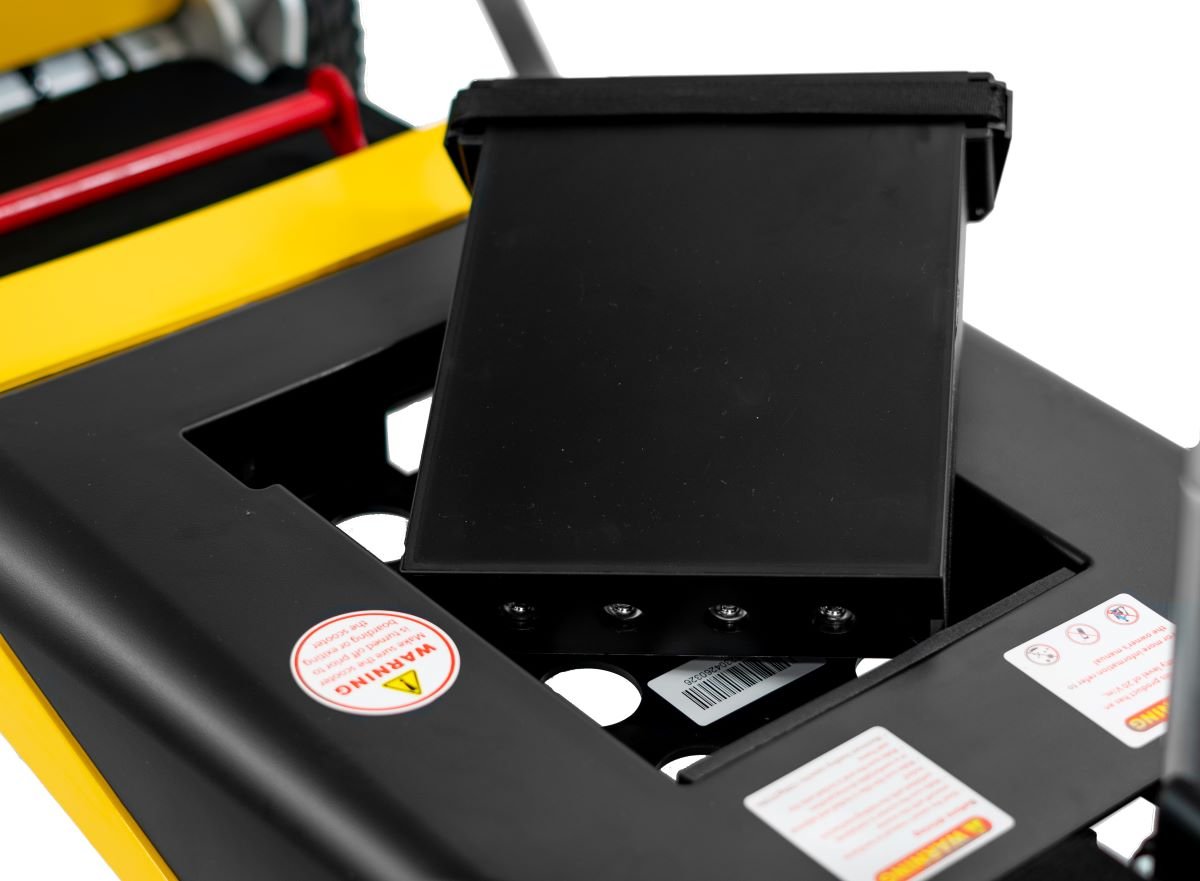
Lead acid Battery

  • Electric Scooter Lead-Acid Battery Prices 2025: What Does a Replacement Actually Cost?

    Electric Scooter Lead-Acid Battery Prices 2025: What Does a Replacement Actually Cost?

    The cost of replacement lead-acid batteries for electric scooters varies enormously in 2025 — from $12-15 USD for a no-name 12V 12Ah battery to over $100 USD for a premium branded unit with full warranty coverage. Understanding exactly what determines these prices, where the genuine value lies, and how to avoid being overcharged or sold counterfeit products will help you make smart purchasing decisions whether you’re buying one replacement battery for your personal scooter or sourcing hundreds for a commercial fleet.

    Prices vary significantly by region due to import duties, shipping costs, local distribution markups, and currency exchange rates. A battery that costs $35 USD from a Chinese manufacturer may retail for $55-75 USD in Europe, $60-85 USD in Africa, or $45-65 USD in Southeast Asia after accounting for shipping and local markup.

    2025 Price Landscape: The Real Range by Specification

    Here’s a practical guide to current market pricing for lead-acid batteries commonly used in electric scooters:

    12V 7Ah battery (small folding scooters, children’s vehicles):

    • Budget/no-name: $12-18 USD
    • Mid-range quality: $20-30 USD
    • Premium brand: $30-45 USD

    12V 12Ah battery (most common replacement size, fits 36V and 48V systems):

    • Budget: $15-25 USD
    • Mid-range quality: $30-45 USD
    • Premium brand: $45-70 USD

    12V 20Ah battery (extended range, delivery-grade applications):

    • Budget: $30-45 USD
    • Mid-range quality: $50-75 USD
    • Premium brand: $75-110 USD

    Complete battery packs:

    • 36V 12Ah SLA pack (3 × 12V 12Ah): $60-130 USD depending on brand
    • 36V 20Ah SLA pack (3 × 12V 20Ah): $90-200 USD depending on brand
    • 48V 12Ah SLA pack (4 × 12V 12Ah): $80-170 USD depending on brand
    • 48V 20Ah SLA pack (4 × 12V 20Ah): $120-260 USD depending on brand

    For a complete 36V 12Ah battery pack (the most common replacement configuration for mid-range e-scooters), expect to pay $60-130 USD for a quality branded product in 2025. A budget pack at $40-50 USD may work for occasional use but should not be relied upon for daily commercial operations.

    Why Do Prices Vary So Much Between Brands?

    The price variation is driven by several genuine and legitimate factors — not all of which are equally important for every buyer:

    Brand and reputation: Established battery brands invest in quality control, R&D for improved plate alloys and separator materials, customer service infrastructure, and warranty support. You’re paying for the brand’s track record, consistency, and accountability — not just the raw materials inside the box.

    Manufacturing quality — specifically plate thickness: As discussed in detail in our previous article, plate thickness is the single most reliable indicator of cycle life. A manufacturer using 3.0mm positive grids has higher material costs than one using 1.5mm grids. A quality 12V 12Ah AGM battery at 3.8-4.2 kg costs more to manufacture than a budget equivalent at 2.8-3.2 kg. The extra cost translates directly to longer life.

    Lead purity: Refining lead to 99.99% purity (Grade A lead) costs more than 99.0% purity lead (Grade B or recycled industrial lead). Impurities in lower-purity lead accelerate grid corrosion and reduce cycle life. The cost difference is embedded in the battery price.

    Warranty scope and duration: A 12-month capacity warranty against dropping below 80% of rated Ah costs the manufacturer money — they must maintain reserves to cover expected warranty claims. A 6-month defect-only warranty costs them very little. A battery priced $10 cheaper might offer only a 6-month defect warranty versus a 12-month capacity warranty — a significant difference in actual consumer protection.

    Freshness: A battery manufactured 18 months ago and stored in a tropical warehouse has degraded before you install it. Some sellers discount older stock to move inventory. The savings rarely compensate for reduced starting capacity and accelerated early failure. Always verify the manufacturing date before purchase.

    Distribution channel markup: Batteries purchased from authorized distributors or OEM parts departments include a markup that funds the retailer’s storage, staff, warranty handling, and overhead. Batteries purchased directly from wholesale distributors or manufacturers are cheaper but may offer less recourse if the battery fails prematurely.

    Regional Price Variations: What to Expect in Your Market

    Europe and North America: The strongest regulatory environments (EU Battery Regulation, US EPA standards) filter out the worst quality products. However, this also means higher baseline prices. Expect to pay $60-130 USD for a quality 36V 12Ah pack. OEM replacement batteries from major scooter brands are available at $80-150 USD. Third-party quality batteries from CHISEN and similar manufacturers are available through importers at $50-90 USD.

    Southeast Asia (Thailand, Vietnam, Indonesia, Philippines): Regional manufacturing and distribution keep prices competitive. Quality batteries are available from local distributors at $40-70 USD for a 36V 12Ah pack. Cheap Chinese imports are widely available at $25-40 USD but should be evaluated carefully using the plate thickness and warranty criteria.

    Africa (Nigeria, Kenya, Ghana, South Africa): Import duties, currency fluctuations, and limited local manufacturing create significant price variability. A 36V 12Ah pack might retail for $70-120 USD in Lagos or Nairobi due to import costs and local distribution margins. Sourcing directly from manufacturers or their authorized regional distributors can significantly reduce costs. Currency hedging and bulk purchasing through fleet operators can lower per-unit costs by 20-30%.

    Middle East (UAE, Saudi Arabia, Qatar): High consumer purchasing power means retail prices are at the upper end of the global range. Quality AGM batteries for high-temperature operation command a premium. Expect $70-130 USD for a quality 36V 12Ah pack. OEM parts from local dealers are widely available but expensive.

    South Asia (India, Pakistan, Bangladesh, Sri Lanka): The fastest-growing electric two-wheeler market globally has intense competition among battery suppliers. Prices are competitive for quality products: $35-60 USD for a quality 36V 12Ah pack. India in particular has strong domestic battery manufacturing that keeps prices lower than import-dependent markets.

    Where to Buy: Channel Comparison

    Online marketplaces (Amazon, AliExpress, eBay, regional platforms): Widest selection and often lowest prices, but quality inconsistency is significant. Stick to sellers with verified high ratings and review history. Look for batteries with clear manufacturing dates, ISO certifications, and specific warranty terms. Avoid listings with no brand name, vague specifications, and no warranty information.

    Battery specialty distributors: Specialists in batteries often have proper storage conditions (climate-controlled warehouses), knowledgeable staff who can verify compatibility, and batteries with known manufacturing dates. They’re typically 10-20% more expensive than marketplace sellers, but the added confidence and support is worth it for important applications.

    OEM parts departments: Direct from the scooter manufacturer is the most expensive option but guarantees compatibility. Use this route when you’re unsure of exact specifications, or when your scooter uses a non-standard configuration. For commercial fleets with 50+ scooters, OEM parts simplify inventory management even at a premium.

    Red flags that signal poor quality or counterfeits: Prices 50%+ below market rate for a known-quality brand. No brand name, no manufacturer address, no certifications. Listings with stock photos that don’t match the actual product. Sellers who cannot or will not provide manufacturing date information. Generic packaging with no technical specifications or safety markings.
  • How Heavy Is an Electric Scooter Lead-Acid Battery? Weight’s Real Impact on Range

    How Heavy Is an Electric Scooter Lead-Acid Battery? Weight’s Real Impact on Range

    If you’ve ever lifted an electric scooter battery out of its compartment for charging, you know lead-acid batteries are heavy. But just how heavy are they in absolute terms, and how does that weight actually affect your scooter’s range, acceleration, hill-climbing ability, and overall riding experience? The answer is more consequential than most riders realize — especially for commercial fleet operators in Southeast Asia, Africa, and South Asia who need to accurately predict range and battery life under real-world conditions.

    Understanding battery weight helps you make better buying decisions, manage your scooter’s payload capacity accurately, estimate range under different conditions, and understand why lithium batteries command such a premium in the electric scooter market.

    Actual Weight Numbers for Common Electric Scooter Battery Configurations

    Here’s a comprehensive weight reference for the lead-acid battery configurations most commonly used in electric scooters globally:

    Individual 12V batteries (per battery):

    • 12V 7Ah (small, lightweight scooters, children’s vehicles): 2.2-2.6 kg per battery
    • 12V 12Ah (most common replacement size, mid-range scooters): 3.5-4.2 kg per battery
    • 12V 20Ah (high capacity, delivery-grade scooters): 5.5-7.0 kg per battery

    Complete battery packs by system voltage:

    • 36V 12Ah (3 × 12V 12Ah): 10.5-12.6 kg total
    • 36V 20Ah (3 × 12V 20Ah): 16.5-21.0 kg total
    • 48V 12Ah (4 × 12V 12Ah): 14.0-16.8 kg total
    • 48V 20Ah (4 × 12V 20Ah): 22.0-28.0 kg total

    To put these numbers in practical perspective: a complete 36V 12Ah lead-acid battery pack weighing 10-13 kg is roughly equivalent to a mid-sized Labrador retriever, a large bag of cement, or a full car tire. Lifting it in and out of the scooter’s battery compartment for charging or replacement is a genuine physical task — and doing it twice daily, 365 days a year, adds up.

    How Weight Affects Range: The Physics Explained

    Every kilogram of battery weight must be propelled by the electric motor, which draws energy from the battery. The relationship between additional weight and reduced range isn’t perfectly linear, but it’s significant enough to matter in practical terms.

    For an electric scooter traveling at constant speed on flat ground, the energy required to overcome rolling resistance (tire deformation, bearing friction) and aerodynamic drag is proportional to total vehicle mass. Adding 5 kg of battery weight to a scooter that weighs 25 kg total (15 kg scooter chassis + 10 kg battery) increases total mass by 20%. At constant speed on flat ground, this increases energy consumption by approximately 10-15%.

    Using a practical example: if a scooter consumes 10Wh per kilometer with a standard battery pack, adding 5 kg might increase consumption to 11.5-12Wh per kilometer. Over a full discharge cycle delivering 400Wh (the rated capacity of a 36V 12Ah battery), that could reduce total range from 40 km to 33-35 km — a reduction of approximately 12-17%.

    The effect on hills is even more dramatic. Climbing a 10% grade at 15 km/h requires approximately 200-250W of mechanical power output from the motor. The additional power required to climb with extra battery weight is approximately: extra mass × gravitational acceleration (9.8 m/s²) × grade fraction. For 5 kg extra weight: 5 × 9.8 × 0.1 = 4.9W additional climbing power requirement. That sounds small in isolation, but when a small 250W motor is already operating near its thermal limit climbing a hill in 35°C ambient temperature, it can mean the difference between maintaining speed and stalling — or triggering thermal protection.

    For commercial delivery riders in cities like Bangkok, Lagos, or Mumbai — where routes involve frequent stops, starts, and minor elevation changes — the cumulative effect of extra battery weight on energy consumption is significant. Riders covering 60-80 km per day with a 36V 12Ah pack need to understand that a heavier battery system may reduce effective range by 5-10 km, potentially requiring a mid-route charge.

    The Lithium-Ion Comparison: Why the Weight Difference Matters So Much

    The reason battery weight is such a prominent topic in the electric scooter world is that lithium-ion battery technology delivers the same voltage and capacity at roughly one-third the weight. A 36V 12Ah lithium battery pack might weigh only 3-4 kg total — compared to 10-12 kg for an equivalent lead-acid AGM pack. That’s a 7-9 kg reduction, which dramatically improves range (more Wh per kg of vehicle), handling, acceleration, and the overall riding experience.

    For individual riders considering a lithium upgrade, the weight reduction math is straightforward: a 9 kg battery weight reduction on a 30 kg scooter is a 30% reduction in total vehicle mass. This improves range by 15-25% on flat terrain and makes hill climbing substantially easier. For commuters who need to carry their scooter up stairs or onto public transit — common in cities across Europe, East Asia, and dense urban areas globally — the weight difference transforms the practicality of the scooter.

    For fleet operators, the lithium versus lead-acid decision involves total cost of ownership, not just purchase price. A lead-acid battery pack at $80-120 may last 18-24 months with good care. A lithium battery pack at $250-400 may last 3-5 years. The cost-per-year comparison often favors lithium for high-mileage applications, even though the upfront cost is 3-4× higher. However, for budget-conscious markets and lower-mileage riders, quality lead-acid batteries remain the most cost-effective choice.

    Real-World Weight Context by Region

    Europe and North America: Lead-acid e-scooters typically weigh 25-35 kg total. The battery pack represents 30-40% of total vehicle weight. For riders who need to carry the scooter, this is a genuine burden. Many European cities with tram and subway access see riders lifting scooters regularly — making lithium upgrades popular despite the premium.

    Southeast Asia: E-scooters in Vietnam, Thailand, Indonesia, and the Philippines are heavily used for daily transport. Many models are designed specifically around lead-acid batteries to keep purchase prices low. Total scooter weights of 70-90 kg are common (lead-acid packs of 15-25 kg are standard for 48V systems). Riders accept the weight as normal for affordable transport.

    Africa: Commercial e-scooters in Kenya, Nigeria, and Ghana are often used for cargo and delivery applications. Heavier lead-acid packs are accepted as part of the trade-off for lower initial cost. Battery weight affects payload capacity — a 48V 20Ah AGM pack at 22-28 kg reduces the cargo a delivery rider can carry.

    Middle East: UAE, Saudi Arabia, and GCC markets show growing interest in lithium batteries for personal mobility devices despite the higher cost. The premium for reduced weight and extended range aligns with higher consumer purchasing power in these markets.

    South Asia: India’s FAME II subsidy program and growing e-scooter market have created strong demand for both lead-acid and lithium options. Budget lead-acid models remain popular for price-sensitive commuters in smaller cities and rural areas, where battery weight is less of a concern than battery price.

  • The True Cost of Cheap Lead-Acid Batteries: Why Plate Quality Matters

    The True Cost of Cheap Lead-Acid Batteries: Why Plate Quality Matters

    You’ve seen them online: a 12V 12Ah lead-acid battery for $12 USD. Free shipping. The listing photo shows it looking nearly identical to batteries costing $40. The specifications printed on the label are identical: 12V, 12Ah, AGM. “2 year warranty.” You think: how different can it really be? Pretty different, actually — and those differences have consequences that show up in the first month of real use and compound dramatically over the battery’s lifetime. For fleet operators and individual riders alike across emerging markets, understanding exactly why plate quality matters changes how you evaluate every battery purchase decision.

    This isn’t a lecture against buying budget batteries. It’s an engineering explainer that gives you the knowledge to evaluate batteries intelligently and avoid the hidden traps that cost more in the long run than buying quality upfront.

    What’s Inside a Lead-Acid Battery: A Technical Primer

    To understand why some batteries last 600 cycles and others last 60, you need to understand what’s happening inside during each charge and discharge cycle. A lead-acid battery contains:

    Lead dioxide (PbO₂) plates — the positive electrode. These dark brown plates store and release energy during each cycle.

    Sponge lead (Pb) plates — the negative electrode. These are the counter-electrode that completes the electrochemical circuit.

    Sulfuric acid (H₂SO₄) electrolyte — in AGM batteries, absorbed into a boron-silicate glass fiber mat; in flooded batteries, liquid between the plates.

    The grid — the structural metal framework that holds the active material in place on each plate. The grid is made of a lead alloy, typically combined with small amounts of antimony, calcium, tin, or selenium to improve casting properties and mechanical strength.

    During discharge: lead dioxide + lead + sulfuric acid → lead sulfate (PbSO₄) on both plates + water. During charging: lead sulfate + lead dioxide + sponge lead → original materials + sulfuric acid.

    The “grid corrosion” problem is where plate quality becomes critical. Over time, the positive grid itself corrodes electrochemically — lead converts to lead oxide at the grid surface. As the grid corrodes, it becomes thinner and loses mechanical strength. Eventually, it cracks or breaks, causing internal open circuits or dead shorts. This is why plate (grid) thickness is everything: a thicker grid has more material to lose to corrosion before catastrophic failure. A grid corroding at 0.02mm per cycle will reach structural failure at 300 cycles from 1.5mm starting thickness versus 600+ cycles from 3.0mm.

    How Cheap Manufacturers Cut Costs — And Why Each Cut Matters

    The cheapest lead-acid batteries are cheap because manufacturers systematically cut corners at every available point:

    Thinner grids: A quality 12V 12Ah deep-cycle AGM battery uses 2.5-3.0mm thick positive grids. A budget battery uses 1.5-1.8mm grids to save on lead content. Thinner grids corrode proportionally faster, and a battery starting with 1.5mm grids may reach structural failure at 150-200 cycles while an equivalent with 3.0mm grids lasts 400+ cycles.

    Lower-purity lead: Refining lead to 99.99% purity requires additional processing. Budget batteries use lead with higher impurity levels — antimony, copper, iron, silver — that accelerate grid corrosion and reduce active material efficiency. Impurities create local galvanic cells that speed up electrochemical degradation. The difference is invisible to the naked eye but measurable in cycle life testing.

    Less active material paste: The amount of lead dioxide coated onto the positive plates directly determines both initial capacity and cycle life. Budget batteries use thinner paste coatings — the battery meets its rated Ah specification on day one (under ideal 20-hour discharge testing conditions) but capacity fades faster as the thinner coating sheds material. After 100 cycles, a budget battery might deliver only 70% of rated capacity; a quality battery might still deliver 90%.

    Lower-quality separators: In AGM batteries, the glass mat separator must hold enough electrolyte to maintain ionic conductivity while physically preventing plate-to-plate contact. Cheap separators may be too thick (reducing energy density), too thin (increasing internal short risk as the mat degrades), or made from lower-quality glass fibers that break down faster in the acidic electrolyte environment.

    No formation cycling quality control: After assembly, new lead-acid batteries require formation — controlled initial charge-discharge cycles that activate the plates and establish the proper crystal structure of the active material. Quality manufacturers perform controlled formation with proper charging profiles. Budget manufacturers skip or abbreviate this step, reducing initial capacity and long-term reliability.

    The Real-World Cost Comparison: Doing the Math

    Comparing two batteries with identical printed specifications:

    • Premium quality battery: $45, 4.0 kg, 3.0mm positive grids, 500-cycle rated life at 80% DoD, 12-month capacity warranty
    • Budget battery: $15, 3.0 kg, 1.5mm positive grids, 150-cycle rated life, no meaningful warranty

    Scenario: Daily commuter riding 10 km each way, 5 days per week. A 36V 12Ah battery (432Wh) delivers approximately 22-28 km of range on a typical mid-range scooter, meaning a full charge cycle every 1-2 days.

    Premium battery lifespan: 500 rated cycles ÷ 0.5 cycles/day = 1,000 days ≈ 2.7 years of service. Budget battery lifespan: 150 rated cycles ÷ 0.5 cycles/day = 300 days ≈ 10 months of service.

    Annual cost:

    • Premium: $45 ÷ 2.7 years = $16.70 per year
    • Budget: $15 ÷ 0.85 years = $17.65 per year

    The cost per year is nearly identical — before factoring in downtime, replacement labor, and the frustration of premature failure. When you factor in two battery replacement procedures versus one over three years, the premium battery is clearly the more economical choice.

    For commercial fleets of 50 scooters, the numbers are starker. Fleet A using budget batteries needs 150-200 battery replacements over three years. Fleet B using quality batteries needs approximately 50 replacements. At $50-80 per replacement including labor, that’s an extra $5,000-12,000 in operational costs over three years — for the “privilege” of buying the cheapest battery upfront.

    Regional Cost Context: Why Climate Makes Quality Even More Important

    Southeast Asia: Ambient temperatures of 30-38°C accelerate all lead-acid degradation mechanisms by approximately 50% compared to temperate climates. A battery rated for 500 cycles at 25°C might deliver only 250-300 cycles in Jakarta or Manila. This makes plate quality even more critical in tropical markets.

    Africa: In Lagos, Nairobi, or Accra, where daytime temperatures regularly exceed 35°C and many scooters are charged in confined spaces, batteries face extreme thermal stress. CHISEN high-temperature-rated AGM batteries are specifically formulated for these conditions with enhanced grid alloys and higher-temperature electrolyte.

    Middle East: Cities like Dubai, Riyadh, and Jeddah routinely see 40-45°C summer temperatures. Budget batteries in this environment may fail within 3-4 months. Quality AGM batteries with operating temperature ratings up to 50°C are essential for reliable operations.

    South Asia: India’s e-scooter market is expanding rapidly, with millions of electric two-wheelers on roads in Delhi, Mumbai, Bangalore, and beyond. The combination of high ambient temperatures, heavy traffic, and frequent full-depth discharge cycles demands batteries with robust plate construction and proven cycle life.

  • OEM Battery vs Third-Party Replacement: Which Lead-Acid Battery Is Worth the Money?

    OEM Battery vs Third-Party Replacement: Which Lead-Acid Battery Is Worth the Money?

    When your electric scooter’s original battery dies, you face a genuine fork in the road: buy a replacement directly from the scooter manufacturer or an authorized dealer (OEM), or buy a third-party battery from a battery specialist. Both approaches have legitimate merit, and the right choice depends on your priorities — cost, reliability, compatibility assurance, performance expectations, and how long you plan to keep the scooter. For fleet operators across emerging markets, this decision can significantly impact operating costs over hundreds of vehicles.

    This guide cuts through the marketing to give you the actual facts about OEM versus third-party batteries, including the hidden risks of cheap third-party batteries and how to identify genuinely high-quality alternatives to OEM parts.

    What You’re Actually Paying For With an OEM Battery

    An OEM (Original Equipment Manufacturer) battery is the same battery — or at minimum, the same exact electrical and physical specifications — that came in your scooter from the factory. Buying from the scooter manufacturer or an authorized dealer gives you the highest possible confidence of compatibility. The battery will physically fit the battery compartment, the connectors will match, and the voltage, current, and C-rate specifications will be precisely what the scooter’s controller and motor expect.

    OEM batteries also come with the scooter manufacturer’s brand credibility. If you own a Ninebot Max (Segway-Ninebot), a genuine Ninebot replacement battery gives you confidence that the battery management system (if applicable), charging profile, and connector pinout will work together perfectly. You’re paying for that certainty and the reduced risk of a compatibility problem.

    The primary downside is cost. OEM batteries typically command a 30-60% price premium over equivalent third-party batteries. In practical terms: a genuine OEM replacement battery for a popular 36V 7.5Ah or 36V 10Ah scooter model might cost $80-120 USD, while an equivalent-quality third-party 36V 12Ah SLA battery from a reputable manufacturer might cost $50-75 USD. For a battery that might deliver a similar number of cycles, the OEM premium is hard to justify purely on performance grounds — but the compatibility certainty is a genuine value for riders who lack technical knowledge.

    In markets like Europe and North America, OEM battery availability is generally good for major brands with established distribution networks. In emerging markets across Africa, South Asia, and Southeast Asia, OEM parts may be difficult to source, imported at high cost, or have long lead times — making third-party alternatives not just cheaper but more accessible.

    What Genuinely Good Third-Party Batteries Offer

    Third-party batteries from reputable battery manufacturers offer equivalent or sometimes superior performance at lower prices. Well-known battery manufacturers like CHISEN, CSBattery, Leoch, and Power Battery invest heavily in plate quality, manufacturing consistency, and quality control — often using higher-grade materials than the generic batteries that some scooter OEMs spec to keep their BOM costs down.

    The key is distinguishing genuinely reputable third-party brands from cheap knock-offs. A Chinese manufacturer like CHISEN, producing AGM batteries in ISO 9001 and ISO 14001 certified facilities since 2003, will deliver batteries with consistent plate thickness, proper electrolyte formulation, and documented cycle life data. A generic no-name battery from an unknown factory may have specifications printed on the label that don’t reflect the actual battery inside.

    Before buying any third-party battery, verify these specifications yourself:

    1. Voltage: Must match exactly — 36V or 48V for most adult scooters. Never substitute a 36V battery in a 48V system or vice versa.
    2. Ah capacity: Should match or exceed the original. A higher Ah rating is fine; a lower Ah rating means less range.
    3. Physical dimensions and terminal layout: Measure your existing battery. Third-party batteries may have slightly different dimensions or terminal positions that prevent them from fitting the battery compartment.
    4. Discharge rate (C-rating): The battery must be able to deliver the current your motor requires. A 36V 500W motor drawing 15A at full load needs a battery rated for at least 15A continuous discharge. For high-performance riding, look for batteries rated at C/3 or C/2 discharge capability.
    5. Charger connector type: The connector that plugs into your scooter’s charging port must match. Different manufacturers use different connectors. Verify this before purchasing.
    6. Charging voltage profile: Your existing charger may be optimized for the OEM battery’s charging profile. AGM batteries typically accept 14.4-14.7V maximum charge voltage per 12V cell group.

    Many third-party battery sellers publish compatibility charts by scooter model, which is helpful. But always cross-reference the physical specifications yourself — a listing may claim “compatible with Xiaomi Mi Electric Scooter” without disclosing that the connector polarity is reversed or the dimensions are 5mm too tall to fit the battery compartment.

    The Long-Term Cost Calculation

    Let’s do the real math, because this is where the decision becomes clear:

    Scenario A: OEM battery at $100, lasts 18 months with daily use (approximately 500 full-equivalent cycles) Scenario B: Quality third-party battery at $55, lasts 15 months with daily use (approximately 400 full-equivalent cycles) Scenario C: Cheap third-party battery at $25, lasts 6 months with daily use (approximately 150 full-equivalent cycles)

    Annual cost comparison:

    • OEM: $100 ÷ 1.5 years = $67/year
    • Quality third-party: $55 ÷ 1.25 years = $44/year
    • Cheap third-party: $25 ÷ 0.5 years = $50/year

    The quality third-party battery comes out significantly ahead — approximately 34% cheaper per year than OEM, and 12% cheaper than the cheap third-party option that requires replacement twice as often.

    This calculation doesn’t account for the operational cost of downtime — every time a battery fails prematurely, the scooter is off the road. For commercial fleets, that downtime has real revenue consequences. A delivery rider in Nairobi or Jakarta who loses 2-3 hours to an unexpected battery failure loses income. A fleet operator who must replace batteries quarterly instead of semi-annually faces doubled labor and logistics costs.

    The Recommendation by Market

    Europe and North America: OEM batteries are readily available and relatively affordable for major brands. Quality third-party batteries offer better value if you’re comfortable verifying specifications. Avoid cheap generic batteries regardless of region.

    Southeast Asia (Thailand, Vietnam, Philippines, Indonesia): Third-party batteries from regional distributors are widely available and significantly cheaper than OEM imports. Choose a quality brand with a local warranty provider. Cheap generic Chinese imports are abundant and should be avoided.

    Africa (Nigeria, Kenya, Ghana, South Africa): OEM parts are often expensive imports with limited availability. A quality third-party battery from a distributor with local stock is usually the practical choice. Prioritize batteries rated for high-temperature operation (35-45°C ambient).

    Middle East (UAE, Saudi Arabia, Qatar): High ambient temperatures accelerate battery degradation. Choose AGM batteries from manufacturers that spec high-temperature tolerance. OEM parts from local dealers are the safest option if budget allows. Third-party AGM batteries from temperature-rated manufacturers are a valid alternative.

    South Asia (India, Pakistan, Bangladesh): A massive market for budget and mid-range electric scooters. Third-party batteries are widely available from battery specialists. Prioritize manufacturers with ISO certifications and verifiable quality data.

  • How to Choose a Lead-Acid Battery Brand for Electric Scooters: 4 Quality Markers

    How to Choose a Lead-Acid Battery Brand for Electric Scooters: 4 Quality Markers

    Walk into any battery distributor in Lagos, Bangkok, or São Paulo and you’ll see dozens of brands and models claiming to be “premium quality” or “long-lasting.” Some 12V 12Ah batteries cost the equivalent of $15 USD. Others cost $50 USD. The packaging looks similar. The specifications are printed identically. So what’s actually different — and how do you separate genuine quality from clever marketing?

    Choosing the right battery brand affects everything from your scooter’s daily range to your total cost of ownership over two or three years. For commercial fleet operators managing 20, 50, or 500 scooters, the right battery brand decision multiplied across the fleet can mean thousands of dollars in savings or unnecessary costs. Here are the four quality markers that genuinely differentiate one lead-acid battery brand from another — and how to identify them without needing a materials science degree.

    Quality Marker 1: Plate Thickness — The Single Most Important Spec

    The thickness of the lead plates inside the battery is the most reliable predictor of quality and expected cycle life. This is not marketing — it’s electrochemistry. Thicker positive grids resist grid corrosion better and shed active material more slowly with each charge-discharge cycle. This directly translates to longer service life in real-world conditions.

    Here’s why plate thickness matters at the molecular level: during each discharge cycle, the lead dioxide (PbO₂) active material on the positive plates converts to lead sulfate (PbSO₄). During each charge cycle, it converts back. However, each cycle causes a tiny amount of the active material to shed from the plate surface — like sandpaper wearing down wood. Thicker plates have more active material to lose before capacity degrades to an unusable level.

    A budget battery with thin positive grids (1.5-2.0mm) might give you 150-250 cycles before capacity drops significantly. A quality battery with thicker positive grids (2.5-3.0mm) can deliver 400-600 cycles under similar conditions. The difference in plate thickness is invisible from the outside of the battery — but it’s usually reflected in the weight.

    The weight proxy: A quality 12V 12Ah deep-cycle AGM battery typically weighs 3.5-4.2 kg. A budget battery of the same stated rating might weigh only 2.8-3.2 kg. That 0.5-1.0 kg difference represents thinner plates, less active material, and fewer cycles. If two batteries have identical printed specifications but one is significantly lighter, it’s almost certainly using thinner grids and cheaper materials. Weight is an surprisingly accurate proxy for quality in lead-acid batteries.

    For reference, CHISEN 12V 12Ah AGM batteries use 2.5-3.0mm positive grids, are manufactured in ISO-certified facilities, and carry a 12-month capacity warranty. They weigh 3.8-4.2 kg depending on the specific model — in the premium range for this capacity class.

    Quality Marker 2: Manufacturing Date and Freshness

    Lead-acid batteries self-discharge and begin the gradual process of sulfation from the day they’re manufactured — even without ever being installed or connected to anything. Sulfation occurs when lead sulfate crystals form on the plate surfaces and, if allowed to grow too large, become difficult to dissolve during charging. A battery that has sat on a warehouse shelf for two years, even if never used, will have measurably reduced capacity compared to a fresh unit.

    The rate of self-discharge in lead-acid batteries is temperature-dependent. At 25°C, a quality AGM battery self-discharges at approximately 2-3% per month. At 40°C (common daytime temperatures in Nigeria, Dubai, or Delhi), the rate approximately doubles. A battery manufactured 18 months ago and stored in a non-climate-controlled warehouse in a tropical climate could have lost 40-50% of its charge through self-discharge — and the sulfation from a chronically undercharged state can permanently reduce capacity.

    Always check the manufacturing date before purchasing. Most batteries are marked with a date code — typically a letter-number combination. A quality brand will make the date identifiable. Common formats include: “A24” (January 2024) or a printed date like “2024-08.” The manufacturing date should be within six months of your purchase date. If you can’t find or identify the date code, ask the seller directly. A reputable seller will know and share this information. If they can’t or won’t provide it, buy elsewhere.

    This rule is especially critical for flooded lead-acid batteries, which self-discharge faster and sulfate more readily when stored discharged. AGM batteries are more forgiving during storage, but the freshness rule still applies. Be especially cautious when buying from online marketplaces where batteries may have passed through multiple distributors and storage conditions before reaching you.

    Quality Marker 3: Manufacturing Facility and Quality Certifications

    Not all lead-acid battery factories are created equal. The quality of the lead alloy, the purity of the electrolyte, the consistency of the plate pasting process, and the quality control during assembly all vary dramatically between manufacturers. A factory in a developed market with strict environmental and safety regulations has different cost structures than one in a developing market — and some of those cost differences reflect genuine differences in process quality.

    What to look for: Batteries manufactured in ISO 9001-certified facilities (quality management systems) and ISO 14001-certified facilities (environmental management) meet minimum standards for process control, documentation, and defect management. ISO certification is not a guarantee of premium quality, but it eliminates the worst manufacturing inconsistencies.

    Reputable manufacturers like CHISEN, CSBattery, Leoch, and Yuasa consistently outperform generic and unknown brands in cycle life testing. These manufacturers publish cycle life data, maintain consistency across production batches, and have quality control processes that catch defective cells before they reach customers. The upfront cost premium is typically justified by 2-3x longer service life, which makes the cost-per-kilometer or cost-per-cycle significantly lower — even though the initial purchase price is higher.

    For regional markets, this matters significantly. In South Asia, many generic brands source cells from multiple unknown factories, creating inconsistency between batches. In Southeast Asia, flooded batteries from lesser-known manufacturers often use recycled lead of questionable purity, which corrodes the grid faster. In Africa and the Middle East, batteries must tolerate high ambient temperatures that accelerate all degradation mechanisms — making quality manufacturer choice even more critical.

    Quality Marker 4: Warranty Terms — Read the Fine Print

    A battery warranty tells you a great deal about the manufacturer’s actual confidence in their product — not just their marketing claims. A quality battery from a reputable manufacturer typically comes with a 12-18 month warranty against manufacturing defects and, in the best cases, against capacity failure.

    What matters in a warranty:

    Duration matters less than coverage scope. A 6-month warranty that covers “defects in materials and workmanship” only protects you if the battery physically breaks — not if it simply loses capacity gradually. A 12-month warranty that covers capacity failure (when the battery drops below 80% of rated capacity) is worth far more because it protects the actual performance you’re buying.

    The warranty claim process is equally important. A good manufacturer makes it straightforward: contact the seller or distributor, provide proof of purchase and manufacturing date, and receive a replacement or prorated credit. Poor-quality manufacturers make the process deliberately difficult — requiring notarized documentation, return shipping at the buyer’s expense, or simply not responding to warranty claims.

    For fleet operators, warranty terms affect operational planning. A battery with a 12-month capacity warranty against failure below 80% rated capacity allows you to plan battery replacement cycles accurately. A battery with a vague “6-month warranty” creates uncertainty about when to replace batteries before they fail in the field.

  • Sealed Lead-Acid (SLA) vs Flooded Lead-Acid: Which One for Your Electric Scooter?

    Sealed Lead-Acid (SLA) vs Flooded Lead-Acid: Which One for Your Electric Scooter?

    When you start looking for a replacement battery for your electric scooter, you’ll encounter two main categories of lead-acid batteries: Sealed Lead-Acid (SLA) — which includes both AGM (Absorbent Glass Mat) and Gel variants — and Flooded Lead-Acid (also called “wet” batteries). Most modern electric scooters, from budget models sold in Southeast Asia to premium commuter scooters in Europe and North America, use sealed lead-acid batteries as original equipment. But understanding the fundamental differences between these types helps you make smarter purchasing decisions, avoid compatibility mistakes, and potentially save money on replacement batteries.

    This guide breaks down how each technology works, where each excels, and which type is right for your specific electric scooter application — whether you’re a daily commuter in Lagos, a fleet operator in São Paulo, or a weekend rider in Amsterdam.

    How They Work: The Fundamental Chemical Difference

    !electric-scooter-lithium-battery-pack-close-up.jpg

    A flooded lead-acid battery contains liquid sulfuric acid (H₂SO₄) electrolyte that freely moves between the battery’s six internal cells. The lead plates are fully immersed in this liquid, and during charging, electrolysis releases hydrogen and oxygen gas through vent caps on top of each cell. Because the electrolyte is liquid and can spill, flooded batteries must be mounted upright. They require regular maintenance: checking and refilling the electrolyte level with distilled water every 4-8 weeks, cleaning white terminal corrosion, and performing periodic equalizing charges to balance cell voltages.

    A sealed lead-acid battery (SLA) has electrolyte that is immobilized — either absorbed in a fine boron-silicate glass fiber mat separator (AGM technology) or suspended in a silica gel compound (Gel technology). SLA batteries are called “valve-regulated” because they use a one-way pressure valve that releases excess gas only if internal pressure exceeds safe limits. The internal recombination mechanism allows most hydrogen and oxygen to recombine back into water during the charging cycle, eliminating the need for external water addition. Because the electrolyte is immobilized, SLA batteries can be mounted in any orientation — even upside down — without risk of acid leakage.

    Which Type Is in Your Electric Scooter?

    The overwhelming majority of electric scooters — particularly consumer-grade models under $1,500 USD — come factory-equipped with AGM sealed lead-acid batteries. This is by deliberate design: AGM batteries are spill-proof, essentially maintenance-free, highly resistant to vibration (critical for scooter applications), and can be mounted in the scooter’s battery compartment in any position without risk of acid leakage from vibration or tip-over.

    Flooded lead-acid batteries are more common in larger applications: car starting batteries, forklift trucks, golf carts, off-grid solar energy storage systems, and backup power installations. While some electric scooter manufacturers — particularly in the budget segment — do use flooded batteries to reduce manufacturing cost, flooded batteries are less common in consumer scooters because the risk of acid leakage from road vibration or accidental tip-over is unacceptable for everyday commuter use.

    Critical compatibility rule: If your scooter came factory-equipped with a sealed (AGM or Gel) battery, do not replace it with a flooded battery unless explicitly approved by the scooter manufacturer. The battery compartment may not be designed to safely contain liquid electrolyte or vent the gases produced during charging. Conversely, replacing a flooded battery with a sealed AGM battery is generally safe and is often a meaningful upgrade — the AGM battery will be more vibration-resistant and completely leak-proof.

    AGM vs Gel: Key Differences That Affect Your Scooter

    Within the sealed lead-acid category, AGM and Gel batteries have meaningfully different characteristics:

    AGM (Absorbent Glass Mat) batteries are the most common type used in electric scooters. The electrolyte is held in a micro-fine glass fiber mat pressed between the plates — approximately 95% saturated with acid electrolyte. AGM batteries have the lowest internal resistance of any lead-acid type, which means better performance under high discharge currents. They recharge faster, handle high current pulses better, and are more efficient at delivering power during acceleration. AGM batteries are preferred for electric scooter applications because the high discharge rates during start-up and hill climbing match AGM’s strengths.

    AGM self-discharge rate is approximately 2-3% per month at 25°C, meaning a fully charged battery stored for six months would still retain approximately 82-88% of its charge. AGM batteries are also more tolerant of high temperatures than Gel batteries, making them suitable for use in hot climates across Africa, the Middle East, and South Asia where ambient temperatures regularly exceed 35°C.

    Gel batteries suspend the electrolyte in a silica gel that forms a semi-solid paste. This eliminates liquid entirely inside the battery. Gel batteries have a slightly higher internal resistance than AGM, which makes them less suitable for high-current applications. During high discharge rates (such as rapid acceleration or climbing a steep hill), Gel batteries exhibit more voltage sag and deliver less current than an equivalent AGM battery. Gel batteries are more commonly found in renewable energy storage applications and mobility scooters used primarily at walking pace.

    The charging profile is also different: Gel batteries require a lower maximum charge voltage (typically 14.1-14.4V per 12V battery vs 14.4-14.7V for AGM). Using an AGM charging profile on a Gel battery risks premature failure. If your scooter came with a Gel battery (uncommon), verify that any replacement charger is compatible with Gel technology before purchasing.

    Performance Comparison for Electric Scooter Applications

    For the specific demands of electric scooter use — repeated high-current discharge, vibration from road surfaces, potential exposure to heat and moisture — the practical performance comparison is clear:

    AGM is the right choice for virtually all electric scooter applications. The slightly lower cost, better high-current performance, faster recharge capability, and greater vibration resistance make AGM the superior technology for this use case. A 36V 12Ah AGM battery pack for an electric scooter typically costs $60-110 depending on brand quality, while a comparable Gel battery might cost 20-30% more without delivering meaningful advantages for this application.

    The one scenario where Gel batteries may make sense: a very small, slow electric scooter used exclusively for flat-terrain, low-speed neighborhood trips by a rider who weighs under 70 kg and never accelerates aggressively. In every other scenario — and particularly for commercial fleet use in emerging markets — AGM is the correct choice.

    Flooded Batteries: When They Make Sense

    Flooded lead-acid batteries do offer one genuine advantage for some applications: slightly longer cycle life under ideal conditions when properly maintained. In a laboratory setting with perfect watering schedules, equalizing charges, and controlled temperatures, a flooded battery may outlast an AGM equivalent. However, in real-world conditions where most scooter riders don’t have the knowledge, tools, or discipline to perform regular electrolyte maintenance, flooded batteries typically fail faster due to electrolyte loss, acid stratification, and plate sulfation from infrequent watering.

    For commercial fleet operators in markets like Kenya, Bangladesh, or Peru, flooded batteries add an operational burden — maintaining water levels across dozens of batteries is time-consuming and requires trained staff. AGM’s maintenance-free operation eliminates this burden entirely, making it the more practical choice for fleet economics even if the per-battery cycle life is marginally shorter.

  • electric scooter lithium battery pack close up 13

    Is Bigger Ah Better? The Correct Logic Behind Lead-Acid Battery Capacity Selection

    Is Bigger Ah Better? The Correct Logic Behind Lead-Acid Battery Capacity Selection

    The amp-hour (Ah) rating on a battery is one of the most misunderstood specifications in the electric scooter world. Bigger seems better, right? More amp-hours means more range, so a 20Ah battery must be better than a 12Ah battery. The reality is more nuanced — and in some cases, a smaller battery used wisely will outperform a larger one used poorly. Understanding the true relationship between Ah, depth of discharge, cycle life, and cost will transform how you make purchasing decisions for your scooter fleet or personal commute. For fleet operators in markets like India, Brazil, Nigeria, and the UAE, getting this right means lower operating costs and fewer battery replacements.

    What Amp-Hours Actually Mean

    !electric-scooter-lithium-battery-pack-close-up.jpg

    An amp-hour is a unit of electric charge — a measure of how much total electrical current a battery can deliver over time. One Ah means the battery can deliver 1 amp of current for 1 hour, or equivalently, 2 amps for 30 minutes, or 0.5 amps for 2 hours. The relationship is linear until the battery approaches full discharge, at which point voltage sag causes the delivery to drop off.

    In practice, for an electric scooter, this translates to range. A 12Ah battery on a 36V system stores approximately 432Wh of energy (12Ah × 36V = 432Wh). A 20Ah battery at 36V stores 720Wh — roughly 67% more energy. But here’s the critical catch that most sellers don’t tell you: the actual usable capacity depends heavily on the depth of discharge (DoD).

    For lead-acid batteries, regularly discharging below 50% DoD dramatically reduces cycle life. A battery taken to 80% DoD repeatedly might deliver only 300 full cycles before dropping to 60% of original capacity. The same battery managed at 50% DoD might deliver 500+ cycles. This means:

    • A 20Ah battery used aggressively to 80% DoD gives you 16Ah of usable capacity per cycle — roughly 35-45 km range on a typical mid-range scooter at moderate speed
    • A 12Ah battery managed conservatively at 50% DoD gives you 6Ah of usable capacity per cycle — roughly 15-20 km range

    Calculating lifetime energy delivered: the 20Ah battery at 80% DoD gives 300 cycles × 16Ah = 4,800Ah total over its service life. The 12Ah battery at 50% DoD gives 500 cycles × 6Ah = 3,000Ah total. The larger battery still wins on total lifetime energy, but the gap is far narrower than the raw 20Ah vs 12Ah specification suggests.

    The Motor Power Equation: Matching Ah to Your Ride

    The Ah rating you actually need depends critically on your scooter’s motor power and your typical riding pattern. A 36V 12Ah battery paired with a 250W motor behaves very differently than the same battery paired with a 500W motor.

    Think of it this way: if your motor draws 15A from a 36V system under full load, a 12Ah battery will be completely drained in 48 minutes of continuous full-power riding. A 20Ah battery under the same conditions will last 80 minutes. But if your motor only draws 5A (a lighter, slower scooter), the same 12Ah battery will last 2.4 hours — enough for most daily commutes.

    A practical energy consumption calculation for fleet operators:

    1. Estimate average power draw: a 350W motor ridden at 60% average load draws approximately 210W
    2. At 36V, 210W ÷ 36V = 5.8A current draw on average
    3. A 12Ah battery at this draw rate: 12Ah ÷ 5.8A = 2.07 hours of riding ≈ 25-35 km depending on terrain and rider weight
    4. A 20Ah battery at the same draw: 20Ah ÷ 5.8A = 3.45 hours ≈ 40-55 km

    If your daily commute is 8-10 km, a 12Ah battery is more than sufficient and can easily be maintained at 50% DoD or less with nightly charging. If you ride 20+ km daily, a 20Ah battery makes more sense — but only if you can manage DoD properly.

    For commercial fleets in cities like Lagos (Nigeria), Accra (Ghana), or Karachi (Pakistan) where riders may cover 60-80 km daily on a single scooter, even a 20Ah 36V pack may require two full cycles per day, which will shorten battery life significantly regardless of management practices.

    Weight and Cost: The Real Trade-offs

    More Ah means more lead, more electrolyte, more plate surface area, and a heavier battery pack. The weight difference between a 12Ah and 20Ah lead-acid battery is substantial and affects your scooter’s practicality:

    • 36V 12Ah SLA pack (3 × 12V 12Ah): approximately 9-11 kg total
    • 36V 20Ah SLA pack (3 × 12V 20Ah): approximately 14-18 kg total

    For a scooter with a 100 kg total payload limit (rider + cargo), adding 5-7 kg of battery weight reduces your available payload capacity. It also means the scooter is substantially heavier to push manually if the battery fails mid-journey, more stress on wheel bearings and brakes, and slightly reduced range on hilly routes.

    From a cost perspective, a 20Ah battery typically costs 40-60% more than a 12Ah battery of the same type. For most urban commuters riding 8-15 km daily, a well-maintained 12Ah battery from a quality manufacturer delivers the best cost-per-kilometer ratio. The economics shift if you regularly need more than 20 km of range between charges — in that case, the extra upfront cost of a 20Ah pack pays for itself in fewer charge cycles and longer overall service life.

    Choosing the Right Ah for Your Market

    Different regions and use cases call for different Ah strategies:

    Southeast Asia (Bangkok, Jakarta, Manila): Urban commutes of 10-20 km are common on congested roads. A 36V 12Ah pack is usually sufficient. Many riders share chargers at apartment buildings, so overnight charging is standard.

    Africa (Lagos, Nairobi, Accra): High ambient temperatures (30-40°C) accelerate battery degradation. Choose a 36V 12Ah or 20Ah pack with AGM batteries rated for high-temperature operation. Lower DoD per cycle extends life in hot climates.

    Middle East (Dubai, Riyadh, Cairo): Extreme heat is the primary enemy of lead-acid batteries. Keep the scooter in shade, charge after the battery cools, and consider a 20Ah pack used conservatively to reduce the number of deep discharge cycles.

    South Asia (Mumbai, Delhi, Dhaka): High ridership volumes and dust exposure. AGM batteries resist vibration and dust ingress better than flooded types. A 36V 20Ah pack gives delivery riders the range needed for a full workday without mid-route charging.

    Europe and Americas: Temperate climates extend battery life significantly. A quality 36V 12Ah battery can last 3-4 years with proper care, making it highly cost-effective for recreational and commuter use.

  • electric scooter lithium battery pack close up 11

    12V vs 24V vs 36V vs 48V Lead-Acid Batteries: What Actually Changes?

    12V vs 24V vs 36V vs 48V Lead-Acid Batteries: What Actually Changes?

    If you’re shopping for an electric scooter battery, you’ve seen these numbers everywhere. 12V, 24V, 36V, 48V. They’re describing voltage — and understanding what changes when you move between these levels is fundamental to making the right purchase, getting the right performance, and keeping your scooter running safely. Many riders in emerging markets across Southeast Asia, Africa, and South Asia are upgrading their e-scooter fleets and need to make these decisions with limited technical support. This guide gives you the knowledge to choose confidently.

    Voltage is not a measure of battery size or capacity. It’s a measure of electrical potential — the “pressure” at which electricity flows through a circuit. Think of it like water pressure in a pipe: higher pressure (voltage) pushes more water (current) through even when the pipe diameter (resistance) stays the same. In an electric scooter, voltage determines how “hard” the battery pushes electrons through the motor windings.

    What Voltage Actually Does in an Electric Scooter

    !electric-scooter-lithium-battery-pack-close-up.jpg

    The motor in your electric scooter has a rated voltage window, typically with a minimum (low voltage cutoff) and maximum safe operating voltage. The voltage you feed into the controller determines two things:

    1. Maximum speed: Higher voltage allows the motor to spin at higher RPMs, which translates directly to higher top speed. A 36V system on the same motor will have a lower top speed than a 48V system. Roughly, doubling the voltage increases speed by about 30-40% (the relationship isn’t perfectly linear due to motor efficiency curves).
    1. Power delivery feel: Higher voltage systems deliver power more responsively and feel more powerful at the same current. A 48V system at 15A delivers 720W of power. A 36V system at 15A delivers only 540W. The extra 180W may not sound dramatic, but it translates to noticeably quicker acceleration off the line — a critical factor for delivery riders weaving through traffic in cities like Lagos, Nairobi, Bangkok, or Mumbai.

    The motor itself is usually rated for a range of voltages. A motor designed for 36-72V input can often run on any of these voltages, but the controller must match the system voltage. You cannot simply plug a 48V battery into a scooter designed for 36V without also upgrading the controller. The controller’s MOSFETs (metal-oxide-semiconductor field-effect transistors) have a maximum voltage rating — exceeding it causes immediate and catastrophic failure.

    What 12V, 24V, 36V, and 48V Actually Mean in Practice

    12V is the base unit — the building block of all lead-acid battery systems. A single 12V lead-acid battery typically consists of six 2V cells connected in series internally, each cell producing 2.0-2.1V when fully charged. By itself, 12V is not enough voltage to run an adult electric scooter (most scooter motors need at least 24V). However, multiple 12V batteries are combined in series to create higher system voltages. In the Philippines, Vietnam, and Indonesia, many budget e-scooter models use 24V systems because they offer the lowest cost entry point for commuters traveling 5-10 km daily.

    24V (two 12V batteries in series): Entry-level voltage for small electric scooters, folding bikes, and children’s vehicles. Typical top speed: 20-25 km/h on flat ground with a 250W motor. Range is limited by the low voltage, as the controller must draw higher current to produce the same power — and higher current means more heat loss in the wiring and controller. At 24V 10A, you get 240W. At 36V 10A, you get 360W from the same current draw. This is why 24V systems feel sluggish on hills.

    36V (three 12V batteries in series): The most common voltage for mid-range electric scooters globally. In Europe and the Americas, the majority of consumer-grade e-scooters from brands like Xiaomi, Ninebot, and their regional equivalents use 36V systems. Typical top speed: 30-35 km/h. Most 36V systems use 10-15Ah of lead-acid capacity, giving 360-540Wh of energy. This is sufficient for most urban commutes up to 25 km per charge on flat terrain. For a delivery rider in Nairobi or Kampala doing 40-60 km per day, a 36V system with good 12V 12Ah batteries is the practical sweet spot.

    48V (four 12V batteries in series): Higher performance tier for heavier riders, hillier routes, or faster scooters. Typical top speed: 40-45 km/h on flat ground. More responsive acceleration and better hill-climbing ability — essential for cities with significant elevation changes such as Medellín (Colombia), Cape Town, or Santiago. A 48V system also allows the use of a lower current draw for the same power output, which reduces heat generation and improves efficiency. At 720W output, a 48V system draws 15A. A 36V system producing the same 720W draws 20A — 33% more current, meaning more resistive heating in every component.

    Why You Can’t Simply Mix Voltages

    A common and costly mistake is connecting batteries of different voltages, ages, or capacities in series or parallel. Here’s why this creates problems:

    If you have a 36V pack (three 12V batteries) and add a fourth 12V battery to make it 48V, but your controller is designed for 36V maximum, the controller will be destroyed within seconds. The maximum voltage rating of the MOSFETs and capacitors will be exceeded, causing immediate failure — and potentially a fire hazard.

    Similarly, connecting two different 12V batteries — one older with reduced capacity and one newer at full capacity — in series creates an imbalanced pack. The weaker battery will discharge first and become the limiting factor. On the next charge cycle, the stronger battery may attempt to overcharge the weaker one, causing gassing, water loss in flooded batteries, or thermal runaway in extreme cases.

    If you want to upgrade from 36V to 48V, you need to replace both the battery AND the controller. This is a significant undertaking that also affects the wiring harness, display, throttle, and potentially the motor. It’s not a simple swap. Budget accordingly.

    The Weight Consideration

    More voltage means more batteries, which means more weight. Here’s a practical comparison:

    • 36V 12Ah lead-acid pack (3 × 12V 12Ah): approximately 10.5-12.6 kg total
    • 48V 12Ah lead-acid pack (4 × 12V 12Ah): approximately 14.0-16.8 kg total

    That extra 3-5 kg of battery weight has real consequences: more energy required to move the scooter, slightly reduced range from the additional mass, and more wear on the frame, wheel bearings, and brakes over time. For many urban commuters, a well-optimized 36V system with quality lead-acid batteries from CHISEN provides the best balance of performance, weight, and total cost of ownership.

  • Before You Replace Your Electric Scooter Battery: 3 Specs That Determine Compatibility

    Before You Replace Your Electric Scooter Battery: 3 Specs That Determine Compatibility

    Buying a replacement lead-acid battery for your electric scooter is not as simple as finding one that fits physically in the compartment and clicking “add to cart.” The wrong battery can damage your scooter’s controller beyond repair, void the remaining warranty on other electrical components, create a serious safety hazard, or simply not function at all — leaving you stranded and out of pocket. Before you replace that battery, there are three specifications that absolutely must match your original setup, and one optional parameter that might actually be worth upgrading.

    Whether you’re a fleet manager replacing 20 batteries on delivery scooters in Jakarta, a rideshare operator in Bogotá, or an individual rider in Manchester replacing a single battery, getting these specifications right is the difference between a smooth swap and an expensive mistake.

    Spec 1: Voltage — The Non-Negotiable Foundation

    Voltage is the most critical specification, and it must match your scooter’s electrical system exactly. Electric scooter controllers are precision power electronics designed to operate within a specific voltage window. Exceeding that window — even briefly — can cause immediate and catastrophic damage.

    The standard voltage configurations for electric scooters are:

    • 36V system — three 12V lead-acid batteries connected in series. Full charge voltage: 43.8–44.0V. LVC cutoff: 31–33V.
    • 48V system — four 12V lead-acid batteries in series. Full charge voltage: 58.8–59.2V. LVC cutoff: 42–44V.
    • 60V system — five 12V lead-acid batteries in series. Full charge voltage: 73.5–74.0V. LVC cutoff: 52–55V.
    • 72V system — six 12V lead-acid batteries in series. Full charge voltage: 88.2–88.8V. LVC cutoff: 63–66V.

    Installing a 48V battery pack on a scooter with a 36V controller is one of the most destructive mistakes you can make. The 12V overvoltage will immediately exceed the controller’s maximum rated input voltage, almost certainly destroying the MOSFETs (metal-oxide semiconductor field-effect transistors) that handle power switching — often with a visible flash, a burning smell, and permanent failure. This is not a recoverable error; it requires replacement of both the controller and, if the surge travels upstream, potentially the battery management electronics as well.

    Conversely, installing a 36V pack on a 48V system results in severely compromised performance. The scooter may technically run, but it will feel noticeably sluggish, top out at a much lower maximum speed (often 40–50% of the rated speed), and the controller’s low voltage cutoff will engage almost immediately — within minutes of starting, in most cases — because the battery voltage under load will collapse toward the LVC threshold almost immediately.

    When buying replacement batteries, verify the voltage in two independent ways: first, check the battery label or product specifications; second, check your scooter’s documentation, the label on the original battery pack, or the controller’s documentation. Some scooters use non-standard configurations — such as two 12V batteries plus an 8V “trolling motor” battery to create a 32V system, or a 36V system built from three 6V golf cart batteries — and in these cases, you must match the exact configuration of the original pack rather than substituting a standard three-12V configuration.

    Spec 2: Physical Dimensions and Terminal Layout — The Forgotten Details

    Lead-acid batteries come in many different form factors, and the battery compartment on your scooter was engineered to accept a specific size and terminal configuration. A battery that is slightly too tall won’t close the compartment lid; one that’s too narrow may shift during riding and stress the wiring; one with the wrong terminal type may require splicing or adapter cables that introduce resistance and heat at the connection point.

    The most common battery sizes for electric scooter applications are:

    Battery ModelApproximate Dimensions (L×W×H mm)Typical Ah RatingCommon Application

    |

  • electric scooter lithium battery pack close up 9

    Sudden Power Cut While Riding? A Step-by-Step Checklist From Battery to Wiring

    Sudden Power Cut While Riding? A Step-by-Step Checklist From Battery to Wiring

    You’re riding along at speed — perhaps navigating the chaotic traffic of Hanoi or Mexico City, cruising down a bike lane in Amsterdam, or making your daily commute through Lagos — and the scooter suddenly cuts out. The dashboard goes dark or flashes an error code. The motor stops. You’re coasting, or worse, you’ve lost power assist at the exact moment you needed it most — entering an intersection, climbing a hill, or merging into fast traffic.

    This is a serious situation, and it can happen for reasons that have nothing to do with the battery. Before you panic and assume your battery is dead, work through this systematic checklist. In our experience helping riders diagnose electric scooter problems — from individual owners in suburban Europe to large commercial fleets operating in Southeast Asia and Latin America — the battery is the root cause in only approximately 35–45% of sudden power-cut cases. The remaining 55–65% are wiring, connector, controller, or sensor issues that are often fixable without spending any money on a new battery. This guide walks you through every major cause in order of likelihood.

    Step 1: The Quick Battery Check (60 Seconds)

    First, check the battery pack voltage at the battery terminals using a digital multimeter. With the scooter powered completely off:

    • A 36V system (three 12V batteries in series) should read above 36.0V when at rest at approximately 50% state of charge. Below 34.0V suggests serious discharge or cell damage. Below 30V indicates a critically depleted battery that may have entered the deep-discharge damage zone.
    • A 48V system (four 12V batteries in series) should read above 48.0V at rest. Below 46.0V is critically low. Below 40V indicates severe depletion.
    • A 60V system (five 12V batteries) should read above 60.0V at rest. Below 57.0V is critically low.

    If the resting voltage looks acceptable, now check the voltage under load. Turn on the scooter (if it powers on) and measure voltage at the battery terminals while gently twisting the throttle to full. If the voltage drops more than 3–5V immediately under load, the battery has developed high internal resistance — most likely from sulfation, plate degradation, or advanced age. This voltage sag under load is called “voltage depression” and is a clear signal of battery wear. If the voltage collapses to near zero under load, there is almost certainly a dead short or an open cell somewhere in the pack, and the battery should be replaced immediately — and handled with extreme care, as a shorted cell can overheat rapidly.

    If the battery voltage is reasonable at rest and under load but the scooter still won’t start or cuts out immediately after starting, proceed to Step 2.

    Step 2: The Low Voltage Cutoff — Your Controller’s Built-In Safety Net

    Most electric scooter controllers incorporate a built-in low voltage cutoff (LVC), sometimes also called the under-voltage protection (UVP) threshold. This circuit automatically cuts power to the motor when the battery voltage drops below a preset minimum, designed to prevent the battery from being discharged below the safe depth-of-discharge limit that causes permanent damage.

    For a 36V system, the LVC is typically set at 31–33V. For a 48V system, it’s typically 42–44V. For a 60V system, it’s typically 52–55V. These thresholds represent approximately 80–85% depth of discharge — the approximate safe limit for deep-cycle lead-acid batteries. If your battery has dropped below this threshold — even briefly, such as during a steep hill climb or high-speed acceleration — the controller will cut motor power instantly.

    The confusing part for riders is that lead-acid batteries recover their resting voltage after a brief period without load — this is called voltage relaxation. A battery that dropped to 30V under hard acceleration might read 35V five minutes later when the scooter is sitting still. So the rider attempts to restart, gets a few minutes of riding, and then the LVC cuts power again. This cutout-restart-cutout cycle is a classic signature of an over-discharged battery, and it becomes more frequent as the battery ages and its effective capacity shrinks.

    If your scooter cuts out while riding, try waiting 5–10 minutes and then attempting to restart. If it restarts normally and runs for 5–10 minutes before cutting again, your battery is severely discharged and shrinking in effective capacity. If it won’t restart at all, the battery has likely dropped below the recovery threshold and may require a specialized recovery charge procedure — a low-current charge at approximately 2.0–2.3V per cell (12–13.8V for a 12V battery) applied over 12–24 hours — before a normal charger can take over.

    Step 3: The Connector Inspection — 5 Minutes That Can Save You Hundreds

    Power interruptions from wiring and connector issues are more common than most riders realize, and they account for a disproportionate share of “mystery” power-cut complaints. The constant vibration from riding over urban streets — whether the cracked pavement of many Asian capitals, the cobblestones of European old towns, or the potholed roads common across Africa and rural Latin America — slowly loosens connectors, fatigues wire insulation, and creates intermittent contacts that the controller interprets as a battery disconnection.

    With the scooter powered off, systematically check every electrical connector between the battery pack and the motor controller, including:

    1. The main discharge connector — usually a large Anderson, XT60, or XT90 plug connecting the battery pack to the controller. This connector experiences the highest continuous current and is most susceptible to heat discoloration and contact wear.
    2. The balance charging connector — a smaller connector (often JST-XH, Molex, or a custom 3-pin/5-pin plug) used for charging and cell balancing. Vibration can loosen these small pins more easily.
    3. Any inline fuse holders — check that the fuse element isn’t corroded, loose in its holder, or showing signs of heating (darkened glass or blackened plastic near the fuse).
    4. The motor connection — inspect the connector between the controller and the motor. Some scooters use a quick-release motor connection that can loosen over time.

    For each connector: unplug it carefully, inspect the metal pins. Are they discolored, bent, or covered in oxidation (a white or greenish powder, especially in humid coastal areas like Manila, Lagos, Miami, or Marseille)? Are there any signs of heat discoloration — brown or black marks near the pins indicating arcing and resistance heating? Clean pins with a contact cleaner spray and a cotton swab. For mild corrosion, apply a thin layer of dielectric grease to prevent future oxidation. Re-plug and unplug connectors several times to “reseat” the contact surfaces.

    !electric-scooter-lithium-battery-pack-close-up.jpg

    Step 4: The Throttle and Hall Sensor Check

    If the battery and wiring look completely healthy but the scooter still won’t deliver power, the problem may be in the throttle assembly or the motor’s Hall effect sensors. These small solid-state sensors tell the controller the motor’s rotational position and speed. If they fail, send an erratic signal, or lose contact due to a broken wire, the controller will typically cut power to the motor as a safety precaution rather than risk sudden uncontrolled acceleration.

    A simple diagnostic test: try starting the scooter from a standstill in a safe area. With the scooter powered on, give it a firm push — does the motor ever spin freely (with no throttle input)? If the motor spins freely with a push, the motor and controller are fundamentally working but the throttle signal is being interrupted. If the motor doesn’t spin even with a push, the controller may not be receiving a valid signal from the throttle or the motor sensors.

    Many modern electric scooter controllers include a built-in diagnostic mode accessible via a small button sequence or smartphone app. Consult your scooter’s service manual — or search for your scooter’s model number plus “diagnostic mode” online — to access fault codes that can pinpoint the exact failing component. Some controllers display error codes via LED flash patterns: for example, two short flashes might indicate a Hall sensor fault, three flashes might indicate a throttle signal fault, and a continuous flash might indicate a communication loss with the battery management circuit.

    If a Hall sensor is confirmed to be faulty, the motor typically needs to be replaced or rebuilt — Hall sensors are usually soldered directly to the motor’s PCB and are not individually replaceable in the field. A throttle replacement is generally simpler and less expensive, ranging from $8–25 for a universal replacement throttle depending on the connector type.