The Ultimate Electric Scooter Battery Checklist Before You Buy
Buying a replacement battery for your electric scooter is one of those decisions that looks simple on the surface — you find the right voltage, the right amp-hours, and click “add to cart.” But spend five minutes reading online forums and you’ll find hundreds of riders who bought exactly that, installed it, and discovered it didn’t fit, didn’t work, or died in six months. The problem is never that batteries are complicated. It’s that most buyers don’t know what to check.
This checklist exists to change that. Run through these 12 points before you buy, and you will avoid every common mistake that riders make when replacing their electric scooter battery.
Before You Start: What You Need to Know About Your Scooter
Before you open a single product page, you need three pieces of information about your current scooter. Without these, you are guessing.
1. Your scooter’s battery voltage. This is non-negotiable. Your controller is designed for a specific voltage — 36V, 48V, 60V, or 72V. A battery at the wrong voltage will either underpower your scooter (wrongly low voltage) or fry your controller (too high). Check the label on your existing battery pack. Or check your scooter’s specification sticker, usually found under the foot deck or inside the battery compartment.
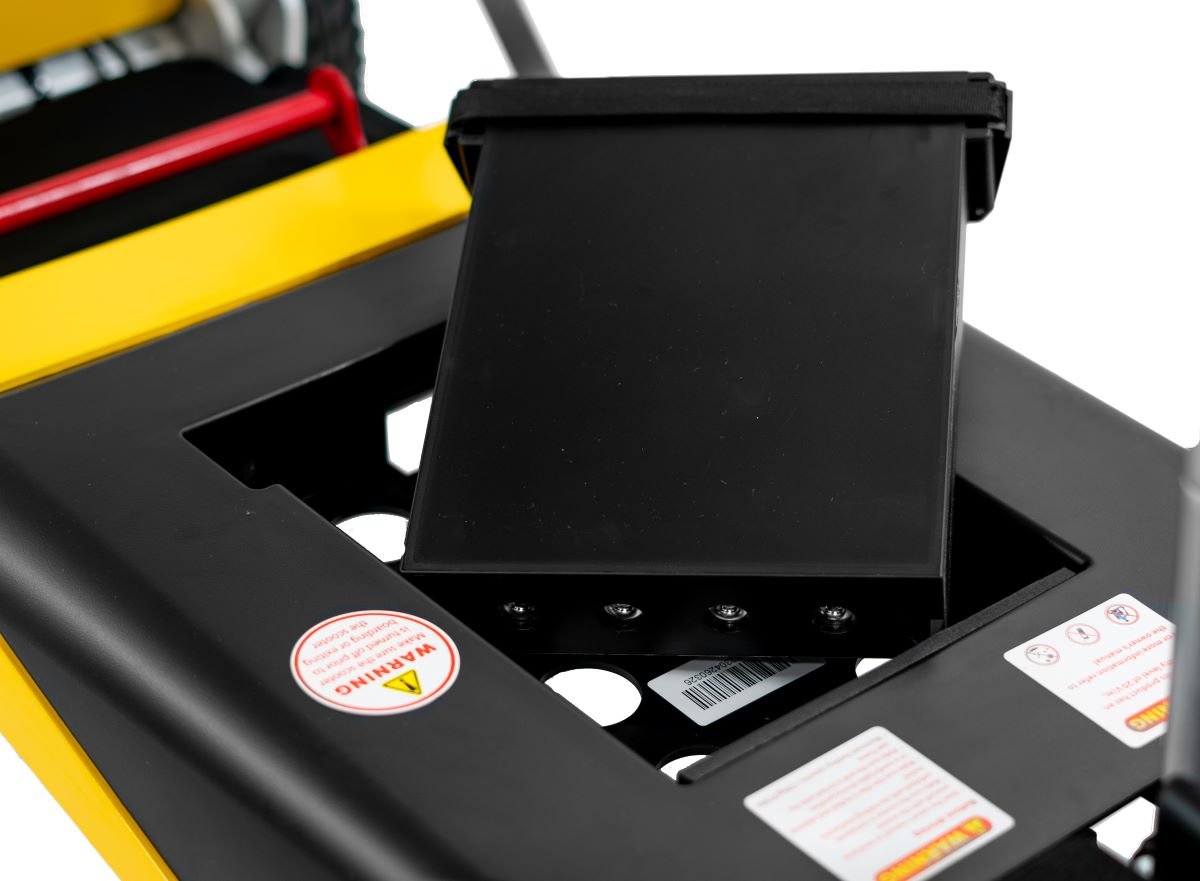
2. The physical dimensions of your battery compartment. Measure the length, width, and height of the space where the battery sits. Write it down in millimeters. Many batteries that have the right electrical specs physically won’t fit — either too long, too wide, or too tall. This is the number one cause of “perfect spec, wrong battery” returns.
3. Your connector type. Look at the plug that connects the battery to your scooter’s controller. Count the pins. Measure the pin diameter. Check whether it’s an Anderson connector, XT60, XT90, a custom proprietary connector, or simple bullet terminals. Write down the exact model number if visible.
The 12-Point Pre-Purchase Checklist
Point 1: Voltage must match exactly. Your replacement battery voltage must exactly match your original. Not “close to” — exactly. A 48V battery is 48V. Not 47V. Not 49V. This is non-negotiable.
Point 2: Physical dimensions must fit. Measure your compartment. Check the battery’s listed dimensions. Leave at least 5mm clearance on all sides — batteries expand slightly during charging, and you need room for wiring.
Point 3: Connector compatibility. The battery’s output connector must match your scooter’s input connector. If it doesn’t, you need to either buy an adapter (adds resistance and potential failure points) or have the connector professionally changed (adds cost).
Point 4: Amp-hour (Ah) rating meets your range needs. Calculate: Volts × Amp-hours = Watt-hours (Wh). Watt-hours ÷ 15 = your approximate range in kilometers at average speeds with average rider weight. If you need 40km range, and you have a 48V system: 40 × 15 = 600Wh. 600 ÷ 48 = 12.5Ah. You need at least a 12.5Ah battery. Round up to the nearest available size.
Point 5: Minimum 300 cycle life specification. Any reputable battery manufacturer publishes a cycle life spec. If they don’t, assume it’s low — probably 150–200 cycles. CHISEN batteries are tested to 350–450 cycles at 80% depth of discharge. Never buy a battery without a published cycle life spec.
Point 6: Safety certifications for your market. If you’re in Europe: CE certification is mandatory. If you’re in North America: look for UL 2271 or UL 2272. Without these, the battery is legally non-compliant for sale in those markets — and potentially unsafe.
Point 7: Charger compatibility confirmed. Your existing charger must be compatible with the new battery’s charging requirements. A 48V lead-acid battery needs a 58.8–59.2V charger. If your charger outputs the wrong voltage, you need to replace it too. Factor this into your budget.
Point 8: Warranty minimum 12 months. Any battery without at least 12 months of warranty is making a silent admission about its expected lifespan. CHISEN offers 12–18 months warranty on all electric scooter batteries.
Point 9: Operating temperature range covers your climate. If you live somewhere hot (summer ambient above 35°C) or cold (winter below 0°C), check that the battery’s specified operating range covers your conditions. Most lead-acid batteries operate from -10°C to +45°C. Cold weather users need to check this carefully.
Point 10: Weight within your scooter’s limit. Heavier batteries affect handling, braking distance, and tire wear. Check your scooter’s gross weight rating and the weight of your total loaded scooter (rider + scooter + cargo). A battery that’s significantly heavier than the original may push you over design limits.
Point 11: Self-discharge rate is normal (3–5% per month). Lead-acid batteries self-discharge at 3–5% per month at 20°C. If a seller claims “ultra-low self-discharge” without a spec, be suspicious. If they claim 0% self-discharge, they are lying.
Point 12: Return and exchange policy verified. Before buying, confirm the seller’s return policy. Can you return a battery that doesn’t fit? What’s the window? Who pays return shipping? Buy from a supplier with a clear, rider-friendly return policy.
!electric-scooter-lithium-battery-pack-close-up.jpg

The Quick-Reference Summary Table
| Check | Standard | Minimum Acceptable | Red Flag |
|---|
|

发表回复