Electric Scooter Battery Swap: Cost, Compatibility, and Pro Tips
When your electric scooter battery dies, the urgency to get back on the road can push riders into making hasty, expensive decisions. A quick search for “electric scooter battery” surfaces hundreds of options across dozens of marketplaces — some costing $40 for a “48V 20Ah” pack, others charging $300 for what appears to be the same specification. What separates a $60 battery that lasts 6 months from a $180 battery that reliably powers your scooter for 3 years? This guide breaks down the real costs of a scooter battery replacement in 2025–2026, explains what compatibility actually means, and shares the professional tips that help riders make smart purchasing decisions rather than expensive mistakes.
Real Cost Breakdown for 2025–2026
Understanding the realistic price landscape for replacement electric scooter batteries requires separating commodity pricing from quality manufacturing. A genuine-quality 48V 12Ah sealed lead-acid battery pack — using proper AGM cells with real rated capacity — ranges from $60 to $120 depending on the manufacturer, brand reputation, and distribution channel. At the lower end of this range, expect to receive a battery using cells from secondary manufacturers with tighter capacity tolerances and shorter cycle life ratings. The $80–$120 range from established brands like CHISEN delivers consistent quality: verified Ah ratings, proper cycle life documentation, and manufacturer warranty coverage.
For the most common mid-range scooter configuration — 48V 20Ah — the market price spans $100 to $200 for a quality replacement. This price range reflects genuine differences in cell quality, assembly precision, and quality control. The $100–$130 range typically represents direct-from-manufacturer pricing or grey-market imports; $130–$200 covers branded products with distributor margins and full warranty support. For higher-voltage systems common on performance scooters, a 60V 20Ah replacement typically costs $120–$240, while a 72V 20Ah pack runs $180–$350. The single most important factor in this price range is verifying that the Ah rating claimed is the actual tested capacity, not a marketing inflated figure — a practice unfortunately common in the budget battery market.
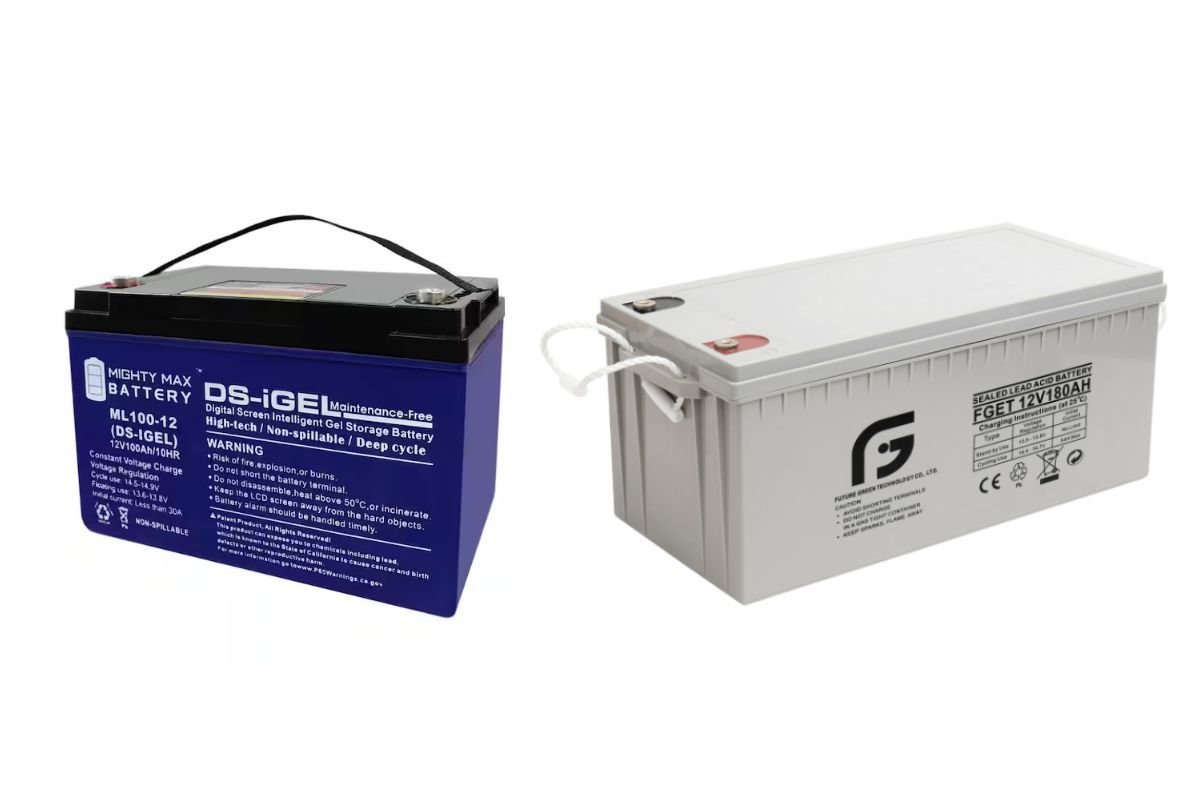
!agm-gel-lead-acid-battery-comparison.jpg

Compatibility Checklist: Don’t Buy Until You Check These 6 Things
Battery compatibility is not as simple as matching voltage. An incompatible battery can damage your scooter’s controller, void your warranty, or create a safety hazard. Before purchasing any replacement, verify all six of these compatibility criteria:
1. Voltage match (critical): Your scooter operates at a specific nominal voltage — 36V, 48V, 60V, or 72V are the most common. A 48V battery on a 60V scooter system will deliver undervoltage and poor performance; a 60V battery on a 48V system will overvoltage the controller and can cause permanent damage. The nominal voltage must match exactly. Note that a “48V” battery pack is actually a series connection of 4 individual 12V cells — measure your old pack’s total voltage with a multimeter to confirm.
2. Physical dimensions: The replacement battery must physically fit your scooter’s battery compartment. Measure the compartment length, width, and height (accounting for any obstacles) and compare against the battery’s listed dimensions. A battery that is 5 mm too long or 3 mm too wide simply won’t close the compartment. Also check the terminal position: some batteries have top terminals, others have front terminals — the wiring harness reaches specific positions.
3. Connector type: The battery’s output connector must match your scooter’s wiring harness, or you must use a compatible adapter. Common connector types include Anderson-style (PP75, PP120), XT60/XT90 (deans style), and proprietary OEM connectors. Using an adapter introduces additional connection resistance and a potential failure point — avoid it if possible.
4. Controller maximum voltage: Your scooter’s controller has a maximum input voltage rating. If you’re replacing with the same nominal voltage pack, this is already accounted for. However, if you’re considering an upgrade to a higher voltage, you must verify that the controller can handle the peak voltage of the new pack (a “48V” lithium battery charges to 54.6V when full; a “60V” pack charges to 67.2V). Exceeding controller voltage limits causes immediate, irreversible damage.
5. Discharge rate compatibility: High-performance scooters with powerful motors may require batteries capable of delivering high burst discharge rates, measured in C-rating. A 48V 20Ah battery with a 1C rating can deliver 20A continuously; a 2C rating delivers 40A. Your scooter’s motor current draw determines the minimum C-rating required. Check the motor’s wattage and calculate: a 1000W motor at 48V draws approximately 20.8A at full power, requiring at least a 1C rated battery.
6. Chemistry compatibility: Most electric scooters use sealed lead-acid (SLA/AGM) batteries from the factory. If your scooter was designed for lead-acid and the controller has a lead-acid charging profile, switching to lithium requires a compatible lithium charger and potentially BMS reconfiguration — this is not a simple drop-in replacement in most cases.
Pro Tips: How to Buy Smart
Buy directly from the battery manufacturer when possible. Marketplace platforms (Amazon, eBay, AliExpress) are flooded with batteries from third-party sellers who import commodity cells, rebox them with inflated specifications, and offer no real warranty. When you buy direct from a manufacturer like CHISEN, you receive: factory-verified specifications (not marketing numbers), traceable manufacturing batch numbers, warranty coverage backed by the actual producer, and technical support if the battery doesn’t fit or perform as specified. The price difference is typically 10–30% — and that difference buys you accountability and peace of mind.
Always verify specs with your multimeter before purchasing online. If a listing claims “48V 20Ah,” measure the voltage of the battery you’re considering (if buying locally) or request a test data sheet from the manufacturer. A genuine 48V 20Ah pack should show approximately 52–54V at full charge with a no-load measurement. If a deal seems too good to be true — a “48V 30Ah” battery for $80, for instance — it almost certainly is: either the capacity is dramatically overstated, the cells are seconds-grade rejects, or the listing is fraudulent. CHISEN provides detailed specification sheets with every battery, including measured capacity data from formation testing, so you know exactly what you’re paying for.

发表回复