Electric Scooter Battery Common Failures in 2026: The Updated Guide Every Rider Needs
The electric scooter market has grown massively in the past three years, and with it, the diversity of battery technologies, charger designs, and usage patterns has increased dramatically. In 2026, riders face a more complex landscape than ever before — and the failure modes have evolved alongside it. Understanding what’s actually breaking, why it’s breaking, and how to prevent it is the difference between a scooter that lasts three years and one that fails in six months.
This guide covers the most common electric scooter battery failures based on field data from manufacturers, service centers, and rider community reports across 2025 and into 2026.
The Top 6 Battery Failure Modes in 2026
1. Premature sulfation from habitual undercharging. This remains the number-one killer of lead-acid batteries in electric scooters, and it’s gotten worse in 2026. Why? Because more riders are using fast chargers designed for lithium batteries on lead-acid batteries, which deliver a partial charge and stop before the battery is truly full. A battery that’s consistently charged to only 80–90% of capacity develops sulfation on the lower portions of the plates, where the active material is least utilized. Within 6–12 months, the battery’s effective capacity drops 30–50%. Prevention: use a charger designed specifically for lead-acid, and charge until the charger indicator turns green — then leave it on float for an additional 1–2 hours.
2. Thermal runaway from incompatible fast charging. Fast chargers that work beautifully with lithium batteries (and are marketed as “universal”) can deliver 2–3× the recommended charging current for lead-acid. This generates excessive heat, causes violent gassing, and can trigger thermal runaway in extreme cases. Battery casings that feel hot to the touch during charging (above 40°C / 104°F) are a warning sign. In 2026, an estimated 15–20% of early battery failures in budget scooters are linked to charger incompatibility. Always verify that your charger output matches your battery’s recommended charging current (typically C/10 for lead-acid, so a 20Ah battery charges best at 2A, not 6A).
3. Physical damage from vibration and impact. More powerful motors (1000W–3000W) generate significantly more vibration than older 250W–500W scooters. This vibration loosens battery mountings, stresses connector pins, and in severe cases cracks internal cell welds. Riders who regularly ride on cobblestones, gravel roads, or uneven urban terrain report connector failures 2–3× more often than road riders. The fix: check battery mounting bolts monthly, use rubber vibration dampers if available, and inspect connectors after any particularly rough ride.
4. BMS-related failures misdiagnosed as battery problems. Many modern electric scooters include a Battery Management System (BMS) between the battery and controller. The BMS protects against over-discharge, overcharge, and short circuits by cutting the circuit. When a BMS fails — or more commonly, when it resets due to a transient voltage spike — riders experience what looks exactly like sudden battery death. In 2026, an estimated 20–30% of “dead battery” reports sent to service centers turn out to be BMS failures, not battery failures. A simple BMS reset (disconnecting the battery for 5 minutes) resolves many of these cases.
5. Freezing damage from cold storage. Lead-acid batteries can be permanently damaged if frozen. A fully discharged battery (0% SOC) freezes at around -2°C — barely below freezing. A fully charged battery freezes at around -50°C. In regions with cold winters, batteries stored in unheated garages or outdoor scooter lockups frequently freeze during cold snaps, cracking the internal cell structure and causing immediate capacity loss. Even a single freeze event can reduce capacity by 30–60%. Prevention: store at 50–60% SOC in a location above 0°C, or bring the battery indoors during winter.
6. Counterfeit and伪劣 batteries in the replacement market. The explosion of the electric scooter market has attracted significant counterfeit battery production. These batteries use thinner plates, lower-quality active material, and recycled lead from spent batteries. They look identical to genuine products but fail within 3–6 months under normal use. Warning signs: price significantly below market rate, no manufacturer markings, no safety certifications, no warranty information. Buying from the original scooter manufacturer or a verified distributor like CHISEN eliminates this risk entirely.
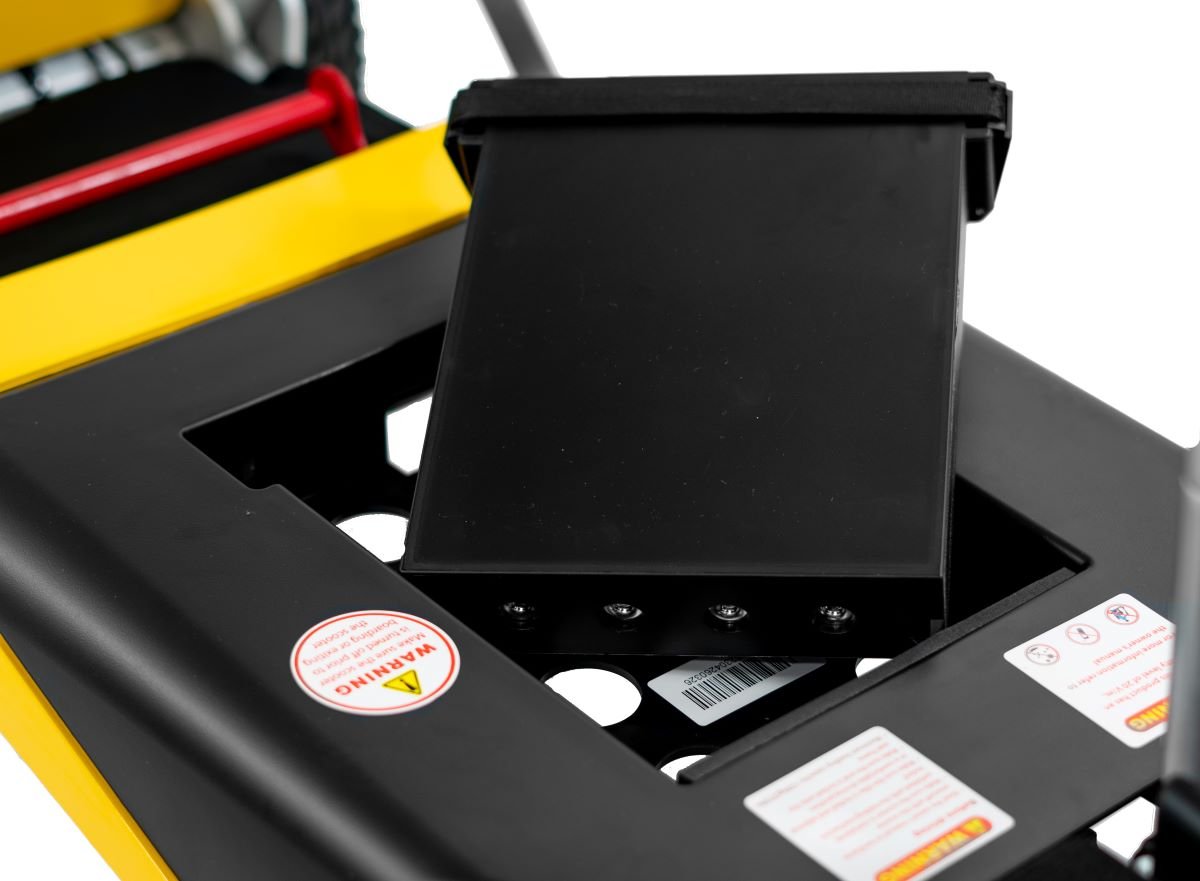
!electric-scooter-lithium-battery-pack-close-up.jpg

How CHISEN’s Manufacturing Standards Prevent These Failures
Quality control at every stage matters enormously. At CHISEN’s production facility, every battery undergoes four critical quality checks before shipping: formation testing (each cell is charged and discharged to verify capacity), impedance testing (internal resistance is measured — high resistance batteries are rejected), leak testing (each sealed battery is pressure-checked for micro-cracks), and cycle testing (a sample from each batch undergoes 50 charge-discharge cycles to verify longevity).
This is why CHISEN lead-acid batteries consistently outperform market average on cycle life — 350–450 cycles at 80% depth of discharge versus the typical 200–300 cycles for commodity batteries. That difference translates to 6–18 months of additional battery life for the average daily commuter.
The Failure Symptom Quick Reference Table
| Symptom | Most Likely Cause | Try First |
|---|
|

发表回复