What Shortens Your Electric Scooter Battery Life – And How to Avoid It
Most electric scooter owners don’t think about their battery until something goes wrong. Then comes the telltale sign — a scooter that barely makes it 5 km when it used to do 15, or a charger that seems to run forever without ever quite reaching full. By that point, irreversible damage has usually already been done. The good news is that every major cause of premature electric scooter battery failure is entirely preventable, once you know what to watch for.
Lead-acid batteries, the most common type powering budget and mid-range electric scooters, are rugged but unforgiving. They tolerate abuse for a while, masking the damage until the capacity cliff arrives suddenly. This article covers eight specific factors that kill electric scooter battery life early — with the exact mechanisms involved and the numbers that show why they matter.
Over-Discharge: The Most Common Electric Scooter Battery Killer
Over-discharging a lead-acid battery below 20% state of charge (SoC) triggers rapid sulfation — the formation of hard lead sulfate crystals on the battery’s negative plates. Sulfation is the primary degradation mechanism in lead-acid batteries, and it accelerates dramatically when the battery sits at low SoC. At 0% SoC (a completely dead battery), sulfation can begin within 24–48 hours. At 20% SoC, the process is slower but still significant — measurable capacity loss can occur within 1–2 weeks of continuous low-charge storage.
The practical threshold: never let your electric scooter battery sit below 20% SoC. If you’ve accidentally run the battery completely flat, charge it immediately — within hours, not days. Every day of neglect at 0% SoC permanently destroys some of the battery’s capacity. A battery that has been deeply discharged and left uncharged for a week may have lost 20–30% of its rated capacity permanently, even if it appears to take a charge later.
For riders who regularly push their scooter’s range to the limit, this is the single most impactful habit change. Carrying a portable charger or planning routes with charging stops can prevent the range anxiety that leads to habitual over-discharge.
Overcharging: When Too Much Charge Becomes Battery Damage
Overcharging a lead-acid battery is just as damaging as over-discharge, though through a different mechanism. When a lead-acid battery is held at float charge voltage above 13.8V for extended periods, the electrolyte begins to break down, releasing hydrogen and oxygen gases (in sealed AGM batteries, these recombine internally). More critically, overcharging accelerates grid corrosion on the positive plates — the structural lead framework that holds the active material.
Grid corrosion is particularly insidious because it is irreversible and cumulative. Unlike sulfation, which can sometimes be partially reversed with a controlled equalization charge, corroded grid metal cannot be restored. Each episode of overcharging — even mild, chronic overcharging from leaving the scooter on the charger overnight every night — eats into the battery’s design life. A battery subjected to regular overcharging at 15V instead of the correct 14.4V absorption voltage may lose 30–50% of its expected lifespan.
The fix is simple: use the charger that came with your scooter or one with identical specifications. Never use a charger with a higher voltage output than your battery’s rated voltage. And set a timer if your charger lacks an automatic shutoff — 8 to 12 hours is sufficient for most 12V 10–14Ah lead-acid packs.
Heat: The Silent Accelerant of Electric Scooter Battery Failure
Temperature above 25°C dramatically accelerates both of the primary degradation mechanisms in lead-acid batteries. For every 10°C increase in operating temperature, the rate of grid corrosion roughly doubles. At 35°C — a common temperature in parked cars, south-facing balconies, or hot garages in summer — a lead-acid battery may lose 40–50% of its design lifespan compared to the same battery at 25°C.
Heat damage is especially dangerous because it is invisible and cumulative. A battery that has spent three summers baking in a hot garage may appear to function normally, holding a full charge, but its total remaining capacity may have dropped by half. The degradation is not apparent until the battery is placed under load — then the capacity shortfall becomes dramatic.
Storage location matters enormously. Parking your scooter in direct sunlight when ambient temperatures exceed 30°C creates a microclimate under the seat or in the battery compartment that can easily reach 45–50°C. That’s hostile territory for lead-acid chemistry. Always park in the shade, and if possible, remove the battery for indoor storage in extreme heat.
Cold Temperatures: Capacity Loss and Charging Hazards
Cold weather presents a double risk for electric scooter batteries. At 0°C, a fully charged lead-acid battery loses approximately 20–25% of its rated capacity — your 15 km range scooter might suddenly deliver only 11–12 km. At -20°C, the loss can exceed 50%. This is not permanent damage; capacity recovers when the battery warms up. But cold temperatures create a secondary hazard when charging.
Charging a frozen or near-freezing lead-acid battery can cause permanent damage. The electrolyte’s viscosity changes at low temperatures, leading to uneven current distribution across the plates. In extreme cases, ice crystals forming in the electrolyte can physically damage the internal plates or the battery case. Never charge a lead-acid battery when the ambient or battery temperature is below 0°C. Bring a cold battery indoors and let it warm to at least 10°C before connecting the charger.
Vibration, Shock, and Physical Stress
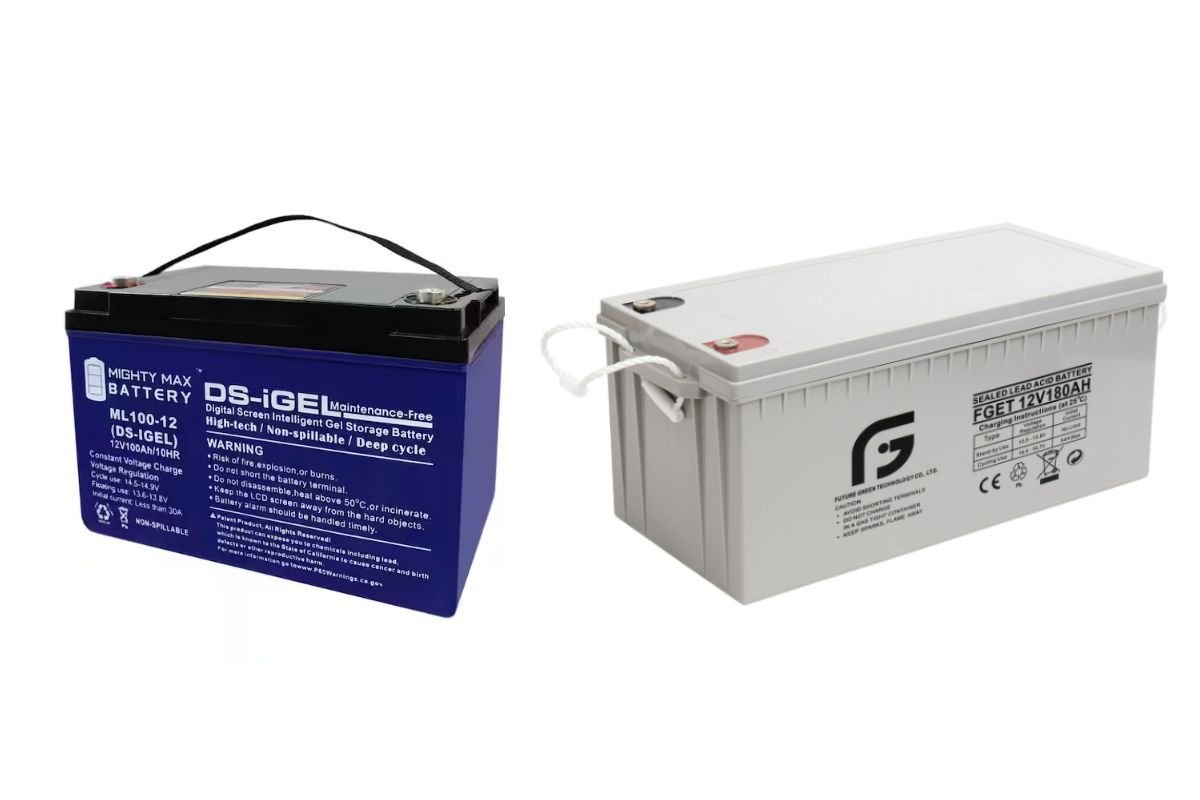
Lead-acid batteries contain liquid electrolyte between plates inside a case. Physical impact — from riding over rough terrain, dropping the battery, or even sustained high-vibration environments — can cause the internal plates to warp, shed active material prematurely, or short against each other. AGM (absorbed glass mat) batteries are significantly more resistant to vibration damage than flooded lead-acid types because the electrolyte is immobilized in a glass fiber separator.
For electric scooters used on rough roads or cobblestone streets, an AGM battery provides better vibration resistance. CHISEN’s AGM electric scooter batteries use compressed glass mat separators rated to withstand vibration levels up to 4G rms, making them more durable for real-world riding conditions than standard flooded batteries.
!agm-gel-lead-acid-battery-comparison.jpg

Wrong Charger: Voltage Mismatch and Cell Damage
Using a charger with the wrong voltage or current specifications is a surprisingly common cause of premature battery failure. A charger with too high a voltage will overcharge and damage the battery as described above. A charger with too low a voltage may never fully charge the battery, leading to chronic undercharging and sulfation.
For 12V lead-acid batteries, the absorption charge voltage should be 14.4–14.7V (2.40–2.45V per cell) at 25°C. Float charge voltage should be 13.5–13.8V. Any charger that regularly exceeds these values will shorten battery life. Always verify your charger’s output specifications match your battery’s requirements.
Long-Term Storage at Low State of Charge
If you’re not riding your scooter for more than two weeks, the battery’s state of charge matters critically. A lead-acid battery stored at 50% SoC will lose roughly 3–5% of its charge per month due to self-discharge. This is normal. But a battery stored at 10–20% SoC enters the sulfation danger zone quickly — within 2–4 weeks, measurable sulfation will begin to accumulate.
Before storing your scooter for more than a few weeks, fully charge the battery. Check it monthly and recharge if it drops below 50% SoC. For seasonal riders (winter storage), a full charge followed by monthly top-up charges is the standard best practice.
Sulfation: The Cumulative Effect of Neglect
Sulfation is not a single event — it’s a cumulative process that begins the moment a lead-acid battery’s plates are exposed to discharge. Small sulfate crystals form during discharge and are normally dissolved during charging. But under conditions of low SoC, incomplete charging, or elevated temperature, these crystals grow larger and harder. Over time, they form an insulating layer that prevents the plate from fully participating in the electrochemical reaction.
Light sulfation can be partially reversed through an equalization charge — a controlled overcharge at 15–16V that drives the sulfate crystals back into solution. However, severe sulfation is permanent. Preventing sulfation is far easier than reversing it: avoid deep discharges, charge promptly after use, and perform a monthly equalization charge if your charger supports it.

发表回复