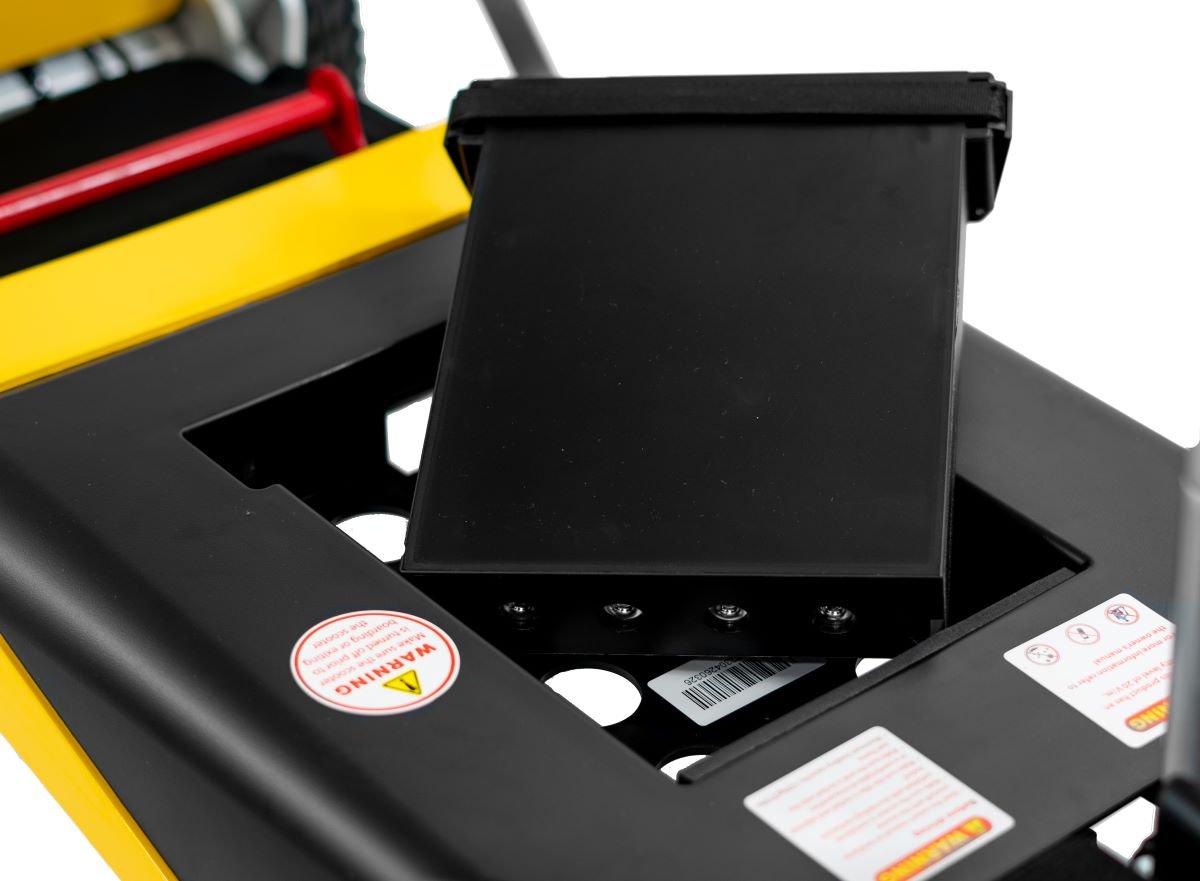
Why Budget Electric Scooters Still Come With Lead-Acid Batteries
Walk into any electric scooter dealership in Jakarta, Lagos, Bogotá, or Bucharest and you will find a striking pattern: the scooters priced under $400 universally feature lead-acid battery systems, while those commanding $700 or more almost universally feature lithium. This is not a coincidence, a historical accident, or a sign that budget manufacturers are lazy. It is the direct and predictable result of pure manufacturing economics, and understanding these economics is essential for anyone who wants to understand why the majority of the world’s electric scooter riders still rely on lead-acid technology in 2026.
The Manufacturing Cost Reality
To appreciate why budget scooters use lead-acid, we must first understand the actual cost of battery packs at the factory gate. A sealed lead-acid battery pack delivering 48 volts and 12 amp-hours — comprising four 12V 12Ah batteries connected in series — costs approximately $40 to $60 in materials and manufacturing labor at a mid-scale factory producing tens of thousands of units per month. The primary cost drivers are lead, which trades at approximately $2,100 to $2,400 per metric ton on global commodities markets, and the polypropylene containers, separators, and electrolyte. The manufacturing process for lead-acid batteries is mature, capital-efficient, and benefits from decades of process optimization.
A lithium battery pack of equivalent specification — 48V nominal using 13S lithium iron phosphate cells — carries a factory cost of $200 to $300 for the cells alone, before accounting for the battery management system electronics, wiring harness, protective enclosure, and assembly labor. The cells represent approximately 70 to 80 percent of total pack cost. Lithium carbonate and lithium phosphate feedstock costs have moderated from the 2022-2023 price spike but remain substantially higher than lead on a per-watt-hour-delivered basis. At cell-level costs of $0.12 to $0.18 per watt-hour for quality LiFePO4 cells and $0.05 to $0.08 per watt-hour for sealed lead-acid cells, the cost differential is structural and cannot be wished away through manufacturing efficiency alone.
The Retail Price Chasm
When these manufacturing costs translate to retail pricing, the gap widens considerably. A quality 48V 12Ah sealed lead-acid battery pack retails for $80 to $120 depending on brand, distributor margins, and market. A 48V 12Ah LiFePO4 battery pack of equivalent specification retails for $400 to $600. That $320 to $480 retail price difference between the two battery chemistries is the entire reason the $200 to $400 electric scooter and the $600 to $1,200 electric scooter exist as distinct market segments.
Consider the economics from the perspective of a scooter manufacturer. A mid-range scooter with a 48V 500W motor, hydraulic disc brakes, front and rear suspension, and a 48V 12Ah lead-acid battery pack has a bill of materials — all the component costs added together — of approximately $180 to $240. Adding manufacturing overhead, quality control, warranty reserve, shipping, marketing, and distributor margin, the manufacturer must price the completed scooter at $280 to $400 to maintain a sustainable gross margin of 20 to 30 percent. This puts a fully equipped lead-acid electric scooter within reach of working-class consumers in markets where the average monthly household income ranges from $400 to $1,200.
The same manufacturer building an otherwise identical scooter with a 48V 12Ah lithium battery pack faces a bill of materials of approximately $340 to $440 — a $160 to $200 increase driven almost entirely by the battery upgrade. To maintain the same margin structure, the manufacturer must price the lithium-equipped model at $480 to $620. In markets where a worker’s monthly salary is $300 or $400, a $600 scooter is simply not a realistic purchase regardless of how favorable its total cost of ownership might be over three years.
The Global Income Context
The global distribution of income reveals why the market for sub-$500 electric scooters is not a niche but the mainstream of worldwide demand. According to World Bank data, the median per-capita income across all countries — weighted by population — is approximately $3,000 to $4,000 per year, or $250 to $333 per month. In this income context, a $400 electric scooter represents between one and two months of take-home pay. A $900 lithium-equipped equivalent represents three to four months of income. The upfront affordability of the lead-acid option is not a secondary consideration — it is the primary determinant of whether a purchase can happen at all.
In India, where average monthly household incomes in Tier 2 and Tier 3 cities range from ₹8,000 to ₹25,000 ($95 to $300), a ₹30,000 ($360) lead-acid electric scooter is a feasible aspiration for a working professional or small-business owner. A ₹70,000 ($840) lithium model is simply out of reach for this demographic. In Indonesia, where electric motorcycles and scooters are being aggressively promoted through government subsidy programs, the subsidized lead-acid electric scooter segment has grown by over 200 percent since 2023, driven precisely by consumers who cannot access credit to finance the higher upfront cost of lithium models. In Kenya, Nigeria, and Ethiopia across Africa, the informal transport sector — bodaboda motorcyclists and electric tricycle operators — has adopted electric power primarily through lead-acid battery systems, valuing the lower entry cost and the ability to earn revenue immediately upon purchase rather than waiting until sufficient credit can be secured for a more expensive vehicle.
What This Means for CHISEN’s Market Position
CHISEN’s strategic position within this landscape is both clear and powerful. As a manufacturer of quality sealed lead-acid batteries specifically engineered for electric scooter applications, CHISEN operates at the intersection of the world’s largest and fastest-growing personal transport market segment. The billions of people globally who cannot afford a $700 lithium scooter represent the addressable market for lead-acid batteries — not as a compromise technology, but as the technology that makes electric personal transport economically accessible for the first time.
The quality differentiation within the lead-acid segment itself is where CHISEN’s value proposition becomes particularly compelling. While budget batteries with thin plates and recycled materials flood the market at the $60 to $80 price point, CHISEN’s thicker-plate, higher-purity-lead construction delivers 300 to 500 cycles versus 100 to 200 cycles for the cheapest alternatives. For a rider in a price-sensitive market who can afford only one battery at a time, the difference between replacing a budget battery every eight months and replacing a CHISEN battery every 30 months is the difference between earning a living and falling into debt. This is not a marginal quality difference — it is a qualitative change in the economics of daily life for millions of riders.
!electric-scooter-lithium-battery-pack-close-up.jpg

The Long View: Lead-Acid as Economic Infrastructure
In the same way that prepaid mobile phones democratized telecommunications in developing economies before smartphones became ubiquitous, lead-acid electric scooters are democratizing electric personal transport for the billions who will transition from walking, cycling, or combustion-engine vehicles over the coming decade. The manufacturing economics that make this possible — cheap, mature, locally producible battery technology — are not a limitation to be overcome but a foundation to be built upon. CHISEN’s commitment to quality within the lead-acid segment ensures that the riders who depend on these batteries receive the maximum possible value from every charge cycle, every kilometer traveled, and every dollar invested in their electric mobility.
The question is not whether lead-acid batteries are “good enough” in some relative sense. The question is whether they are the right tool for the job at the price point that makes the job accessible. For the majority of the world’s electric scooter riders in 2026, the answer to that question remains emphatically yes.

发表回复