8km Daily Commute: What Battery Capacity Do You Actually Need?
Eight kilometers sounds like a manageable distance — about a 25-minute walk, or a short drive in traffic-choked cities like Bangkok where the same journey can take an hour by car during rush hour. But on an electric scooter, 8km of daily commuting raises a practical question that every rider faces: how much battery capacity do I actually need to avoid being stranded halfway to work? The answer is not as simple as looking at a range chart and picking the battery with the highest number, because rated range and real-world range are different things, and buying more battery than you need means paying more upfront, carrying more weight, and recharging more frequently than necessary. This guide gives you a reliable formula to calculate exactly what capacity your commute requires, backed by real energy consumption data from electric scooter batteries across different configurations, so you can make a confident purchasing decision the first time.
Understanding Energy Consumption: Why Rated Range and Real Range Are Different
Every electric scooter battery manufacturer publishes a rated range based on standardized test conditions that rarely match the reality of your actual commute, and understanding why this gap exists is the first step toward buying the right battery. The widely used 12-18 Wh/km figure represents the energy consumed per kilometer traveled at moderate speeds on flat terrain with a rider weighing approximately 70kg — a reasonable baseline, but one that masks enormous variation depending on terrain gradient, total load, tire pressure, ambient temperature, and riding style. In Shanghai’s dense urban grid, where stop-and-go traffic dominates and traffic lights are spaced 200-300 meters apart, the effective energy consumption climbs to 15-18 Wh/km because constant acceleration from a stop burns significantly more energy than maintaining cruise speed. Bangkok’s flat terrain and tropical heat make it one of the more energy-efficient environments for lead-acid scooter batteries, with consumption typically falling in the 13-16 Wh/km range for daily commuters riding at moderate speeds of 25-30 km/h. In contrast, Lagos’s uneven road surfaces, frequent potholes, and heavy loads of delivery cargo can push energy consumption to 18-22 Wh/km, meaning a battery rated for 40km of range might deliver only 25-30km of real-world use under these conditions. This discrepancy between laboratory ratings and real-world performance is why relying on advertised range figures alone is one of the most common mistakes new electric scooter buyers make when selecting a battery.
The Capacity Formula: A Reliable Method for Any Commute
Rather than guessing from range charts, experienced riders and fleet managers use a simple formula to calculate the minimum battery capacity needed for any given daily commute: multiply your actual daily distance in kilometers by 1.5, then multiply that result by 1.3 to create a safety buffer. The first multiplier of 1.5 accounts for real-world factors that increase energy consumption above the rated baseline — including stop-start traffic, headwinds, road imperfections, and rider weight variations that are not reflected in the standardized test conditions. The second multiplier of 1.3 adds a safety margin that keeps your battery from being deeply discharged on a daily basis, which is critical for extending the cycle life of any lead-acid battery and ensuring that you always have enough reserve to handle unexpected detours or situations where your commute takes longer than usual. For an 8km daily commute, applying this formula gives: 8 × 1.5 × 1.3 = 15.6km as the minimum rated range your battery should provide, which means you need a battery that can deliver at least 16km of rated range to be comfortable. This calculation is particularly relevant for commuters in Amsterdam, where bicycle lanes and flat terrain allow for efficient riding but wind resistance from canal-crossing bridges can significantly increase energy consumption on certain routes that appear flat on a map.
!electric-scooter-lithium-battery-pack-close-up.jpg

Matching Battery Specifications to Your Calculated Range
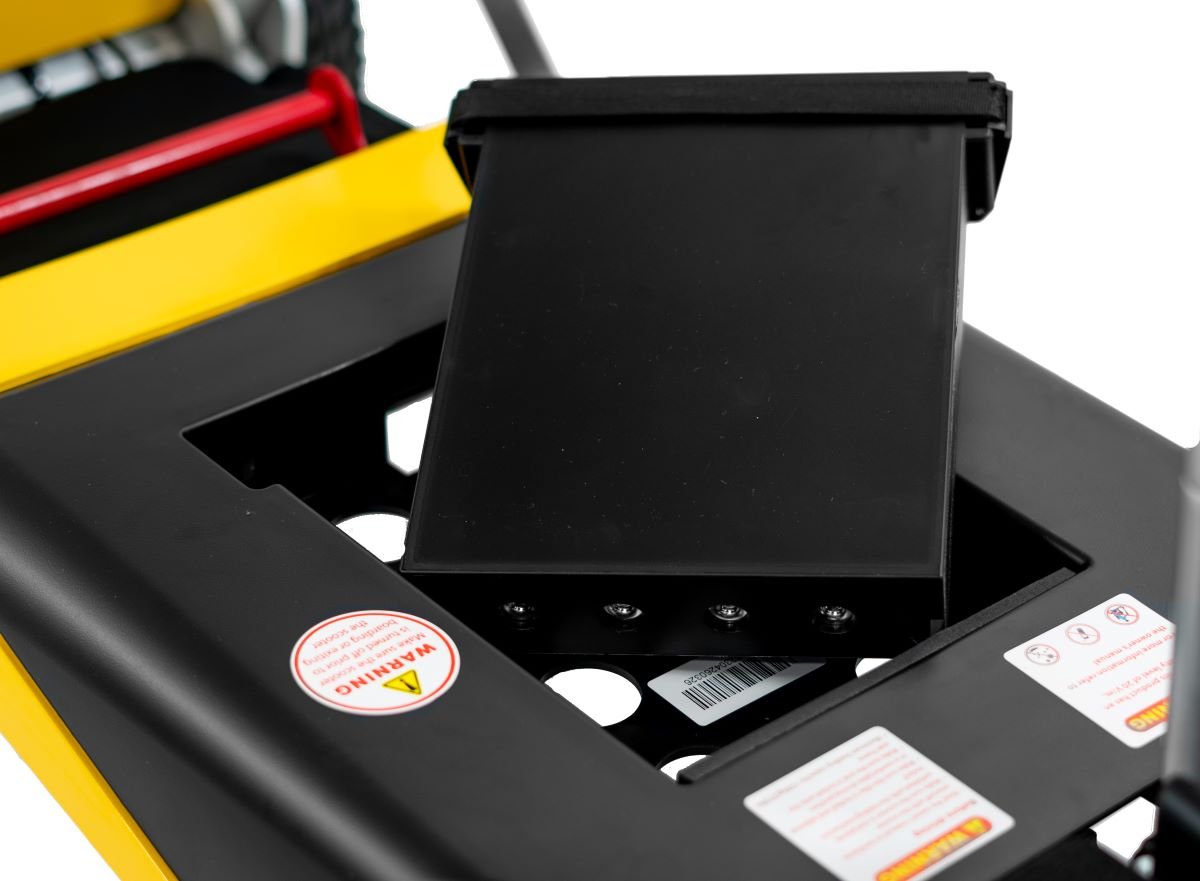
Once you know your minimum required rated range, you can match it to a specific battery configuration using the voltage and ampere-hour ratings that are standard across the electric scooter battery market. A 48V 10Ah battery stores 480Wh of energy (calculated as 48 volts × 10 ampere-hours), and under typical conditions it delivers approximately 30km of rated range — which falls just short of the 30km safety-adjusted range needed for an 8km daily commute with full safety margin. A 48V 12Ah battery stores 576Wh and delivers approximately 38km of rated range, which translates to roughly 22-25km of real-world adjusted range — comfortably covering the 15.6km requirement with a meaningful buffer for variations in riding conditions. A 48V 20Ah battery stores 960Wh and delivers approximately 60km of rated range, offering an extremely generous margin that would support an 8km daily commute while using only about one-third of the battery’s capacity each day, which dramatically extends the effective cycle life by keeping discharge depths shallow. For commuters in Mexico City who face both significant elevation changes and heavy stop-and-go traffic on a daily basis, even a 48V 12Ah battery may feel constrained during weeks when the weather is particularly hot or the rider is carrying additional cargo, making the 48V 20Ah configuration a more comfortable long-term investment despite the higher upfront cost.
Why Shallow Discharges Extend Battery Life and Save Money
One of the most underappreciated aspects of choosing a slightly larger battery than you strictly need is the dramatic impact it has on the long-term cost of ownership, particularly for lead-acid batteries where cycle life is directly tied to depth of discharge. A quality lead-acid battery delivers approximately 300-500 full charge cycles when consistently discharged to 80% of capacity, but this number roughly doubles when the battery is typically discharged to only 50% of capacity during daily use, meaning the battery will last two to three times longer in calendar terms. For a rider doing an 8km daily commute with a 48V 12Ah battery delivering 576Wh, each day’s commute uses approximately 15.6km worth of the available 38km range, meaning the battery is typically cycling between 60% and 100% state of charge — a shallow discharge pattern that favors longevity. The financial math is compelling: spending $20-40 more on a 48V 12Ah battery instead of a 48V 10Ah battery can easily add two to three years of additional service life, effectively reducing the cost per kilometer traveled by 30-40% over the battery’s lifetime. This is why experienced fleet operators in Bangkok’s shared scooter market consistently choose batteries with at least 40% more capacity than the minimum required range, and why CHISEN’s range of 48V 12Ah and 48V 20Ah configurations are designed with exactly this shallow-discharge optimization in mind for daily commuter applications.
Making the Final Decision for Your Specific Situation
The right battery capacity ultimately depends on your specific commute profile, your tolerance for range anxiety, and whether your scooter will be used exclusively for commuting or for additional errands and leisure rides. For pure commuters doing a fixed 8km round trip on flat urban terrain in cities like Amsterdam or Shanghai, a 48V 12Ah lead-acid battery represents the sweet spot between cost, weight, and range — offering comfortable daily headroom without the bulk and expense of a larger pack. For riders whose commute involves significant elevation changes, uneven roads, or frequent stops — such as routes through hilly areas of Mexico City or potholed streets in Lagos — upgrading to a 48V 20Ah configuration provides the confidence that comes with never worrying about running low, even during heavier-than-usual usage days. Riders in extremely hot climates such as Lagos or Bangkok should also factor in the seasonal capacity reduction that occurs when batteries are operated in temperatures above 30°C for extended periods, which can reduce effective range by 10-15% and should be accounted for in the safety margin calculation. Using the formula provided in this guide and rounding up to the next available battery configuration is a reliable method that works across all climates and terrain types, and it will consistently deliver a battery that feels comfortable rather than marginal on your daily ride.
Need the right replacement battery for your electric scooter? 📧

发表回复