Electric Scooter Battery Cycles: Real-World Tips to Reach the Upper Limit
If you’re getting 300 cycles from your electric scooter battery when the spec sheet says 500, you’re leaving significant money on the table. The difference between a battery that barely survives its warranty period and one that delivers years of reliable service often comes down to habits — charging practices, storage discipline, and a handful of low-effort maintenance actions that add up to months of extra battery life.
This article cuts through the theory and focuses purely on what works in practice. Every tip here is backed by battery chemistry fundamentals, real-world data from electric scooter fleet operators, and CHISEN’s manufacturing experience with lead-acid batteries. Implement even half of these and you’ll notice the difference.
Never Go Below 20% State of Charge — This Is Your Non-Negotiable Floor
The single most effective habit for extending lead-acid electric scooter battery cycles is straightforward: never let the battery discharge below 20% state of charge. Every percentage point below this threshold accelerates sulfation and shortens cycle life in a predictable, measurable way.
Battery cycle-life curves for deep-cycle lead-acid batteries show a steep cliff below 20% SoC. At 10% SoD, a battery may deliver only 200–250 cycles before falling below 60% capacity. At 50% DoD, the same battery delivers 500–600 cycles. That’s a 2–2.5x difference in total service life from one behavioral change.
For daily commuters, the practical implication is to charge every evening regardless of remaining range. Don’t wait until the battery indicator shows one bar or “low battery” warning. By the time the warning activates, the battery is already at or below 20% SoC. Charging at 40–50% SoC — which typically means after every 5–8 km of a 15 km range — keeps the battery in the optimal zone and adds a meaningful number of cycles over time.
If you have a commute that regularly pushes your battery below 30%, consider carrying a lightweight portable charger or planning a mid-day charging stop. The marginal cost of electricity for an extra charge is negligible compared to the cost of premature battery replacement.
Charge After Every Ride — The Small Charge Is a Big Win
Modern smart charging technology means that partial charges do not harm lead-acid batteries. Unlike older nickel-cadmium batteries, which had a “memory effect” that penalized partial charging, lead-acid batteries are indifferent to charge frequency. In fact, charging more often — keeping the battery topped up between shallow discharges — is beneficial.
Each charge cycle at a shallow DoD extends the total number of cycles the battery can deliver. A 10Ah battery cycled at 20% DoD per charge (using 2Ah each time) will theoretically deliver 50 charges before depleting the 1,000Ah total throughput it can accept over its lifetime. That same battery cycled at 80% DoD delivers only about 12.5 cycles before the same throughput limit. The shallow-cycle approach delivers four times as many individual charges.
For urban commuters making multiple short trips per day, this means charging between every trip is better than waiting until the end of the day. A rider who makes two 5 km trips and recharges after each one is doing more for their battery than a rider who makes one 10 km trip and charges once.
Use a Timer Charger or Smart Charger — Avoid Overnight Overcharging
Leaving a lead-acid battery on a standard charger for 14+ hours is one of the most common and most damaging charging mistakes. A quality smart charger monitors the battery’s acceptance current and switches to float mode (typically 13.5–13.8V) when the battery reaches full charge. A standard charger continues applying absorption voltage indefinitely, accelerating grid corrosion and electrolyte loss.
For lead-acid batteries, the standard charging profile is: bulk charge at constant current until voltage reaches 14.4–14.7V, then absorption phase at constant voltage until current drops to a set threshold (typically below 3% of capacity), then float phase at 13.5–13.8V. A complete charge for a 12V 10Ah battery typically takes 8–12 hours at a charging current of 1A. At 2A charging current, the bulk and absorption phases complete faster, but the battery still requires the full absorption time to fully replenish the electrolyte.
A simple mechanical timer set to 10–12 hours is an effective low-cost solution if your charger lacks automatic shutoff. Connect the charger, set the timer, and the circuit breaks automatically when the charge is complete. This prevents the chronic mild overcharging that silently shortens battery life by 20–30%.
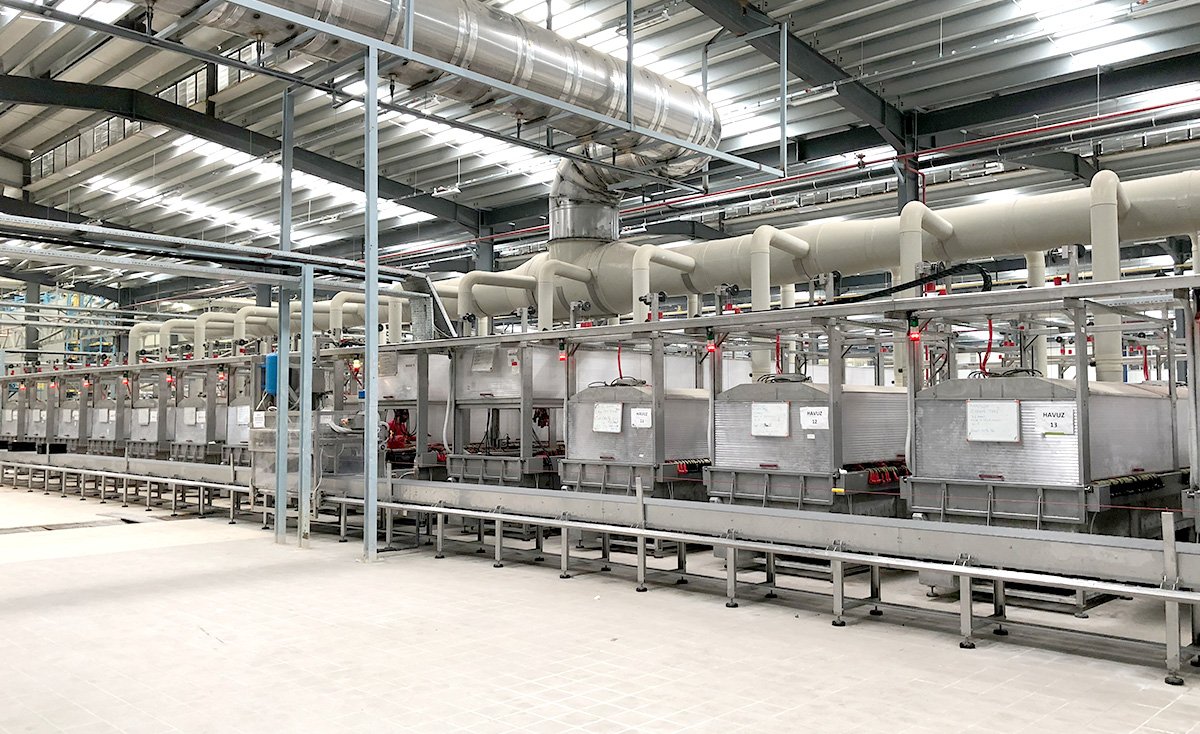
!lead-acid-battery-manufacturing-factory-line.jpg

Avoid Fast Chargers on Lead-Acid Batteries
Fast charging is designed for lithium-ion chemistry and can be genuinely harmful to lead-acid batteries. A fast charger delivering 5A or more to a 12V 10Ah lead-acid battery forces current into the cells faster than the electrochemical conversion process can safely absorb. The result is excessive gassing, electrolyte heating, and increased grid corrosion on the positive plate.
For lead-acid, the recommended charging current is C/10 — one-tenth of the battery’s amp-hour capacity. For a 12V 12Ah battery, that’s 1.2A. Charging at 2–3A (C/5 to C/4) is acceptable but will generate more heat and reduce cycle life compared to C/10 charging. Anything above 0.5C (6A for a 12Ah battery) should be considered fast charging and avoided for routine charging of lead-acid batteries.
The exception is occasional emergency fast charges — if you need to get moving and don’t have time for a full charge, a 30-minute boost at moderate current (2–3A) will add meaningful range without causing significant damage. Just don’t make it a daily habit.
Perform a Monthly Equalization Charge to Prevent Capacity Imbalance
Lead-acid batteries are composed of multiple cells connected in series, and over time, these cells can become unbalanced. One cell may charge and discharge at a slightly different rate than its neighbors, leading to a situation where the strongest cell is undercharged while the weakest cell is overcharged during normal charging cycles. Left unchecked, this imbalance progressively worsens, with the weak cell eventually becoming the limiting factor for the entire battery pack.
An equalization charge applies a controlled, elevated voltage (typically 15–16V for a 12V battery) for 2–4 hours after the battery has completed a full charge. This excess voltage drives a gentle overcharge that equalizes the charge level across all cells and reverses mild sulfation. Most smart chargers designed for deep-cycle lead-acid batteries have an automatic equalization mode; otherwise, it can be performed manually with a well-regulated power supply.
Monthly equalization charges are especially important for batteries that are regularly cycled at higher DoD (above 50%), for batteries that are more than 12 months old, and for multi-battery packs where cell matching may not be perfect. CHISEN’s AGM batteries benefit from monthly equalization particularly during the first year, as the formation process continues to mature the active materials.
Store at 50% SOC and Check Monthly
For periods of non-use longer than two weeks, charge the battery to 50–60% SoC before storing. At this charge level, the self-discharge rate for a quality AGM lead-acid battery is approximately 3–5% per month at 20°C. A battery stored at 50% SoC in a cool location (10–15°C) will still be above the 20% sulfation threshold after 6 months with no intervention.
Check the battery voltage monthly with a multimeter. A resting voltage below 12.4V for a 12V nominal battery indicates the SoC has dropped below 50% and a recharge is needed. Any battery that drops below 12.0V resting voltage during storage is at immediate risk of sulfation damage.
Temperature during storage also matters. Every 10°C reduction in storage temperature halves the self-discharge rate. A battery stored at 5°C loses charge at roughly one-quarter the rate of the same battery stored at 25°C. For seasonal storage (winter), keeping the battery in a cool, dry basement or garage (above 0°C) is far better than a heated room.
Summary: The Cycle-Extension Checklist
Putting it together, here’s the real-world protocol for maximizing your electric scooter battery cycles: charge when the battery reaches 50% SoC (not below 20%), use a C/10 charging current, never fast-charge lead-acid batteries, use a timer or smart charger, perform monthly equalization charges, and store at 50% SoC in a cool location when not riding. These habits will reliably push your battery toward the upper end of its rated cycle range — 500 cycles or more — instead of watching it fade in half that time.
CHISEN’s technical team can advise on optimal charging parameters for specific battery models and configurations. Contact them for detailed specifications and charging guidance.

发表回复