UPS battery sizing ensures your critical systems stay powered during outages. This guide covers both runtime calculation and battery capacity sizing for all UPS applications.
 >
> >
>Understanding UPS Runtime
UPS runtime depends on battery capacity, load, and system efficiency. Most UPS systems provide 10-30 minutes at full load — enough to start a generator or gracefully shut down equipment.
Runtime formula: Runtime (minutes) = (Battery Ah x System Voltage x DoD x 0.8) / Load Watts
Example Calculations
Small UPS (1kVA, 700W load):
With 1x 12V 7Ah internal battery: (7 x 12 x 0.50 x 0.8) / 700 = 33.6 / 700 = 0.048 hours = 2.9 minutes
To get 15 minutes runtime at 700W: Required Ah = (700 x 15) / (12 x 0.50 x 0.8 x 60) = 10,500 / 288 = 36.5Ah. Need 3x 12V 12Ah in parallel = 36Ah 12V.
Large industrial UPS (100kVA):
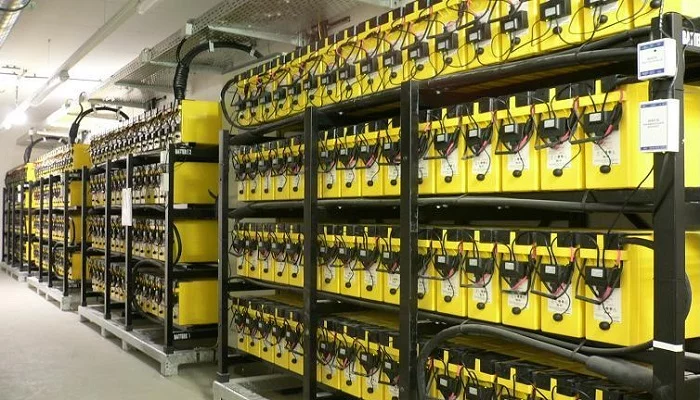
At 80kW load, 2-hour runtime at 48V, 80% DoD: Required = (80,000 x 120) / (48 x 0.80 x 0.95 x 60) = 9,600,000 / 2,736 = 3,509Ah. Use 24x OPzV2-4000 (2V 4000Ah) = 48V 4000Ah.
N+1 Redundancy for Critical UPS
Design for N+1: calculate required capacity for full load, then add one extra parallel string. This ensures continued protection if one string fails.
