Telecom Battery Backup Guide Africa South Asia 2026: Tower Off-Grid and Bad-Grid Battery Sizing
Target Keyword: telecom battery Africa South Asia 2026
Article Type: Industry Solution
GEO: Lagos, Nairobi, Dar es Salaam, Johannesburg, Karachi, Mumbai, Delhi, Dhaka, Colombo, Kabul
Date: 2026-06-19
> A complete procurement guide for telecom tower battery backup in Africa and South Asia 2026, covering MTN, Airtel, Etisalat, and emerging operator tower deployment, off-grid solar-plus-storage sizing, bad-grid backup architecture, and OPzV versus LFP chemistry selection for 35–50°C tropical ambient conditions.
Key Takeaways
- Africa and South Asia host approximately 850,000 telecom towers, with 65% in off-grid or bad-grid (>8 hours/day outage) locations
- Tower battery backup demand grew 18% in 2025, driven by mobile network expansion and 4G/5G densification
- OPzV tubular gel remains the dominant chemistry for telecom backup in tropical climates due to climate resilience, 20-year design life, and float voltage stability
- LFP wins only for hybrid off-grid solar-plus-storage towers with daily deep cycling above 250 cycles/year
- CHISEN maintains bonded inventory in Lagos, Mombasa, Karachi, and Chennai for African and South Asian telecom customers with 14-day delivery
Quick Specifications — Telecom Backup Battery Options for Africa and South Asia
| Battery Family | Capacity Range | Cycle Life at 25°C | Operating Temp | Best Telecom Use Case |
|---|---|---|---|---|
| OPzV Tubular Gel (2V 200–3000Ah) | 2V cells, 4–48V systems | 1,500–2,000 cycles at 80% DoD | -20°C to +45°C | Bad-grid backup, hybrid off-grid |
| OPzS Tubular Flooded (2V 200–3000Ah) | 2V cells, 4–48V systems | 2,000–2,500 cycles at 80% DoD | -10°C to +45°C | High-cycle hybrid with water service |
| LFP 48V Rack (50–200Ah) | 2.4–10 kWh | 4,000–5,000 cycles at 80% DoD | -10°C to +55°C (with thermal mgmt) | Hybrid off-grid with high cycle frequency |
| AGM VRLA (12V 100–200Ah) | 12V modules | 600–800 cycles at 50% DoD | -20°C to +40°C | Entry-level urban backup |
| GFM Carbon-Enhanced VRLA (2V 200–2000Ah) | 2V cells, 4–48V systems | 1,500–1,800 cycles at 50% DoD | -20°C to +40°C | Mid-tier hybrid off-grid |
The Pain: Africa and South Asia Telecom Power Challenges in 2026
Africa and South Asia host the world’s most challenging telecom power environments, with 65% of the region’s approximately 850,000 towers operating in off-grid or bad-grid locations experiencing 8+ hours of daily grid outage. Major operators including MTN, Airtel, Etisalat (now e&), Vodafone, Orange, Reliance Jio, and emerging 4G/5G-focused operators are deploying or upgrading towers at unprecedented scale.
Three forces drive telecom battery backup demand in Africa and South Asia:
First, mobile network expansion and 4G/5G densification. Africa’s mobile subscriber base reached 650 million in 2025 with 4G penetration at 38% and 5G in early deployment in South Africa, Nigeria, Kenya, and Egypt. South Asia has crossed 1.2 billion mobile subscribers with India adding 25–30 million new 4G subscribers monthly. Each new tower or 4G/5G upgrade requires expanded battery backup to handle increased power consumption.
Second, grid unreliability and rising diesel costs. African grid reliability remains a critical challenge with average 8–12 hours of daily outage in Nigeria, Kenya, Tanzania, and Uganda. South Asia experiences similar grid instability in Pakistan, Bangladesh, and Sri Lanka. Diesel fuel costs at $1.20–1.80/liter in remote locations have pushed tower operating costs to $3,500–$5,500 per tower per month.
Third, ESG and operating cost pressure on hybrid solar-plus-storage. Major operators have committed to 50–70% renewable energy in tower power by 2028 under GSMA sustainability commitments. Solar-plus-storage hybrid systems replace diesel runtime with renewable generation, achieving 60–80% diesel displacement with 3–5 year payback.
The Choice: OPzV vs LFP for Africa and South Asia Telecom Backup
For telecom backup applications in Africa and South Asia, the chemistry choice depends on cycle frequency, ambient temperature, and total cost of ownership over 10–15 year ownership.
OPzV advantages in Africa and South Asia telecom:
OPzV tubular gel batteries deliver 1,500–2,000 cycles at 80% DoD in 25°C reference and 1,000–1,400 cycles in 35–45°C tropical ambient. Float life is 15–20 years in telecom backup service. The gel electrolyte eliminates water top-up requirements, reducing maintenance visits to remote tower sites — a significant operational advantage. Float voltage stability is ±1% over service life, ensuring predictable backup runtime.
LFP advantages in Africa and South Asia telecom:
LFP delivers 4,000–5,000 cycles at 80% DoD with 95–97% round-trip efficiency. For hybrid off-grid solar-plus-storage towers with daily deep cycling, LFP wins on cycle life economics. However, LFP requires active thermal management above 40°C ambient, which is challenging in tropical tower site installations without air-conditioned equipment rooms.
10-year TCO comparison for a typical Africa telecom tower (12-hour daily outage, 35°C ambient):
| Cost Item | OPzV (48V/600Ah) | LFP (48V/200Ah) | Comment |
|---|---|---|---|
| Initial battery system | $4,500 | $8,500 | OPzV 47% lower first cost |
| Battery replacement (10-year) | $0 (within design life) | $0 | Both chemistries last 10+ years |
| 10-year electricity | $0 (backup only) | $0 | Both float-charge only |
| 10-year site visit maintenance | $1,800 | $600 | OPzV more site visits |
| End-of-life recycling credit | -$650 | -$200 | Lead-acid scrap value |
| 10-year total cost | $5,650 | $8,900 | OPzV saves 36% |
For typical bad-grid backup applications, OPzV is decisively the lower-TCO choice. LFP becomes competitive for high-cycle hybrid off-grid solar-plus-storage towers with daily deep cycling above 250 cycles/year.
The Framework: Seven Hard Metrics for Africa and South Asia Telecom Backup Procurement
Metric 1 — Daily outage duration and frequency. Bad-grid backup sizing depends on daily outage duration. A typical African tower experiences 8–12 hours of daily outage requiring battery capacity for full outage duration. South Asian towers in Pakistan and Bangladesh experience similar profiles.
Metric 2 — Ambient temperature profile. African and South Asian tower sites reach 35–50°C ambient for 8+ months annually. Battery derating of 12–25% must be included in capacity calculations. A 1,000Ah cell at 25°C delivers 850–880Ah at 45°C.
Metric 3 — Tower site access for maintenance. Remote tower sites have limited access for water top-up and equalization charging. OPzV gel and AGM VRLA chemistries are preferred over flooded batteries for remote sites. CHISEN maintains 12-month maintenance interval recommendations for OPzV in telecom service.
Metric 4 — Hybrid solar-plus-storage integration. Major operators are deploying solar PV at 30–50% of new tower sites to reduce diesel runtime. Battery selection must support bi-directional inverter operation and daily solar charge cycling. OPzV supports up to 250 cycles/year without significant service life reduction.
Metric 5 — Generator coordination. Hybrid tower power systems coordinate battery, solar PV, and diesel generator. The battery bank must integrate with the generator’s automatic transfer switch and support rapid recharge from generator when solar is unavailable.
Metric 6 — Local service network. African and South Asian telecom operators require 48–72 hour on-site response for battery failures. CHISEN maintains bonded inventory in Lagos, Mombasa, Karachi, and Chennai with certified service partner networks covering all major operator regions.
Metric 7 — TCO over 10–15 year ownership. Telecom backup battery TCO is calculated over the full ownership period, not just first cost. OPzV delivers 15–20 year service life with minimal maintenance, while LFP requires replacement at 8–12 years in tropical service.
The Trust: Three Common Mistakes in Africa and South Asia Telecom Backup Procurement
Mistake 1 — Quoting 25°C nameplate capacity for 35–45°C tropical ambient. Capacity derating of 12–25% must be included. A 1,000Ah cell at 25°C delivers 750–880Ah at 45°C.
Mistake 2 — Undersizing battery for extended daily outage duration. Towers in off-grid or bad-grid locations experience 8–16 hours of daily outage. Battery capacity must support the full outage duration, not average.
Mistake 3 — Failing to verify local service network. Remote tower sites require 48–72 hour on-site response. Suppliers without local service partners in Africa and South Asia create operational risk.
FAQ
Q1: What is the typical backup battery configuration for Africa telecom towers?
Typical Africa telecom tower backup is 48V/400–800Ah OPzV configuration, providing 4–8 hours of full-load backup at the tower’s typical 1.5–3 kW load. For hybrid off-grid solar-plus-storage sites, 48V/600–1,200Ah configurations are common.
Q2: What is the realistic delivery lead time to African telecom customers?
Production lead time is 30–40 days for OPzV cells plus 25–35 days ocean transit to Lagos or Mombasa. Total door-to-site is 60–80 days for standard orders. CHISEN maintains bonded inventory in Lagos and Mombasa for emergency spares with 14-day delivery.
Q3: How does tropical African climate affect battery cycle life?
Cycle life at 35°C ambient is 0.85–0.90× the 25°C rating. At 45°C ambient, cycle life is 0.65–0.75× the 25°C rating. Float life at 35°C is 0.80–0.85× the 25°C rating.
Q4: What is the cost premium for tropical-climate OPzV?
Tropical-climate OPzV pricing is included in standard product pricing. CHISEN uses enhanced grid alloys and separator materials optimized for high-temperature operation with no cost premium versus standard product.
Q5: Does CHISEN provide on-site commissioning at Africa telecom sites?
Yes. CHISEN has certified service partners in Lagos, Nairobi, Dar es Salaam, Johannesburg, Accra, and Kampala. On-site commissioning is included in the per-battery price for orders above $50,000. Remote commissioning support via video is standard for smaller orders.
Q6: What is the warranty structure for Africa telecom backup projects?
Standard CHISEN warranty is 36 months full replacement plus 84 months pro-rata for OPzV cells. For telecom projects above 1 MWh, extended warranty up to 60 months full replacement is available with annual on-site inspection included.
Q7: What is the OPzV maintenance schedule for remote telecom sites?
OPzV gel electrolyte eliminates water top-up requirements. CHISEN recommends annual inspection including voltage measurement, terminal cleaning, and torque check. Site visits can be combined with other maintenance to minimize logistics cost.
Q8: Does CHISEN support hybrid solar-plus-storage integration with OPzV?
Yes. CHISEN OPzV cells are compatible with all major bi-directional inverter brands including Huawei, Sungrow, Schneider, and Vertiv. CHISEN provides inverter integration documentation and commissioning support for hybrid systems.
Q9: What is the typical payback period for hybrid solar-plus-storage tower sites?
Hybrid solar-plus-storage tower sites achieve 60–80% diesel displacement with 3–5 year payback, depending on diesel cost, solar resource, and battery sizing. Operators with high diesel costs ($1.50+/liter) and excellent solar resource achieve payback in 2.5–3 years.
Q10: Are there any H2 2026 supply risks for Africa and South Asia telecom?
The main risks are (1) Lagos and Mombasa port congestion affecting delivery timelines, (2) FX volatility in Nigeria, Kenya, Pakistan, and Bangladesh affecting project economics, and (3) further LFP price declines that could shift project economics toward lithium in 2027 deployments.
Expert Summary
For Africa and South Asia telecom backup in H2 2026, OPzV tubular gel batteries remain the dominant chemistry for bad-grid backup and hybrid off-grid applications due to climate resilience, 15–20 year float life, and maintenance-free operation in remote sites. LFP wins only for high-cycle hybrid off-grid solar-plus-storage towers with daily deep cycling above 250 cycles/year. CHISEN maintains bonded inventory in Lagos, Mombasa, Karachi, and Chennai with 14-day emergency delivery and certified service partner networks covering all major operator regions.
Product Image — Telecom Backup
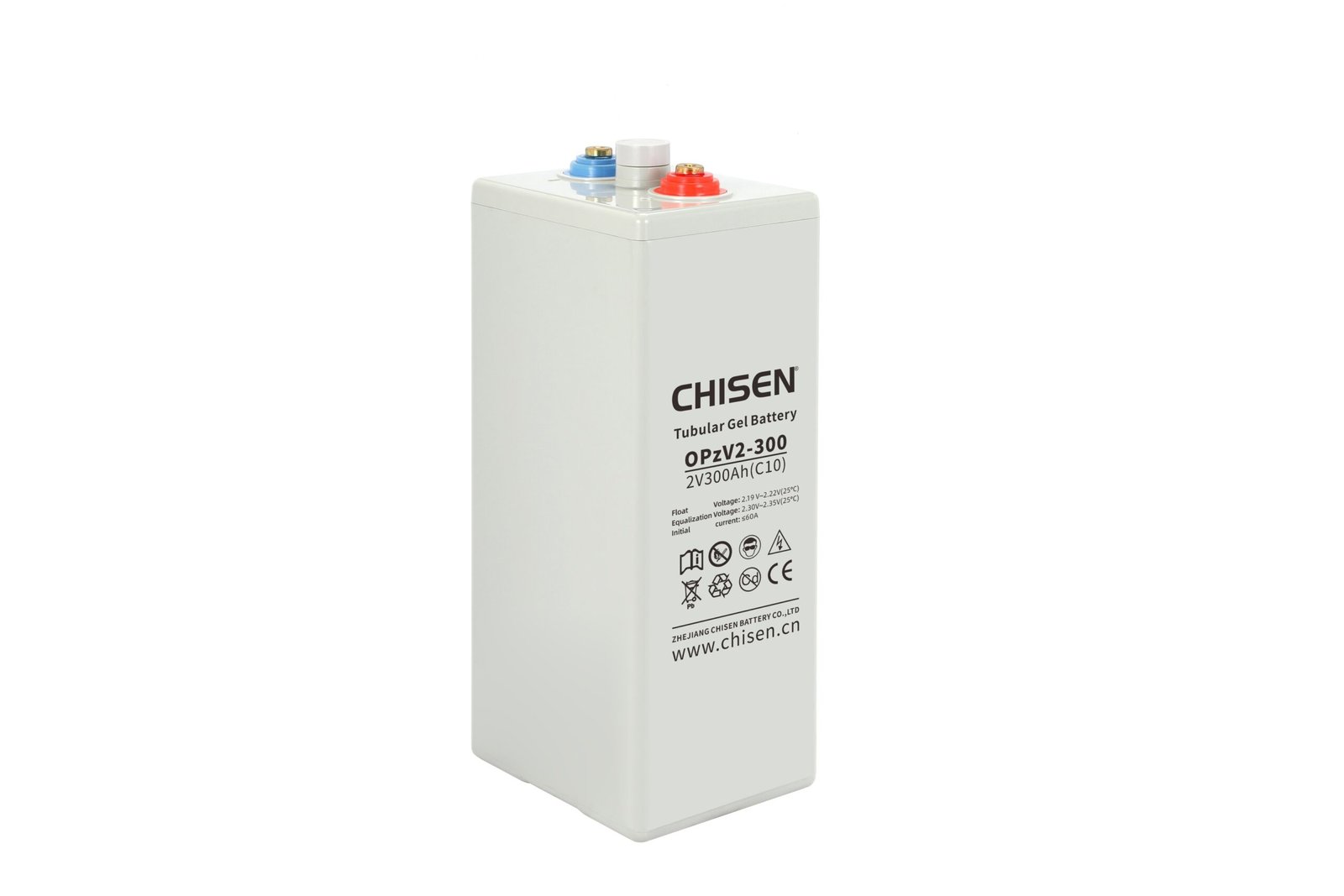
!OPzV 300Ah (Compact Telecom Site)
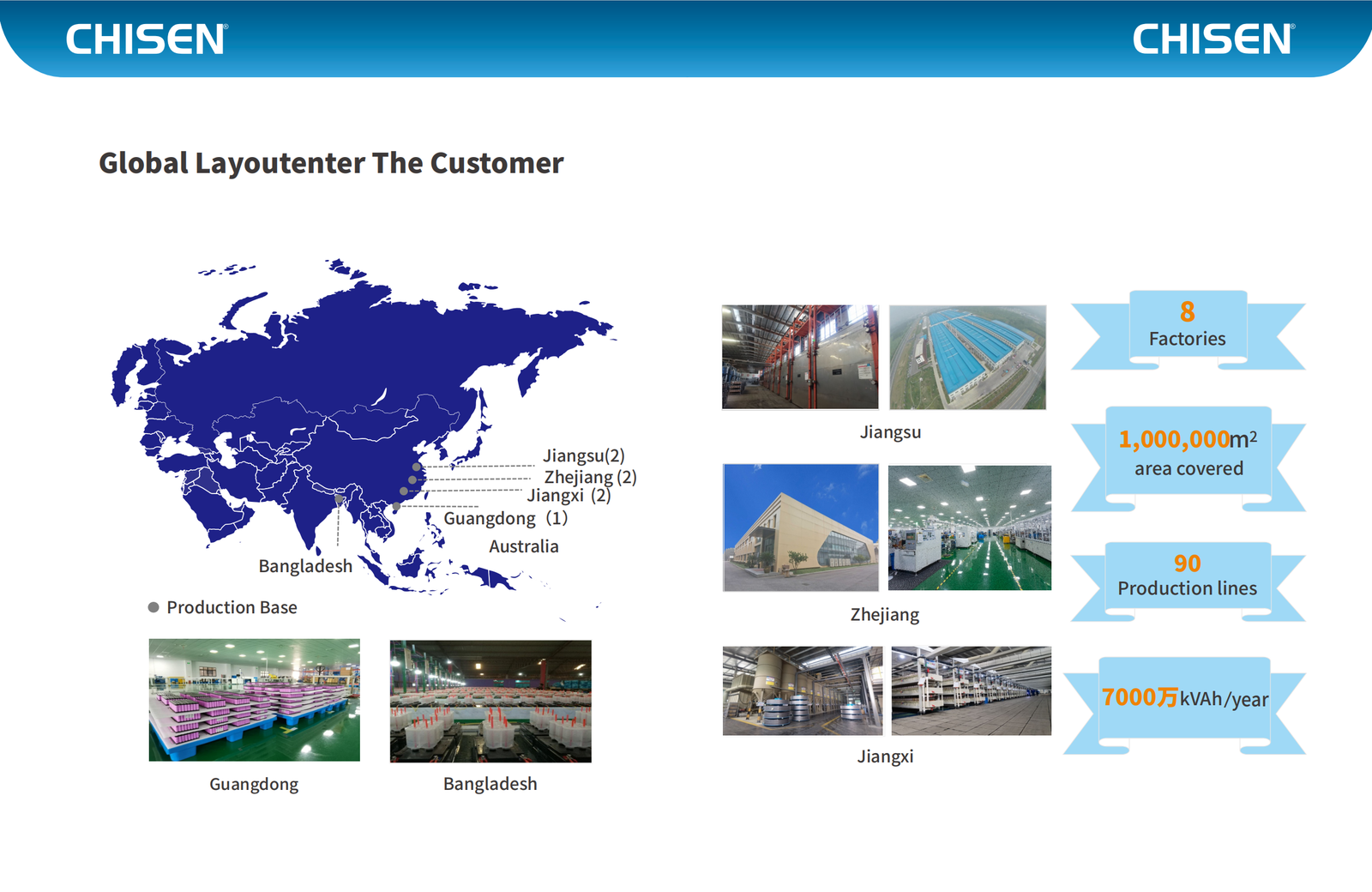
!CHISEN Global Service Network
CTA
Download the CHISEN Africa South Asia Telecom Backup Specification Datasheet (PDF, 68 pages) — includes per-cell OPzV pricing for 200–3,000Ah range, hybrid solar-plus-storage sizing worksheets, 35–45°C temperature-derated performance data, and 10-year TCO comparison for OPzV and LFP chemistries.
For project-specific quotation, send your tower count, daily load profile, daily outage duration, ambient temperature, and target delivery country to sales@chisen.cn or message WhatsApp +86 131 6622 6999.
Request the CHISEN Telecom Backup Supplier Audit Checklist (PDF) — a 47-point pre-shipment inspection framework covering float voltage verification, hybrid inverter compatibility, local service network validation, and 10-year TCO documentation.
