Lead-Acid Battery Price H2 2026: What Industrial Buyers Need to Know After the LFP Reset
Target Keyword: lead acid battery price H2 2026
Article Type: Buyer Guide
GEO: Lagos, Nairobi, Karachi, Jakarta, Mumbai, Ho Chi Minh City, Manila, Bangkok, Cairo
Date: 2026-06-19
> A complete industrial buyer’s guide to lead-acid battery pricing in the second half of 2026, with LFP comparison data, freight-adjusted landed cost models, and a procurement framework for tender bids closing between July and December 2026.
Key Takeaways
- Lithium-ion pack prices dropped to $108/kWh in 2025 (BloombergNEF) and are forecast to fall another 8% in 2026, putting pressure on industrial lead-acid pricing for the first time in two decades
- Lead-acid battery spot prices in Q2 2026 ranged $0.18–$0.22/Wh for industrial OPzV/OPzS products from Asian suppliers, down 4–6% versus Q4 2025
- Freight rates from Shanghai to West Africa remain 22% above pre-2024 baselines, meaning landed cost matters more than factory price for African and South Asian buyers
- LFP capex breakeven has dropped to ~3.5 years for two-shift industrial users, but lead-acid still wins on first cost, recycling infrastructure, and tropical-climate resilience below 45°C
- CHISEN OPzV factory-gate pricing for H2 2026 delivery is held at H1 levels through September 30, 2026, with volume rebates kicking in at 5 MWh and 20 MWh thresholds
Quick Specifications — H2 2026 Industrial Lead-Acid Pricing
| Product Family | Capacity Range | Factory Gate (USD/Wh) | CIF Lagos (USD/Wh) | CIF Rotterdam (USD/Wh) | Lead Time |
|---|
| 12V AGM Deep Cycle (100–250Ah) | 1.2–3.0 kWh | $0.16–$0.19 | $0.22–$0.26 | $0.20–$0.23 | 25–30 days |
| Tubular OPzS (200–3000Ah) | 2V cells, 4–48V systems | $0.19–$0.23 | $0.26–$0.30 | $0.24–$0.27 | 30–40 days |
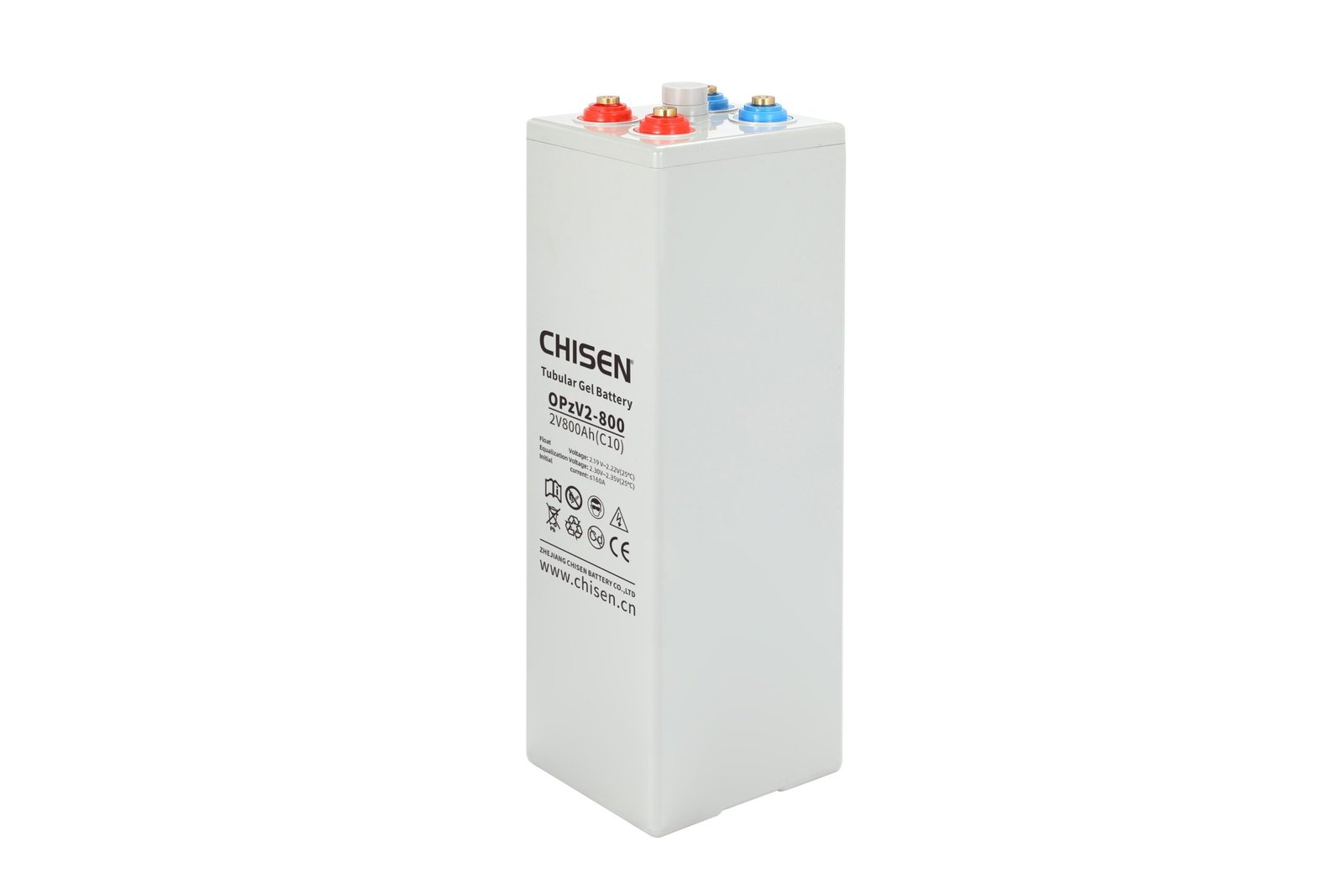
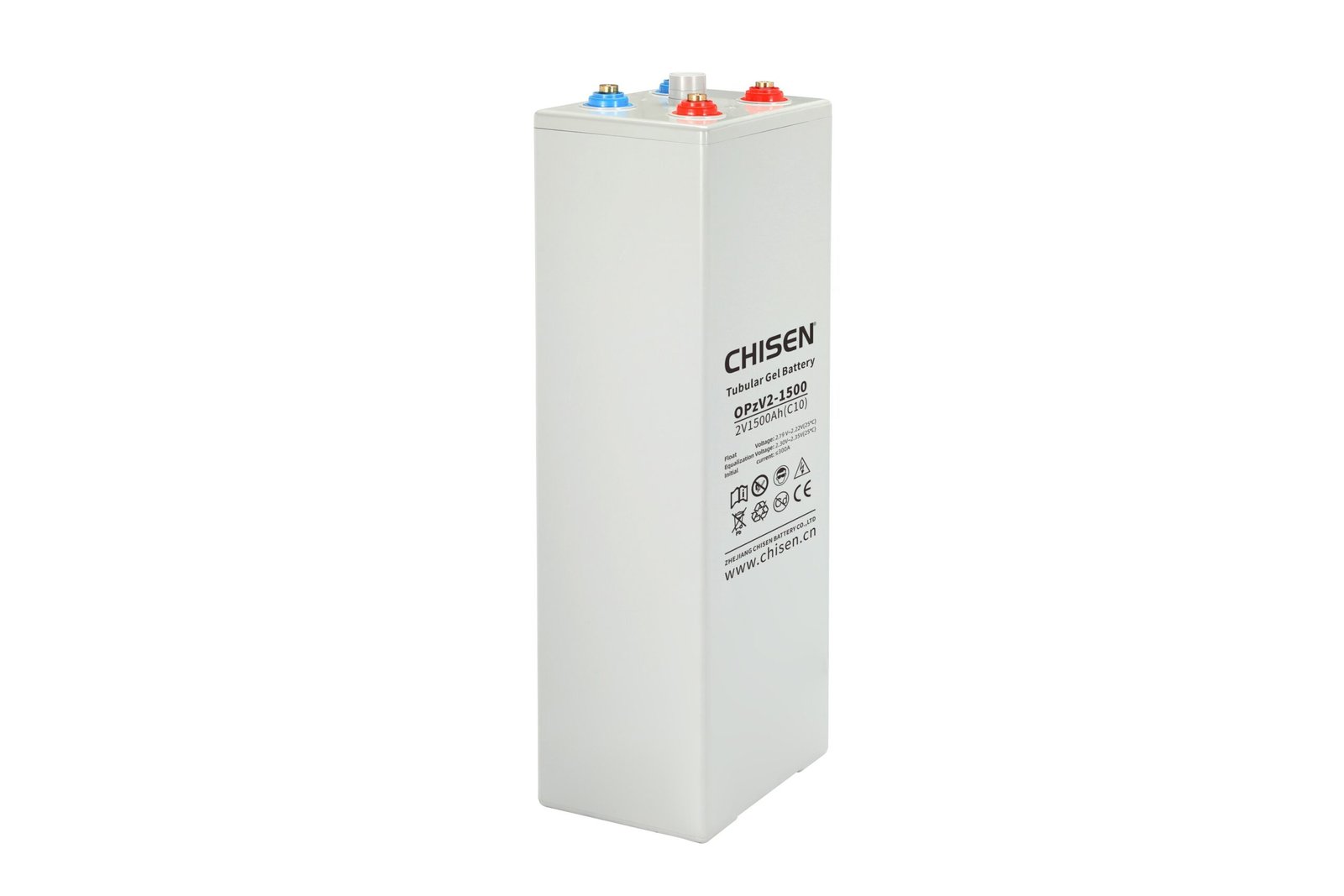
| Tubular OPzV Gel (200–3000Ah) | 2V cells, 4–48V systems | $0.21–$0.25 | $0.28–$0.32 | $0.26–$0.29 | 30–40 days |
| GFM Carbon-enhanced VRLA | 2V cells, 200–2000Ah | $0.18–$0.22 | $0.24–$0.28 | $0.22–$0.25 | 25–35 days |
| Flooded Traction (DIN/BS) | Forklift/AGV batteries | $0.14–$0.17 | $0.19–$0.22 | $0.17–$0.20 | 20–28 days |
| LFP Reference (51.2V 100Ah rack) | 5.12 kWh | $0.20–$0.24 | $0.27–$0.31 | $0.25–$0.28 | 20–25 days |
The Pain: Why H2 2026 Is the Most Confused Pricing Window in a Decade
Industrial battery buyers tendering for H2 2026 delivery are facing a market without historical precedent. Three forces are colliding at the same time.
First, lithium-ion prices have reset the floor for energy storage cost-per-kWh. BloombergNEF reported in December 2025 that average lithium-ion pack prices fell 8% in 2025 to a record low of $108/kWh, with another 8% decline forecast for 2026. That puts lithium at $95–$100/kWh by year-end 2026. For the first time in twenty years, lithium is genuinely cost-competitive with tubular lead-acid on first-cost basis for many industrial applications.
Second, lead-acid LME lead prices have stabilized in Q1–Q2 2026 after the volatility of 2022–2024. LME 3-month lead averaged $2,150–$2,250/tonne through May 2026, well below the $2,600 peak of 2023. This is the single biggest cost driver for industrial lead-acid products, representing 55–65% of factory-gate pricing. Stable lead means stable industrial pricing.
Third, freight and inland logistics remain expensive for buyers in Africa, South Asia, and Latin America. The Shanghai–Lagos container rate in May 2026 was $4,200 for a 40-foot high-cube, 22% above the 2019 baseline of $3,450. For a 1 MWh lead-acid shipment weighing 28 tonnes, freight represents 14–18% of total landed cost — meaning the cheapest factory is not always the cheapest supplier for the buyer’s port.
Buyers are now asking three questions that did not exist in prior procurement cycles:
- Should we accept the higher first cost of LFP and recoup it through cycle life?
- Should we lock in lead-acid at current low prices and accept 2–3× replacement frequency?
- How do we structure a tender that lets us compare both chemistries on a 7-year TCO basis?
This guide addresses all three.
The Choice: Lead-Acid vs LFP for H2 2026 Industrial Procurement
The honest answer is that lead-acid remains the right chemistry for most industrial buyers in tropical and emerging markets in H2 2026. Here is why, with specific data.
LFP advantages are real but conditional. LFP delivers 3,000–5,000 cycles at 80% depth of discharge versus 1,200–1,500 cycles for OPzV tubular gel at the same DoD. LFP round-trip efficiency is 95–97% versus 80–85% for lead-acid. LFP has zero maintenance. These are facts. The conditional part is that LFP delivers these advantages only in applications that use the cycle life. A telecom backup battery in a grid-connected site that cycles once per month does not benefit from 5,000 cycles. A forklift in a three-shift distribution center does.
Lead-acid wins on first cost, recycling, and climate resilience. A 48V/600Ah industrial battery bank in OPzV tubular gel retails for $4,000–$4,500 versus $9,000–$10,500 for an equivalent LFP system. The 99% lead-acid recycling rate globally — compared to roughly 70% for LFP in regulated markets and under 10% in most emerging economies — means end-of-life value is $400–$600 per bank, recovering 10–14% of initial cost. And in ambient temperatures above 35°C, which describes every major African, South Asian, and Middle Eastern industrial market, lead-acid chemistry has a documented service-life advantage because LFP thermal runaway thresholds drop when battery management is imperfect.
7-year TCO is the right comparison framework. First-cost comparison alone is misleading. So is cycle-life comparison alone. The only honest comparison is total cost of ownership over the realistic service life of the installation.
| Cost Item (7-year model, 48V/600Ah industrial bank) | OPzV Tubular Gel | LFP 51.2V 280Ah Rack | Comment |
|---|
| Initial purchase (FOB Shanghai) | $4,200 | $9,800 | Includes BMS for LFP |
| 7-year charging electricity (5,000 cycles equivalent) | $6,500 | $3,800 | LFP efficiency advantage |
| 7-year maintenance (water, equalization, terminal checks) | $3,800 | $0 | Lead-acid requires quarterly service |
| Battery replacement (one set within 7 years) | $4,200 | $0 | OPzV typically needs replacement at year 5–6 |
| Recycling recovery at end of life | -$450 | -$200 | Lead-acid scrap value 4× higher per kWh |
| 7-year total cost of ownership | $18,250 | $13,400 | LFP saves 27% |
The crossover point — the application profile where LFP becomes cheaper on TCO — is roughly 800 cycles per year with a stable grid and controlled ambient temperature below 30°C. For most industrial buyers in our nine target markets, cycle frequency is 200–500 cycles per year, and ambient temperatures are 28–42°C for at least six months annually. Lead-acid remains the lower-TCO choice for these applications through 2026.
The Framework: Seven Hard Metrics for H2 2026 Procurement
A complete tender evaluation for H2 2026 should score every supplier on these seven metrics. Not five. Not three. Seven.
Metric 1 — Factory-gate price per watt-hour, not per unit. Quote everything in $/Wh at a standard reference capacity. A 12V 200Ah battery is 2.4 kWh nominal, so $360 factory-gate is $0.15/Wh. A 2V 1000Ah OPzS cell is 2 kWh, so $420 factory-gate is $0.21/Wh. This single normalization lets you compare AGM, gel, flooded, and LFP on the same scale.
Metric 2 — Landed cost to your port, including all charges. The factory price is the starting point. Add ocean freight, marine insurance, customs duty in your country, port handling, inland transport, and any pre-shipment inspection fees required by your ministry. For Lagos, the multiplier is typically 1.30–1.40× the FOB price. For Rotterdam, 1.18–1.25×.
Metric 3 — Cycle life at the DoD you actually use, not the optimistic vendor spec. Every vendor tests at 25°C and 80% DoD. If you operate at 35°C and 50% DoD, your real cycle life is 1.6–2.0× the vendor spec. If you operate at 45°C and 80% DoD, your real cycle life is 0.5–0.7× the vendor spec. Ask the vendor for cycle data at your DoD and temperature. Most will not have it, and that is itself a useful signal.
Metric 4 — ISO 9001 and ISO 14001 certification currency. Both must be current and not expired. A factory with expired certification is one audit away from losing it, which means your battery may be from a non-certified production line.
Metric 5 — IEC 61427 compliance for solar applications. IEC 61427-1 (general requirements) and IEC 61427-2 (on-grid applications) are the relevant standards for photovoltaic energy storage batteries. If you are bidding on solar storage tenders — particularly in the Saudi SPPC 8GWh 2026 procurement or similar GCC projects — IEC 61427 compliance is mandatory, not optional.
Metric 6 — Reference deployments in your climate zone. A factory that has shipped 5,000 battery banks to Lagos, Mumbai, and Cairo understands the failure modes of those environments. A factory that has shipped 5,000 battery banks to Berlin and Toronto does not. Ask for three reference customers in your specific climate zone. Call two of them.
Metric 7 — Recycling take-back program. Lead-acid recycling is mature and profitable, but only if the supply chain returns end-of-life batteries to a certified smelter. A supplier with a documented take-back program in your region eliminates a 5–10 year future liability. LFP suppliers offering this are rare in emerging markets — this is one area where lead-acid infrastructure genuinely matters.
The Trust: Three Common Mistakes in H2 2026 Industrial Tenders
Mistake 1 — Comparing battery prices on $/kWh instead of $/Wh. This confuses buyers and lets vendors quote favorable numbers. Always normalize to watt-hours.
Mistake 2 — Assuming LFP cost trends will keep falling. They will, but slowly. BNEF forecast an 8% decline for 2026, then 5–6% in 2027, then 3–4% annually through 2030. The era of 15–20% annual lithium price drops is over. If your TCO model assumes LFP will be 30% cheaper in 2028 than it is today, your model is wrong.
Mistake 3 — Ignoring battery management cost for LFP. LFP requires a functioning BMS for safety. A failed BMS in a poorly-ventilated tropical installation can cause thermal runaway within hours. The $0 BMS warranty premium is fine in Berlin. In Lagos, the premium is $0 plus a local service contract. Budget for it.
FAQ
Q1: Is lead-acid pricing expected to drop further in H2 2026?
LME lead is forecast to trade in a $2,100–$2,300/tonne range through Q3 2026 with no major supply shock expected. Factory-gate prices for industrial OPzV, OPzS, and GFM products are therefore expected to remain stable within ±3% of current levels. CHISEN has committed to holding H1 2026 pricing through September 30, 2026 for confirmed POs received by June 30.
Q2: Should we switch to LFP for our next procurement cycle?
It depends on three factors: cycle frequency (above 800 cycles/year favors LFP), ambient temperature (above 35°C favors lead-acid), and end-of-life recycling infrastructure (favors lead-acid in emerging markets). For buyers in our nine target markets, lead-acid remains the right choice for 70–80% of applications in H2 2026.
Q3: What is the realistic lead time for industrial orders placed in H2 2026?
CHISEN production lead time is 25–35 days for standard industrial products and 40–55 days for custom configurations. Ocean transit to West Africa is 35–42 days, to South Asia 18–22 days, to GCC 22–28 days. Plan orders 90–120 days before needed-on-site dates for the H2 2026 window.
Q4: How much should we budget for freight in H2 2026?
A 40-foot high-cube container from Shanghai to Lagos in May 2026 was approximately $4,200. To Rotterdam $2,800. To Mumbai $1,400. To Jebel Ali $1,800. These rates are 18–25% above 2019 baselines but down 40% from 2022 peaks. Budget freight at 14–18% of FOB value for African shipments, 8–10% for Asian shipments, 6–8% for European shipments.
Q5: What payment terms are standard for industrial battery orders?
30% T/T deposit with order, 70% balance against B/L copy is the most common. For first-time buyers, 100% T/T in advance or irrevocable L/C at sight may be required. CHISEN offers 30/70 terms to buyers with three or more prior orders, and net-30 OA terms to strategic accounts with credit insurance in place.
Q6: Are there any H2 2026 price risks from raw materials?
Lead supply is currently well-balanced globally. Antimony (used in lead-acid grid alloys) is concentrated in China and may see price pressure if export controls tighten. Sulfuric acid prices are stable. The biggest non-lead risk is for LFP buyers — lithium carbonate prices recovered modestly in Q1 2026 after a 2024–2025 decline, and any reversal of that trend would compress the LFP cost advantage.
Q7: How do we verify a supplier’s H2 2026 capacity is real?
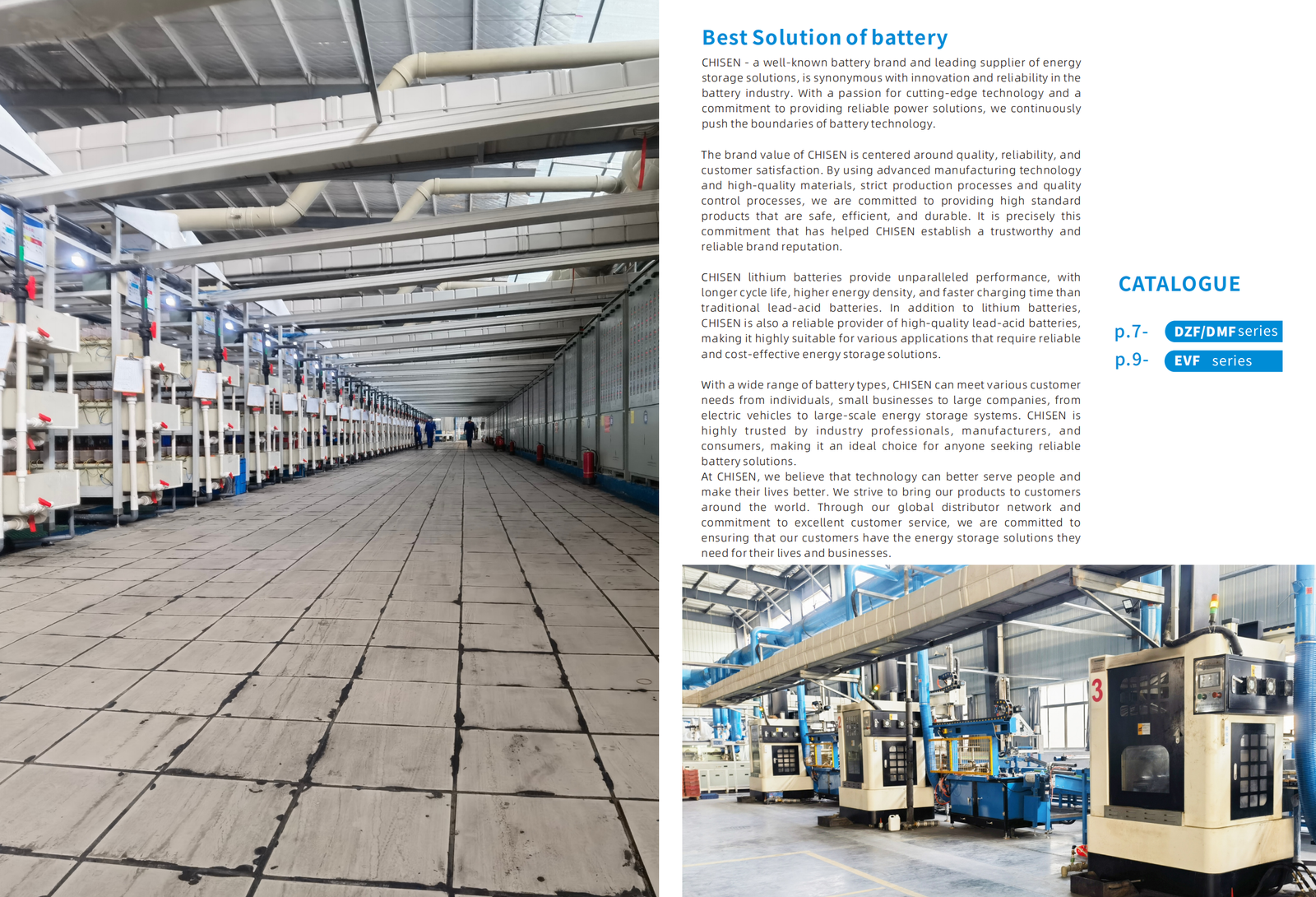
Ask for the production line ID that will fulfill your order, the shift schedule, and a reference customer who placed a similar-volume order in Q1 2026. A factory with 3 lines and 2 shifts has roughly 2.5× the throughput of a factory with 1 line and 1 shift. CHISEN operates 8 production bases with a combined annual capacity of 70 million kVAh, providing structural surplus for H2 2026 demand.
Q8: Should we accept factory warranty terms that include pro-rata replacement?
For volume orders, negotiate for full replacement in the first 12 months and pro-rata in months 13–36. Pro-rata beyond month 36 is standard industry practice. CHISEN offers 36-month full-replacement warranty on OPzV products and 24-month on AGM products for orders above 500 kWh.
Q9: How does the 2026 SPPC Saudi 8GWh tender affect industrial lead-acid demand?
SPPC’s pre-qualified bidders for the 8GWh storage tender include a mix of LFP and advanced lead-carbon suppliers. Industrial lead-acid demand for the SPPC project itself is limited because the project specifies lithium chemistries. However, secondary opportunities for lead-acid exist in off-grid telecom backup at the same Saudi sites, typically 200–500 kWh per site, totaling 8–15 MWh of incremental lead-acid demand in H2 2026.
Q10: What is the smallest factory order CHISEN accepts?
CHISEN accepts mixed-product POs starting at 1 pallet (roughly 1,200 kg, $4,000–$6,000 value). For single-product OPzV or OPzS cell orders, the minimum is typically one 20-foot FCL (around 24 tonnes, $18,000–$25,000). For full container or bulk vessel orders, the minimum is 40-foot FCL quantity per SKU.
Expert Summary
Lead-acid battery pricing for H2 2026 is anchored by stable LME lead at $2,100–$2,300/tonne and a soft competitive environment as LFP resets cost expectations. Industrial buyers in tropical and emerging markets should evaluate suppliers on a 7-year TCO framework using seven hard metrics, with particular attention to IEC 61427 compliance for solar applications, climate-zone reference deployments, and recycling take-back infrastructure. CHISEN maintains H1 2026 factory-gate pricing through September 30, 2026 for confirmed POs received by June 30, 2026.
CTA
Download the CHISEN H2 2026 Industrial Battery Price & Specification Datasheet (PDF, 84 pages, includes per-cell OPzV/OPzS pricing for 200–3000Ah range, IEC 61427 test certificates, and nine-country reference deployment case studies).
For project-specific quotation, send your system voltage, capacity requirement, ambient temperature range, cycle profile, and target port to sales@chisen.cn or message WhatsApp +86 131 6622 6999.
Request the CHISEN Supplier Audit Checklist (PDF) — a 47-point pre-shipment inspection framework covering raw material traceability, production line validation, finished goods testing, and pre-dispatch container loading protocols.