Lead acid Battery

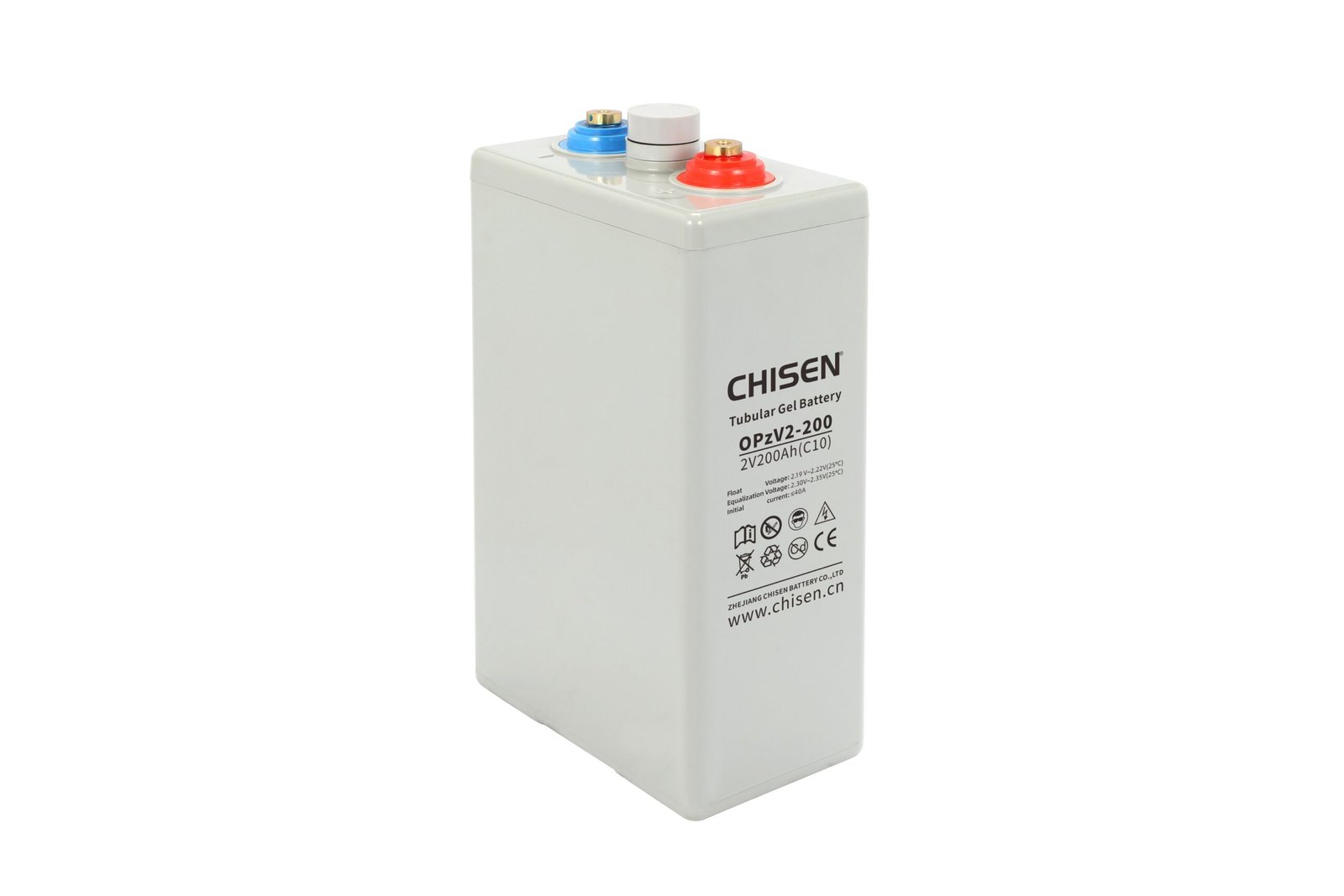
  • CHISEN OPzV 2V 150Ah Battery: Complete Technical Guide

    CHISEN OPzV 2V 150Ah Battery — OPzV Tubular GEL Technology
    CHISEN OPzV 2V 150Ah Battery — OPzV Tubular GEL Technology

    The CHISEN OPzV 2V 150Ah battery is a premium stationary lead-acid battery featuring GEL technology. This comprehensive guide covers specifications, applications, performance, and maintenance for the 150Ah model.

    1. Product Overview

    The CHISEN OPzV 2V 150Ah battery represents CHISEN Battery’s advanced GEL technology, designed for demanding stationary energy storage applications. The “OPzV” designation follows the IEC international standard for tubular plate stationary VRLA batteries, while “150Ah” indicates the rated capacity of 150 ampere-hours at the standard C20 discharge rate.

    This 2V cell format allows flexible system configuration: series connection achieves higher system voltages (48V, 96V, 120V), while parallel strings increase total capacity. The 150Ah capacity makes it ideal for solar energy storage systems, telecom base stations, and industrial UPS applications requiring reliable long-duration backup power.

    2. Technical Principles and Construction

    The OPzV 2V 150Ah uses tubular GEL technology — the most advanced lead-acid chemistry available. Key construction features:

    • Tubular positive plates: Lead dioxide active material contained in braided polyester tubes with corrosion-resistant lead alloy spines. This design prevents positive plate shedding — the primary failure mode in flat-plate batteries.
    • Gelled electrolyte: Sulfuric acid immobilized in silica gel provides uniform ionic distribution, eliminating stratification and enabling recombinant gas management.
    • Pressure-regulated valves: Recombinant valve maintains internal pressure for >99% gas recombination efficiency, achieving truly maintenance-free operation.

    The gel electrolyte enables the battery to be installed in any orientation (except permanently inverted) and provides superior deep discharge recovery compared to AGM batteries.

    3. Application Scenarios

  • Small solar home systems (2-5kWh/day)
  • Telecom BTS micro-sites (2-4 hour backup)
  • Traffic signal backup systems
  • Emergency lighting central battery systems
  • Residential UPS systems

4. Performance Advantages

The CHISEN OPzV 2V 150Ah offers these key performance characteristics:

  • Cycle life: 1,200–1,500 cycles at 80%% DoD (depth of discharge), making it ideal for daily cycling solar applications.
  • Float life: 15–20 years at 25C ambient temperature — one of the longest service lives in lead-acid technology.
  • Operating temperature: -40C to +60C — unmatched performance in extreme climate conditions.
  • Efficiency: 85–90%% round-trip energy efficiency.
  • Self-discharge: Less than 2%% per month at 25C — minimal losses during storage.
  • Deep discharge recovery: Superior recovery after repeated deep discharges compared to AGM batteries.

The tubular GEL design delivers the longest cycle life of any sealed VRLA technology, making it the preferred choice for solar energy storage applications requiring daily cycling.

5. Maintenance Guide

The CHISEN OPzV 2V 150Ah requires minimal maintenance:

  • Installation: Mount on a level surface in a ventilated area. Ensure terminals are tight and anti-corrosion washers are installed.
  • Monthly inspection: Check terminal connections for tightness and corrosion. Clean with baking soda solution if needed.
  • Voltage monitoring: Monthly resting voltage check: 2.15–2.18V per cell (12.9–13.1V per 6-cell 12V unit) indicates full charge.
  • Charging: Bulk/absorb: 14.1–14.4V per 12V unit. Float: 13.5–13.8V. Temperature compensation: -4mV/degC per cell.
  • Storage: Fully charge before storage. Recharge every 6 months to prevent sulfation.

6. Market Prospects and Industry Trends

The global market for stationary lead-acid batteries continues to grow, driven by several key trends that position the CHISEN OPzV 2V 150Ah for strong demand:

  • Renewable energy expansion: Solar installations worldwide require reliable energy storage, with OPzV technology the proven choice for large-scale solar-plus-storage.
  • Telecom infrastructure growth: 5G rollout globally demands more backup power, creating sustained demand for 150Ah class batteries.
  • Energy security concerns: Grid instability in emerging markets drives adoption of battery backup for critical infrastructure.
  • Environmental regulations: OPzV technology meets evolving environmental standards with OPzV recyclable materials and leak-proof designs.

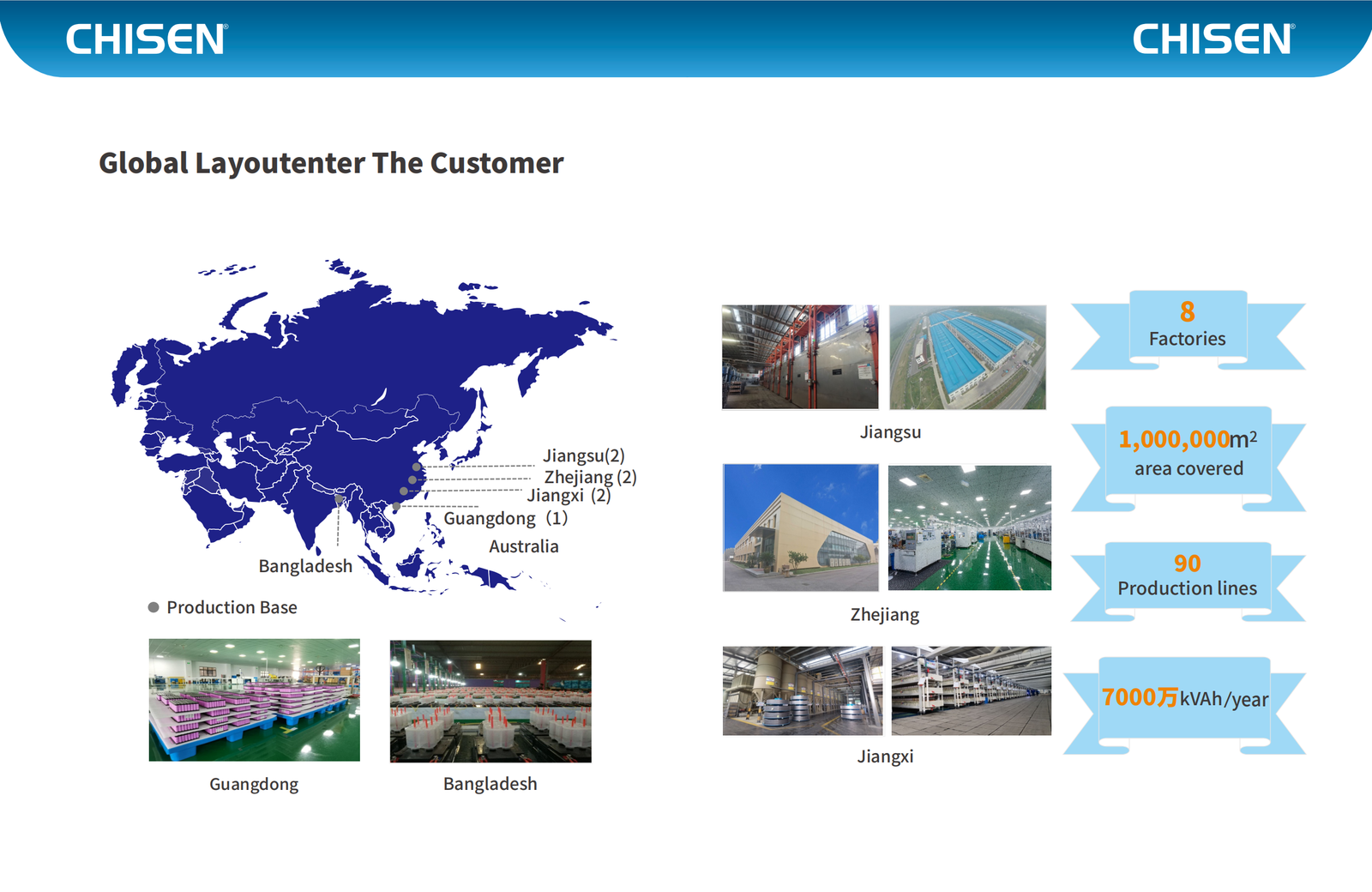
CHISEN Battery’s 8 global factories and 70 million kVAh annual capacity ensure reliable supply to distributors and EPC contractors worldwide. Our OPzV 2V 150Ah battery is available with CE, ISO9001, ISO14001, and TUV Rheinland certifications.


Need a Quote on CHISEN OPzV 2V 150Ah?

CHISEN Battery manufactures OPzV 2V batteries in all capacities from 100Ah to 3000Ah. Contact our sales team for specifications, pricing, and lead times.

Factory 8 global factories | 70M kVAh/year
Certifications CE, ISO9001, ISO14001, TUV Rheinland
Tel +86 131 2666 8999
Email jack@chisen.cn
Web www.chisen.cn

Download OPzV 2V 150Ah Official Spec Sheet (PDF)

Download PDF Specification

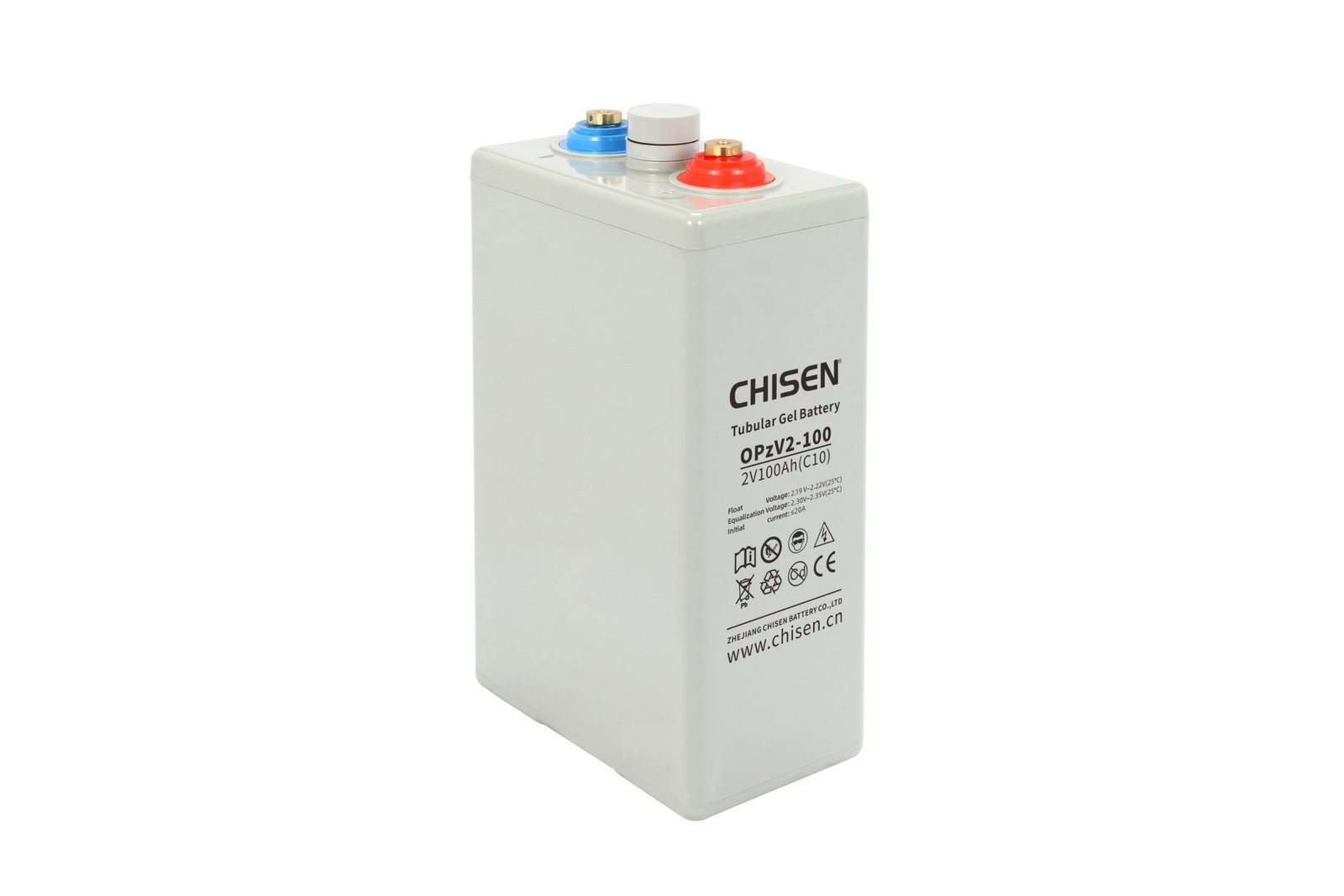
  • CHISEN OPzV 2V 100Ah Battery: Complete Technical Guide

    CHISEN OPzV 2V 100Ah Battery — OPzV Tubular GEL Technology
    CHISEN OPzV 2V 100Ah Battery — OPzV Tubular GEL Technology

    The CHISEN OPzV 2V 100Ah battery is a premium stationary lead-acid battery featuring GEL technology. This comprehensive guide covers specifications, applications, performance, and maintenance for the 100Ah model.

    1. Product Overview

    The CHISEN OPzV 2V 100Ah battery represents CHISEN Battery’s advanced GEL technology, designed for demanding stationary energy storage applications. The “OPzV” designation follows the IEC international standard for tubular plate stationary VRLA batteries, while “100Ah” indicates the rated capacity of 100 ampere-hours at the standard C20 discharge rate.

    This 2V cell format allows flexible system configuration: series connection achieves higher system voltages (48V, 96V, 120V), while parallel strings increase total capacity. The 100Ah capacity makes it ideal for solar energy storage systems, telecom base stations, and industrial UPS applications requiring reliable long-duration backup power.

    2. Technical Principles and Construction

    The OPzV 2V 100Ah uses tubular GEL technology — the most advanced lead-acid chemistry available. Key construction features:

    • Tubular positive plates: Lead dioxide active material contained in braided polyester tubes with corrosion-resistant lead alloy spines. This design prevents positive plate shedding — the primary failure mode in flat-plate batteries.
    • Gelled electrolyte: Sulfuric acid immobilized in silica gel provides uniform ionic distribution, eliminating stratification and enabling recombinant gas management.
    • Pressure-regulated valves: Recombinant valve maintains internal pressure for >99% gas recombination efficiency, achieving truly maintenance-free operation.

    The gel electrolyte enables the battery to be installed in any orientation (except permanently inverted) and provides superior deep discharge recovery compared to AGM batteries.

    3. Application Scenarios

  • Small solar home systems (2-5kWh/day)
  • Telecom BTS micro-sites (2-4 hour backup)
  • Traffic signal backup systems
  • Emergency lighting central battery systems
  • Residential UPS systems

    4. Performance Advantages

    The CHISEN OPzV 2V 100Ah offers these key performance characteristics:

    The tubular GEL design delivers the longest cycle life of any sealed VRLA technology, making it the preferred choice for solar energy storage applications requiring daily cycling.

    5. Maintenance Guide

    The CHISEN OPzV 2V 100Ah requires minimal maintenance:

    6. Market Prospects and Industry Trends

    The global market for stationary lead-acid batteries continues to grow, driven by several key trends that position the CHISEN OPzV 2V 100Ah for strong demand:

    CHISEN Battery’s 8 global factories and 70 million kVAh annual capacity ensure reliable supply to distributors and EPC contractors worldwide. Our OPzV 2V 100Ah battery is available with CE, ISO9001, ISO14001, and TUV Rheinland certifications.


    Need a Quote on CHISEN OPzV 2V 100Ah?

    CHISEN Battery manufactures OPzV 2V batteries in all capacities from 100Ah to 3000Ah. Contact our sales team for specifications, pricing, and lead times.

    Factory 8 global factories | 70M kVAh/year
    Certifications CE, ISO9001, ISO14001, TUV Rheinland
    Tel +86 131 2666 8999
    Email jack@chisen.cn
    Web www.chisen.cn

    Download OPzV 2V 100Ah Official Spec Sheet (PDF)

    Download PDF Specification

  • The Future of Energy Storage: Trends and Innovations 2026

    CHISEN OPzV 2V 2500Ah — Utility Scale Energy Storage
    CHISEN OPzV 2V 2500Ah — Utility Scale Energy Storage
    CHISEN Global Factory Network — 60+ Countries
    CHISEN Global Factory Network — 60+ Countries

    The energy storage landscape is evolving rapidly in 2026. From sodium-ion commercialization to solid-state batteries entering markets, this report covers the key trends shaping the future of battery technology and what they mean for solar installers and battery buyers.

    KEY STATISTICS

    Global energy storage market (2026)$62 billion
    Lithium battery price drop (2024–2026)28% decrease
    Sodium-ion battery market share (projected 2030)15–20% of stationary storage
    Solid-state battery commercializationPilot production 2026–2027
    Lead-acid revenue (2025)$45.8 billion

    2026 Energy Storage Technology Landscape

    Energy Storage Technology Roadmap 2026
    Technology Maturity Cost (per kWh) Key Applications Timeline
    Lead-Acid (OPzV) Mature $200–350 Solar, telecom, UPS Now
    Lithium (LiFePO4) Mature $450–750 Premium solar, EV Now
    Sodium-Ion Early commercial $350–550 Budget storage, cold climate 2025–2028
    Flow Batteries Commercial $400–800 Utility-scale storage Now
    Solid-State Pilot $800–1,500+ Premium EV, aerospace 2027–2030
    Zinc-Air Pilot $300–600 Remote off-grid 2026–2029

    What This Means for Solar Battery Buyers

    • Lead-acid remains safe choice: OPzV technology is proven, affordable, and recyclable. No technology risk. Excellent value for large stationary applications.
    • Lithium getting cheaper: LiFePO4 prices have dropped 60% since 2020. Now accessible for premium residential installations.
    • Sodium-ion emerging: China is the leader; CATL and BYD are scaling production. Promising for cold climates but cycle life still improving.
    • Solid-state is not ready: Despite headlines, solid-state batteries remain in pilot production. Do not wait for them — install proven OPzV or LiFePO4 now.
    • Hybrid systems increasing: Combining lead-acid (bulk storage) with lithium (fast response) in hybrid systems is an emerging best practice for commercial installations.

    Need a Reliable Battery Supplier?

    CHISEN Battery — 8 global factories, 70M kVAh/year. OPzV tubular GEL, AGM VRLA, front terminal batteries. Trusted by distributors in 60+ countries.

    Factory 8 global factories
    Capacity 70 million kVAh/year
    Tel +86 131 2666 8999
    Email jack@chisen.cn
    Web www.chisen.cn

    Request a Quote

  • Off-Grid Solar System Design: Battery and Panel Sizing Guide

    CHISEN OPzV 2V 800Ah for Off-Grid Solar Systems
    CHISEN OPzV 2V 800Ah for Off-Grid Solar Systems
    CHISEN OPzV 2V 800Ah for Off-Grid Solar
    CHISEN OPzV 2V 800Ah for Off-Grid Solar

    Designing an off-grid solar system requires balancing energy production, storage capacity, and backup. This complete guide covers system sizing, component selection, and configuration for residential, cabin, and remote off-grid installations.

    KEY STATISTICS

    Typical off-grid solar efficiency (overall)65–80% (panels to load)
    Battery round-trip efficiency (OPzV)85–90%
    Solar panel derating factor0.8 (for real-world output)
    Rule of thumb for autonomy3 days without sun = 3× daily consumption
    Charge controller efficiency (MPPT)94–98%

    Off-Grid System Components

    • Solar panels (PV array)
    • Charge controller (MPPT recommended)
    • Battery bank (OPzV or AGM)
    • Inverter (pure sine wave)
    • Backup generator (diesel/propane)
    • System monitoring

    System Design Steps

    Off-Grid Solar Design Workflow
    Step Task Output
    1 Calculate daily energy use (Wh) 2,000–10,000Wh/day
    2 Size battery bank for 3–5 days autonomy 48V, 300–1500Ah
    3 Calculate solar array: daily Wh × 1.3 ÷ sun hours 3,000–20,000W
    4 Select MPPT charge controller (string voltage) 150V or 250V controller
    5 Size inverter (peak load × 1.5 safety) 5–15kW typical
    6 Plan backup generator capacity 5–15kW diesel/propane

    CHISEN OPzV Off-Grid Configurations

    CHISEN Off-Grid System Design Examples
    System Daily Load Battery Bank Solar Array Backup
    Weekend cabin 2,000Wh 4×OPzV2-200 (48V 200Ah) 3kW None
    Full-time home 5,000Wh 4×OPzV2-300 (48V 300Ah) 6kW 5kW generator
    Small business 10,000Wh 4×OPzV2-300×2str (48V 600Ah) 12kW 10kW generator
    Off-grid community 20,000Wh 24×OPzV2-1000 (48V 1000Ah) 25kW 15kW generator

    Need a Reliable Battery Supplier?

    CHISEN Battery — 8 global factories, 70M kVAh/year. OPzV tubular GEL, AGM VRLA, front terminal batteries. Trusted by distributors in 60+ countries.

    Factory 8 global factories
    Capacity 70 million kVAh/year
    Tel +86 131 2666 8999
    Email jack@chisen.cn
    Web www.chisen.cn

    Request a Quote

  • Solar Battery Warranty: What Every Buyer Should Know

    CHISEN OPzV 2V 500Ah with Full Warranty Support
    CHISEN OPzV 2V 500Ah with Full Warranty Support
    CHISEN OPzV 2V 600Ah with Warranty
    CHISEN OPzV 2V 600Ah with Warranty

    A solar battery warranty is more than a piece of paper — it determines your real cost of ownership. This guide explains what to look for in battery warranties, common pitfalls, and what CHISEN Battery offers to protect your investment.

    KEY STATISTICS

    Industry standard warranty (lead-acid)3–5 years limited
    CHISEN OPzV warranty5 years limited
    Warranty void triggersOvercharging, undercharging, physical damage, unauthorized modification
    Capacity warranty thresholdUsually 60–80% of rated capacity
    Prorated vs replacement warrantyFull replacement > prorated

    What Battery Warranties Cover

    Battery Warranty Types Explained
    Warranty Type What It Covers Typical Duration Which Batteries
    Full replacement Complete battery replacement if capacity fails below threshold 3–5 years Premium OPzV, lithium
    Prorated Replacement credit scales down with age 2–5 years Budget AGM, flooded
    Capacity warranty Guarantees minimum usable capacity (e.g. 60% @ 5 years) 3–10 years OPzV, lithium
    Cycle warranty Guarantees minimum cycles (e.g. 1,000 cycles @ 5 years) 5 years Solar-specific models

    How to Validate Your Battery Warranty

    • Register warranty within 30 days of installation — most manufacturers require this
    • Keep all purchase invoices and delivery documents with serial numbers visible
    • Maintain installation records showing correct voltage settings and charge controller configuration
    • Log battery voltage readings monthly to prove proper operation
    • Use only manufacturer-approved charge controllers and inverters
    • Never exceed recommended temperature, voltage, or current limits

    Frequently Asked Questions

    What voids a solar battery warranty?

    Overcharging (voltage above rated float voltage), undercharging (chronic DoD > 80% for AGM), physical damage from impact or corrosion, unauthorized disassembly, installation without proper ventilation, and use with incompatible charge controllers are the most common warranty void triggers.

    What does capacity warranty mean?

    A capacity warranty guarantees the battery will maintain a minimum percentage of rated capacity. For example, an 80% capacity warranty at 5 years means if the battery tests below 80Ah in a 100Ah rated battery at year 5, it qualifies for warranty replacement or repair.

    Should I buy extended warranty?

    For OPzV batteries with 10–15 year design life, the standard 5-year warranty covers the critical early years. Extended warranties beyond 5 years are worthwhile if the cost is under 15% of battery purchase price and the warranty covers full replacement rather than prorated credit.


    Need a Reliable Battery Supplier?

    CHISEN Battery — 8 global factories, 70M kVAh/year. OPzV tubular GEL, AGM VRLA, front terminal batteries. Trusted by distributors in 60+ countries.

    Factory 8 global factories
    Capacity 70 million kVAh/year
    Tel +86 131 2666 8999
    Email jack@chisen.cn
    Web www.chisen.cn

    Request a Quote

  • Battery Recycling and Environmental Responsibility in Solar Storage

    CHISEN OPzV Battery — Recyclable Lead-Acid Technology
    CHISEN OPzV Battery — Recyclable Lead-Acid Technology
    CHISEN OPzV 2V 200Ah — Widely Recycled
    CHISEN OPzV 2V 200Ah — Widely Recycled

    Battery recycling is both an environmental imperative and a business opportunity. Lead-acid batteries have the highest recycling rate of any consumer product — over 99%. This guide covers recycling processes, regulations, and environmental responsibility in solar battery storage.

    KEY STATISTICS

    Lead-acid global recycling rate99%+ of batteries recycled
    Lead recovered per battery60–80% of battery weight
    Lithium battery recycling rate (2025)< 10% at scale
    Solar battery waste projected (2030)2.5 million metric tons/year
    Revenue from lead recycling$8–12 billion annually (global)

    Lead-Acid: The Champion of Recycling

    The lead-acid battery recycling loop is one of the most successful closed-loop recycling systems in any industry. In the United States, over 99% of lead-acid batteries are collected and recycled — the highest rate of any consumer product. The collected lead is smelted and refined to produce new battery plates.

    Solar Battery End-of-Life Planning

    • Design for longevity: OPzV batteries last 10–15 years in solar applications, reducing waste frequency
    • Monitor capacity: Replace batteries when capacity drops below 60–70% of rated — do not wait for complete failure
    • Use a certified recycler: In most countries, battery retailers are legally obligated to accept old batteries for recycling
    • Track serial numbers: For large commercial banks, maintain records of install dates to plan replacement cycles
    • Consider repurposing: Old solar batteries with 40–60% capacity remaining can be repurposed for less demanding applications (emergency lighting, standby power)

    Need a Reliable Battery Supplier?

    CHISEN Battery — 8 global factories, 70M kVAh/year. OPzV tubular GEL, AGM VRLA, front terminal batteries. Trusted by distributors in 60+ countries.

    Factory 8 global factories
    Capacity 70 million kVAh/year
    Tel +86 131 2666 8999
    Email jack@chisen.cn
    Web www.chisen.cn

    Request a Quote

  • Why Lead Acid Batteries Still Dominate the Energy Storage Market 2026

    CHISEN OPzV 2V 3000Ah Industrial Battery
    CHISEN OPzV 2V 3000Ah Industrial Battery
    CHISEN OPzV 2V 1500Ah — Industrial Scale
    CHISEN OPzV 2V 1500Ah — Industrial Scale

    Despite massive lithium-ion growth in consumer electronics and EVs, lead-acid batteries still power over 65% of global energy storage applications. Here is why lead-acid remains dominant in 2026 and where its future lies.

    KEY STATISTICS

    Lead-acid global market share (energy storage)~65% of MWh deployed (2025)
    Global lead-acid market size$45.8 billion (2025)
    Lead-acid recycling rate globally99%+ (closed-loop recovery)
    Upfront cost advantage vs lithium3–4× lower per kWh
    Lead-acid recycling infrastructure130+ countries

    Why Lead-Acid Still Dominates in 2026

    1. Unmatched Recyclability

    Lead-acid is the most recycled consumer product in the world — over 99% of lead is recovered from spent batteries and reused in new ones. The closed-loop lead recycling industry has operated profitably for 100+ years. Lithium battery recycling at scale is still developing.

    2. Superior Cold Weather Performance

    At -20C, a lead-acid battery retains ~70% of rated capacity. LiFePO4 drops to 50–60% at the same temperature and requires heating systems below 0C. This makes lead-acid essential for solar installations in cold climates from Canada to Scandinavia to Mongolia.

    3. 160+ Year Track Record

    Lead-acid technology has been in commercial use since 1859. Engineers and regulators worldwide understand it. This institutional knowledge means lower installation risk and faster regulatory approval compared to newer battery technologies.

    4. Explosion-Proof Safety

    Lead-acid batteries do not experience thermal runaway — the dangerous condition that has caused lithium battery fires in solar installations, EVs, and electronic devices worldwide. For indoor and enclosed installations, this is a critical safety advantage.

    5. Lowest $/kWh for Large Installations

    Cost per kWh by Technology
    Technology Cost per kWh Best Application
    Flooded Lead-Acid $80–150 Budget large-scale storage
    AGM VRLA $150–250 UPS, telecom, solar
    OPzV Tubular GEL $200–350 Professional solar, daily cycling
    LiFePO4 Lithium $450–750 Premium, space-constrained

    Need a Reliable Battery Supplier?

    CHISEN Battery — 8 global factories, 70M kVAh/year. OPzV tubular GEL, AGM VRLA, front terminal batteries. Trusted by distributors in 60+ countries.

    Factory 8 global factories
    Capacity 70 million kVAh/year
    Tel +86 131 2666 8999
    Email jack@chisen.cn
    Web www.chisen.cn

    Request a Quote

  • Solar Battery Maintenance Tips to Extend Battery Life

    CHISEN Battery Factory — Professional Manufacturing
    CHISEN Battery Factory — Professional Manufacturing
    CHISEN Battery Manufacturing Facility
    CHISEN Battery Manufacturing Facility

    Proper solar battery maintenance can double or triple your battery bank lifespan — saving thousands in replacement costs. This guide covers essential maintenance tasks for lead-acid (AGM, GEL, OPzV) and lithium batteries.

    KEY STATISTICS

    Regular maintenance extends lead-acid life2–3x longer service life
    Voltage imbalance in 24-cell bankCan reduce capacity by 30%
    Ideal float voltage (AGM 12V)13.5–13.8V per unit
    Temperature impact on lifeEvery 10C above 25C halves float life
    Equalization frequency (flooded)Every 30–60 days

    Monthly Maintenance Checklist

    Solar Battery Maintenance Schedule
    Task Frequency AGM/GEL Flooded LiFePO4
    Visual inspection Monthly Check Check Check
    Terminal cleaning Every 6 months Clean Clean Clean
    Water level top-up As needed N/A Monthly N/A
    Voltage check (resting) Monthly 12.7–12.9V 12.5–12.8V 12.8–13.2V
    Equalization charge 30–60 days Not needed Required N/A
    Terminal anti-corrosion grease Every 6 months Apply Apply Apply
    Temperature check Monthly Log readings Log readings BMS auto

    Common Problems and Solutions

    • Battery wont hold charge
      Cause: Sulfation from chronic undercharging
      Solution: Apply periodic equalization; replace if capacity below 60%
    • Excessive water consumption
      Cause: High float voltage or high ambient temperature
      Solution: Reduce float voltage by 0.1V per 10C above 25C
    • Battery bank undersized
      Cause: Growth in loads without bank upgrade
      Solution: Rebuild bank to new capacity; keep DoD below 50%
    • Intermittent performance
      Cause: Loose terminals or corroded connections
      Solution: Tighten connections; apply terminal grease; check cable gauge

    Frequently Asked Questions

    How often should I check solar battery water levels?

    Check flooded lead-acid batteries monthly. Top up with distilled water to the indicated level (10–15mm above plates) after the battery is fully charged. Never let plates become exposed — this causes permanent damage.

    What voltage indicates a fully charged 12V battery?

    Resting (no charge/discharge for 1+ hours): AGM = 12.7–13.0V. GEL = 12.8–13.1V. OPzV = 12.9–13.2V. LiFePO4 = 13.2–13.4V. Below 12.3V resting = needs immediate charging.

    Do sealed AGM and GEL batteries need maintenance?

    Sealed VRLA (AGM and GEL) requires minimal maintenance compared to flooded, but still benefits from monthly terminal inspection, voltage monitoring, and keeping batteries clean and dry.


    Need a Reliable Battery Supplier?

    CHISEN Battery — 8 global factories, 70M kVAh/year. OPzV tubular GEL, AGM VRLA, front terminal batteries. Trusted by distributors in 60+ countries.

    Factory 8 global factories
    Capacity 70 million kVAh/year
    Certifications CE, ISO9001, ISO14001, TUV Rheinland
    Tel +86 131 2666 8999
    Email jack@chisen.cn
    Web www.chisen.cn

    Request a Quote

  • RV Battery Types: A Complete Guide 2026

    CHISEN EVF Series Battery for Golf Carts and RVs
    CHISEN EVF Series Battery for Golf Carts and RVs
    CHISEN EVF Series Battery for Golf Carts
    CHISEN EVF Series Battery for Golf Carts

    Choosing the right RV battery affects everything from appliance runtime to how often you need shore power. This 2026 guide covers the best battery types for RVs, motorhomes, and campervans with sizing advice and cost comparisons.

    Best RV Battery Types Compared

    RV Battery Type Comparison 2026
    Battery Type Best For Capacity Cycle Life Maintenance Cost 12V 100Ah
    AGM Deep Cycle Budget RVs, occasional use 100Ah 500–700 @50% None $150–250
    Lithium LiFePO4 Full-time RVers, boondockers 100Ah 3,000–5,000 None $600–1,000
    Flooded Lead-Acid Traditional RVs, budget 100Ah 300–500 @50% Monthly water $100–180
    OPzV Tubular GEL Premium RVs, solar-heavy 100Ah 1,000–1,200 None $250–400

    KEY STATISTICS

    RV refrigerator daily draw1,500–3,000Wh
    Air conditioner (AC) draw1,200–2,500W while running
    Typical boondocking goal3–5 days off-grid
    AGM self-discharge rate1–3% per month
    LiFePO4 round-trip efficiency95–98%

    How to Size Your RV Battery Bank

    • Calculate total daily Wh: Typical RVer uses 2,000–4,000Wh/day including lights, fridge, water pump, fans, laptop, phone chargers.
    • Choose DoD: AGM = 50% max. LiFePO4 = 80% OK. OPzV = 80% OK.
    • Formula: Required Ah = Daily Wh / (12V x DoD x 0.95)
    • Example: 3,000Wh/day / (12 x 0.50 x 0.95) = 526Ah — use 5x 100Ah AGM in parallel
    • Solar recharging: Add 1.3x solar panels of daily discharge to fully recharge each day

    Frequently Asked Questions

    Can I use car starting batteries in my RV for deep cycling?

    No. Starting batteries are designed for brief high-current discharge to start engines. Using them for deep cycling causes rapid failure within weeks. Always use deep cycle batteries for RV house loads.

    How many batteries for RV air conditioning off-grid?

    A typical RV AC draws 1,200–2,500W. Running 4 hours requires 6,000–10,000Wh. At 12V with 50% DoD AGM, this needs 1,000–1,700Ah. Most off-grid RVers use solar + generator + battery combination.

    Do sealed AGM batteries need maintenance?

    Sealed VRLA AGM requires minimal maintenance vs flooded but benefits from monthly terminal inspection, voltage monitoring, and keeping batteries clean and dry.


    Need a Reliable Battery Supplier?

    CHISEN Battery — 8 global factories, 70M kVAh/year. OPzV tubular GEL, AGM VRLA, front terminal batteries. Trusted by distributors in 60+ countries.

    Factory 8 global factories
    Capacity 70 million kVAh/year
    Certifications CE, ISO9001, ISO14001, TUV Rheinland
    Tel +86 131 2666 8999
    Email jack@chisen.cn
    Web www.chisen.cn

    Request a Quote

  • Solar Battery Bank Sizing Calculator: Formula Guide

    CHISEN OPzV 2V 200Ah Battery for Home Solar
    CHISEN OPzV 2V 200Ah Battery for Home Solar
    CHISEN OPzV 2V 420Ah Battery for Solar
    CHISEN OPzV 2V 420Ah Battery for Solar

    Correctly sizing a solar battery bank prevents premature battery failure and ensures your system meets daily energy needs. This step-by-step guide covers the complete formula with worked examples for residential, commercial, and off-grid systems.

    The Solar Battery Sizing Formula

    Battery Bank (Ah) = Daily Wh / (System Voltage x DoD x Inverter Efficiency)

    KEY STATISTICS

    DoD for OPzV (design point)80% (cycle life optimized)
    DoD for AGM (design point)50% (maximum life)
    Inverter efficiency (typical)92–96%
    Days of autonomy (grid-tied)1–2 days
    Days of autonomy (off-grid)3–5 days
    Solar panel oversizing factor1.2–1.3x daily discharge

    Step 1: Calculate Daily Energy Consumption

    • LED lighting: 10 x 10W x 5 hrs = 500Wh
    • Refrigerator: 150W x 24hrs x 0.4 duty cycle = 1,440Wh
    • TV: 50W x 4 hrs = 200Wh
    • Laptop: 30W x 5 hrs = 150Wh
    • Total daily consumption: 2,290Wh/day

    Step 2: Choose System Voltage

    Solar System Voltage Selection
    System Size Voltage When to Use
    < 3kWh/day 12V Small cabins, weekend use, minimal loads
    3–10kWh/day 24V Standard residential solar
    > 10kWh/day 48V Commercial, industrial, large off-grid

    Sizing Examples

    Solar Battery Bank Sizing Examples
    Application Daily Wh Voltage DoD Days Required Ah CHISEN OPzV Config
    Small cabin 2,000Wh 48V 80% 2 104Ah 4x OPzV2-200 (200Ah)
    Residential 5,000Wh 48V 80% 1 130Ah 4x OPzV2-300 (300Ah)
    Small biz 10,000Wh 48V 80% 2 547Ah 4x OPzV2-300 x 4 strings
    Large off-grid 20,000Wh 48V 80% 3 1,563Ah 24x OPzV2-1000

    Frequently Asked Questions

    How many solar panels do I need to recharge a battery bank?

    Solar panels should be sized at 1.2–1.3x daily battery discharge to achieve full recharge. Example: 5,000Wh daily use needs 6,000–6,500Wh of solar output. In practice, location, orientation, and temperature reduce output by 15–25%.

    What happens if the battery bank is undersized?

    An undersized bank discharged beyond design DoD daily dramatically reduces cycle life. A battery rated for 1,200 cycles at 50% DoD may deliver only 200–300 cycles if regularly discharged to 90%.

    Can I add batteries to an existing bank later?

    Yes, but only if new batteries are the same age, type, capacity, and manufacturer. Mixing old and new batteries causes imbalance that shortens all battery life.


    Need a Reliable Battery Supplier?

    CHISEN Battery — 8 global factories, 70M kVAh/year. OPzV tubular GEL, AGM VRLA, front terminal batteries. Trusted by distributors in 60+ countries.

    Factory 8 global factories
    Capacity 70 million kVAh/year
    Certifications CE, ISO9001, ISO14001, TUV Rheinland
    Tel +86 131 2666 8999
    Email jack@chisen.cn
    Web www.chisen.cn

    Request a Quote