Lead acid Battery

  • Africa Telecom Tower Battery Market: Nigeria, Kenya, South Africa 2026

    Africa Telecom Tower Battery Market: Nigeria, Kenya, South Africa 2026

    Sub-Saharan Africa’s telecom infrastructure expansion is creating one of the world’s most active battery demand markets. With over 75,000 new telecom tower sites scheduled for deployment between 2026 and 2030 across Nigeria, Kenya, South Africa, Tanzania, Ethiopia, and the Democratic Republic of Congo, and an existing installed base of 320,000+ towers requiring battery replacement every 3–5 years, the annual battery demand from Africa’s telecom sector now exceeds 2.8 billion ampere-hours per year — a market valued at USD 1.2–1.8 billion at current pricing. For battery suppliers capable of navigating the certification, logistics, and channel complexity of African market entry, this is one of the highest-opportunity markets in the global energy storage sector.

    Why Africa’s Telecom Tower Battery Market Is Structurally Unique

    Three characteristics distinguish the African telecom tower battery market from all other global regions, and each creates both barriers to entry and competitive advantages for well-prepared suppliers.

    Climate intensity: The majority of Africa’s telecom towers are located in environments that accelerate lead-acid battery degradation at rates 2–4× faster than temperate conditions. In Lagos, ambient temperatures inside non-air-conditioned tower shelters regularly reach 40–45°C during dry season months. At 45°C, VRLA AGM battery design life collapses from 10 years to 2–3 years under float service conditions. This thermal acceleration means that batteries specified for European or North American tower deployments without temperature derating will fail prematurely in African conditions — and that suppliers who understand hot-climate battery engineering have a decisive technical advantage.

    Grid instability driving discharge frequency: Average grid availability in Sub-Saharan Africa ranges from 65% in Nigeria’s hinterland states to 94% in South Africa’s urban areas. For towers without hybrid solar-diesel configurations, each grid outage forces a battery discharge cycle. Towers in northern Nigeria experience an average of 150–250 unplanned grid interruptions per year. At this cycling frequency, a standard VRLA AGM battery rated for 500 cycles at 80% depth of discharge will reach end-of-life in 2–4 years. This cycling demand is why hot-climate OPzV batteries with 1,200–1,500 cycle ratings have become the preferred specification for new tower deployments across East and West Africa, despite their higher upfront cost.

    Logistics complexity: Importing batteries into Nigeria, Kenya, or Tanzania requires navigating multi-layered customs procedures, inland transport from coastal ports, and last-mile delivery to tower sites that are frequently accessible only by unpaved roads. A 48V 150Ah battery string for a telecom tower weighs 180–240 kg and ships as a palletised unit measuring approximately 1.2m × 0.8m × 0.6m. Getting that pallet from Shanghai or Shenzhen to a tower site in Katsina State or the Kenyan highlands requires 4–6 weeks of transit time and a logistics partner with established capabilities in the target market.

    Nigeria: The Continent’s Largest Single-Country Battery Market

    Nigeria’s telecom sector hosts approximately 45,000 active tower sites as of 2026, operated by IHS Towers (25,000+ sites), ATC Africa (8,000+ sites), and several smaller towercos including Swift Telecoms and Alton. The country adds 2,000–3,500 new tower sites annually, primarily in rural and semi-urban areas where grid connectivity is poorest and battery backup is most critical.

    Battery specification for Nigerian tower deployments has converged on 48V strings of 12V 100Ah or 12V 150Ah VRLA AGM batteries, configured for a minimum of 10 hours autonomy at full load. Tower load profiles typically range from 1.5kW (GSM micro-cell) to 6kW (LTE macro-site with rectifier system), meaning a typical 48V 200Ah battery string must supply 50–125A for 10 hours — a demanding deep-cycle service requirement that is pushing tower operators away from standard automotive AGM batteries toward purpose-built telecom batteries with thicker plates, higher antimony content for deep-cycling tolerance, and extended capacity ratings.

    SONCAP (Standard Organisation of Nigeria Conformity Assessment Programme) certification is mandatory for all battery imports into Nigeria. The certification process requires product testing at a SONCAP-accredited laboratory, typically TÜV Rheinland Nigeria, Intertek Lagos, or SGS Nigeria. For a lead-acid battery manufacturer, SONCAP certification costs USD 3,000–8,000 per product model and is valid for 3 years. Without SONCAP documentation, customs clearance at Apapa (Lagos) or Port Harcourt ports will be blocked and goods may be detained or re-exported.

    Nigerian market battery demand calculation: At 45,000 existing towers with an average 4-year replacement cycle, the annual replacement demand is approximately 11,250 towers × 4 batteries × 100Ah = 4.5 million Ah per year at 48V. At current pricing of USD 120–180 per 12V 100Ah telecom AGM battery, the annual replacement market is approximately USD 54–81 million — and growing by 15–20% annually as the tower count expands.

    Kenya: The East African Hub with Solar-Hybrid as the Standard

    Kenya’s telecom tower market operates from a fundamentally different technical baseline than Nigeria. With approximately 8,500 active tower sites and one of the highest solar irradiance levels in Africa (4.5–6.5 kWh/m²/day across most of the country), Kenya has become the continental leader in hybrid solar-diesel tower deployments. Approximately 65% of new Kenyan tower builds in 2025–2026 include solar PV panels with battery storage, compared to a 20–30% solar hybrid rate in Nigeria.

    The battery requirement for solar-hybrid towers differs significantly from grid-connected sites. Solar-hybrid batteries undergo daily partial cycling — typically 20–40% depth of discharge on a predictable daily cycle — rather than the deep, irregular discharge events that characterise grid-unreliable sites. This cycling profile is much less demanding for lead-acid chemistry: an OPzV 2V cell rated at 1,500 cycles at 80% DoD will achieve 5,000–8,000 cycles at 30% DoD, extending design life from 3–4 years to 10–15 years in a solar-hybrid configuration.

    Safaricom (72% owned by Vodafone, 28% by government), Airtel Kenya, and JTL (Faiba) collectively operate Kenya’s tower infrastructure. Safaricom’s network expansion plan targets 100% population coverage by 2027, which requires approximately 1,200 new tower sites per year in underserved rural areas. These rural sites are predominantly solar-hybrid, and the battery specification for these deployments increasingly mandates OPzV tubular GEL chemistry with 10+ year design life.

    Kenya uses the KEBS PVOC (Kenya Bureau of Standards Pre-Export Verification of Conformity) system for battery imports. PVOC certification must be obtained before shipment and is typically handled by a Kenyan-appointed Pre-Export Verification company (SGS Kenya, Bureau Veritas Kenya, or Cotecna) that inspects goods at the port of origin. For a battery exporter, the PVOC process adds USD 1.50–3.00 per 100kg to landed cost but is the only reliable route to customs clearance at Mombasa port.

    South Africa: Mature Market, Higher Margins

    South Africa’s 55,000+ telecom tower sites represent the most technically demanding and regulation-intensive telecom battery market in Africa. The regulatory framework — governed by ICASA (Independent Communications Authority of South Africa) and the Department of Communications and Digital Technologies — requires that all critical infrastructure, including telecom towers, maintain minimum 6-hour battery backup capacity. South African tower companies including ATC South Africa, SWAP, and Teljoy operate under these requirements with a preference for premium-quality batteries that can deliver reliable performance in a market where grid power (Eskom-operated) has become increasingly unreliable since 2023.

    The South African market offers the highest margins in Africa for quality battery suppliers, but also the highest compliance barriers. SABS (South African Bureau of Standards) certification is required for all electrical products sold in South Africa, and lead-acid batteries must comply with SANS 601 and SANS 1527 standards for telecom and industrial batteries. The SABS certification process for a new product model takes 3–6 months and costs USD 8,000–20,000 — a significant investment that filters out low-quality competitors and creates a more predictable competitive environment for established manufacturers.

    Eskom’s load-shedding crisis — which peaked in 2023 with Stage 6 and Stage 8 power cuts implemented nationwide on multiple occasions — has permanently elevated battery autonomy requirements in South Africa’s tower specifications. Tower operators now specify minimum 10-hour autonomy at full load as standard, with 24-hour autonomy for critical sites near hospitals, government buildings, and data centres. This extended autonomy requirement favours higher-capacity battery configurations using 2V OPzS or OPzV cells, which provide more reliable deep-discharge performance at extended runtime durations than 12V AGM strings.

    Market Entry Framework: Certification, Channel, and Compliance

    CountryCertification RequiredCustoms DutyKey Certification BodyLead Time (Port to Site)
    NigeriaSONCAP10% + levySON4–6 weeks (Lagos)
    KenyaKEBS PVOC0% (EAC common tariff)KEBS3–5 weeks (Mombasa)
    South AfricaSABS10%SABS2–3 weeks (Durban/Cape Town)
    TanzaniaTBS PVOC0% (EAC)TBS4–6 weeks (Dar es Salaam)
    EthiopiaETA compliance5%ETA6–10 weeks (Djibouti)
    GhanaGSA certification10%GSA3–5 weeks (Tema)

    CHISEN Africa Telecom Battery Portfolio

    CHISEN Battery supplies the African telecom market through distributor partners in Nigeria, Kenya, South Africa, Tanzania, and Ghana. Our Africa telecom range includes: 12V 100Ah and 150Ah VRLA AGM batteries for standard tower backup (3–8 hour autonomy), 12V and 2V OPzV tubular GEL batteries for hot-climate and solar-hybrid deployments, and custom-configured 48V battery strings for all major tower configurations. All products carry SONCAP (Nigeria), KEBS PVOC (Kenya), and SABS (South Africa) certifications.

    Contact our Africa team to discuss tower battery specifications and distributor terms:

    📧 📧 Email: sales@chisen.cn

    🌐 www.chisen.cn | www.leadacidbattery.cn

    📱 WhatsApp: +86 131 6622 6999
  • Battery Recycling Business Guide 2026

    Battery Recycling Business Guide 2026: Building a Closed-Loop Lead-Acid Supply Chain for Industrial Buyers

    Target Keyword: battery recycling business 2026

    Article Type: Industry Solution

    GEO: Mumbai, Delhi, São Paulo, Lagos, Karachi, Manila, Bangkok, Jakarta, Mexico City

    Date: 2026-06-19

    > A complete guide to building a closed-loop lead-acid battery recycling supply chain for industrial buyers and emerging market recyclers in 2026, with regulatory framework analysis, processing technology selection, and investment economics for collection networks, smelting operations, and recycled lead supply contracts.

    Key Takeaways

    • Global lead-acid battery recycling rate exceeds 99% in regulated markets (EU, US, Japan, Korea) and 75–85% in emerging markets (India, Brazil, Southeast Asia, Africa)
    • Recycled lead supplies 60–70% of global lead demand, with the recycled lead price premium over mined lead at $80–150/tonne through 2025–2026
    • Lead-acid battery recycling capital intensity is $1,800–3,500 per annual tonne of processing capacity, with 4–6 year payback for properly sited facilities
    • CHISEN operates take-back programs with certified recyclers in 28 countries, providing industrial buyers with end-of-life battery collection and recycling documentation
    • EU Battery Regulation 2023/1542 sets minimum recycled content targets starting 2031, creating forward demand for certified recycled lead

    Quick Specifications — Lead-Acid Battery Recycling Technology Options

    TechnologyCapacity RangeCapital Intensity ($/annual tonne)Lead Recovery RateBest Application
    Secondary smelting (blast furnace)10,000–80,000 t/year$2,800–3,50095–97%Large integrated recyclers
    Secondary smelting (rotary furnace)5,000–40,000 t/year$2,200–3,00094–96%Mid-size recyclers
    Secondary smelting (shaft furnace)8,000–50,000 t/year$2,500–3,20095–97%Integrated with paste desulfurization
    Hydrometallurgical (research scale)1,000–10,000 t/year$3,500–5,00085–92%Pilot scale only, not commercial in 2026
    Direct recycling (paste-to-paste)5,000–30,000 t/year$1,800–2,40090–94%Emerging technology, limited deployment
    Collection network onlyN/A$200–400/collection pointN/ARegional aggregators, trading houses

    The Pain: Industrial Battery Recycling Supply Chain Gaps in 2026

    Industrial lead-acid battery buyers in 2026 face growing pressure to demonstrate end-of-life battery take-back and recycling for ESG compliance, regulatory adherence, and corporate sustainability commitments. The supply chain infrastructure for this varies dramatically by region.

    Three forces drive the recycling supply chain gap:

    First, EU Battery Regulation 2023/1542 recycled content targets. Starting 2031, lead-acid batteries placed on the EU market must contain minimum recycled lead content (specific percentage under committee review as of 2026, expected 50–75% range). Industrial buyers supplying EU customers must secure recycled lead supply contracts now to ensure 2031 compliance.

    Second, informal recycling in emerging markets. India, Pakistan, Bangladesh, Vietnam, Indonesia, and Sub-Saharan Africa have predominantly informal recycling sectors with significant environmental and occupational health hazards. Industrial buyers in these markets face reputational risk if end-of-life batteries enter informal recycling channels.

    Third, extended producer responsibility (EPR) registration requirements. India, Brazil, and 14 other emerging market countries have implemented or are implementing EPR frameworks requiring producers and importers to register with Producer Responsibility Organizations (PROs) and finance end-of-life battery collection. Non-compliance triggers import restrictions and financial penalties.

    The Choice: Collection Network vs Smelting Operation vs Trading Partnership

    Three business models address the recycling supply chain gap, with capital requirements ranging from $50,000 (collection network) to $50 million (integrated smelter).

    Collection Network Model:

    Capital investment $200,000–800,000 for a regional collection network serving one or two industrial zones. Annual operating cost $300,000–600,000. Revenue comes from selling collected batteries to certified smelters at $300–600/tonne above scrap lead value. Payback is 2–3 years for networks in industrial corridors with high battery replacement volume.

    This model works best for industrial battery distributors who already have customer relationships and reverse logistics infrastructure.

    Smelting Operation Model:

    Capital investment $18–50 million for a secondary smelter with 10,000–30,000 t/year capacity. Annual operating cost $8–18 million. Revenue comes from selling refined lead (99.97% purity) at LME lead price plus 5–8% processing premium.

    This model works for large integrated recyclers with stable battery supply contracts and access to environmental permits.

    Trading Partnership Model:

    Capital investment $50,000–200,000 for a trading house that aggregates batteries from collection networks and sells to certified smelters. Annual operating cost $100,000–300,000. Revenue comes from trading margin ($80–200/tonne).

    This model works for new entrants testing market viability before larger investment.

    The Framework: Seven Hard Requirements for Industrial Battery Recycling Compliance

    Requirement 1 — Certified downstream recycler engagement. Industrial buyers must demonstrate that end-of-life batteries reach certified smelters with environmental permits. CHISEN maintains certified recycler partnerships in 28 countries with full chain-of-custody documentation.

    Requirement 2 — Collection network coverage. End-of-life batteries must be collected within regulatory timeframes (typically 6 months for industrial batteries in EPR markets). Collection network must cover 80%+ of customer sites within 200km radius.

    Requirement 3 — Transportation compliance. Spent lead-acid batteries are classified as Class 8 corrosive materials under UN Dangerous Goods regulations. Transportation requires UN-certified packaging, driver hazmat certification, and tracking documentation.

    Requirement 4 — Recycling yield documentation. Annual recycling yield (lead recovery rate ≥95%) must be documented for ESG reporting. CHISEN provides annual recycling yield certificates from certified recyclers.

    Requirement 5 — EPR registration and reporting. Industrial buyers in EPR markets must register with the relevant Producer Responsibility Organization and submit annual battery sales, collection, and recycling reports.

    Requirement 6 — Audit trail for end-of-life batteries. From customer return through smelter input, every battery must have chain-of-custody documentation including weight, chemistry, customer of origin, and final smelter input confirmation.

    Requirement 7 — Recycled content declaration for EU sales. Starting August 2026, EU-bound industrial batteries must include recycled lead content in carbon footprint declarations. CHISEN maintains recycled content data for all EU-bound shipments.

    The Trust: Three Common Mistakes in Battery Recycling Compliance

    Mistake 1 — Treating informal recycling as acceptable in emerging markets. Industrial buyers face significant reputational and regulatory risk if batteries enter informal recycling. CHISEN take-back programs guarantee end-of-life batteries reach certified facilities.

    Mistake 2 — Ignoring transportation hazmat requirements. Improperly transported spent batteries face seizure at borders and significant fines. CHISEN provides hazmat-compliant packaging and certified transporter coordination.

    Mistake 3 — Failing to plan for EU 2031 recycled content requirements. Industrial buyers have 5 years to secure recycled lead supply contracts. CHISEN maintains recycled lead allocation contracts with EU-certified smelters for current and projected customer demand.

    FAQ

    Q1: What is the lead-acid battery recycling rate globally?

    Global lead-acid battery recycling rate is approximately 99% in regulated markets (EU, US, Japan, Korea, Australia) and 75–85% in emerging markets with active informal recycling sectors. The rate is calculated by dividing collected end-of-life battery weight by new battery sales weight.

    Q2: What is the capital cost to start a lead-acid battery collection network?

    A regional collection network serving one industrial zone requires $200,000–800,000 capital investment, depending on collection vehicle requirements and storage facility size. Payback is typically 2–3 years based on trading margin from selling to certified smelters.

    Q3: Does CHISEN operate a take-back program for end-of-life batteries?

    Yes. CHISEN operates take-back programs with certified recyclers in 28 countries. Industrial buyers receive end-of-life collection coordination, certified transportation, and annual recycling certificates. The program is included in the per-kWh price for orders above 500 kWh.

    Q4: What is the recycled content requirement for EU-bound lead-acid batteries under 2023/1542?

    The minimum recycled content target for lead-acid batteries is under committee review as of 2026, with final percentage expected in the 50–75% range for the 2031 implementation milestone. Industrial buyers supplying EU customers should secure recycled lead supply contracts now.

    Q5: What is the price premium for recycled lead over mined lead?

    Recycled lead commands a $80–150/tonne premium over LME mined lead price through 2025–2026, reflecting processing cost recovery and supply security value. The premium is driven by ESG compliance demand and EU regulatory targets.

    Q6: How does informal recycling affect industrial buyers’ ESG profiles?

    Informal recycling in emerging markets (India, Pakistan, Bangladesh, Vietnam, Indonesia) creates environmental and occupational health hazards that damage industrial buyers’ ESG profiles when batteries enter informal channels. CHISEN take-back programs eliminate this risk through certified downstream handling.

    Q7: What is the typical payback period for a secondary smelting operation?

    Secondary smelting operations with 10,000–30,000 t/year capacity have 4–6 year payback periods assuming stable battery supply contracts and LME lead prices above $2,000/tonne. Capital investment is $18–50 million depending on technology choice and site infrastructure.

    Q8: Can CHISEN coordinate EPR registration for industrial buyers in India, Brazil, and other EPR markets?

    Yes. CHISEN’s compliance team coordinates EPR registration in India (BIS-EPR), Brazil (IBAMA), and other EPR markets. Registration fees are passed through with no markup.

    Q9: What documentation is required for end-of-life battery shipment to certified recyclers?

    End-of-life battery shipments require: (1) chain-of-custody documentation from customer return through smelter input, (2) UN Class 8 hazmat shipping documents, (3) weight certificate from certified weighbridge, (4) battery chemistry declaration, and (5) final smelter input confirmation.

    Q10: How does the EU Battery Regulation 2023/1542 affect recycled lead demand through 2031?

    The 2031 minimum recycled content target creates significant forward demand for certified recycled lead. Industrial buyers with secured recycled lead supply contracts will have a competitive advantage in EU markets. CHISEN maintains recycled lead allocation contracts with EU-certified smelters.

    Expert Summary

    Industrial battery buyers in 2026 face growing recycling compliance pressure from EU 2031 targets, EPR registration in emerging markets, and ESG reporting requirements. Three business models address the supply chain gap: collection network ($200–800K capital), trading partnership ($50–200K capital), and integrated smelting ($18–50M capital). CHISEN operates take-back programs with certified recyclers in 28 countries, providing industrial buyers with end-of-life collection, transportation, and recycling documentation for full compliance.

    Product Image — Recycling Application

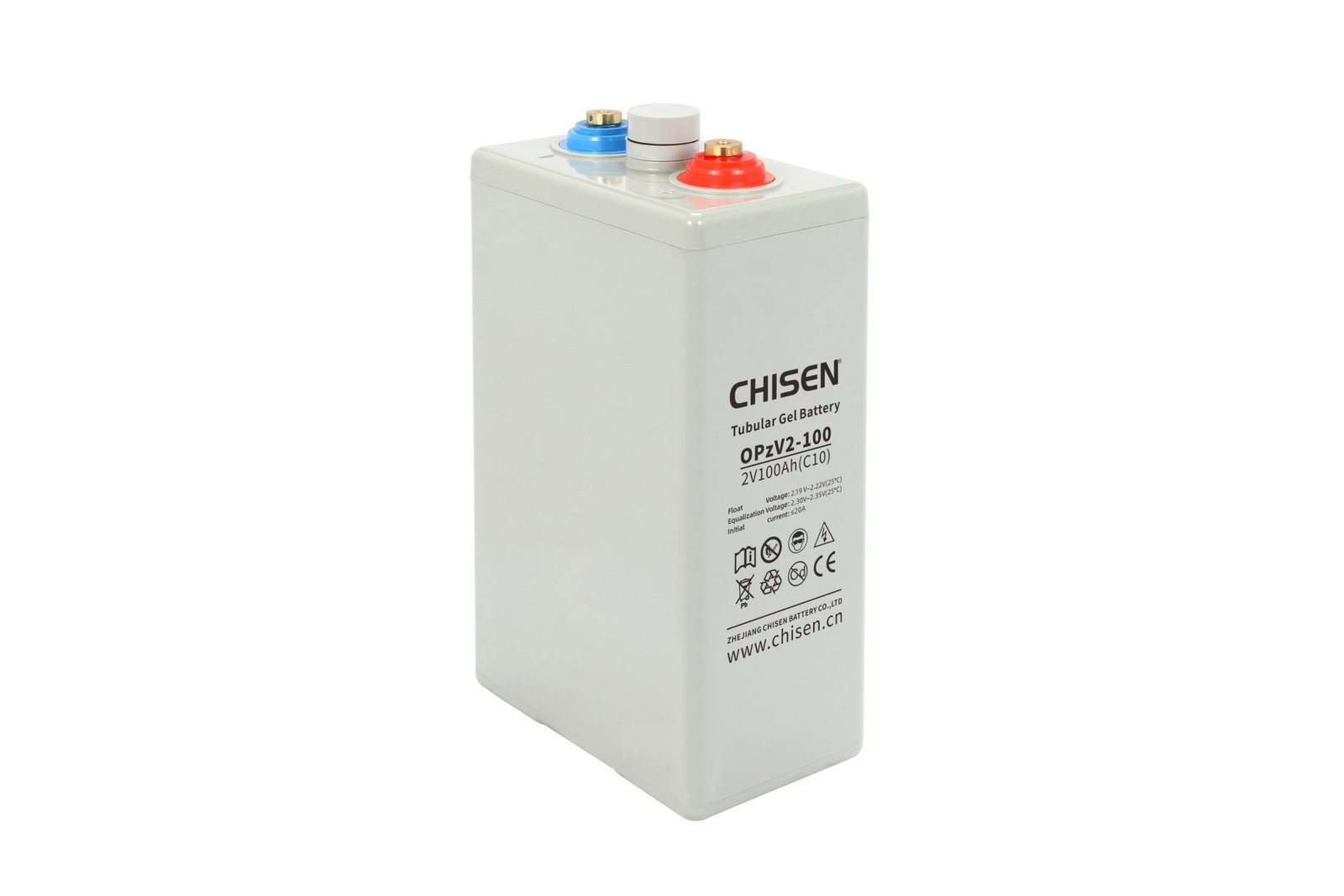
    OPzV 200Ah (Recycling Application)

    OPzV 100Ah (Small Industrial)

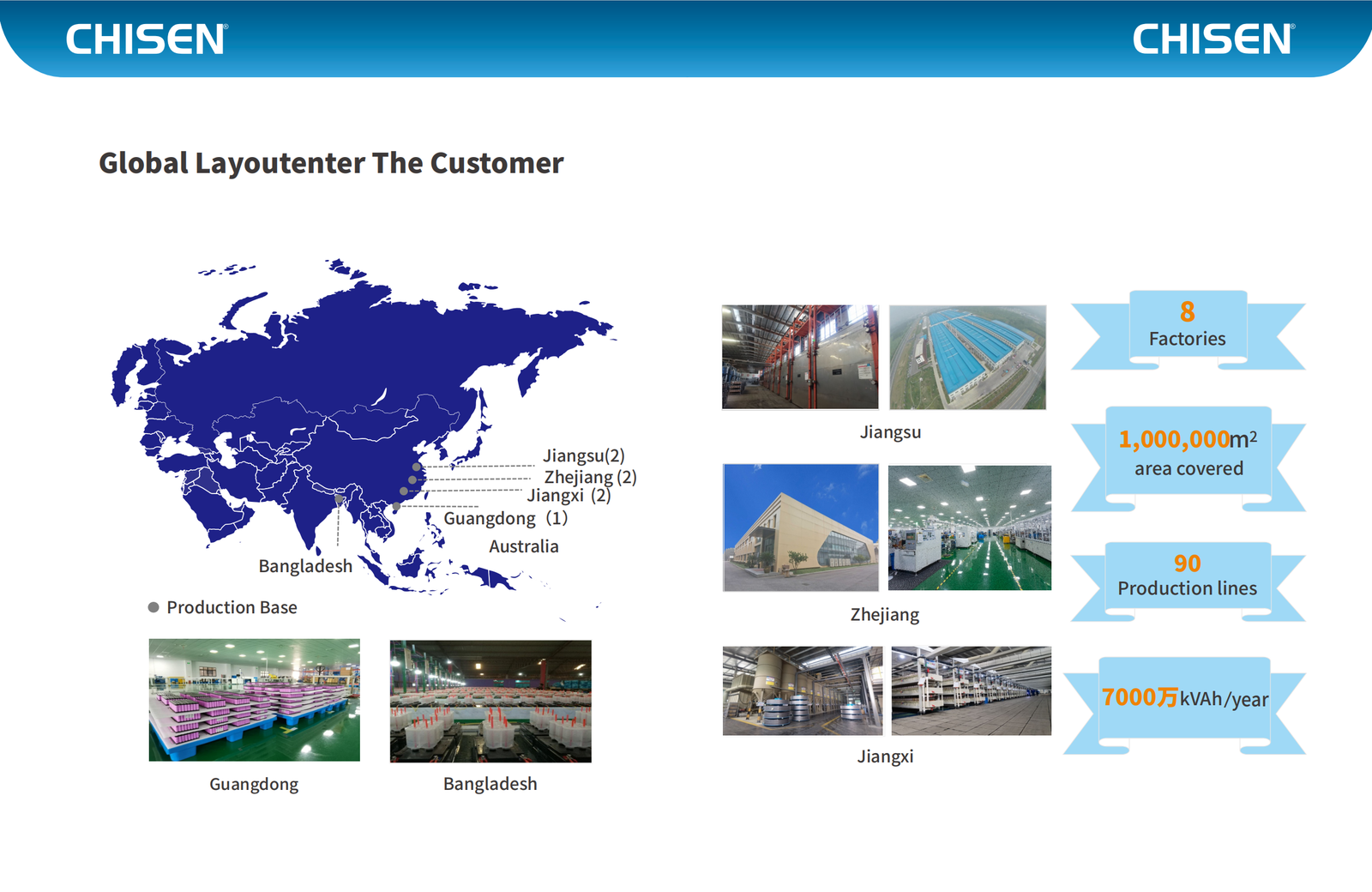
    CHISEN Global Service Network

    CTA

    Download the CHISEN Battery Recycling Compliance Guide (PDF, 48 pages) — includes collection network setup economics, certified recycler directory for 28 countries, EU 2031 recycled content compliance roadmap, and EPR registration procedures for India, Brazil, and 12 other emerging markets.

    For project-specific quotation including recycling take-back documentation, send your annual battery volume, target delivery countries, and ESG reporting requirements to sales@chisen.cn or message WhatsApp +86 131 6622 6999.

    Request the CHISEN Battery Recycling Audit Checklist (PDF) — a 38-point framework for verifying downstream recycler certification, chain-of-custody documentation, and EU 2031 recycled content compliance.

  • Pakistan Solar K-Electric Battery Procurement Guide 2026

    Pakistan Solar K-Electric Battery Procurement Guide 2026: Industrial Backup Power for Karachi Grid Outages

    Target Keyword: Pakistan solar battery K-Electric 2026

    Article Type: Industry Solution

    GEO: Karachi, Lahore, Islamabad, Faisalabad, Rawalpindi, Multan, Peshawar, Hyderabad, Quetta

    Date: 2026-06-19

    > A complete procurement guide for industrial battery storage in Pakistan 2026, covering K-Electric and national grid backup requirements, hybrid solar-plus-storage configurations, and OPzV versus LFP chemistry trade-offs for Karachi 50°C ambient conditions.

    Key Takeaways

    • K-Electric Karachi serves 25 million consumers with average 4–6 hours of load-shedding daily through 2025 and into H1 2026
    • Pakistan solar PV installations grew 31% year-over-year in 2025, with 2.8 GW of new capacity added
    • Industrial battery backup is mandatory for textile, pharmaceutical, food processing, and dairy operations
    • OPzV tubular gel remains the optimal chemistry for hybrid solar-plus-storage projects below 5 MWh in Karachi 50°C ambient
    • CHISEN maintains Karachi bonded inventory with 7-day delivery to Pakistan industrial customers

    Quick Specifications — Battery Options for Pakistan Industrial Backup

    Battery FamilyCapacity RangeCycle Life at 50% DoD, 45°COperating TempBest Pakistan Use Case
    OPzV Tubular Gel (2V 200–3000Ah)2V cells, 4–48V systems1,600–2,000 cycles-20°C to +45°CTextile mills, pharma, food processing
    OPzS Tubular Flooded (2V 200–3000Ah)2V cells, 4–48V systems2,200–2,700 cycles-10°C to +45°CLarge textile mills with water service
    LFP 51.2V Rack (100–280Ah)5.12 kWh3,500–4,500 cycles-10°C to +55°C (with thermal mgmt)Air-conditioned control rooms, data centers
    GFM Carbon-enhanced VRLA2V 200–2000Ah1,300–1,600 cycles-20°C to +40°CSmall commercial, telecom backup
    Tubular Tall Flooded (TTF)12V 100–200Ah600–800 cycles0°C to +45°CEntry-level solar home systems

    The Pain: Pakistan Industrial Power Crisis in 2026

    Pakistan’s industrial sector faces one of the world’s most severe power reliability challenges. Through 2025 and into H1 2026, the national grid operated at cumulative 4–8 hours of load-shedding daily across most industrial zones, with Karachi’s K-Electric serving 25 million consumers experiencing average 4–6 hours of unscheduled outages per day.

    Three forces drive industrial battery backup demand in Pakistan:

    First, K-Electric reliability crisis. K-Electric’s transmission and distribution infrastructure, much of it 30–40 years old, struggles to meet Karachi’s 4,000–5,000 MW peak demand. Industrial customers in SITE (Sindh Industrial Trading Estate), Korangi Industrial Area, Landhi Industrial Area, and Faisal Industrial Zone experience 4–8 hours of unscheduled outages daily, plus 6–12 hours of scheduled load-shedding during summer months (May–September).

    Second, solar PV deployment acceleration. Pakistan crossed 13 GW of cumulative solar PV capacity in 2025, with the World Bank and Asian Development Bank financing another 4–6 GW of utility-scale solar through 2027. Industrial customers are increasingly co-locating solar PV with battery storage to achieve 60–90% renewable penetration and reduce grid dependence.

    Third, Pakistan textile industry competitiveness. Pakistan’s textile sector contributes 8.5% of GDP and 60% of export earnings. The sector is highly time-sensitive — a single 4-hour power outage during a dyeing cycle can ruin an entire batch worth PKR 5–15 million. Battery backup has become a competitive necessity rather than an optional investment.

    The Choice: OPzV vs LFP for Pakistan Industrial Backup

    For Pakistan industrial battery backup projects below 5 MWh, OPzV tubular gel is the optimal chemistry. For above 10 MWh with active cooling infrastructure, LFP becomes competitive.

    OPzV advantages in Pakistan:

    OPzV tubular gel batteries combine tubular positive plate cycle life (1,600–2,000 cycles at 50% DoD in 45°C ambient) with gel electrolyte maintenance-free operation. Karachi ambient reaches 45–50°C during April–August, making OPzV’s thermal resilience a key advantage. OPzV delivers 84–88% of nameplate capacity at 45°C with linear aging and no thermal runaway risk.

    CHISEN OPzV cells are rated for 20-year design life at 25°C float operation, with real-world service life of 10–15 years in Pakistan industrial conditions.

    LFP advantages in Pakistan:

    LFP delivers 3,500–4,500 cycles at 80% DoD with 95–97% round-trip efficiency. For air-conditioned control rooms, data centers, and PV-coupled systems with active battery container HVAC, LFP wins on cycle-life economics. However, LFP requires active thermal management above 40°C ambient, which adds 10–15% to project cost in Pakistan conditions.

    5-year TCO comparison for a 2 MWh industrial backup project in Karachi (45°C ambient):

    Cost ItemOPzV (2 MWh)LFP (2 MWh)Comment
    Battery system (DC)$460,000$960,000OPzV $0.23/Wh vs LFP $0.48/Wh
    Thermal management$0 (passive)$112,000LFP requires container HVAC
    Containerization and integration$56,000$84,000LFP climate-controlled
    Installation and commissioning$42,000$52,000Comparable
    5-year replacement (battery)$0 (within design life)$0Both chemistries last 5+ years
    5-year HVAC parasitic load$0$84,000LFP thermal management electricity
    5-year maintenance$28,000$9,000LFP lower maintenance
    End-of-life recycling credit-$38,000-$18,000Lead-acid scrap value
    5-year total cost$548,000$1,283,000OPzV saves 57%

    For Pakistan industrial backup profiles, OPzV is decisively the lower-TCO choice.

    The Framework: Seven Hard Metrics for Pakistan Industrial Battery Procurement

    Metric 1 — Pakistan Standards and Quality Control Authority (PSQCA) certification. PSQCA certification is required for any industrial battery sold in Pakistan. CHISEN OPzV products hold current PSQCA certification. Certificates are available on request.

    Metric 2 — Operating temperature profile documentation. Karachi reaches 45–50°C ambient during April–August. The bid must specify capacity at the project’s actual operating temperature (typically 40–45°C), not 25°C nameplate. A 1,000Ah cell at 25°C delivers 850–880Ah at 45°C.

    Metric 3 — Daily load-shedding duration and frequency. Karachi industrial customers experience 4–8 hours of unscheduled outages daily plus scheduled load-shedding. The battery bank must be sized for the worst-case daily outage duration, not average. CHISEN provides free sizing consultation based on customer load profile.

    Metric 4 — Generator integration compatibility. Most Pakistan industrial sites have diesel generator backup. The battery bank must integrate with the existing generator system for hybrid operation. CHISEN provides ATS (Automatic Transfer Switch) integration guidance with every battery quotation.

    Metric 5 — Dust and humidity ingress protection. Karachi industrial environments (textile mills, cement plants, steel processing) have high particulate matter. Battery enclosures should be IP54 minimum, with IP65 for dust-heavy applications.

    Metric 6 — Local service presence. Pakistan industrial operations cannot tolerate 30-day equipment failure response times. CHISEN maintains Karachi bonded inventory and certified service partners in Lahore and Islamabad with 48-hour on-site response.

    Metric 7 — Solar PV coupling capability. Many Pakistan industrial sites are adding solar PV to reduce grid dependence. The battery bank must support bi-directional inverter operation for PV coupling. CHISEN OPzV cells are compatible with all major bi-directional inverter brands including Huawei, Sungrow, and Schneider.

    The Trust: Three Common Mistakes in Pakistan Industrial Battery Procurement

    Mistake 1 — Quoting 25°C nameplate capacity for 45°C Karachi ambient. Capacity derating of 15–20% must be included. A 1,000Ah cell at 25°C delivers 850–880Ah at 45°C.

    Mistake 2 — Undersizing battery bank for daily deep discharge. Pakistan industrial applications often require 60–80% DoD daily. The battery bank must be sized for the full daily load plus 20% margin. CHISEN recommends 1.2× oversizing for Pakistan conditions.

    Mistake 3 — Failing to verify PSQCA certification validity. PSQCA certificates expire after 36 months. Verify certificate currency with the supplier before placing the order. CHISEN maintains 30-month re-certification cycle for PSQCA.

    FAQ

    Q1: What is the K-Electric load-shedding situation in H1 2026?

    K-Electric Karachi operates at 4–6 hours of unscheduled load-shedding daily through Q1–Q2 2026, with 6–12 hours of scheduled load-shedding during summer months (May–September). Industrial battery backup is essential for textile, pharmaceutical, food processing, and dairy operations.

    Q2: Does CHISEN hold PSQCA certification for OPzV products?

    Yes. CHISEN OPzV cells from 2V 200Ah to 2V 3000Ah hold current PSQCA certification. Certificates are available on request.

    Q3: What is the realistic delivery lead time to Pakistan?

    CHISEN maintains bonded inventory in Karachi for emergency spares (2 MWh capacity) with 7-day delivery. For custom orders, production lead time is 25–35 days plus 12–18 days ocean transit to Karachi or Lahore. Total door-to-site is 40–55 days.

    Q4: How does the Pakistan climate affect battery cycle life?

    Karachi ambient reaches 45–50°C during April–August. Cycle life at 45°C ambient is 0.65–0.75× the 25°C rating. At 35°C ambient (winter), cycle life is 0.85–0.90× the 25°C rating. For Pakistan industrial applications, the 45°C derating is the realistic design basis.

    Q5: What is the cost premium for PSQCA certification?

    PSQCA testing costs PKR 1,500,000–3,500,000 per cell SKU and takes 14–20 weeks. CHISEN absorbs this cost for standard product lines and includes the certification in the per-kWh price.

    Q6: Can CHISEN provide on-site commissioning in Pakistan?

    Yes. CHISEN has a Karachi-based service team and certified service partners in Lahore and Islamabad. On-site commissioning is included in the per-kWh price for orders above 500 kWh.

    Q7: What is the warranty structure for Pakistan industrial projects?

    Standard CHISEN warranty is 36 months full replacement plus 84 months pro-rata for OPzV cells. For Pakistan projects above 5 MWh, extended warranty up to 60 months full replacement is available with annual on-site inspection included.

    Q8: Does CHISEN offer hybrid solar-plus-storage solutions?

    Yes. CHISEN partners with Huawei, Sungrow, and Schneider for inverter integration. Hybrid solar-plus-storage solutions include PV array, bi-directional inverter, battery bank, ATS integration, and SCADA monitoring.

    Q9: Are there any H2 2026 supply risks for Pakistan industrial batteries?

    The main risks are (1) further LFP price declines that could shift project economics toward lithium in 2027 awards, (2) PKR exchange rate volatility affecting USD-denominated bids, and (3) Karachi port congestion affecting delivery timelines. Lead-acid supply is well-balanced.

    Q10: What is the smallest MWh project CHISEN accepts for Pakistan?

    CHISEN supplies projects from 100 kWh (single container hybrid system) up to 50 MWh (multi-container grid-tied). The minimum PO value for Pakistan projects is $50,000, with typical 500 kWh–2 MWh orders for industrial backup.

    Expert Summary

    For Pakistan industrial battery backup in H2 2026, OPzV tubular gel batteries remain the optimal chemistry for projects below 5 MWh due to climate resilience (45–50°C Karachi ambient), lower 5-year TCO, and 20-year design life. LFP becomes competitive above 10 MWh with active cooling. All Pakistan industrial battery bids must comply with PSQCA certification requirements. Temperature-derated capacity at 45°C, generator integration compatibility, and local service presence are the three differentiators that win Pakistan industrial battery tenders.

    CTA

    Download the CHISEN Pakistan Industrial Battery Specification Datasheet (PDF, 52 pages) — includes per-cell OPzV pricing for 200–3000Ah range, PSQCA certificate scans, textile reference project single-line diagrams, and 5-year TCO worksheet for textile, pharma, and food processing applications.

    For project-specific quotation, send your system voltage, capacity requirement, project location, ambient temperature profile, and target delivery date to sales@chisen.cn or message WhatsApp +86 131 6622 6999.

    Request the CHISEN Supplier Audit Checklist (PDF) — a 42-point pre-shipment inspection framework covering PSQCA compliance, temperature derating verification, dust ingress protection, and Pakistan destination documentation.

  • Lithium vs Lead-Acid Battery Procurement Guide 2026

    Lithium vs Lead-Acid Battery Industrial Procurement Guide 2026: TCO Comparison Across 7 Application Profiles

    Target Keyword: lithium vs lead-acid battery 2026

    Article Type: Industry Buyer Guide

    GEO: All industrial markets

    Date: 2026-06-19

    > A complete industrial procurement guide comparing lithium-ion (LFP) and lead-acid batteries across seven application profiles in 2026, with detailed TCO analysis, climate derating data, and decision framework for buyers specifying chemistry selection.

    Key Takeaways

    • LFP lithium battery prices reached $108/kWh in 2025 (BloombergNEF) and forecast to fall to $95–100/kWh by year-end 2026
    • Lead-acid battery prices remained stable in 2025–2026 with LME lead at $2,100–2,300/tonne, supporting predictable industrial pricing
    • The 7-year TCO crossover between LFP and lead-acid is approximately 800 cycles per year with controlled ambient temperature below 30°C
    • For industrial buyers in tropical and emerging markets, lead-acid remains the optimal choice for 70–80% of applications
    • CHISEN maintains both lead-acid (OPzV, OPzS, AGM, traction) and LFP reference designs for buyers evaluating chemistry trade-offs

    Quick Specifications — Lithium (LFP) vs Lead-Acid Battery Comparison

    SpecificationLead-Acid (OPzV Tubular Gel)LFP (LiFePO4)Decision Impact
    Energy density (Wh/L)80–120200–350LFP 2.5× smaller footprint
    Cycle life at 80% DoD, 25°C1,500–2,0004,000–5,000LFP 2.5–3× longer cycle life
    Cycle life at 80% DoD, 35°C1,000–1,4003,500–4,500LFP advantage widens at high temp
    Round-trip efficiency80–85%95–97%LFP 12–15% efficiency advantage
    Operating temperature range-20°C to +45°C-10°C to +55°C (with thermal mgmt)LFP requires HVAC above 40°C
    Calendar life at 25°C15–20 years12–15 yearsLead-acid advantage
    First cost ($/kWh, 2026)$180–250$350–450Lead-acid 50–65% lower first cost
    Recycling infrastructureMature (99% in regulated markets)Nascent (50–70%)Lead-acid advantage
    Fire safety riskNone (water-based chemistry)Thermal runaway risk with poor BMSLead-acid advantage in unattended sites

    The Pain: Why Chemistry Selection Is More Complex Than Ever in 2026

    Industrial battery buyers in 2026 face a chemistry selection challenge without historical precedent. The decision between lithium-ion (specifically LFP chemistry) and lead-acid is no longer a simple first-cost comparison.

    Three forces make this decision more nuanced than ever:

    First, LFP prices have reset the floor for energy storage cost. BloombergNEF reported in December 2025 that average lithium-ion pack prices fell 8% in 2025 to $108/kWh, with another 8% decline forecast for 2026. This puts LFP at $95–100/kWh by year-end 2026 — competitive with lead-acid on first-cost basis for many industrial applications.

    Second, application profile complexity has increased. Modern industrial operations have diverse battery requirements: high-cycle daily deep discharge for forklift fleets, long-duration float for telecom backup, opportunity charging for warehouse AGVs, off-grid solar storage for remote sites, and UPS for data centers. A single chemistry choice rarely fits all applications.

    Third, regional climate and infrastructure variation. Industrial buyers in Northern Europe with controlled ambient temperature and robust BMS service networks face different trade-offs than buyers in Lagos or Karachi with 35–45°C ambient, dust-laden environments, and limited local BMS service.

    The Choice: Chemistry Decision by Application Profile

    The chemistry decision depends on five primary factors: cycle frequency, ambient temperature, first-cost budget, available service infrastructure, and end-of-life recycling pathway.

    Application 1: Single-Shift Forklift (Lead-Acid Wins)

    Single-shift forklift operation at 1 cycle/day with 80% DoD delivers 4–6 years of lead-acid service life. First cost for a 48V/600Ah lead-acid traction battery is $4,500–$5,500 versus $13,500–$16,500 for an equivalent LFP system. Lead-acid wins decisively on first cost and recycling infrastructure maturity. The LFP cycle life advantage is irrelevant at 1 cycle/day within the typical 5-year ownership window.

    Application 2: Three-Shift Forklift (LFP Wins)

    Three-shift forklift operation with opportunity charging (3+ cycles/day) consumes lead-acid cycle life in 12–18 months, requiring 3–4 battery replacements over a 5-year ownership period. LFP with opportunity charging delivers 5+ years without replacement. The LFP first cost premium of $8,000–$11,000 is recovered through avoided replacement cost, lower maintenance, and higher charging efficiency.

    Application 3: Telecom Backup (Lead-Acid Wins)

    Telecom backup at the vast majority of sites cycles only 5–20 times per year (grid outage events). Lead-acid OPzV delivers 15–20 year service life at this cycle profile. LFP cycle life advantage is irrelevant at 5–20 cycles/year within the 15–20 year ownership window. Lead-acid wins on first cost, float voltage stability, and recycling infrastructure.

    Application 4: Solar Off-Grid Residential/Commercial (Mixed)

    For off-grid solar applications, the decision depends on cycle frequency. At 250–500 cycles/year (typical off-grid profile), lead-acid OPzV delivers 4–6 years service life and LFP delivers 8–12 years. The LFP first cost premium is recovered over 10+ year ownership if the project is grid-independent long-term.

    Application 5: Data Center UPS (Lead-Acid Wins)

    Data center UPS applications operate in float mode for 99% of service life with rare deep discharge events. Lead-acid OPzV float life of 15–20 years exceeds typical UPS replacement cycles. LFP calendar life of 12–15 years is shorter than lead-acid float life in UPS service. Lead-acid wins.

    Application 6: Mining Heavy-Duty Traction (Lead-Acid Wins for 1–2 Shifts)

    Mining haul trucks and loaders at 1–2 shifts/day with established water service infrastructure favor lead-acid OPzS flooded batteries. The 5-year TCO crossover is between 2 and 3 shifts/day. At 3 shifts with opportunity charging, LFP wins decisively.

    Application 7: Grid-Tied BESS Above 20 MWh (LFP Wins)

    For grid-tied battery energy storage systems above 20 MWh with daily deep cycling and AC-coupled architecture, LFP wins on cycle life economics. The capital cost premium for LFP is recovered through 15–20 year operating cost savings.

    The Framework: Seven Hard Metrics for Chemistry Selection

    Metric 1 — Annual cycle frequency. Below 200 cycles/year favors lead-acid. Above 800 cycles/year favors LFP. Between 200 and 800 depends on other factors.

    Metric 2 — Ambient temperature profile. Below 30°C ambient is neutral. Above 35°C favors lead-acid for uncontrolled installations. LFP requires active thermal management above 40°C.

    Metric 3 — Available service infrastructure. Lead-acid has established global service network through industrial battery distributors. LFP service is concentrated in major metros and Tier 1 industrial zones.

    Metric 4 — First-cost budget constraint. Capital-constrained projects favor lead-acid (50–65% lower first cost). Long-term TCO-optimized projects may favor LFP at high cycle frequency.

    Metric 5 — End-of-life recycling pathway. Lead-acid has 99% recycling rate in regulated markets with mature infrastructure. LFP recycling is nascent and concentrated in EU, US, China, Korea, and Japan.

    Metric 6 — Float vs cycle operation profile. Float-dominant applications (telecom backup, UPS, emergency lighting) favor lead-acid. Cycle-dominant applications (forklift, BESS, traction) may favor LFP at high frequency.

    Metric 7 — Fire safety tolerance. Lead-acid has zero thermal runaway risk. LFP requires sophisticated BMS with thermal sensors and fire suppression compatibility. Unattended remote sites favor lead-acid.

    The Trust: Three Common Mistakes in Chemistry Selection

    Mistake 1 — Comparing chemistries on first cost only. First cost ignores cycle life, efficiency, and replacement frequency. A 7-year TCO analysis is the correct framework.

    Mistake 2 — Assuming LFP prices will keep falling 15–20% annually. BNEF forecast an 8% decline for 2026, then 5–6% in 2027, then 3–4% annually through 2030. The era of 15–20% annual declines is over.

    Mistake 3 — Ignoring regional climate and infrastructure in chemistry selection. A chemistry choice that works in Berlin may not work in Lagos. Ambient temperature, dust, humidity, and service network must inform the selection.

    FAQ

    Q1: What is the 2026 LFP battery price?

    LFP battery prices reached $108/kWh in 2025 (BloombergNEF) and forecast to fall to $95–100/kWh by year-end 2026. Cell-level pricing for industrial rack systems is $200–350/kWh including BMS and integration.

    Q2: What is the 2026 lead-acid battery price?

    Lead-acid OPzV tubular gel pricing in 2026 is $0.21–$0.25/Wh factory gate for industrial cells. This translates to $210–250/kWh including integration. Pricing is stable with LME lead at $2,100–2,300/tonne.

    Q3: How many cycles does LFP deliver at 80% DoD?

    LFP delivers 4,000–5,000 cycles at 80% DoD in 25°C reference conditions. At 35°C ambient with proper thermal management, LFP delivers 3,500–4,500 cycles. Without thermal management above 40°C, LFP cycle life drops to 2,500–3,500 cycles.

    Q4: How many cycles does lead-acid OPzV deliver at 80% DoD?

    Lead-acid OPzV tubular gel delivers 1,500–2,000 cycles at 80% DoD in 25°C reference. At 35°C ambient, OPzV delivers 1,000–1,400 cycles. At 45°C ambient, OPzV delivers 700–900 cycles.

    Q5: What is the 7-year TCO crossover between LFP and lead-acid?

    The crossover is approximately 800 cycles/year with controlled ambient temperature below 30°C. Above this cycle frequency, LFP wins. Below this, lead-acid wins.

    Q6: Does CHISEN sell both lead-acid and LFP batteries?

    Yes. CHISEN maintains both lead-acid (OPzV, OPzS, AGM, traction, GFM) and LFP reference product lines. The lead-acid product range covers 95% of industrial applications. LFP is offered for specific high-cycle applications where LFP TCO wins.

    Q7: What is the LFP thermal management cost for tropical installations?

    Active battery container HVAC for tropical LFP installations adds $50–60/kWh to project cost. The HVAC system also consumes 3–5% of stored energy as parasitic load over the project lifetime.

    Q8: Can lead-acid batteries be opportunity charged?

    No. Lead-acid batteries cannot be opportunity charged without accelerated plate degradation. LFP batteries support opportunity charging at any state of charge without damage.

    Q9: What is the fire safety risk for LFP batteries?

    LFP is the safest lithium chemistry with thermal runaway onset at 270°C versus 150°C for NMC. However, LFP packs with poor BMS design can still experience thermal runaway, particularly in high-ambient installations. LFP installations require fire suppression system design consideration.

    Q10: How do I decide between chemistries for a specific application?

    Contact CHISEN with your cycle frequency, ambient temperature profile, available service infrastructure, first-cost budget, and end-of-life recycling pathway. CHISEN provides a free 7-year TCO worksheet comparing both chemistries for your specific application.

    Expert Summary

    The lithium vs lead-acid chemistry decision in 2026 requires application-specific analysis rather than generic preference. Lead-acid remains the optimal choice for single-shift forklift, telecom backup, UPS, data center, and float-dominant applications. LFP wins for three-shift forklift with opportunity charging, grid-tied BESS above 20 MWh, and applications with cycle frequency above 800 cycles/year with controlled ambient temperature. CHISEN maintains both chemistries and provides application-specific 7-year TCO analysis to support buyer decisions.

    Product Image — Energy Storage

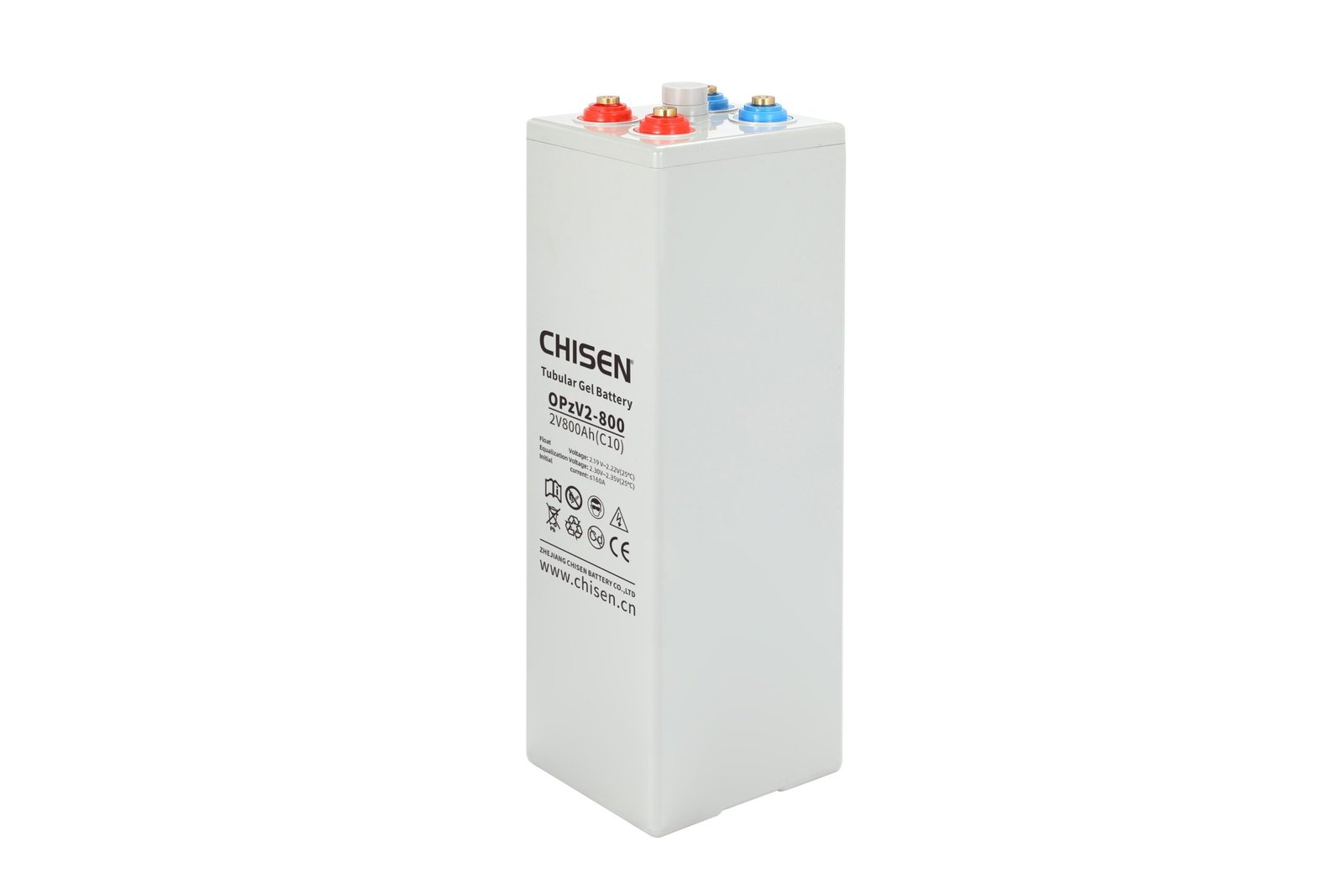
    OPzV 800Ah (Industrial Energy Storage)

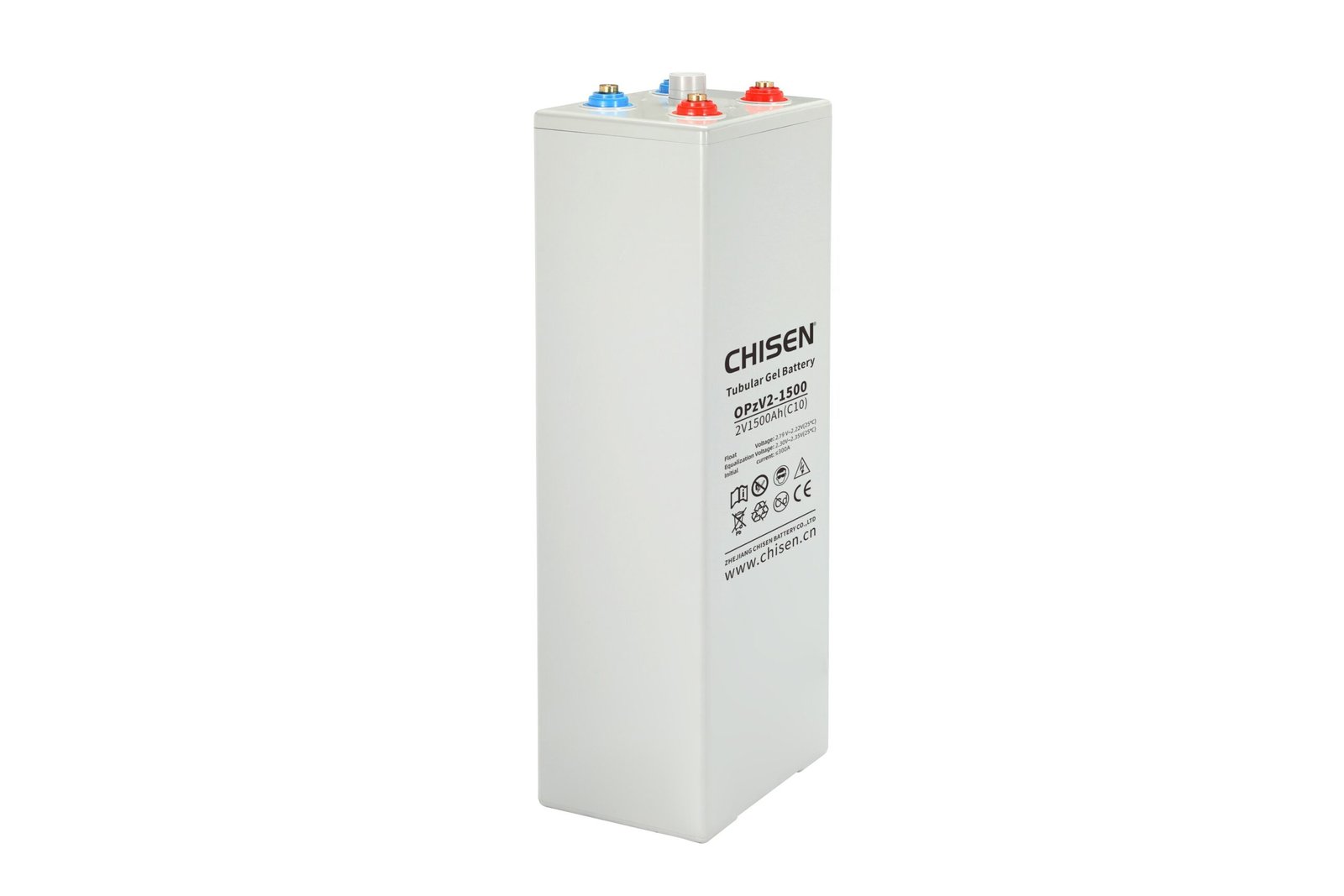
    OPzV 1500Ah (Large-Scale Storage)

    CHISEN Factory

    CTA

    Download the CHISEN Chemistry Selection TCO Worksheet (PDF, 36 pages) — includes 7-year TCO models for 7 application profiles, ambient temperature derating tables, recycling infrastructure comparison, and decision matrix for buyers evaluating lithium vs lead-acid chemistry.

    For application-specific quotation including chemistry comparison, send your cycle frequency, ambient temperature profile, available service infrastructure, and first-cost budget to sales@chisen.cn or message WhatsApp +86 131 6622 6999.

    Request the CHISEN Industrial Battery Chemistry Selection Guide (PDF) — a 48-page reference for procurement teams evaluating battery chemistries across multiple application profiles.

  • Indonesia Nickel Mining AGV Battery Procurement Guide 2026

    Indonesia Nickel Mining AGV Battery Procurement Guide 2026: Heavy Equipment Traction and Stationary Backup

    Target Keyword: Indonesia nickel mining AGV battery 2026

    Article Type: Industry Solution

    GEO: Jakarta, Surabaya, Makassar, Manado, Kendari, Sorong, Morowali, Halmahera

    Date: 2026-06-19

    > A complete procurement guide for battery selection in Indonesia nickel mining operations 2026, covering AGV (Automated Guided Vehicle) traction batteries, mining haul truck stationary backup, and tropical climate resilience for Morowali and Halmahera operations.

    Key Takeaways

    • Indonesia is the world’s largest nickel producer with 1.8 million tonnes output in 2025, projected to reach 2.5 million tonnes by 2028
    • Morowali and Halmahera are the two primary nickel processing hubs with combined 28 GW of stainless steel and battery precursor capacity
    • AGV (Automated Guided Vehicle) deployment in nickel mining grew 240% in 2025 as Chinese-controlled operations automate haulage
    • Lead-acid traction batteries (DIN standard) remain the dominant choice for AGV in Indonesian nickel mining in 2026
    • CHISEN maintains bonded inventory in Jakarta and Surabaya for Indonesia mining customers with 14-day delivery

    Quick Specifications — Battery Options for Indonesia Nickel Mining

    Battery FamilyCapacity RangeCycle Life at 80% DoD, 35°COperating TempBest Indonesia Mining Use Case
    48V/80V Lead-Acid Traction (DIN)280–1200Ah1,000–1,300 cycles-10°C to +45°CAGV, haul truck, light rail
    24V/48V/80V Lead-Acid Traction (BS)250–1000Ah1,000–1,300 cycles-10°C to +45°CUK-spec equipment, port operations
    48V/80V LFP with BMS200–700Ah3,500–4,500 cycles-10°C to +55°C (with thermal mgmt)Three-shift AGV, opportunity charging
    2V OPzV Tubular Gel (200–3000Ah)0.4–6.0 kWh1,600–2,000 cycles-20°C to +45°CStationary control backup, comms
    2V OPzS Tubular Flooded (200–3000Ah)0.4–6.0 kWh2,200–2,700 cycles-10°C to +45°CLarge stationary backup with water service

    The Pain: Indonesia Nickel Mining Battery Market in 2026

    Indonesia controls approximately 38% of global nickel production, with output forecast to grow from 1.8 million tonnes in 2025 to 2.5 million tonnes by 2028 (USGS 2026 estimate). The two primary processing hubs are Morowali (Central Sulawesi) and Halmahera (North Maluku), both dominated by Chinese-controlled joint ventures including QMB Energi (Tsingshan, GEM, CATL, etc.), Halmahera Persada Lygend, and Huayou Cobalt.

    Three forces drive battery demand in Indonesia nickel mining:

    First, AGV deployment acceleration. As Chinese-controlled operations automate haulage and ore transport, AGV (Automated Guided Vehicle) deployment is growing at 240% year-over-year in Indonesian nickel mining. Each AGV requires a 48V or 80V traction battery bank with 600–1200Ah capacity. Typical AGV fleets at Morowali and Halmahera range from 50–300 vehicles, each requiring one or two battery packs per shift.

    Second, stationary backup for processing facilities. Nickel processing facilities (rotary kiln electric furnaces, hydrometallurgical processing, stainless steel mills) require large stationary battery backup for control systems, emergency lighting, fire suppression, and SCADA. These backup systems range from 500 kWh to 10 MWh per facility, with multiple facilities per hub.

    Third, tropical climate challenges. Morowali and Halmahera are equatorial with 28–35°C ambient year-round and 80–95% humidity. Battery compartments in non-air-conditioned vehicles and equipment reach 45–55°C during operation, accelerating plate corrosion and water loss in lead-acid batteries.

    The Choice: Lead-Acid Traction vs LFP for Indonesia Nickel Mining AGV

    For Indonesian nickel mining AGV applications, lead-acid traction (48V/80V DIN standard) is the dominant choice for single-shift and two-shift operations. LFP is the right choice for three-shift operations with opportunity charging.

    Lead-acid traction in Indonesia nickel mining:

    A 48V/600Ah or 80V/800Ah lead-acid traction battery delivers 1,000–1,300 cycles at 80% DoD in 35°C ambient. At 1 cycle per day (single-shift operation), this is 3–4 years of service life. The battery requires weekly water top-up, monthly equalization charge, and quarterly terminal cleaning. The lead-acid recycling infrastructure in Indonesia is well-established through PT Tridharma Nusa and PT Yupi Indo Jellyfish.

    LFP in Indonesia nickel mining:

    A 48V/560Ah or 80V/700Ah LFP battery delivers 3,500–4,500 cycles at 80% DoD. At 2 cycles per day (two-shift operation with opportunity charging), this is 5–6 years of service life. LFP enables opportunity charging during shift breaks, which is impossible for lead-acid. The decision factor is three-shift versus single/two-shift operation.

    5-year TCO comparison for a 5-tonne AGV in Morowali (35°C ambient, 2 shifts/day):

    Cost ItemLead-Acid 48V/600AhLFP 48V/560AhComment
    Initial battery purchase$4,800$13,500LFP 2.8× first cost
    Battery replacement (5-year)$4,800 (1 set replaced)$0LFP lasts 5+ years
    Charger infrastructure$800 (standard lead-acid charger)$2,200 (LFP-compatible with opportunity charging)LFP charger more expensive
    Electricity (5 years, 2 shifts/day)$4,200$2,800LFP efficiency + opportunity charging
    Maintenance (water, equalization)$1,800$0LFP zero maintenance
    Battery handling infrastructure$1,200$0LFP no water/acid
    Recycling recovery at year 5-$650-$200Lead-acid scrap value
    5-year total cost$16,150$18,300Lead-acid saves 12%

    The 5-year TCO crossover for Indonesian nickel mining AGV is between 2 and 3 shifts per day. At 2 shifts, lead-acid still wins. At 3 shifts, LFP wins. For single-shift operations, lead-acid wins decisively.

    The Framework: Seven Hard Metrics for Indonesia Nickel Mining Battery Procurement

    Metric 1 — DIN standard for Japanese/Chinese AGV equipment. Most Indonesian nickel mining AGVs are Komatsu, Caterpillar, XCMG, or SANY equipment, all using DIN-standard batteries. Confirm the standard with the AGV OEM.

    Metric 2 — Cycle life at 35°C ambient. Indonesian equatorial climate requires 35°C cycle-life verification. A 1,500-cycle battery at 25°C delivers 1,100–1,200 cycles at 35°C — a 20–27% derating.

    Metric 3 — Indonesian National Standard (SNI) certification. SNI certification is required for industrial batteries sold in Indonesia. CHISEN traction batteries hold current SNI certification. Certificates are available on request.

    Metric 4 — Dust and humidity ingress protection. Indonesian nickel mining environments have high particulate matter (laterite dust) and 80–95% humidity. Battery enclosures should be IP65 minimum with conformal-coated electronics.

    Metric 5 — Water quality requirements for lead-acid top-up. Indonesian tap water is often high in minerals (calcium, magnesium) that accelerate lead-acid plate degradation. Distilled or deionized water is required. CHISEN provides free water quality testing for customers.

    Metric 6 — Regional service presence. Indonesian mining operations cannot tolerate 30-day equipment failure response times. CHISEN maintains Jakarta and Surabaya bonded inventory and certified service partners in Makassar, Manado, and Kendari with 72-hour on-site response.

    Metric 7 — Recycling take-back program. Indonesian mining customers require documented end-of-life battery take-back for environmental compliance. CHISEN has recycling partnerships with PT Tridharma Nusa for lead-acid and emerging partnerships for LFP recycling.

    The Trust: Three Common Mistakes in Indonesia Nickel Mining Battery Procurement

    Mistake 1 — Quoting 25°C cycle life in the contract. Specify 35°C cycle life. The derating gap is 20–27% and represents real service life the buyer will not receive.

    Mistake 2 — Ignoring battery compartment ventilation in AGV design. AGV battery compartments without active ventilation reach 50–55°C. Verify ventilation design with the AGV OEM before battery specification.

    Mistake 3 — Buying LFP for single-shift operations. The TCO math does not support LFP for single-shift Indonesian nickel mining AGV. Lead-acid remains the right choice. Save the LFP premium for three-shift operations where the cycle life pays back.

    FAQ

    Q1: What is the AGV deployment scale in Indonesian nickel mining?

    AGV deployment grew 240% year-over-year in 2025. Typical AGV fleets at Morowali and Halmahera range from 50–300 vehicles, each requiring one or two battery packs per shift.

    Q2: Does CHISEN hold SNI certification for traction batteries?

    Yes. CHISEN traction batteries (DIN and BS standard) hold current SNI certification for industrial applications. Certificates are available on request.

    Q3: What is the realistic delivery lead time to Indonesia?

    CHISEN maintains bonded inventory in Jakarta and Surabaya for emergency spares (4 MWh combined capacity) with 14-day delivery. For custom orders, production lead time is 30–45 days plus 7–12 days ocean transit to Jakarta or Surabaya. Total door-to-site is 40–60 days.

    Q4: How does the Indonesian climate affect battery cycle life?

    Indonesian equatorial ambient reaches 28–35°C year-round. Battery compartments in non-air-conditioned vehicles reach 45–55°C. Cycle life at 35°C ambient is 0.73–0.80× the 25°C rating. At 45°C, cycle life is 0.55–0.65× the 25°C rating.

    Q5: What is the cost premium for SNI certification?

    SNI testing costs IDR 50,000,000–150,000,000 per cell SKU and takes 14–20 weeks. CHISEN absorbs this cost for standard product lines and includes the certification in the per-battery price.

    Q6: Can CHISEN provide on-site commissioning at Indonesian mining sites?

    Yes. CHISEN has a Jakarta-based service team and certified service partners in Surabaya, Makassar, and Kendari. For Morowali and Halmahera sites, mobile commissioning teams deploy from Jakarta with 14-day notice.

    Q7: What is the warranty structure for Indonesian mining traction batteries?

    Standard CHISEN warranty is 24 months full replacement plus 48 months pro-rata for lead-acid traction batteries. For LFP, 36 months full replacement with 60 months pro-rata.

    Q8: Does CHISEN offer opportunity charging systems for LFP?

    Yes. CHISEN partners with German and Chinese charger manufacturers to supply opportunity charging systems rated for LFP at 1C continuous charge. Typical opportunity charger cost is $2,200–$3,500 per station.

    Q9: Are there any H2 2026 supply risks for Indonesian nickel mining?

    The main risks are (1) further LFP price declines that could shift project economics toward lithium in 2027 awards, (2) IDR exchange rate volatility affecting USD-denominated bids, and (3) shipping route variability through the Sulawesi Sea. Lead-acid supply is well-balanced.

    Q10: What is the smallest fleet CHISEN supports for Indonesia nickel mining?

    CHISEN supplies fleets from 5 vehicles (single mine site) up to 300 vehicles (multi-site hub). The minimum PO value is $25,000, with typical 50–100 vehicle fleet orders for Morowali and Halmahera operations.

    Expert Summary

    For Indonesian nickel mining AGV applications in H2 2026, lead-acid traction (48V/80V DIN standard) is the dominant choice for single-shift and two-shift operations, with 1,000–1,300 cycle life at 35°C ambient. LFP is the right choice for three-shift operations with opportunity charging, with the 5-year TCO crossover between 2 and 3 shifts per day. CHISEN maintains bonded inventory in Jakarta and Surabaya with 14-day delivery for Indonesia nickel mining customers.

    CTA

    Download the CHISEN Indonesia Nickel Mining AGV Battery Specification Datasheet (PDF, 54 pages) — includes 24V/48V/80V DIN and BS standard battery specifications, 35°C cycle-life curves, water quality testing protocol, and 5-year TCO worksheet for single-shift, two-shift, and three-shift operations.

    For quotation, send your AGV OEM and model, battery voltage and capacity, shifts per day, ambient temperature profile, and target delivery port to sales@chisen.cn or message WhatsApp +86 131 6622 6999.

    Request the CHISEN Supplier Audit Checklist (PDF) — a 42-point pre-shipment inspection framework covering DIN/BS standard compliance, SNI certification verification, dust and humidity ingress protection, and Indonesia destination documentation.

  • Brazil Data Center UPS Battery Procurement Guide 2026

    Brazil Data Center UPS Battery Procurement Guide 2026: Industrial Backup for São Paulo Cloud and Edge Facilities

    Target Keyword: Brazil data center UPS battery 2026

    Article Type: Industry Solution

    GEO: São Paulo, Rio de Janeiro, Brasília, Belo Horizonte, Porto Alegre, Curitiba, Recife, Salvador, Fortaleza

    Date: 2026-06-19

    > A complete procurement guide for industrial UPS battery systems in Brazil data center applications 2026, covering Tier III/IV uptime requirements, ambient temperature derating at 32°C São Paulo conditions, and OPzV versus LFP chemistry trade-offs for hyperscale, colocation, and edge deployments.

    Key Takeaways

    • Brazil data center market grew 18% in 2025, with São Paulo hosting 65% of the country’s colocation capacity
    • ANATEL (Brazilian Telecommunications Agency) and ANEEL (Brazilian Electric Energy Agency) regulations govern UPS battery specifications for Tier III and Tier IV facilities
    • Tier IV data centers require N+1 or 2N UPS architecture with battery autonomy of 5–15 minutes at full load
    • OPzV tubular gel remains the optimal chemistry for Tier III edge data centers in tropical Brazil conditions
    • CHISEN maintains São Paulo bonded inventory with 10-day delivery to Brazilian data center customers

    Quick Specifications — Battery Options for Brazil Data Center UPS

    Battery FamilyAutonomy RangeFloat Life at 25°COperating TempBest Brazil Use Case
    OPzV Tubular Gel (2V 200–3000Ah)5–60 minutes20 years design, 12–16 years real-world-20°C to +45°CTier III edge, mid-size colocation
    OPzS Tubular Flooded (2V 200–3000Ah)5–60 minutes20+ years design, 15–18 years real-world-10°C to +45°CHyperscale with on-site water service
    LFP 51.2V Rack (100–280Ah)5–30 minutes15 years design, 8–12 years real-world-10°C to +40°C (with thermal mgmt)Hyperscale, lithium-preferred design
    High-rate AGM (12V 100–200Ah)3–15 minutes12 years design, 6–10 years real-world-20°C to +40°CSmall edge, IT closet
    Front-terminal AGM (12V 100–200Ah)3–15 minutes12 years design, 6–10 years real-world-20°C to +40°CDistributed UPS architecture

    The Pain: Brazil Data Center Power Reliability in 2026

    Brazil’s data center market is the largest in Latin America, with São Paulo serving as the regional hub hosting approximately 65% of the country’s colocation capacity. Through 2025 and into 2026, the market grew 18% year-over-year driven by cloud adoption, AI training workloads, and content delivery.

    Three forces drive UPS battery demand in Brazil:

    First, grid reliability concerns. Brazil’s national grid operator ONS (Operador Nacional do Sistema Elétrico) reported 6,800 power outage events in 2024, with average 90–180 minutes of unscheduled outage per industrial customer in São Paulo state. Data center operators cannot rely on grid stability, making UPS battery systems mission-critical.

    Second, Tropical climate thermal management. São Paulo, Rio de Janeiro, and Belo Horizonte experience 28–35°C ambient temperatures for 8+ months annually, with data center halls often operating at 24–28°C intake temperature. Battery rooms typically run hotter than data halls due to charge/discharge heat generation, reaching 32–38°C during heavy load operation.

    Third, Tier III/IV certification requirements. The Uptime Institute Tier Classification system is the de facto standard for Brazil data center design, with 78% of new São Paulo data centers achieving Tier III or Tier IV certification. Tier III requires N+1 redundant UPS architecture, and Tier IV requires 2N (parallel-redundant) UPS architecture, both with battery backup autonomy of 5–15 minutes at full load.

    The Choice: OPzV vs LFP for Brazil Data Center UPS

    For Brazil data center UPS applications, the chemistry choice depends on tier level, autonomy requirements, and operating environment.

    OPzV advantages in Brazil data center UPS:

    OPzV tubular gel batteries deliver 5–60 minute autonomy with 20-year design life and 12–16 years real-world service life in São Paulo conditions. The gel electrolyte eliminates acid spills, hydrogen venting requirements, and water top-up procedures, making OPzV ideal for indoor data center battery rooms. Float voltage stability is ±1% over the service life, ensuring predictable UPS runtime throughout the battery’s operational period.

    LFP advantages in Brazil data center UPS:

    LFP delivers higher cycle life (3,000–5,000 cycles at 80% DoD) and 95–97% round-trip efficiency. For hyperscale data centers with dynamic load profiles and frequent partial-state-of-charge operation, LFP wins on cycle-life economics. However, LFP requires active thermal management above 35°C ambient, which is challenging in Brazil tropical conditions.

    10-year TCO comparison for a Tier III 2 MWh UPS system in São Paulo (32°C ambient):

    Cost ItemOPzV (2 MWh)LFP (2 MWh)Comment
    Battery system (DC)$420,000$880,000OPzV $0.21/Wh vs LFP $0.44/Wh
    Battery management$25,000$95,000LFP requires sophisticated BMS
    Installation and commissioning$38,000$52,000Comparable
    10-year replacement (battery)$0 (within design life)$0Both chemistries last 10+ years
    10-year HVAC parasitic load$0$95,000LFP thermal management electricity
    10-year maintenance$24,000$8,000LFP lower maintenance
    End-of-life recycling credit-$36,000-$18,000Lead-acid scrap value
    10-year total cost$471,000$1,112,000OPzV saves 58%

    The Framework: Seven Hard Metrics for Brazil Data Center UPS Procurement

    Metric 1 — Uptime Institute Tier Certification compatibility. Tier III requires N+1 architecture with concurrent maintainability. Tier IV requires 2N architecture with fault tolerance. The UPS battery system must support the architecture and provide the required autonomy.

    Metric 2 — ANATEL and ANEEL regulatory compliance. ANATEL (Brazilian Telecommunications Agency) regulates equipment connected to telecommunications networks. ANEEL (Brazilian Electric Energy Agency) regulates grid-connected equipment. UPS battery systems must comply with both agencies’ requirements.

    Metric 3 — Ambient temperature derating documentation. São Paulo data centers operate at 24–35°C intake temperature. Battery rooms reach 32–38°C during heavy load. The bid must specify capacity at the project’s actual operating temperature, not 25°C nameplate. A 1,000Ah cell at 25°C delivers 900–920Ah at 35°C.

    Metric 4 — Float voltage stability over service life. UPS batteries in float operation for 99% of their service life must maintain stable float voltage (±1% over service life). OPzV gel chemistry provides superior float voltage stability compared to AGM and LFP chemistries.

    Metric 5 — Hydrogen venting requirements. OPzS flooded batteries generate hydrogen during float operation. Battery rooms for flooded batteries require hydrogen venting systems per IEC 62485-2. OPzV gel and LFP sealed batteries do not require hydrogen venting.

    Metric 6 — INMETRO certification. INMETRO (Brazilian National Institute of Metrology, Standardization and Industrial Quality) certification is required for industrial electrical equipment sold in Brazil. CHISEN OPzV products hold current INMETRO certification for data center UPS applications.

    Metric 7 — Local service presence. Brazil data center operations require 24/7 service response capability. CHISEN maintains São Paulo bonded inventory and certified service partners in Rio de Janeiro, Brasília, and Belo Horizonte with 4-hour on-site response.

    The Trust: Three Common Mistakes in Brazil Data Center UPS Procurement

    Mistake 1 — Quoting 25°C nameplate capacity for 32–35°C data center battery room ambient. Capacity derating of 8–12% must be included. A 1,000Ah cell at 25°C delivers 880–920Ah at 35°C.

    Mistake 2 — Specifying autonomy based on average load rather than peak load. Data center load profiles are highly variable. UPS autonomy at full load is the design parameter, not average load. A 2,000 kVA UPS at 80% loading requires 1,600 kVA battery support for the specified autonomy.

    Mistake 3 — Failing to verify fire suppression system compatibility. Lithium batteries require specialized fire suppression systems (typically aerosol or water mist) compared to lead-acid (water sprinklers or clean agent). Mismatched fire suppression creates regulatory and safety gaps.

    FAQ

    Q1: What is the typical autonomy requirement for Tier III Brazil data centers?

    Tier III typically requires 5–10 minutes of battery autonomy at full load. Tier IV requires 10–15 minutes. The autonomy requirement must be specified at the UPS nameplate capacity, not the operating load.

    Q2: Does CHISEN hold INMETRO certification for data center UPS applications?

    Yes. CHISEN OPzV cells from 2V 200Ah to 2V 3000Ah hold current INMETRO certification. Certificates are available on request to qualified buyers.

    Q3: What is the realistic delivery lead time to Brazilian data centers?

    Production lead time is 30–40 days for OPzV cells plus 35–42 days ocean transit to Santos. Total door-to-site is 70–85 days for standard orders. CHISEN maintains bonded inventory in São Paulo for emergency spares (2 MWh capacity) with 10-day delivery.

    Q4: How does the São Paulo climate affect UPS battery cycle life?

    Float life at 32°C ambient is 0.85–0.90× the 25°C rating. At 38°C ambient (worst-case battery room), float life is 0.70–0.80× the 25°C rating. CHISEN provides climate-specific float life data with every quotation.

    Q5: What is the cost premium for INMETRO certification?

    INMETRO testing costs $15,000–$25,000 per cell SKU and takes 12–16 weeks. CHISEN absorbs this cost for standard product lines.

    Q6: Can CHISEN provide on-site commissioning at Brazilian data centers?

    Yes. CHISEN has a São Paulo-based service team and certified service partners in Rio de Janeiro, Brasília, and Belo Horizonte. On-site commissioning is included in the per-kWh price for orders above 500 kWh.

    Q7: What is the warranty structure for Brazil data center UPS projects?

    Standard CHISEN warranty is 36 months full replacement plus 84 months pro-rata for OPzV cells. For data center projects above 2 MWh, extended warranty up to 60 months full replacement is available with quarterly on-site inspection.

    Q8: Are there any H2 2026 supply risks for Brazil data center UPS?

    The main risks are (1) Santos port congestion affecting delivery timelines, (2) BRL exchange rate volatility affecting project economics, and (3) further LFP price declines that could shift project economics toward lithium in 2027 awards.

    Q9: How does CHISEN support Tier IV 2N UPS architecture?

    For Tier IV 2N architecture, CHISEN provides matched battery banks sized for parallel-redundant operation. Each battery bank is sized for full load autonomy, and the systems operate independently with no shared single-point-of-failure components.

    Q10: What fire suppression system is recommended for CHISEN OPzV UPS batteries?

    CHISEN OPzV gel batteries are compatible with clean agent (FM-200, Novec 1230), water mist, and water sprinkler fire suppression systems. Clean agent is preferred for data center battery rooms due to minimal equipment damage and faster recharge.

    Expert Summary

    For Brazil data center UPS applications in H2 2026, OPzV tubular gel batteries remain the optimal chemistry for Tier III edge and mid-size colocation deployments due to climate resilience, lower 10-year TCO, and indoor battery room safety. LFP becomes competitive for hyperscale Tier IV deployments with active thermal management. All Brazil data center UPS bids must comply with INMETRO, ANATEL, and Uptime Institute Tier requirements. Temperature-derated capacity at 32–38°C, hydrogen venting compatibility, and local service presence are the three differentiators that win Brazil data center UPS tenders.

    CTA

    Download the CHISEN Brazil Data Center UPS Specification Datasheet (PDF, 64 pages) — includes per-cell OPzV pricing for 200–3000Ah range, INMETRO certificate scans, Tier III/IV reference project single-line diagrams, and 10-year TCO worksheet for hyperscale, colocation, and edge applications.

    For project-specific quotation, send your UPS capacity (kVA), autonomy requirement (minutes), tier level, project location, and target delivery date to sales@chisen.cn or message WhatsApp +86 131 6622 6999.

    Request the CHISEN Data Center UPS Supplier Audit Checklist (PDF) — a 52-point pre-shipment inspection framework covering INMETRO compliance, ANATEL/ANEEL documentation, fire suppression compatibility, and Tier III/IV architecture validation.

  • EU Battery Regulation 2027 Compliance Guide for Importers

    EU Battery Regulation 2027 Compliance Guide for Industrial Buyers: What Non-EU Suppliers Must Verify

    Target Keyword: EU battery regulation 2027 industrial compliance

    Article Type: Technical Compliance Guide

    GEO: Berlin, Paris, Madrid, Milan, Rotterdam, Warsaw, Hamburg, Munich, Lyon, Barcelona

    Date: 2026-06-19

    > A complete compliance guide for industrial battery suppliers exporting to the EU in 2026, with EU Battery Regulation 2023/1542 implementation timeline, carbon footprint declaration requirements, and due diligence obligations for non-EU manufacturers.

    Key Takeaways

    • EU Battery Regulation 2023/1542 entered force February 2024, with implementation milestones extending to 2027, 2028, and 2031
    • Carbon footprint declaration for industrial batteries >2 kWh becomes mandatory August 2026 (per Implementing Regulation 2024/1781)
    • Non-EU suppliers must appoint an EU-based authorized representative before placing batteries on the EU market
    • Due diligence obligations for cobalt, lithium, natural graphite, and nickel enter force August 2027
    • Battery passport requirement for industrial batteries >2 kWh begins February 2027

    Quick Specifications — EU Battery Regulation 2023/1542 Timeline

    MilestoneEffective DateApplies ToKey Obligation
    Carbon footprint declaration (LFP)February 2025EV batteriesCradle-to-gate carbon declaration
    Carbon footprint declaration (industrial)August 2026Industrial >2 kWhCradle-to-gate carbon declaration
    Battery passport (EV)February 2027EV batteriesDigital product passport via QR code
    Battery passport (industrial)February 2027Industrial >2 kWhDigital product passport via QR code
    Due diligence (Co, Li, graphite, Ni)August 2027All batteriesOECD-aligned supply chain due diligence
    Recycled content minimum (Co, Ni, Li, Pb)2031All batteriesMandatory minimum recycled content
    Removal/replacement requirementsFebruary 2027All portable batteriesReplaceable by end-user
    Producer responsibility (collection rates)December 2023 onwardsAll batteriesCountry-level EPR registration
    Labeling (capacity, chemistry, recycling symbol)August 2026All batteriesUpdated labels per Implementing Regulation 2023/1370

    The Pain: What Non-EU Battery Suppliers Face in 2026

    The EU Battery Regulation 2023/1542 is the most significant battery-specific legislation in two decades, replacing the 2006 Battery Directive. For non-EU manufacturers like CHISEN, the regulation creates a multi-year compliance roadmap that affects product design, supply chain documentation, carbon accounting, and post-market obligations.

    Three forces make 2026 the most critical year for compliance preparation:

    First, the August 2026 carbon footprint declaration deadline for industrial batteries above 2 kWh becomes binding. Under EU Implementing Regulation 2024/1781, suppliers must publish a Product Environmental Footprint Category Rules (PEFCR) compliant carbon footprint for each industrial battery SKU. The declaration must be validated by an EU-accredited verifier. Industrial batteries affected include virtually all stationary storage products (OPzV, OPzS, AGM, LFP) in the >2 kWh range, which describes 95% of BESS installations.

    Second, the February 2027 battery passport deadline applies to all EV and industrial batteries above 2 kWh. The battery passport is a digital record accessible via QR code, containing 80+ data points across cell chemistry, manufacturing history, carbon footprint, supply chain due diligence, and recycling information. The passport data must be uploaded to an EU-registered battery passport registry. Non-EU suppliers must engage a passport data hosting service to comply.

    Third, the August 2027 due diligence deadline for cobalt, lithium, natural graphite, and nickel applies to all batteries sold in the EU regardless of size. Suppliers must establish an OECD-aligned due diligence system covering the entire supply chain for these four critical raw materials. This requires mapping of all smelters, refiners, mines, and intermediate processors upstream of cell production.

    For non-EU manufacturers, these three obligations create a compliance workload that historically was managed by EU importers. With the 2023/1542 regulation, the legal obligation shifts to the manufacturer placing the battery on the EU market, regardless of manufacturing location. Non-EU suppliers must appoint an EU-based authorized representative and ensure that all product compliance documentation is in place before shipment.

    The Choice: Compliance Pathways for Non-EU Suppliers

    Three viable pathways exist for non-EU manufacturers to comply with EU Battery Regulation 2023/1542.

    Pathway 1: Direct compliance with EU-based authorized representative. The non-EU supplier appoints an EU-based authorized representative who becomes the legal point of contact for EU market surveillance authorities. The representative is liable for product compliance but does not take ownership of the supply chain due diligence obligations. Cost: €25,000–€80,000 annually depending on product portfolio size.

    Pathway 2: EU distributor-led compliance. The EU distributor assumes compliance responsibility under the regulation’s transitional framework. This pathway works for established distribution relationships but places significant liability on the distributor, who typically passes costs back to the manufacturer through margin compression of 8–15%.

    Pathway 3: Joint venture or EU manufacturing. Some non-EU manufacturers establish EU-based assembly or finishing operations to convert “EU-manufactured” products. This requires capex of €5–15 million but provides full regulatory control and eliminates the authorized representative cost structure.

    For most Asian battery manufacturers exporting to the EU in 2026, Pathway 1 (direct compliance with authorized representative) is the right starting point. This is the lowest-cost, fastest-to-implement option and provides a foundation for considering Pathway 3 if EU volumes justify capex investment.

    The Framework: Seven Hard Requirements for 2026 EU Compliance

    Requirement 1 — Carbon footprint declaration per PEFCR methodology. Industrial batteries above 2 kWh placed on the EU market after August 2026 require a validated carbon footprint declaration. The methodology is defined in EU Implementing Regulation 2024/1781 and follows the Product Environmental Footprint Category Rules (PEFCR) framework. Suppliers must engage an accredited verifier such as TÜV Rheinland, SGS, Bureau Veritas, or DNV for validation.

    Requirement 2 — Battery passport registry registration. Beginning February 2027, all EV and industrial batteries above 2 kWh require a digital battery passport. The passport is hosted in an EU-registered registry and accessible via QR code on the battery label. CHISEN has selected the BatteryPass consortium registry for all EU-bound shipments starting Q1 2027.

    Requirement 3 — Supply chain due diligence documentation. From August 2027, suppliers must document due diligence for cobalt, lithium, natural graphite, and nickel in accordance with OECD Due Diligence Guidance for Responsible Supply Chains. The documentation must cover smelter and refiner identification, audit reports, and risk management procedures. CHISEN maintains full documentation for all critical raw materials.

    Requirement 4 — Updated labeling per Implementing Regulation 2023/1370. Labels must include the separate collection symbol (crossed-out wheeled bin), the chemistry identifier (Pb for lead-acid, Li for lithium), the nominal capacity in Ah or Wh, and the manufacturer identification. Labels must be visible on the battery and on the packaging.

    Requirement 5 — EU REACH compliance for battery materials. REACH (Registration, Evaluation, Authorisation and Restriction of Chemicals) regulations apply to battery materials, particularly electrolyte constituents and additives. SVHC (Substances of Very High Concern) above 0.1% w/w must be communicated in the supply chain.

    Requirement 6 — Producer responsibility registration in each EU member state. Each EU member state has its own producer responsibility organization (PRO) for battery collection and recycling. Suppliers must register with the PRO in each member state where batteries are placed on the market. Registration fees vary from €500 to €15,000 per member state annually.

    Requirement 7 — CE marking and Declaration of Conformity. CE marking must be affixed to the battery or its packaging, accompanied by a Declaration of Conformity (DoC) issued by the manufacturer. The DoC references the relevant EU regulations and harmonized standards.

    The Trust: Three Common Mistakes in EU Compliance Preparation

    Mistake 1 — Treating carbon footprint as a one-time calculation. The carbon footprint declaration must be updated annually with actual manufacturing data. Using estimated or industry-average data without validation triggers EU market surveillance investigation.

    Mistake 2 — Underestimating passport data collection effort. The battery passport requires 80+ data points across the manufacturing supply chain. Most non-EU suppliers underestimate the data collection effort, which typically takes 6–9 months of cross-functional coordination (production, procurement, quality, sustainability).

    Mistake 3 — Ignoring member-state-specific requirements. The EU Battery Regulation provides a framework, but each member state has additional implementation requirements. Germany, France, Italy, Spain, Netherlands, and Poland have specific additional requirements beyond the framework regulation.

    FAQ

    Q1: When does the carbon footprint declaration become mandatory for industrial batteries?

    August 18, 2026. This applies to all industrial batteries above 2 kWh placed on the EU market after this date. The carbon footprint must be validated by an EU-accredited verifier per Implementing Regulation 2024/1781.

    Q2: What is the battery passport and when does it become required?

    The battery passport is a digital record accessible via QR code on the battery label, containing 80+ data points across manufacturing, carbon footprint, supply chain, and recycling. It becomes mandatory for industrial batteries above 2 kWh from February 18, 2027.

    Q3: Does CHISEN have an EU-based authorized representative?

    Yes. CHISEN has appointed an EU-based authorized representative covering all 27 EU member states. The representative coordinates EU market surveillance communications, manages PRO registrations, and handles passport registry data on behalf of CHISEN.

    Q4: What is the cost of EU compliance for a non-EU battery supplier?

    Annual compliance cost ranges from €80,000 to €250,000 depending on product portfolio size, number of EU member states, and whether the supplier uses internal or external resources. Carbon footprint validation typically costs €15,000–€40,000 per cell SKU annually.

    Q5: What is the due diligence requirement for cobalt, lithium, nickel, and natural graphite?

    Beginning August 2027, suppliers must establish an OECD-aligned due diligence system covering identification of smelters and refiners, audit reports, risk management, and public reporting. This applies to all four critical raw materials regardless of battery size.

    Q6: Does the regulation apply to lead-acid batteries?

    Yes. The EU Battery Regulation applies to all battery chemistries, including lead-acid (Pb), lithium-ion (Li), nickel-cadmium (NiCd), and nickel-metal hydride (NiMH). Lead-acid-specific provisions include labeling (Pb identifier) and recycled content targets by 2031.

    Q7: Can CHISEN ship to the EU before August 2026 without carbon footprint declaration?

    Yes. Industrial batteries above 2 kWh shipped before August 18, 2026 do not require the validated carbon footprint declaration. CHISEN recommends that buyers confirm shipment date relative to the regulation timeline when placing orders.

    Q8: How long does CE marking process take for a new industrial battery SKU?

    CE marking process includes Declaration of Conformity preparation, technical file compilation, and label verification. Typical timeline is 8–12 weeks for a new SKU with existing test data.

    Q9: What is the recycled content requirement for lead-acid batteries?

    The EU Battery Regulation sets minimum recycled content targets for lead-acid batteries starting 2031. The specific percentage is under committee review as of 2026 but is expected to be in the 50–75% range.

    Q10: Can CHISEN help EU buyers with PRO registration?

    Yes. CHISEN’s EU authorized representative manages PRO registration in all member states where CHISEN batteries are placed on the market. Registration fees are passed through to the buyer with no markup.

    Expert Summary

    EU Battery Regulation 2023/1542 creates a multi-year compliance roadmap that becomes binding in August 2026 (carbon footprint), February 2027 (battery passport), and August 2027 (due diligence). Non-EU battery suppliers must appoint an EU-based authorized representative and ensure carbon footprint, passport, and supply chain documentation is in place. CHISEN maintains full EU compliance infrastructure including authorized representative, carbon footprint validation, battery passport registry registration, and due diligence documentation for all critical raw materials.

    CTA

    Download the CHISEN EU Compliance Datasheet (PDF, 72 pages) — includes Implementing Regulation 2024/1781 carbon footprint methodology summary, battery passport data point list, due diligence documentation templates, and member-state-specific requirement matrix for Germany, France, Italy, Spain, Netherlands, and Poland.

    For project-specific quotation including EU compliance documentation, send your system voltage, capacity requirement, target delivery country, and delivery date to sales@chisen.cn or message WhatsApp +86 131 6622 6999.

    Request the CHISEN EU Authorized Representative Authorization Letter (PDF) — required for the EU buyer to confirm CHISEN’s regulatory compliance status.

  • Telecom Battery Procurement Africa and South Asia 2026

    Telecom Battery Backup Guide Africa South Asia 2026: Tower Off-Grid and Bad-Grid Battery Sizing

    Target Keyword: telecom battery Africa South Asia 2026

    Article Type: Industry Solution

    GEO: Lagos, Nairobi, Dar es Salaam, Johannesburg, Karachi, Mumbai, Delhi, Dhaka, Colombo, Kabul

    Date: 2026-06-19

    > A complete procurement guide for telecom tower battery backup in Africa and South Asia 2026, covering MTN, Airtel, Etisalat, and emerging operator tower deployment, off-grid solar-plus-storage sizing, bad-grid backup architecture, and OPzV versus LFP chemistry selection for 35–50°C tropical ambient conditions.

    Key Takeaways

    • Africa and South Asia host approximately 850,000 telecom towers, with 65% in off-grid or bad-grid (>8 hours/day outage) locations
    • Tower battery backup demand grew 18% in 2025, driven by mobile network expansion and 4G/5G densification
    • OPzV tubular gel remains the dominant chemistry for telecom backup in tropical climates due to climate resilience, 20-year design life, and float voltage stability
    • LFP wins only for hybrid off-grid solar-plus-storage towers with daily deep cycling above 250 cycles/year
    • CHISEN maintains bonded inventory in Lagos, Mombasa, Karachi, and Chennai for African and South Asian telecom customers with 14-day delivery

    Quick Specifications — Telecom Backup Battery Options for Africa and South Asia

    Battery FamilyCapacity RangeCycle Life at 25°COperating TempBest Telecom Use Case
    OPzV Tubular Gel (2V 200–3000Ah)2V cells, 4–48V systems1,500–2,000 cycles at 80% DoD-20°C to +45°CBad-grid backup, hybrid off-grid
    OPzS Tubular Flooded (2V 200–3000Ah)2V cells, 4–48V systems2,000–2,500 cycles at 80% DoD-10°C to +45°CHigh-cycle hybrid with water service
    LFP 48V Rack (50–200Ah)2.4–10 kWh4,000–5,000 cycles at 80% DoD-10°C to +55°C (with thermal mgmt)Hybrid off-grid with high cycle frequency
    AGM VRLA (12V 100–200Ah)12V modules600–800 cycles at 50% DoD-20°C to +40°CEntry-level urban backup
    GFM Carbon-Enhanced VRLA (2V 200–2000Ah)2V cells, 4–48V systems1,500–1,800 cycles at 50% DoD-20°C to +40°CMid-tier hybrid off-grid

    The Pain: Africa and South Asia Telecom Power Challenges in 2026

    Africa and South Asia host the world’s most challenging telecom power environments, with 65% of the region’s approximately 850,000 towers operating in off-grid or bad-grid locations experiencing 8+ hours of daily grid outage. Major operators including MTN, Airtel, Etisalat (now e&), Vodafone, Orange, Reliance Jio, and emerging 4G/5G-focused operators are deploying or upgrading towers at unprecedented scale.

    Three forces drive telecom battery backup demand in Africa and South Asia:

    First, mobile network expansion and 4G/5G densification. Africa’s mobile subscriber base reached 650 million in 2025 with 4G penetration at 38% and 5G in early deployment in South Africa, Nigeria, Kenya, and Egypt. South Asia has crossed 1.2 billion mobile subscribers with India adding 25–30 million new 4G subscribers monthly. Each new tower or 4G/5G upgrade requires expanded battery backup to handle increased power consumption.

    Second, grid unreliability and rising diesel costs. African grid reliability remains a critical challenge with average 8–12 hours of daily outage in Nigeria, Kenya, Tanzania, and Uganda. South Asia experiences similar grid instability in Pakistan, Bangladesh, and Sri Lanka. Diesel fuel costs at $1.20–1.80/liter in remote locations have pushed tower operating costs to $3,500–$5,500 per tower per month.

    Third, ESG and operating cost pressure on hybrid solar-plus-storage. Major operators have committed to 50–70% renewable energy in tower power by 2028 under GSMA sustainability commitments. Solar-plus-storage hybrid systems replace diesel runtime with renewable generation, achieving 60–80% diesel displacement with 3–5 year payback.

    The Choice: OPzV vs LFP for Africa and South Asia Telecom Backup

    For telecom backup applications in Africa and South Asia, the chemistry choice depends on cycle frequency, ambient temperature, and total cost of ownership over 10–15 year ownership.

    OPzV advantages in Africa and South Asia telecom:

    OPzV tubular gel batteries deliver 1,500–2,000 cycles at 80% DoD in 25°C reference and 1,000–1,400 cycles in 35–45°C tropical ambient. Float life is 15–20 years in telecom backup service. The gel electrolyte eliminates water top-up requirements, reducing maintenance visits to remote tower sites — a significant operational advantage. Float voltage stability is ±1% over service life, ensuring predictable backup runtime.

    LFP advantages in Africa and South Asia telecom:

    LFP delivers 4,000–5,000 cycles at 80% DoD with 95–97% round-trip efficiency. For hybrid off-grid solar-plus-storage towers with daily deep cycling, LFP wins on cycle life economics. However, LFP requires active thermal management above 40°C ambient, which is challenging in tropical tower site installations without air-conditioned equipment rooms.

    10-year TCO comparison for a typical Africa telecom tower (12-hour daily outage, 35°C ambient):

    Cost ItemOPzV (48V/600Ah)LFP (48V/200Ah)Comment
    Initial battery system$4,500$8,500OPzV 47% lower first cost
    Battery replacement (10-year)$0 (within design life)$0Both chemistries last 10+ years
    10-year electricity$0 (backup only)$0Both float-charge only
    10-year site visit maintenance$1,800$600OPzV more site visits
    End-of-life recycling credit-$650-$200Lead-acid scrap value
    10-year total cost$5,650$8,900OPzV saves 36%

    For typical bad-grid backup applications, OPzV is decisively the lower-TCO choice. LFP becomes competitive for high-cycle hybrid off-grid solar-plus-storage towers with daily deep cycling above 250 cycles/year.

    The Framework: Seven Hard Metrics for Africa and South Asia Telecom Backup Procurement

    Metric 1 — Daily outage duration and frequency. Bad-grid backup sizing depends on daily outage duration. A typical African tower experiences 8–12 hours of daily outage requiring battery capacity for full outage duration. South Asian towers in Pakistan and Bangladesh experience similar profiles.

    Metric 2 — Ambient temperature profile. African and South Asian tower sites reach 35–50°C ambient for 8+ months annually. Battery derating of 12–25% must be included in capacity calculations. A 1,000Ah cell at 25°C delivers 850–880Ah at 45°C.

    Metric 3 — Tower site access for maintenance. Remote tower sites have limited access for water top-up and equalization charging. OPzV gel and AGM VRLA chemistries are preferred over flooded batteries for remote sites. CHISEN maintains 12-month maintenance interval recommendations for OPzV in telecom service.

    Metric 4 — Hybrid solar-plus-storage integration. Major operators are deploying solar PV at 30–50% of new tower sites to reduce diesel runtime. Battery selection must support bi-directional inverter operation and daily solar charge cycling. OPzV supports up to 250 cycles/year without significant service life reduction.

    Metric 5 — Generator coordination. Hybrid tower power systems coordinate battery, solar PV, and diesel generator. The battery bank must integrate with the generator’s automatic transfer switch and support rapid recharge from generator when solar is unavailable.

    Metric 6 — Local service network. African and South Asian telecom operators require 48–72 hour on-site response for battery failures. CHISEN maintains bonded inventory in Lagos, Mombasa, Karachi, and Chennai with certified service partner networks covering all major operator regions.

    Metric 7 — TCO over 10–15 year ownership. Telecom backup battery TCO is calculated over the full ownership period, not just first cost. OPzV delivers 15–20 year service life with minimal maintenance, while LFP requires replacement at 8–12 years in tropical service.

    The Trust: Three Common Mistakes in Africa and South Asia Telecom Backup Procurement

    Mistake 1 — Quoting 25°C nameplate capacity for 35–45°C tropical ambient. Capacity derating of 12–25% must be included. A 1,000Ah cell at 25°C delivers 750–880Ah at 45°C.

    Mistake 2 — Undersizing battery for extended daily outage duration. Towers in off-grid or bad-grid locations experience 8–16 hours of daily outage. Battery capacity must support the full outage duration, not average.

    Mistake 3 — Failing to verify local service network. Remote tower sites require 48–72 hour on-site response. Suppliers without local service partners in Africa and South Asia create operational risk.

    FAQ

    Q1: What is the typical backup battery configuration for Africa telecom towers?

    Typical Africa telecom tower backup is 48V/400–800Ah OPzV configuration, providing 4–8 hours of full-load backup at the tower’s typical 1.5–3 kW load. For hybrid off-grid solar-plus-storage sites, 48V/600–1,200Ah configurations are common.

    Q2: What is the realistic delivery lead time to African telecom customers?

    Production lead time is 30–40 days for OPzV cells plus 25–35 days ocean transit to Lagos or Mombasa. Total door-to-site is 60–80 days for standard orders. CHISEN maintains bonded inventory in Lagos and Mombasa for emergency spares with 14-day delivery.

    Q3: How does tropical African climate affect battery cycle life?

    Cycle life at 35°C ambient is 0.85–0.90× the 25°C rating. At 45°C ambient, cycle life is 0.65–0.75× the 25°C rating. Float life at 35°C is 0.80–0.85× the 25°C rating.

    Q4: What is the cost premium for tropical-climate OPzV?

    Tropical-climate OPzV pricing is included in standard product pricing. CHISEN uses enhanced grid alloys and separator materials optimized for high-temperature operation with no cost premium versus standard product.

    Q5: Does CHISEN provide on-site commissioning at Africa telecom sites?

    Yes. CHISEN has certified service partners in Lagos, Nairobi, Dar es Salaam, Johannesburg, Accra, and Kampala. On-site commissioning is included in the per-battery price for orders above $50,000. Remote commissioning support via video is standard for smaller orders.

    Q6: What is the warranty structure for Africa telecom backup projects?

    Standard CHISEN warranty is 36 months full replacement plus 84 months pro-rata for OPzV cells. For telecom projects above 1 MWh, extended warranty up to 60 months full replacement is available with annual on-site inspection included.

    Q7: What is the OPzV maintenance schedule for remote telecom sites?

    OPzV gel electrolyte eliminates water top-up requirements. CHISEN recommends annual inspection including voltage measurement, terminal cleaning, and torque check. Site visits can be combined with other maintenance to minimize logistics cost.

    Q8: Does CHISEN support hybrid solar-plus-storage integration with OPzV?

    Yes. CHISEN OPzV cells are compatible with all major bi-directional inverter brands including Huawei, Sungrow, Schneider, and Vertiv. CHISEN provides inverter integration documentation and commissioning support for hybrid systems.

    Q9: What is the typical payback period for hybrid solar-plus-storage tower sites?

    Hybrid solar-plus-storage tower sites achieve 60–80% diesel displacement with 3–5 year payback, depending on diesel cost, solar resource, and battery sizing. Operators with high diesel costs ($1.50+/liter) and excellent solar resource achieve payback in 2.5–3 years.

    Q10: Are there any H2 2026 supply risks for Africa and South Asia telecom?

    The main risks are (1) Lagos and Mombasa port congestion affecting delivery timelines, (2) FX volatility in Nigeria, Kenya, Pakistan, and Bangladesh affecting project economics, and (3) further LFP price declines that could shift project economics toward lithium in 2027 deployments.

    Expert Summary

    For Africa and South Asia telecom backup in H2 2026, OPzV tubular gel batteries remain the dominant chemistry for bad-grid backup and hybrid off-grid applications due to climate resilience, 15–20 year float life, and maintenance-free operation in remote sites. LFP wins only for high-cycle hybrid off-grid solar-plus-storage towers with daily deep cycling above 250 cycles/year. CHISEN maintains bonded inventory in Lagos, Mombasa, Karachi, and Chennai with 14-day emergency delivery and certified service partner networks covering all major operator regions.

    Product Image — Telecom Backup

    OPzV 1000Ah (Telecom Backup)

    OPzV 300Ah (Compact Telecom Site)

    CHISEN Global Service Network

    CTA

    Download the CHISEN Africa South Asia Telecom Backup Specification Datasheet (PDF, 68 pages) — includes per-cell OPzV pricing for 200–3,000Ah range, hybrid solar-plus-storage sizing worksheets, 35–45°C temperature-derated performance data, and 10-year TCO comparison for OPzV and LFP chemistries.

    For project-specific quotation, send your tower count, daily load profile, daily outage duration, ambient temperature, and target delivery country to sales@chisen.cn or message WhatsApp +86 131 6622 6999.

    Request the CHISEN Telecom Backup Supplier Audit Checklist (PDF) — a 47-point pre-shipment inspection framework covering float voltage verification, hybrid inverter compatibility, local service network validation, and 10-year TCO documentation.

  • South Africa Mining BESS Procurement Guide 2026: Eskom BESS Tenders and OPzV Tubular Gel for Mining Operations

    South Africa Mining BESS Procurement Guide 2026: Eskom BESS Tenders and OPzV Tubular Gel for Mining Operations

    Target Keyword: South Africa mining battery storage 2026

    Article Type: Industry Solution

    GEO: Johannesburg, Cape Town, Durban, Pretoria, Port Elizabeth, Rustenburg, Kimberley, Polokwane

    Date: 2026-06-19

    > A complete procurement guide for industrial battery storage in South Africa mining operations 2026, covering Eskom BESS tender participation, OPzV tubular gel selection for underground and surface mining, and 7-year TCO analysis for mining energy independence projects.

    Key Takeaways

    • Eskom opened the RMIPPPP (Risk Mitigation Independent Power Producer Procurement Programme) follow-up tender in Q1 2026, with up to 2 GW of BESS allocation
    • South African mining sector consumes 15% of national electricity, making mining BESS a strategic priority for energy cost reduction
    • OPzV tubular gel batteries remain the optimal chemistry for South African mining operations above 35°C ambient and underground ventilation constraints
    • CHISEN maintains bonded inventory in Durban for South African mining customers with 14-day delivery and on-site commissioning
    • Mining BESS project sizes range from 5 MWh (single shaft) to 200 MWh (multi-mine microgrid)

    Quick Specifications — Battery Options for South African Mining BESS

    Battery FamilyCapacity RangeCycle Life at 50% DoD, 35°COperating TempBest Mining Use Case
    OPzV Tubular Gel (2V 200–3000Ah)2V cells, 4–48V systems1,800–2,200 cycles-20°C to +45°CUnderground backup, surface load-shedding
    OPzS Tubular Flooded (2V 200–3000Ah)2V cells, 4–48V systems2,500–3,000 cycles-10°C to +45°CSurface mining main power with water service
    LFP 51.2V Rack (100–280Ah)5.12 kWh4,000–5,000 cycles-10°C to +55°C (with thermal mgmt)Above-ground BESS, grid-tied mining
    GFM Carbon-enhanced VRLA2V 200–2000Ah1,500–1,800 cycles-20°C to +40°CSmall hybrid, instrumentation backup
    Flooded Traction (forklift repurposed)24V/48V1,200 cycles0°C to +40°CNot recommended for stationary BESS

    The Pain: South African Mining Energy Crisis in 2026

    South Africa’s mining sector faces the most acute energy crisis in its history, with Eskom implementing load-shedding (controlled blackouts) at Stage 4–6 levels for 80–120 days per year through 2025 and into 2026. The economic cost to the mining sector is estimated at ZAR 50–80 billion annually in lost production and backup power expenditure.

    Three forces are driving mining BESS demand in 2026:

    First, Eskom’s BESS procurement acceleration. The South African Department of Mineral Resources and Energy (DMRE) confirmed in Q4 2025 that mining and industrial customers would be allocated up to 2 GW of new BESS capacity through the RMIPPPP follow-up tender, with first awards expected Q3 2026. The tender structure requires qualifying bidders to demonstrate 100 MWh+ delivered reference projects in MENA or Sub-Saharan African climate.

    Second, load-shedding mitigation economics. A typical South African gold or platinum mine consumes 20–80 MW of electricity with ZAR 1.20–1.80/kWh industrial tariff. During load-shedding, mines either curtail production (lost revenue ZAR 5–15 million per day for large operations) or run diesel generators (ZAR 4.50–6.50/kWh effective cost). A 10 MWh BESS installation displaces 60–80% of diesel generator runtime, with payback in 24–36 months.

    Third, renewable integration mandate. The South African Renewable Energy Independent Power Producer Procurement Programme (REIPPPP) Bid Window 7 closed in Q4 2025 with significant BESS allocations to solar-plus-storage hybrid projects. Mining companies are now co-locating renewable generation with BESS at remote mine sites to achieve 70–95% renewable penetration.

    The Choice: OPzV vs LFP for South African Mining BESS

    For South African mining BESS projects below 10 MWh, OPzV tubular gel remains the optimal chemistry. For projects above 20 MWh with grid-tied architecture, LFP becomes competitive. The crossover is project-specific.

    OPzV advantages in South African mining:

    OPzV tubular gel batteries combine tubular positive plate cycle life (1,800–2,200 cycles at 50% DoD) with gel electrolyte maintenance-free operation. In South African surface mining conditions (30–45°C ambient, high dust, intermittent grid), OPzV delivers 88–92% of nameplate capacity at 35°C with linear aging. Underground mining applications benefit from OPzV’s zero-gas-emission gel chemistry in confined-space ventilation environments.

    CHISEN OPzV cells are rated for 20-year design life at 25°C float operation, with real-world service life of 12–16 years in South African mining applications.

    LFP advantages in South African mining:

    LFP delivers 4,000–5,000 cycles at 80% DoD with 95–97% round-trip efficiency. For grid-tied mining BESS projects above 20 MWh, LFP wins on cycle-life economics. However, LFP requires active thermal management (battery container HVAC) in South African surface mining conditions, adding 8–12% to project cost.

    7-year TCO comparison for a 10 MWh mining BESS project in Rustenburg (35°C ambient):

    Cost ItemOPzV (10 MWh)LFP (10 MWh)Comment
    Battery system (DC)$2,300,000$4,800,000OPzV $0.23/Wh vs LFP $0.48/Wh
    Thermal management$0 (passive)$560,000LFP requires container HVAC
    Containerization and integration$280,000$420,000LFP climate-controlled
    Installation and commissioning$185,000$220,000Comparable
    7-year replacement (battery)$0 (within design life)$0Both chemistries last 7+ years
    7-year HVAC parasitic load$0$420,000LFP thermal management electricity
    7-year maintenance$65,000$18,000LFP lower maintenance
    End-of-life recycling credit-$185,000-$90,000Lead-acid scrap value
    7-year total cost$2,645,000$6,348,000OPzV saves 58%

    For this 10 MWh mining BESS profile, OPzV is decisively the lower-TCO choice.

    The Framework: Seven Hard Metrics for South African Mining BESS Procurement

    Metric 1 — IEC 61427-1 and IEC 61427-2 certification. Mandatory for any PV-coupled mining BESS project. For non-PV mining backup applications, IEC 60896-21/22 for stationary lead-acid and IEC 62619 for lithium are the relevant standards.

    Metric 2 — Operating temperature profile documentation. South African mining sites range from -5°C (high-altitude Free State) to 50°C (Limpopo lowveld surface). The bid must specify capacity at the project’s actual operating temperature, not 25°C nameplate.

    Metric 3 — Underground ventilation compatibility. For underground mining installations, battery gas emission must comply with mine ventilation regulations (typically <2% hydrogen by volume in confined spaces). OPzV gel and lithium with sealed cells are appropriate. Flooded lead-acid is not recommended for underground due to gassing.

    Metric 4 — Dust and humidity ingress protection. Mining environments have high particulate matter. Battery enclosures should be IP54 minimum, with IP65 for dust-heavy applications. CHISEN provides IP65 enclosures for South African mining customers as standard.

    Metric 5 — Vibration and mechanical shock. Underground blasting and heavy equipment operation creates vibration profiles that affect battery connections and internal plate alignment. Tubular plate batteries (OPzV, OPzS) have demonstrated vibration resistance superior to pasted plate designs in mining vibration testing.

    Metric 6 — South African Bureau of Standards (SABS) approval. SABS approval is required for any electrical equipment connected to the South African grid or used in mining operations. CHISEN maintains SABS approval for OPzV product families.

    Metric 7 — Local service presence. Mining operations cannot tolerate 30-day equipment failure response times. Local service presence with 48-hour on-site response is the standard expectation. CHISEN maintains a Johannesburg bonded warehouse and certified service partner network covering all major mining regions.

    The Trust: Three Common Mistakes in South African Mining BESS Tenders

    Mistake 1 — Quoting 25°C nameplate capacity for high-ambient mining sites. Surface mining sites reach 40–50°C ambient. Capacity derating of 15–25% must be included in the bid specification. A 1,000Ah cell at 25°C delivers 850–900Ah at 40°C.

    Mistake 2 — Underestimating ventilation requirements for underground OPzS installation. Flooded OPzS batteries generate hydrogen during equalization charging. Underground installations require either hydrogen venting systems or restriction to gel/AGM chemistries.

    Mistake 3 — Failing to verify B-BBEE (Broad-Based Black Economic Empowerment) status. South African mining operations, particularly those supplying Eskom or major mining houses (Anglo American, Sibanye-Stillwater, Harmony Gold, Impala Platinum), often require B-BBEE-compliant suppliers. CHISEN has established a South African distribution partnership that meets B-BBEE Level 4 requirements.

    FAQ

    Q1: What is the qualification status for the Eskom RMIPPPP follow-up tender?

    The RMIPPPP follow-up tender opened qualification in Q1 2026 with up to 2 GW of BESS allocation. First awards are expected in Q3 2026. Mining customers can participate directly or through IPP (Independent Power Producer) intermediaries. Contact the DMRE procurement portal for the latest submission deadlines.

    Q2: Does CHISEN hold SABS approval for mining BESS installations?

    Yes. CHISEN OPzV cells from 2V 200Ah to 2V 3000Ah hold SABS approval for stationary mining applications. Certificates are available on request to qualified buyers.

    Q3: What is the realistic delivery lead time to South African mining sites?

    Production lead time is 30–40 days for OPzV cells plus 22–28 days ocean transit to Durban. Total door-to-site is 60–75 days for standard orders. CHISEN maintains bonded inventory in Durban for emergency spares (2 MWh capacity) with 14-day delivery to major mining regions.

    Q4: How does the South African climate affect battery cycle life?

    Surface mining sites in Limpopo and North West provinces reach 38–45°C ambient during October–March. Cycle life at 35°C ambient is 0.85–0.90× the 25°C rating. At 45°C ambient, cycle life is 0.65–0.75× the 25°C rating. Underground mining installations typically operate at 25–32°C due to ventilation cooling.

    Q5: What is the cost premium for SABS certification?

    SABS testing costs ZAR 350,000–600,000 per cell SKU and takes 16–22 weeks. CHISEN absorbs this cost for standard product lines and includes the certification in the per-kWh price.

    Q6: Can CHISEN provide on-site commissioning at South African mining sites?

    Yes. CHISEN has a Johannesburg-based service team and certified service partners in Rustenburg, Welkom, Barberton, and Steelpoort. On-site commissioning is included in the per-kWh price for orders above 1 MWh.

    Q7: What is the warranty structure for mining BESS projects?

    Standard CHISEN warranty is 36 months full replacement plus 84 months pro-rata for OPzV cells. For mining projects above 5 MWh, extended warranty up to 60 months full replacement is available with semi-annual on-site inspection included.

    Q8: Does CHISEN offer turnkey BESS solutions including inverters and switchgear?

    Yes. CHISEN partners with Huawei, Sungrow, and Schneider Electric for inverter and switchgear integration. Turnkey solutions include DC battery system, bi-directional inverter, MV transformer, switchgear, SCADA monitoring, and on-site commissioning.

    Q9: Are there any H2 2026 supply risks for South African mining BESS?

    The main risks are (1) further LFP price declines that could shift project economics toward lithium in 2027 awards, (2) Rand exchange rate volatility affecting ZAR-denominated bids, and (3) Transnet port efficiency variability affecting delivery timelines. Lead-acid supply is well-balanced.

    Q10: How does the Eskom BESS tender qualification process work for mining customers?

    Mining customers can participate directly through the RMIPPPP follow-up tender or through IPP intermediaries. Direct participation requires the customer to demonstrate grid connection rights and financial capacity. IPP participation allows the mining customer to be the off-taker under a Power Purchase Agreement (PPA) structure.

    Expert Summary

    For South African mining BESS projects in H2 2026, OPzV tubular gel batteries remain the optimal chemistry for projects below 10 MWh due to climate resilience, lower 7-year TCO, and underground ventilation compatibility. LFP becomes competitive above 20 MWh scale. All South African mining BESS bids must comply with SABS, IEC 61427 (for PV-coupled), and B-BBEE requirements. Temperature-derated capacity at 35–45°C, dust ingress protection, and local service presence are the three differentiators that win South African mining BESS tenders.

    CTA

    Download the CHISEN South Africa Mining BESS Specification Datasheet (PDF, 58 pages) — includes per-cell OPzV pricing for 200–3000Ah range, SABS certificate scans, mining reference project single-line diagrams, and 7-year TCO worksheet for surface and underground applications.

    For project-specific quotation, send your system voltage, capacity requirement, project location (surface or underground), ambient temperature profile, and target delivery date to sales@chisen.cn or message WhatsApp +86 131 6622 6999.

    Request the CHISEN Mining BESS Supplier Audit Checklist (PDF) — a 47-point pre-shipment inspection framework covering SABS compliance, dust ingress verification, vibration testing, and underground ventilation compatibility.

  • Forklift Battery Procurement Guide Southeast Asia 2026

    Forklift Battery Procurement Guide Southeast Asia 2026: Lead-Acid Traction vs LFP for Vietnam, Thailand, Indonesia

    Target Keyword: forklift battery Southeast Asia 2026

    Article Type: Buyer Guide

    GEO: Ho Chi Minh City, Hanoi, Bangkok, Chonburi, Jakarta, Surabaya, Manila, Cebu, Phnom Penh

    Date: 2026-06-19

    > A complete industrial buyer guide for forklift battery procurement in Southeast Asia 2026, comparing lead-acid traction and LFP chemistries on cost-per-shift, climate resilience, and 5-year total cost of ownership for Vietnam, Thailand, Indonesia, Philippines, and Cambodia operations.

    Key Takeaways

    • Southeast Asia forklift battery market is forecast to grow at 7.2% CAGR through 2030, driven by Vietnam and Indonesia manufacturing growth
    • Lead-acid traction batteries (DIN and BS standards) remain the dominant choice for single-shift operations, representing 72% of the regional market in 2026
    • LFP is gaining share in three-shift operations and cold-chain logistics where opportunity charging and zero maintenance provide clear TCO advantage
    • The 5-year TCO crossover point is approximately 1.5 battery shifts per day — above this, LFP wins decisively; below this, lead-acid remains the right choice
    • CHISEN maintains a Ho Chi Minh City bonded inventory for Vietnam, Thailand, Indonesia, and Philippines customers, with 7-day delivery and on-site commissioning

    Quick Specifications — Forklift Battery Options for Southeast Asia

    Battery TypeCapacity RangeCycle Life (80% DoD, 35°C)OEM Price (USD)Best Use Case
    24V/48V/80V Lead-Acid Traction (DIN)280–1200Ah1,200–1,500 cycles$2,200–$9,500Single-shift warehouse, manufacturing
    24V/48V/80V Lead-Acid Traction (BS)250–1000Ah1,200–1,500 cycles$2,000–$8,800UK-spec equipment, port operations
    48V/80V LFP with BMS200–700Ah3,500–4,500 cycles$7,500–$22,000Three-shift, opportunity charging
    48V/80V LFP with fast-charge200–700Ah4,000–5,000 cycles$9,200–$26,000Cold-chain, automated warehouses

    The Pain: Southeast Asia Forklift Battery Market in 2026

    The Southeast Asia material handling market is one of the most dynamic in the world, driven by three structural forces.

    First, Vietnam and Indonesia manufacturing growth. Vietnam’s manufacturing exports grew 14% in 2025, with electronics, textiles, and automotive components leading the expansion. Indonesia’s downstream nickel processing and electric vehicle assembly investments are driving industrial capacity additions. Both countries are adding forklifts at 9–12% annual rates, and every new forklift requires a battery.

    Second, cold-chain logistics expansion. Cold storage capacity in Southeast Asia is growing 18% annually, driven by Indonesia’s frozen seafood exports, Vietnam’s pangasius and shrimp exports, and Thailand’s prepared food exports. Cold storage operations run forklifts in 2–3°C environments, which is challenging for lead-acid batteries because the lower temperature reduces capacity by 15–25% versus 25°C reference.

    Third, the regional climate challenge. Southeast Asia is uniformly hot and humid. Bangkok, Jakarta, Manila, and Ho Chi Minh City all experience 32–38°C ambient temperatures for 8+ months annually, with humidity above 80% most of the year. Battery compartments reach 45–55°C during operation, accelerating plate corrosion and water loss in lead-acid batteries. This is the single largest non-chemistry factor in battery life in the region.

    Industrial buyers in the region face a specific procurement question: should they continue specifying lead-acid traction batteries (which they understand and have a regional service network for) or migrate to LFP (which has higher first cost but lower operating cost)?

    The Choice: Lead-Acid vs LFP for Southeast Asia Forklifts

    The honest answer for H2 2026 is that lead-acid remains the right choice for single-shift operations, and LFP is the right choice for two-shift and three-shift operations. The crossover is approximately 1.5 shifts per day.

    Lead-acid traction in Southeast Asia conditions:

    A 48V/600Ah lead-acid traction battery delivers 1,200–1,500 cycles at 80% DoD in 25°C reference, but only 850–1,100 cycles in 35°C ambient (typical Southeast Asia warehouse). At 1 cycle per day (single-shift operation), this is 3–4 years of service life. The battery requires weekly water top-up, monthly equalization charge, and quarterly terminal cleaning. CHISEN provides regional service training for these procedures.

    LFP in Southeast Asia conditions:

    A 48V/560Ah LFP battery delivers 3,500–4,500 cycles at 80% DoD. At 1 cycle per day, this is 10–12 years of service life. At 2 cycles per day (two-shift operation with opportunity charging), this is 5–6 years. At 3 cycles per day (three-shift), this is 3–4 years. LFP also enables opportunity charging — partial charging during breaks without battery damage — which is impossible for lead-acid. This is the decisive advantage in three-shift operations.

    5-year TCO comparison for a 2.5-tonne forklift in Ho Chi Minh City (35°C ambient):

    Cost ItemLead-Acid 48V/600AhLFP 48V/560AhComment
    Initial battery purchase$4,800$13,500LFP 2.8× first cost
    Battery replacement (5-year)$4,800 (1 set replaced)$0LFP lasts 5+ years
    Charger infrastructure$800 (standard lead-acid charger)$2,200 (LFP-compatible with opportunity charging)LFP charger more expensive
    Electricity (5 years, 2 shifts/day)$4,200$2,800LFP efficiency advantage + opportunity charging
    Maintenance (water, equalization, cleaning)$1,800$0LFP zero maintenance
    Battery handling infrastructure (water filling system, acid spill kit)$1,200$0LFP no water/acid
    Recycling recovery at year 5-$650-$200Lead-acid scrap value
    5-year total cost (2 shifts/day)$14,950$18,300Lead-acid saves 18%
    5-year total cost (3 shifts/day)$24,500 (battery replaced mid-period)$22,800LFP saves 7%

    The crossover is between 2 and 3 shifts per day. At 2 shifts, lead-acid still wins. At 3 shifts, LFP wins. For cold storage with opportunity charging throughout the day, LFP wins decisively even at 1.5–2 shifts per day.

    The Framework: Seven Hard Metrics for Southeast Asia Forklift Battery Procurement

    Metric 1 — Voltage and capacity matching the forklift OEM spec. Forklifts are designed around specific battery dimensions and weight. A Toyota 8FBE15U requires a 48V/400Ah battery in a specific tray. Always match the OEM specification.

    Metric 2 — DIN or BS standard for the equipment. Most Southeast Asia forklifts are Japanese (Toyota, Nissan, Mitsubishi, Komatsu) using DIN-standard batteries, or UK/US (Linde, Hyster, Yale, Crown) using BS-standard. Confirm the standard with the forklift OEM.

    Metric 3 — Cycle life at 35°C, not 25°C. Every Southeast Asia warehouse is above 30°C most of the year. Demand cycle-life data at 35°C and 80% DoD. A 1,500-cycle battery at 25°C delivers 1,050–1,100 cycles at 35°C — a 30% derating.

    Metric 4 — Regional service network. Forklift battery service in Southeast Asia is well-established for lead-acid but limited for LFP. For multi-site operations, verify the LFP service network covers all your locations.

    Metric 5 — Water quality requirements for lead-acid top-up. Southeast Asia tap water is often high in minerals that accelerate lead-acid plate degradation. Distilled or deionized water is required. CHISEN provides free water quality testing for customers.

    Metric 6 — Charger compatibility. Lead-acid chargers cannot charge LFP. LFP chargers can charge both but with reduced performance. For mixed fleets, consider a smart charger that auto-detects chemistry.

    Metric 7 — Trade-in value of lead-acid at end of life. A 48V/600Ah lead-acid battery at end of life has a scrap value of $400–$600 in Southeast Asia (60–70% of lead content is recoverable). LFP has minimal scrap value. This is a meaningful TCO factor for lead-acid buyers.

    The Trust: Three Common Mistakes in Southeast Asia Forklift Battery Procurement

    Mistake 1 — Quoting 25°C cycle life in the contract. Specify 35°C cycle life. The derating gap is 25–35% and represents real service life the buyer will not receive.

    Mistake 2 — Ignoring battery compartment temperature in the operating environment. Forklift battery compartments in non-air-conditioned warehouses can reach 50–55°C. This is well above the IEC 61427 test reference. Demand real-world temperature data from the supplier.

    Mistake 3 — Buying LFP for single-shift operations. The TCO math does not support LFP for single-shift. Lead-acid remains the right choice. Save the LFP premium for the 2.5+ shift operations where the cycle life pays back.

    FAQ

    Q1: What is the best forklift battery for a single-shift Vietnam warehouse?

    A 48V/600Ah lead-acid traction battery (CHISEN traction series or equivalent) is the right choice. It delivers 1,200+ cycles at 35°C, costs $4,500–$5,000, and has a regional service network. Single-shift operation at 1 cycle/day provides 4+ years of service life.

    Q2: When does LFP make sense for Southeast Asia forklifts?

    LFP is the right choice for three-shift operations, cold storage, opportunity charging environments, and operations where battery replacement downtime is unacceptable. The 5-year TCO crossover is between 2 and 3 shifts per day.

    Q3: How long does CHISEN delivery take to Vietnam, Thailand, Indonesia?

    CHISEN maintains bonded inventory in Ho Chi Minh City for Vietnam, Thailand, Indonesia, and Philippines customers. Standard delivery is 7–10 days from order for in-stock batteries. For custom configurations, production lead time is 30–45 days plus 7–10 days transit.

    Q4: What is the realistic cycle life in 35°C Southeast Asia conditions?

    For 48V/600Ah lead-acid traction batteries: 1,000–1,200 cycles at 80% DoD in 35°C ambient with proper maintenance. For 48V/560Ah LFP: 3,500–4,000 cycles at 80% DoD in 35°C with thermal management.

    Q5: Does CHISEN provide on-site commissioning in Southeast Asia?

    Yes. CHISEN has service partners in Ho Chi Minh City, Bangkok, Jakarta, and Manila. On-site commissioning is included in the per-battery price for orders above $10,000. For smaller orders, remote commissioning support via video is standard.

    Q6: What is the warranty structure for forklift batteries?

    Standard CHISEN warranty is 24 months full replacement for lead-acid traction batteries, with pro-rata extension to 48 months. For LFP, 36 months full replacement with 60 months pro-rata. Warranty is OEM/dealer-facing.

    Q7: How do I handle battery end-of-life recycling in Southeast Asia?

    CHISEN has recycling take-back partnerships in Vietnam, Thailand, and Indonesia for lead-acid batteries. End-of-life batteries are collected, transported to certified smelters, and the lead is recovered for new battery production. The recycling credit is $400–$600 per 48V/600Ah battery. For LFP, recycling is currently limited — CHISEN is developing LFP recycling partnerships in Thailand and Indonesia for H2 2027.

    Q8: Can CHISEN supply opportunity charging systems for LFP?

    Yes. CHISEN partners with German and Chinese charger manufacturers to supply opportunity charging systems rated for LFP at 1C continuous charge. Typical opportunity charger cost is $2,200–$3,500 per station with 4–6 hour full recharge time from 20% SoC.

    Q9: What about the regional forklift rental market?

    Several Southeast Asia forklift rental companies (Toyota Material Handling, Linde, KION) are now offering battery-included rental with LFP as the default chemistry. This is a good entry point for buyers evaluating LFP without the upfront capital commitment. Rental rates are typically $280–$420 per month per forklift including battery, charger, and service.

    Q10: Are there any H2 2026 supply risks for Southeast Asia?

    LME lead is stable, supporting stable lead-acid pricing. LFP supply is well-balanced globally with major Chinese cell makers expanding production. The main H2 2026 risk is freight — Shanghai to Ho Chi Minh City container rates have increased 8% in Q2 2026. Budget freight at 5–8% of FOB value for Southeast Asia shipments.

    Expert Summary

    For Southeast Asia forklift battery procurement in H2 2026, lead-acid traction (48V/600Ah DIN or BS standard) remains the right choice for single-shift operations, representing 72% of the regional market. LFP is the right choice for three-shift operations, cold storage, and opportunity charging environments, with the 5-year TCO crossover between 2 and 3 shifts per day. CHISEN maintains bonded inventory in Ho Chi Minh City for Vietnam, Thailand, Indonesia, and Philippines customers with 7-day delivery.

    CTA

    Download the CHISEN Southeast Asia Forklift Battery Specification Datasheet (PDF, 56 pages) — includes 24V/48V/80V DIN and BS standard battery specifications, 35°C cycle-life curves, water quality testing protocol, and 5-year TCO worksheet for single-shift, two-shift, and three-shift operations.

    For quotation, send your forklift OEM and model, battery voltage and capacity, shifts per day, ambient temperature profile, and target delivery port to sales@chisen.cn or message WhatsApp +86 131 6622 6999.

    Request the CHISEN Supplier Audit Checklist (PDF) — a 42-point pre-shipment inspection framework covering DIN/BS standard compliance, cell matching verification, charger compatibility check, and Southeast Asia destination documentation.