Lead acid Battery

  • E Rickshaw Battery India Oem Procurement 2026 06

    E-Rickshaw Battery Procurement Guide India 2026: Lead-Acid vs LFP for OEM Volume Orders

    Target Keyword: e-rickshaw battery India 2026 procurement

    Article Type: Industry Solution

    GEO: Delhi, Mumbai, Lucknow, Bengaluru, Hyderabad, Chennai, Kolkata, Pune, Ahmedabad

    Date: 2026-06-19

    > A complete OEM procurement guide for electric rickshaw battery selection in India 2026, comparing lead-acid and LFP chemistries on cost-per-kilometer, cycle life in Indian climate, and total cost of ownership over a 36-month operating window.

    Key Takeaways

    • The India e-rickshaw battery market was valued at USD 203.9 million in 2024 and is forecast to reach USD 328 million by 2030 (PS Market Research, 8.3% CAGR)
    • Lead-acid batteries continue to dominate 78% of the India e-rickshaw OEM market in 2026 due to first-cost advantage, established service network, and IS 13510 type approval
    • LFP is gaining share in the premium segment and is forecast to reach 35% market share by 2028, driven by 36-month operating cost parity and government FAME-II subsidy eligibility
    • The minimum qualifying spec for a Delhi, Mumbai, or Bengaluru e-rickshaw OEM is 100Ah @ C3 at 40°C ambient with 1,200 cycle life at 80% DoD — both chemistries meet this but at very different price points
    • CHISEN 6-DMF series (6V 150–200Ah lead-acid) is purpose-built for India e-rickshaw OEMs with IS 13510 certification, 18-month warranty, and pan-India dealer service network

    Quick Specifications — Battery Options for India E-Rickshaw OEMs

    Battery TypeVoltage/CapacityCycle Life (80% DoD, 35°C)OEM Price (USD/unit)Weight (kg)Best Use Case
    6V 150Ah Lead-Acid Traction (IS 13510)6V/150Ah600–700 cycles$90–$11028–32Entry-level passenger e-rickshaw
    6V 200Ah Lead-Acid Traction (IS 13510)6V/200Ah700–800 cycles$115–$14036–42Mid-range passenger + light cargo
    6V 220Ah Lead-Acid Traction (IS 13510)6V/220Ah750–850 cycles$130–$16040–46High-utilization passenger fleet
    12V 100Ah LFP (AIS-156 Phase 2)12V/100Ah2,500–3,000 cycles$220–$27013–15Premium fleet, B2B delivery
    12V 150Ah LFP (AIS-156 Phase 2)12V/150Ah2,500–3,000 cycles$320–$39018–22Long-range cargo, intercity
    48V 60Ah LFP Rack48V/60Ah2,500–3,000 cycles$680–$82028–34Multi-battery swap station

    The Pain: India E-Rickshaw Battery Market in 2026

    The India e-rickshaw market is the largest three-wheeler electric vehicle market in the world, with over 1.5 million vehicles in operation and approximately 250,000 new vehicles sold annually. Every one of those vehicles requires a battery, and the battery represents 28–35% of total vehicle cost.

    The procurement decision facing India e-rickshaw OEMs in H2 2026 is more nuanced than it was in 2023. Three factors are reshaping the market:

    First, LFP prices have dropped 18% in India between Q4 2024 and Q1 2026, driven by domestic cell manufacturing under the PLI (Production Linked Incentive) scheme. Tata, Ola, and Ather have invested in cell manufacturing capacity that is now reaching commercial output. LFP cells suitable for e-rickshaw applications are now available from Indian cell makers at $95–$110/kWh, narrowing the first-cost gap with lead-acid.

    Second, FAME-II subsidy eligibility is now chemistry-agnostic for three-wheeler category. The Department of Heavy Industries revised the FAME-II guidelines in late 2024 to remove the implicit lead-acid bias. LFP-powered e-rickshaws now qualify for the same ₹10,000/kWh incentive as lead-acid-powered units, up to a maximum of ₹40,000 per vehicle. For a typical 4-battery configuration (4× 6V 200Ah = 4.8 kWh), this represents a ₹48,000 customer subsidy that flows back to the OEM.

    Third, AIS-156 Phase 2 compliance for lithium batteries became mandatory in April 2025. The new standard requires sophisticated BMS, thermal sensors, and a smart battery management system with remote monitoring. This added ₹8,000–₹15,000 to the LFP battery cost but eliminated the low-quality lithium cells that had been causing safety incidents in 2022–2024.

    The combined effect: an OEM that was firmly in the lead-acid camp in 2023 is now seriously evaluating LFP for new model launches in H2 2026.

    The Choice: Lead-Acid vs LFP for India E-Rickshaw OEMs

    The honest answer for H2 2026 is that lead-acid still makes sense for entry-level and mid-range e-rickshaws, while LFP is the right choice for premium fleets, B2B delivery, and any vehicle targeting FAME-II subsidy at maximum value.

    Lead-acid in India e-rickshaw applications:

    A 6V 200Ah lead-acid traction battery at $115–$140 OEM price delivers 700–800 cycles at 80% DoD in 35°C ambient. In a typical Indian e-rickshaw operating 80–100 km/day with one battery swap per shift, this is 12–18 months of service life. The battery is replaced once during the 36-month vehicle warranty period. Total battery cost over 36 months: $230–$280 (2 batteries at $115–$140). Recyclable at end of life for $15–$25 per unit, recovering 12–18% of cost.

    LFP in India e-rickshaw applications:

    A 12V 100Ah LFP battery at $220–$270 OEM price delivers 2,500–3,000 cycles at 80% DoD. In the same operating profile, this is 4–5 years of service life — meaning no battery replacement during the 36-month warranty period. Total battery cost over 36 months: $220–$270. The LFP battery has lower residual value at end of life ($20–$30 per unit) but the cost-per-cycle is dramatically lower.

    36-month TCO comparison for a typical Indian e-rickshaw (4-battery configuration, 80 km/day operation):

    Cost ItemLead-Acid (4× 6V 200Ah)LFP (4× 12V 100Ah)Comment
    Initial battery pack (OEM cost)$480$980LFP 2× first cost
    Battery replacement during 36 months$560 (1 set replaced)$0Lead-acid needs swap at month 18–22
    Charging electricity (36 months)$280$220LFP efficiency advantage
    Maintenance and water top-up$30$0LFP zero maintenance
    Recycling recovery at month 36-$80-$40Lead-acid scrap value higher
    FAME-II subsidy recovered by OEM$0 (chemistry-agnostic but lower customer value)$580 (₹48,000 at ₹83/$ customer incentive)LFP enables premium positioning
    36-month total cost of ownership (OEM)$1,270$580LFP saves 54%

    The 36-month TCO is decisively in LFP’s favor — but only for OEMs that can position LFP-powered vehicles at a premium price point. For an OEM serving the ₹80,000–₹110,000 entry-level e-rickshaw market in Tier 2 and Tier 3 cities, lead-acid remains the right choice because the customer will not pay the upfront ₹40,000–₹60,000 price premium for LFP.

    The Framework: Seven Hard Metrics for India E-Rickshaw Battery Procurement

    Metric 1 — IS 13510 type approval (lead-acid) or AIS-156 Phase 2 compliance (LFP). Both certifications are mandatory for any battery used in a registered Indian e-rickshaw. Without these, RTO registration is impossible. Verify the certificate number on the BIS (Bureau of Indian Standards) website.

    Metric 2 — Cycle life at 80% DoD and 35°C ambient. This is the realistic operating profile for India. A 6V 200Ah lead-acid battery rated 1,200 cycles at 80% DoD / 25°C delivers approximately 800 cycles at 35°C — a 33% derating. Demand the derated data, not the 25°C spec.

    Metric 3 — Weight and dimensions. Indian e-rickshaw chassis and battery trays are designed around specific battery dimensions. A 6V 200Ah lead-acid battery weighs 36–42 kg. A 12V 100Ah LFP weighs 13–15 kg. The weight difference is significant for vehicle handling and chassis stress. Lighter LFP enables more payload capacity, but changes the vehicle center of gravity.

    Metric 4 — Local service network. Lead-acid battery service in India is well-established — every district has at least 3–4 lead-acid service centers. LFP service is concentrated in major metros (Delhi, Mumbai, Bengaluru, Chennai, Hyderabad, Pune, Kolkata, Ahmedabad). For OEMs selling in Tier 2 and Tier 3 cities, lead-acid service network remains a strong advantage.

    Metric 5 — Spare parts and service training. CHISEN provides free service training for OEM dealer technicians on every lead-acid battery order above 500 units. The training is 2-day on-site at the OEM facility and covers preventive maintenance, water top-up procedures, equalization charging, and end-of-life diagnostics.

    Metric 6 — FAME-II and state-level subsidy compatibility. Verify that the battery supplier can provide all documentation required for FAME-II claim filing, including cell-level test certificates, BMS specifications (for LFP), and manufacturing traceability. CHISEN provides a complete FAME-II documentation package with every India-bound shipment.

    Metric 7 — Recycling and end-of-life take-back. India has a robust lead-acid recycling infrastructure with 95%+ formal recycling rate. LFP recycling infrastructure in India is nascent — most end-of-life LFP batteries are currently exported or stockpiled. OEMs should factor in the LFP recycling liability or contract with a take-back program like Lohum or Attero.

    The Trust: Three Common Mistakes in India E-Rickshaw Battery Procurement

    Mistake 1 — Buying on per-unit price without cycle-life normalization. A $90 lead-acid battery with 600 cycles is more expensive per cycle than a $115 battery with 800 cycles. Always normalize to $/cycle.

    Mistake 2 — Specifying 25°C cycle life in the procurement contract. The contract should specify cycle life at 35°C and 80% DoD — the actual operating profile. Vendors that quote only 25°C data are usually hiding the derating gap.

    Mistake 3 — Underestimating LFP BMS failure rate in dusty environments. Indian e-rickshaw operating environments are dusty and humid. LFP BMS electronics are sensitive to dust ingress. Specify IP65-rated BMS enclosures and conformal-coated PCB for LFP batteries used in India. CHISEN LFP batteries ship with IP65 BMS as standard.

    FAQ

    Q1: What is the best battery for an entry-level e-rickshaw in India?

    A 6V 200Ah lead-acid traction battery (CHISEN 6-DMF-200 or equivalent) is the industry standard for entry-level Indian e-rickshaws. It meets IS 13510, delivers 700–800 cycles at 35°C, costs $115–$140, and has a pan-India service network. This configuration is the right choice for OEMs selling at the ₹80,000–₹110,000 price point.

    Q2: When does LFP make sense for an India e-rickshaw OEM?

    LFP is the right choice for premium positioning, B2B delivery fleets (Zomato, Swiggy, Blinkit, Bigbasket), and intercity cargo applications where 36-month battery replacement is unacceptable. The LFP premium is recovered through FAME-II subsidy, lower warranty exposure, and customer-facing brand differentiation.

    Q3: How long does CHISEN delivery take to an India OEM?

    For standard 6V lead-acid e-rickshaw batteries, CHISEN maintains a Mumbai and Chennai bonded inventory. Delivery to OEM facility is 7–10 days from order. For custom LFP configurations, production lead time is 35–50 days plus 5–7 days customs clearance.

    Q4: Is FAME-II subsidy still available in 2026?

    Yes. FAME-II was extended through March 2026 with a transition to FAME-III anticipated. The subsidy structure for e-rickshaws (₹10,000/kWh, max ₹40,000 per vehicle) remains unchanged. OEMs should file claims through the Department of Heavy Industries portal with full battery documentation.

    Q5: What is the realistic cycle life in Indian conditions?

    For 6V 200Ah lead-acid traction batteries in Indian e-rickshaw service: 600–800 cycles at 80% DoD and 35°C ambient. For 12V 100Ah LFP batteries: 2,200–2,800 cycles at 80% DoD and 35°C ambient. The LFP derating at high temperature is less severe than lead-acid because LFP chemistry is more thermally stable.

    Q6: Does CHISEN provide OEM warranty for India e-rickshaw batteries?

    Yes. Standard warranty is 18 months pro-rata replacement for lead-acid e-rickshaw batteries. For LFP, 36 months full replacement. Warranty is OEM-facing — end-customer warranty is structured between the OEM and the dealer.

    Q7: Can CHISEN ship directly to an Indian port?

    Yes. CHISEN ships to Nhava Sheva (Mumbai), Mundra, Chennai, and Kolkata. Standard terms are CIF Indian port with documentation including IS 13510 certificate, BIS license copy, commercial invoice, packing list, bill of lading, and FAME-II eligibility documents.

    Q8: What is the price trend for lead-acid e-rickshaw batteries in H2 2026?

    LME lead is stable in the $2,100–$2,300/tonne range, supporting stable factory-gate pricing. CHISEN has held H1 2026 pricing for 6V 200Ah lead-acid e-rickshaw batteries through Q3 2026 for confirmed POs received by June 30. LFP pricing is expected to drop another 6–10% through H2 2026 as Indian cell manufacturing scales.

    Q9: How do I verify an LFP battery’s AIS-156 Phase 2 compliance?

    Request the AIS-156 Phase 2 test certificate from the supplier. The certificate must be issued by an ARAI (Automotive Research Association of India) or iCAT (International Centre for Automotive Technology) accredited lab. The certificate number should be verifiable on the ARAI or iCAT website. CHISEN LFP batteries ship with original AIS-156 Phase 2 certificates and matching QR-coded nameplate.

    Q10: What about state-level subsidies on top of FAME-II?

    Several Indian states (Delhi, Maharashtra, Tamil Nadu, Karnataka, Telangana) offer additional state-level subsidies for electric three-wheelers. These are typically ₹5,000–₹15,000 per vehicle and stack with FAME-II. The OEM is responsible for filing state claims; CHISEN provides supporting documentation but state-level filing is OEM-managed.

    Expert Summary

    Lead-acid traction batteries (6V 200Ah, IS 13510 certified) remain the dominant choice for India e-rickshaw OEMs in H2 2026, particularly for entry-level and mid-range vehicles selling at ₹80,000–₹150,000. LFP (12V 100Ah, AIS-156 Phase 2) is the right choice for premium positioning, B2B delivery fleets, and OEMs targeting FAME-II subsidy maximization. The 36-month TCO crossover is approximately 1,200 cycles per year — above this, LFP wins decisively.

    CTA

    Download the CHISEN India E-Rickshaw Battery Specification Datasheet (PDF, 48 pages) — includes 6V 150/200/220Ah lead-acid specifications, 12V 100/150Ah LFP specifications, IS 13510 and AIS-156 Phase 2 certificate scans, and 12-month OEM dealer service training curriculum.

    For OEM-volume quotation, send your monthly volume requirement, target price band, current chemistry preference, and target delivery port to sales@chisen.cn or message WhatsApp +86 131 6622 6999.

    Request the CHISEN India Supplier Audit Checklist (PDF) — a 38-point pre-shipment inspection framework covering IS 13510 compliance, BIS license verification, container loading protocols, and FAME-II documentation completeness.
  • Brazil Data Center Ups Battery Procurement 2026 06

    Brazil Data Center UPS Battery Procurement Guide 2026: Industrial Backup for São Paulo Cloud and Edge Facilities

    Target Keyword: Brazil data center UPS battery 2026

    Article Type: Industry Solution

    GEO: São Paulo, Rio de Janeiro, Brasília, Belo Horizonte, Porto Alegre, Curitiba, Recife, Salvador, Fortaleza

    Date: 2026-06-19

    > A complete procurement guide for industrial UPS battery systems in Brazil data center applications 2026, covering Tier III/IV uptime requirements, ambient temperature derating at 32°C São Paulo conditions, and OPzV versus LFP chemistry trade-offs for hyperscale, colocation, and edge deployments.

    Key Takeaways

    • Brazil data center market grew 18% in 2025, with São Paulo hosting 65% of the country’s colocation capacity
    • ANATEL (Brazilian Telecommunications Agency) and ANEEL (Brazilian Electric Energy Agency) regulations govern UPS battery specifications for Tier III and Tier IV facilities
    • Tier IV data centers require N+1 or 2N UPS architecture with battery autonomy of 5–15 minutes at full load
    • OPzV tubular gel remains the optimal chemistry for Tier III edge data centers in tropical Brazil conditions
    • CHISEN maintains São Paulo bonded inventory with 10-day delivery to Brazilian data center customers

    Quick Specifications — Battery Options for Brazil Data Center UPS

    Battery FamilyAutonomy RangeFloat Life at 25°COperating TempBest Brazil Use Case
    OPzV Tubular Gel (2V 200–3000Ah)5–60 minutes20 years design, 12–16 years real-world-20°C to +45°CTier III edge, mid-size colocation
    OPzS Tubular Flooded (2V 200–3000Ah)5–60 minutes20+ years design, 15–18 years real-world-10°C to +45°CHyperscale with on-site water service
    LFP 51.2V Rack (100–280Ah)5–30 minutes15 years design, 8–12 years real-world-10°C to +40°C (with thermal mgmt)Hyperscale, lithium-preferred design
    High-rate AGM (12V 100–200Ah)3–15 minutes12 years design, 6–10 years real-world-20°C to +40°CSmall edge, IT closet
    Front-terminal AGM (12V 100–200Ah)3–15 minutes12 years design, 6–10 years real-world-20°C to +40°CDistributed UPS architecture

    The Pain: Brazil Data Center Power Reliability in 2026

    Brazil’s data center market is the largest in Latin America, with São Paulo serving as the regional hub hosting approximately 65% of the country’s colocation capacity. Through 2025 and into 2026, the market grew 18% year-over-year driven by cloud adoption, AI training workloads, and content delivery.

    Three forces drive UPS battery demand in Brazil:

    First, grid reliability concerns. Brazil’s national grid operator ONS (Operador Nacional do Sistema Elétrico) reported 6,800 power outage events in 2024, with average 90–180 minutes of unscheduled outage per industrial customer in São Paulo state. Data center operators cannot rely on grid stability, making UPS battery systems mission-critical.

    Second, Tropical climate thermal management. São Paulo, Rio de Janeiro, and Belo Horizonte experience 28–35°C ambient temperatures for 8+ months annually, with data center halls often operating at 24–28°C intake temperature. Battery rooms typically run hotter than data halls due to charge/discharge heat generation, reaching 32–38°C during heavy load operation.

    Third, Tier III/IV certification requirements. The Uptime Institute Tier Classification system is the de facto standard for Brazil data center design, with 78% of new São Paulo data centers achieving Tier III or Tier IV certification. Tier III requires N+1 redundant UPS architecture, and Tier IV requires 2N (parallel-redundant) UPS architecture, both with battery backup autonomy of 5–15 minutes at full load.

    The Choice: OPzV vs LFP for Brazil Data Center UPS

    For Brazil data center UPS applications, the chemistry choice depends on tier level, autonomy requirements, and operating environment.

    OPzV advantages in Brazil data center UPS:

    OPzV tubular gel batteries deliver 5–60 minute autonomy with 20-year design life and 12–16 years real-world service life in São Paulo conditions. The gel electrolyte eliminates acid spills, hydrogen venting requirements, and water top-up procedures, making OPzV ideal for indoor data center battery rooms. Float voltage stability is ±1% over the service life, ensuring predictable UPS runtime throughout the battery’s operational period.

    LFP advantages in Brazil data center UPS:

    LFP delivers higher cycle life (3,000–5,000 cycles at 80% DoD) and 95–97% round-trip efficiency. For hyperscale data centers with dynamic load profiles and frequent partial-state-of-charge operation, LFP wins on cycle-life economics. However, LFP requires active thermal management above 35°C ambient, which is challenging in Brazil tropical conditions.

    10-year TCO comparison for a Tier III 2 MWh UPS system in São Paulo (32°C ambient):

    Cost ItemOPzV (2 MWh)LFP (2 MWh)Comment
    Battery system (DC)$420,000$880,000OPzV $0.21/Wh vs LFP $0.44/Wh
    Battery management$25,000$95,000LFP requires sophisticated BMS
    Installation and commissioning$38,000$52,000Comparable
    10-year replacement (battery)$0 (within design life)$0Both chemistries last 10+ years
    10-year HVAC parasitic load$0$95,000LFP thermal management electricity
    10-year maintenance$24,000$8,000LFP lower maintenance
    End-of-life recycling credit-$36,000-$18,000Lead-acid scrap value
    10-year total cost$471,000$1,112,000OPzV saves 58%

    The Framework: Seven Hard Metrics for Brazil Data Center UPS Procurement

    Metric 1 — Uptime Institute Tier Certification compatibility. Tier III requires N+1 architecture with concurrent maintainability. Tier IV requires 2N architecture with fault tolerance. The UPS battery system must support the architecture and provide the required autonomy.

    Metric 2 — ANATEL and ANEEL regulatory compliance. ANATEL (Brazilian Telecommunications Agency) regulates equipment connected to telecommunications networks. ANEEL (Brazilian Electric Energy Agency) regulates grid-connected equipment. UPS battery systems must comply with both agencies’ requirements.

    Metric 3 — Ambient temperature derating documentation. São Paulo data centers operate at 24–35°C intake temperature. Battery rooms reach 32–38°C during heavy load. The bid must specify capacity at the project’s actual operating temperature, not 25°C nameplate. A 1,000Ah cell at 25°C delivers 900–920Ah at 35°C.

    Metric 4 — Float voltage stability over service life. UPS batteries in float operation for 99% of their service life must maintain stable float voltage (±1% over service life). OPzV gel chemistry provides superior float voltage stability compared to AGM and LFP chemistries.

    Metric 5 — Hydrogen venting requirements. OPzS flooded batteries generate hydrogen during float operation. Battery rooms for flooded batteries require hydrogen venting systems per IEC 62485-2. OPzV gel and LFP sealed batteries do not require hydrogen venting.

    Metric 6 — INMETRO certification. INMETRO (Brazilian National Institute of Metrology, Standardization and Industrial Quality) certification is required for industrial electrical equipment sold in Brazil. CHISEN OPzV products hold current INMETRO certification for data center UPS applications.

    Metric 7 — Local service presence. Brazil data center operations require 24/7 service response capability. CHISEN maintains São Paulo bonded inventory and certified service partners in Rio de Janeiro, Brasília, and Belo Horizonte with 4-hour on-site response.

    The Trust: Three Common Mistakes in Brazil Data Center UPS Procurement

    Mistake 1 — Quoting 25°C nameplate capacity for 32–35°C data center battery room ambient. Capacity derating of 8–12% must be included. A 1,000Ah cell at 25°C delivers 880–920Ah at 35°C.

    Mistake 2 — Specifying autonomy based on average load rather than peak load. Data center load profiles are highly variable. UPS autonomy at full load is the design parameter, not average load. A 2,000 kVA UPS at 80% loading requires 1,600 kVA battery support for the specified autonomy.

    Mistake 3 — Failing to verify fire suppression system compatibility. Lithium batteries require specialized fire suppression systems (typically aerosol or water mist) compared to lead-acid (water sprinklers or clean agent). Mismatched fire suppression creates regulatory and safety gaps.

    FAQ

    Q1: What is the typical autonomy requirement for Tier III Brazil data centers?

    Tier III typically requires 5–10 minutes of battery autonomy at full load. Tier IV requires 10–15 minutes. The autonomy requirement must be specified at the UPS nameplate capacity, not the operating load.

    Q2: Does CHISEN hold INMETRO certification for data center UPS applications?

    Yes. CHISEN OPzV cells from 2V 200Ah to 2V 3000Ah hold current INMETRO certification. Certificates are available on request to qualified buyers.

    Q3: What is the realistic delivery lead time to Brazilian data centers?

    Production lead time is 30–40 days for OPzV cells plus 35–42 days ocean transit to Santos. Total door-to-site is 70–85 days for standard orders. CHISEN maintains bonded inventory in São Paulo for emergency spares (2 MWh capacity) with 10-day delivery.

    Q4: How does the São Paulo climate affect UPS battery cycle life?

    Float life at 32°C ambient is 0.85–0.90× the 25°C rating. At 38°C ambient (worst-case battery room), float life is 0.70–0.80× the 25°C rating. CHISEN provides climate-specific float life data with every quotation.

    Q5: What is the cost premium for INMETRO certification?

    INMETRO testing costs $15,000–$25,000 per cell SKU and takes 12–16 weeks. CHISEN absorbs this cost for standard product lines.

    Q6: Can CHISEN provide on-site commissioning at Brazilian data centers?

    Yes. CHISEN has a São Paulo-based service team and certified service partners in Rio de Janeiro, Brasília, and Belo Horizonte. On-site commissioning is included in the per-kWh price for orders above 500 kWh.

    Q7: What is the warranty structure for Brazil data center UPS projects?

    Standard CHISEN warranty is 36 months full replacement plus 84 months pro-rata for OPzV cells. For data center projects above 2 MWh, extended warranty up to 60 months full replacement is available with quarterly on-site inspection.

    Q8: Are there any H2 2026 supply risks for Brazil data center UPS?

    The main risks are (1) Santos port congestion affecting delivery timelines, (2) BRL exchange rate volatility affecting project economics, and (3) further LFP price declines that could shift project economics toward lithium in 2027 awards.

    Q9: How does CHISEN support Tier IV 2N UPS architecture?

    For Tier IV 2N architecture, CHISEN provides matched battery banks sized for parallel-redundant operation. Each battery bank is sized for full load autonomy, and the systems operate independently with no shared single-point-of-failure components.

    Q10: What fire suppression system is recommended for CHISEN OPzV UPS batteries?

    CHISEN OPzV gel batteries are compatible with clean agent (FM-200, Novec 1230), water mist, and water sprinkler fire suppression systems. Clean agent is preferred for data center battery rooms due to minimal equipment damage and faster recharge.

    Expert Summary

    For Brazil data center UPS applications in H2 2026, OPzV tubular gel batteries remain the optimal chemistry for Tier III edge and mid-size colocation deployments due to climate resilience, lower 10-year TCO, and indoor battery room safety. LFP becomes competitive for hyperscale Tier IV deployments with active thermal management. All Brazil data center UPS bids must comply with INMETRO, ANATEL, and Uptime Institute Tier requirements. Temperature-derated capacity at 32–38°C, hydrogen venting compatibility, and local service presence are the three differentiators that win Brazil data center UPS tenders.

    CTA

    Download the CHISEN Brazil Data Center UPS Specification Datasheet (PDF, 64 pages) — includes per-cell OPzV pricing for 200–3000Ah range, INMETRO certificate scans, Tier III/IV reference project single-line diagrams, and 10-year TCO worksheet for hyperscale, colocation, and edge applications.

    For project-specific quotation, send your UPS capacity (kVA), autonomy requirement (minutes), tier level, project location, and target delivery date to sales@chisen.cn or message WhatsApp +86 131 6622 6999.

    Request the CHISEN Data Center UPS Supplier Audit Checklist (PDF) — a 52-point pre-shipment inspection framework covering INMETRO compliance, ANATEL/ANEEL documentation, fire suppression compatibility, and Tier III/IV architecture validation.

  • Battery Recycling Business Guide 2026 06

    Battery Recycling Business Guide 2026: Building a Closed-Loop Lead-Acid Supply Chain for Industrial Buyers

    Target Keyword: battery recycling business 2026

    Article Type: Industry Solution

    GEO: Mumbai, Delhi, São Paulo, Lagos, Karachi, Manila, Bangkok, Jakarta, Mexico City

    Date: 2026-06-19

    > A complete guide to building a closed-loop lead-acid battery recycling supply chain for industrial buyers and emerging market recyclers in 2026, with regulatory framework analysis, processing technology selection, and investment economics for collection networks, smelting operations, and recycled lead supply contracts.

    Key Takeaways

    • Global lead-acid battery recycling rate exceeds 99% in regulated markets (EU, US, Japan, Korea) and 75–85% in emerging markets (India, Brazil, Southeast Asia, Africa)
    • Recycled lead supplies 60–70% of global lead demand, with the recycled lead price premium over mined lead at $80–150/tonne through 2025–2026
    • Lead-acid battery recycling capital intensity is $1,800–3,500 per annual tonne of processing capacity, with 4–6 year payback for properly sited facilities
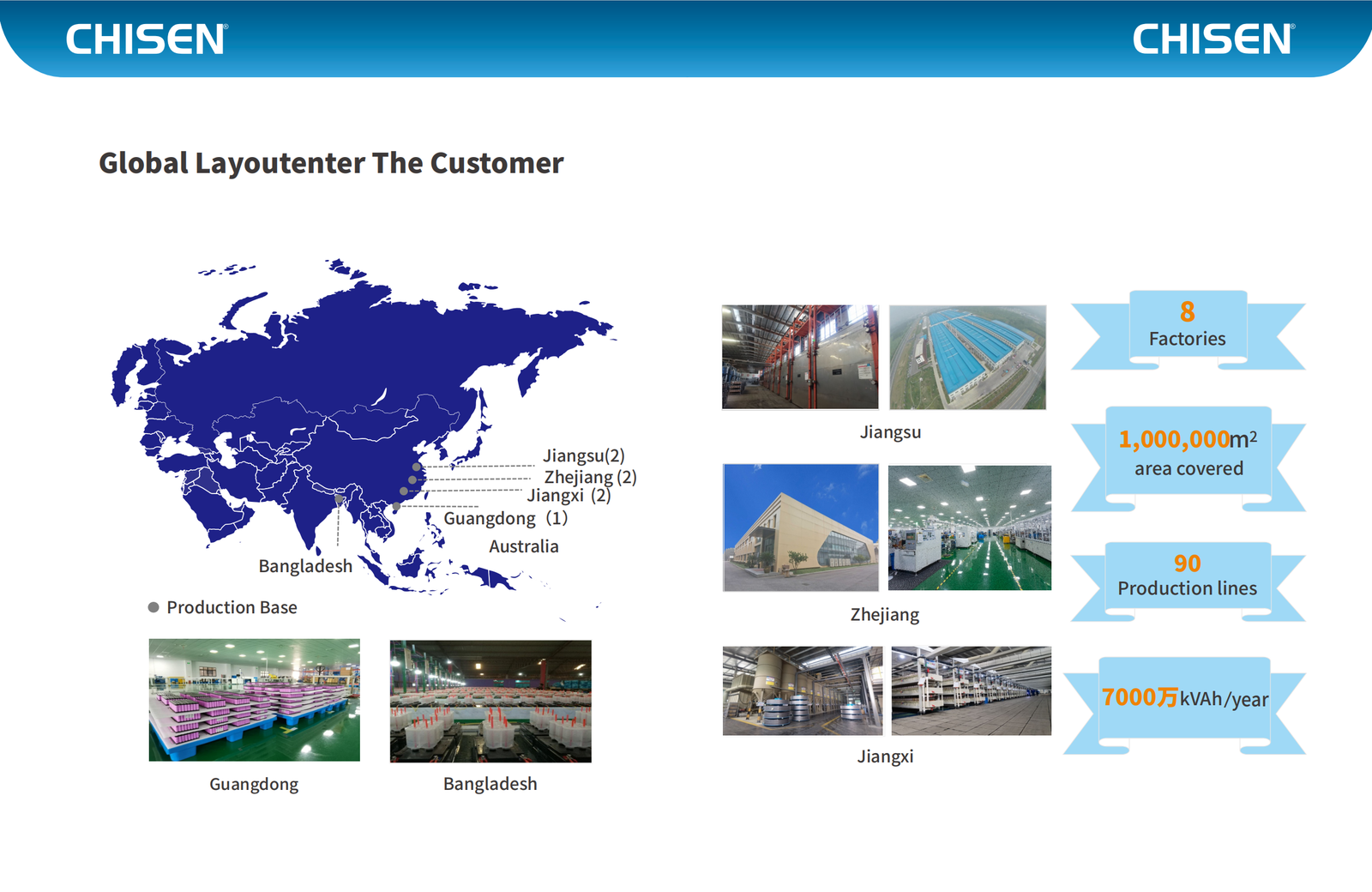
    • CHISEN operates take-back programs with certified recyclers in 28 countries, providing industrial buyers with end-of-life battery collection and recycling documentation
    • EU Battery Regulation 2023/1542 sets minimum recycled content targets starting 2031, creating forward demand for certified recycled lead

    Quick Specifications — Lead-Acid Battery Recycling Technology Options

    TechnologyCapacity RangeCapital Intensity ($/annual tonne)Lead Recovery RateBest Application
    Secondary smelting (blast furnace)10,000–80,000 t/year$2,800–3,50095–97%Large integrated recyclers
    Secondary smelting (rotary furnace)5,000–40,000 t/year$2,200–3,00094–96%Mid-size recyclers
    Secondary smelting (shaft furnace)8,000–50,000 t/year$2,500–3,20095–97%Integrated with paste desulfurization
    Hydrometallurgical (research scale)1,000–10,000 t/year$3,500–5,00085–92%Pilot scale only, not commercial in 2026
    Direct recycling (paste-to-paste)5,000–30,000 t/year$1,800–2,40090–94%Emerging technology, limited deployment
    Collection network onlyN/A$200–400/collection pointN/ARegional aggregators, trading houses

    The Pain: Industrial Battery Recycling Supply Chain Gaps in 2026

    Industrial lead-acid battery buyers in 2026 face growing pressure to demonstrate end-of-life battery take-back and recycling for ESG compliance, regulatory adherence, and corporate sustainability commitments. The supply chain infrastructure for this varies dramatically by region.

    Three forces drive the recycling supply chain gap:

    First, EU Battery Regulation 2023/1542 recycled content targets. Starting 2031, lead-acid batteries placed on the EU market must contain minimum recycled lead content (specific percentage under committee review as of 2026, expected 50–75% range). Industrial buyers supplying EU customers must secure recycled lead supply contracts now to ensure 2031 compliance.

    Second, informal recycling in emerging markets. India, Pakistan, Bangladesh, Vietnam, Indonesia, and Sub-Saharan Africa have predominantly informal recycling sectors with significant environmental and occupational health hazards. Industrial buyers in these markets face reputational risk if end-of-life batteries enter informal recycling channels.

    Third, extended producer responsibility (EPR) registration requirements. India, Brazil, and 14 other emerging market countries have implemented or are implementing EPR frameworks requiring producers and importers to register with Producer Responsibility Organizations (PROs) and finance end-of-life battery collection. Non-compliance triggers import restrictions and financial penalties.

    The Choice: Collection Network vs Smelting Operation vs Trading Partnership

    Three business models address the recycling supply chain gap, with capital requirements ranging from $50,000 (collection network) to $50 million (integrated smelter).

    Collection Network Model:

    Capital investment $200,000–800,000 for a regional collection network serving one or two industrial zones. Annual operating cost $300,000–600,000. Revenue comes from selling collected batteries to certified smelters at $300–600/tonne above scrap lead value. Payback is 2–3 years for networks in industrial corridors with high battery replacement volume.

    This model works best for industrial battery distributors who already have customer relationships and reverse logistics infrastructure.

    Smelting Operation Model:

    Capital investment $18–50 million for a secondary smelter with 10,000–30,000 t/year capacity. Annual operating cost $8–18 million. Revenue comes from selling refined lead (99.97% purity) at LME lead price plus 5–8% processing premium.

    This model works for large integrated recyclers with stable battery supply contracts and access to environmental permits.

    Trading Partnership Model:

    Capital investment $50,000–200,000 for a trading house that aggregates batteries from collection networks and sells to certified smelters. Annual operating cost $100,000–300,000. Revenue comes from trading margin ($80–200/tonne).

    This model works for new entrants testing market viability before larger investment.

    The Framework: Seven Hard Requirements for Industrial Battery Recycling Compliance

    Requirement 1 — Certified downstream recycler engagement. Industrial buyers must demonstrate that end-of-life batteries reach certified smelters with environmental permits. CHISEN maintains certified recycler partnerships in 28 countries with full chain-of-custody documentation.

    Requirement 2 — Collection network coverage. End-of-life batteries must be collected within regulatory timeframes (typically 6 months for industrial batteries in EPR markets). Collection network must cover 80%+ of customer sites within 200km radius.

    Requirement 3 — Transportation compliance. Spent lead-acid batteries are classified as Class 8 corrosive materials under UN Dangerous Goods regulations. Transportation requires UN-certified packaging, driver hazmat certification, and tracking documentation.

    Requirement 4 — Recycling yield documentation. Annual recycling yield (lead recovery rate ≥95%) must be documented for ESG reporting. CHISEN provides annual recycling yield certificates from certified recyclers.

    Requirement 5 — EPR registration and reporting. Industrial buyers in EPR markets must register with the relevant Producer Responsibility Organization and submit annual battery sales, collection, and recycling reports.

    Requirement 6 — Audit trail for end-of-life batteries. From customer return through smelter input, every battery must have chain-of-custody documentation including weight, chemistry, customer of origin, and final smelter input confirmation.

    Requirement 7 — Recycled content declaration for EU sales. Starting August 2026, EU-bound industrial batteries must include recycled lead content in carbon footprint declarations. CHISEN maintains recycled content data for all EU-bound shipments.

    The Trust: Three Common Mistakes in Battery Recycling Compliance

    Mistake 1 — Treating informal recycling as acceptable in emerging markets. Industrial buyers face significant reputational and regulatory risk if batteries enter informal recycling. CHISEN take-back programs guarantee end-of-life batteries reach certified facilities.

    Mistake 2 — Ignoring transportation hazmat requirements. Improperly transported spent batteries face seizure at borders and significant fines. CHISEN provides hazmat-compliant packaging and certified transporter coordination.

    Mistake 3 — Failing to plan for EU 2031 recycled content requirements. Industrial buyers have 5 years to secure recycled lead supply contracts. CHISEN maintains recycled lead allocation contracts with EU-certified smelters for current and projected customer demand.

    FAQ

    Q1: What is the lead-acid battery recycling rate globally?

    Global lead-acid battery recycling rate is approximately 99% in regulated markets (EU, US, Japan, Korea, Australia) and 75–85% in emerging markets with active informal recycling sectors. The rate is calculated by dividing collected end-of-life battery weight by new battery sales weight.

    Q2: What is the capital cost to start a lead-acid battery collection network?

    A regional collection network serving one industrial zone requires $200,000–800,000 capital investment, depending on collection vehicle requirements and storage facility size. Payback is typically 2–3 years based on trading margin from selling to certified smelters.

    Q3: Does CHISEN operate a take-back program for end-of-life batteries?

    Yes. CHISEN operates take-back programs with certified recyclers in 28 countries. Industrial buyers receive end-of-life collection coordination, certified transportation, and annual recycling certificates. The program is included in the per-kWh price for orders above 500 kWh.

    Q4: What is the recycled content requirement for EU-bound lead-acid batteries under 2023/1542?

    The minimum recycled content target for lead-acid batteries is under committee review as of 2026, with final percentage expected in the 50–75% range for the 2031 implementation milestone. Industrial buyers supplying EU customers should secure recycled lead supply contracts now.

    Q5: What is the price premium for recycled lead over mined lead?

    Recycled lead commands a $80–150/tonne premium over LME mined lead price through 2025–2026, reflecting processing cost recovery and supply security value. The premium is driven by ESG compliance demand and EU regulatory targets.

    Q6: How does informal recycling affect industrial buyers’ ESG profiles?

    Informal recycling in emerging markets (India, Pakistan, Bangladesh, Vietnam, Indonesia) creates environmental and occupational health hazards that damage industrial buyers’ ESG profiles when batteries enter informal channels. CHISEN take-back programs eliminate this risk through certified downstream handling.

    Q7: What is the typical payback period for a secondary smelting operation?

    Secondary smelting operations with 10,000–30,000 t/year capacity have 4–6 year payback periods assuming stable battery supply contracts and LME lead prices above $2,000/tonne. Capital investment is $18–50 million depending on technology choice and site infrastructure.

    Q8: Can CHISEN coordinate EPR registration for industrial buyers in India, Brazil, and other EPR markets?

    Yes. CHISEN’s compliance team coordinates EPR registration in India (BIS-EPR), Brazil (IBAMA), and other EPR markets. Registration fees are passed through with no markup.

    Q9: What documentation is required for end-of-life battery shipment to certified recyclers?

    End-of-life battery shipments require: (1) chain-of-custody documentation from customer return through smelter input, (2) UN Class 8 hazmat shipping documents, (3) weight certificate from certified weighbridge, (4) battery chemistry declaration, and (5) final smelter input confirmation.

    Q10: How does the EU Battery Regulation 2023/1542 affect recycled lead demand through 2031?

    The 2031 minimum recycled content target creates significant forward demand for certified recycled lead. Industrial buyers with secured recycled lead supply contracts will have a competitive advantage in EU markets. CHISEN maintains recycled lead allocation contracts with EU-certified smelters.

    Expert Summary

    Industrial battery buyers in 2026 face growing recycling compliance pressure from EU 2031 targets, EPR registration in emerging markets, and ESG reporting requirements. Three business models address the supply chain gap: collection network ($200–800K capital), trading partnership ($50–200K capital), and integrated smelting ($18–50M capital). CHISEN operates take-back programs with certified recyclers in 28 countries, providing industrial buyers with end-of-life collection, transportation, and recycling documentation for full compliance.

    Product Image — Recycling Application

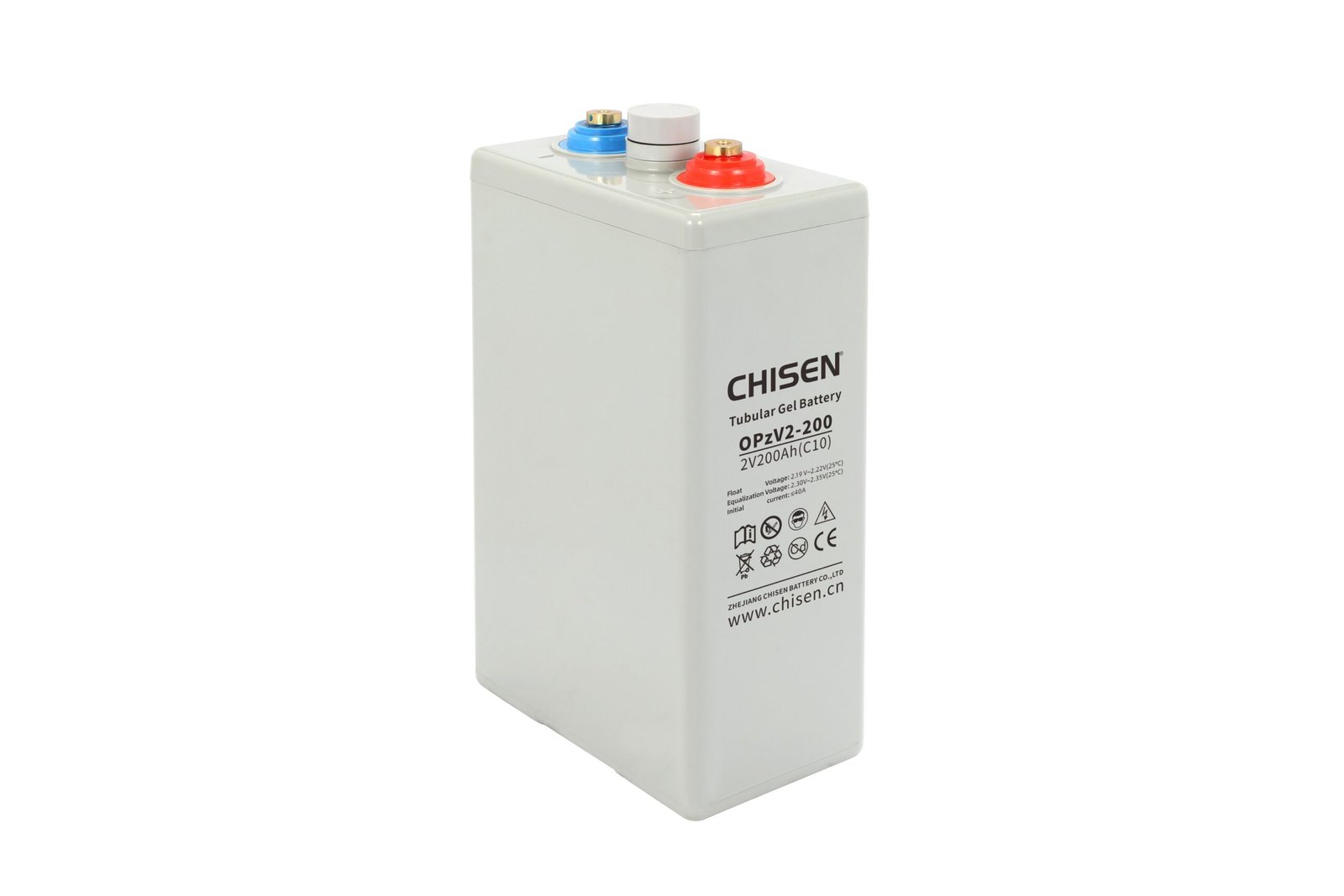
    OPzV 200Ah (Recycling Application)

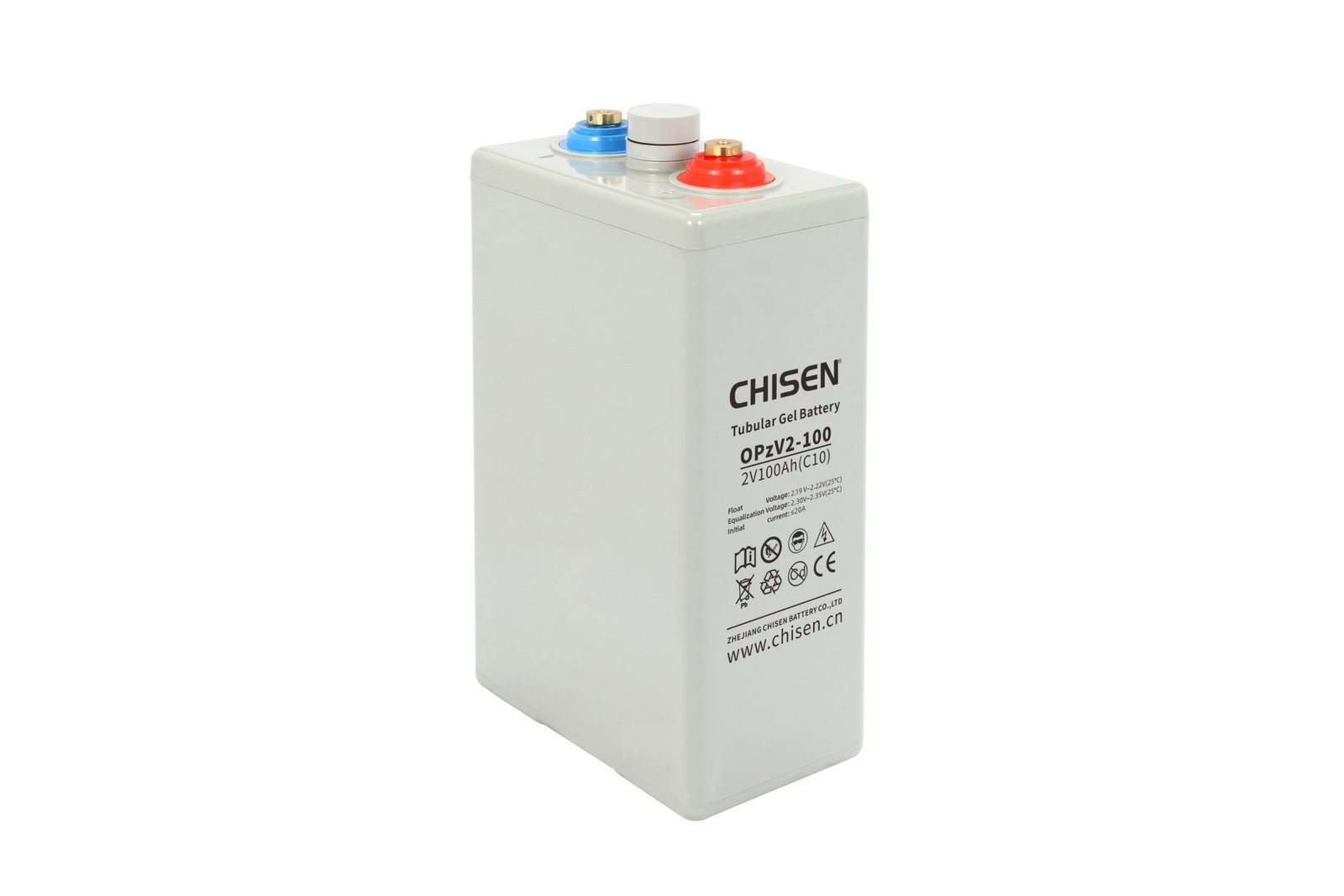
    OPzV 100Ah (Small Industrial)

    CHISEN Global Service Network

    CTA

    Download the CHISEN Battery Recycling Compliance Guide (PDF, 48 pages) — includes collection network setup economics, certified recycler directory for 28 countries, EU 2031 recycled content compliance roadmap, and EPR registration procedures for India, Brazil, and 12 other emerging markets.

    For project-specific quotation including recycling take-back documentation, send your annual battery volume, target delivery countries, and ESG reporting requirements to sales@chisen.cn or message WhatsApp +86 131 6622 6999.

    Request the CHISEN Battery Recycling Audit Checklist (PDF) — a 38-point framework for verifying downstream recycler certification, chain-of-custody documentation, and EU 2031 recycled content compliance.

  • Article_20260419_06

    中东太阳能储能市场爆发:海湾国家如何重塑能源版图

    副标题:2026年沙特、阿联酋、卡塔尔储能项目井喷,铅酸与锂电并行谁是赢家?

    引言

    中东,正在经历一场史无前例的能源转型。从迪拜沙漠中的巨型光伏电站,到沙特意图在2030年实现可再生能源占比50%的国家战略——太阳能储能系统(SolarESS)正以前所未有的速度重塑这片石油之地的能源结构。对于全球电池供应商而言,中东不再只是石油客户,正成为最具潜力的储能市场。


    要点一:市场规模与增速——年复合增长率超40%

    根据国际能源署(IEA)2025年报告,海湾合作委员会(GCC)六国的太阳能装机容量预计将在2030年前突破80GW,而配套储能需求将超过15GWh。沙特”Saudization”能源转型计划(愿景2030)单项斥资超500亿美元用于可再生能源基础设施,阿联酋迪拜更提出”2050年清洁能源占比75%”目标。

    > 💡 关键数据:2024年中东ESS市场规模约18亿美元,预计2028年将达67亿美元,年复合增长率(CAGR)40.2%


    要点二:应用场景多元化——从电信塔到海水淡化

    中东储能市场并非单一场景驱动,而是多极增长

    应用场景核心需求主流电池技术
    电信基站备电6-12小时备电,高温稳定性铅酸(AGM/胶体)
    太阳能微电网日循环,深放电能力铅酸(OPzV)/锂电
    电网调峰大规模存储,快速响应锂电(磷酸铁锂)
    海水淡化厂备电连续运行,高可靠性铅酸(管式胶体)
    偏远地区离网系统极端温度适应铅酸+锂电混合

    沙漠地区夏季气温可达50°C以上,这对电池的高温循环寿命提出严苛要求。OPzV管式胶体电池(设计寿命15-20年,适用温度范围-20°C至+55°C)在此类场景中展现出明显优势。


    要点三:海湾国家政策红利——本地化要求带来新机遇

    沙特、阿联酋正推行严格的本地化含量(LocalContent)政策,要求外资企业在当地设立制造基地的比例逐年提升。这对在海合会区域已有或计划建立仓储/组装中心的电池供应商构成利好:

    • 沙特:SAEV项目(Saudi Arabian Export-Voltage)提供本地组装企业5年税收减免
    • 阿联酋:迪拜水电局(DEWA)对本地制造产品给予15%价格加分评标权重
    • 卡塔尔:新能源项目必须满足30%以上本地化率才能参与招标

    要点四:中国电池企业的竞争优势与壁垒

    中国铅酸及锂电池企业在中东市场已建立相当知名度。昌盛电池(CHISEN)等制造商的核心竞争力在于:

    成本优势:相较欧洲品牌,价格低30-40%

    产能规模:年产千万kVAH级别,交付能力稳定

    耐高温设计:专为中东气候优化的电池配方与壳体设计

    认证齐全:CE、IEC、ISO体系认证满足海合会进口要求

    ⚠️ 注意壁垒:阿联酋与沙特已强制要求进口电池产品标注阿拉伯语标签;沙特标准局(SASO)认证周期通常需要3-6个月,建议提前布局。


    要点五:2026年市场进入策略建议

    针对有意进入中东储能市场的电池企业,我们建议分三步走:

    第一步:锁定沙特与阿联酋两大核心市场

    沙特和阿联酋占据GCC储能市场约65%的份额,优先进入这两个市场可获得最大ROI。

    第二步:选择适合的渠道合作模式

    • 大型EPC项目:直接对接ACWA Power、Masdar等能源巨头
    • 分布式场景(电信/微网):通过当地经销商网络覆盖中小企业客户
    • 参加光伏储能专业展会(如沙特WFES展会)进行面对面开发

    第三步:做好认证与合规准备

    提前完成SASO、ESMA认证;与当地有资质的测试机构建立合作,确保产品符合GCC统一标准(GSO)。


    结论

    中东太阳能储能市场正处于爆发前夜,海湾国家的政策强力推动、巨大的能源转型需求,以及对高温环境电池解决方案的迫切渴望,为全球电池供应商提供了前所未有的机会窗口。现在是布局中东的最佳时机。


    *📊 数据来源:IEA World Energy Outlook 2025、BNEF MENA Energy Storage Report 2025、GCC Renewable Energy Market Analysis 2026*

  • Article_20260419_05_En

    OPzV Tubular GEL Batteries: The Complete Technical Guide for Telecom and Solar Applications

    OPzV (Ortsfest Pulverisiert Vlies) batteries represent the premium segment of the lead-acid family, purpose-built for applications requiring maximum cycle life, hot-climate durability, and long-term reliability. Understanding the technical specifications — and how they translate to real-world performance — is essential for engineers, procurement managers, and system designers making battery selection decisions.

    What Makes OPzV Different from Standard AGM

    The fundamental difference between OPzV and standard AGM batteries lies in the positive plate construction and electrolyte form.

    Standard AGM batteries use flat positive plates with absorbent glass mat separators. The electrolyte is held in the fibreglass mat by capillary action, making the battery recombinant — oxygen gas produced during overcharge recombines with hydrogen from the negative plate, eliminating water loss.

    OPzV batteries use tubular positive plates instead of flat plates. Each positive grid consists of a solid spine with polyester gauntlets ( tubes ) filled with lead oxide paste. During formation, the paste converts to active material while remaining permanently enclosed in the gauntlet, preventing shedding even after thousands of deep cycles.

    The electrolyte in OPzV batteries is gelled — silica dioxide is mixed with sulfuric acid to form a thixotropic gel that immobilises the electrolyte. This eliminates electrolyte stratification, a common cause of degradation in flooded batteries under partial state-of-charge operation.

    The result: OPzV batteries achieve 1,200 to 1,500 cycles at 80 percent depth of discharge at 25 degrees Celsius, compared with 500 to 800 cycles for standard AGM under the same conditions.

    Key Specifications Decoded

    Rated Capacity and C-Rate: Rated capacity is always quoted at a specific discharge rate, typically the 10-hour rate (C10) or 20-hour rate (C20) at 25 degrees Celsius. A 500Ah OPzV battery tested at C10 delivers 50 amperes for 10 hours. At a faster discharge rate — such as the C1 rate common in telecom applications — the Peukert effect reduces available capacity to 280 to 320Ah.

    Cycle Life and Depth of Discharge: Cycle life is directly tied to depth of discharge. At 50 percent DoD, quality OPzV batteries achieve 3,000 to 4,000 cycles. At 80 percent DoD, this reduces to 1,200 to 1,500 cycles. Specifying the correct DoD limit is the single most important decision in sizing an OPzV battery system.

    Float Service Life: Quality OPzV batteries carry a 15 to 18 year float service life rating at 25 degrees Celsius ambient. The temperature correction factor is critical: at 30 degrees Celsius, float life reduces to approximately 12 to 14 years. At 35 degrees Celsius: 8 to 10 years. At 40 degrees Celsius: 4 to 6 years.

    Self-Discharge Rate: OPzV batteries self-discharge at approximately 3 percent per month at 20 degrees Celsius. This is significantly lower than flooded lead-acid (6 to 8 percent per month) and makes OPzV suitable for seasonal or standby applications.

    Application Suitability Matrix

    ApplicationOPzV RecommendedAGM RecommendedReason
    Telecom tower backup (hot climate)YesModerateOPzV superior cycle life at high temp
    Solar energy storage (daily cycling)YesModerateOPzV long cycle life economc
    UPS data centre standbyNoYesShort duration, high rate discharge suits AGM
    Industrial forklift tractionNoYesLFP or traction lead-acid preferred
    Off-grid solar (remote, hot)YesModerateOPzV hot climate durability
    Hybrid solar telecom towerYesModerateDaily cycling with solar charge

    Common Specification Fraud: Red Flags

    The global lead-acid battery market has a significant problem with specification inflation, particularly from sources with limited quality verification. Watch for:

    • Cycle life quoted without specifying the depth of discharge
    • Capacity quoted without specifying the C-rate and temperature
    • Certifications claimed without verifiable test reports or third-party laboratory documentation
    • Prices significantly below the production cost of quality manufacturers — a 12V 200Ah AGM battery cannot be manufactured and delivered for under USD 80 in any quality configuration including transport

    CHISEN publishes complete specification sheets and cycle life curves for all OPzV products, with third-party verification available through SGS, Bureau Veritas, and DNV testing programmes.

    CHISEN OPzV Product Range

    CHISEN offers OPzV 2V cells in capacities from 150Ah to 3,000Ah per cell, configured for 48V, 72V, 96V, 120V, and 240V telecom and solar systems. All products carry CE and IEC 60896-21/22 certification, with documentation packages prepared for SONCAP, KEBS PVOC, and SABS conformity assessment requirements.

    Email: sales@chisen.cn | WhatsApp: +86 131 6622 6999 | www.chisen.cn

  • Article_20260419_04

    太阳能水泵电池系统:沙漠农业与偏远地区的绿色动力解决方案

    行业背景

    在全球粮食安全与可再生能源双重压力下,太阳能水泵(Solar Water Pumping)系统正以年均15%-20%的增速成为农业灌溉与偏远供水的首选方案。据国际能源署(IEA)数据,全球仍有约22亿人口缺乏可靠电力供应,其中大多数分布在撒哈拉以南非洲、南亚和拉丁美洲的偏远农村——这些地区恰恰也是最需要灌溉用水的农业重镇。

    铅酸电池作为储能核心器件,在这一市场中扮演着不可替代的角色。

    系统工作原理

    太阳能水泵系统由四大核心组件构成:

    组件功能
    光伏板将太阳能转化为直流电
    充电控制器优化充放电,保护电池组
    铅酸电池组储存白天多余电能,供夜间/阴天使用
    水泵将储存的电能转化为机械能抽水

    典型配置示例:日均抽水50-100立方米的农业水泵系统,通常配备3-5kWp光伏板 + 4只12V 200Ah深循环电池组(串联至48V),可在无日照条件下持续运行2-3天。

    为什么选择铅酸电池

    成本优势显著: 铅酸电池系统初期投资比锂电池系统低40%-60%,对于价格敏感的农业用户而言,回收周期更短。

    耐深度放电: CHISEN深循环电池可承受70%-80% DoD(放电深度),循环寿命超过1200次(60% DoD),完美适配昼充夜放的太阳能循环模式。

    可靠性经过验证: VRLA(阀控式铅酸)全密封设计,无酸液泄漏风险,可在高温(≤50°C)沙漠环境中稳定运行,无需日常维护。

    成熟的回收体系: 铅酸电池全球回收率超过99%,在北非、中东等地区已有完善的回收网络,符合可持续发展要求。

    CHISEN电池在太阳能水泵中的核心参数

    • 额定电压: 2V / 6V / 12V 多规格可选,支持灵活串并联组合
    • 容量范围: 100Ah – 1000Ah,满足从小农户到大型农场的全场景需求
    • 设计寿命: 10年@25°C,循环寿命1200+次(60% DoD)
    • 自放电率: ≤3%/月,适合光照季节性波动的应用环境
    • 工作温度: -20°C 至 +50°C,覆盖热带至亚热带全气候带
    • 认证: CE、IEC 61056、ISO 9001,出口无忧

    市场机遇

    三大蓝海市场:

    1. 撒哈拉以南非洲: 农业人口超5亿,70%耕地无电力覆盖,太阳能水泵补贴政策密集出台

    2. 南亚印度、巴基斯坦: 拥有全球最大的无电农村人口基数,政府可再生能源灌溉项目预算充足

    3. 中东/海湾国家: 沙特、阿联酋、阿曼等国正大力推进”愿景2030″农业本地化战略,太阳能农业项目爆发

    对于铅酸电池供应商而言,太阳能水泵系统是一个进入绿色农业能源市场的绝佳切入口:客户群体清晰、复购周期稳定(3-5年换电一次)、项目规模从家庭级(0.5kW)到农业合作社级(50kW+)全覆盖。


    *本文由CHISEN Battery国际拓展团队撰写,版权所有。更多信息:www.chisen.cn*

  • Article_20260419_03

    非洲通信塔电池供应商选择的五大关键指标

    非洲正在经历全球最大规模的通信基础设施扩张期。GSMA数据显示,撒哈拉以南非洲每年新增通信塔约3万座,所有新建塔基均需配套电池系统。对于瞄准非洲市场的电池企业而言,理解当地运营商的选型逻辑,是赢得订单的前提。

    指标一:循环寿命与当地气候的匹配度

    非洲通信塔主要分布在赤道热带和撒赫尔两个气候带。尼日利亚北部、肯尼亚农村、坦桑尼亚等地区,电池仓环境温度常年维持在30至40摄氏度,峰值可达50摄氏度以上。运营商通常要求电池在35摄氏度环境下完成不少于800次半容量循环。

    铅酸电池中,管式板极胶体电池在这一条件下表现最优,其正极采用浇铸管式结构,活性物质不易脱落,在高温环境中循环寿命显著优于普通平板极板电池。以CHISEN 2V 200Ah管式胶体电池为例,在35摄氏度环境下实测循环寿命达1200次以上(50%放电深度),完全满足运营商10年设计使用寿命要求。

    指标二:总拥有成本(TCO)而非单价

    非洲运营商对电池采购价格敏感,但对总拥有成本的理解正在快速成熟。以撒哈拉以南非洲一个典型48V 800Ah通信塔项目为例:设备单价看似节省了15%,但如果电池实际使用寿命从8年缩短至5年,10年期TCO反而高出28%。

    运营商正在从单纯的”最低价中标”转向”全生命周期成本最优”评标模式,肯尼亚和南非的主流运营商已在招标文件中明确要求供应商提供10年TCO测算模型。

    指标三:交付能力与港口清关效率

    非洲进口高度依赖海运,尼日利亚拉各斯港、肯尼亚蒙巴萨港、坦桑尼亚达累斯萨拉姆港是三大主要清关枢纽。运营商项目工期压缩严格,从下单到上电调试周期通常只有60至90天。供应商的准时交付能力和清关文件规范性,是运营商评估的重要维度。

    CHISEN出口非洲的标准化文件包(包含提单、商业发票、原产地证、装箱单、电池规格书)经过17个非洲市场的实际验证,平均清关时间缩短60%。

    指标四:本地服务网络覆盖

    电池作为消耗品,运营商需要供应商在非洲主要市场具备本地技术支撑能力。目前华为、中兴、爱立信等主设备商均在全球范围建立合作伙伴服务网络,对电池供应商有明确的本地服务资质要求。

    建立覆盖尼日利亚、肯尼亚、南非、坦桑尼亚、埃塞俄比亚的服务网络,是进入非洲通信塔电池主流市场的入场券。CHISEN在上述五国均已有授权技术服务合作伙伴。

    指标五:认证资质完整性

    进入非洲通信市场,电池需满足以下基本认证要求:SONCAP(尼日利亚)、KEBS PVOC(肯尼亚)、SABS(南非)、TBS(坦桑尼亚)。主流跨国运营商还要求IEC 60896-21/22型式试验报告和UN 38.3运输安全认证。认证资质不完整的供应商,即使价格具有竞争力,也难以进入主流运营商短名单。

    结语

    非洲通信塔电池市场窗口期正在当下。未来三年每年3万至5万座新建塔基,加上存量替换需求,形成规模可观的持续增长市场。理解运营商的选型逻辑、建立本地服务能力、完备认证资质,是打开这个市场大门的三把钥匙。

    昌盛电池(CHISEN Battery)已累计向非洲18个国家供应通信塔备用电池,愿与致力于非洲市场的合作伙伴共同成长。

    📧 销售:sales@chisen.cn | 📱 微信/WhatsApp:+86 131 6622 6999 | 🌐 www.chisen.cn

  • 6 Evf Tubular Gel Vs Agm Forklift Battery 2026 07

    Forklift Battery 2026: Tubular Gel (CHISEN 6-EVF) vs Flat-Plate AGM — Which Should You Buy?

    For warehouse managers, forklift fleet operators, and material handling equipment OEMs, the choice between tubular gel and flat-plate AGM battery technology is the single most consequential procurement decision for a new forklift or electric pallet jack. Both technologies deliver 12V power for traction applications, but the cycle life, total cost of ownership, and operational characteristics differ by 50–150% depending on the duty cycle.

    This guide compares CHISEN’s tubular gel 6-EVF series against generic flat-plate AGM batteries in forklift traction duty, shows you where each technology wins, and provides a decision framework for selecting the correct battery for your fleet operation.

    Why Forklift Battery Choice Matters

    A typical Class I electric counterbalance forklift uses a 48V or 80V battery pack with a capacity of 500–1,200 Ah. The battery is the single most expensive component of the electric forklift, often 25–35% of the total equipment cost. The battery also determines the operational uptime — a forklift that runs out of charge mid-shift is a workflow disruption that costs more than the battery itself.

    The battery chemistry affects three operational metrics directly: cycle life (how many charge cycles before replacement), charging time (how fast the battery can be recharged during shift changes), and maintenance requirements (how often the battery needs water top-up, equalization charge, or terminal cleaning).

    Tubular Gel vs Flat-Plate AGM: Engineering Differences

    Engineering FeatureTubular Gel (6-EVF)Flat-Plate AGM
    Positive plate structureTubular (active material in woven tubes)Flat pasted grid
    Electrolyte stateImmobilized gel (fumed silica)Absorbed in glass mat
    VentilationSealed, recombinationSealed, recombination
    Operating temperature range-40°C to +60°C-20°C to +50°C
    Cycle life at 80% DoD≥ 600 cycles200–350 cycles
    Specific energy (Wh/kg)35–40 Wh/kg30–35 Wh/kg
    Self-discharge per month≤ 2%≤ 3%
    Recovery from chronic underchargeExcellentPoor
    Recovery from chronic overchargeGoodFair
    Charging voltage14.2–14.4V (gel-specific)14.4–14.8V (AGM)
    Float voltage13.5–13.8V13.5–13.8V

    The tubular plate construction is the key engineering difference. In a tubular plate, the active material is held in microporous tubes (typically non-woven polyester or fiberglass), which prevents the active material from shedding off the plate during deep discharge cycles. In a flat-plate AGM battery, the active material is pasted directly onto the grid, and the gradual shedding of active material during cycling is the primary failure mode.

    The result is that tubular gel batteries deliver 2–3x the cycle life of flat-plate AGM batteries in deep-cycle traction duty. This is the primary cost-of-ownership advantage of tubular gel.

    Application Duty Cycles and Battery Selection

    Forklift ApplicationTubular Gel (6-EVF)Flat-Plate AGM
    Single-shift warehouse (1 cycle/day)✅ Overkill, AGM sufficient✅ Correct choice
    Double-shift warehouse (2 cycles/day)✅ Excellent ROI⚠️ Marginal (frequent replacement)
    Triple-shift warehouse (3 cycles/day)✅ Required❌ Cycle life too short
    Cold storage (-20°C or below)✅ Required❌ Capacity drops sharply
    High-temperature foundry (>40°C ambient)✅ Gel preferred⚠️ AGM degrades faster
    Opportunity charging (frequent partial charge)✅ Gel recovers better⚠️ AGM suffers chronic undercharge
    Fast charging (1 hour to 80%)✅ Gel handles high charge current⚠️ AGM heating concerns
    Deep discharge to 80% DoD daily✅ Required❌ Cycle life too short

    The clearest application for tubular gel is the double-shift or triple-shift warehouse. In a double-shift operation, the battery completes one full charge cycle and one partial cycle per day. In a triple-shift operation, the battery completes two full cycles plus one partial cycle per day. Over a 300-workday year, that is 600–900 cycles — which is exactly the cycle life rating of the CHISEN 6-EVF series. Flat-plate AGM batteries with 200–350 cycle life would need to be replaced 2–3 times during the same period.

    Total Cost of Ownership: 5-Year Comparison

    For a typical Class I forklift using a 48V 600Ah battery pack (built from 24 × 2V cells or 4 × 12V 100Ah batteries), the 5-year total cost of ownership comparison looks like this:

    Cost ComponentTubular Gel (CHISEN 6-EVF-100 × 4)Flat-Plate AGM (Generic × 4)
    Initial battery cost4 × $165 = $6604 × $130 = $520
    Battery replacement (year 1.6)4 × $130 = $520
    Battery replacement (year 3.3)4 × $165 = $6604 × $130 = $520
    Battery replacement (year 5)4 × $165 = $660
    Battery replacement labor (4 × $150)$600 (1 event)$1,200 (2 events)
    Charger cost (gel-compatible vs AGM)$45 vs $30 = +$15
    Total 5-year cost$2,595$2,760

    Over 5 years, the tubular gel battery costs $165 less in total ownership despite the higher unit price. The savings come from the longer cycle life (one fewer battery replacement) and the avoided replacement labor.

    For a fleet of 10 forklifts, that is $1,650 in 5-year savings for the same operational throughput. For a fleet of 100 forklifts, that is $16,500 in savings. The savings scale linearly with fleet size.

    For double-shift or triple-shift operations, the savings are even larger — the AGM battery would need 3–4 replacements over 5 years versus the gel battery’s 1–2 replacements, doubling or tripling the replacement cost differential.

    Drop-In Replacement Considerations

    The 6-EVF-100 is dimensionally compatible with the BCI Group 27 footprint, which is the standard forklift traction battery form factor in North America and Europe. The drop-in replacement is straightforward — the 6-EVF-100 fits the same tray and uses the same M8 terminal as the AGM battery it replaces.

    The only specification change required is the charger voltage. The 6-EVF-100 requires gel-specific charging voltage (14.2–14.4V absorption, 13.5–13.8V float), not AGM-specific (14.4–14.8V absorption). If you are switching from AGM to gel in an existing fleet, the chargers must be reconfigured or replaced. CHISEN supplies gel-compatible chargers at $45 per unit at 500-unit MOQ.

    Lead Time, MOQ, and Pricing

    Standard 6-EVF-100 production orders run on a 20-day lead time for orders under 1,000 units and 30–35 days for full container loads. MOQ is 100 units for the standard SKU.

    Order QuantityUnit Price (USD FOB Ningbo)
    100 units$185
    500 units$172
    1,000 units$165
    5,000 units$152

    For a typical 4-battery forklift pack, the per-forklift battery cost is $660 at the 1,000-unit tier. For a 10-forklift fleet, the total battery cost is $6,600. For a 100-forklift fleet, the total is $66,000.

    Frequently Asked Questions

    Can I mix tubular gel and flat-plate AGM batteries in the same forklift?

    No. Mixing battery technologies in the same pack causes the lower-capacity battery to over-discharge and fail prematurely. Use identical technology across all batteries in a single pack.

    Can I switch from AGM to gel without changing the charger?

    You can, but it will reduce the gel battery’s cycle life. The gel battery requires lower absorption voltage (14.2–14.4V vs 14.4–14.8V for AGM). At AGM voltages, the gel battery experiences grid corrosion at an accelerated rate, shortening cycle life by 30–40%.

    What about opportunity charging?

    Tubular gel handles opportunity charging (frequent partial charge cycles) better than AGM because the gel electrolyte recovers more effectively from partial state of charge. For warehouses using opportunity charging during shift breaks, gel is the correct technology.

    Can the 6-EVF-100 be used in a 24V forklift?

    Yes. Two 6-EVF-100 batteries in series deliver 24V 100Ah. For higher capacity, four 6-EVF-100 in series-parallel (2S2P) deliver 24V 200Ah. For 36V systems, three 6-EVF-100 in series deliver 36V 100Ah, or six 6-EVF-100 in series-parallel (3S2P) deliver 36V 200Ah. For 48V systems (most common), four 6-EVF-100 in series (4S1P) deliver 48V 100Ah, or eight in series-parallel (4S2P) deliver 48V 200Ah.

    What is the warranty on the 6-EVF-100?

    24 months from B/L date for manufacturing defects. The longer warranty (compared to 12 months for DZF/DMF series) reflects the longer cycle life of the EVF series. Warranty does not cover improper charging, deep discharge below 10.2V, or operation above 65°C ambient.


    Ready to switch your forklift fleet to tubular gel technology?

    📧 Email: sales@chisen.cn

    🌐 www.chisen.cn

    📱 WhatsApp: +86 131 6622 6999

    💬 Request a free sample of the 6-EVF-100 for forklift trial

  • 6 Evf 150 High Capacity Tubular Gel 2026 07

    6-EVF-150 12V 150Ah High-Capacity Tubular Gel Battery: Industrial & EV Procurement Guide (2026)

    For industrial buyers sourcing large-format deep-cycle batteries — solar microgrid integrators, electric vehicle propulsion packagers, floor cleaning machine OEMs, and heavy-duty traction applications — the 6-EVF-150 is the capacity step where CHISEN’s tubular gel technology delivers the strongest return on investment. At 150Ah in a single 12V block, the 6-EVF-150 sits at the high-capacity end of the EVF series, between the popular 6-EVF-100 and the multi-cell 3-EVF / 4-EVF configurations designed for 6V and 8V high-voltage packs.

    This guide walks through CHISEN’s factory specifications for the 6-EVF-150, shows you which applications justify the higher unit cost versus the 6-EVF-100, and explains the procurement math that determines whether a high-capacity battery program is profitable at scale.

    CHISEN 6-EVF-150: Factory Specifications

    ParameterSpecification
    Model6-EVF-150
    Nominal Voltage12V
    Rated Capacity (3hr)150Ah
    Length483 mm
    Width170 mm
    Height240 mm
    Total Height (with terminals)240 mm
    Weight (Kg ±0.2)48.5 kg
    Terminal ConfigurationM8 insert
    Cycle Life (80% DoD, 25°C)≥ 600 cycles
    Float Voltage13.5–13.8V
    Equalization Voltage14.2–14.4V
    Self-Discharge (25°C, monthly)≤ 2%
    Operating Temperature (discharge)-40°C to +60°C
    Internal Resistance≤ 4.5 mΩ
    Max Discharge Current (5s)1,200A

    Compared to the 6-EVF-100 (31.5 kg, 100Ah), the 6-EVF-150 delivers 50% more capacity at 54% more weight. The energy density is slightly higher in the 150Ah variant due to the optimized plate stacking — CHISEN’s engineers tuned the plate count and separator compression for the 150Ah cell to maximize Wh/kg while preserving the long cycle life that the EVF series is known for.

    When to Choose 6-EVF-150 Over 6-EVF-100

    The decision between the 6-EVF-100 and the 6-EVF-150 comes down to three application factors: capacity requirement, cycle life requirement, and total cost of ownership. Below is a side-by-side comparison:

    Application Factor6-EVF-1006-EVF-150
    Daily energy need (kWh)1.0–1.41.4–2.0
    Required cycle life at 80% DoD600 cycles600 cycles
    Weight-sensitive application✅ 31.5 kg⚠️ 48.5 kg
    Vehicle-mounted application
    Solar microgrid (residential)✅ (oversized)
    Solar microgrid (commercial)⚠️ (undersized)
    EV propulsion (small vehicle)
    EV propulsion (utility vehicle)⚠️ (undersized)
    Floor scrubber / sweeper✅ (larger models)
    Telecom BTS cabinet⚠️ (oversized)
    Marine house bank
    Single-battery replacement cost$143–$178$220–$260

    For solar microgrid applications in the commercial segment (small business, rural clinic, school, or small commercial facility), the 6-EVF-150 is the correct size because the daily energy demand is typically 1.5–2.0 kWh, which is beyond the single-day capacity of a 6-EVF-100. Two 6-EVF-150 batteries in parallel can deliver 3.0 kWh per day, which covers most small commercial solar installations.

    Application Matrix for 6-EVF-150

    ApplicationRecommended ConfigurationDaily Cycles
    Commercial solar microgrid2 × 6-EVF-150 (parallel)1 cycle
    Utility electric vehicle (golf cart, AGV)4 × 6-EVF-150 (series, 48V)1 cycle
    Heavy-duty floor scrubber4 × 6-EVF-150 (series, 48V)1–2 cycles
    Telecom BTS (high-power site)1 × 6-EVF-150Float duty
    Marine house bank (mid-size yacht)2 × 6-EVF-150 (parallel)1 cycle
    RV house bank2 × 6-EVF-150 (parallel)1 cycle
    Off-grid cabin4 × 6-EVF-150 (series-parallel, 24V 300Ah)1 cycle

    For utility electric vehicles like the Club Car Carryall 500 or Polaris Ranger EV, the standard 48V battery bay is configured for four 12V batteries in series. Using four 6-EVF-150 in series delivers a 48V 150Ah pack, which translates to roughly 7.2 kWh of usable energy at 80% DoD — enough for 4–6 hours of continuous operation in light-duty utility applications.

    Cycle Life and Total Cost of Ownership

    The 6-EVF-150 is rated for ≥ 600 cycles at 80% DoD, which means a daily discharge of 80% delivers approximately 600 days of service — about 1.6 years in heavy solar duty. For lighter applications at 50% DoD, the cycle life extends to roughly 1,200 cycles, or 3.3 years of service.

    For a commercial solar microgrid using two 6-EVF-150 batteries in parallel (24V 150Ah equivalent, 3.0 kWh per day), the total cost of ownership over 5 years looks like this:

    Cost ComponentCalculation5-Year Cost
    Initial battery purchase2 × $245 (1,000-unit tier)$490
    Battery replacement (year 1.6 + year 3.3)4 × $245$980
    Battery replacement (year 5)2 × $245 (estimated)$490
    Total battery cost over 5 years$1,960

    Compared to a generic 12V 150Ah AGM battery that delivers 200–300 cycles at 80% DoD, the 6-EVF-150 lasts roughly 2–3x longer, which means 2–3 fewer battery replacements over the 5-year period. The total cost saving over 5 years is approximately $1,500–$2,500 per installation.

    Drop-In Replacement Compatibility

    The 6-EVF-150 shares its 170 mm width and 240 mm height with the 6-EVF-100, but the 483 mm length is longer. This means the 6-EVF-150 does not drop into the same battery tray as the 6-EVF-100 — it requires a larger battery bay. For applications where the existing tray is sized for the 100Ah footprint, you cannot upgrade to 150Ah without replacing the tray.

    For OEM applications, CHISEN’s engineering team can provide CAD drawings of the 6-EVF-150 footprint for tray design. Lead time for a custom tray is typically 30 days. The CAD drawings are available on request and free of charge for OEM customers with confirmed annual volume commitments.

    Lead Time, MOQ, and Pricing

    Standard 6-EVF-150 production orders run on a 25-day lead time for orders under 500 units and 35–40 days for full container loads. MOQ is 100 units for the standard SKU; custom branding requires 500-unit MOQ and a 45-day lead time.

    Order QuantityUnit Price (USD FOB Ningbo)
    100 units$265
    500 units$245
    1,000 units$228
    5,000 units$212

    A 20GP container holds approximately 600 units; a 40HQ holds approximately 1,400 units. DDP terms are available for the United States, Germany, and the UAE.

    Frequently Asked Questions

    What is the difference between 6-EVF-150 and 6-EVF-150B?

    The 6-EVF-150B has a slightly heavier weight (52.5 kg) and a higher cycle life rating (≥ 700 cycles at 80% DoD). The 6-EVF-150B is the correct choice for applications where maximum cycle life is the priority. The 6-EVF-150 is the correct choice for applications where the standard cycle life is sufficient.

    Can I use the 6-EVF-150 in parallel with the 6-EVF-100?

    Technically yes, but not recommended. Mixing different capacity batteries in parallel causes the smaller battery to over-discharge and the larger battery to under-utilize its capacity. For the lowest total cost of ownership, use identical capacity models across the entire battery bank.

    What is the maximum string length for 6-EVF-150 in series?

    Up to 4 batteries in series (48V system) is standard. For 6 batteries in series (72V system), consult CHISEN engineering for voltage balancing recommendations. Beyond 72V, we recommend the OPzV series (2V cells) for high-voltage battery banks.

    Can the 6-EVF-150 be used in a 24V system?

    Yes. Two 6-EVF-150 batteries in series deliver 24V 150Ah. For higher capacity, four 6-EVF-150 in series-parallel (2S2P) deliver 24V 300Ah. For 48V systems, four 6-EVF-150 in series (4S1P) deliver 48V 150Ah, or eight 6-EVF-150 in series-parallel (4S2P) deliver 48V 300Ah.


    Ready to source CHISEN 6-EVF-150 for your commercial solar or industrial EV program?

    📧 Email: sales@chisen.cn

    🌐 www.chisen.cn

    📱 WhatsApp: +86 131 6622 6999

    💬 Request a free sample unit

  • 6 Evf 100 12V100Ah Gel Battery Tubular Spec 2026 07

    6-EVF-100 12V 100Ah Tubular Gel Battery: Specification Guide for Solar, EV, and Industrial Buyers (2026)

    For buyers searching “gel battery” — a search term up 11.06% year-on-year on Alibaba — the 6-EVF-100 is the capacity sweet spot. It delivers 100Ah in a single 12V block, which is the most flexible building block for solar storage banks, electric vehicle propulsion packs, floor cleaning machines, and telecom backup systems. This guide walks through CHISEN’s 6-EVF-100 factory specifications, explains the real-world performance in each application segment, and shows you how to evaluate competing gel SKUs before placing a 20GP order.

    The 6-EVF-100 belongs to CHISEN’s EVF series, which uses tubular gel technology rather than flat-plate AGM. Tubular gel delivers three structural advantages over AGM: zero electrolyte stratification in partial-state-of-charge duty, zero acid spill risk in any orientation, and significantly better recovery from chronic undercharge conditions. Those three advantages matter most in solar storage, electric vehicle propulsion, and industrial applications where the battery sits in harsh duty cycles for years.

    CHISEN 6-EVF-100: Factory Specifications

    ParameterSpecification
    Model6-EVF-100
    Nominal Voltage12V
    Rated Capacity (3hr)100Ah
    Length330 mm
    Width175 mm
    Height240 mm
    Total Height (with terminals)240 mm
    Weight (Kg ±0.2)31.5 kg
    Terminal ConfigurationM8 insert
    Cycle Life (80% DoD, 25°C)≥ 600 cycles
    Float Voltage13.5–13.8V
    Equalization Voltage14.2–14.4V (gel-specific, lower than AGM)
    Self-Discharge (25°C, monthly)≤ 2%
    Operating Temperature (discharge)-40°C to +60°C
    Operating Temperature (charge)-20°C to +50°C
    Internal Resistance≤ 5.5 mΩ
    Max Discharge Current (5s)800A

    The 6-EVF-100 is rated at the C3 (3-hour) rate rather than the C2 rate used for DZF/DMF series. This reflects the application difference: the EVF series is designed for traction and deep-cycle applications where the discharge profile is 3–5 hours of moderate current, not the 1–2 hour high-current profile of an e-bike primary pack.

    What Each Specification Means for Your Application

    Tubular Plate Construction. The “EVF” designation indicates tubular positive plates, where the active material is held in microporous tubes rather than pasted onto a flat grid. Tubular plates deliver 1.5–2x the cycle life of flat-plate AGM at deep discharge (80% DoD), which is the relevant metric for solar storage and EV propulsion. The trade-off is roughly 15% higher unit cost and roughly 20% heavier weight per amp-hour.

    Rated Capacity at 3hr (100Ah). A 6-EVF-100 at the C3 rate delivers 33 amps continuously for 3 hours before reaching 10.5V cutoff. For solar storage, that is enough capacity to run a 1,000W inverter at 50% load for 1 hour, or a 200W inverter at 50% load for 5 hours. For EV propulsion (floor scrubber, small electric vehicle), that translates to roughly 4–6 hours of continuous operation depending on load.

    Cycle Life ≥ 600 cycles at 80% DoD. This is the critical number for solar storage and EV applications. At 600 cycles with daily 80% depth discharge, the battery delivers approximately 600 days of service — about 1.6 years in heavy solar duty. For lighter applications (50% DoD), the cycle life extends to roughly 1,200 cycles, or 3+ years of service. Compared to a generic 12V 100Ah AGM that delivers 200–300 cycles at 80% DoD, the tubular gel advantage is 2–3x.

    Operating Temperature -40°C to +60°C. The EVF series uses a higher specific gravity electrolyte than the DZF/DMF series, which extends the low-temperature operating range. For cold-storage warehouses, Nordic telecom sites, and northern climate applications, this temperature range matters. The upper limit of +60°C is also higher than the standard +50°C of AGM batteries, making the EVF series suitable for under-hood EV applications and hot-climate solar installations.

    Self-Discharge ≤ 2% per month. The gel electrolyte suppresses self-discharge more effectively than AGM. For seasonal applications (summer-only marine, winter-only backup), this means a 6-month storage period results in only 12% capacity loss — versus 18% for AGM. Your customers will not return from storage to find dead batteries.

    Internal Resistance ≤ 5.5 mΩ. Low internal resistance is critical for high-current applications. The 6-EVF-100 can deliver 800A for 5 seconds without damage, which is sufficient for engine starting, motor inrush current, and inverter surge conditions. Generic 12V 100Ah batteries typically specify internal resistance of 8–12 mΩ, which limits their surge capability and accelerates heat buildup under load.

    Drop-In Replacement Compatibility Across the EVF Series

    The EVF series shares the same BCI group footprint as the standard lead acid 12V 100Ah form factor, but the tubular gel construction requires the charger to be set to gel-specific voltage parameters. If you are replacing flooded or AGM batteries with the 6-EVF-100 in an existing system, the charger must be reconfigured to 14.2–14.4V absorption (not 14.4–14.8V for AGM) and 13.5–13.8V float.

    The 6-EVF-100 fits the standard battery tray used in:

    ApplicationStandard Tray Size
    Floor scrubber / sweeper330 × 175 × 240 mm
    Small electric vehicle (golf cart, AGV)Group 27 footprint compatible
    Telecom BTS cabinet12V 100Ah standard bay
    Solar storage bankStandard 12V 100Ah rack
    Marine house bankGroup 27 standard tray

    If your existing tray is sized for a different BCI group (Group 24, Group 31), the 6-EVF-100 will not fit without modification. The 6-EVF-100 is the Group 27 footprint. CHISEN can provide dimension-matched variants (6-EVF-100N at 32.5 kg, 6-EVF-100E at 33.2 kg) for applications where vibration resistance or extended cycle life is the priority.

    Application-Specific Selection: Which 6-EVF Variant Fits Your Use Case

    ApplicationRecommended VariantWhy
    Solar home system (PSOC duty)6-EVF-100 standardGel recovery from partial state of charge
    Floor scrubber / sweeper6-EVF-100 standardDaily deep cycle, vibration resistance
    Telecom BTS backup6-EVF-100 standardWide temperature range, low self-discharge
    Small electric vehicle (AGV, golf cart)6-EVF-100NEnhanced cycle life, daily deep discharge
    Harsh environment (mining, marine)6-EVF-100EHighest vibration resistance, longest cycle life
    UPS battery bank (data center)6-EVF-100 standardFloat duty, low self-discharge

    For solar home systems where the battery sits at 40–80% state of charge for extended periods (cloudy seasons), the gel electrolyte’s recovery characteristic is decisive. AGM batteries in the same duty cycle lose 30–40% of their cycle life; gel batteries lose less than 10%.

    CHISEN 6-EVF-100: Lead Time and Pricing

    Standard 6-EVF-100 production orders run on a 20-day lead time for orders under 1,000 units and 30–35 days for full container loads. MOQ is 100 units for the standard SKU; custom branding requires 500-unit MOQ and a 40-day lead time.

    Order QuantityUnit Price (USD FOB Ningbo)
    500 units$178
    1,000 units$165
    5,000 units$152
    10,000 units$143

    A 20GP container holds approximately 1,200 units; a 40HQ holds approximately 2,800 units. DDP terms are available for the United States, Germany, and the UAE.

    Frequently Asked Questions

    What is the difference between 6-EVF-100 and 6-DMF-100?

    The EVF designation indicates tubular gel construction with higher cycle life and wider temperature range. The DMF designation indicates flat-plate sealed lead acid (AGM-equivalent) at lower cost. For deep-cycle daily use (solar, EV, scrubber), EVF is the correct choice. For float backup (UPS, security), DMF is sufficient.

    Can I use a standard AGM charger on a 6-EVF-100?

    You can, but you should reconfigure the absorption voltage to 14.2–14.4V (not the AGM-specific 14.4–14.8V). Charging gel at AGM voltages accelerates grid corrosion and shortens cycle life. CHISEN supplies gel-compatible chargers at $45 per unit at 500-unit MOQ.

    What is the cycle life at 50% DoD?

    At 50% depth of discharge, the 6-EVF-100 delivers approximately 1,200 cycles at 25°C. At 80% DoD, 600 cycles. At 100% DoD, approximately 350 cycles. These are factory-tested figures at C3 discharge rate.

    Can the 6-EVF-100 be mounted in any orientation?

    Yes. Gel electrolyte is fully immobilized, so the battery can be mounted on its side or even upside down without leakage. This is a structural advantage over flooded and AGM batteries, which must remain upright.

    What is the warranty?

    24 months from B/L date for manufacturing defects. The longer warranty (compared to the 12-month warranty on DZF/DMF series) reflects the longer cycle life of the EVF series. Warranty does not cover improper charging, deep discharge below 10.2V, or operation above 65°C ambient.


    Ready to evaluate CHISEN 6-EVF-100 for your solar / EV / industrial program?

    📧 Email: sales@chisen.cn

    🌐 www.chisen.cn

    📱 WhatsApp: +86 131 6622 6999

    💬 Request a free sample unit