Lead acid Battery

  • Industrial Forklift Battery Guide: Lead-Acid vs. Lithium for Warehouse Operations (2026)

    Industrial Forklift Battery Guide: Lead-Acid vs. Lithium for Warehouse Operations (2026)

    A 3PL company running 40 forklifts in a Dallas distribution centre was spending $180,000 per year on lead-acid battery replacement and another $60,000 per year on battery maintenance labour. After switching to LFP lithium batteries in 2023, their total battery cost dropped to $45,000 per year — a 75% reduction in battery operating cost. Battery-related forklift downtime fell from an average of 90 minutes per truck per day to under 5 minutes. Operator satisfaction scores rose, and the maintenance team was redeployed to higher-value preventive work.

    Yet the majority of warehouse operators in North America and Europe are still running on lead-acid batteries in 2026, unaware that the total cost of ownership (TCO) calculation has fundamentally changed. The technology has matured, prices have fallen, and the operational case for LFP has become overwhelming — especially for high-utilisation operations.

    This article gives warehouse managers, fleet operators, and procurement directors the complete, unbiased framework for making the right battery chemistry choice for their specific operation. No brand advocacy, no vendor spin — just the numbers and the decision logic.

    The Forklift Battery Market Scale and Why the Chemistry Decision Matters More Than Ever

    The global forklift fleet exceeds 1.4 million units, with approximately 65% still running on lead-acid batteries. North America alone operates roughly 650,000 electric forklift units, representing a multi-billion-dollar annual battery market. The e-commerce boom — driven by Amazon, Alibaba, and JD.com logistics networks — has pushed multi-shift warehouse operations up 22% since 2020. These high-utilisation facilities are exactly the operating environment where LFP lithium-ion economics are strongest and most compelling.

    The average warehouse forklift operates 16–24 hours per day in three-shift operations. At this utilisation level, lead-acid batteries require mid-shift battery swaps — each swap taking 20–30 minutes of downtime per truck per shift — or opportunity charging infrastructure that adds capital cost and floor space requirements. LFP eliminates the swap entirely: a 30-minute opportunity charge during a scheduled operator break restores 20–30% of state of charge without any physical battery handling.

    Consider the hard cost of that downtime: a three-shift warehouse losing 30 minutes per truck per shift to battery management equals 1.5 hours per day × $85 per hour opportunity cost × 20 trucks × 250 working days = $637,500 per year in lost throughput — and that figure is calculated before accounting for battery cost, maintenance labour, emergency replacement premiums, or the administrative overhead of managing a battery room.

    The chemistry decision is no longer just an equipment question. It is a throughput, profitability, and competitive positioning question. Warehouse operators who made the switch to LFP between 2020 and 2024 have locked in operational cost advantages that their lead-acid-dependent competitors are only beginning to feel.

    The Choice — Lead-Acid vs. LFP Chemistry Comparison

    The following table presents the direct comparison across the factors that matter most in a total cost of ownership analysis:

    Factor VRLA Flat-Plate Lead-Acid LFP Lithium-Ion Impact on Decision
    ——– ————————– —————– ——————-
    Upfront Cost (48V 600Ah) $4,000–6,000 $9,500–13,000 $5,500–7,000 premium
    Charging Efficiency 75–80% 92–96% LFP saves $0.08–0.12 per kWh
    Daily Downtime for Charging 20–30 min swap per shift 0 (opportunity charge) LFP saves 60–90 min/day
    Annual Battery Maintenance Cost $800–1,200 per truck $0 LFP saves $800–1,200/truck/year
    Battery Replacement Cycle Every 3–5 years Every 8–12 years LFP: 1 replacement vs 2–3
    10-Year Total Cost (per truck) $22,000–35,000 $17,500–24,000 LFP saves $4,500–11,000
    Payback Period N/A 2.1–3.5 years LFP positive in Year 3
    Cold Storage Compatibility Poor below −10°C Excellent to −20°C Varies by climate
    BMS Intelligence Basic (voltage only) Advanced (cell-level monitoring) LFP enables predictive maintenance

    LFP Is an Operations Upgrade, Not Just a Battery Upgrade

    The Battery Management System embedded in quality LFP forklift batteries transforms battery management from reactive firefighting to proactive maintenance planning. Fleet managers gain real-time visibility into State of Health (SoH) per truck, State of Charge (SoC), individual cell temperatures, current draw patterns, and cumulative charge/discharge cycle counts.

    This data enables failure prediction before it happens. A battery showing elevated internal resistance in a specific cell, or gradually declining capacity below 80% SoH, can be flagged for scheduled replacement — rather than discovered mid-shift when a truck loses power on a fully loaded pallet rack. For a 20-truck fleet, proactive BMS-driven maintenance scheduling eliminates 4–8 emergency battery purchases per year, each carrying a 30–40% premium over planned procurement. This alone represents $8,000–20,000 in annual savings on a fleet of 20 trucks, before accounting for the value of avoided downtime.

    Beyond maintenance, BMS data informs operational decisions: which trucks should be assigned to the heaviest lifts, which batteries are approaching replacement and should be rotated to lower-intensity applications, and where opportunity charging windows are most needed in the shift schedule.

    The Framework — Matching Battery Chemistry to Your Operation Type

    Single-Shift Operations (8 hours per day)

    For standard single-shift operations in temperate climates with moderate loads, the LFP payback period extends to 4–6 years — which may exceed the remaining useful life of trucks in a lightly used fleet. Lead-acid AGM batteries remain financially acceptable in this scenario. However, two conditions tip the scales decisively toward LFP even in single-shift environments:

    First, cold environments below −10°C: lead-acid batteries lose significant capacity in the cold and require heated battery rooms or dedicated charging infrastructure that adds cost and energy consumption. LFP operates without capacity derating at these temperatures.

    Second, heavy single-shift loads: if a single shift involves 6+ hours of continuous peak power draw — such as continuous heavy stacking or loading/unloading — the battery discharges to 70–80% depth of discharge daily, accelerating lead-acid degradation and pushing the replacement cycle toward the 3-year end of the range. LFP handles this duty profile with ease, delivering its full 8–12 year lifespan.

    For fleets with trucks older than five years, LFP retrofit kits — which replace the battery pack without requiring a new truck — are worth evaluating. A retrofit at $7,000–9,000 per truck avoids the full $13,000 new-LFP cost while capturing most operational benefits and extending the useful life of aging equipment.

    Double-Shift Operations (16 hours per day)

    Double-shift is the break-even point where LFP economics become compelling for the majority of operations. With 16-hour daily utilisation, a single LFP battery covers the full shift through opportunity charging during meal breaks and shift transitions — entirely eliminating the battery swap that double-shift lead-acid operations require.

    The savings at 16-hour utilisation are substantial: 30–60 minutes of operator time saved per shift (now spent productively rather than supervising a battery change), zero battery room management labour, and a single battery purchase rather than two batteries per truck. LFP payback in double-shift operations lands at 2.5–3.5 years.

    For double-shift operations in cold storage at −20°C or in hot warehouses above 40°C, LFP is the unambiguous choice regardless of the upfront cost comparison. The operational reliability gains — no cold-related capacity failures, no hot-weather watering and equalisation requirements — justify the investment on safety and continuity-of-operations grounds alone.

    Triple-Shift Operations (24 hours per day)

    Triple-shift is the scenario where LFP economics become overwhelming. With continuous 24-hour operation, lead-acid batteries undergo deep cycling every single day. This duty profile accelerates degradation significantly: a lead-acid battery rated for 1,500 cycles at 80% DoD in a single-shift operation may deliver only 800–1,000 cycles in a triple-shift environment before reaching end-of-life.

    Triple-shift operations typically require two lead-acid batteries per truck — one in use, one on charge or cooldown — which doubles the capital cost and doubles the maintenance burden. Battery room space doubles, battery handling equipment is needed, and the labour cost of managing swaps across a 20-truck fleet running 24 hours is considerable.

    LFP allows true opportunity charging: a 30-minute fast charge during a scheduled operator break restores 20–30% of state of charge without any physical battery handling, no swap, and no dedicated battery room. One LFP battery covers all three shifts. The payback period for LFP in triple-shift operations: 1.8–2.5 years.

    At a 2.5-year payback on a $11,000 LFP battery investment, a 20-truck fleet saves $4,500–11,000 per truck over 10 years — equivalent to $90,000–220,000 in total fleet savings over a decade.

    Cold Storage Warehouses (Below −20°C)

    Cold storage presents a fundamental incompatibility with lead-acid chemistry that no operational management can fully mitigate. At −20°C, lead-acid batteries lose 30–40% of rated capacity. More critically, if a lead-acid battery is discharged below 50% state of charge at these temperatures, the electrolyte can freeze — causing permanent physical damage to the battery plates that no subsequent charging or maintenance can reverse.

    Managing lead-acid batteries in cold storage also requires heated battery rooms to allow safe charging (charging frozen or very cold lead-acid batteries is unsafe and damages the cells), additional ventilation to manage hydrogen gas released during charging, and careful monitoring to ensure batteries are never left discharged overnight.

    LFP batteries with built-in low-temperature charging protection — using self-heating systems that consume less than 1% of battery capacity per hour — operate reliably at −30°C without capacity derating and without the safety hazards associated with lead-acid hydrogen gas release. For cold storage operators, the choice between LFP and lead-acid is effectively LFP versus an ongoing operational liability that manifests as frequent mid-shift failures, accelerated battery replacement, and safety compliance complexity.

    The Trust — 5 Honest Truths About Forklift Battery Selection

    1. Not all LFP forklift batteries are equal

    A-grade automotive-grade cells from manufacturers such as CATL, EVE, REPT, and BYD provide 4,000–6,000 cycle life at full depth of discharge under controlled temperature conditions. B-grade cells or repurposed EV battery packs — often rebranded and sold at attractive price points — may deliver only 1,500–2,500 cycles in the demanding forklift duty profile.

    The upfront price difference between a quality pack and a budget pack may be $1,500–2,000 per battery. The lifecycle cost difference over 10 years of heavy use is $5,000–8,000 per truck. Always request independent cycle test reports per IEC 62619 from the battery manufacturer, verify the cell OEM’s production line traceability, and insist on datasheets showing performance at your actual operating temperature range.

    2. Charger compatibility is a hidden conversion cost

    Many existing lead-acid chargers apply equalisation voltages of 2.4–2.5V per cell — a deliberate overcharge applied periodically to balance lead-acid cells. These voltages exceed the LFP maximum charge voltage of 3.65V per cell. Using a lead-acid charger on an LFP battery will cause overvoltage damage, trigger BMS protection shutdowns, and immediately void the battery warranty.

    LFP-specific chargers with CAN-bus communication to the battery BMS, proper constant current/constant voltage (CCCV) charging profiles, and temperature-compensated charging are required. Retrofit charger cost: $1,500–3,000 per truck. In a 20-truck fleet, this adds $30,000–60,000 to the conversion cost — a line item that must appear in the TCO calculation before comparing headline battery prices.

    3. Battery monitoring ROI is real and immediate

    A BMS that tracks State of Health per truck and sends alerts before failure enables proactive replacement scheduling. The alternative — reactive replacement on failure — carries two penalties: emergency purchases cost 30–40% more than planned procurement, and emergency purchases in a tight battery market carry lead times of 4–8 weeks. A warehouse without a working forklift for a week has a productivity crisis regardless of the cost of the battery itself.

    For a 20-truck fleet running lead-acid, proactive battery management — using the available BMS data from LFP or adding a battery monitoring system to lead-acid packs — saves $8,000–15,000 per year in avoided emergency purchases. For an LFP fleet, the same BMS data identifies underperforming cells for early warranty replacement and tracks SoH trajectories to plan replacement timing 6–12 months in advance.

    4. The forklift’s second life matters

    LFP batteries at 70% State of Health — the conventional threshold for end of first life in forklift traction applications — retain 70–80% of their original capacity and can be safely repurposed for lower-duty stationary applications. These include solar-plus-storage backup systems, peak shaving to reduce demand charges, and standby power for critical infrastructure.

    Second-life LFP packs continue operating for an additional 5–8 years in these stationary applications. The resale or transfer value of a used LFP pack at 70% SoH typically ranges from $1,500–3,000 per pack — a value that offsets the effective cost of the original forklift battery purchase. When calculating true TCO, residual or second-life value is a legitimate and material offset.

    5. Battery-as-a-Service models are emerging

    Several battery suppliers now offer LFP forklift batteries on a per-hour or per-cycle subscription basis, eliminating upfront capital cost entirely. Typical BaaS pricing: $0.25–0.40 per operational hour, with a minimum monthly commitment. The supplier retains ownership of the battery and replaces it under warranty if performance falls below specified thresholds.

    For operations with uncertain volume — seasonal peaks, rapidly evolving contract structures, or early-stage automation pilots where forklift count may change within 2–3 years — BaaS models can be more financially rational than ownership. The trade-off: total cost over 5+ years exceeds ownership cost, and dependency on a single supplier’s battery quality and availability introduces a different category of operational risk. Evaluate BaaS when capital is constrained or volume is genuinely uncertain; prefer ownership when the operation is stable and the 10-year TCO is the primary decision metric.

    FAQ

    Q1: Can we retrofit LFP batteries into our existing Toyota, Crown, or Hyster forklifts without replacing the trucks?

    Yes. Most major electric forklift manufacturers — Toyota, Crown, Raymond, Hyster, Kion, and Jungheinrich — offer OEM-approved LFP conversion kits for trucks aged 3–10 years. The conversion replaces the existing lead-acid battery compartment with an LFP pack sized to the truck’s system voltage (36V or 48V) and physical dimensions, using compatible tray configurations. The truck’s existing motors, controllers, and仪表板 remain unchanged.

    Conversion cost is typically 70–85% of the cost of a new LFP-equipped truck. For a fleet with 10 trucks averaging five years old, full fleet conversion via retrofit is typically the most capital-efficient upgrade path — extending the useful life of trucks that still have 5–7 years of body structure remaining while eliminating the battery management burden. Always confirm OEM approval and warranty coverage implications with your forklift dealer before proceeding.

    Q2: How do I size a forklift battery correctly for our specific application?

    Battery sizing requires three inputs and a formula. The three inputs are: (1) peak power draw in kilowatts — taken from the forklift nameplate, motor specification sheet, or measured with a clamp meter during representative operation; (2) daily energy consumption in kilowatt-hours — either measured from telemetry data over a representative week, or estimated from shift duration, average load weight, and a typical load factor of 0.4–0.6; (3) required hours of operation between charges.

    The sizing formula is:

    Battery Capacity (Ah) = (Peak Power Draw (W) × Hours Required) / System Voltage (V) × Depth of Discharge Factor

    Use a Depth of Discharge factor of 0.8 for lead-acid (to preserve cycle life) and 0.9 for LFP (which tolerates deeper discharge without degradation). Always add a 15–20% safety margin for unexpected heavy use, terrain variation, or regenerative braking events that increase energy recovery. An undersized battery is the most common cause of mid-shift operational failures and the most costly sizing error — it forces either early return-to-charge (reducing shift productivity) or deep discharge that accelerates battery degradation.

    Q3: What is the realistic lifespan of LFP forklift batteries in heavy industrial use?

    In triple-shift warehouse operations with continuous 20–24 hour daily use, quality LFP cells with A-grade automotive certification (4,000+ cycle rated at 80% DoD, 25°C) typically deliver 3,000–4,500 cycles before reaching 70% State of Health — the conventional threshold for forklift traction end-of-first-life. At 3,000 cycles divided by 365 days, this represents 8.2 years of daily full cycle operation.

    With opportunity charging — the standard operating practice for LFP in warehouse operations — the battery rarely cycles at full depth of discharge. At an average 50% DoD per cycle (partial charge during breaks), the same battery delivers 6,000–8,000 partial cycles, extending effective life to 8–12 years. This 10-year battery lifespan aligns closely with the typical forklift truck body lifespan in intensive industrial use (8–12 years before major structural overhaul or retirement), meaning most operators will retire the truck before retiring the battery.

    Q4: What safety certifications are required for LFP forklift batteries in Europe and the US?

    In the United States, UL 2580 (Standard for Batteries for Use in Electric Industrial Trucks) is required by OSHA for industrial forklift battery installations. This standard covers electrical safety, thermal runaway propagation, vibration resistance, and short-circuit protection. In the European Union, CE marking is mandatory for market access, and EN 1175-1 (safety requirements for electrical systems of industrial trucks) sets the specific technical standard. For cold storage applications where the facility handles flammable goods, additional EN 14585 requirements for explosive atmospheres may apply, requiring specialized equipment certifications.

    Always verify that the battery supplier holds current, third-party test laboratory certifications — not just self-declared compliance — for your target market. Certification status should be a non-negotiable item in the supplier evaluation checklist and a condition of purchase.

    Q5: How does LFP compare to NMC lithium for forklift applications in 2026?

    LFP (Lithium Iron Phosphate) is the correct chemistry for forklift traction applications in virtually all scenarios. NMC (Nickel Manganese Cobalt) offers higher gravimetric and volumetric energy density — meaning a more compact, lighter weight battery pack — which is advantageous in certain applications such as aerospace or high-performance electric vehicles where weight is at a premium.

    However, NMC carries three critical disadvantages for forklift use: (1) NMC thermal runaway onset occurs at 150–200°C, while LFP thermal runaway onset occurs at 270°C or higher. In an enclosed warehouse environment with limited fire suppression infrastructure, a thermal runaway event in an NMC battery is significantly harder to contain and presents greater risk to personnel and property; (2) NMC cycle life is 2,000–3,000 cycles versus LFP at 4,000–6,000 cycles, meaning NMC requires earlier and more frequent replacement in heavy-use forklift applications, adding to long-term cost; (3) NMC cobalt content creates supply chain concentration risk (cobalt is predominantly sourced from the DRC) and ethical sourcing compliance requirements that add procurement complexity. For warehouse forklift applications, LFP is the dominant, recommended, and correct chemistry.

    Ready to Calculate Your Fleet’s True Cost?

    The decision between lead-acid and LFP is no longer a technology preference — it is a data-driven financial calculation specific to your operation’s shift pattern, utilisation rate, climate conditions, and growth trajectory. CHISEN’s technical team supports complete LFP conversion specification, charger compatibility assessment, and fleet battery management system setup — for warehouses running 5 trucks or 500.

    Whether you are evaluating a single forklift or an entire distribution centre fleet, our engineers can deliver a full TCO analysis specific to your operation within 5–7 business days. Start the conversation today.

    📧 Email: sales@chisen.cn

    📱 WhatsApp: +86 131 6622 6999

    🌐 www.chisen.cn

  • Lead-Acid Battery Recycling: Global Business Opportunity in 2026 — A Distributor and Importer Guide

    The global lead-acid battery recycling industry represents one of the most successful circular economy stories in modern manufacturing. With a recycling rate exceeding 99% for end-of-life lead batteries — the highest of any consumer product category globally — the industry processes approximately 7 to 8 million metric tonnes of spent batteries annually, recovering lead, plastic, and sulfuric acid for use in new battery production. For procurement directors, import distributors, and tender buyers, understanding the global recycling ecosystem, lead price dynamics, regulatory frameworks, and emerging business models is no longer optional — it is a fundamental requirement for competitive battery procurement in 2026.

    This article provides a comprehensive analysis of the lead-acid battery recycling opportunity, with specific guidance on sourcing recycled lead, navigating international waste regulations, and structuring supply agreements that protect margins in a volatile raw materials market.

    The February 2021 LME lead price surge to USD 2,680 per metric tonne — driven partly by Chinese environmental enforcement actions against non-compliant smelters — sent shockwaves through the battery supply chain. Procurement teams that had locked in fixed-price supply agreements found themselves exposed to spot price spikes of 25–35% within a single quarter. The lesson: in a market where lead accounts for 60–70% of battery production cost, the recycling supply chain is not a peripheral consideration — it is the primary variable in purchase cost competitiveness.

    Beyond price volatility, regulatory pressure is intensifying. The EU Battery Regulation 2023/1542, which came into full force in 2024, mandates minimum recycled content thresholds for industrial batteries — 6% for lead from 2031, rising to 12% by 2036. The United States EPA has tightened permitting for secondary lead smelters under the Clean Air Act, reducing the number of operational recyclers in North America by an estimated 30% since 2018. China has consolidated its recycling industry around large, mechanised facilities under the MIIT Access Conditions, eliminating much of the informal sector. These regulatory shifts are restructuring the global recycling supply chain — and creating both risks and opportunities for international buyers.

    The consequence for battery procurement is clear: distributors and importers who understand the recycling supply chain can secure pricing advantages of 8–15% over competitors who rely solely on primary lead supply. This article explains exactly how.

    Factor Primary Lead (mined) Recycled Lead (secondary) Impact on Battery Cost
    LME Price Premium Benchmark Typically USD 50–150/tonne discount 2–5% cost advantage for recycled
    Supply Lead Time 4–8 weeks from mine 1–3 weeks from regional recycler Reduced inventory cost
    Environmental Compliance REACH/RoHS documentation Same + Basel Convention for cross-border Critical for EU/USEPA compliance
    Smelter Capacity Risk Concentrated in Australia, Peru Distributed (every major economy) Supply security advantage
    Certification Required CCSI, SGS verification ATR, SGS, Bureau Veritas testing Added procurement cost
    Lead Purity 99.97% minimum (Grade A) 99.97% minimum (same standard) No performance difference
    CO₂ Footprint 3.5–4.5 tonnes CO₂/tonne lead 0.5–1.0 tonnes CO₂/tonne lead ESG reporting advantage

    The data is unambiguous: recycled lead meets identical purity specifications at lower cost, with superior ESG credentials. The primary advantage of primary lead is supply consistency for very large volume buyers who need guaranteed fixed volumes. For most battery importers and distributors, a blended approach — 60–70% recycled lead, 30–40% primary — provides the optimal balance of cost, supply security, and compliance.

    Step 1: Classify Your Supplier Categories

    The global recycled lead supplier base splits into three tiers. Tier 1: large integrated recyclers (e.g., Gravita India, Recyclex,公正 recycling companies in South Korea and Japan) — these suppliers offer consistent quality, international certifications, and volume reliability. Tier 2: regional recyclers (e.g., secondary smelters in the UAE, South Africa, Mexico) — these offer competitive pricing and faster logistics for regional buyers but less consistent documentation quality. Tier 3: trading houses that aggregate material from multiple Tier 2 sources — useful for spot purchases but not for long-term supply agreements.

    For CHISEN’s target customers — battery distributors, industrial importers, and project developers — Tier 1 and Tier 2 suppliers are the primary targets for long-term supply agreements. The qualification process for a new recycled lead supplier takes 60–90 days, including documentation review, sample testing, and reference checks.

    Step 2: Verify Certification and Documentation

    Before committing to a recycled lead purchase, verify the following documentation package: ATR (Attestation of Test Report) from an accredited laboratory confirming lead purity of minimum 99.97%; certificate of origin confirming the country of smelting; MSDS (Material Safety Data Sheet) for the lead product; Basel Convention compliance certificate for cross-border shipments (required for any export from non-OECD to non-OECD countries); and lead content assay report per batch from the smelter.

    For EU market supply, insist on full REACH compliance declaration and the newly required Battery Regulation 2023/1542 recycled content declaration. For US market supply, verify EPA compliance documentation and any applicable state-level permits for the recycler.

    Step 3: Structure Pricing and Payment Terms

    Recycled lead is typically priced at a discount to the LME three-month settlement price. For annual supply agreements, the typical structure is: LME three-month settlement price minus USD 80–150/tonne rebate, settled monthly against LME average. Spot purchases are priced at LME spot minus USD 30–80/tonne, subject to immediate availability.

    Payment terms in the international recycled lead trade are typically: 30% deposit upon order confirmation, 70% against shipping documents (Bill of Lading). Letters of Credit (LC at sight or 30 days) are the preferred payment instrument for volumes above USD 50,000. Creditworthy buyers with established supplier relationships may negotiate open account terms of 30–60 days.

    Step 4: Manage Logistics and Delivery

    The typical delivery lead time for recycled lead from a regional smelter to a battery manufacturer’s warehouse is: 2–4 weeks for sea freight from South Korea, Japan, or Taiwan to major Chinese or Southeast Asian ports; 3–5 weeks from the UAE (Jebel Ali) to South Asian or East African ports; 4–6 weeks from South Africa or Mexico to European or South American ports. Airfreight is used only for urgent spot purchases — the cost premium of USD 400–800/tonne makes it uneconomical for routine volumes.

    Lead ingots are packed in wooden bundles of approximately 1 metric tonne, measuring 800mm × 400mm × 200mm. The standard 20-foot container accommodates approximately 20–22 tonnes of lead ingots. For a battery importer purchasing 100 tonnes per month, the optimal logistics solution is a monthly FCL (Full Container Load) shipment from the selected supplier.

    1. Lead purity inconsistency: Not all secondary smelters produce identical purity. Request a minimum of three batch test reports before committing to a supply agreement, and negotiate a purity guarantee clause (minimum 99.97% lead content) with liquidated damages for sub-standard deliveries. Chromium, arsenic, and bismuth contamination at above-trace levels can affect battery formation and reduce battery cycle life.

    2. Basel Convention classification risk: Spent lead-acid batteries are classified as hazardous waste under the Basel Convention (Annex I, Y31). However, recycled lead ingots — produced from smelting of spent batteries — are typically classified as non-hazardous, as the smelting process transforms the material. Verify the exact HS code classification with your freight forwarder before shipping. Incorrect classification can result in shipment delays of 2–6 weeks at customs and fines of USD 5,000–50,000 per incident.

    3. Smelter capacity concentration risk: Regional recycler closures (driven by environmental permit non-renewal or economic pressure) can disrupt supply with little warning. The US secondary lead industry lost approximately 30% of its capacity between 2018 and 2023 due to EPA enforcement. Diversify across at least two suppliers in different geographies to protect against single-source disruption.

    4. LME price basis manipulation: Some recycled lead suppliers structure contracts on LME “spot” price, which can be more volatile than the three-month settlement price. Always specify LME three-month settlement as the pricing basis, and negotiate a maximum price variation clause (±10% from agreed reference price per quarter) to cap exposure to extreme market moves.

    5. Counterfeit documentation risk: In some markets, fraudulent certificates of origin and quality test reports have been encountered. Always verify test reports by requesting raw laboratory data (not just the summary certificate), and cross-reference the supplier’s claimed certifications with the issuing body’s registry. SGS, Bureau Veritas, and Intertek all offer supplier verification services that include factory inspection and documentation authentication.

    Q1: What is the minimum order quantity for recycled lead from an international supplier, and what discounts are available?

    A: The minimum order quantity (MOQ) for recycled lead from international suppliers is typically 20 tonnes (one FCL) for sea freight shipments. Some trading houses offer smaller lots (5–10 tonnes) at a premium of USD 30–60/tonne. Volume discounts are typically structured as: 20–100 tonnes/month — LME minus USD 80–100/tonne; 100–500 tonnes/month — LME minus USD 100–130/tonne; 500+ tonnes/month — LME minus USD 130–150/tonne plus additional rebate for annual commitment.

    Q2: How do EU recycled content mandates affect battery procurement contracts for distributors selling into Europe in 2026?

    A: The EU Battery Regulation 2023/1542 requires that industrial batteries with capacity above 2 kWh contain minimum recycled content declarations from 2027, with mandatory minimum thresholds kicking in from 2031 (6% for lead) and 2036 (12% for lead). Distributors selling batteries into the EU need to request recycled content declarations from their suppliers starting now — not from 2031. This declaration must specify the percentage of recycled lead in the battery and must be supported by a mass balance calculation verified by an accredited third party.

    Q3: What are the storage requirements for recycled lead ingots, and how does this affect inventory cost?

    A: Recycled lead ingots should be stored in dry, covered warehouses on wooden pallets, with separation from other metals to prevent galvanic corrosion. Lead does not rust like steel, but surface oxidation (a grey-white oxide layer) occurs in humid conditions and is purely cosmetic — it does not affect battery performance. The practical storage requirement is a minimum of 100 square metres per 500 tonnes of inventory. At current lead prices of approximately USD 2,200–2,500/tonne, 500 tonnes represents an inventory value of USD 1.1–1.25 million. Inventory financing cost (at 5–7% per annum) adds USD 55,000–87,500 to annual holding costs.

    Q4: Can spent lead batteries be legally exported from developing countries for recycling, and what regulations apply?

    A: Under the Basel Convention, the export of spent lead-acid batteries from non-OECD countries to non-OECD countries for recycling requires prior informed consent (PIC) from the receiving country. Exports from non-OECD to OECD countries are generally permitted under the OECD decision on transboundary movements of spent batteries. The EU prohibits the export of spent lead batteries to non-EU countries. In practice, the most common legal route for spent battery recycling from Africa, Asia, and Latin America is export to OECD-country recyclers in South Korea, Japan, Belgium, or the United States. Many battery distributors now structure “closed-loop” take-back programmes — collecting spent batteries from customers and coordinating with licensed recyclers for responsible processing.

    Q5: How does recycled lead pricing compare to primary lead across different market conditions, and when should buyers prefer one over the other?

    A: The recycled vs. primary lead price differential varies with market conditions. In periods of strong LME prices and tight primary supply (as in 2022–2024), the recycled discount widens to USD 150–250/tonne, making recycled supply significantly more attractive. In periods of weak LME prices and abundant primary supply, the discount narrows to USD 30–80/tonne. For budget planning purposes, buyers should model recycled lead at LME minus USD 100/tonne as a base case, with a range of LME minus USD 50–200/tonne depending on market conditions.

    CHISEN invites enquiries from international battery distributors and industrial importers seeking reliable, certified lead-acid battery supply backed by a transparent recycling supply chain. Our team supports recycled content declaration documentation for EU Battery Regulation compliance, offers competitive CIF pricing to global ports, and can facilitate introductions to approved secondary lead suppliers in South Korea, Japan, and the UAE for customers seeking supply chain diversification.

    📧 Email: sales@chisen.cn

    📱 WhatsApp: +86 131 6622 6999

    🌐 www.chisen.cn

  • Africa Telecom Tower Battery Market: Entry Strategy for 2026

    Africa Telecom Tower Battery Market: Entry Strategy for 2026

    Africa’s telecom sector is in the midst of a transformative expansion that will define the continent’s digital economy for the next decade. With mobile subscriber penetration still below 50% in several sub-Saharan countries and 5G network rollout beginning in South Africa, Nigeria, and Kenya, the continent’s telecom operators and tower companies are investing aggressively in network infrastructure. At the heart of this infrastructure buildout is the telecom tower battery market — a USD 800 million to 1.2 billion annual opportunity for battery manufacturers who can navigate the continent’s distinctive regulatory, logistical, and commercial landscape.

    For battery procurement directors at African telecom companies and tower operators, and for battery manufacturers evaluating the continent as a market, this article provides a comprehensive analysis of the African telecom tower battery market: its scale and growth trajectory, the battery technology choices being made, the regulatory frameworks in key markets, and the supplier qualification criteria that determine which manufacturers succeed.

    Market Scale and Growth Dynamics

    The African telecom tower market comprises approximately 850,000 to 900,000 active tower sites as of early 2026, with the majority located in Nigeria (approximately 90,000 towers), South Africa (approximately 70,000 towers), Kenya (approximately 30,000 towers), Tanzania (approximately 20,000 towers), Ghana (approximately 18,000 towers), Ethiopia (approximately 15,000 towers), and Uganda (approximately 12,000 towers). These figures exclude a substantial number of informal and rural tower sites that operate off-grid or through community mobile schemes.

    The market is growing at approximately 5 to 8% annually in tower count, driven by population growth, urbanisation, rural coverage mandates from governments, and 5G network deployment in major urban centres. The tower count growth translates to approximately 40,000 to 60,000 new tower sites per year across the continent, each requiring a battery backup system.

    More significant than new tower growth is the replacement market, which dwarfs new build in volume terms. The average telecom tower battery bank requires replacement every 3 to 5 years under African operating conditions — significantly shorter than the 8 to 12-year design life these batteries achieve in temperate climates. Hot ambient temperatures (30 to 45 degrees C in many markets), inconsistent grid power (causing frequent battery cycling), and suboptimal charging practices all accelerate battery degradation. This creates a replacement market of approximately 150,000 to 200,000 tower sites per year, each requiring battery replacement.

    The combined new-build and replacement market creates an annual battery demand of approximately 8 to 12 million ampere-hours across the continent for telecom applications alone, valued at USD 800 million to 1.2 billion at average selling prices. This figure does not include solar-plus-battery hybrid systems, which are growing rapidly as operators seeking to reduce diesel consumption in grid-weak areas.

    Country-by-Country Market Analysis

    Nigeria, with approximately 90,000 telecom towers and mobile subscriber penetration approaching 90%, is the largest and most competitive telecom battery market in Africa. The major tower companies — IHS Towers, ATC Africa, and Pan African Towers — collectively manage approximately 70% of Nigerian tower sites. IHS Towers alone operates over 30,000 towers in Nigeria and has standardised on deep-cycle AGM batteries for its backup power systems, with tender volumes of USD 50 to 80 million annually for battery supply contracts.

    The Nigerian operating environment is characterised by significant grid instability, with many tower sites experiencing 4 to 12 hours of power outage per day. This intensive cycling duty, combined with ambient temperatures of 30 to 38 degrees C, creates the most demanding battery application environment on the continent. Standard AGM batteries in Nigerian tower sites typically last 18 to 30 months, while hot-climate-rated OPzV batteries can achieve 4 to 6 years of service life. This performance gap creates a compelling TCO argument for OPzV technology in Nigerian telecom applications.

    South Africa represents the most sophisticated telecom battery market on the continent, with tower companies including IHS Towers, ATC South Africa, and Telco Tower Limited operating approximately 70,000 tower sites. The South African grid is more stable than most African markets, reducing battery cycling frequency, and ambient temperatures are moderate (15 to 35 degrees C range). Standard VRLA AGM batteries are widely specified for South African telecom applications, with 8 to 10-year design life achievable under South African operating conditions.

    The South African regulatory environment is governed by ICASA (the Independent Communications Authority of South Africa), and battery imports require IEC test reports and a Letter of Authority (LOA) from ICASA. South African tower companies require SABS certification or an equivalent quality mark for electrical equipment. CHISEN CE marking provides the technical basis for SABS certification applications.

    Kenya, Tanzania, and East Africa more broadly represent the fastest-growing telecom battery markets in Africa. Safaricom’s 5G launch in 2022 and the subsequent competitive responses from Airtel Kenya and Telcom Kenya have catalysed a new wave of tower investment across Kenya. The geographic diversity of the Kenyan market — with tower sites ranging from the coastal plain (hot, humid) to the Rift Valley (moderate) to the northern arid regions (extreme heat) — requires a flexible battery specification strategy.

    Ethiopia’s telecom market, historically dominated by Ethio Telecom with a monopoly structure, is undergoing liberalisation. The entry of Safaricom Ethiopia and the anticipated entry of additional operators will drive rapid network expansion over the 2025 to 2030 period. The Ethiopian telecom battery market is expected to grow from approximately 15,000 towers today to over 40,000 by 2030, creating an annual battery demand of USD 100 to 150 million at mature market prices.

    Battery Technology Trends in African Telecom

    The African telecom battery market is undergoing a technology transition that mirrors the continent’s diverse operating environments and procurement sophistication levels. At one end of the spectrum, basic AGM batteries continue to dominate for standard backup power in stable-grid markets and for price-sensitive operators. At the other end, hot-climate-rated OPzV batteries are gaining adoption among tier-1 tower companies that prioritise total cost of ownership over upfront cost.

    The solar-plus-battery hybrid trend, driven by the economics of diesel displacement, is creating a new category of battery demand in African telecom. Solar hybrid towers, where batteries cycle daily (discharging during peak hours when solar generation is insufficient and recharging when solar generation is high), require genuine deep-cycle batteries rather than standby batteries. OPzV and LFP technologies are increasingly specified for solar hybrid applications, with OPzV dominating in the near term due to its cost advantage over LFP for this duty cycle.

    In South Africa, Kenya, and increasingly Nigeria, LFP lithium batteries are gaining consideration for new solar hybrid tower deployments, particularly for large tower company tenders where the total cost of ownership argument for LFP (3,000 to 5,000 cycle life vs. 1,000 to 1,500 for OPzV) is compelling over 10-year concession periods. CHISEN offers both OPzV and LFP battery solutions for African telecom applications, enabling objective technology recommendations based on application requirements.

    Regulatory Frameworks and Certification Requirements

    Battery imports into African countries are subject to a complex web of regulations that vary significantly by market. Understanding and navigating these regulations is a critical success factor for battery manufacturers seeking to enter African markets, and for African procurement teams specifying battery requirements for their suppliers.

    Nigeria: The Standards Organisation of Nigeria (SON) requires SONCAP (Standards Organisation of Nigeria Conformity Assessment Programme) certification for electrical equipment imports, including lead-acid batteries. The SONCAP process involves product testing at SON-approved laboratories and issuance of a Product Certificate (PC) and Shipment Certificate (SC). CHISEN holds SONCAP certification for its VRLA AGM and OPzV ranges, enabling direct commercial shipments to Nigeria without requiring the importer to obtain separate certification.

    Kenya: The Kenya Bureau of Standards (KEBS) requires PVOC (Pre-Export Verification of Conformity) certification for regulated products, including lead-acid batteries. The PVOC process involves product testing and inspection at origin before shipment. CHISEN holds KEBS PVOC certification for its battery ranges, enabling smooth customs clearance for shipments to Kenya.

    South Africa: The South African Bureau of Standards (SABS) requires SABS EMC and SABS Safety certification for electrical equipment sold in South Africa. The SABS mark is mandatory for most electrical products, and batteries must comply with IEC 60896-21/22 standards to be eligible for SABS certification.

    Tanzania, Uganda, Ghana, and Ethiopia: Each of these markets has its own conformity assessment requirements, typically based on the Pre-Export Verification of Conformity (PVOC) model used by multiple East and West African countries. CHISEN is progressively expanding its African market certifications to cover Tanzania (TBS), Uganda (UNBS), Ghana (GSA), and Ethiopia (ESI/EIO).

    Procurement Specifications: What African Tower Companies Require

    African tower companies and telecom operators specify battery requirements in tender documents that reflect the specific operating conditions of the market. Procurement officers evaluating battery suppliers should ensure their products meet or exceed the following specification categories:

    Technical specifications: Rated capacity (Ah) at the C/10 or C/20 discharge rate, verified by independent test reports. Float design life (years at 25 degrees C and at 35 degrees C). Cycle life at declared DoD, verified by IEC 6266 or equivalent test standard. Operating temperature range (minimum: minus 10 to plus 50 degrees C). Battery dimensions, weight, and terminal configuration (must be compatible with existing battery room layouts).

    Quality assurance: ISO 9001:2015 certified quality management system at the manufacturing facility. Factory Acceptance Testing (FAT) protocols agreed with the buyer. Defect rate history and warranty terms. Third-party inspection by SGS, Bureau Veritas, or Intertek at buyer’s option.

    Commercial terms: Delivery lead time (typically 30 to 45 days CIF to African port). Payment terms (letter of credit at sight is standard; open account for established relationships). Warranty duration and claims procedure. Spare parts availability and after-sales support in-market.

    CHISEN meets all of these specification requirements and maintains established relationships with major African tower companies through our regional distribution network. Our Lagos-based distribution partner provides local technical support, warranty management, and inventory for Nigerian customers.

    Logistics and Supply Chain Considerations

    Shipping batteries to African markets presents logistical challenges that require careful planning and experienced freight forwarding partners. Lead-acid batteries are classified as hazardous cargo (UN Number 2794 for batteries with acid, UN Number 2800 for VRLA batteries) and must be shipped in compliance with the IMDG Code (International Maritime Dangerous Goods Code).

    Key logistics considerations for African battery shipments include: freight mode (sea freight is standard; air freight is used for urgent sample or small-volume shipments); transit time from Shanghai or Shenzhen to West African ports (Lagos Apapa, Accra, Tema) is 30 to 40 days; to East African ports (Mombasa, Dar es Salaam) is 25 to 35 days; packaging must comply with IMDG packing instruction P801 for lead-acid batteries; and freight rates are quoted per cubic metre (CBM) or per metric tonne, whichever is greater for LCL shipments.

    Port infrastructure varies significantly across African markets. Lagos Apapa Port handles the majority of Nigerian imports but is characterised by congestion and customs delays averaging 7 to 21 days. Mombasa Port in Kenya and Dar es Salaam Port in Tanzania offer more efficient customs clearance processes through their single window systems. Procurement teams should factor in 7 to 14 days of port clearance time when planning delivery schedules.

    CHISEN works with established freight forwarding partners experienced in hazardous goods shipments to African ports, providing competitive CIF pricing to all major African ports and handling all export documentation including Bill of Lading, packing list, commercial invoice, certificate of origin, and IEC test reports.

    FAQ

    Q1: What battery technology is best suited for telecom tower backup in hot-climate African conditions?

    A: For standard standby backup (grid-connected sites with less than 4 hours of outage per day), deep-cycle AGM batteries with hot-climate ratings (35 degree C design life) are the most cost-effective choice. For intensive cycling duty (grid-weak sites with 4 to 12 hours of daily outages) or solar hybrid applications, OPzV tubular gel batteries deliver significantly better total cost of ownership through superior cycle life (1,200 to 1,500 cycles at 80% DoD vs. 300 to 500 for AGM).

    Q2: How do I verify that a Chinese battery supplier’s claimed cycle life is accurate?

    A: Request independent third-party test reports from accredited laboratories (UL, TUV, Intertek, SGS, DEKRA) that confirm the claimed cycle life at the declared DoD and temperature. Look for tests conducted to IEC 6266 (deep-cycle lead-acid batteries) or equivalent standards. Ask for the test report reference number and verify it with the issuing laboratory. CHISEN provides full cycle life test reports from accredited laboratories for all product ranges.

    Q3: What is the realistic lead time for battery supply to African markets?

    A: From order confirmation to arrival at an African port, expect 35 to 50 days for standard orders (production: 14 to 21 days plus sea freight: 21 to 28 days). For urgent requirements, air freight can reduce delivery to 7 to 14 days but at approximately 5 to 8x the cost of sea freight. CHISEN maintains safety stock of popular SKUs at its Lagos and Nairobi distribution partners, enabling 5 to 10-day delivery to customers in Nigeria and Kenya from in-market inventory.

    Q4: Do lead-acid batteries require special handling during African transport and storage?

    A: Lead-acid batteries should be stored in a cool, dry, ventilated location away from direct sunlight and heat sources. Batteries should not be stacked more than three units high to prevent crushing of lower units. Before installation, verify that the open-circuit voltage of each battery is above 2.10V per cell (12.6V for a 12V battery), indicating the battery is sufficiently charged. Batteries with OCV below 2.00V per cell may require extended charging before use.

    Q5: How do battery warranty claims work in African markets with limited logistics infrastructure?

    A: CHISEN warranty claims are processed through our regional distribution partners, who manage the claims documentation and arrange replacement shipment. The standard warranty process involves: the customer notifies the distributor of a suspected warranty claim; the distributor inspects the batteries and completes a warranty claim form; CHISEN reviews the claim and approves or rejects within 10 working days; approved replacements are shipped with the next order or air-freighted for urgent cases. CHISEN warranty covers manufacturing defects confirmed by capacity testing; it does not cover damage from misuse, improper charging, physical damage, or operation outside specified parameters.

    Contact CHISEN to receive the full certification document package, African market pricing, and sample testing protocol.

    Email: sales@chisen.cn

    WhatsApp: +86 131 6622 6999

    www.chisen.cn

  • Solar Water Pump Battery System Design: A Complete Technical Guide

    Solar Water Pump Battery System Design: A Complete Technical Guide

    In the semi-arid farming regions of Gujarat and Rajasthan, India, solar-powered irrigation has transformed agricultural productivity for thousands of smallholder farmers. A 3 kW solar water pump, paired with a correctly sized battery bank, enables year-round irrigation regardless of grid availability, eliminating the diesel fuel cost that previously consumed 30 to 40% of these farmers’ gross revenues. But in site after site, the limiting factor on system performance is not the solar panels, not the pump motor, and not the inverter — it is the battery bank, undersized or overcharged or simply wrong for the application. This guide provides the technical depth that system designers, project developers, and procurement officers need to specify and source solar water pump battery systems correctly.

    Solar Water Pump System Architecture

    Solar water pump systems differ from grid-connected solar installations in one fundamental respect: there is no grid to fall back on. The battery bank is not a backup — it is the primary energy storage element that enables the pump to operate when solar generation is insufficient or absent. This central role of the battery bank in solar water pump systems shapes every aspect of system design, from sizing methodology to battery technology selection to charging parameter configuration.

    A solar water pump system typically consists of: solar photovoltaic array (rated 1 to 10 kW depending on pump power and daily water requirement); a charge controller that manages battery charging from the solar array; a battery bank that stores energy for pump operation; an inverter or pump controller that converts battery DC output to AC or variable-frequency drive (VFD) input for the pump motor; and the water pump itself, which may be a surface centrifugal pump or a submersible pump depending on the water source depth.

    The battery bank’s role is to store solar energy during daylight hours when generation exceeds pump demand, and to supply energy to the pump during early morning hours, evening hours, and cloudy periods when solar generation is insufficient. In off-grid solar water pump applications, the battery bank must provide 100% of pump energy requirements for periods of up to 2 to 5 days during sustained cloudy weather, requiring significantly larger battery banks than grid-connected solar systems with grid fallback.

    The daily energy balance for a solar water pump system is straightforward in principle: the solar array must generate enough energy each day to pump the required water volume while simultaneously recharging the battery bank from its daily discharge. In practice, this balance is complicated by seasonal variation in solar irradiance, daily variation in pumping demand (irrigation needs vary by crop, growth stage, and weather), and battery efficiency losses during charging and discharging.

    Battery Sizing Methodology for Solar Water Pump Applications

    Battery sizing for solar water pump applications follows a structured methodology that accounts for daily energy requirement, depth of discharge limit, autonomy requirement, and temperature correction. The sizing calculation begins with the pump’s power consumption and daily operating hours.

    Step 1: Calculate daily energy requirement in watt-hours. For a 2 HP (1.5 kW) pump operating 6 hours per day, the gross energy requirement is 1.5 kW x 6 hours = 9,000 Wh. However, the battery must also supply energy lost during inverter conversion (typically 10 to 15% loss) and battery charging/discharging losses (typically 10 to 15% round-trip loss). With a combined efficiency of 75%, the battery must supply approximately 9,000 Wh divided by 0.75 = 12,000 Wh per day.

    Step 2: Determine the required battery bank capacity in Ah. For a 48V system, the required Ah capacity is 12,000 Wh divided by 48V = 250 Ah rated capacity. At the recommended depth of discharge of 50% for long battery life, the battery bank should be sized at 250 Ah divided by 0.50 = 500 Ah rated capacity.

    Step 3: Apply a temperature correction factor for hot-climate installations. At ambient temperatures above 30 degrees C, batteries lose effective capacity. A temperature correction factor of 1.15 to 1.25 is applied, depending on the worst-case ambient temperature. In Rajasthan (where summer temperatures regularly reach 45 degrees C), a correction factor of 1.25 is applied, requiring a battery bank of approximately 500 Ah x 1.25 = 625 Ah.

    Step 4: Apply an autonomy factor for cloudy weather. For 2 days of autonomy (standard for most off-grid solar pump applications), the battery bank capacity is doubled: 625 Ah x 2 = 1,250 Ah at 48V nominal. This requires a battery bank of approximately 48V 1,250 Ah, typically configured as 24 x 2V 1,250Ah cells or 4 x 12V 625Ah blocks in parallel.

    This sizing calculation demonstrates why battery cost represents 20 to 35% of total off-grid solar water pump system cost. Undersizing the battery bank — a common error driven by budget pressure — leads to battery failure within 12 to 18 months, requiring replacement that ultimately costs more than installing the correctly sized bank from the outset.

    Battery Technology Selection: Lead-Acid vs. Lithium for Solar Pumping

    Two battery technologies are commercially viable for solar water pump applications: lead-acid (specifically deep-cycle AGM and OPzV gel) and lithium iron phosphate (LFP). Each technology has distinct characteristics that make it more or less suitable for specific application profiles.

    Lead-acid batteries have been the dominant choice for off-grid solar water pump applications for over 30 years, offering proven technology, low upfront cost, and wide availability. Deep-cycle AGM batteries, priced at USD 100 to 180 per 12V 200Ah unit, are suitable for small-scale solar pumps (up to 2 HP) in moderate climates with daily cycling at 50% DoD. OPzV tubular gel batteries, priced at USD 250 to 400 per 2V 500Ah cell, are recommended for larger systems (above 3 HP) or hot-climate applications where superior cycle life justifies the higher upfront cost.

    LFP batteries offer significant performance advantages — 3,000 to 5,000 cycle life at 80% DoD, 95% round-trip efficiency, and 50 to 60% lower weight than equivalent lead-acid banks — but carry a first-cost premium of 2 to 3x over lead-acid alternatives. For solar water pump applications, LFP is increasingly specified for commercial and industrial pumping installations (above 10 HP) where the total cost of ownership over 10+ years favours lithium’s longer life and lower replacement frequency.

    CHISEN recommends deep-cycle AGM batteries for small-scale solar water pumps (1 to 3 HP) and OPzV gel batteries for medium and large-scale solar water pump installations (3 to 10 HP) and hot-climate applications. LFP battery options are available for commercial projects where the procurement team has budget flexibility.

    Solar Charge Controller Configuration for Battery Longevity

    The solar charge controller is the component that most directly determines battery longevity in solar water pump systems. A charge controller that is misconfigured, undersized, or of poor quality will destroy batteries regardless of their intrinsic quality. Understanding charge controller specifications and configuration is essential for any system designer or procurement officer responsible for solar water pump battery performance.

    Two types of charge controllers are used in solar water pump systems: Pulse Width Modulation (PWM) and Maximum Power Point Tracking (MPPT). PWM controllers are simpler and less expensive but are less efficient (typically 70 to 80% conversion efficiency) and less suitable for systems with high voltage difference between the solar array and battery bank. MPPT controllers are more expensive but significantly more efficient (typically 94 to 98% conversion efficiency) and can harvest 10 to 30% more energy from the solar array compared to PWM controllers.

    For the battery, the critical charge controller parameters are the bulk/absorb voltage setting, the float voltage setting, the temperature compensation coefficient, and the low-voltage disconnect (LVD) threshold. These parameters must be matched to the specific battery type and the site temperature conditions. CHISEN provides detailed charging parameter guidelines for its battery ranges, including recommended bulk, absorb, float, and equalisation voltage settings at temperatures from 10 to 45 degrees C.

    The low-voltage disconnect (LVD) setting is particularly important for battery longevity. The LVD prevents the battery from discharging below the recommended depth of discharge limit, automatically disconnecting the load (pump) when battery state of charge falls below the LVD threshold. For lead-acid batteries, the LVD should be set at approximately 1.75V per cell (21.0V for a 24-cell 48V string), corresponding to approximately 50% DoD at the C/20 discharge rate.

    System Design Checklist for Solar Water Pump Battery Applications

    Procurement officers and system designers should verify the following specifications before committing to a solar water pump battery system design:

    Batteries: Battery type and rated Ah capacity (confirmed by the sizing calculation above). Battery technology: deep-cycle AGM for budget applications below 3 HP, OPzV gel for premium or hot-climate applications. Battery cycle life rating at the application DoD, verified by IEC 6266 or IEC 60896-21 test reports. Battery design life at float service (25 degrees C) and hot-climate operation (35 degrees C). Battery warranty terms and duration. Battery certifications: IEC 60896-21/22 compliance, CE marking, and relevant market certifications.

    Charge Controller: Controller type (MPPT preferred over PWM for efficiency). Controller current rating should be 125 to 130% of the solar array short-circuit current at STC. Controller voltage rating must match the solar array maximum open-circuit voltage and the battery bank nominal voltage. MPPT tracking range must be compatible with the solar array Voc at the lowest expected operating temperature.

    System Integration: Inverter efficiency (94 to 97% for quality pure sine wave inverters). System grounding configuration (negative grounded or floating). Ground fault protection requirements for the specific installation. Battery monitoring system: individual cell voltage monitoring is recommended for battery banks above 24 cells.

    Case Study: Solar Irrigation in Rajasthan, India

    A 5 HP submersible pump installation in Bikaner, Rajasthan, provides an illustrative case study for solar water pump battery system design. The pumping head is 80 metres, the daily water requirement is 50,000 litres, and the pump operates 6 hours per day. The daily energy requirement at the pump is approximately 25,000 Wh (accounting for hydraulic efficiency losses). With a 48V battery bank, 75% round-trip efficiency, 50% DoD limit, and 2-day autonomy at 35 degrees C ambient temperature, the required battery bank is 48V 1,650 Ah.

    The system uses a CHISEN battery bank of 24 x CS2V-OPZV-800Ah cells, providing 800 Ah at the C/10 discharge rate, which exceeds the minimum requirement of 825 Ah after temperature correction. The battery bank has been operating since January 2024, with monthly monitoring of individual cell voltages confirming all cells are within 0.05V of each other. The CHISEN batteries are expected to require replacement after 6 to 8 years under these cycling conditions, compared to the 2 to 3-year replacement cycle that would have been required with standard AGM batteries.

    FAQ

    Q1: How do I size the battery bank for a solar water pump if I do not know the exact daily pumping hours?

    A: Size the battery bank based on the pump’s power rating (kW) and the maximum expected daily operating hours. Use a conservative estimate of 4 to 6 hours per day for medium pumps (2 to 5 HP) and 6 to 8 hours for larger pumps (5 to 10 HP). When solar resource is uncertain (e.g., monsoonal climates with extended cloudy periods), add a 25 to 30% safety margin to the calculated battery capacity.

    Q2: Can I use automotive starting batteries in a solar water pump system?

    A: No. Starting batteries are designed for brief, high-current discharges (cranking) and will fail within weeks if used for cycling applications. Solar water pump batteries must be genuine deep-cycle batteries rated for repeated charge-discharge cycling at depths of 30 to 80% DoD. Using starting batteries will result in premature failure and is a false economy.

    Q3: Should I specify a single large battery bank or multiple smaller strings?

    A: For reliability-critical applications, parallel strings provide redundancy: if one string fails, the remaining strings continue to operate. For a 48V system, two parallel strings of 12 cells each is a common configuration. However, parallel strings must be carefully balanced and monitored, and strings should be of identical age and capacity to avoid circulating currents between strings.

    Q4: What maintenance is required for lead-acid batteries in solar water pump systems?

    A: Sealed AGM and OPzV batteries require minimal maintenance: verify terminal connections are tight and corrosion-free every 6 months; check that the battery room temperature is within the specified range; and confirm that charging voltage settings are correct and temperature compensation is active. Flooded lead-acid batteries (less common in modern systems) require monthly water level checks and topping up with distilled water.

    Q5: How does battery performance degrade over time, and when should I plan for replacement?

    A: Lead-acid batteries degrade through plate corrosion (reducing capacity and increasing internal resistance) and active material shedding (reducing capacity). The rate of degradation is determined primarily by operating temperature, depth of discharge, and charging practice. Plan for battery replacement when capacity falls below 80% of rated Ah, which typically occurs at 50 to 70% of design life for cycling applications. Regular capacity testing (annual or bi-annual full discharge test) provides the data needed to predict replacement timing accurately.

    Contact CHISEN to receive the full technical datasheet, battery sizing spreadsheet, and sample charging protocol for solar water pump applications.

    Email: sales@chisen.cn

    WhatsApp: +86 131 6622 6999

    www.chisen.cn

  • OPzV Tubular GEL Batteries: Technical Deep Dive for Telecom and Solar Applications

    OPzV Tubular GEL Batteries: Technical Deep Dive for Telecom and Solar Applications

    When a telecom infrastructure fund manager in Nairobi was evaluating battery suppliers for 12,000 tower sites across East Africa, one specification consistently separated qualified bidders from the rest: OPzV tubular gel technology. Not because it was the cheapest option on paper, but because the total cost of ownership over a 10-year concession period told a different story. This article provides the technical depth that procurement directors and project engineers need to evaluate, specify, and source OPzV batteries with confidence.

    OPzV Technology: Construction and Electrochemical Principles

    OPzV batteries belong to the valve-regulated lead-acid (VRLA) family, distinguished by their use of a immobilised gel electrolyte rather than liquid acid or absorbed glass mat (AGM). The electrolyte in an OPzV cell is a thixotropic mixture of sulfuric acid and fumed silica, which forms a stable gel matrix upon curing. This gel immobilises the electrolyte completely, preventing stratification and eliminating the risk of electrolyte leakage regardless of the battery’s orientation. The valve-regulated design allows generated gases (hydrogen and oxygen) to recombine internally, eliminating the need for distilled water additions over the battery’s design life.

    The positive plates in OPzV cells use a tubular plate construction that is fundamentally different from the flat pasted plates used in standard VRLA AGM batteries. Each positive plate consists of a series of tubes (or gauntlets) made from woven polyester or glass fibre, which are filled with lead dioxide paste during manufacturing. The tubular construction prevents active material shedding — the primary failure mode in flat-plate deep-cycle batteries — by physically containing the active material within the gauntlet structure even as the plates expand and contract during repeated charge-discharge cycles.

    The negative plates in OPzV cells use flat pasted plates with lead calcium or lead calcium-tin grid alloys, similar to those used in AGM batteries. The grid alloy composition is optimised to minimise grid corrosion, which is the primary failure mode in float service applications. The lead calcium-tin alloy used in premium OPzV cells provides superior corrosion resistance compared to standard lead-antimony alloys, enabling the 15 to 20-year design lives achieved by quality tubular gel products.

    The separator in OPzV cells is typically a microporous polyethylene (PE) separator or a fleece gauntlet that separates the positive and negative plates while allowing ionic conduction through the gel electrolyte. The separator must maintain mechanical integrity throughout the battery’s life, resisting degradation from acid concentration, temperature, and mechanical stress.

    OPzV vs AGM: Performance Comparison for Critical Applications

    The performance differences between OPzV tubular gel and AGM batteries are substantial and have direct commercial implications for procurement decisions. In deep-cycle applications — where batteries are regularly discharged to 50% to 80% depth of discharge — OPzV batteries demonstrably outperform AGM across every relevant metric. OPzV cells achieve 1,200 to 1,500 cycles at 80% DoD and 2,000 to 3,000 cycles at 50% DoD, compared to 300 to 500 cycles at 80% DoD for AGM batteries under identical conditions.

    This cycle life advantage is particularly significant in solar cycling applications where the battery experiences a daily charge-discharge cycle. A solar telecom installation in Lagos or Nairobi, where the battery cycles every day at 50% DoD, can expect an OPzV battery to deliver 8 to 12 years of service before replacement is required. An AGM battery under the same conditions would require replacement after 3 to 5 years. The cost difference — replacing the AGM battery bank 2 to 3 times over the project life — makes OPzV the lower total cost option in virtually every solar cycling application.

    For standby power applications (telecom backup, UPS), the comparison is less clear-cut. In temperate climates where ambient temperatures are consistently between 20 and 25 degrees C, AGM batteries can achieve their rated 10-year design life and represent a cost-effective choice. However, in hot climates — where telecom shelters routinely experience 35 to 45 degree C ambient temperatures — AGM degradation accelerates dramatically, and OPzV batteries maintain a meaningful performance advantage. At 35 degrees C, a 10-year AGM battery degrades to approximately 5 to 6 years of effective service life, while a premium OPzV cell maintains 8 to 10 years.

    The internal resistance of OPzV batteries is slightly higher than AGM equivalents, which translates to marginally lower discharge efficiency (approximately 88 to 92% for OPzV vs. 92 to 95% for AGM). In solar applications where efficiency directly affects system sizing, this 3 to 5% difference may require slightly larger solar arrays to compensate. However, the superior cycle life of OPzV overwhelmingly compensates for this efficiency difference in cycling applications.

    IEC Standards, Certifications, and Quality Verification

    Quality OPzV batteries must comply with the international standard IEC 60896-21 and IEC 60896-22, which specify test methods and performance requirements for valve-regulated lead-acid batteries. Type testing to these standards verifies rated capacity, float life, endurance, and short-circuit performance. Procurement specifications should require independent third-party test reports from accredited laboratories such as UL, TUV, Intertek, or DEKRA, confirming compliance.

    Beyond IEC compliance, CHISEN OPzV batteries are tested and certified to additional standards relevant to specific applications: EN 60896-21/22 for European market compliance; GR-63-CORE for telecom equipment room applications (Bellcore standard); and ATEX 2014/34/EU for potentially explosive atmosphere applications in mining and industrial environments.

    For telecom infrastructure procurement, the Telcordia GR-3160 standard provides additional performance criteria specifically relevant to telecom outside plant battery applications, including requirements for thermal runaway resistance, extreme temperature performance, and vibration resistance. CHISEN OPzV products are available with GR-3160 compliance documentation upon request.

    Factory Acceptance Testing (FAT) is available at the CHISEN manufacturing facility prior to shipment. FAT protocols typically include: individual cell voltage verification; capacity testing on a statistical sample basis (AQL 1.0, MIL-STD-105E); internal resistance or impedance measurement; visual inspection of terminal torque and case integrity; and weight and dimension verification against specifications.

    System Design: Sizing and Configuring OPzV Battery Banks

    Proper system design is essential to achieve the rated performance from OPzV battery banks. Battery bank sizing for telecom or solar applications follows a structured methodology. First, the required ampere-hours (Ah) capacity is determined based on the load (watts), required runtime (hours), system voltage, and acceptable depth of discharge. Second, the number of cells is calculated based on the system voltage — a 48V system uses 24 cells at 2V nominal per cell. Third, the cells are selected to provide the required Ah capacity at the required discharge rate (C-rate) and end-of-discharge voltage.

    For telecom applications, CHISEN OPzV 2V cells are available from 150Ah to 3,000Ah per cell, providing the capacity range required for single-string installations (small shelters) through large multi-string battery rooms. The 2V cell format enables flexible string configuration: for a 48V 400Ah system, four parallel strings of 24 x 2V 100Ah cells can be used, or a single string of 24 x 2V 400Ah cells, depending on space constraints and redundancy requirements.

    Battery room thermal management is critical for OPzV performance in hot climates. The battery room temperature should be maintained below 30 degrees C where possible through shading, ventilation, and insulation. For enclosed telecom shelters, forced-air cooling or thermoelectric air conditioners designed for battery room thermal management should be specified. The cost of thermal management is invariably less than the cost of premature battery replacement caused by inadequate temperature control.

    Equalisation charging should be performed monthly or quarterly for OPzV batteries in cycling applications. The equalisation voltage (typically 2.35 to 2.40V per cell at 25 degrees C) should be temperature-compensated and applied until the charging current stabilises at a minimum value for at least one hour. Equalisation charging helps maintain cell balance, reverses mild sulphation, and extends overall battery bank life.

    CHISEN OPzV Product Range and Procurement Information

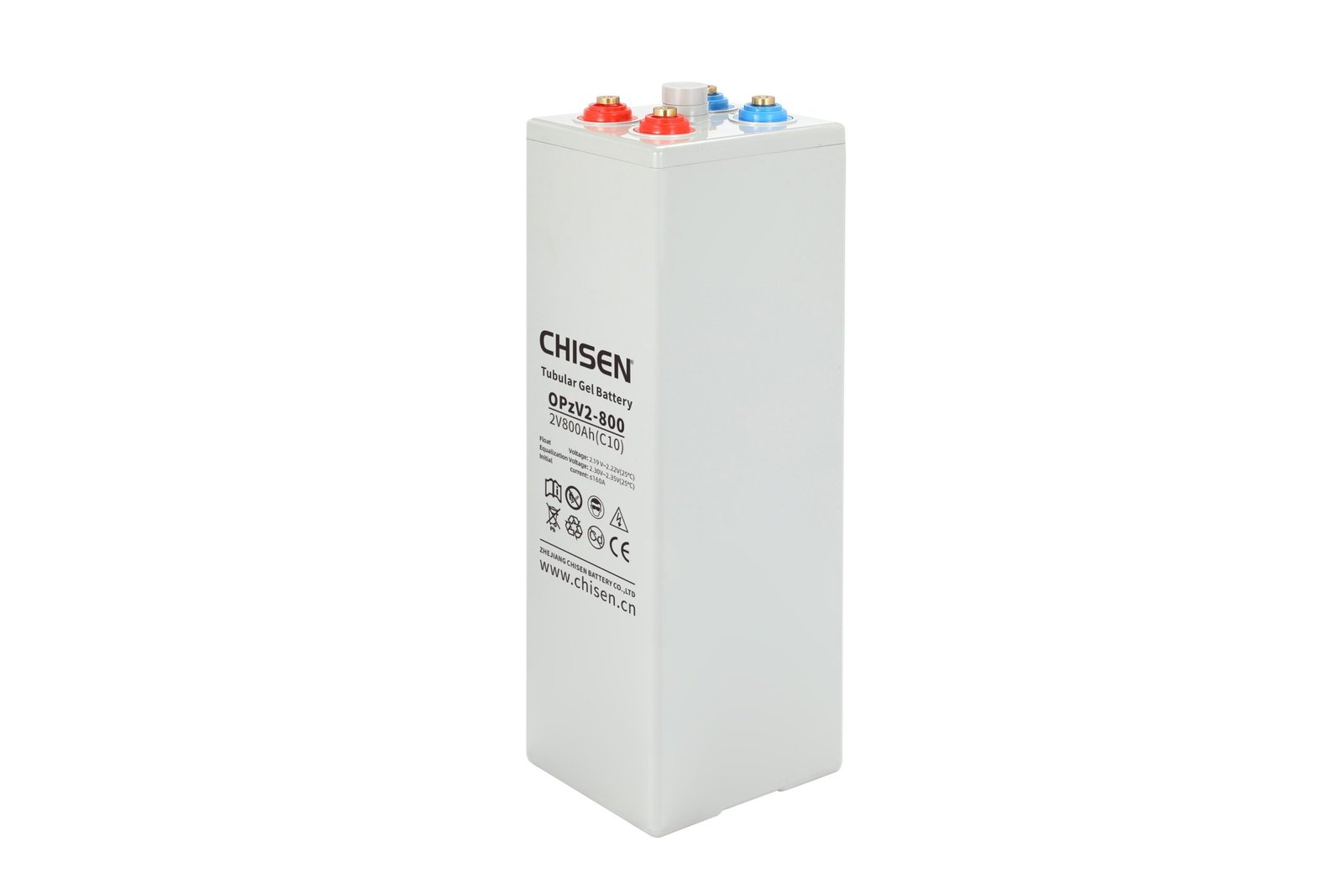
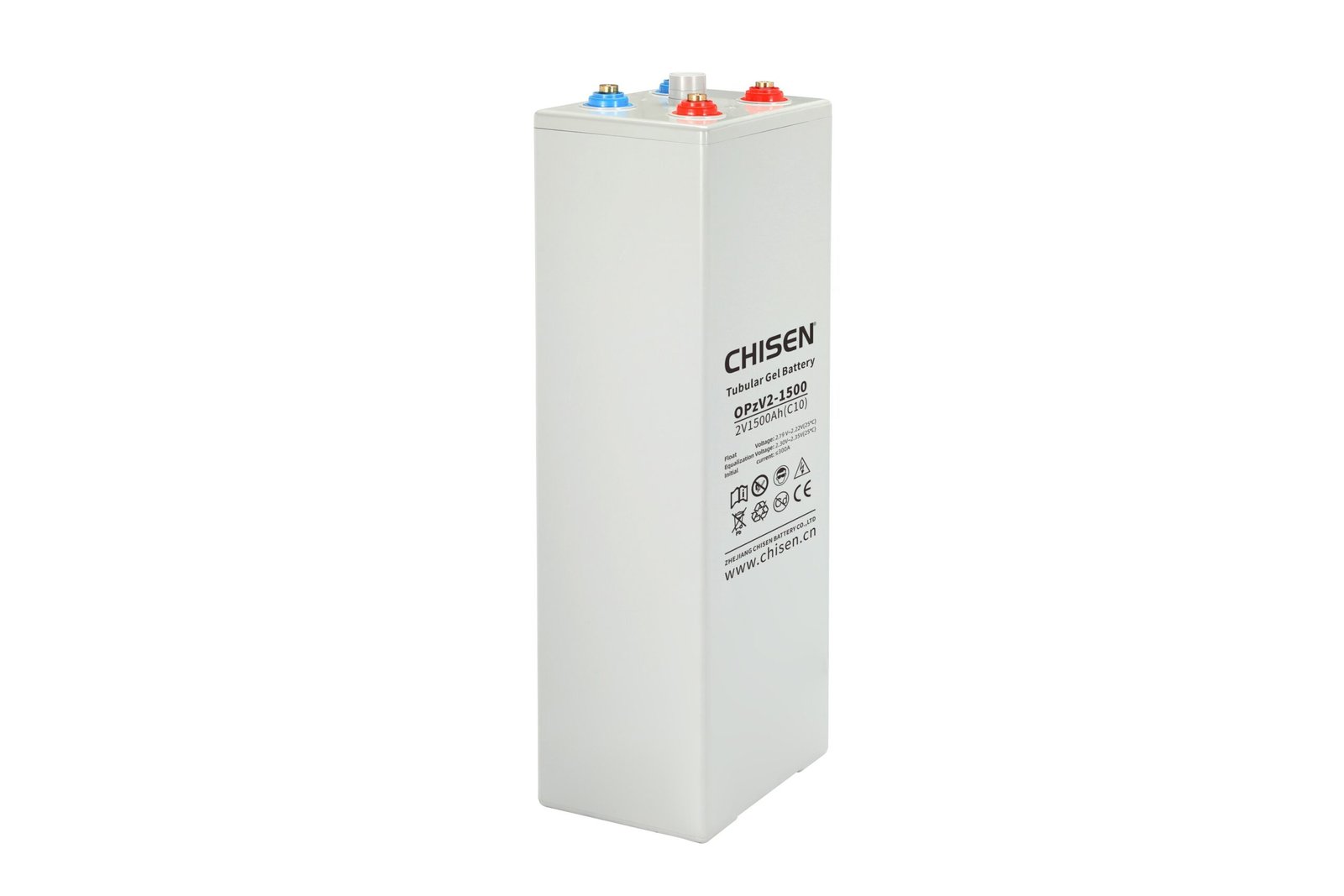
    CHISEN manufactures OPzV tubular gel batteries across two dedicated production lines at our Hangzhou and Jiangsu manufacturing bases. Our OPzV product range includes the CS2V-OPZV series (2V 150Ah to 2V 3,000Ah), with cycle life ratings of 1,200+ cycles at 80% DoD and design lives of 15 to 18 years at 25 degrees C float service. All CHISEN OPzV cells comply with IEC 60896-21/22 and carry CE marking.

    The most popular CHISEN OPzV SKUs for telecom and solar applications include the CS2V-OPZV-200Ah, CS2V-OPZV-400Ah, CS2V-OPZV-600Ah, CS2V-OPZV-800Ah, CS2V-OPZV-1,000Ah, CS2V-OPZV-1,200Ah, CS2V-OPZV-1,500Ah, CS2V-OPZV-2,000Ah, and CS2V-OPZV-3,000Ah. Custom configurations for large project applications, including custom terminal types, terminal torque specifications, and inter-cell connector sizing, are available for volume orders.

    CHISEN OPzV batteries are currently deployed at telecom tower sites across the Middle East (Saudi Arabia, UAE, Oman), Africa (Nigeria, Kenya, Tanzania, South Africa), South Asia (India, Bangladesh, Pakistan), and Southeast Asia (Indonesia, Vietnam, Philippines). Our reference projects include deployments in climates ranging from the desert conditions of Riyadh (ambient up to 50 degrees C) to the highland conditions of Addis Ababa (ambient as low as 5 degrees C at night).

    FAQ

    Q1: What is the real-world cycle life of OPzV batteries in solar telecom applications in hot climates?

    A: In solar telecom applications in hot climates (average ambient 30 to 35 degrees C) with daily cycling at 50% depth of discharge, quality OPzV batteries typically deliver 800 to 1,000 effective cycles before reaching 80% of rated capacity. This translates to approximately 3 to 5 years of service life in these demanding conditions, compared to 1.5 to 3 years for standard AGM under identical conditions. OPzV hot-climate (HC) variants, with enhanced grid alloys and optimised electrolyte formulations, can extend this to 1,000 to 1,200 cycles.

    Q2: Can OPzV batteries be installed in existing AGM battery rooms without modifications?

    A: Yes, with one important consideration: OPzV cells are approximately 15 to 20% larger and 10 to 15% heavier than equivalent AGM cells for the same rated Ah capacity. Procurement teams should verify that the existing battery room has sufficient space and structural support for the OPzV battery bank. All other aspects — system voltage, float charge settings, terminal configurations, and monitoring systems — are compatible with OPzV technology.

    Q3: What float voltage should be set for OPzV batteries, and does it change with temperature?

    A: The standard float voltage for OPzV batteries is 2.25V per cell (27.0V for a 24-cell 48V string) at 25 degrees C. Temperature compensation should be applied: reduce float voltage by approximately 3mV per cell per degree C above 25 degrees C, and increase by the same amount below 25 degrees C. At 35 degrees C, the float voltage should be approximately 2.22V per cell; at 15 degrees C, approximately 2.28V per cell.

    Q4: What is the shelf life of OPzV batteries before they need recharging?

    A: OPzV batteries have a self-discharge rate of approximately 2 to 3% per month at 25 degrees C, meaning they can be stored for 6 to 12 months before requiring a boost charge. Storage at elevated temperatures accelerates self-discharge; at 35 degrees C, the self-discharge rate increases to approximately 4 to 5% per month. Batteries stored for more than 6 months should be given a full equalisation charge before being placed into service.

    Q5: What warranty does CHISEN provide on OPzV batteries, and what does it cover?

    A: CHISEN OPzV batteries carry a 3-year warranty against manufacturing defects, covering premature capacity failure below 80% of rated Ah at the declared float voltage and temperature. The warranty does not cover damage caused by improper charging, physical damage, thermal runaway caused by external heat sources, or operation outside the specified temperature range. Full warranty terms and conditions are provided with each purchase order confirmation.

    Contact CHISEN to receive the full certification document package, IEC test reports, and sample testing protocol.

    Email: sales@chisen.cn

    WhatsApp: +86 131 6622 6999

    www.chisen.cn

  • Mining Battery Applications: Heavy Duty Deep Cycle Requirements

    Mining Battery Applications: Heavy Duty Deep Cycle Requirements 2026

    The mining industry represents one of the most demanding applications for industrial battery systems, with extreme environmental conditions, intensive duty cycles, and safety-critical requirements that push battery technology to its limits. From electric underground mining vehicles to backup power for communication systems and safety equipment, batteries are essential to modern mining operations. Understanding the specific requirements of mining battery applications is essential for manufacturers and suppliers seeking to serve this technically challenging market.

    Mining Industry Battery Market Overview

    The global mining battery market is estimated at approximately USD 3 to 4 billion annually, with the majority of demand coming from underground mining equipment, particularly electric load-haul-dump (LHD) vehicles, underground trucks, and personnel carriers. The transition from diesel to battery-electric mining equipment, driven by ventilation requirements and carbon emission targets, is creating significant new demand for large-format lithium-ion batteries, while lead-acid batteries continue to dominate for backup power, auxiliary systems, and smaller mobile equipment.

    The major mining markets include Australia (the largest producer of iron ore and coal), South Africa (platinum, gold, and coal), Chile (copper and lithium), Canada (nickel, gold, and diamonds), and Peru (copper and gold). Each market has distinct regulatory frameworks, environmental conditions, and battery application requirements. In underground mining, the battery market is concentrated in longwall coal mining regions in Australia, South Africa, and China, where electric LHD vehicles and shuttle cars have replaced diesel equipment.

    The battery-electric vehicle (BEV) transition in mining is accelerating, with major mining companies including BHP, Rio Tinto, Vale, and Anglo American committing to electric mine fleets. The first generation of battery-electric mining vehicles used lead-acid batteries, but lithium-ion has become the preferred chemistry for new vehicle deployments due to its superior energy density and cycle life. However, the existing fleet of lead-acid-powered mining equipment represents a substantial ongoing replacement battery market.

    Underground Mining Vehicle Battery Requirements

    Underground mining vehicles operate in some of the most demanding environments for battery systems. The battery must provide sufficient energy for a full shift of operation (typically 6 to 8 hours), be capable of rapid opportunity charging during shift changes (20 to 30 minutes), withstand continuous vibration and shock loading, operate safely in potentially explosive atmospheres (ATEX/IECEx requirements), and deliver consistent performance in high-temperature underground environments.

    The standard battery format for underground mining vehicles is the 2V traction cell, available in capacities from 500Ah to 2,000Ah per cell. These cells are configured into strings of 24 to 48 cells (for 48V to 96V nominal systems) and assembled into battery packs with integrated battery monitoring, thermal management, and explosion-proof enclosures. Lead-acid traction cells for mining vehicles are rated for 1,500 to 2,000 cycles at 80% DoD under standard conditions.

    For the emerging battery-electric mining vehicle market, LFP lithium-ion batteries are increasingly the preferred chemistry, offering energy densities of 120 to 180 Wh/kg (compared to 25 to 35 Wh/kg for lead-acid), cycle lives of 3,000 to 5,000 cycles, and the ability to opportunity charge to 80% state of charge in 15 to 20 minutes. Major mining vehicle manufacturers including Epiroc, Sandvik, and Komatsu have introduced battery-electric models with LFP battery packs.

    CHISEN is actively developing a range of industrial lithium-ion battery products for mining vehicle applications, with planned introduction in 2026. In the interim, CHISEN continues to supply its proven range of lead-acid traction cells to the global mining market.

    Mining Communication and Safety System Batteries

    Beyond vehicle propulsion, batteries are critical components of mining communication systems, safety equipment, and emergency lighting. Underground mines require reliable communication systems that operate during power outages, making battery backup mandatory for all communication infrastructure including leaky feeder cable systems, PAGA (Public Address and General Alarm) systems, and telephone systems.

    Safety system batteries must comply with strict regulations covering potentially explosive atmospheres. In underground coal mines, batteries must meet ATEX (Europe) or MSHA (United States) certification requirements for use in hazardous locations. These certifications require explosion-proof enclosures, limited surface temperature, and protection against spark ignition. CHISEN mining communication batteries are available with optional explosion-proof enclosures meeting ATEX Zone 1 requirements.

    Emergency lighting batteries in underground mines must provide minimum 4 hours of illumination during power outages to enable safe evacuation. Sealed lead-acid batteries (AGM) are the standard choice for underground emergency lighting applications, providing reliable performance in the warm, potentially humid underground environment. CHISEN 12V 7Ah to 12V 18Ah sealed AGM batteries are widely used in mining emergency lighting applications worldwide.

    Solar Power for Remote Mining Applications

    Many mining operations are located in remote areas without reliable grid power, requiring autonomous power generation solutions. Solar photovoltaic systems with battery storage are increasingly deployed for mining camp power, communication tower power, and monitoring equipment power. The battery bank in these applications must provide reliable power through multi-day cloudy periods and operate in extreme temperatures ranging from minus 20 degrees C in high-altitude mines to plus 50 degrees C in desert locations.

    For remote mining solar applications, CHISEN OPzV 2V cells are the preferred battery choice, offering the combination of deep-cycle capability, wide operating temperature range, and long service life required for off-grid mining environments. CHISEN batteries are deployed at mining sites across the Pilbara (Australia), the Atacama (Chile), the Kalahari (South Africa), and the Peruvian Andes.

    The solar power requirement for a typical remote mining communication tower is 3 to 5 kW of solar panels and a 48V 400Ah battery bank (19.2 kWh), providing 3 to 5 days of autonomy. For larger mining camp applications, battery banks can exceed 1,000 kWh, configured using parallel strings of CHISEN 2V 1,000Ah or 2V 2,000Ah cells.

    CHISEN Mining Battery Solutions

    CHISEN offers a comprehensive range of batteries for mining applications, including the CS2V-TP series (2V 500Ah to 2V 2,000Ah traction cells for underground vehicles); the CS12V-MC series (12V 7Ah to 12V 100Ah sealed AGM for communication and safety systems); and the CS2V-SM series (2V 200Ah to 2V 3,000Ah OPzV cells for solar power systems). All CHISEN mining batteries comply with relevant IEC standards and carry CE marking, with selected products holding ATEX and MSHA certification.

    CHISEN mining batteries are supplied to mining operations across Australia, South Africa, Chile, Peru, and Indonesia, with a distribution network covering all major mining regions. Our technical team provides application engineering support for battery sizing, installation design, and maintenance protocol development for mining battery applications.

    CHISEN invites enquiries from mining companies, mining equipment OEMs, and mining services contractors seeking reliable battery solutions. Contact us at sales@chisen.cn or WhatsApp +86 131 6622 6999.

    Email: sales@chisen.cn | WhatsApp: +86 131 6622 6999

    🌐 www.chisen.cn

  • Cold Chain Solar Storage: Battery Applications in Developing Markets

    Cold Chain Solar Storage: Battery Applications in Developing Markets 2026

    Cold chain infrastructure, the system of temperature-controlled storage and transport that preserves perishable goods from farm to consumer, represents one of the fastest-growing applications for solar-powered battery storage in developing markets. With an estimated one-third of all food produced globally lost to spoilage due to inadequate cold storage, and with vaccine cold chain requirements expanding in the wake of COVID-19 and routine immunisation programmes, the demand for reliable, off-grid cold chain solutions is surging across Africa, South Asia, and Southeast Asia.

    Battery storage is the enabling technology that makes solar-powered cold chain economically viable, providing the energy buffering required to power refrigeration compressors and cooling systems during periods of low or no solar generation. Understanding the cold chain solar battery market, the specific technical requirements, and the emerging business models is essential for battery manufacturers and project developers seeking to participate in this high-impact market.

    The Cold Chain Challenge in Developing Markets

    The cold chain gap in developing markets represents both a humanitarian challenge and a commercial opportunity. In sub-Saharan Africa, approximately 50% of perishable food is lost post-harvest due to inadequate storage, representing an economic loss of USD 4 billion annually. In India, cold chain losses affect approximately 30% of fruit and vegetable production, contributing to food inflation and farmer income instability. In Southeast Asia, the expansion of seafood and horticulture exports is constrained by insufficient cold chain infrastructure at origin.

    The root cause of cold chain gaps in developing markets is inadequate and unreliable electricity supply. Grid electricity in rural areas of Africa and South Asia is frequently unavailable, unreliable, or unaffordable for the continuous power demands of refrigeration. Diesel-powered cold storage is technically viable but increasingly economically uncompetitive with solar-plus-storage, and diesel supply chains are unreliable in remote locations.

    Solar-powered cold chain addresses this challenge directly, providing renewable energy-powered refrigeration that operates independently of the grid. A typical solar cold room (10 to 100 cubic metres) requires 5 to 15 kW of solar panels and a battery bank of 20 to 100 kWh, depending on the temperature requirement, insulation quality, and desired days of autonomy. The battery bank stores solar energy during daylight hours for use during the night and cloudy periods, enabling continuous operation without grid power.

    Battery Requirements for Cold Chain Applications

    Cold chain solar battery applications impose specific technical requirements that differ from standard solar storage applications. The primary requirement is sufficient capacity for multi-day autonomy, as cold chain goods must be maintained at constant temperature continuously and any power interruption results in spoilage. Battery banks for cold chain applications are typically sized for 2 to 5 days of autonomy, representing 2 to 5 times the daily energy requirement.

    The battery duty cycle in cold chain applications is characterised by daily deep cycling with charging during daylight hours and discharge throughout the night and cloudy periods. During peak daytime refrigeration loads, the battery may simultaneously charge and discharge (partial state of charge operation), placing stress on batteries that are not designed for this duty pattern. The recommended battery type for cold chain applications is OPzV tubular gel, which is specifically designed for daily cycling and PSoC operation.

    CHISEN OPzV 2V cells, available from 150Ah to 3,000Ah per cell, are widely used in solar cold chain applications across Africa and South Asia. The 2V cell format allows flexible string configuration to achieve the required system voltage (typically 24V, 48V, or 120V DC) and capacity. CHISEN OPzV cells are rated for 1,200+ cycles at 80% DoD and have demonstrated reliable performance in cold chain applications in ambient temperatures from 5 to 50 degrees C.

    Temperature management of the battery bank is critical in cold chain applications. In hot climates, battery enclosures should be shaded and ventilated to prevent excessive temperature buildup. In high-altitude or cold-climate applications, battery performance may be reduced at low temperatures, requiring battery banks to be oversized by 15 to 25% to account for reduced cold-weather capacity.

    Cold Chain Solar Business Models

    The economics of cold chain solar storage are compelling but require innovative business models to achieve commercial viability at scale. Three business models are emerging as the most successful approaches to deploying solar cold chain in developing markets.

    The first model is the equipment-as-a-service (EaaS) model, in which a company owns and operates the solar cold chain equipment and charges farmers or food businesses a fee for cold storage services. This model reduces the capital barrier for end users and enables professional operation and maintenance of the equipment. Companies including SunCool in Kenya, Solarfreeze in Nigeria, and Ecozen in India have deployed thousands of solar cold rooms under this model.

    The second model is the cooperative model, in which a group of farmers or fishermen collectively own and operate a solar cold storage facility. This model is particularly effective in agricultural markets where smallholder farmers produce perishable crops that require cold storage at a central collection point. Government programmes and international development organisations often support cooperative cold storage through grants or subsidised loans.

    The third model is the anchor tenant model, in which a commercial entity (such as a food processor, export company, or supermarket chain) invests in solar cold chain infrastructure and makes cold storage available to surrounding smallholder farmers as an additional revenue stream. This model leverages the anchor tenant existing commercial infrastructure and provides a reliable market for smallholder farmers.

    Case Studies in Cold Chain Solar Deployment

    In Kenya, the Kenya Agricultural and Livestock Research Organisation (KALRO) has deployed over 200 solar cold rooms for agricultural research and commercial use. Each cold room is powered by a 10 kW solar array with a 48V 400Ah battery bank (19.2 kWh), providing 1.5 days of autonomy. The batteries, primarily CHISEN OPzV 2V 400Ah cells, have operated reliably since 2021 with minimal maintenance.

    In Nigeria, Solarfreeze has deployed over 500 solar-powered cold storage units for fish preservation in coastal communities. Each unit uses a 5 kW solar array with a 48V 300Ah battery bank, providing 24-hour operation for fish preservation at minus 18 degrees C. The project has reduced post-harvest fish losses from 40% to under 5%, improving渔民 incomes by an estimated 30%.

    In India, the National Cold Chain Mission has supported the deployment of over 5,000 solar cold rooms for agricultural produce preservation. These units range from 10 MT to 100 MT capacity and use battery banks sized from 48V 400Ah to 120V 600Ah depending on the storage volume and climate zone. CHISEN batteries have been specified for over 1,000 of these installations.

    CHISEN Cold Chain Solar Solutions

    CHISEN offers a comprehensive range of batteries for cold chain solar applications, with the CS2V-CC series (2V 150Ah to 2V 3,000Ah OPzV cells) designed specifically for the demanding duty cycle of solar cold storage. CHISEN cold chain batteries feature: superior cycling performance with 1,200+ cycles at 80% DoD; wide operating temperature range from minus 20 to plus 50 degrees C; robust terminal design with flame-arrestor vents; and IEC 60896-21/22 compliance with CE marking.

    CHISEN technical team provides free system sizing support for cold chain solar applications, incorporating the specific refrigeration load, ambient temperature profile, solar resource data, and required autonomy to calculate the optimal battery bank configuration. Contact our technical team to receive a custom battery sizing proposal for your cold chain solar project.

    CHISEN invites enquiries from cold chain project developers, NGOs, government agencies, and equipment manufacturers seeking reliable battery solutions for solar cold chain applications. Contact us at sales@chisen.cn or WhatsApp +86 131 6622 6999.

    Email: sales@chisen.cn | WhatsApp: +86 131 6622 6999

    🌐 www.chisen.cn

  • Industrial Battery Charging Guide: Best Practices for Lead-Acid Systems

    Industrial Battery Charging Guide: Best Practices for Lead-Acid Systems 2026

    Proper battery charging is the single most important factor in maximising the service life and performance of industrial lead-acid batteries. Despite being a mature and well-understood technology, lead-acid battery failure due to incorrect charging remains one of the most common causes of premature battery replacement in industrial applications. Understanding the fundamentals of lead-acid battery charging, the key charging parameters, and best practices for different application scenarios is essential for anyone responsible for battery-powered industrial equipment.

    Fundamentals of Lead-Acid Battery Charging Chemistry

    Lead-acid battery charging involves a reversible electrochemical reaction in which lead dioxide (positive plate) and lead (negative plate) are converted back to lead sulphate by the application of electrical energy. The charging process proceeds in three phases: the bulk phase, during which the battery accepts its maximum charging current (typically 10 to 25% of rated capacity) and the voltage rises gradually; the absorption phase, during which the charging current tapers as the battery approaches full charge and the voltage is maintained at a constant value; and the float phase, during which a reduced voltage is applied to maintain the battery at full charge without overcharging.

    The charging efficiency of lead-acid batteries is approximately 85 to 90%, meaning that 10 to 15% of the electrical energy is converted to heat rather than stored chemical energy. This heat generation is most significant during the bulk charging phase and when charging at high rates, and can cause battery temperature to rise significantly if not managed properly.

    Overcharging, the application of charging current after the battery has reached full charge, causes electrolytic decomposition (gassing) and grid corrosion that accelerate battery degradation. Even modest overcharging of 5 to 10% above the recommended float voltage can significantly reduce battery life. Undercharging, the application of insufficient charging current or voltage, causes progressive sulphation of the battery plates that reduces capacity and shortens life.

    Charging Algorithms for Different Applications

    Different industrial applications require different charging algorithms optimised for the specific battery duty cycle. The most common charging algorithms for lead-acid batteries include: constant current, constant voltage (CC-CV); modified constant current (IU); pulse charging; and intermittent charging.

    CC-CV charging is the most widely used algorithm for industrial lead-acid battery charging. The algorithm applies a constant charging current during the bulk phase until the battery voltage reaches the absorption voltage threshold (typically 2.35 to 2.45V per cell at 25 degrees C), then maintains constant voltage until the charging current tapers to C/20 (5% of rated capacity). The absorption time is typically 2 to 4 hours, and the total charge time for a fully discharged battery is 8 to 12 hours.

    Modified constant current (IU) charging is used for applications where controlled charging is not available, such as solar charging systems with simple PWM charge controllers. The IU algorithm applies a constant current until a defined voltage is reached, then maintains that voltage until the current falls to a defined minimum. This algorithm is less precise than CC-CV but is robust and forgiving of imprecise parameter settings.

    Pulse charging and intermittent charging algorithms are used in some specialised applications where reducing battery gassing or minimising grid corrosion are priorities. These algorithms apply charging in controlled pulses or intermittent periods, allowing the battery to equalise between pulses. While some battery manufacturers promote these algorithms as life-extending, independent testing has shown mixed results and CC-CV remains the recommended standard algorithm for lead-acid battery charging.

    Temperature Compensation in Battery Charging

    Temperature compensation is essential for correct battery charging in environments where ambient temperature varies significantly from the standard 25 degrees C reference temperature. The optimal charging voltage for lead-acid batteries decreases as temperature increases and increases as temperature decreases, following a temperature coefficient of approximately minus 3 to minus 4 mV per cell per degree C from the 25 degrees C reference.

    At 25 degrees C, the recommended float voltage is 2.275V per cell (13.65V for a 12V battery). At 35 degrees C, this should be reduced to approximately 2.245V per cell (13.47V for 12V). At 15 degrees C, the float voltage should be increased to approximately 2.305V per cell (13.83V for 12V). Failure to temperature-compensate charging voltage can cause overcharging in hot environments and undercharging in cold environments, both of which reduce battery life.

    Modern industrial battery chargers and UPS systems incorporate automatic temperature compensation using a temperature sensor attached to the battery terminal or placed in the battery compartment. These systems adjust charging voltage in real time based on measured battery temperature, ensuring optimal charging regardless of ambient conditions.

    CHISEN recommends temperature-compensated charging for all industrial lead-acid battery applications. Our range of industrial battery chargers includes built-in temperature compensation as standard, and our technical support team can provide specific charging voltage recommendations for any application temperature range.

    Charging Best Practices by Application

    The optimal charging approach varies by application, and following application-specific best practices is essential for maximising battery life. For motive power applications (forklift trucks, electric vehicles, ground support equipment), the recommended approach is opportunity charging: connecting the battery to the charger whenever the vehicle is not in use, rather than waiting for a full discharge before charging. This approach is sometimes called charging to taste and is proven to extend battery life by avoiding deep discharge cycles.

    For stationary standby applications (telecom, UPS, emergency lighting), the battery is maintained on float charge continuously. The float voltage setting must be carefully optimised for the ambient temperature and the specific battery type. For VRLA AGM batteries, the standard float voltage is 2.275V per cell at 25 degrees C; for OPzV batteries, the float voltage is 2.25V per cell at 25 degrees C. Float voltage should be reduced by approximately 3 mV per cell for each degree C above 25 degrees C.

    For solar cycling applications, the charging parameters must be coordinated with the solar charge controller settings. The charge controller must be sized to provide the bulk charging current required by the battery (typically C/10 to C/5) and must include temperature compensation for correct absorption voltage setting. The controller must also include a low-voltage disconnect (LVD) function to prevent battery discharge below the recommended depth of discharge limit.

    CHISEN provides comprehensive charging guidelines for all its industrial battery products, including recommended float voltage settings, temperature compensation coefficients, equalisation charging protocols, and charger specifications. These guidelines are available from the CHISEN technical support team.

    Equalisation Charging and Battery Maintenance

    Equalisation charging is a controlled overcharge applied periodically to equalise the state of charge of individual cells in a battery string and to reverse mild sulphation. Equalisation charging involves applying a voltage approximately 5 to 10% higher than the normal float voltage for a defined period (typically 2 to 4 hours), which causes all cells to reach full charge regardless of their initial state.

    Equalisation charging should be performed monthly for lead-acid batteries in cycling applications and quarterly for standby applications. The equalisation voltage should be applied at the standard current limit and maintained until the charging current reaches a stable minimum for at least one hour. Equalisation charging should only be performed on vented lead-acid batteries, as the higher voltage during equalisation can cause pressure buildup in sealed batteries if applied excessively.

    Regular equalisation charging is particularly important for batteries that experience irregular cycling patterns, partial state-of-charge operation, or periods of inactivity. In solar applications where the battery may not reach full charge every day, monthly equalisation charging helps maintain cell balance and prevent individual cells from becoming progressively discharged.

    CHISEN recommends monthly equalisation charging for all lead-acid batteries in cycling applications. Our industrial battery chargers include a selectable equalisation charging mode with automatic temperature compensation.

    CHISEN invites enquiries from industrial equipment operators, battery charging system integrators, and maintenance teams seeking charging best practices guidance. Contact us at sales@chisen.cn or WhatsApp +86 131 6622 6999.

    Email: sales@chisen.cn | WhatsApp: +86 131 6622 6999

    🌐 www.chisen.cn

  • Railway Signal Battery Applications: Reliability Requirements

    Railway Signal Battery Applications: Reliability Requirements 2026

    Railway signal batteries represent one of the most demanding and safety-critical applications for industrial battery systems. Railway signalling systems require absolute reliability, as battery failure can result in signal malfunction with potentially catastrophic consequences. Understanding the specific requirements of railway signal battery applications, the relevant standards and certifications, and the procurement criteria used by railway operators is essential for manufacturers and distributors seeking to serve this prestigious but technically demanding market.

    Railway Signalling System Overview

    Railway signalling systems control the safe movement of trains by providing drivers with information about track conditions, speed limits, and the authority to proceed. Modern railway signalling relies on a combination of wayside signals, interlocking systems, and train detection equipment, all of which require continuous electrical power to function reliably. Battery backup is mandatory for all critical signalling equipment, ensuring that signals continue to operate correctly during power outages.

    The railway signalling power supply architecture typically consists of: a primary AC power supply from the national grid; a battery charging system that maintains a float-charged standby battery bank; the standby battery bank that provides power during AC supply failures; and the signalling equipment load, which may include signal heads, track circuits, axle counters, and interlocking components. Battery autonomy requirements for railway signalling applications range from 8 to 72 hours depending on the criticality of the location and the availability of backup generation.

    In areas with unreliable grid power, railway operators specify longer autonomy times and may require solar or diesel backup charging systems in addition to the battery bank. In remote or desert locations where grid power is unavailable, battery banks may be the sole power source, with solar charging maintaining the battery during daylight hours. These off-grid signalling installations require batteries with superior deep-cycle capability and wide operating temperature ranges.

    Battery Technology for Railway Signalling

    The railway signalling battery market is dominated by lead-acid technologies, specifically VRLA AGM and OPzV tubular gel batteries, with LFP gaining adoption in newer installations. The selection of battery technology depends on the specific application requirements including autonomy time, ambient temperature range, required service life, and total cost of ownership considerations.

    VRLA AGM batteries are the most common choice for standard railway signalling applications with autonomy requirements of 8 to 24 hours and ambient temperatures between 0 and 35 degrees C. AGM batteries offer the advantage of sealed, maintenance-free operation that eliminates the risk of acid leakage and reduces ongoing maintenance requirements. CHISEN VRLA AGM signalling batteries are rated for 10-year design life at 25 degrees C and comply with EN 60896-21/22 requirements.

    OPzV tubular gel batteries are preferred for premium signalling applications where longer service life or operation in hotter environments is required. OPzV batteries offer superior cycle life under partial state-of-charge operation and better high-temperature performance than AGM, making them suitable for signalling equipment rooms in warm climates or in locations with poor ventilation. CHISEN OPzV 2V cells are available from 150Ah to 3,000Ah per cell, providing the capacity required for large signalling installations.

    LFP batteries are increasingly specified for new railway signalling installations, particularly where long battery life (15+ years), reduced weight, or improved cycle efficiency are priority criteria. The Battery Management System (BMS) required for LFP systems adds complexity and cost but provides benefits including remote monitoring of battery state of health, cell balancing, and protection against abuse conditions.

    Relevant Standards and Certifications

    Railway signalling batteries are subject to stringent standards and certification requirements that vary by country and railway operator. The most widely recognised international standard for stationary lead-acid batteries is IEC 60896-21/22, which specifies test methods and performance requirements for VRLA batteries. Railway operators typically require batteries that comply with this standard, with type testing reports from an accredited laboratory.

    In Europe, the relevant standard for railway signalling batteries is EN 50272-3 (safety requirements for secondary batteries for stationary applications) and the railway-specific EN 50155 standard, which covers electronic equipment used in railway applications including battery charging systems. In the United States, AREMA (American Railway Engineering and Maintenance-of-Way Association) publishes recommended practices for railway signalling systems, including battery specifications.

    China railway signalling battery requirements are governed by the China Railway Corporation (CRC) technical specifications, which require products to pass type testing at a CRCC (China Railway Construction Certification Center) approved laboratory. CHISEN has obtained CRCC certification for its railway signalling battery range, enabling direct supply to Chinese railway projects.

    The UK railway network (Network Rail) specifies batteries according to its own product acceptance process, which requires independent testing and approval through the Network Rail Approved Products List. Similar approval processes apply in Germany (Deutsche Bahn), France (SNCF), and other major railway markets.

    Procurement and Specification Criteria

    Railway operators specify battery procurement requirements that reflect the safety-critical nature of the application. Key specification criteria include: design life (typically 10 to 15 years at 25 degrees C); float voltage tolerance (batteries must maintain capacity at the specified float voltage); high-rate discharge performance (batteries must deliver rated capacity at the C/10 rate for 10 hours); mechanical strength (containers and terminals must withstand vibration and shock per IEC 60068); and temperature range (batteries must operate correctly from minus 25 to plus 55 degrees C).

    Environmental compliance is increasingly important in railway battery procurement. Railway operators in Europe and North America require REACH and RoHS compliance documentation, battery recycling certificates, and conflict minerals declarations. CHISEN maintains comprehensive compliance documentation for all its railway signalling battery products.

    Battery monitoring is an increasingly common requirement for railway signalling battery installations. Modern signalling equipment rooms are equipped with battery monitoring systems that track individual cell voltages, string current, and ambient temperature, providing alarm notifications when parameters deviate from specified ranges. CHISEN railway signalling batteries are compatible with all major battery monitoring systems and include optional integrated voltage monitoring taps for cells that do not include monitoring hardware.

    CHISEN Railway Signalling Battery Solutions

    CHISEN offers a comprehensive range of batteries for railway signalling applications, including the CS12V-RS series (12V 100Ah to 12V 230Ah VRLA AGM for standard signalling applications) and the CS2V-RS series (2V 150Ah to 2V 3,000Ah OPzV cells for premium signalling applications). All CHISEN railway signalling batteries comply with IEC 60896-21/22 and carry CE marking, and selected products hold CRCC, Network Rail, and DB approval.

    CHISEN railway signalling batteries are in service at over 3,000 railway signalling installations across China, Southeast Asia, the Middle East, and Africa. Our products have demonstrated reliable performance in some of the most challenging railway environments, including desert railways in Saudi Arabia, high-altitude railways in Tibet, and tropical railways in Malaysia and Indonesia.

    CHISEN invites enquiries from railway engineering companies, signalling system integrators, and railway operator procurement departments. We offer technical support for battery specification, system design, and installation. Contact us at sales@chisen.cn or WhatsApp +86 131 6622 6999.

    Email: sales@chisen.cn | WhatsApp: +86 131 6622 6999

    🌐 www.chisen.cn

  • Solar Street Light Battery Guide: Technical Selection 2026

    Solar Street Light Battery Guide: Technical Selection 2026

    Solar street lighting represents one of the most successful applications of off-grid solar energy, providing reliable public lighting in locations where grid connection is expensive, impractical, or impossible. The battery is the critical enabling component of any solar street light system, storing solar energy during daylight hours for use during the night. Selecting the right battery for solar street light applications requires understanding the specific duty cycle, environmental conditions, and performance requirements unique to this application.

    Solar Street Light Market Overview

    The global solar street lighting market is estimated at USD 8 to 10 billion annually as of 2025, with growth projected at 15 to 20% CAGR through 2030. The market is driven by government programmes to expand public lighting in developing countries, municipal energy efficiency initiatives, off-grid rural electrification projects, and commercial and residential solar lighting products.

    The largest markets for solar street lights include India, China, Southeast Asia, Africa, and Latin America. India has deployed over 1 million solar street lights under its various rural electrification programmes, with state government utilities driving the majority of procurement. China has deployed an estimated 5 million solar street lights, primarily through municipal government programmes. In Africa, solar street lighting is a key component of urbanisation programmes in Kenya, Nigeria, Tanzania, and South Africa.

    The battery typically represents 15 to 25% of the total system cost in a solar street light, making battery selection a significant procurement decision. Battery performance directly determines the reliability and longevity of the street light system, as premature battery failure renders the entire system non-functional until the battery is replaced.

    Battery Requirements for Solar Street Light Applications

    Solar street light batteries face a demanding duty cycle that combines daily cycling with extended periods of partial state-of-charge (PSoC) operation and exposure to harsh environmental conditions. The typical duty cycle involves a 6 to 10 hour discharge period each night, followed by a 6 to 8 hour charge period during daylight hours, with the battery spending a significant portion of its time in a partially charged state between cycles.

    The depth of discharge for solar street light batteries varies by system design and latitude. In equatorial regions with consistent solar irradiation, batteries are typically sized to provide 10 to 12 hours of lighting per night at a depth of 50 to 60% DoD. In higher latitudes with seasonal variation in day length, batteries must be sized for longer winter nights and may experience 70 to 80% DoD during winter months. Systems designed for 3 to 5 days of autonomy (for cloudy weather) require battery banks sized accordingly larger.

    The operating environment for solar street light batteries is typically harsh, with high ambient temperatures in tropical and subtropical regions, cold temperatures in temperate climates, and exposure to rain, dust, and in coastal areas, salt spray. Battery enclosures must provide IP65 or higher protection against dust and water ingress, and battery thermal management must be addressed through enclosure design, shading, or passive cooling.

    Battery Technology Comparison for Solar Street Lighting

    Three battery technologies are commonly used in solar street light applications: lead-acid (AGM and gel), lithium-ion (LFP), and to a lesser extent, nickel-cadmium (Ni-Cd). Each technology has distinct characteristics that make it more or less suitable for solar street light applications.

    Lead-acid batteries, specifically sealed AGM and gel types, have been the dominant battery technology for solar street lights since the 1990s. The advantages of lead-acid for solar street lights include: low upfront cost (USD 50 to 150 per unit for a 12V 100Ah battery); proven, well-understood technology with predictable performance; wide availability from multiple suppliers; and straightforward installation and replacement. The disadvantages include: lower energy density than lithium alternatives (requiring larger, heavier enclosures); shorter cycle life than LFP in hot-climate applications; and sensitivity to high temperatures and over-discharge.

    LFP batteries are increasingly specified for solar street lights in premium applications where total cost of ownership, weight, or space constraints favour their superior performance. LFP advantages include: 3,000 to 5,000 cycle life at 80% DoD (significantly better than lead-acid); 50 to 60% lighter than equivalent lead-acid batteries; consistent voltage throughout the discharge cycle; and superior hot-climate performance. Disadvantages include: 2 to 3x higher upfront cost than lead-acid; requirement for a Battery Management System (BMS); and limited compatibility with some traditional solar charge controller designs.

    For most solar street light applications, CHISEN recommends sealed AGM batteries for budget-sensitive projects and OPzV gel batteries for premium applications requiring long life in hot climates. LFP batteries are recommended for large-scale municipal projects where total cost of ownership analysis favours the lower replacement frequency of lithium technology.

    Sizing Solar Street Light Batteries

    Battery sizing for solar street lights follows a four-step methodology. First, determine the nightly energy consumption in watt-hours: multiply the LED fixture wattage by the required burning hours per night. For example, a 30W LED fixture burning 11 hours per night consumes 330 Wh per night. Second, calculate the required battery capacity by dividing the nightly energy consumption by the system voltage (typically 12V) and applying a depth-of-discharge limit. At 50% DoD, the required capacity is 330 Wh divided by 12V equals 27.5 Ah, divided by 0.50 DoD equals 55 Ah rated capacity.

    Third, apply a temperature correction factor for hot-climate installations. At 35 degrees C ambient temperature, a correction factor of 1.25 to 1.30 is applied, requiring a battery of approximately 70 Ah rated capacity. Fourth, apply an autonomy factor for cloudy weather days. For 2 days of autonomy, multiply the single-night capacity by 2, yielding a final battery size of approximately 140 Ah at 12V.

    CHISEN provides a free battery sizing calculator for solar street light applications, available from our technical support team. The calculator incorporates latitude-specific solar yield data, temperature correction factors, and autonomy requirements to provide accurate battery sizing recommendations for any location worldwide.

    CHISEN Solar Street Light Battery Range

    CHISEN offers a dedicated range of batteries designed specifically for solar street light applications, with the CS12V-SSL series (12V 40Ah to 12V 200Ah sealed AGM) and the CS12V-SSLG series (12V 40Ah to 12V 150Ah sealed gel). Both series are designed for the demanding daily cycling requirements of solar street light applications, with cycle life ratings of 600+ cycles at 50% DoD for AGM and 800+ cycles at 50% DoD for gel batteries.

    CHISEN solar street light batteries feature: reinforced plate grids for enhanced deep-cycle performance; high-density active material formulations for improved capacity retention; flame-arrestor vents for safe operation in enclosed enclosures; and robust ABS containers with UV-resistant finish for long-term outdoor durability.

    CHISEN invites enquiries from solar street light manufacturers, project developers, and government procurement agencies. We offer competitive pricing on our solar street light battery range, with technical support for system design and sizing. Contact us at sales@chisen.cn or WhatsApp +86 131 6622 6999.

    Email: sales@chisen.cn | WhatsApp: +86 131 6622 6999

    🌐 www.chisen.cn