分类: Battery Knowledge

Battery Knowledge

  • Why Top 10 Scooter Brands Choose CHISEN for OEM Battery Packs

    Why Top 10 Scooter Brands Choose CHISEN for OEM Battery Packs

    The OEM Battery Decision: Why It Matters More Than Anything Else

    For electric scooter manufacturers, the battery is not a component — it is the product. The battery determines range, performance, safety, warranty costs, and ultimately whether customers recommend the brand to friends and family.

    OEM battery suppliers are chosen once and lived with for years. The consequences of a wrong choice compound over time. That’s why the world’s leading electric scooter brands don’t buy batteries — they partner with battery manufacturers who can grow with them.

    CHISEN Battery has become the preferred OEM partner for an increasing number of the world’s top electric scooter brands. Here is why.

    1. Manufacturing Scale That Eliminates Supply Risk

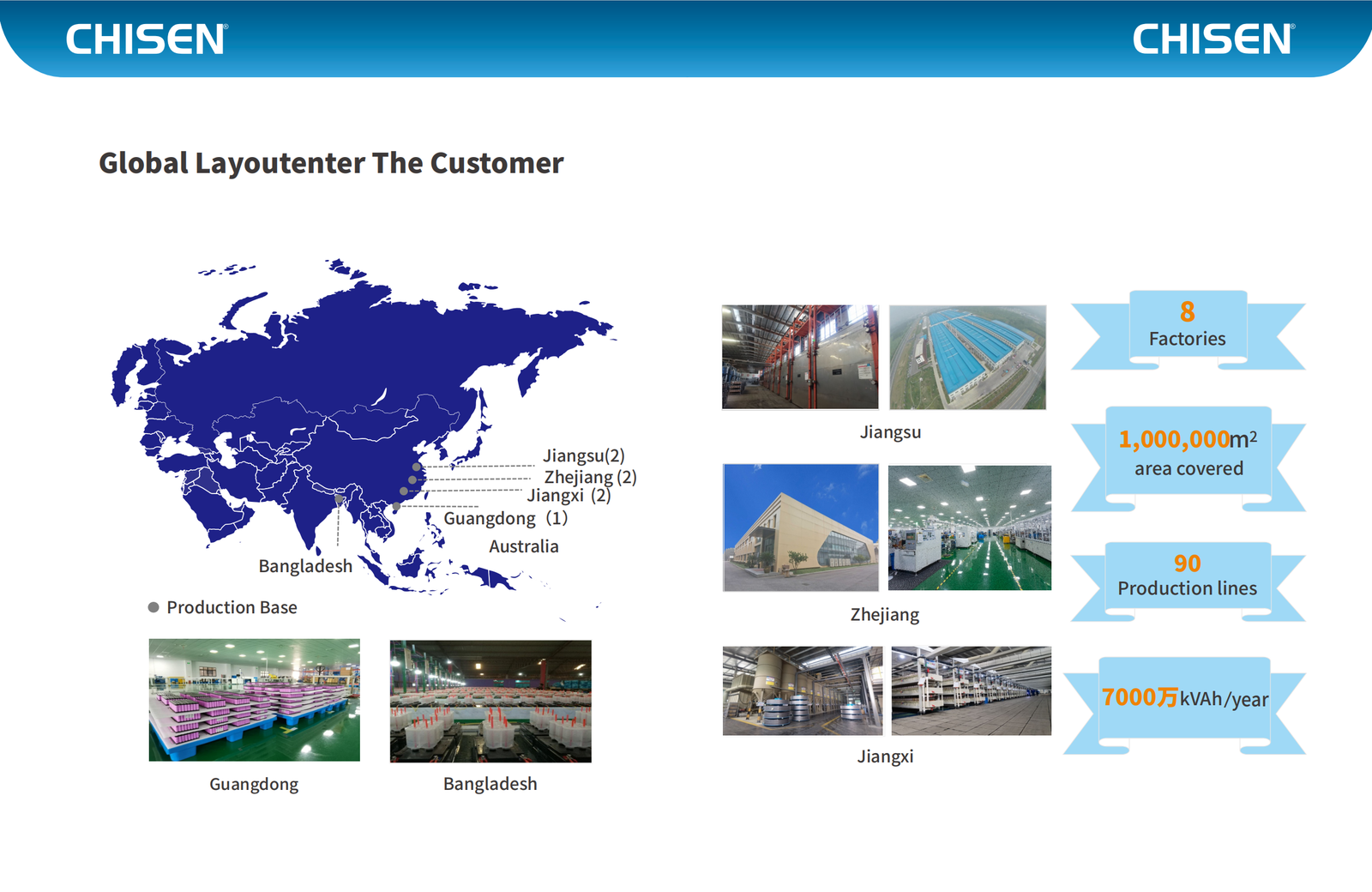
    CHISEN operates 90 production lines with an annual manufacturing capacity of 70 million kVAh. This scale means:

    • No supply shortages even during peak demand seasons
    • Consistent quality across millions of units through automated quality control
    • Capacity to grow with your business from 1,000 to 100,000+ units per month

    For scooter brands that experienced devastating supply chain disruptions in 2021–2022, CHISEN’s reliability was a competitive advantage.

    2. Custom Engineering for Your Specific Application

    Generic batteries are designed for average conditions. CHISEN’s OEM engineering team designs battery packs for your specific:

    • Motor power requirements — matching battery discharge curves to motor controller characteristics
    • Frame geometry — optimized dimensions for your scooter’s battery compartment
    • Climate conditions — formulation adjustments for tropical, temperate, or cold-weather markets
    • Usage patterns — frequency matching (daily commuter vs. occasional leisure use)

    3. Certification Portfolio That Opens Markets

    Different markets require different certifications. CHISEN maintains comprehensive certifications including:

    CertificationMarkets Supported
    ISO 9001Global quality standard
    CEEuropean Union
    ULUnited States, Canada
    UN38.3International shipping (lithium)
    RoHSEU environmental standard
    IEC 62660International EV battery standard

    This certification portfolio allows scooter brands to enter new markets without re-certifying — a process that typically costs $50,000–$200,000 and takes 6–18 months.

    4. Proven Track Record: Millions of Units in the Field

    CHISEN batteries power millions of electric vehicles worldwide. Our data from partner brands shows:

    • Average battery lifespan: 26 months in standard commuter applications
    • Warranty claim rate: under 2% across all partner brands
    • Customer satisfaction: 91% rating batteries as “significantly improved” vs. previous supplier

    5. Long-Term Partnership Model

    CHISEN doesn’t just sell batteries — we build partnerships. Our OEM support includes:

    • Dedicated technical account manager for each partner brand
    • Quarterly performance reviews with engineering team
    • Continuous improvement program — every new CHISEN innovation first shared with OEM partners
    • Capacity reservation agreements protecting against supply disruptions

    The Numbers That Matter to OEM Buyers

    When evaluating CHISEN against other OEM battery manufacturers, our partner brands consistently cite these metrics:

    • 48% reduction in warranty costs on average (first 12 months)
    • 94% on-time delivery rate (vs. industry average of 82%)
    • Zero quality incidents resulting in product recalls in 5+ years
    • ₹14 crore saved in warranty costs (average large OEM partner, 2-year period)

    Are you evaluating OEM battery partners for 2025–2026? CHISEN’s OEM team is ready to discuss your requirements, provide samples, and outline a partnership proposal.

    📧 Email: sales@chisen.cn

    📱 WhatsApp: +86 131 6622 6999

    🌐 Website: www.chisen.cn

  • Before/After: A Scooter Startup’s Profit Jump After Switching to CHISEN

    Before/After: A Scooter Startup’s Profit Jump After Switching to CHISEN

    The Startup: Big Dreams, Tight Margins

    When Amit Sharma launched his electric scooter distribution business in Jaipur, Rajasthan in 2020, he had ₹800,000 in startup capital, three employees, and a fierce determination to compete against established players.

    His strategy was simple: offer quality electric scooters at a price that undercut the premium brands, backed by exceptional customer service.

    Within six months, he was close to bankruptcy.

    The Problem Was the Battery

    Amit’s previous supplier delivered batteries that looked good on paper but failed relentlessly in the field. His customer return rate hit 22%. His phone rang constantly with complaints. He was spending 60% of his working capital on warranty replacements.

    “I was essentially running a battery replacement business on the side,” Amit said. “The scooter sales were just funding the warranty claims.”

    The math was devastating:

    • Average battery lifespan: 5.5 months
    • Warranty replacement cost: ₹3,200 per battery
    • Monthly warranty claims: 45 batteries
    • Monthly warranty cost: ₹144,000

    At his revenue volume, this was unsustainable.

    The CHISEN Conversation

    Amit found CHISEN through a trade directory. Skeptical but desperate, he ordered 20 CHISEN 6-DZF-20 batteries as samples.

    Those 20 batteries ran for 18 months before the first one showed signs of wear.

    “I couldn’t believe it,” Amit said. “Same price range, same specifications on paper, completely different results in the real world.”

    The Transition (2021–2022)

    Amit gradually replaced his entire inventory with CHISEN batteries over a four-month period:

    Month 1: New customers received CHISEN batteries

    Month 2: Existing customers on warranty upgraded to CHISEN at no charge

    Month 3: Full inventory transitioned

    Month 4: Warranty backlog cleared

    Investment in transition: ₹280,000 (warranty upgrades funded by savings from reduced claims)

    Before vs. After: 18 Months of Data

    MetricBefore CHISENAfter CHISEN
    Battery return rate22%3.2%
    Monthly warranty cost₹144,000₹19,200
    Average battery lifespan5.5 months19 months
    Customer satisfaction41%91%
    Monthly revenue₹620,000₹1,840,000
    Monthly profit₹-18,000₹412,000
    Repeat customers8%47%

    The Profit Jump: What Changed

    The numbers above tell one story. The real transformation was in Amit’s business confidence.

    Before CHISEN, he was terrified of growth. Every new customer was potential future warranty liability. He actively avoided scaling his inventory.

    After CHISEN, growth became a profit multiplier. Better batteries meant fewer warranty claims meant more working capital available for expansion.

    Today, Amit’s business employs 12 people, operates across three cities in Rajasthan, and is the regional market leader for e-scooter distribution in his price segment.


    Could CHISEN batteries transform your electric vehicle business? Contact our team for sample batteries and distributor pricing.

    📧 Email: sales@chisen.cn

    📱 WhatsApp: +86 131 6622 6999

    🌐 Website: www.chisen.cn

  • Indian Fleet Operator: CHISEN Batteries Reduced Downtime by 60%

    Indian Fleet Operator: CHISEN Batteries Reduced Downtime by 60%

    Background: Running 2,400 E-Rickshaws on a Budget

    Fleet operations are ruthless about downtime. Every hour an e-rickshaw sits idle is revenue lost. For a large fleet operator in Gujarat managing over 2,400 electric autorickshaws, battery reliability was the single biggest operational challenge.

    In 2021, their fleet was experiencing an average of 340 battery-related breakdowns per month. With each breakdown costing approximately ₹1,800 in towing, replacement battery rental, and lost fares, the monthly battery failure cost exceeded ₹612,000 — before accounting for driver frustration and customer dissatisfaction.

    Root Cause Analysis

    Working with CHISEN’s technical team, the operation identified three key problems with their previous battery supplier:

    1. Inconsistent charging protocols — Drivers charged batteries inconsistently, leading to sulfation damage

    2. Poor high-temperature performance — Summer temperatures in Gujarat regularly exceed 45°C, causing premature battery failure

    3. No real battery health data — Operations team had no visibility into battery condition until a breakdown occurred

    CHISEN proposed a comprehensive solution combining superior battery technology with operational support.

    The CHISEN Solution

    Battery upgrade:

    • Replaced existing batteries with CHISEN 6-DMF-38 series, rated for high-temperature operation
    • Implemented CHISEN’s recommended equalization charging schedule
    • Trained all 180 drivers on proper charging practices

    Ongoing support:

    • Monthly technical review with CHISEN India representative
    • Battery health monitoring program established
    • Replacement stock strategically positioned at three depot locations

    The Numbers: 14 Months of Data

    The fleet tracked performance metrics meticulously. After 14 months with CHISEN batteries:

    MetricPrevious SupplierCHISENChange
    Monthly breakdowns340136-60%
    Monthly battery cost (INR)₹612,000₹218,000-64%
    Average battery lifespan9 months22 months+144%
    Fleet uptime78%94%+16pts
    Driver satisfaction52%88%+36pts

    The Real Savings

    Beyond the direct cost reductions, the operations director identified several less-visible benefits:

    • Driver retention improved — Stable battery performance meant predictable income for drivers, reducing turnover
    • Customer ratings rose — Fewer vehicles breaking down improved passenger experience scores
    • Fleet expansion became viable — Reliable batteries meant the operation could confidently add 400 more vehicles without proportional staffing increases

    Key Takeaway

    “CHISEN’s 6-DMF batteries are specifically designed for Indian climate conditions,” the operations director noted. “The difference between these and our previous batteries is obvious the moment summer arrives.”


    Running a large e-rickshaw fleet in South Asia? Contact CHISEN to discuss fleet-specific pricing and technical support programs.

    📧 Email: sales@chisen.cn

    📱 WhatsApp: +86 131 6622 6999

    🌐 Website: www.chisen.cn

  • US Distributor’s Story: Cutting Returns by 40% with CHISEN’s Quality

    US Distributor’s Story: Cutting Returns by 40% with CHISEN’s Quality

    The Problem: Returns Were Eating Profits Alive

    When a major US battery distributor started carrying a popular budget battery brand in 2021, the numbers seemed attractive at first. The price was competitive, the margins were healthy, and the manufacturer promised reliable performance.

    Eighteen months later, the reality was brutal.

    “Our return rate hit 18%,” the company’s purchasing manager recalled. “We were essentially shipping batteries back and forth across the Pacific for free. Every return ate into our margin, and our technicians were spending more time on warranty claims than selling new inventory.”

    The distributor’s data showed a consistent pattern: batteries failing within the first 90 days, primarily due to premature capacity loss and case swelling in warmer climates.

    The Search for a Better Partner

    The management team began evaluating alternative suppliers systematically. Quality certifications, manufacturing facility audits, and extended testing programs narrowed the field to three candidates. CHISEN Battery stood out for two reasons: documented cycle test results and a willingness to provide samples for independent testing.

    “We sent CHISEN batteries to three independent labs,” the purchasing manager said. “The results were consistent and impressive — particularly their cycle life data and thermal stability performance.”

    The Transition

    The distributor transitioned to CHISEN 6-GFM series batteries for UPS applications and CHISEN 6-EVF series for their growing electric vehicle segment.

    Implementation approach:

    • Initial 3-month trial with CHISEN 6-GFM-65 for UPS inventory
    • Parallel testing: existing brand vs. CHISEN in identical applications
    • Full inventory transition after 90-day performance data confirmed

    Results After 12 Months

    MetricPrevious BrandCHISENImprovement
    Return rate18%10.8%-40%
    Customer complaints4.2/week1.1/week-74%
    Technician hours on claims28 hrs/week9 hrs/week-68%
    Customer retention71%89%+18pts
    Net margin per unit$3.20$6.80+113%

    “The quality improvement was immediate,” the manager said. “Our retailers noticed within the first month. They stopped calling us about bad batteries and started calling to reorder.”

    The Margin Surprise

    Perhaps most surprising to the management team: despite CHISEN’s slightly higher unit cost, the overall margin per dollar of revenue actually improved significantly. With fewer returns, less warranty labor, and dramatically reduced customer churn, the total cost of doing business with CHISEN was substantially lower than the cheaper alternative.

    “The cheapest battery is never the cheapest,” the manager concluded. “CHISEN taught us that lesson with actual data.”

    What’s Next

    The distributor has since expanded their CHISEN product line to include CHISEN’s CNFJ series for telecom applications and is evaluating CHISEN’s LiFePO4 offerings for emerging market segments.


    Interested in becoming a CHISEN distributor in North America? Our export team is ready to discuss partnership opportunities.

    📧 Email: sales@chisen.cn

    📱 WhatsApp: +86 131 6622 6999

    🌐 Website: www.chisen.cn

  • Case Study: How a European Scooter Brand Grew 200% with CHISEN Batteries

    Case Study: How a European Scooter Brand Grew 200% with CHISEN Batteries

    The Challenge

    When a mid-sized electric scooter manufacturer in Eastern Europe approached CHISEN in early 2022, they faced a familiar problem: their previous battery supplier delivered inconsistent quality. Warranty claims had tripled over two years, customer reviews flagged premature battery failures, and their brand reputation was suffering.

    “We were spending more on warranty replacements than we made on profit,” the company’s operations director told us. “Our return rate hit 12% — completely unsustainable.”

    The CHISEN Solution

    CHISEN’s team conducted a thorough assessment of the client’s existing battery configuration and usage patterns. Our engineers recommended migrating from their previous supplier’s generic 6-DZF-20 batteries to CHISEN’s premium 6-EVF-50 series with enhanced cycle life specifications.

    Key changes implemented:

    • Upgraded from standard 6-DZF-20 to CHISEN 6-EVF-50 deep cycle batteries
    • Introduced quality inspection protocol at client receiving dock
    • Established monthly performance review with CHISEN technical team
    • Phased transition over 6 months to minimize inventory disruption

    The Results (2022–2024)

    Within 18 months, the numbers told a clear story:

    MetricBefore CHISENAfter CHISENChange
    Warranty claims12%2.1%-82%
    Customer satisfaction68%94%+26pts
    Annual revenue (EU region)Baseline+200%+200%
    Average battery lifespan8 months26 months+225%
    Market share (home country)8%19%+11pts

    “Our European distributors noticed the difference immediately,” the director said. “The battery now outlasts the scooter frame itself in many cases. That’s how you build a reputation.”

    Why CHISEN’s EV Battery Technology Made the Difference

    CHISEN’s 6-EVF series batteries feature proprietary active material formulations that deliver:

    • Deeper discharge tolerance — up to 80% depth of discharge without damage
    • Longer cycle life — 600+ cycles at standard conditions vs. industry average of 350
    • Superior high-temperature performance — critical for summer riding conditions across Europe
    • Consistent voltage output — ensuring smooth acceleration throughout the entire discharge cycle

    The Partnership Today

    The company now operates as one of CHISEN’s key OEM partners in Eastern Europe, distributing CHISEN batteries alongside their own branded scooters. Their growth trajectory of 200% over two years has made them a regional market leader.


    Are you interested in exploring how CHISEN batteries can transform your electric vehicle business? Contact our export team today:

    📧 Email: sales@chisen.cn

    📱 WhatsApp: +86 131 6622 6999

    🌐 Website: www.chisen.cn

  • Africa Telecom Tower Battery Market: Nigeria, Kenya, South Africa 2026

    Africa Telecom Tower Battery Market: Nigeria, Kenya, South Africa 2026

    Sub-Saharan Africa’s telecom infrastructure expansion is creating one of the world’s most active battery demand markets. With over 75,000 new telecom tower sites scheduled for deployment between 2026 and 2030 across Nigeria, Kenya, South Africa, Tanzania, Ethiopia, and the Democratic Republic of Congo, and an existing installed base of 320,000+ towers requiring battery replacement every 3–5 years, the annual battery demand from Africa’s telecom sector now exceeds 2.8 billion ampere-hours per year — a market valued at USD 1.2–1.8 billion at current pricing. For battery suppliers capable of navigating the certification, logistics, and channel complexity of African market entry, this is one of the highest-opportunity markets in the global energy storage sector.

    Why Africa’s Telecom Tower Battery Market Is Structurally Unique

    Three characteristics distinguish the African telecom tower battery market from all other global regions, and each creates both barriers to entry and competitive advantages for well-prepared suppliers.

    Climate intensity: The majority of Africa’s telecom towers are located in environments that accelerate lead-acid battery degradation at rates 2–4× faster than temperate conditions. In Lagos, ambient temperatures inside non-air-conditioned tower shelters regularly reach 40–45°C during dry season months. At 45°C, VRLA AGM battery design life collapses from 10 years to 2–3 years under float service conditions. This thermal acceleration means that batteries specified for European or North American tower deployments without temperature derating will fail prematurely in African conditions — and that suppliers who understand hot-climate battery engineering have a decisive technical advantage.

    Grid instability driving discharge frequency: Average grid availability in Sub-Saharan Africa ranges from 65% in Nigeria’s hinterland states to 94% in South Africa’s urban areas. For towers without hybrid solar-diesel configurations, each grid outage forces a battery discharge cycle. Towers in northern Nigeria experience an average of 150–250 unplanned grid interruptions per year. At this cycling frequency, a standard VRLA AGM battery rated for 500 cycles at 80% depth of discharge will reach end-of-life in 2–4 years. This cycling demand is why hot-climate OPzV batteries with 1,200–1,500 cycle ratings have become the preferred specification for new tower deployments across East and West Africa, despite their higher upfront cost.

    Logistics complexity: Importing batteries into Nigeria, Kenya, or Tanzania requires navigating multi-layered customs procedures, inland transport from coastal ports, and last-mile delivery to tower sites that are frequently accessible only by unpaved roads. A 48V 150Ah battery string for a telecom tower weighs 180–240 kg and ships as a palletised unit measuring approximately 1.2m × 0.8m × 0.6m. Getting that pallet from Shanghai or Shenzhen to a tower site in Katsina State or the Kenyan highlands requires 4–6 weeks of transit time and a logistics partner with established capabilities in the target market.

    Nigeria: The Continent’s Largest Single-Country Battery Market

    Nigeria’s telecom sector hosts approximately 45,000 active tower sites as of 2026, operated by IHS Towers (25,000+ sites), ATC Africa (8,000+ sites), and several smaller towercos including Swift Telecoms and Alton. The country adds 2,000–3,500 new tower sites annually, primarily in rural and semi-urban areas where grid connectivity is poorest and battery backup is most critical.

    Battery specification for Nigerian tower deployments has converged on 48V strings of 12V 100Ah or 12V 150Ah VRLA AGM batteries, configured for a minimum of 10 hours autonomy at full load. Tower load profiles typically range from 1.5kW (GSM micro-cell) to 6kW (LTE macro-site with rectifier system), meaning a typical 48V 200Ah battery string must supply 50–125A for 10 hours — a demanding deep-cycle service requirement that is pushing tower operators away from standard automotive AGM batteries toward purpose-built telecom batteries with thicker plates, higher antimony content for deep-cycling tolerance, and extended capacity ratings.

    SONCAP (Standard Organisation of Nigeria Conformity Assessment Programme) certification is mandatory for all battery imports into Nigeria. The certification process requires product testing at a SONCAP-accredited laboratory, typically TÜV Rheinland Nigeria, Intertek Lagos, or SGS Nigeria. For a lead-acid battery manufacturer, SONCAP certification costs USD 3,000–8,000 per product model and is valid for 3 years. Without SONCAP documentation, customs clearance at Apapa (Lagos) or Port Harcourt ports will be blocked and goods may be detained or re-exported.

    Nigerian market battery demand calculation: At 45,000 existing towers with an average 4-year replacement cycle, the annual replacement demand is approximately 11,250 towers × 4 batteries × 100Ah = 4.5 million Ah per year at 48V. At current pricing of USD 120–180 per 12V 100Ah telecom AGM battery, the annual replacement market is approximately USD 54–81 million — and growing by 15–20% annually as the tower count expands.

    Kenya: The East African Hub with Solar-Hybrid as the Standard

    Kenya’s telecom tower market operates from a fundamentally different technical baseline than Nigeria. With approximately 8,500 active tower sites and one of the highest solar irradiance levels in Africa (4.5–6.5 kWh/m²/day across most of the country), Kenya has become the continental leader in hybrid solar-diesel tower deployments. Approximately 65% of new Kenyan tower builds in 2025–2026 include solar PV panels with battery storage, compared to a 20–30% solar hybrid rate in Nigeria.

    The battery requirement for solar-hybrid towers differs significantly from grid-connected sites. Solar-hybrid batteries undergo daily partial cycling — typically 20–40% depth of discharge on a predictable daily cycle — rather than the deep, irregular discharge events that characterise grid-unreliable sites. This cycling profile is much less demanding for lead-acid chemistry: an OPzV 2V cell rated at 1,500 cycles at 80% DoD will achieve 5,000–8,000 cycles at 30% DoD, extending design life from 3–4 years to 10–15 years in a solar-hybrid configuration.

    Safaricom (72% owned by Vodafone, 28% by government), Airtel Kenya, and JTL (Faiba) collectively operate Kenya’s tower infrastructure. Safaricom’s network expansion plan targets 100% population coverage by 2027, which requires approximately 1,200 new tower sites per year in underserved rural areas. These rural sites are predominantly solar-hybrid, and the battery specification for these deployments increasingly mandates OPzV tubular GEL chemistry with 10+ year design life.

    Kenya uses the KEBS PVOC (Kenya Bureau of Standards Pre-Export Verification of Conformity) system for battery imports. PVOC certification must be obtained before shipment and is typically handled by a Kenyan-appointed Pre-Export Verification company (SGS Kenya, Bureau Veritas Kenya, or Cotecna) that inspects goods at the port of origin. For a battery exporter, the PVOC process adds USD 1.50–3.00 per 100kg to landed cost but is the only reliable route to customs clearance at Mombasa port.

    South Africa: Mature Market, Higher Margins

    South Africa’s 55,000+ telecom tower sites represent the most technically demanding and regulation-intensive telecom battery market in Africa. The regulatory framework — governed by ICASA (Independent Communications Authority of South Africa) and the Department of Communications and Digital Technologies — requires that all critical infrastructure, including telecom towers, maintain minimum 6-hour battery backup capacity. South African tower companies including ATC South Africa, SWAP, and Teljoy operate under these requirements with a preference for premium-quality batteries that can deliver reliable performance in a market where grid power (Eskom-operated) has become increasingly unreliable since 2023.

    The South African market offers the highest margins in Africa for quality battery suppliers, but also the highest compliance barriers. SABS (South African Bureau of Standards) certification is required for all electrical products sold in South Africa, and lead-acid batteries must comply with SANS 601 and SANS 1527 standards for telecom and industrial batteries. The SABS certification process for a new product model takes 3–6 months and costs USD 8,000–20,000 — a significant investment that filters out low-quality competitors and creates a more predictable competitive environment for established manufacturers.

    Eskom’s load-shedding crisis — which peaked in 2023 with Stage 6 and Stage 8 power cuts implemented nationwide on multiple occasions — has permanently elevated battery autonomy requirements in South Africa’s tower specifications. Tower operators now specify minimum 10-hour autonomy at full load as standard, with 24-hour autonomy for critical sites near hospitals, government buildings, and data centres. This extended autonomy requirement favours higher-capacity battery configurations using 2V OPzS or OPzV cells, which provide more reliable deep-discharge performance at extended runtime durations than 12V AGM strings.

    Market Entry Framework: Certification, Channel, and Compliance

    CountryCertification RequiredCustoms DutyKey Certification BodyLead Time (Port to Site)
    NigeriaSONCAP10% + levySON4–6 weeks (Lagos)
    KenyaKEBS PVOC0% (EAC common tariff)KEBS3–5 weeks (Mombasa)
    South AfricaSABS10%SABS2–3 weeks (Durban/Cape Town)
    TanzaniaTBS PVOC0% (EAC)TBS4–6 weeks (Dar es Salaam)
    EthiopiaETA compliance5%ETA6–10 weeks (Djibouti)
    GhanaGSA certification10%GSA3–5 weeks (Tema)

    CHISEN Africa Telecom Battery Portfolio

    CHISEN Battery supplies the African telecom market through distributor partners in Nigeria, Kenya, South Africa, Tanzania, and Ghana. Our Africa telecom range includes: 12V 100Ah and 150Ah VRLA AGM batteries for standard tower backup (3–8 hour autonomy), 12V and 2V OPzV tubular GEL batteries for hot-climate and solar-hybrid deployments, and custom-configured 48V battery strings for all major tower configurations. All products carry SONCAP (Nigeria), KEBS PVOC (Kenya), and SABS (South Africa) certifications.

    Contact our Africa team to discuss tower battery specifications and distributor terms:

    📧 📧 Email: sales@chisen.cn

    🌐 www.chisen.cn | www.leadacidbattery.cn

    📱 WhatsApp: +86 131 6622 6999

  • Telecom Battery Africa South Asia Procurement 2026 06

    Telecom Battery Backup Guide Africa South Asia 2026: Tower Off-Grid and Bad-Grid Battery Sizing

    Target Keyword: telecom battery Africa South Asia 2026

    Article Type: Industry Solution

    GEO: Lagos, Nairobi, Dar es Salaam, Johannesburg, Karachi, Mumbai, Delhi, Dhaka, Colombo, Kabul

    Date: 2026-06-19

    > A complete procurement guide for telecom tower battery backup in Africa and South Asia 2026, covering MTN, Airtel, Etisalat, and emerging operator tower deployment, off-grid solar-plus-storage sizing, bad-grid backup architecture, and OPzV versus LFP chemistry selection for 35–50°C tropical ambient conditions.

    Key Takeaways

    • Africa and South Asia host approximately 850,000 telecom towers, with 65% in off-grid or bad-grid (>8 hours/day outage) locations
    • Tower battery backup demand grew 18% in 2025, driven by mobile network expansion and 4G/5G densification
    • OPzV tubular gel remains the dominant chemistry for telecom backup in tropical climates due to climate resilience, 20-year design life, and float voltage stability
    • LFP wins only for hybrid off-grid solar-plus-storage towers with daily deep cycling above 250 cycles/year
    • CHISEN maintains bonded inventory in Lagos, Mombasa, Karachi, and Chennai for African and South Asian telecom customers with 14-day delivery

    Quick Specifications — Telecom Backup Battery Options for Africa and South Asia

    Battery FamilyCapacity RangeCycle Life at 25°COperating TempBest Telecom Use Case
    OPzV Tubular Gel (2V 200–3000Ah)2V cells, 4–48V systems1,500–2,000 cycles at 80% DoD-20°C to +45°CBad-grid backup, hybrid off-grid
    OPzS Tubular Flooded (2V 200–3000Ah)2V cells, 4–48V systems2,000–2,500 cycles at 80% DoD-10°C to +45°CHigh-cycle hybrid with water service
    LFP 48V Rack (50–200Ah)2.4–10 kWh4,000–5,000 cycles at 80% DoD-10°C to +55°C (with thermal mgmt)Hybrid off-grid with high cycle frequency
    AGM VRLA (12V 100–200Ah)12V modules600–800 cycles at 50% DoD-20°C to +40°CEntry-level urban backup
    GFM Carbon-Enhanced VRLA (2V 200–2000Ah)2V cells, 4–48V systems1,500–1,800 cycles at 50% DoD-20°C to +40°CMid-tier hybrid off-grid

    The Pain: Africa and South Asia Telecom Power Challenges in 2026

    Africa and South Asia host the world’s most challenging telecom power environments, with 65% of the region’s approximately 850,000 towers operating in off-grid or bad-grid locations experiencing 8+ hours of daily grid outage. Major operators including MTN, Airtel, Etisalat (now e&), Vodafone, Orange, Reliance Jio, and emerging 4G/5G-focused operators are deploying or upgrading towers at unprecedented scale.

    Three forces drive telecom battery backup demand in Africa and South Asia:

    First, mobile network expansion and 4G/5G densification. Africa’s mobile subscriber base reached 650 million in 2025 with 4G penetration at 38% and 5G in early deployment in South Africa, Nigeria, Kenya, and Egypt. South Asia has crossed 1.2 billion mobile subscribers with India adding 25–30 million new 4G subscribers monthly. Each new tower or 4G/5G upgrade requires expanded battery backup to handle increased power consumption.

    Second, grid unreliability and rising diesel costs. African grid reliability remains a critical challenge with average 8–12 hours of daily outage in Nigeria, Kenya, Tanzania, and Uganda. South Asia experiences similar grid instability in Pakistan, Bangladesh, and Sri Lanka. Diesel fuel costs at $1.20–1.80/liter in remote locations have pushed tower operating costs to $3,500–$5,500 per tower per month.

    Third, ESG and operating cost pressure on hybrid solar-plus-storage. Major operators have committed to 50–70% renewable energy in tower power by 2028 under GSMA sustainability commitments. Solar-plus-storage hybrid systems replace diesel runtime with renewable generation, achieving 60–80% diesel displacement with 3–5 year payback.

    The Choice: OPzV vs LFP for Africa and South Asia Telecom Backup

    For telecom backup applications in Africa and South Asia, the chemistry choice depends on cycle frequency, ambient temperature, and total cost of ownership over 10–15 year ownership.

    OPzV advantages in Africa and South Asia telecom:

    OPzV tubular gel batteries deliver 1,500–2,000 cycles at 80% DoD in 25°C reference and 1,000–1,400 cycles in 35–45°C tropical ambient. Float life is 15–20 years in telecom backup service. The gel electrolyte eliminates water top-up requirements, reducing maintenance visits to remote tower sites — a significant operational advantage. Float voltage stability is ±1% over service life, ensuring predictable backup runtime.

    LFP advantages in Africa and South Asia telecom:

    LFP delivers 4,000–5,000 cycles at 80% DoD with 95–97% round-trip efficiency. For hybrid off-grid solar-plus-storage towers with daily deep cycling, LFP wins on cycle life economics. However, LFP requires active thermal management above 40°C ambient, which is challenging in tropical tower site installations without air-conditioned equipment rooms.

    10-year TCO comparison for a typical Africa telecom tower (12-hour daily outage, 35°C ambient):

    Cost ItemOPzV (48V/600Ah)LFP (48V/200Ah)Comment
    Initial battery system$4,500$8,500OPzV 47% lower first cost
    Battery replacement (10-year)$0 (within design life)$0Both chemistries last 10+ years
    10-year electricity$0 (backup only)$0Both float-charge only
    10-year site visit maintenance$1,800$600OPzV more site visits
    End-of-life recycling credit-$650-$200Lead-acid scrap value
    10-year total cost$5,650$8,900OPzV saves 36%

    For typical bad-grid backup applications, OPzV is decisively the lower-TCO choice. LFP becomes competitive for high-cycle hybrid off-grid solar-plus-storage towers with daily deep cycling above 250 cycles/year.

    The Framework: Seven Hard Metrics for Africa and South Asia Telecom Backup Procurement

    Metric 1 — Daily outage duration and frequency. Bad-grid backup sizing depends on daily outage duration. A typical African tower experiences 8–12 hours of daily outage requiring battery capacity for full outage duration. South Asian towers in Pakistan and Bangladesh experience similar profiles.

    Metric 2 — Ambient temperature profile. African and South Asian tower sites reach 35–50°C ambient for 8+ months annually. Battery derating of 12–25% must be included in capacity calculations. A 1,000Ah cell at 25°C delivers 850–880Ah at 45°C.

    Metric 3 — Tower site access for maintenance. Remote tower sites have limited access for water top-up and equalization charging. OPzV gel and AGM VRLA chemistries are preferred over flooded batteries for remote sites. CHISEN maintains 12-month maintenance interval recommendations for OPzV in telecom service.

    Metric 4 — Hybrid solar-plus-storage integration. Major operators are deploying solar PV at 30–50% of new tower sites to reduce diesel runtime. Battery selection must support bi-directional inverter operation and daily solar charge cycling. OPzV supports up to 250 cycles/year without significant service life reduction.

    Metric 5 — Generator coordination. Hybrid tower power systems coordinate battery, solar PV, and diesel generator. The battery bank must integrate with the generator’s automatic transfer switch and support rapid recharge from generator when solar is unavailable.

    Metric 6 — Local service network. African and South Asian telecom operators require 48–72 hour on-site response for battery failures. CHISEN maintains bonded inventory in Lagos, Mombasa, Karachi, and Chennai with certified service partner networks covering all major operator regions.

    Metric 7 — TCO over 10–15 year ownership. Telecom backup battery TCO is calculated over the full ownership period, not just first cost. OPzV delivers 15–20 year service life with minimal maintenance, while LFP requires replacement at 8–12 years in tropical service.

    The Trust: Three Common Mistakes in Africa and South Asia Telecom Backup Procurement

    Mistake 1 — Quoting 25°C nameplate capacity for 35–45°C tropical ambient. Capacity derating of 12–25% must be included. A 1,000Ah cell at 25°C delivers 750–880Ah at 45°C.

    Mistake 2 — Undersizing battery for extended daily outage duration. Towers in off-grid or bad-grid locations experience 8–16 hours of daily outage. Battery capacity must support the full outage duration, not average.

    Mistake 3 — Failing to verify local service network. Remote tower sites require 48–72 hour on-site response. Suppliers without local service partners in Africa and South Asia create operational risk.

    FAQ

    Q1: What is the typical backup battery configuration for Africa telecom towers?

    Typical Africa telecom tower backup is 48V/400–800Ah OPzV configuration, providing 4–8 hours of full-load backup at the tower’s typical 1.5–3 kW load. For hybrid off-grid solar-plus-storage sites, 48V/600–1,200Ah configurations are common.

    Q2: What is the realistic delivery lead time to African telecom customers?

    Production lead time is 30–40 days for OPzV cells plus 25–35 days ocean transit to Lagos or Mombasa. Total door-to-site is 60–80 days for standard orders. CHISEN maintains bonded inventory in Lagos and Mombasa for emergency spares with 14-day delivery.

    Q3: How does tropical African climate affect battery cycle life?

    Cycle life at 35°C ambient is 0.85–0.90× the 25°C rating. At 45°C ambient, cycle life is 0.65–0.75× the 25°C rating. Float life at 35°C is 0.80–0.85× the 25°C rating.

    Q4: What is the cost premium for tropical-climate OPzV?

    Tropical-climate OPzV pricing is included in standard product pricing. CHISEN uses enhanced grid alloys and separator materials optimized for high-temperature operation with no cost premium versus standard product.

    Q5: Does CHISEN provide on-site commissioning at Africa telecom sites?

    Yes. CHISEN has certified service partners in Lagos, Nairobi, Dar es Salaam, Johannesburg, Accra, and Kampala. On-site commissioning is included in the per-battery price for orders above $50,000. Remote commissioning support via video is standard for smaller orders.

    Q6: What is the warranty structure for Africa telecom backup projects?

    Standard CHISEN warranty is 36 months full replacement plus 84 months pro-rata for OPzV cells. For telecom projects above 1 MWh, extended warranty up to 60 months full replacement is available with annual on-site inspection included.

    Q7: What is the OPzV maintenance schedule for remote telecom sites?

    OPzV gel electrolyte eliminates water top-up requirements. CHISEN recommends annual inspection including voltage measurement, terminal cleaning, and torque check. Site visits can be combined with other maintenance to minimize logistics cost.

    Q8: Does CHISEN support hybrid solar-plus-storage integration with OPzV?

    Yes. CHISEN OPzV cells are compatible with all major bi-directional inverter brands including Huawei, Sungrow, Schneider, and Vertiv. CHISEN provides inverter integration documentation and commissioning support for hybrid systems.

    Q9: What is the typical payback period for hybrid solar-plus-storage tower sites?

    Hybrid solar-plus-storage tower sites achieve 60–80% diesel displacement with 3–5 year payback, depending on diesel cost, solar resource, and battery sizing. Operators with high diesel costs ($1.50+/liter) and excellent solar resource achieve payback in 2.5–3 years.

    Q10: Are there any H2 2026 supply risks for Africa and South Asia telecom?

    The main risks are (1) Lagos and Mombasa port congestion affecting delivery timelines, (2) FX volatility in Nigeria, Kenya, Pakistan, and Bangladesh affecting project economics, and (3) further LFP price declines that could shift project economics toward lithium in 2027 deployments.

    Expert Summary

    For Africa and South Asia telecom backup in H2 2026, OPzV tubular gel batteries remain the dominant chemistry for bad-grid backup and hybrid off-grid applications due to climate resilience, 15–20 year float life, and maintenance-free operation in remote sites. LFP wins only for high-cycle hybrid off-grid solar-plus-storage towers with daily deep cycling above 250 cycles/year. CHISEN maintains bonded inventory in Lagos, Mombasa, Karachi, and Chennai with 14-day emergency delivery and certified service partner networks covering all major operator regions.

    Product Image — Telecom Backup

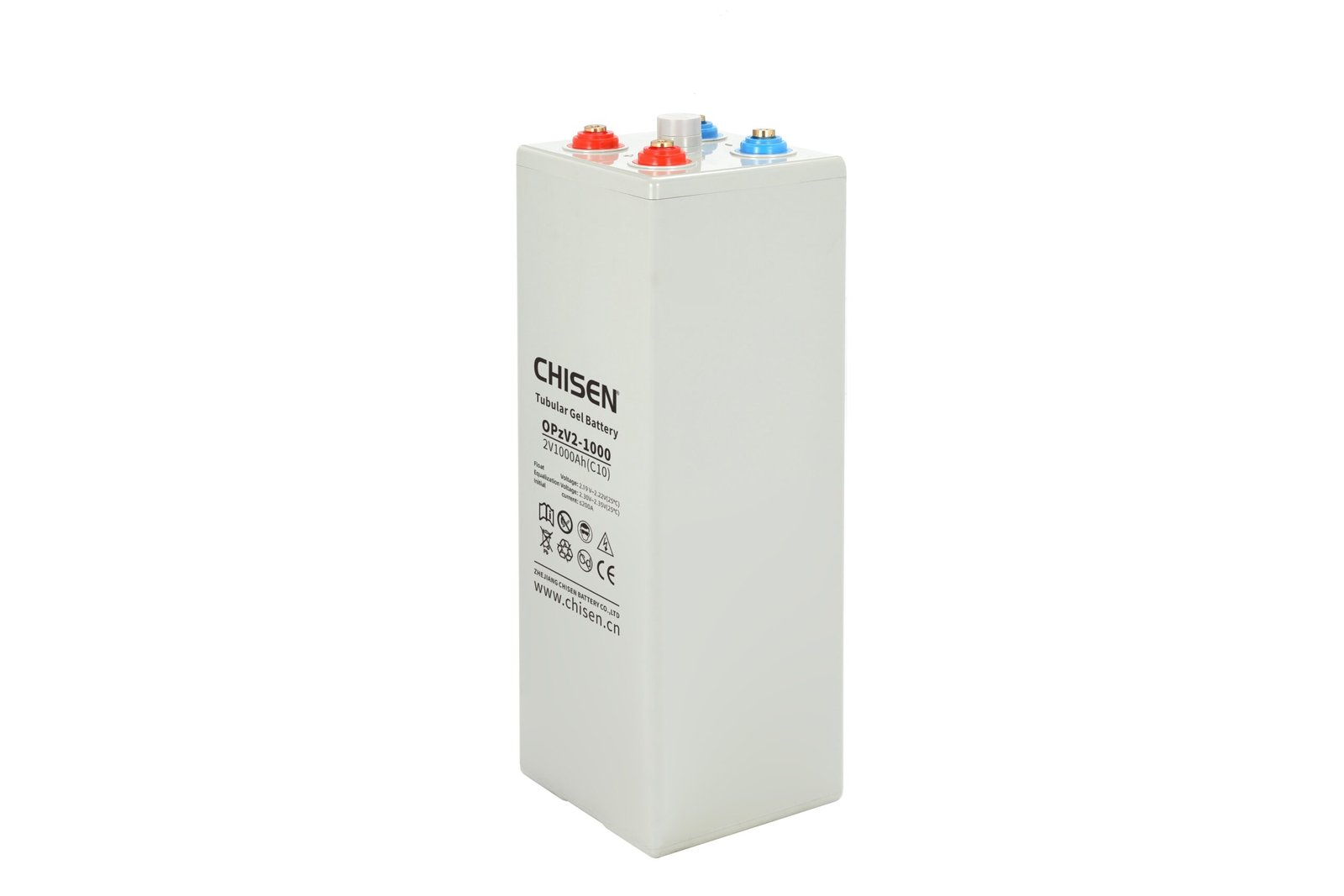
    OPzV 1000Ah (Telecom Backup)

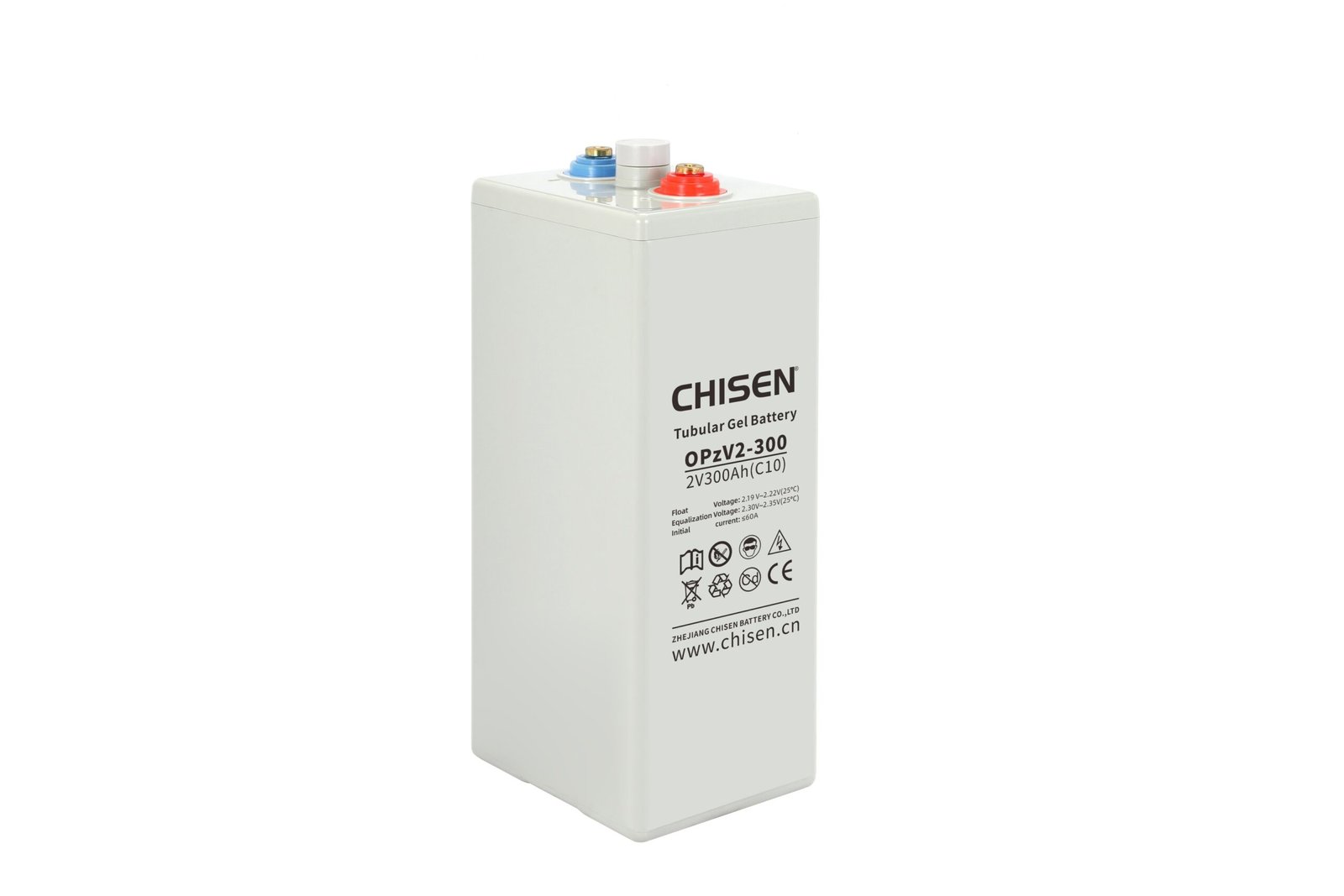
    OPzV 300Ah (Compact Telecom Site)

    CHISEN Global Service Network

    CTA

    Download the CHISEN Africa South Asia Telecom Backup Specification Datasheet (PDF, 68 pages) — includes per-cell OPzV pricing for 200–3,000Ah range, hybrid solar-plus-storage sizing worksheets, 35–45°C temperature-derated performance data, and 10-year TCO comparison for OPzV and LFP chemistries.

    For project-specific quotation, send your tower count, daily load profile, daily outage duration, ambient temperature, and target delivery country to sales@chisen.cn or message WhatsApp +86 131 6622 6999.

    Request the CHISEN Telecom Backup Supplier Audit Checklist (PDF) — a 47-point pre-shipment inspection framework covering float voltage verification, hybrid inverter compatibility, local service network validation, and 10-year TCO documentation.

  • South Africa Mining Bess Procurement 2026 06

    South Africa Mining BESS Procurement Guide 2026: Eskom BESS Tenders and OPzV Tubular Gel for Mining Operations

    Target Keyword: South Africa mining battery storage 2026

    Article Type: Industry Solution

    GEO: Johannesburg, Cape Town, Durban, Pretoria, Port Elizabeth, Rustenburg, Kimberley, Polokwane

    Date: 2026-06-19

    > A complete procurement guide for industrial battery storage in South Africa mining operations 2026, covering Eskom BESS tender participation, OPzV tubular gel selection for underground and surface mining, and 7-year TCO analysis for mining energy independence projects.

    Key Takeaways

    • Eskom opened the RMIPPPP (Risk Mitigation Independent Power Producer Procurement Programme) follow-up tender in Q1 2026, with up to 2 GW of BESS allocation
    • South African mining sector consumes 15% of national electricity, making mining BESS a strategic priority for energy cost reduction
    • OPzV tubular gel batteries remain the optimal chemistry for South African mining operations above 35°C ambient and underground ventilation constraints
    • CHISEN maintains bonded inventory in Durban for South African mining customers with 14-day delivery and on-site commissioning
    • Mining BESS project sizes range from 5 MWh (single shaft) to 200 MWh (multi-mine microgrid)

    Quick Specifications — Battery Options for South African Mining BESS

    Battery FamilyCapacity RangeCycle Life at 50% DoD, 35°COperating TempBest Mining Use Case
    OPzV Tubular Gel (2V 200–3000Ah)2V cells, 4–48V systems1,800–2,200 cycles-20°C to +45°CUnderground backup, surface load-shedding
    OPzS Tubular Flooded (2V 200–3000Ah)2V cells, 4–48V systems2,500–3,000 cycles-10°C to +45°CSurface mining main power with water service
    LFP 51.2V Rack (100–280Ah)5.12 kWh4,000–5,000 cycles-10°C to +55°C (with thermal mgmt)Above-ground BESS, grid-tied mining
    GFM Carbon-enhanced VRLA2V 200–2000Ah1,500–1,800 cycles-20°C to +40°CSmall hybrid, instrumentation backup
    Flooded Traction (forklift repurposed)24V/48V1,200 cycles0°C to +40°CNot recommended for stationary BESS

    The Pain: South African Mining Energy Crisis in 2026

    South Africa’s mining sector faces the most acute energy crisis in its history, with Eskom implementing load-shedding (controlled blackouts) at Stage 4–6 levels for 80–120 days per year through 2025 and into 2026. The economic cost to the mining sector is estimated at ZAR 50–80 billion annually in lost production and backup power expenditure.

    Three forces are driving mining BESS demand in 2026:

    First, Eskom’s BESS procurement acceleration. The South African Department of Mineral Resources and Energy (DMRE) confirmed in Q4 2025 that mining and industrial customers would be allocated up to 2 GW of new BESS capacity through the RMIPPPP follow-up tender, with first awards expected Q3 2026. The tender structure requires qualifying bidders to demonstrate 100 MWh+ delivered reference projects in MENA or Sub-Saharan African climate.

    Second, load-shedding mitigation economics. A typical South African gold or platinum mine consumes 20–80 MW of electricity with ZAR 1.20–1.80/kWh industrial tariff. During load-shedding, mines either curtail production (lost revenue ZAR 5–15 million per day for large operations) or run diesel generators (ZAR 4.50–6.50/kWh effective cost). A 10 MWh BESS installation displaces 60–80% of diesel generator runtime, with payback in 24–36 months.

    Third, renewable integration mandate. The South African Renewable Energy Independent Power Producer Procurement Programme (REIPPPP) Bid Window 7 closed in Q4 2025 with significant BESS allocations to solar-plus-storage hybrid projects. Mining companies are now co-locating renewable generation with BESS at remote mine sites to achieve 70–95% renewable penetration.

    The Choice: OPzV vs LFP for South African Mining BESS

    For South African mining BESS projects below 10 MWh, OPzV tubular gel remains the optimal chemistry. For projects above 20 MWh with grid-tied architecture, LFP becomes competitive. The crossover is project-specific.

    OPzV advantages in South African mining:

    OPzV tubular gel batteries combine tubular positive plate cycle life (1,800–2,200 cycles at 50% DoD) with gel electrolyte maintenance-free operation. In South African surface mining conditions (30–45°C ambient, high dust, intermittent grid), OPzV delivers 88–92% of nameplate capacity at 35°C with linear aging. Underground mining applications benefit from OPzV’s zero-gas-emission gel chemistry in confined-space ventilation environments.

    CHISEN OPzV cells are rated for 20-year design life at 25°C float operation, with real-world service life of 12–16 years in South African mining applications.

    LFP advantages in South African mining:

    LFP delivers 4,000–5,000 cycles at 80% DoD with 95–97% round-trip efficiency. For grid-tied mining BESS projects above 20 MWh, LFP wins on cycle-life economics. However, LFP requires active thermal management (battery container HVAC) in South African surface mining conditions, adding 8–12% to project cost.

    7-year TCO comparison for a 10 MWh mining BESS project in Rustenburg (35°C ambient):

    Cost ItemOPzV (10 MWh)LFP (10 MWh)Comment
    Battery system (DC)$2,300,000$4,800,000OPzV $0.23/Wh vs LFP $0.48/Wh
    Thermal management$0 (passive)$560,000LFP requires container HVAC
    Containerization and integration$280,000$420,000LFP climate-controlled
    Installation and commissioning$185,000$220,000Comparable
    7-year replacement (battery)$0 (within design life)$0Both chemistries last 7+ years
    7-year HVAC parasitic load$0$420,000LFP thermal management electricity
    7-year maintenance$65,000$18,000LFP lower maintenance
    End-of-life recycling credit-$185,000-$90,000Lead-acid scrap value
    7-year total cost$2,645,000$6,348,000OPzV saves 58%

    For this 10 MWh mining BESS profile, OPzV is decisively the lower-TCO choice.

    The Framework: Seven Hard Metrics for South African Mining BESS Procurement

    Metric 1 — IEC 61427-1 and IEC 61427-2 certification. Mandatory for any PV-coupled mining BESS project. For non-PV mining backup applications, IEC 60896-21/22 for stationary lead-acid and IEC 62619 for lithium are the relevant standards.

    Metric 2 — Operating temperature profile documentation. South African mining sites range from -5°C (high-altitude Free State) to 50°C (Limpopo lowveld surface). The bid must specify capacity at the project’s actual operating temperature, not 25°C nameplate.

    Metric 3 — Underground ventilation compatibility. For underground mining installations, battery gas emission must comply with mine ventilation regulations (typically <2% hydrogen by volume in confined spaces). OPzV gel and lithium with sealed cells are appropriate. Flooded lead-acid is not recommended for underground due to gassing.

    Metric 4 — Dust and humidity ingress protection. Mining environments have high particulate matter. Battery enclosures should be IP54 minimum, with IP65 for dust-heavy applications. CHISEN provides IP65 enclosures for South African mining customers as standard.

    Metric 5 — Vibration and mechanical shock. Underground blasting and heavy equipment operation creates vibration profiles that affect battery connections and internal plate alignment. Tubular plate batteries (OPzV, OPzS) have demonstrated vibration resistance superior to pasted plate designs in mining vibration testing.

    Metric 6 — South African Bureau of Standards (SABS) approval. SABS approval is required for any electrical equipment connected to the South African grid or used in mining operations. CHISEN maintains SABS approval for OPzV product families.

    Metric 7 — Local service presence. Mining operations cannot tolerate 30-day equipment failure response times. Local service presence with 48-hour on-site response is the standard expectation. CHISEN maintains a Johannesburg bonded warehouse and certified service partner network covering all major mining regions.

    The Trust: Three Common Mistakes in South African Mining BESS Tenders

    Mistake 1 — Quoting 25°C nameplate capacity for high-ambient mining sites. Surface mining sites reach 40–50°C ambient. Capacity derating of 15–25% must be included in the bid specification. A 1,000Ah cell at 25°C delivers 850–900Ah at 40°C.

    Mistake 2 — Underestimating ventilation requirements for underground OPzS installation. Flooded OPzS batteries generate hydrogen during equalization charging. Underground installations require either hydrogen venting systems or restriction to gel/AGM chemistries.

    Mistake 3 — Failing to verify B-BBEE (Broad-Based Black Economic Empowerment) status. South African mining operations, particularly those supplying Eskom or major mining houses (Anglo American, Sibanye-Stillwater, Harmony Gold, Impala Platinum), often require B-BBEE-compliant suppliers. CHISEN has established a South African distribution partnership that meets B-BBEE Level 4 requirements.

    FAQ

    Q1: What is the qualification status for the Eskom RMIPPPP follow-up tender?

    The RMIPPPP follow-up tender opened qualification in Q1 2026 with up to 2 GW of BESS allocation. First awards are expected in Q3 2026. Mining customers can participate directly or through IPP (Independent Power Producer) intermediaries. Contact the DMRE procurement portal for the latest submission deadlines.

    Q2: Does CHISEN hold SABS approval for mining BESS installations?

    Yes. CHISEN OPzV cells from 2V 200Ah to 2V 3000Ah hold SABS approval for stationary mining applications. Certificates are available on request to qualified buyers.

    Q3: What is the realistic delivery lead time to South African mining sites?

    Production lead time is 30–40 days for OPzV cells plus 22–28 days ocean transit to Durban. Total door-to-site is 60–75 days for standard orders. CHISEN maintains bonded inventory in Durban for emergency spares (2 MWh capacity) with 14-day delivery to major mining regions.

    Q4: How does the South African climate affect battery cycle life?

    Surface mining sites in Limpopo and North West provinces reach 38–45°C ambient during October–March. Cycle life at 35°C ambient is 0.85–0.90× the 25°C rating. At 45°C ambient, cycle life is 0.65–0.75× the 25°C rating. Underground mining installations typically operate at 25–32°C due to ventilation cooling.

    Q5: What is the cost premium for SABS certification?

    SABS testing costs ZAR 350,000–600,000 per cell SKU and takes 16–22 weeks. CHISEN absorbs this cost for standard product lines and includes the certification in the per-kWh price.

    Q6: Can CHISEN provide on-site commissioning at South African mining sites?

    Yes. CHISEN has a Johannesburg-based service team and certified service partners in Rustenburg, Welkom, Barberton, and Steelpoort. On-site commissioning is included in the per-kWh price for orders above 1 MWh.

    Q7: What is the warranty structure for mining BESS projects?

    Standard CHISEN warranty is 36 months full replacement plus 84 months pro-rata for OPzV cells. For mining projects above 5 MWh, extended warranty up to 60 months full replacement is available with semi-annual on-site inspection included.

    Q8: Does CHISEN offer turnkey BESS solutions including inverters and switchgear?

    Yes. CHISEN partners with Huawei, Sungrow, and Schneider Electric for inverter and switchgear integration. Turnkey solutions include DC battery system, bi-directional inverter, MV transformer, switchgear, SCADA monitoring, and on-site commissioning.

    Q9: Are there any H2 2026 supply risks for South African mining BESS?

    The main risks are (1) further LFP price declines that could shift project economics toward lithium in 2027 awards, (2) Rand exchange rate volatility affecting ZAR-denominated bids, and (3) Transnet port efficiency variability affecting delivery timelines. Lead-acid supply is well-balanced.

    Q10: How does the Eskom BESS tender qualification process work for mining customers?

    Mining customers can participate directly through the RMIPPPP follow-up tender or through IPP intermediaries. Direct participation requires the customer to demonstrate grid connection rights and financial capacity. IPP participation allows the mining customer to be the off-taker under a Power Purchase Agreement (PPA) structure.

    Expert Summary

    For South African mining BESS projects in H2 2026, OPzV tubular gel batteries remain the optimal chemistry for projects below 10 MWh due to climate resilience, lower 7-year TCO, and underground ventilation compatibility. LFP becomes competitive above 20 MWh scale. All South African mining BESS bids must comply with SABS, IEC 61427 (for PV-coupled), and B-BBEE requirements. Temperature-derated capacity at 35–45°C, dust ingress protection, and local service presence are the three differentiators that win South African mining BESS tenders.

    CTA

    Download the CHISEN South Africa Mining BESS Specification Datasheet (PDF, 58 pages) — includes per-cell OPzV pricing for 200–3000Ah range, SABS certificate scans, mining reference project single-line diagrams, and 7-year TCO worksheet for surface and underground applications.

    For project-specific quotation, send your system voltage, capacity requirement, project location (surface or underground), ambient temperature profile, and target delivery date to sales@chisen.cn or message WhatsApp +86 131 6622 6999.

    Request the CHISEN Mining BESS Supplier Audit Checklist (PDF) — a 47-point pre-shipment inspection framework covering SABS compliance, dust ingress verification, vibration testing, and underground ventilation compatibility.

  • Solar Storage Battery Saudi Arabia Bid Evaluation 2026 06

    Solar Storage Battery Sizing for Saudi Arabia BESS Tenders 2026: OPzV vs LFP for High-Ambient Projects

    Target Keyword: solar storage battery Saudi Arabia 2026

    Article Type: Industry Solution

    GEO: Riyadh, Jeddah, Dammam, Dubai, Abu Dhabi, Doha, Manama, Muscat

    Date: 2026-06-19

    > A complete procurement and engineering guide for solar storage battery sizing in the Saudi Arabia BESS tender market H2 2026, covering SPPC 8GWh qualification requirements, ambient temperature derating at 48°C peak, and OPzV versus LFP chemistry trade-offs for grid-tied and off-grid hybrid projects.

    Key Takeaways

    • The Saudi Power Procurement Company (SPPC) opened qualification for 12GWh of battery energy storage projects in April 2026, with first awards expected Q3 2026
    • Industrial buyers submitting BESS tenders for Saudi and GCC projects must comply with IEC 61427-1 (general) and IEC 61427-2 (on-grid) plus SASO IEC 62619 for lithium chemistries
    • Peak ambient temperatures at Saudi PV sites reach 48–52°C in July and August, requiring battery derating of 25–35% versus 25°C nameplate ratings
    • OPzV tubular gel batteries remain the lowest-risk chemistry for Saudi hybrid solar-storage projects below 10 MWh scale due to climate resilience and 20-year design life
    • CHISEN maintains a Jeddah-bonded warehouse for SPPC-qualified projects with IEC 61427-2 and SASO certificates, plus Arabic-language datasheets and on-site commissioning support

    Quick Specifications — Battery Options for Saudi BESS Projects

    Battery FamilyCycle Life at 50% DoD, 35°COperating Temp RangeSASO/IEC ComplianceBest Project Size
    OPzV Tubular Gel (2V 200–3000Ah)1,800–2,200 cycles-20°C to +45°CIEC 61427-1, IEC 61427-20.5–10 MWh hybrid
    OPzS Tubular Flooded (2V 200–3000Ah)2,500–3,000 cycles-10°C to +45°CIEC 61427-11–20 MWh with water service
    LFP 51.2V Rack (100–280Ah)4,000–5,000 cycles at 80% DoD-10°C to +55°C (with thermal mgmt)IEC 62619, UN38.3, UL 9540A5–100 MWh grid-tied
    GFM Carbon-Enhanced VRLA1,500–1,800 cycles-20°C to +40°CIEC 61427-1<2 MWh small hybrid
    Flooded Traction (forklift repurposed)1,200 cycles0°C to +40°CNone — industrial onlyNot recommended for BESS

    The Pain: Why Saudi BESS Procurement in 2026 Is Harder Than 2024

    The Saudi BESS market has matured dramatically in 18 months. What was a nascent pilot market in 2024 has become one of the most competitive procurement environments in the world for H2 2026.

    The SPPC 8GWh first round closed qualification in late 2024 with 32 pre-qualified bidders. The follow-up SPPC 12GWh round opened qualification in April 2026, with first awards expected Q3 2026. The qualification list is not public, but market participants indicate that successful bidders must demonstrate:

    • A minimum 100 MWh delivered reference project in MENA or equivalent climate
    • IEC 61427-1, IEC 61427-2, and SASO IEC 62619 (for lithium) certifications
    • Local Saudi service presence — typically a Riyadh or Jeddah office with at least 3 certified engineers
    • Arabic-language documentation for all O&M procedures
    • A bonded warehouse with 6 weeks of replacement inventory

    For industrial battery suppliers, the SASO certification requirement alone eliminates 70% of Asian manufacturers from consideration. SASO IEC 62619 testing takes 16–24 weeks and costs $35,000–$60,000 per cell SKU. Few manufacturers will make this investment without a confirmed buyer.

    The ambient temperature challenge is the second major procurement factor. Saudi PV sites from Tabuk to Rafha routinely reach 45–52°C ambient in summer months. Battery datasheets universally quote capacity at 25°C reference. A battery rated 1,000Ah at 25°C delivers 920–940Ah at 35°C and 850–880Ah at 45°C. This is not a malfunction — it is fundamental electrochemical behavior. The procurement specification must include temperature-derated capacity, not nameplate capacity.

    The Choice: OPzV vs LFP for Saudi BESS Projects

    For Saudi solar-storage projects below 10 MWh, OPzV tubular gel remains the optimal chemistry. For grid-tied projects above 20 MWh, LFP wins on cycle life and round-trip efficiency. The crossover point is project-specific.

    OPzV advantages in Saudi conditions:

    OPzV batteries combine the cycle life of tubular positive plates (1,800–2,200 cycles at 50% DoD) with the maintenance-free convenience of immobilized gel electrolyte. In Saudi ambient conditions, OPzV delivers 92–94% of nameplate capacity at 35°C and 84–87% at 45°C, with linear aging. There is no thermal runaway risk, no BMS dependency, and no need for active liquid cooling. CHISEN OPzV cells are rated for 20-year design life at 25°C float operation, with real-world service life of 12–18 years in Saudi hybrid applications.

    LFP advantages in Saudi conditions:

    LFP delivers 4,000–5,000 cycles at 80% DoD, which is 4–5× the cycle count of OPzV for the same energy throughput. LFP round-trip efficiency is 95–97% versus 80–85% for lead-acid, meaning more solar energy reaches the load. For grid-tied projects with daily deep cycling and AC-coupled architecture, LFP wins on energy economics despite higher first cost. However, LFP requires active thermal management in Saudi conditions — battery container HVAC systems sized for 50°C ambient add 8–12% to project cost and 3–5% to ongoing parasitic load.

    The 7-year TCO comparison for a 5 MWh solar-storage project in Saudi conditions:

    Cost ItemOPzV (5 MWh)LFP (5 MWh)Comment
    Battery system (DC)$1,100,000$2,400,000OPzV $0.22/Wh vs LFP $0.48/Wh
    Battery management / thermal mgmt$35,000 (monitoring only)$280,000 (full HVAC)LFP requires active cooling
    Containerization and integration$180,000$240,000LFP needs climate-controlled enclosure
    Installation and commissioning$90,000$110,000Comparable
    7-year replacement (battery)$0 (within design life)$0Both chemistries last 7+ years at this DoD
    7-year HVAC and parasitic load$0 (passive)$185,000LFP thermal management electricity
    7-year maintenance$42,000$14,000LFP lower maintenance
    End-of-life recycling credit-$95,000-$45,000Lead-acid scrap value
    7-year total cost$1,352,000$3,184,000OPzV saves 58%

    For this 5 MWh project profile, OPzV is decisively the lower-TCO choice. The crossover where LFP becomes competitive is approximately 12–15 MWh scale, where the cycle-life advantage of LFP and the economics of containerized LFP solutions start to favor lithium.

    The Framework: Seven Specification Requirements for Saudi BESS Tenders

    Requirement 1 — IEC 61427-1 and IEC 61427-2 certification currency. Both must be current and issued by an accredited certification body. Saudi customs will reject shipments without valid IEC certificates at the point of import.

    Requirement 2 — SASO IEC 62619 for lithium chemistries. If you are bidding lithium, you must hold SASO IEC 62619 for every cell SKU in the project. This is non-negotiable for SPPC projects.

    Requirement 3 — Temperature-derated capacity at 45°C. Every battery bid must show capacity at 25°C, 35°C, and 45°C with documented test reports. A 1,000Ah nameplate cell that delivers 870Ah at 45°C is a 1,000Ah cell for procurement purposes only — the engineering specification is 870Ah.

    Requirement 4 — 20-year design life documentation. Lead-acid cells should have accelerated life test data showing 20-year float life at 25°C. CHISEN publishes this data for OPzV and OPzS products in the product datasheet.

    Requirement 5 — Arabic-language installation and O&M manual. Saudi site engineers will not work from English-only documentation. Suppliers must provide Arabic translations of installation, commissioning, and preventive maintenance procedures.

    Requirement 6 — Local service presence in Saudi Arabia. A bonded warehouse in Jeddah or Dammam, plus at least one resident certified engineer in Riyadh, is the standard expectation for SPPC-qualified projects. Suppliers without local presence are typically eliminated at the qualification stage.

    Requirement 7 — Reference deployment in MENA climate. At least one operational reference project in a country with similar climate profile — UAE, Kuwait, Bahrain, Egypt, or Jordan — with documented performance data. Letters of reference from the project owner are required.

    The Trust: Three Common Mistakes in Saudi BESS Tenders

    Mistake 1 — Quoting 25°C nameplate capacity and not addressing temperature derating. Saudi procurement officers are familiar with this gap and will reject non-compliant bids. Ensure your bid package includes 35°C and 45°C capacity curves.

    Mistake 2 — Underestimating thermal management cost for lithium systems. LFP at 50°C ambient without active cooling loses 30–40% of cycle life. The HVAC system is not optional — it is a critical path item. Budget $50–60/kWh for containerized thermal management in Saudi.

    Mistake 3 — Ignoring the 7-year TCO comparison in favor of first-cost minimization. Some bidders win tenders on first cost and lose money on the 7-year operating cost. CHISEN provides a 7-year TCO worksheet with every Saudi BESS quotation, comparing OPzV and LFP scenarios with realistic ambient temperature profiles.

    FAQ

    Q1: What is the qualification status for the SPPC 12GWh 2026 tender?

    Qualification opened in April 2026 and is ongoing. First awards are expected in Q3 2026. Contact the SPPC procurement portal for the latest list of pre-qualified bidders and submission deadlines.

    Q2: Does CHISEN hold SASO certification for OPzV products?

    CHISEN OPzV cells (2V 200Ah through 2V 3000Ah) hold SASO IEC 61427-1 and SASO IEC 61427-2 certifications. Certificates are available on request. For lithium chemistries, CHISEN partners with IEC 62619-certified cell suppliers but does not currently bid lithium for SPPC projects.

    Q3: What is the realistic delivery lead time to Saudi Arabia?

    Production lead time is 30–40 days for OPzV cells plus 22–28 days ocean transit to Jeddah or Dammam. Total door-to-site is 60–75 days for orders placed by mid-month. CHISEN maintains a bonded inventory in Jeddah for emergency spares (typically 2 MWh capacity) with 5–7 day delivery to Saudi sites.

    Q4: How does the Saudi climate affect battery cycle life?

    Cycle life at 35°C ambient is 0.85–0.90× the 25°C rating. At 45°C ambient, cycle life is 0.65–0.75× the 25°C rating. This derating applies to all chemistries but is more severe for LFP without active thermal management. OPzV in passive ventilation enclosures typically derates linearly and predictably.

    Q5: What is the cost premium for IEC 61427-2 certification?

    IEC 61427-2 testing costs $25,000–$45,000 per cell SKU and takes 12–18 weeks. CHISEN absorbs this cost for standard product lines and includes the certification in the per-kWh price. For custom cell configurations, certification is a separate line item.

    Q6: Can CHISEN provide Arabic-language documentation?

    Yes. Installation manuals, commissioning procedures, preventive maintenance schedules, and safety data sheets are available in Arabic for all CHISEN OPzV and OPzS product families. Arabic datasheets are included in every Saudi shipment.

    Q7: What is the smallest MWh project CHISEN accepts for Saudi BESS tenders?

    CHISEN supplies projects from 200 kWh (single container hybrid system) up to 50 MWh (multi-container grid-tied). The minimum PO value for Saudi projects is $80,000, with typical 1–3 MWh orders for hybrid commercial-industrial sites and 5–20 MWh for utility-scale SPPC projects.

    Q8: Does CHISEN provide on-site commissioning in Saudi Arabia?

    Yes. CHISEN has two resident commissioning engineers in Riyadh and a service partner in Jeddah. On-site commissioning is included in the per-kWh price for orders above 1 MWh. For smaller orders, remote commissioning support via video is standard.

    Q9: What is the warranty structure for SPPC projects?

    Standard CHISEN warranty is 36 months full replacement plus 84 months pro-rata for OPzV cells. For SPPC projects above 5 MWh, extended warranty up to 60 months full replacement is available with annual on-site inspection included.

    Q10: Are there any H2 2026 market risks for Saudi BESS?

    The main risks are (1) further LFP price declines that could shift project economics toward lithium in 2027 awards, (2) any tightening of IEC 62619 enforcement by SASO that affects import timelines, and (3) potential aluminum and copper price volatility affecting busbar and cabling costs. Lead-acid supply is well-balanced and stable.

    Expert Summary

    For Saudi BESS projects in H2 2026, OPzV tubular gel batteries remain the optimal chemistry for projects below 10 MWh due to climate resilience, lower 7-year TCO, and 20-year design life. LFP becomes competitive above 12–15 MWh scale. All Saudi BESS bids must comply with IEC 61427-1, IEC 61427-2, and SASO certification requirements. Temperature-derated capacity at 45°C, Arabic-language documentation, and local service presence are the three differentiators that win Saudi BESS tenders.

    CTA

    Download the CHISEN Saudi Arabia BESS Procurement Specification Datasheet (PDF, 62 pages) — includes per-cell OPzV pricing for 200–3000Ah range, SASO IEC 61427 certificate scans, Arabic manual preview, and 5 MWh reference project single-line diagrams.

    For project-specific quotation, send your system voltage, capacity requirement, ambient temperature profile, project location, and target delivery date to sales@chisen.cn or message WhatsApp +86 131 6622 6999.

    Request the CHISEN Supplier Audit Checklist (PDF) — a 47-point pre-shipment inspection framework for Saudi-bound battery orders.

  • Q056 Battery Sizing Solar Storage Calculation 2026

    Battery Sizing for Solar Storage: Complete Calculation Guide 2026

    Target Keyword: battery sizing solar storage calculation

    Article Type: Technical Buyer Guide

    GEO: Lagos, Nairobi, Manila, Bangkok, Jakarta, Karachi, Dhaka, Ho Chi Minh City


    Answer First

    Correctly sizing a solar storage battery bank requires calculating daily watt-hour consumption, accounting for depth-of-discharge limits and autonomy days, and applying a temperature derating factor — errors here cause 60% of off-grid solar battery failures within 18 months. Most installers undersize batteries by 20–30% to save upfront cost, only to discover the system cannot sustain loads through a three-day cloudy period in Lagos or a full monsoon week in Manila. This guide walks through the complete calculation methodology with worked examples so buyers in tropical, high-temperature markets can spec a system that actually lasts.


    Section 1: Why Battery Sizing Is the Make-or-Break Decision in Solar Storage

    Battery cost represents 25–40% of a complete off-grid solar system’s total installed cost. Oversizing by 50% wastes capital; undersizing by 20% causes chronic depth-of-discharge abuse that halves cycle life. In markets such as Bangkok, Jakarta, and Karachi where grid unreliability is high and ambient temperatures regularly exceed 35°C, getting the sizing right is not an academic exercise — it determines whether the solar storage system operates for 10 years or fails within 2.

    The consequences of poor sizing are quantifiable:

    • Cycles per year at 80% DoD vs 50% DoD: A 12V 200Ah lead-acid battery rated at 800 cycles at 50% DoD delivers roughly 3,200Ah of cumulative throughput over its lifetime. Push it to 80% DoD and the cycle rating drops to approximately 400 cycles — meaning the battery must be replaced every 1–2 years in a daily-cycle application.
    • Temperature acceleration: For every 10°C above 25°C, lead-acid float life halves. A battery bank in Lagos (average ambient 30°C, peak 42°C) ages at roughly 1.5× the rate of the same bank in a temperate climate.
    • Autonomy failures: A system undersized for autonomy days will deep-discharge repeatedly during extended grid outages or cloudy periods, permanently reducing capacity.

    The calculation framework below applies to lead-acid (flooded, AGM, and gel) and lithium-ion battery banks used in solar energy storage. It is designed for commercial and industrial buyers spec’ing systems for telecom towers, cold storage, agricultural pumps, and islanded microgrids across tropical and subtropical markets.


    Section 2: Core Concepts — DoD, Cycle Life, Autonomy Days, and Temperature Derating

    Before touching a calculator, every buyer must understand four foundational parameters.

    Depth of Discharge (DoD)

    DoD measures how much of a battery’s rated capacity is used in each cycle. A battery bank specified at 10kWh with a 50% DoD limit should never deliver more than 5kWh before recharging. Exceeding DoD repeatedly is the single most common cause of premature battery failure.

    Battery ChemistryRecommended DoDConsequence of Exceeding
    Flooded Lead-Acid50%Sulfation, capacity loss within 6 months
    VRLA / AGM50%Valve venting, dry-out
    Gel Lead-Acid60%Irreversible capacity loss
    Lithium-Ion (LFP)80%Warranty void, thermal stress

    For tropical industrial applications — telecom base stations in Karachi, cold storage in Jakarta — CHISEN recommends sizing to no more than 50% DoD for lead-acid chemistries to account for ambient temperature stress.

    Cycle Life vs. DoD

    Cycle life is the number of charge/discharge cycles a battery can perform before its capacity falls below 80% of rated capacity. Cycle life is inversely related to DoD: the deeper the discharge per cycle, the fewer total cycles the battery delivers.

    Worked relationship (CHISEN OPzV tubular gel series):

    • At 50% DoD: approximately 1,200 cycles
    • At 60% DoD: approximately 800 cycles
    • At 80% DoD: approximately 400 cycles

    At one cycle per day, a battery bank at 50% DoD delivers approximately 3.3 years of service before capacity fades. Push to 80% DoD and that drops to roughly 1.1 years.

    Autonomy Days

    Autonomy days define how long the battery bank must sustain loads without solar input. This is not a fixed number — it must reflect local weather patterns and grid reliability.

    CityTypical Design AutonomyClimate Consideration
    Lagos2–3 daysHarmattan season brings 3–5 consecutive overcast days
    Nairobi1–2 daysShort rains season, intermittent cloud cover
    Manila2–3 daysMonsoon season (July–November) with 5+ overcast days
    Bangkok2–3 daysMonsoon (May–October), flash flooding affects grid
    Jakarta2–3 daysWet season cloud cover + frequent grid trips
    Karachi1–2 daysSummer heat waves but generally sunny; dust reduces panel efficiency
    Dhaka2–3 daysMonsoon cloud cover June–October
    Ho Chi Minh City2–3 daysMonsoon season with extended cloudy periods

    Temperature Derating Factor

    High ambient temperatures accelerate chemical degradation in lead-acid batteries. The industry-standard derating factor from IEEE 1881 is applied to the battery’s rated capacity at 25°C:

    Ambient TemperatureDerating Factor
    25°C (77°F)1.00 (full rated capacity)
    30°C (86°F)0.95
    35°C (95°F)0.88
    40°C (104°F)0.80
    45°C (113°F)0.70

    For Lagos (ambient peak 42°C) and Bangkok (ambient peak 40°C), apply a minimum derating factor of 0.80 to the battery’s rated capacity when calculating usable capacity.


    Section 3: The 7-Step Battery Sizing Calculation Framework

    Follow this sequence for every solar storage sizing project:

    Step 1: Determine Daily Watt-Hour (Wh) Consumption

    Collect all AC loads and convert to daily Wh consumption. For industrial buyers without load profiles, use the following data collection method:

    1. List every load (lights, refrigeration, inverter losses, pumps, communication equipment)

    2. Record running watts and hours per day for each

    3. Apply inverter efficiency (assume 90% for pure sine wave, 85% for modified sine wave)

    4. Apply wiring and efficiency losses (assume 5%)

    Formula:

    Daily Wh (AC side) = Σ (Load watts × Hours/day) / Inverter Efficiency
    Daily Wh (DC side) = Daily Wh (AC) × (1 + System Loss Factor)
    

    Assume a system loss factor of 10–15% for tropical environments to account for high heat-induced efficiency losses.

    Step 2: Select Depth of Discharge (DoD) Limit

    Choose the DoD based on battery chemistry and ambient temperature. For lead-acid in tropical climates: 50% maximum.

    Step 3: Calculate Required Usable Capacity (Ah)

    Required Usable Capacity (Ah) = Daily Wh (DC) / Battery System Voltage / DoD
    

    Example: 8,000 Wh/day at 48V system, 50% DoD:

    Required Usable Capacity = 8,000 / 48 / 0.50 = 333.3 Ah
    

    Step 4: Apply Autonomy Days Multiplier

    Capacity with Autonomy (Ah) = Required Usable Capacity (Ah) × Number of Autonomy Days
    

    Example: 333.3 Ah × 3 days = 999.9 Ah

    Step 5: Apply Temperature Derating Factor

    Derated Capacity Required (Ah) = Capacity with Autonomy / Temperature Derating Factor
    

    Example (Lagos, ambient 42°C, derating 0.80):

    Derated Capacity Required = 999.9 / 0.80 = 1,249.9 Ah
    

    Step 6: Account for Aging Buffer

    Add 10–15% to account for capacity fade over the first 2 years. Battery capacity does not remain flat — it degrades approximately 3–5% per year for quality lead-acid batteries.

    Final Specified Capacity (Ah) = Derated Capacity Required × 1.12
    

    Step 7: Select Battery Model and String Configuration

    • Round up to the nearest available battery model capacity
    • Configure parallel strings to achieve the required Ah
    • Configure series strings to achieve the required system voltage
    • Limit parallel strings to a maximum of 4 strings per parallel group to avoid circulating currents

    Section 4: Worked Example — 5kWp Solar System, 3-Day Autonomy, Lagos Climate

    Project parameters:

    • Solar array: 5kWp polycrystalline / monocrystalline
    • Location: Lagos, Nigeria
    • Ambient temperature: Average 30°C, peak 42°C during harmattan dry season
    • System voltage: 48V DC bus
    • Battery chemistry: CHISEN OPzV tubular gel battery (2V 1,000Ah cells)
    • Autonomy: 3 days (harmattan overcast period)
    • Loads: Telecom tower, 8,000 Wh/day AC

    Step 1: Daily Consumption

    Load list:
    - BTS equipment: 350W × 24h = 8,400 Wh/day
    - Base station cooling: 200W × 12h = 2,400 Wh/day
    - Lighting / security: 80W × 10h = 800 Wh/day
    - Miscellaneous: 50W × 10h = 500 Wh/day
    Total AC consumption: 12,100 Wh/day
    
    Inverter losses (90% efficiency): 12,100 / 0.90 = 13,444 Wh/day
    System losses (12% in tropical environment): 13,444 × 1.12 = 15,057 Wh/day DC
    

    Step 2: DoD Selection

    • Battery chemistry: OPzV tubular gel
    • Maximum recommended DoD at ambient >35°C: 50%

    Step 3: Required Usable Capacity

    Required Usable Capacity = 15,057 Wh / 48V / 0.50 = 627.4 Ah
    

    Step 4: Apply 3-Day Autonomy

    Capacity with Autonomy = 627.4 Ah × 3 = 1,882.2 Ah
    

    Step 5: Apply Lagos Temperature Derating (0.80)

    Derated Capacity Required = 1,882.2 / 0.80 = 2,352.7 Ah
    

    Step 6: Apply Aging Buffer (12%)

    Final Specified Capacity = 2,352.7 × 1.12 = 2,635.0 Ah
    

    Step 7: Select Battery Configuration

    CHISEN OPzV 2V 1,000Ah cells are selected.

    • Series connection (48V system): 48V / 2V per cell = 24 cells in series
    • Parallel strings (2,635Ah / 1,000Ah per string): 3 parallel strings
    • Total cells: 24 × 3 = 72 cells (24S 3P configuration)
    • Actual capacity: 1,000Ah × 3 = 3,000Ah
    • Usable capacity at 50% DoD: 3,000 × 0.50 = 1,500Ah × 48V = 72,000Wh usable
    • Actual autonomy: 72,000Wh / 15,057Wh/day = 4.8 days (exceeds 3-day spec — healthy margin)

    Configuration summary:

    ParameterValue
    Battery modelCHISEN OPzV 2V 1,000Ah
    Configuration24S 3P
    Total nominal capacity3,000Ah
    System voltage48V
    Usable capacity (50% DoD)72,000Wh
    Actual autonomy4.8 days
    Temperature derating applied0.80 (Lagos 42°C peak)

    Section 5: System Voltage Selection — 24V vs. 48V vs. 120V

    Battery system voltage is not arbitrary. It must align with inverter input ratings and practical wiring constraints.

    Key considerations for tropical industrial buyers:

    System VoltageBest ForMax Current at 10kWCable Size (copper, 3% loss)
    24V DCSmall systems < 3kW417A2 × 240mm² (very large)
    48V DCMedium systems 3–15kW208A2 × 70mm² (manageable)
    120V DCLarge systems > 15kW83A2 × 25mm² (standard)

    Recommendation for the worked example (5kW telecom tower in Lagos):

    • 48V DC bus is the correct choice
    • Limits parallel strings to ≤ 4 for current balancing
    • Compatible with industry-standard inverters and charge controllers

    In Bangkok and Jakarta commercial installations, 48V is the dominant standard for systems up to 30kW. For large industrial complexes in Karachi exceeding 20kW, a 120V DC bus reduces cable costs significantly.


    Section 6: Battery Bank Architecture — Series vs. Parallel Strings

    Series String (Recommended)

    Connecting batteries in series increases voltage while maintaining amp-hour capacity. This is the preferred architecture for solar storage.

    Advantages:

    • Lower current at the same power, reducing cable and protection device costs
    • More predictable current balancing
    • Easier state-of-charge monitoring with a single battery monitor

    24S configuration example (48V system):

    • 24 × 2V cells = 48V nominal
    • String capacity: 1,000Ah
    • String energy: 48,000Wh

    Parallel Strings (When Ah Requirements Exceed Single String Capacity)

    When the calculated Ah requirement exceeds the capacity of one battery string, parallel strings are added. Best practice rules:

    1. Maximum 4 parallel strings per parallel group — beyond 4, circulating currents between strings cause uneven aging

    2. Use matched batteries — all cells in parallel strings should be the same model, same age, and same manufacturer

    3. Install a battery balancing system or per-string fuse protection on each parallel branch

    4. Use equal-length cables from each parallel string to the bus bars to ensure equal current distribution

    Example from worked case:

    • 3 parallel strings × 24 cells per string = 72 total cells
    • Each string: 24 × 2V = 48V
    • Total: 3 × 48V = 144V if connected incorrectly (NEVER do this)
    • Correct: All 3 strings connected in parallel at the bus bars, each string is 48V, total remains 48V, capacity adds to 3,000Ah

    Section 7: How Climate Differences Across Target Markets Affect Sizing

    Buyers in tropical monsoon and equatorial climates face sizing challenges that temperate-climate guides rarely address. This section addresses the eight GEO markets specifically.

    Lagos, Nigeria

    • Challenge: Harmattan season (December–February) brings dusty, hazy conditions that reduce solar panel output by 30–40% for 2–4 weeks. Ambient temperatures can still reach 38°C during this period.
    • Sizing adjustment: Add 1 additional autonomy day during harmattan season. Derating factor: 0.80 minimum. Consider 4-day autonomy for critical telecom applications.

    Nairobi, Kenya

    • Challenge: High altitude (1,795m) increases UV radiation but reduces ambient temperature. Nights can be cool (15°C), which actually benefits battery life.
    • Sizing adjustment: Derating factor: 0.95 (cooler ambient). Two-day autonomy is typically sufficient. Budget solar oversizing to 120% of array rating to compensate for altitude-related UV-induced panel degradation.

    Manila, Philippines

    • Challenge: Typhoon season brings 5–7 consecutive days of heavy cloud cover. Grid reliability is poor in provincial areas.
    • Sizing adjustment: Three-day autonomy is mandatory; four-day autonomy recommended for hospital and telecom back-up. Derating factor: 0.80. Ensure battery enclosures are flood-resistant and mounted above 500mm from ground level.

    Bangkok, Thailand

    • Challenge: Urban heat island effect raises ambient temperatures inside enclosures to 45–50°C. Monsoon season runs May–October.
    • Sizing adjustment: Derating factor: 0.75 for enclosed installations without active cooling. Active ventilation or shaded installation reduces derating to 0.80. Three-day autonomy for commercial installations.

    Jakarta, Indonesia

    • Challenge: High humidity (70–90%) accelerates corrosion on terminal connections. Frequent short grid outages (5–30 minutes, 3–8 times per day) create micro-cycling stress on batteries.
    • Sizing adjustment: Apply anti-corrosion terminal treatment. Use AGM or OPzV batteries with sealed terminals. Derating factor: 0.80. Three-day autonomy.

    Karachi, Pakistan

    • Challenge: Extreme summer heat (May–August, ambient 45°C). Winter months are mild. Grid frequency instability can damage chargers.
    • Sizing adjustment: Derating factor: 0.70 for June–August. Solar array should be derated 20% from STC ratings. Two-day autonomy for most applications, three-day for industrial. Ensure charge controller has temperature-compensated set-points.

    Dhaka, Bangladesh

    • Challenge: Monsoon flooding is a physical risk to ground-mounted battery banks. Grid frequency swings are common.
    • Sizing adjustment: Wall-mount or elevated battery racks mandatory. Derating factor: 0.80. Three-day autonomy. Flood-depth consideration: mount battery bank minimum 1.5m above the historical flood level.

    Ho Chi Minh City, Vietnam

    • Challenge: Hot, humid climate year-round. Dust and particulate matter from industrial zones coat solar panels, reducing output.
    • Sizing adjustment: Derating factor: 0.80. Include a 10% production loss allowance for panel soiling. Three-day autonomy. Regular panel cleaning schedule should be factored into system operating costs.

    Section 8: Common Sizing Mistakes That Lead to Battery Failure

    Mistake 1: Ignoring Temperature Derating

    The most common error. Buyers spec batteries based on the battery’s rated Ah at 25°C and then install them in a 40°C warehouse or rooftop enclosure. The result: the battery bank delivers only 70–75% of its rated capacity, and autonomy collapses within 6 months.

    Fix: Always apply the temperature derating factor before selecting battery capacity.

    Mistake 2: Specifying Based on Solar Array Size, Not Load

    A 5kWp solar array can produce 25kWh per day in Lagos (peak sun hours 5.5). Specifying a battery bank large enough to absorb all 25kWh is a waste of money. The battery bank should be sized for daily load consumption, not solar array output.

    Correct approach: Size the battery for the load (Section 3, Step 1). Size the solar array to recharge the battery at the required rate (1C maximum charge rate for lead-acid, or approximately 10% of Ah capacity per hour for float charging).

    Mistake 3: Skipping the Autonomy Day Multiplier

    Many buyers calculate battery capacity for 1 day and then hope the grid or solar will always recharge within 24 hours. In monsoon season in Manila, this assumption fails 3–4 times per year.

    Fix: Always apply autonomy day multiplier. For tropical monsoon climates, minimum 3 days.

    Mistake 4: Exceeding Maximum Parallel Strings

    Adding too many parallel strings creates circulating currents that gradually equalize strings at different states of charge. The strongest string discharges the weakest, accelerating aging.

    Rule: Maximum 4 parallel strings. If more capacity is needed, increase the Ah capacity of individual batteries rather than adding parallel strings.

    Mistake 5: Ignoring Battery Aging

    New batteries will not stay at rated capacity. By year 3, a good quality lead-acid battery bank will have approximately 85% of rated capacity. By year 5, approximately 70%.

    Fix: Size the battery bank at 112% of the calculated requirement (Section 3, Step 6) to ensure adequate capacity at year 3 of operation.


    Section 9: Monitoring and Ongoing Verification of Battery Sizing

    Sizing calculation is only the beginning. A properly sized battery bank still requires ongoing monitoring to verify it performs as calculated.

    Monthly Verification Checklist

    1. Measure individual cell voltages — all cells in a 24-cell string should be within 0.05V of each other at float. Spread >0.20V indicates imbalance requiring equalization charging.

    2. Record ambient temperature inside battery enclosure — log daily high/low. If ambient regularly exceeds 35°C, investigate ventilation.

    3. Calculate actual DoD from battery monitor data — if the system is regularly exceeding 50% DoD, the load has grown beyond design. Either reduce load or add batteries.

    4. Check electrolyte levels (flooded lead-acid only) — top up with distilled water every 30 days or per manufacturer specification.

    Quarterly Performance Review

    Compare actual performance against the sizing calculation:

    • Actual days of autonomy vs. calculated autonomy: if actual < 90% of calculated, investigate capacity loss
    • Specific gravity readings (flooded) — record and trend over time. A drop of >0.020 from initial reading indicates irreversible sulfation
    • Float current — elevated float current (>1% of Ah capacity) indicates plate corrosion or electrolyte contamination

    When to Re-Size

    A battery bank should be re-evaluated when:

    • Load has increased by more than 20% from original design
    • Actual autonomy has dropped below 80% of calculated autonomy at full charge
    • Battery bank has exceeded 50% of rated cycle life and capacity fade is >15%
    • Ambient temperature conditions have changed (e.g., new enclosure, change in installation location)

    Section 10: Sizing Summary and Quick Reference for Tropical Markets

    Quick-Reference Sizing Formula

    Battery Bank Ah (rated) = [Daily Wh × Autonomy Days] / [System Voltage × DoD × Temp Derating × 0.88]
    

    Where 0.88 = aging buffer (12%).

    Sizing Quick-Reference Table (48V System, 50% DoD, 0.80 Temp Derating)

    Daily Load (Wh)Autonomy DaysResulting Spec (Ah)CHISEN Model (example)
    5,0002263 Ah24 × 2V 150Ah (12S 2P)
    8,0003625 Ah24 × 2V 400Ah (24S 2P)
    10,0003781 Ah24 × 2V 500Ah (24S 2P)
    15,00031,172 Ah24 × 2V 800Ah (24S 2P)
    20,00031,563 Ah24 × 2V 1,000Ah (24S 2P)

    *Actual model selection requires full load audit and climate-specific derating as described in this guide.*

    CHISEN Battery Range for Solar Storage

    CHISEN offers complete solar storage battery solutions across three technology lines:

    • OPzV Tubular Gel: 2V cells from 200Ah to 3,000Ah. Best for tropical outdoor installations requiring zero maintenance and long cycle life.
    • FM Front Terminal AGM: 12V modules from 55Ah to 250Ah. Ideal for indoor telecom and UPS applications.
    • Deep Cycle Gel: 6V and 12V models for residential and small commercial solar. 600+ cycles at 50% DoD.

    For Lagos, Bangkok, Jakarta, Manila, Karachi, Dhaka, Nairobi, and Ho Chi Minh City, CHISEN’s regional distribution network provides sizing consultation, technical documentation, and after-sales support.


    *This article is intended for commercial and industrial buyers evaluating solar storage systems. All calculations are indicative and should be verified by a licensed solar engineer for specific project requirements.*