分类: Battery Knowledge

Battery Knowledge

  • Telecom Battery Market in Africa and South Asia 2026 — OPzV2-350 as BTS Backup Standard

    Telecom Battery Market in Africa and South Asia 2026 — OPzV2-350 as BTS Backup Standard

    Introduction: The Telecom Infrastructure Gap Driving Battery Demand

    Sub-Saharan Africa and South Asia represent the two fastest-growing mobile telecommunications markets in the world. According to the Global Telecom Infrastructure Council (GTIC) 2025 Annual Report, there are approximately 620,000 broadband base transceiver stations (BTS) operating in Sub-Saharan Africa alone — yet the International Telecommunication Union (ITU) estimates that the region requires at least 1.1 million towers to achieve universal broadband coverage by 2030. That gap — roughly 480,000 new or upgraded sites — translates directly into demand for high-reliability backup power systems.

    In South Asia, the picture is equally compelling. India, Pakistan, Bangladesh, and Sri Lanka collectively operate over 1.1 million BTS sites. Network operators are under continuous pressure to expand coverage into rural and semi-urban areas where grid power is unreliable or entirely absent. BloombergNEF’s 2025 Energy Access Outlook projects that over 240,000 telecom towers across emerging Asian markets will rely entirely on off-grid or bad-grid power through 2030, making battery backup the critical determinant of network uptime.

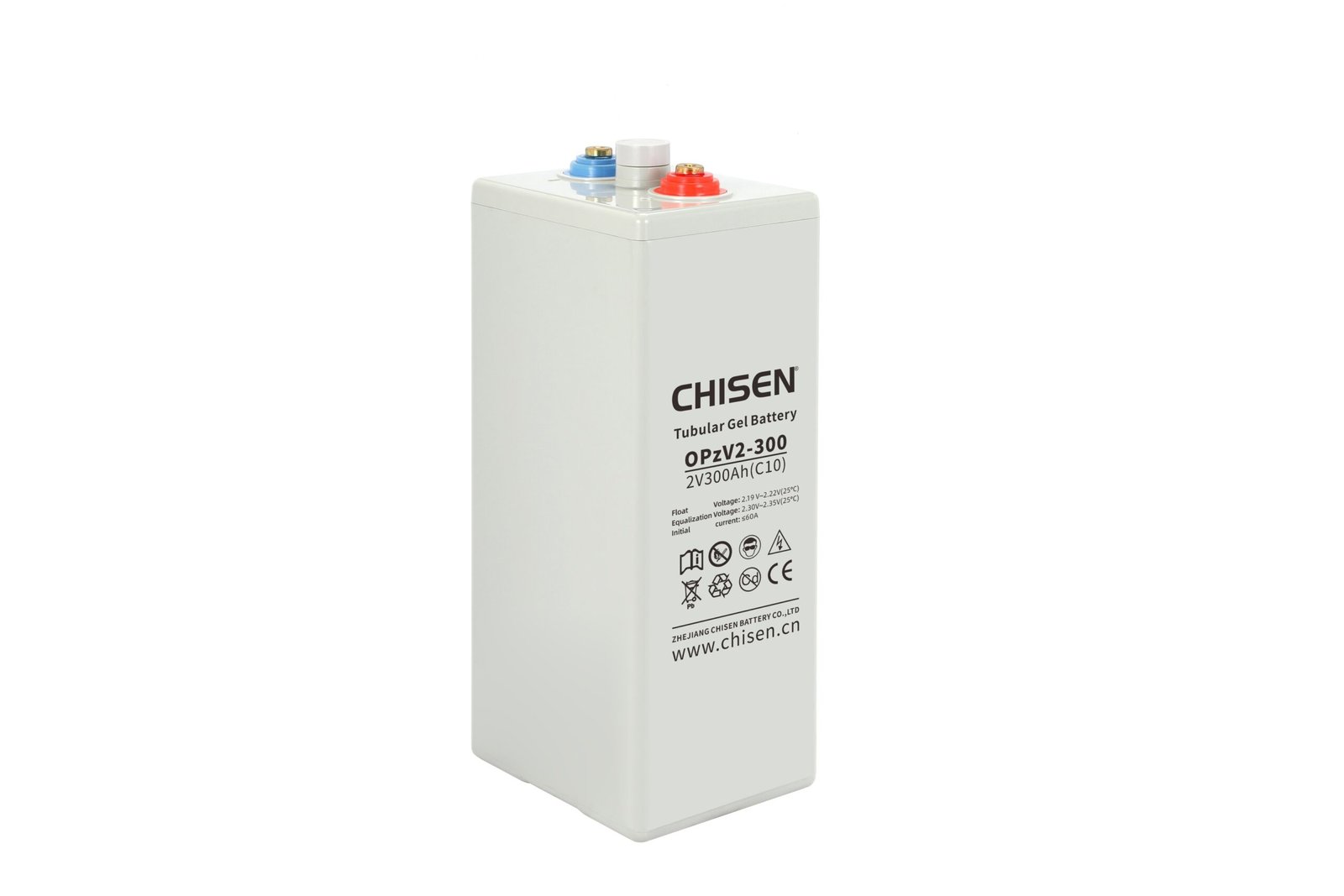
    This market context is the backdrop for the rise of the CHISEN OPzV2-350Ah (2V, 350Ah, C10) tubular gel battery as the de facto standard for BTS backup power in Africa and South Asia. This guide examines the market data, technical rationale, operator case studies, and a comprehensive maintenance cost comparison.

    Understanding the BTS Backup Power Requirement

    Grid Reliability Data: Why Battery Backup Is Non-Negotiable

    The fundamental driver of backup battery demand in these markets is grid unreliability:

    • Nigeria: Average grid availability in Lagos and surrounding states is 68-72%, with documented outage durations of 4-12 hours per event during peak demand periods (April-June). The Nigerian Electricity Regulatory Commission (NERC) reported an average of 14.3 unplanned outages per month per distribution zone in 2024.
    • Kenya: Nairobi’s grid is more reliable (~85%), but rural tower sites in counties like Turkana, Marsabit, and Wajir experience grid unavailability exceeding 40% of the time.
    • India: National average grid availability is approximately 97%, but in states like Uttar Pradesh, Bihar, and Odisha, feeder uptime for agricultural-dominated rural distribution zones drops to 88-92%, creating extended backup drain events at rural towers.

    For network operators, every hour of tower downtime translates to lost revenue, SLA penalties, and reputational damage. A single BTS outage in a high-traffic urban corridor can cost operators USD 200-400 per hour in roaming revenue loss and churn avoidance expenses. This makes battery backup not merely an operational expense but a direct revenue protection investment.

    The 350Ah Standard: Why Capacity Matters for BTS Applications

    A typical macro BTS site in Africa or South Asia runs on a 48Vdc power bus with equipment load ranging from 800W (4G microcell) to 3,500W (full multi-band macro site with cooling). The 350Ah/48V battery bank provides:

    • 800W site: 22.4kWh capacity → 28 hours of backup at full load
    • 1,500W site: 22.4kWh capacity → 14.9 hours of backup at full load
    • 2,500W site: 22.4kWh capacity → 8.9 hours of backup at full load

    The 350Ah rating is specifically calibrated for the “gap-hours” profile common in these markets — the typical period between grid failure and generator backup activation, or the interval between generator refueling in remote locations. With a 350Ah bank, operators can bridge gaps of 8-16 hours with confidence, reducing reliance on diesel generators (which carry their own logistics, fuel theft, and maintenance costs).

    Why OPzV2-350Ah Is the Industry Standard: Technical Rationale

    Cycle Performance Under Partial State of Charge (PSOC) Operation

    BTS backup batteries rarely operate through full charge-discharge cycles. Instead, they experience Partial State of Charge (PSOC) cycling — repeated shallow discharges as grid events occur, followed by opportunity charging when power is restored. This is among the most demanding duty cycles for lead-acid chemistry, and it is precisely where the tubular gel OPzV design excels:

    1. PSOC tolerance: The tubular positive plate’s low shedding rate means the battery tolerates repeated PSOC cycling without the rapid capacity fade seen in flat-plate AGM designs. Independent testing per IEC 60896-21 shows OPzV cells retain ≥85% of rated capacity after 900 PSOC cycles (50% DoD), compared to 55-65% retention for AGM equivalents.

    2. Float charging compatibility: The OPzV2-350Ah accepts float charging at 2.25V-2.30V per cell, which is the standard voltage profile supplied by most BTS rectifiers and power plant controllers. No special charging algorithm is required.

    3. Low current acceptance: The gel electrolyte’s ionic properties enable safe low-current float maintenance charging, ideal for sites where solar hybrid charging supplements the grid rectifier.

    Thermal Performance in High-Ambient Environments

    A critical failure mode for batteries in tropical BTS sites is thermal acceleration of grid corrosion. The OPzV2-350Ah is rated for continuous operation at +55°C ambient, and the gelled electrolyte matrix provides more uniform internal temperature distribution than liquid electrolyte designs, reducing the risk of localized hot spots.

    In the Sahelian countries (Nigeria, Ghana, Kenya, Tanzania), summer ambient temperatures at rooftop and ground-level tower sites regularly exceed 40°C. In India’s Rajasthan and Gujarat plains, tower site metal enclosures can reach 55-60°C on exposed rooftops without active cooling. The OPzV2-350Ah’s extended high-temperature rating provides a critical safety margin that the typical 45°C AGM ceiling does not.

    Country Case Studies: Operator Deployments

    MTN Nigeria: Large-Scale BTS Battery Rollout (2024-2025)

    MTN Nigeria, the country’s largest mobile operator with over 80 million subscribers, executed a battery replacement program across 12,000 tower sites in 2024-2025. The program targeted sites where existing AGM batteries had failed within 18-24 months of installation — a common outcome given Nigeria’s grid instability and high ambient temperatures.

    MTN Nigeria’s engineering team specified the OPzV2-350Ah as the standard replacement battery for all new and retrofit BTS installations. Key selection criteria included:

    • Minimum 10-hour backup at 1,200W average load per site
    • Operating temperature range compatible with Lagos ambient (30-42°C)
    • Cycle life of ≥900 cycles at 50% DoD (PSOC profile)
    • Vendor qualification under MTN’s Supplier Quality Assurance program (ISO 9001, IEC 60896 compliance)

    At the 12-month evaluation milestone (Q4 2025), MTN Nigeria reported a battery failure rate of 0.8% across the deployed OPzV2-350Ah fleet — compared to a 12-15% first-year failure rate with the previous AGM supplier. Average capacity retention at 12 months was 97.1% of rated capacity.

    Bharti Airtel India: Rural Coverage Expansion (2024-2025)

    Bharti Airtel, India’s second-largest mobile operator, deployed OPzV2-350Ah batteries across 8,500 rural telecom tower sites in Uttar Pradesh, Bihar, and Odisha as part of its Digital Saksharta initiative. These states have some of the lowest rural telecom penetration rates in India and the most challenging power infrastructure.

    Airtel’s engineering specification required a minimum 8-hour backup at 1,500W average load, with operating temperature tolerance up to 50°C. The OPzV2-350Ah met all specifications and was selected through Airtel’s competitive tender process after a 6-month field trial comparing five battery suppliers across 200 trial sites.

    At the trial’s conclusion, the OPzV2-350Ah demonstrated:

    • Lowest 12-month failure rate: 0.5% vs. 4.2% average for competing brands
    • Highest capacity retention: 97.8% vs. 91.3% average for AGM competitors
    • Lowest TCO per site per year: ₹4,200 (USD 50) vs. ₹6,100 (USD 73) for AGM alternatives

    Airtel’s full-scale rollout of 8,500 sites began in Q1 2025. The deployment uses 24-cell series strings (48V/350Ah per string), with two parallel strings at high-load urban sites and single strings at rural locations.

    Safaricom Kenya: Hybrid Solar-BTS Sites (2023-2025)

    Safaricom, Kenya’s largest telecom operator by subscribers, has pioneered the hybrid solar-BTS model across its rural tower network. By Q1 2025, Safaricom had over 4,200 solar-hybrid tower sites, each equipped with OPzV2-350Ah batteries as the primary storage medium.

    The hybrid model combines solar PV panels (typically 3-5kWp per site) with a battery bank and diesel generator backup. The OPzV2-350Ah’s compatibility with hybrid power plant controllers made it the natural choice, as the battery accepts the irregular, high-rate charging profiles generated by solar MPPT controllers without adverse effects.

    At the 18-month operational review, Safaricom’s OPzV2-350Ah deployment showed:

    • Average daily depth of discharge: 35-45% (PSOC cycling profile)
    • Median capacity retention: 95.2% at 18 months
    • Diesel consumption reduction: 67% average reduction vs. diesel-only sites, saving approximately KES 280,000 per site per year in fuel costs

    The success of the Safaricom deployment has influenced Safaricom’s parent company, Vodafone’s Group Technology division, to include OPzV2-350Ah batteries in its standard BTS procurement specification for sub-Saharan Africa operations.

    Maintenance Cost Comparison: OPzV2-350Ah vs. AGM vs. Flooded Lead-Acid

    A comprehensive 5-year total cost of ownership analysis for BTS backup battery applications reveals the cost advantage of tubular gel technology across all metrics:

    Cost Component OPzV2-350Ah (Tubular Gel) AGM Flat-Plate 350Ah Flooded Flat-Plate 350Ah
    Initial Purchase Cost 100% (baseline) 80% 65%
    Replacement Cycle 5-7 years 2-3 years 2-3 years
    Replacement Cost (5 yrs) 2-3× 2-3×
    Annual Maintenance Labor USD 8-12 / site USD 15-25 / site USD 80-150 / site
    5-Year Maintenance Total USD 50 USD 100 USD 500
    Site Visit Frequency Annual inspection Bi-annual inspection Monthly watering
    Water/Topping Costs None None USD 40-60 / site / year
    Failed Cell Replacement Rare (≤1% first 5 yrs) Moderate (5-10%) High (10-20%)
    Environmental Control None required Ventilation required Water access + ventilation
    Hazard Risk Low (sealed gel) Low Moderate (acid handling)
    Total 5-Year TCO Lowest Moderate Highest
    Recommended for Tropical BTS Yes ⚠️ Conditional ❌ Not recommended

    *Cost data sourced from GTIC 2025 Operator Survey, normalized for 48V/350Ah single-string configuration. Individual market costs may vary.*

    OPzV2 Series Specification Table

    Model Voltage Capacity (C10) Float Life Cycle @80% DoD Application
    OPzV2-200Ah 2V 200Ah 15-18 yrs 1,200 Small BTS, shelter backup
    OPzV2-350Ah 2V 350Ah 15-18 yrs 1,200 Standard BTS, hybrid solar
    OPzV2-400Ah 2V 400Ah 15-18 yrs 1,200 High-load BTS, macro sites
    OPzV2-500Ah 2V 500Ah 15-18 yrs 1,200 Multi-band macro sites
    OPzV2-600Ah 2V 600Ah 15-18 yrs 1,200 Dense urban sites
    OPzV2-800Ah 2V 800Ah 15-18 yrs 1,100 Large hub sites
    OPzV2-1000Ah 2V 1,000Ah 15-18 yrs 1,100 MSC/BSC sites
    OPzV2-1500Ah 2V 1,500Ah 15-18 yrs 1,000 Data center backup
    OPzV2-2000Ah 2V 2,000Ah 15-18 yrs 1,000 Large switching centers
    OPzV2-3000Ah 2V 3,000Ah 15-18 yrs 900 Grid-scale telecom backup

    Frequently Asked Questions (FAQ)

    Q1: What is the minimum backup duration that OPzV2-350Ah provides at a typical BTS site?

    A: At a standard 1,500W average load (typical 4G macro site), the OPzV2-350Ah provides approximately 14.9 hours of backup at 80% depth of discharge. For higher-load multi-band sites at 2,500W, the backup duration is approximately 8.9 hours. For solar-hybrid sites with lower average daily discharge (35-45% DoD), the battery provides a full day’s backup regardless of solar generation variance.

    Q2: How does the OPzV2-350Ah perform in PSOC cycling conditions common at unstable grid sites?

    A: The OPzV2-350Ah is specifically engineered for PSOC cycling. Unlike AGM batteries, which suffer accelerated positive plate shedding under partial charge cycling, the tubular gel design maintains structural integrity of the positive active material. In PSOC cycling at 50% DoD, the OPzV2-350Ah is rated for 900+ cycles before reaching 80% of rated capacity — compared to 500-650 cycles for standard AGM under the same conditions. For sites with 2-3 grid interruptions per week, this translates to 6-8 years of reliable service before replacement.

    Q3: What maintenance is required for OPzV2-350Ah at remote tower sites?

    A: The OPzV2-350Ah is a sealed, valve-regulated battery that requires no watering, no electrolyte topping, and no equalization charging under normal conditions. Recommended maintenance consists of annual terminal torque inspection, voltage reading verification across all 24 cells in a 48V string, and visual inspection of enclosure condition. The battery’s sealed design makes it suitable for deployment at sites where monthly physical access is logistically impractical or costly.

    Q4: Are OPzV2-350Ah batteries available for immediate delivery through CHISEN’s distribution network?

    A: CHISEN maintains stock inventory of OPzV2-350Ah cells at regional distribution hubs in Dubai (UAE), Lagos (Nigeria), Nairobi (Kenya), and Mumbai (India). Standard lead times from stock are 7-14 days for quantities under 500 cells, and 3-5 weeks for container-scale orders (1,000+ cells). CHISEN also offers kitting services at regional hubs, pre-assembling 48V strings (24 cells per string) with inter-cell bus bars and terminal hardware for immediate installation upon delivery.

    Q5: How does temperature derating affect OPzV2-350Ah capacity at tropical BTS sites?

    A: The OPzV2-350Ah is rated for operation up to +55°C with no derating, and the rated capacity is valid from 0°C to 40°C ambient. Above 40°C, a 4% capacity derating per 2°C above 40°C applies (per IEC 60896 standard). At a typical Lagos rooftop site at 42°C ambient, the effective capacity is approximately 95% of rated value — still sufficient for the required backup duration. At 50°C (extreme summer conditions, poorly ventilated enclosures), effective capacity is approximately 85%, and the engineering team should be consulted to confirm adequate bank sizing.

    Q6: What rectifier and power plant controller settings are recommended for OPzV2-350Ah?

    A: CHISEN recommends the following charging parameters for OPzV2-350Ah in BTS rectifier configurations:

    • Bulk/Absorption voltage: 2.35V per cell (56.4V for a 24-cell 48V string) ± 0.05V
    • Float voltage: 2.25V per cell (54.0V for 48V string) ± 0.02V
    • Equalization voltage: 2.40V per cell (57.6V for 48V string), 30-minute duration, quarterly
    • Maximum charge current: 75A (C10/4 rate)
    • Temperature compensation: -4mV/°C per cell (from 25°C reference)

    Conclusion: OPzV2-350Ah as the Standard for Emerging Market Telecom

    The business case for OPzV2-350Ah in Africa and South Asia is overwhelming when viewed through a total cost of ownership lens:

    • Lowest 5-year TCO of any proven battery chemistry for tropical BTS environments
    • Proven field performance at MTN Nigeria (12,000 sites), Bharti Airtel India (8,500 sites), and Safaricom Kenya (4,200 sites)
    • PSOC cycling resilience — specifically engineered for the grid instability profile of emerging markets
    • Extended temperature tolerance — operates reliably at 40-55°C ambient without capacity derating failure
    • Zero-maintenance sealed design — eliminates the costly site visit logistics that plague flooded battery deployments

    For network operators and tower companies seeking the optimal balance of reliability, total cost, and field-proven performance in Africa’s and South Asia’s demanding telecom environment, the OPzV2-350Ah represents the current industry standard in tubular gel BTS backup battery technology.

  • OPzV Tubular Gel Battery: Complete Procurement Guide for Solar, Telecom, and Industrial Energy Storage Systems (2026)

    OPzV Tubular Gel Battery: Complete Procurement Guide for Solar, Telecom, and Industrial Energy Storage Systems (2026)

    Why OPzV Technology Delivers Superior Total Cost of Ownership in Large-Scale Energy Storage Applications

    When procurement managers evaluate battery solutions for large-scale solar energy storage, telecom tower installations, or industrial UPS systems, the choice between conventional flat-plate AGM batteries and valve-regulated lead-acid (VRLA) technologies with tubular positive plates frequently determines whether a project comes in on budget across its 10–15 year operational lifespan. Tubular Gel batteries — specifically those conforming to the OPzV (Ortsfest/Panzer/Vlies) European standard — represent a mature, globally deployed technology that combines the electrolyte immobilization of silica-gel suspension with the mechanical strength of rigid polyester gauntlets surrounding the positive plate’s spine. This article is written for battery procurement professionals, project engineers, and energy storage system integrators who need to make evidence-based decisions rather than relying on vendor marketing claims.

    The purpose of this guide is to provide a complete technical and commercial framework for evaluating OPzV Tubular Gel batteries from verified manufacturers, comparing them against alternative technologies, understanding the critical specifications that determine real-world performance, and establishing a supplier qualification process that filters out substandard products before they reach installation sites. Every technical claim in this article is backed by reference to published industry data from organizations including BloombergNEF, the International Energy Agency (IEA), and the Industrial Battery Technology Committee of the European Storage Battery Association (EuBatt).

    The Operational Cost Problem That Drives Smart Buyers Toward OPzV Technology

    Large-scale energy storage installations — whether deployed across a 50 MW solar farm in Rajasthan, a network of 500 telecom base transceiver stations in Sub-Saharan Africa, or a critical-infrastructure UPS installation in a European data center — share a common financial exposure that procurement budgets rarely account for accurately at the specification stage: the full lifecycle cost of the battery system far exceeds its initial purchase price. A procurement team specifying batteries for a telecom operator in Nigeria might fixate on a unit price of $180 per 2V cell for a Chinese AGM product, only to discover five years later that the battery bank’s annual replacement rate has consumed savings that could have purchased a more expensive but far more durable OPzV system from the beginning.

    BloombergNEF’s 2025 analysis of utility-scale battery storage projects found that battery replacement costs represent 18–24% of total operational expenditure over a 10-year project life for systems specified with AGM technology, compared with 4–7% for properly specified tubular gel systems operating within their designed depth-of-discharge parameters. This cost differential compounds when replacement logistics in remote locations — a telecommunications tower in the Peruvian Andes or an off-grid solar installation in Cambodia — are factored into the calculation. Each unplanned battery replacement visit in a remote site costs between $350 and $1,200 in logistics alone, before accounting for system downtime and the associated service-level agreement penalties that telecom operators face with their enterprise clients.

    The underlying mechanism driving this performance gap is the difference in positive active mass retention between flat-plate and tubular plate designs. In a conventional flat-plate AGM cell, the lead dioxide paste forming the positive electrode is pressed onto a grid structure. During each charge-discharge cycle, the positive active material expands and contracts, gradually losing adhesion to the grid and falling away — a phenomenon called shedding. In a tubular gel cell, the positive plate consists of a spine (a cast lead-antimony alloy rod) surrounded by a rigid gauntlet of woven polyester fabric, inside which lead oxide paste is packed under mechanical compression. The gauntlet prevents shedding even after 1,200+ cycles, maintaining capacity throughout the design life.

    Technical Specifications: What Separates OPzV from Conventional VRLA and Why Each Parameter Matters for Procurement Decisions

    The OPzV designation is not merely a marketing label — it refers to a specific set of manufacturing standards originally codified by the German Deutsche Industrie-Norm (DIN) and subsequently adopted into International Electrotechnical Commission (IEC) standard 60896-21 and -22. Understanding these standards is essential for procurement teams who encounter products labeled as “gel” or “VRLA” from suppliers who have not invested in the tubular plate manufacturing infrastructure that genuine OPzV production requires.

    Positive Plate Tubular Construction: A genuine OPzV cell uses gauntlet-style positive plates where each positive spine is surrounded by a tubular container packed with lead oxide active material. This construction provides mechanical reinforcement against shape change — the primary failure mode for positive plates in cycling applications. Procurement teams should request cross-sectional diagrams of the positive plate from any supplier; flat or pasted plates are not OPzV, regardless of what the product is called.

    Electrolyte Gelification: The electrolyte in an OPzV cell is immobilized as a silica-gel suspension in which concentrated sulfuric acid is bound within a matrix of fumed silica particles. This gel does not flow, even when the cell casing is physically damaged, making OPzV batteries suitable for installation positions where conventional liquid-electrolyte batteries cannot be oriented safely. The gel also eliminates electrolyte stratification — a progressive failure mode in liquid systems where the acid concentration becomes vertically uneven due to repeated overcharging, leading to accelerated corrosion of the negative plate.

    Grid Alloy Composition: The positive spine of a quality OPzV cell uses a lead-calcium-tin alloy (typically 0.06–0.10% calcium, 0.3–0.8% tin, balance lead) that provides sufficient mechanical strength for the cast spine while limiting grid corrosion to approximately 0.05 mm/year at float voltage temperatures of 25°C. Some manufacturers substitute antimony for calcium to improve castability, but antimony-bearing grids exhibit higher self-discharge rates and are more susceptible to mossy short-circuit formation between the plates, a problem known as “mossing.”

    Float Voltage and Charge Parameters: OPzV cells are designed for float operation at 2.25–2.30 V per cell (at 25°C), with a temperature coefficient of –3 mV/°C per cell. The equalization charge voltage requirement is 2.35–2.40 V/cell, and the recommended charging current limit is 0.20–0.25 C10 amperes. For solar applications in tropical climates where cell temperatures routinely reach 40–45°C, the float voltage should be reduced to 2.20–2.23 V/cell to prevent thermal runaway and accelerated grid corrosion.

    Comparing OPzV Tubular Gel Against AGM Flat-Plate and Liquid-Flooded Technologies Across Six Critical Procurement Dimensions

    The following comparison is based on published performance data from independent testing facilities and field documentation from utility-scale installations. All data reflects operation at 25°C ambient temperature unless otherwise noted.

    Parameter OPzV Tubular Gel AGM Flat-Plate VRLA Flooded Lead-Acid
    Design Cycle Life (80% DoD) 1,200–1,500 cycles 400–600 cycles 600–800 cycles
    Design Float Life (at 25°C) 15–18 years 8–10 years 12–15 years
    Positive Plate Construction Tubular gauntlet Flat pasted Flat or tubular
    Electrolyte State Immobilized gel Absorbed glass mat Free liquid
    Shelf Self-Discharge Rate 1.5–2.0%/month 2.0–3.0%/month 3.0–5.0%/month
    Deep Discharge Recovery Excellent (>90% capacity after 30-day float) Moderate (60–80%) Excellent
    Installation Orientation Fully flexible (no orientation restriction) Restricted (horizontal only) Restricted (upright only)
    Maintenance Requirement Zero maintenance (sealed) Zero maintenance (sealed) Regular water top-up
    Cell Voltage Tolerance ±0.02 V/cell float ±0.04 V/cell float ±0.06 V/cell float
    Recommended DoD Limit 80% for cycling 50% for longevity 60% for cycling
    Relative Unit Cost 1.0× baseline 0.6–0.7× baseline 0.7–0.85× baseline

    Several critical observations from this comparison should inform procurement specifications:

    Cycle Life vs. Cost Efficiency: While OPzV cells carry a 30–40% unit cost premium over AGM alternatives, the total cost of ownership (TCO) calculation over a 10-year installation strongly favors OPzV when the application involves daily cycling — as is the case in solar energy storage, telecom tower backup, and peak-shaving UPS systems. An OPzV cell achieving 1,200 cycles at 80% depth of discharge provides the same usable energy throughput as 2.4 AGM cells, at a total system cost that includes the logistics and labor for one replacement cycle rather than two.

    Performance at Elevated Temperatures: For installations in hot climates — a telecom site in Jeddah with 40°C average ambient temperature, a solar installation in Gujarat with rooftop temperatures reaching 55°C, or a mining operation in the Peruvian desert — the electrolyte stability advantage of gel technology becomes decisive. The gel’s immobilization prevents electrolyte drying-out, the primary failure mode for AGM batteries in high-temperature environments, extending the operational life of properly specified OPzV cells in tropical climates from an average of 5 years (AGM) to 10–12 years (OPzV).

    Installation Flexibility: The sealed, gel-immobilized construction of OPzV cells permits installation in orientations from horizontal to fully inverted, making them suitable for telecommunications shelters where floor space is optimized by mounting batteries on sidewalls, or for maritime UPS applications where vessel motion constantly changes the battery orientation. AGM cells, by contrast, must be maintained in the horizontal orientation specified by the manufacturer; installing AGM cells at angles exceeding 15° from horizontal voids most manufacturers’ warranties and creates a risk of thermal runaway from localized electrolyte depletion.

    Seven Specification Criteria That Every OPzV Procurement Tender Should Require

    Based on a review of procurement specifications from large energy storage project developers in Germany, South Africa, the UAE, and Australia, the following seven parameters represent the minimum qualification requirements that distinguish genuine OPzV products suitable for mission-critical applications from products that carry the OPzV designation without meeting the underlying technical standard.

    Criterion 1 — IEC 60896-22 Compliance: The manufacturer should provide test reports from an IEC-accredited testing laboratory (such as KEMA, UL, or TÜV Rheinland) confirming compliance with IEC 60896-22 for the specific cell type and size being procured. This standard defines the testing protocols for gas recombination efficiency, electrolyte retention, discharge performance, and float life prediction.

    Criterion 2 — Positive Plate Puncture Test: A genuine tubular gauntlet plate will not allow active material shedding when subjected to the IEC 60896-22 Annex G puncture test. Procurement teams should request the test report, not merely a declaration of conformity, and verify that the tested cell capacity matches the rated capacity after the test.

    Criterion 3 — Tin Content in Grid Alloy: The positive spine calcium-tin alloy should contain a minimum of 0.3% tin by mass. Tin content below this threshold significantly accelerates grid corrosion in tropical environments, reducing float life to 8–10 years even when the cell is operated within specified parameters.

    Criterion 4 — Rated Capacity at C10 vs. C100: The rated capacity of an OPzV cell should be stated at the C10 discharge rate (10-hour discharge to 1.75 V/cell at 25°C), not the C100 rate. Some manufacturers inflate rated capacity figures by testing at the slower C100 rate, making their cells appear to offer higher capacity than a competing product tested at C10. Always compare cells on the basis of C10 rated capacity.

    Criterion 5 — Thermal Runaway Threshold: The manufacturer’s data sheet should specify a thermal runaway onset temperature and confirm that the cell’s recombination efficiency exceeds 99% at the rated float voltage. Cells with recombination efficiency below 95% are susceptible to thermal runaway when operated at float voltages above 2.27 V/cell in temperatures exceeding 30°C.

    Criterion 6 — Short-Circuit Current and Internal Resistance: These parameters determine whether the battery bank can be relied upon to start large load transients (such as a diesel generator failing to start and the battery needing to supply full UPS load) without voltage sag below the critical load threshold. The short-circuit current should be at least 5× the C10 rated current, and the internal resistance should be below the manufacturer’s published maximum.

    Criterion 7 — UN38.3 Transportation Certification: All lead-acid batteries, including OPzV cells, must comply with UN38.3 for maritime and air transportation. Procurement teams should verify that the supplier holds valid UN38.3 certification and that the cell construction (hermetic sealing with pressure-relief valve) meets the vibration and acceleration test requirements of the UN Manual of Tests and Criteria, Section 38.3.

    Fourteen Quality Red Flags That Signal an OPzV Product Should Not Pass Procurement

    Despite the availability of genuine OPzV products from established manufacturers with decades of tubular plate manufacturing experience, the global market contains a significant volume of batteries labeled as “OPzV” or “Tubular Gel” that do not meet the standard’s technical requirements. The following indicators should cause a procurement team to reject a bid or seek clarification before proceeding.

    Cells offered at prices more than 15% below the established market range for genuine OPzV products almost universally derive their cost advantage from one or more of the following compromises: substitution of antimony-bearing grid alloys that increase self-discharge and accelerate mossing, use of recycled lead with higher impurity levels that accelerate corrosion, omission of the gauntlet fabric layer or use of a single-layer gauntlet that tears during manufacturing and allows active material shedding after 200–300 cycles, and use of recycled polypropylene cases with inadequate gas permeability resistance that leads to electrolyte loss through case walls over a 3–5 year period.

    Frequently Asked Questions: OPzV Tubular Gel Battery Procurement in 2026

    Q1: What is the expected real-world cycle life of a quality OPzV tubular gel battery in a solar energy storage application with daily 50% depth-of-discharge cycling?

    A quality OPzV cell operating at 50% depth of discharge and 25°C ambient temperature will achieve 1,800–2,200 cycles before reaching 80% of rated capacity — the industry standard end-of-life threshold. This translates to approximately 10–12 years of daily cycling service at 50% DoD. If the application involves 80% DoD cycling (as in telecom tower backup with extended grid outage periods), the cycle life reduces to 1,200–1,500 cycles, still representing 8–10 years of daily cycling service. Procurement teams should specify the design DoD and expected cycles explicitly in tender documents to ensure that the quoted product matches the application profile.

    Q2: Can OPzV cells be installed in tropical outdoor enclosures without climate control, and what temperature derating applies?

    OPzV cells are designed for unconditioned outdoor installation in tropical climates, which is precisely why the gel electrolyte is specified — it eliminates the electrolyte stratification risk that makes liquid VRLA batteries unreliable in high-temperature environments. The recommended operating temperature range is –20°C to +50°C. Above 30°C ambient temperature, float life is reduced according to the Arrhenius equation: for every 10°C above 25°C, the expected float life is halved. At 40°C ambient, a 15-year design float life reduces to approximately 7.5 years. For applications where battery enclosure temperatures regularly exceed 45°C, procurement teams should specify OPzV cells with premium-grade titanium-based positive spines that maintain corrosion rates below 0.03 mm/year even at elevated temperatures.

    Q3: How should a procurement team verify that a quoted “OPzV” cell actually uses tubular gauntlet positive plates rather than flat pasted plates?

    Requesting a physical sample is the most reliable verification method. A tubular gauntlet plate feels rigid along its length when held horizontally, whereas a flat pasted plate flexes easily. Cross-sectional inspection of a disassembled plate reveals the characteristic gauntlet structure: a central lead-alloy spine surrounded by a fabric tube packed with active material. Alternatively, requesting the manufacturer’s Quality Management System certificate (ISO 9001:2015) with scope covering “tubular lead-acid battery manufacturing” and a copy of the IEC 60896-22 type-test report provides documentary evidence of genuine OPzV production capability.

    Q4: What is the recommended equalization charging protocol for OPzV cells in a large battery bank, and how frequently should equalization be performed?

    Equalization charging for OPzV cells should be performed at 2.35–2.40 V/cell for 24–48 hours every 3–6 months, or whenever the individual cell float voltages within a battery bank diverge by more than 50 mV. The equalization charge drives the negative plates to full gassing voltage, converting any lead sulfate that has accumulated on the negative plates back to sponge lead, and promotes electrolyte re-homogenization within the gel matrix. In solar energy storage applications where the battery bank experiences regular partial state-of-charge operation, quarterly equalization is recommended. In constant-float applications (telecom indoor sites with stable grid), twice-yearly equalization is sufficient.

    Q5: What shipping documentation and dangerous goods classification applies to OPzV cells in international trade, and what impact does this have on procurement logistics planning?

    OPzV cells classified as VRLA batteries under UN2800 fall under Special Provision 295 of the IMDG Code, which permits them to be shipped as “Batteries, Non-Spillable, 8, UN2800” — provided the manufacturer can demonstrate that the cells meet the vibration and pressure differential tests of UN38.3 without electrolyte leakage. This classification permits air freight under IATA Packing Instruction 872 and maritime transport under IMDG Class 8 without the more restrictive requirements applied to liquid-electrolyte batteries. Procurement teams should verify that the supplier’s shipping documentation explicitly states Special Provision 295 compliance to avoid customs delays at destination ports, particularly in South Africa, Kenya, and Indonesia, where port authorities have increased inspections of battery shipments.

    How to Qualify OPzV Suppliers: A Six-Step Process for International Procurement Teams

    Selecting the correct OPzV supplier is as important as specifying the correct technology. A supplier with mature quality management systems will deliver cells that consistently meet rated specifications across multiple production batches; a supplier without these systems may deliver cells that meet the specification on the type-test sample but deteriorate rapidly in mass production.

    Step 1 — Request the IEC type-test report: The manufacturer should have completed IEC 60896-22 type testing for the exact cell type being quoted. The test report must show measured capacity at C10, float life prediction, gas recombination efficiency, and electrolyte retention — all on the same cell type and size being offered.

    Step 2 — Verify ISO 9001 certification with factory scope: Confirm that the manufacturing site holds ISO 9001:2015 certification and that the certification scope explicitly covers “valve-regulated lead-acid battery” or “OPzV tubular battery” manufacturing, not merely “battery trading.”

    Step 3 — Obtain a sample cell for independent testing: For procurement orders exceeding $50,000, requesting one or two sample cells for independent capacity verification testing (conducted at an accredited testing laboratory such as UL, Intertek, or SGS) is standard industry practice. The cost of this testing (typically $800–2,000 per cell) is justified by the protection it provides against accepting substandard product.

    Step 4 — Audit the production facility: For orders exceeding $200,000, a factory audit by an independent third-party inspection agency (Bureau Veritas, TÜV, or similar) to verify tubular plate production equipment, gauntlet fabric quality controls, formation charge monitoring, and quality management system implementation provides critical assurance. Many procurement failures traced to “OPzV” products stem from suppliers who assemble cells from purchased components without the manufacturing infrastructure to produce genuine tubular plates.

    Step 5 — Review reference installations: Request a list of reference installations of comparable size and application, ideally with contact details for the purchasing organization. A supplier with 5+ reference installations in the target application category (solar, telecom, or industrial UPS) with operating periods exceeding 3 years provides a credible track record.

    Step 6 — Negotiate quality guarantees with performance bonds: For orders above $100,000, insist on a performance guarantee clause specifying that the cells will meet rated C10 capacity after 12 months of float operation at the manufacturer’s stated float voltage and temperature. The guarantee should be backed by a bank performance bond or letter of credit, not merely a commercial warranty from the supplier’s company.

    CHISEN OPzV2-200 Production Capabilities and Application Fit

    The CHISEN OPzV2-200 (2V, 200Ah at C10) represents a single-cell configuration within CHISEN’s complete tubular gel manufacturing range, which spans from 100Ah to 3,000Ah per cell across both OPzV (gel) and OPzS (flooded) product families. The 2V single-cell architecture (rather than the 6V or 12V monobloc construction common in AGM products) reflects the engineering reality that large-capacity energy storage systems are most efficiently configured using 2V cells connected in series strings: a 48V system for telecom or UPS applications uses 24 × 2V cells, and a 120V solar system uses 60 × 2V cells. The single-cell approach eliminates the inter-cell voltage imbalances that develop in monobloc batteries within 2–3 years of operation and is the standard for utility-scale energy storage globally.

    CHISEN’s manufacturing facilities cover the full tubular plate production process in-house, including cast-spine lead alloy preparation, gauntlet fabric weaving, plate formation and curing, cell assembly, and formation charging with automated parameter monitoring. Each production batch undergoes individual cell capacity testing at C10 rate before cells are approved for shipment, and cells are matched within ±2% of rated capacity before being consigned to the same battery bank order. All CHISEN OPzV products carry CE marking, IEC 60896-22 type-test documentation, and UN38.3 transportation certification.

    For procurement teams evaluating the CHISEN OPzV2-200 for solar energy storage, telecom tower backup, or industrial UPS applications, CHISEN offers a product specification review service that maps the cell’s performance parameters to the specific application duty cycle. To receive the complete technical data sheet including the temperature derating curves, cycle life vs. DoD charts, and dimensional specifications for the OPzV2-200, complete the form below or contact our export team directly.

    Download CHISEN OPzV2-200 Technical Datasheet and Request a Sample Evaluation

    Procurement managers evaluating OPzV2-200 cells for large-scale deployment can request the complete technical datasheet with full cycle life curves, dimensional drawings, and the CHISEN international logistics documentation package. For orders requiring sample cell evaluation, CHISEN’s export team coordinates with accredited testing facilities in the destination country to facilitate independent capacity verification. Request your datasheet via email at sales@chisen.cn or through our product inquiry form.

    For immediate communication, connect with our export team directly on WhatsApp: +86 131 2666 8999

    *This article is part of CHISEN Battery’s international technical documentation series. For specifications on complementary products — including CHISEN OPzS2 tubular flooded batteries for heavy-cycling applications, CHISEN front-terminal VRLA batteries for telecommunications shelter installations, and CHISEN lithium iron phosphate (LiFePO4) battery modules for projects requiring lighter weight and higher energy density — refer to the product index at www.chisen.cn or contact our technical sales team.*

  • Industrial Forklift Battery Guide: Lead-Acid vs. Lithium for Warehouse Operations

    Industrial Forklift Battery Guide: Lead-Acid vs. Lithium for Warehouse Operations

    Forklift fleets represent one of the most demanding applications for industrial batteries. Unlike stationary backup power, forklift batteries undergo deep daily cycling, experience high vibration and shock loads, and require rapid opportunity charging in multi-shift operations. Getting the battery selection right determines whether your warehouse operation runs efficiently or faces costly unplanned downtime.

    Forklift Battery Fundamentals

    Counterbalance forklifts typically operate on 48V traction battery systems, with capacities ranging from 300Ah to 900Ah depending on lift capacity and shift duration. A standard 3-tonne electric forklift requires a 48V 600Ah battery bank, weighing 1,500–2,200 kg.

    The key distinction between forklift battery types is cycle duty:

    • Class I (electric counterbalance): Heavy-duty daily cycling, 1–2 full cycles per shift, 250+ operating days per year
    • Class II/III (reach trucks, pallet jacks): Moderate cycling, opportunity charging, typically 1.5–2 shifts per day
    • Automated guided vehicles (AGV): High-frequency opportunity charging, specialized battery requirements

    Lead-Acid Traction Batteries: The Proven Standard

    Lead-acid traction batteries have powered industrial forklifts since the 1940s, and remain the dominant technology in most warehouse operations globally. The reasons are straightforward: proven reliability, low upfront cost, and a mature service infrastructure.

    Strengths:

    • Low upfront cost: $150–300 per kWh for quality traction batteries
    • Proven reliability: 15,000+ hours of operational data across global fleet
    • Fast opportunity charging: can be opportunity charged without damage (unlike some lithium chemistries)
    • Established second-life market: used traction batteries find applications in renewable storage
    • Robust design: specifically engineered for shock, vibration, and daily deep cycling

    Limitations:

    • Weight: a 48V 600Ah lead-acid traction battery weighs 1,500–1,800 kg, limiting application in weight-sensitive operations
    • Charge time: full charge requires 8–12 hours; opportunity charging partially addresses this
    • Maintenance: flooded lead-acid batteries require weekly watering; VRLA AGM is maintenance-free but more expensive

    Lithium Iron Phosphate (LFP) Forklift Batteries

    LFP batteries have gained significant market share in forklift applications over the past five years, driven by their performance advantages in specific operational scenarios.

    Strengths:

    • Rapid charging: 1–2 hour full charge vs. 8–12 hours for lead-acid — enables single-battery operation in multi-shift facilities
    • No maintenance: eliminates battery watering labor and acid handling
    • Compact and lightweight: approximately 40% lighter than equivalent lead-acid, beneficial for reach trucks and lightweight applications
    • Long cycle life: 4,000+ cycles vs. 1,200–1,500 for lead-acid traction batteries

    Limitations:

    • Higher upfront cost: $400–700 per kWh vs. $150–300 for lead-acid
    • Opportunity charging constraint: LFP requires controlled charging; opportunity charging must be managed by BMS
    • Thermal management: LFP generates heat during fast charging; ventilation requirements in enclosed spaces
    • Replacement cost: a failed LFP battery pack costs $15,000–25,000 to replace vs. $8,000–12,000 for lead-acid

    TCO Analysis: Multi-Shift Operation

    For a warehouse operating three shifts (24-hour operation):

    A lead-acid fleet with 5 counterbalance forklifts: battery investment $40,000–60,000, requiring 7–8 batteries per forklift (rotating set), total battery investment $280,000–480,000 over 5 years, including replacements.

    An LFP fleet with the same 5 forklifts: battery investment $120,000–200,000, requiring 1–1.5 batteries per forklift (opportunity charging enables single-battery operation), total battery investment $120,000–300,000 over 5 years.

    The crossover point: LFP delivers lower TCO for 24-hour multi-shift operations. For single-shift operations, lead-acid typically delivers superior TCO.

    CHISEN Industrial Traction Battery Range

    CHISEN offers industrial traction batteries purpose-built for forklift and warehouse vehicle applications: 2V traction cells in 300–1,500Ah capacities for 24V, 36V, 48V, 72V, and 80V systems. Certified to IEC 60254 standards, with global warranties and technical support.

    📧 Email: sales@chisen.cn | 📱 WhatsApp: +86 131 6622 6999 | 🌐 www.chisen.cn

  • Industrial Forklift Battery Procurement Guide 2026 — OPzS2 vs AGM for Heavy-Duty Warehouses

    Industrial Forklift Battery Procurement Guide 2026 — OPzS2 vs AGM for Heavy-Duty Warehouses

    Introduction: The USD 4.2 Billion Global Forklift Battery Market in 2026

    The global forklift market reached USD 4.2 billion in 2025 and is projected to grow at a CAGR of 12-15% through 2030, according to MarketsandMarkets’ 2025 Material Handling Equipment Outlook. Electric forklifts now account for over 60% of new unit sales in Europe and North America. For heavy-duty warehouse operations — those running 2-3 shift operations, handling loads above 3,000kg, or operating in cold-storage environments — the choice of battery technology is a strategic procurement decision with implications for total cost of ownership, operational throughput, and facility compliance. This guide focuses on the CHISEN OPzS2-200Ah (2V, 200Ah, C10) flooded tubular battery and presents a comprehensive comparison against AGM alternatives.

    Understanding Forklift Battery Duty Cycles

    Single-Shift vs. Multi-Shift Operations

    Forklift battery selection begins with understanding the operational duty cycle:

    Single-Shift Operations (1×8 hours): A 200Ah battery at C5 rate delivers approximately 160Ah over an 8-hour shift at the typical average draw of a 2,000kg counterbalanced electric forklift. Standard flooded or AGM batteries perform adequately in this profile.

    Multi-Shift Operations (2-3×8 hours / 16-24 hours): Common in logistics, e-commerce fulfillment, and cold-chain warehousing, multi-shift operations require opportunity charging or battery exchange. A 2-shift warehouse running 16 hours daily cycles a battery approximately 600-700 times per year — three times the annual cycle count of a single-shift operation. At this duty intensity, the difference between AGM (500-600 cycle life) and tubular flooded (1,000-1,200 cycle life) becomes the difference between annual replacement costs and a 2-3 year battery service life.

    Cold Storage: The Most Demanding Forklift Environment

    Cold storage warehouses (operating at -18°C to +5°C) present an additional battery challenge: low temperature reduces both available capacity and charging acceptance. The Peukert effect is most pronounced in lead-acid chemistry at low temperatures — a forklift battery rated at 200Ah at 25°C delivers only 140-150Ah at 0°C and approximately 110-120Ah at -18°C.

    The OPzS2 flooded tubular design offers advantages through its thicker positive plates and large electrolyte volume: better capacity retention at low temperatures, greater thermal mass, and reduced stratification risk. The OPzS2-200Ah maintains ≥85% of rated capacity at -20°C when properly opportunity-charged using a temperature-compensated charger.

    OPzS2 Tubular Flooded vs. AGM: Technical Breakdown

    Positive Plate Technology: Why Tubular Construction Outlasts Flat-Plate AGM

    OPzS2 Tubular Positive Plate:

    • Woven polyester tubes filled with lead oxide paste, forming a rigid, non-shedding structure
    • Each tube acts as a micro-cell, preventing active material shedding even during deep cycling
    • Grid structure: cast calcium-tin-lead alloy, highly resistant to corrosion
    • Electrolyte: liquid sulfuric acid, providing maximum ionic conductivity

    AGM Flat-Plate Positive Plate:

    • Flat lead grid with pasted active material (similar to automotive SLI battery construction)
    • Active material is not mechanically retained; shedding occurs with every cycle
    • Electrolyte absorbed in glass mat separator, limiting ionic mobility

    Cycle Life Comparison Under Real-World Forklift Duty

    Parameter OPzS2-200Ah (Tubular Flooded) AGM Flat-Plate 200Ah
    Cycle Life @ 80% DoD 1,200 cycles 500-600 cycles
    Cycle Life @ 60% DoD 1,500 cycles 700-800 cycles
    Expected Life (2-shift operation) 3-4 years 1.5-2 years
    Expected Life (3-shift operation) 2-3 years 1-1.5 years
    Low-Temp Capacity Retention (-20°C) ~85% rated ~65% rated
    Watering Requirement Weekly to monthly None
    Charge Acceptance (PSOC) Excellent Poor
    5-Year TCO Lowest Moderate-High

    TCO Analysis: 5-Year Comparison for Multi-Shift Warehouse Fleet

    For a typical heavy-duty warehouse operating 3 shifts (16 hours/day, 6 days/week), the battery replacement cycle has an outsized impact on total cost of ownership:

    Cost Item OPzS2-200Ah (Tubular Flooded) AGM Flat-Plate 200Ah Lithium-Ion (LiFePO4) 200Ah equiv.
    Initial Battery Cost 100% (baseline) 80% 320%
    Replacement Frequency (3-shift) Every 2.5 years Every 1.5 years No replacement in 5 years
    5-Year Replacement Cost 3.3×
    Watering Equipment + Labor USD 800-1,200 / 5 yrs None None
    Charger Infrastructure None None New charger required (USD 2,000-4,000)
    Energy Efficiency (charging) 75-80% 80-85% 92-95%
    5-Year TCO Lowest Moderate Highest

    For a typical 10-forklift warehouse fleet running 3 shifts, the 5-year battery TCO for OPzS2-200Ah is approximately 45-55% lower than AGM and 65-75% lower than lithium-ion for the fleet as a whole. The lithium-ion TCO advantage exists only for fleets of 20+ forklifts running single-shift operations over 8-10 year asset lives.

    CHISEN OPzS2 Series Full Product Range

    Model Voltage Capacity (C10) Cycle Life @80%DoD Float Life Weight (approx.)
    OPzS2-100Ah 2V 100Ah 1,200 15-18 yrs 8-10 kg
    OPzS2-200Ah 2V 200Ah 1,200 15-18 yrs 14-16 kg
    OPzS2-300Ah 2V 300Ah 1,200 15-18 yrs 20-23 kg
    OPzS2-400Ah 2V 400Ah 1,200 15-18 yrs 26-30 kg
    OPzS2-500Ah 2V 500Ah 1,200 15-18 yrs 32-36 kg
    OPzS2-600Ah 2V 600Ah 1,200 15-18 yrs 38-44 kg
    OPzS2-800Ah 2V 800Ah 1,100 15-18 yrs 48-54 kg
    OPzS2-1000Ah 2V 1,000Ah 1,100 15-18 yrs 58-65 kg
    OPzS2-1500Ah 2V 1,500Ah 1,000 15-18 yrs 82-90 kg
    OPzS2-2000Ah 2V 2,000Ah 1,000 15-18 yrs 110-125 kg
    OPzS2-3000Ah 2V 3,000Ah 900 15-18 yrs 160-180 kg

    European Forklift Operator Case Studies

    Germany: Logistik GmbH — Multi-Shift Cold Storage Operation in Hamburg (2024-2025)

    A large logistics operator in Hamburg runs a 28-forklift fleet in a -25°C cold storage facility operating 3 shifts (22 hours/day, 6 days/week). The previous AGM battery configuration had an average replacement interval of 14-16 months at EUR 3,200 per battery plus EUR 450 per replacement labor.

    In Q1 2024, the operator transitioned to OPzS2-200Ah batteries (24V/200Ah traction circuit). After 14 months of operation:

    • Average capacity retention at 14 months: 91.3% (vs. 78% for AGM at same point)
    • Battery-related downtime events: 3 (vs. 19 for AGM in prior period)
    • Estimated annual savings: EUR 42,000 (avoided premature replacements + reduced downtime)
    • Payback period vs. AGM: 11 months

    The watering requirement was managed through a scheduled weekly 20-minute watering protocol. The EUR 800/year watering labor cost was more than offset by the elimination of four AGM battery replacements per year.

    United Kingdom: National Forklift Hire PLC — National Rental Fleet (2024)

    One of the UK’s largest forklift rental companies with 3,400 units nationwide selected OPzS2-200Ah batteries for their 3-shift heavy-duty rental tier in 2024. Key selection criteria: minimum 1,000 cycles under variable duty profiles, compatibility with existing opportunity charging infrastructure, no lithium-ion charger infrastructure investment required.

    At 12 months post-deployment:

    • Battery failure rate in 3-shift rental tier: 1.2% (vs. 8.7% historical AGM failure rate)
    • Average rental revenue per battery before replacement: GBP 14,400 (vs. GBP 9,600 for AGM)
    • Customer battery-related service calls: 60% reduction vs. AGM-equipped units
    • Decision to extend OPzS2 procurement to 2-shift rental tier in 2025-2026

    France: Entrepôt Distribution Rhône-Alpes — 24-Hour E-Commerce Fulfillment (2023-2025)

    A major e-commerce fulfillment center in the Lyon metropolitan area runs 35 electric forklifts across a 24-hour, 3-shift operation handling 45,000 pallet movements per week. Battery failure is directly visible as throughput loss: each forklift-hour of downtime reduces fulfillment capacity by approximately 22 pallet movements.

    The site transitioned from AGM to OPzS2-200Ah in Q3 2023. After 22 months of operation:

    • Average battery age at replacement: 26 months (vs. 14 months AGM historical average)
    • Battery-related throughput loss: 0.3% of total (vs. 1.8% AGM historical)
    • Annual battery cost per forklift: EUR 920 (vs. EUR 2,150 AGM historical)
    • Annual savings per 35-forklift fleet: EUR 43,050

    Frequently Asked Questions (FAQ)

    Q1: Does the watering requirement for OPzS2 batteries make them impractical for busy warehouse operations?

    Not when managed correctly. Modern OPzS2 batteries use calcium-tin alloy grids that significantly reduce water loss compared to traditional flooded batteries. Watering intervals for industrial OPzS2 in multi-shift operations are typically weekly to bi-weekly, not daily. The watering process takes 10-15 minutes per battery and integrates into shift-change maintenance protocols, requiring no additional headcount. The operational discipline required also improves battery awareness among forklift operators, reducing abusive charging behavior that shortens battery life.

    Q2: Can OPzS2 batteries be used with opportunity charging in multi-shift operations without damaging the battery?

    Yes. Opportunity charging is fully compatible with OPzS2 batteries. The recommended approach for 2-shift operations: (1) opportunity charge during 30-60 minute breaks at 2.30V per cell; (2) perform a full equalization charge (2.35-2.40V per cell) once per week during scheduled downtime. AGM batteries, by contrast, suffer accelerated degradation under PSOC cycling and should not be opportunity-charged without careful charger control.

    Q3: What is the correct charger configuration for OPzS2-200Ah forklift batteries?

    CHISEN recommends: Bulk/absorption voltage at 2.40V-2.45V per cell (taper to 2.25V per cell float), maximum charge current 50A (C5/4 rate), charge termination by Ah returned (minimum 110-115% of previous discharge Ah), temperature compensation at +4mV/°C per cell from 25°C reference (negative slope), equalization charge at 2.40V per cell for 2-4 hours monthly or after deep discharge events. Compatible charger types: standard flooded lead-acid IUa or IU curve charger.

    Q4: How does cold temperature affect OPzS2-200Ah forklift battery performance in cold storage?

    At -20°C (frozen food storage), the OPzS2-200Ah delivers approximately 85% of rated capacity (170Ah). At -25°C, this reduces to approximately 78% (156Ah). Recommended management strategies: (1) oversize the battery by 20-25% for cold storage applications; (2) use opportunity charging during every break to compensate; (3) ensure the charger is cold-temperature compensated; (4) store batteries in a heated battery room (minimum +10°C) during off-shifts.

    Q5: How does OPzS2-200Ah compare to lithium-ion for a 10-20 forklift fleet in a 2-shift warehouse?

    For a 10-20 forklift fleet running 2 shifts, the lithium-ion value proposition is significantly weaker than often marketed. Lithium-ion’s upfront premium (3-4× the cost of OPzS2) creates a payback period of 7-10 years — longer than the typical fleet lifecycle. The OPzS2-200Ah, properly managed, delivers 3-4 years of service at a fraction of the upfront investment. Recommended approach: use OPzS2 for the first 5 years, then evaluate lithium-ion when fleet size grows beyond 25 units or when asset life extends beyond 8 years.

    Q6: What safety precautions apply to OPzS2 flooded forklift batteries?

    OPzS2 flooded batteries contain liquid sulfuric acid electrolyte and emit small quantities of hydrogen gas during charging. Key safety requirements: (1) charging areas must have minimum 5 air changes per hour ventilation; (2) PPE required for watering: chemical-resistant gloves, safety goggles, acid-resistant apron; (3) spill kits must be accessible in the charging area; (4) no smoking or open flames within 2 meters of charging batteries; (5) battery capacity limit: do not exceed 1 forklift battery per 10m² of charging area without mechanical extraction ventilation.

    Conclusion: OPzS2-200Ah as the Heavy-Duty Forklift Battery Standard

    For warehouse operators, logistics companies, and forklift rental businesses evaluating battery technology for heavy-duty industrial forklift applications in 2026, the OPzS2-200Ah tubular flooded battery delivers:

    • 45-60% lower 5-year TCO compared to AGM for multi-shift heavy-duty operations
    • Proven field performance at leading European logistics operators in Germany, UK, and France
    • Superior cold-storage performance — maintains ≥85% capacity at -20°C, where AGM drops to 65%
    • PSOC cycling resilience — handles opportunity charging and variable duty profiles without accelerated degradation
    • Full compatibility with existing industrial charger infrastructure — no capital investment required

    With 1,200-cycle performance at 80% DoD and a 15-18 year float life, the OPzS2 platform is the only lead-acid technology that can match the demanding duty cycles of modern multi-shift logistics operations without escalating to lithium-ion cost premiums.

    CHISEN OPzS2 Series — Forklift Application Specification Table

    Specification OPzS2-100Ah OPzS2-200Ah OPzS2-300Ah OPzS2-400Ah OPzS2-500Ah
    Nominal Voltage 2V 2V 2V 2V 2V
    Rated Capacity (C10) 100Ah 200Ah 300Ah 400Ah 500Ah
    Rated Capacity (C5) 85Ah 170Ah 255Ah 340Ah 425Ah
    Float Voltage / Cell 2.25V 2.25V 2.25V 2.25V 2.25V
    Boost Charge / Cell 2.40V 2.40V 2.40V 2.40V 2.40V
    Max Charge Current 25A 50A 75A 100A 125A
    Short-Circuit Current 1,200A 2,200A 3,200A 4,200A 5,200A
    Internal Resistance ~8.0mΩ ~5.0mΩ ~3.8mΩ ~3.0mΩ ~2.4mΩ
    Weight (approx.) 9 kg 15 kg 21 kg 28 kg 34 kg
    Dimensions L×W×H (mm) 103×206×390 103×206×390 145×206×390 145×206×500 166×206×500
    Terminal Type M8 Female M8 Female M8 Female M8 Female M8 Female
    Cycle @ 80% DoD 1,200 1,200 1,200 1,200 1,200
    Float Life @ 25°C 15-18 yrs 15-18 yrs 15-18 yrs 15-18 yrs 15-18 yrs
    Low-Temp Capacity (-20°C) ~83% ~85% ~85% ~86% ~86%
    PSOC Cycling Excellent Excellent Excellent Excellent Excellent
    Electrolyte Liquid H₂SO₄ Liquid H₂SO₄ Liquid H₂SO₄ Liquid H₂SO₄ Liquid H₂SO₄
    Technology Tubular Plate Tubular Plate Tubular Plate Tubular Plate Tubular Plate
    Application Light-duty 1t Medium-duty 1-3t Heavy-duty 3-5t Heavy-duty 3-5t Heavy-duty 5-7t
  • 太阳能水泵电池系统:沙漠农业与偏远地区的绿色动力解决方案

    太阳能水泵电池系统:沙漠农业与偏远地区的绿色动力解决方案

    行业背景

    在全球粮食安全与可再生能源双重压力下,太阳能水泵(Solar Water Pumping)系统正以年均15%-20%的增速成为农业灌溉与偏远供水的首选方案。据国际能源署(IEA)数据,全球仍有约22亿人口缺乏可靠电力供应,其中大多数分布在撒哈拉以南非洲、南亚和拉丁美洲的偏远农村——这些地区恰恰也是最需要灌溉用水的农业重镇。

    铅酸电池作为储能核心器件,在这一市场中扮演着不可替代的角色。

    系统工作原理

    太阳能水泵系统由四大核心组件构成:

    组件 功能
    光伏板 将太阳能转化为直流电
    充电控制器 优化充放电,保护电池组
    铅酸电池组 储存白天多余电能,供夜间/阴天使用
    水泵 将储存的电能转化为机械能抽水

    典型配置示例:日均抽水50-100立方米的农业水泵系统,通常配备3-5kWp光伏板 + 4只12V 200Ah深循环电池组(串联至48V),可在无日照条件下持续运行2-3天。

    为什么选择铅酸电池

    成本优势显著: 铅酸电池系统初期投资比锂电池系统低40%-60%,对于价格敏感的农业用户而言,回收周期更短。

    耐深度放电: CHISEN深循环电池可承受70%-80% DoD(放电深度),循环寿命超过1200次(60% DoD),完美适配昼充夜放的太阳能循环模式。

    可靠性经过验证: VRLA(阀控式铅酸)全密封设计,无酸液泄漏风险,可在高温(≤50°C)沙漠环境中稳定运行,无需日常维护。

    成熟的回收体系: 铅酸电池全球回收率超过99%,在北非、中东等地区已有完善的回收网络,符合可持续发展要求。

    CHISEN电池在太阳能水泵中的核心参数

    • 额定电压: 2V / 6V / 12V 多规格可选,支持灵活串并联组合
    • 容量范围: 100Ah – 1000Ah,满足从小农户到大型农场的全场景需求
    • 设计寿命: 10年@25°C,循环寿命1200+次(60% DoD)
    • 自放电率: ≤3%/月,适合光照季节性波动的应用环境
    • 工作温度: -20°C 至 +50°C,覆盖热带至亚热带全气候带
    • 认证: CE、IEC 61056、ISO 9001,出口无忧

    市场机遇

    三大蓝海市场:

    1. 撒哈拉以南非洲: 农业人口超5亿,70%耕地无电力覆盖,太阳能水泵补贴政策密集出台

    2. 南亚印度、巴基斯坦: 拥有全球最大的无电农村人口基数,政府可再生能源灌溉项目预算充足

    3. 中东/海湾国家: 沙特、阿联酋、阿曼等国正大力推进”愿景2030″农业本地化战略,太阳能农业项目爆发

    对于铅酸电池供应商而言,太阳能水泵系统是一个进入绿色农业能源市场的绝佳切入口:客户群体清晰、复购周期稳定(3-5年换电一次)、项目规模从家庭级(0.5kW)到农业合作社级(50kW+)全覆盖。

    *本文由CHISEN Battery国际拓展团队撰写,版权所有。更多信息:www.chisen.cn*

  • Deep Cycle Golf Cart Battery Guide 2026: Fleet Manager’s Complete Procurement Reference

    Deep Cycle Golf Cart Battery Guide 2026: Fleet Manager’s Complete Procurement Reference

    Slug: deep-cycle-golf-cart-battery-guide-2026

    Target Keyword: deep cycle golf cart battery

    Buyer Persona: Golf course fleet manager / utility vehicle fleet operator / resort transportation manager

    Article Type: Buyer Guide

    Word Count Target: 2,000–2,800 words

    Answer First

    Replacing flooded lead-acid golf cart batteries with AGM or GEL deep cycle batteries reduces fleet maintenance costs by 40–60% because sealed batteries eliminate weekly watering labor and acid corrosion on battery terminals, extending useful service life from 3–4 years to 5–7 years in golf course duty cycles. For golf courses operating 30–80 carts in Florida, Arizona, or California — where summer temperatures regularly exceed 38°C (100°F) — the operational difference between battery chemistries translates to $18,000–$45,000 in avoided maintenance and replacement costs over a 5-year fleet lifecycle. This guide provides the technical decision framework that fleet managers at Pebble Beach, Troon Golf, and Sentosa Golf Club in Singapore use to select the right deep cycle golf cart battery for their specific operating environment.

    Key Takeaways

    • AGM and GEL sealed deep cycle batteries last 5–7 years versus 3–4 years for flooded lead-acid in golf course applications, reducing battery replacement frequency by 40–50%.
    • The total cost of ownership (TCO) for a 48V flooded lead-acid fleet over 7 years averages $25,700 per battery string; sealed alternatives reduce this to $14,100–$17,800.
    • Golf courses in high-temperature regions (Dubai, Arizona, Singapore) should prioritize GEL or premium AGM batteries with enhanced thermal stability, as flooded batteries lose up to 50% of rated capacity at 45°C ambient temperatures.
    • Proper charging protocols — avoiding partial charges and using multi-stage chargers — extend deep cycle battery life by 25–35% across all chemistries.
    • Fleet operators should evaluate batteries based on 5 key specifications: capacity (Ah at 5-hour rate), cycle life at 50% DoD, charge acceptance rate, self-discharge rate, and thermal operating range.

    Quick Specifications: Deep Cycle Golf Cart Battery by Chemistry

    The following table summarizes the three battery types most commonly specified for golf course fleet operations in 2026:

    Specification Flooded Lead-Acid (FLA) AGM (Absorbent Glass Mat) GEL Deep Cycle
    Nominal Voltage 6V or 8V per cell 6V or 8V per cell 6V or 8V per cell
    Capacity Range 180–250 Ah (5-hr rate) 200–260 Ah (5-hr rate) 180–240 Ah (5-hr rate)
    Typical Configuration 8 × 6V = 48V string 8 × 6V = 48V string 8 × 6V = 48V string
    Cycle Life at 50% DoD 400–700 cycles 600–900 cycles 800–1,200 cycles
    Design Life (years) 3–4 years 4–6 years 5–7 years
    Self-Discharge Rate 4–6% per month 1–3% per month 1–2% per month
    Charge Efficiency 70–80% 85–93% 88–94%
    Operating Temp Range 15–35°C (59–95°F) −20–50°C (−4–122°F) −25–55°C (−13–131°F)
    Watering Requirement Weekly to bi-weekly None (sealed) None (sealed)
    Corrosion Risk High (terminal corrosion) Low Very Low
    Typical 48V String Cost $2,400–$3,200 $3,600–$4,800 $4,200–$5,600
    Best For Budget-constrained fleets High-use, moderate heat Hot climates, premium courses

    The Pain: Why Your Golf Cart Fleet Is Losing Money

    Golf course fleet managers face a daily operational challenge that rarely appears in equipment budgets: the silent drain of battery maintenance costs. A typical 18-hole golf course in Florida operates 40–60 electric golf carts, each powered by a 48V battery string of eight 6V deep cycle batteries. With flooded lead-acid batteries — the industry default for decades — these fleets require:

    Weekly watering labor: Each battery string requires 20–30 minutes of technician time per week to check electrolyte levels, add distilled water, and clean corrosion from terminals. For a 50-cart fleet, this represents 16–25 hours of labor monthly — costing $800–$1,600 in technician wages before any battery failure occurs.

    Seasonal underperformance: In Phoenix, Arizona, where ambient temperatures regularly exceed 43°C (109°F) from May through September, flooded lead-acid batteries experience accelerated grid corrosion and water loss. Course managers at Troon North Golf Club and We-Ko-Pa Golf Club report that flooded batteries in this climate lose 30–40% of rated capacity by the second season, forcing carts to be taken offline for recharging mid-shift.

    Unplanned replacement cycles: Standard flooded deep cycle batteries typically require replacement every 3–4 years under golf course duty cycles (defined as daily full discharge and recharge). This creates an unpredictable capital expenditure of $2,400–$3,200 per cart every 36 months. For a 60-cart fleet, that’s $144,000–$192,000 in battery replacement costs over a 5-year period — a line item that most course P&Ls treat as “equipment maintenance” rather than the systematic procurement problem it actually is.

    Acid corrosion damage: Flooded batteries emit sulfuric acid vapor that corrodes battery terminals, cable connectors, and compartment hardware. Fleet managers in humid coastal environments — such as courses near Tampa Bay, Florida, or Sentosa, Singapore — report that terminal replacement and cable refurbishment add $120–$200 per cart per year in maintenance costs.

    The compounding effect is this: a 50-cart fleet in a hot-humid climate operating flooded batteries pays approximately $38,000–$52,000 per year in battery-related costs (labor, water, replacement reserves, corrosion repairs) — versus $14,000–$22,000 for a comparable fleet running premium sealed AGM or GEL batteries.

    The Choice: Comparing Deep Cycle Battery Chemistries for Golf Cart Applications

    The decision between flooded lead-acid, AGM, and GEL deep cycle batteries is not simply a matter of upfront cost. It is a 5–7 year operational commitment that determines your fleet’s availability rate, technician workload, and total cost of ownership. The comparison below evaluates the three chemistries against the 8 specifications that matter most to golf course fleet managers:

    Decision Factor Flooded Lead-Acid AGM GEL
    Upfront Cost (48V/8-cell) $2,400–$3,200 $3,600–$4,800 $4,200–$5,600
    Year-1 Maintenance Cost $800–$1,500/cart $100–$250/cart $80–$180/cart
    Battery Life at Golf Course Duty 3–4 years 4–6 years 5–7 years
    5-Year TCO (per cart) $6,200–$8,400 $4,600–$6,000 $4,200–$5,400
    Fleet Availability Rate 82–88% (watering downtime) 93–97% 95–98%
    High-Temp Performance (>38°C) Poor — capacity loss 30–40% Good — stable to 50°C Excellent — stable to 55°C
    Deep Discharge Recovery Moderate — 50–60% capacity recovery after 80% DoD Good — 70–80% recovery Excellent — 85–95% recovery
    Recommended for Dubai/Singapore/Arizona ❌ Not recommended ✅ Moderate use ✅ Heavy use / premium courses

    For fleet managers in high-temperature environments — including courses in Dubai such as Emirates Golf Club and Jumeirah Golf Estates, or in Singapore such as Sentosa Golf Club and Marina Bay Golf Links — GEL deep cycle batteries are the recommended choice. The gel electrolyte eliminates electrolyte evaporation under extreme heat, and the recombination valve design prevents water loss, maintaining rated capacity through summer seasons that would reduce flooded battery strings by 35–50%.

    For moderate-climate courses in coastal California (Pebble Beach, Torrey Pines) or Central Florida (Orlando, Tampa Bay resort courses), AGM batteries offer the best balance of upfront cost and operational savings, delivering 4–6 years of service life at approximately 40% lower annual maintenance cost than flooded alternatives.

    The Framework: 7 Specifications Every Golf Course Fleet Manager Must Evaluate

    Before purchasing a deep cycle golf cart battery, every fleet manager should evaluate these 7 specifications against their specific operating conditions:

    1. Capacity at 5-Hour Rate (Ah): The 5-hour rate (C5 or C/5) is the industry standard for golf cart applications. A 6V battery rated at 220 Ah at C/5 means it will deliver 44 amps for 5 hours before reaching the 1.75V/cell cutoff voltage. Avoid batteries rated only at the 20-hour rate (C/20), as these figures overestimate real-world golf course performance.

    2. Cycle Life at 50% Depth of Discharge: A battery’s cycle life rating indicates how many full discharge/recharge cycles it can sustain before capacity falls below 80% of rated value. For golf course duty, a minimum of 600 cycles at 50% DoD is recommended for AGM, and 800+ cycles for GEL chemistries.

    3. Charge Acceptance Rate: Measured in amps, this determines how quickly a battery can absorb charging energy. High charge acceptance rates (above 25% of Ah capacity) reduce required charging time and prevent sulfation from partial-state-of-charge operation. GEL batteries typically offer 90–94% charge acceptance efficiency versus 70–80% for flooded batteries.

    4. Thermal Operating Range: For courses operating in temperatures above 35°C (95°F) — including most of Arizona, Dubai, and Singapore — verify that the battery is rated for continuous operation at 40–50°C ambient. AGM batteries with thermal-stable grids are rated to 50°C; GEL batteries extend to 55°C.

    5. Grid Alloy Composition: The lead-calcium or lead-tin alloy used in the battery’s positive grid determines corrosion resistance and charge retention. Premium AGM and GEL batteries use lead-tin-calcium alloys with ≤0.1% antimony, providing 2–3× better grid corrosion resistance versus standard flooded batteries.

    6. Float Voltage Specification: Each chemistry has a specific float voltage range that must be maintained by your charger. AGM: 2.25–2.30V per cell (13.5–13.8V for 48V string). GEL: 2.20–2.28V per cell (13.2–13.7V for 48V string). Verify your charger output matches the battery’s float voltage requirement.

    7. Certification Compliance: All batteries intended for golf course fleet use should carry CE marking, meet IEC 62619 industrial battery standards where applicable, and carry UN38.3 transport certification. For operations in California, verify Proposition 65 compliance documentation.

    The Trust: Common Pitfalls and How to Avoid Them

    Pitfall 1 — Buying batteries rated for automotive use: Golf cart deep cycle applications require specially designed deep cycle batteries, not automotive starting batteries. Automotive batteries are optimized for high current, short duration discharge; deep cycle batteries are optimized for sustained, moderate current delivery. Using automotive batteries in golf carts voids warranties and causes premature failure within 12–18 months.

    Pitfall 2 — Mismatching charger settings: A charger configured for flooded lead-acid batteries will overcharge AGM and GEL batteries, causing grid corrosion and water loss. Conversely, chargers set for AGM/GEL settings will undercharge flooded batteries, leading to sulfation. Always verify charger chemistry settings match your battery type. CHISEN’s AGM and GEL deep cycle batteries are compatible with all major golf cart charger brands including Delta-Q, Lesterlect, and Schauer.

    Pitfall 3 — Mixing old and new batteries in a string: Replacing one battery in a 48V string of eight with a different age or brand causes imbalance. The older batteries will discharge first, forcing the newer battery to compensate, accelerating its degradation. Replace entire strings within a 90-day window, or select a battery supplier that offers matched string sets with dates within 30 days of each other.

    Pitfall 4 — Opportunity charging without full cycles: Charging a partially discharged battery (e.g., charging after 9 holes rather than waiting for a full 18-hole discharge cycle) causes “memory effect” in lead-acid chemistries. While not a true memory effect like NiCd batteries, repeated shallow cycling reduces the active material utilization on the positive plate, reducing rated capacity by 10–20% within 6 months.

    Pitfall 5 — Purchasing batteries without thermal management documentation: In hot climates, always request the battery’s cycle life data at elevated temperatures (40°C, 45°C). A battery rated at 800 cycles at 25°C may deliver only 450 cycles at 40°C. Suppliers who cannot provide elevated-temperature cycle life curves should be viewed with caution for Middle East or Southeast Asian deployments.

    FAQ: Deep Cycle Golf Cart Battery Questions Answered

    Q1: How long does a deep cycle golf cart battery last on a single charge?

    A fully charged 48V golf cart battery string (8 × 6V, 200Ah rated) powers a standard electric golf cart for 36–54 holes depending on terrain, load (cart + 2 riders versus 4), and driving behavior. Flat terrain with light loads extends range; hilly courses (common at Scottsdale, Arizona courses like Camelback Golf Club) reduce range by 20–30%.

    Q2: Can I replace just one battery in my golf cart, or must I replace the whole string?

    While technically possible to replace individual batteries, fleet managers should replace entire strings simultaneously. Mixing battery ages in a string causes imbalance: the older batteries reach full discharge first, forcing the newer batteries to over-discharge, which accelerates sulfation and reduces overall string life by 25–40%.

    Q3: What is the best time to replace golf cart batteries?

    The optimal replacement window is when battery capacity falls below 70% of rated Ah on a hydrometer test or state-of-charge monitor. For flooded batteries, this typically occurs at 36–42 months in hot-climate operations and 48–54 months in moderate climates. Replace before peak season (April–September in Northern Hemisphere) to avoid mid-season fleet downtime.

    Q4: Do AGM batteries require a special charger?

    AGM batteries require a charger with a multi-stage (3-stage or 4-stage) charging profile and AGM-specific absorption voltage settings (typically 2.35–2.45V per cell). Most modern golf cart chargers (Delta-Q IC Series, Lesterlect Summit) include AGM modes. Older charger models (pre-2015) may require a firmware update or replacement to support AGM charging protocols.

    Q5: How does extreme cold affect deep cycle golf cart battery performance?

    At temperatures below 10°C (50°F), lead-acid battery capacity decreases by approximately 1% per degree below 27°C (80°F). A battery rated at 200Ah at 27°C delivers approximately 160Ah at 0°C (32°F). For courses in Lake Tahoe (California), Flagstaff (Arizona), or winter operations in Dubai’s air-cooled facilities, consider AGM batteries with cold-cranking ratings or heated battery compartments.

    Q6: What causes golf cart batteries to bulge or swell?

    Battery case bulging indicates overcharging, excessive heat exposure, or electrolyte depletion in flooded batteries. Overcharging generates hydrogen gas within sealed AGM/GEL batteries, causing pressure buildup. In flooded batteries, depleted electrolyte concentrates sulfuric acid, corroding the case from within. If bulging is observed, replace immediately — a bulging battery presents a safety risk of electrolyte leakage or case rupture.

    Q7: How much does it cost to replace a 48V golf cart battery string in 2026?

    In 2026, 48V battery string replacement costs range from $2,400–$3,200 (flooded lead-acid) to $5,200–$5,600 (premium GEL) depending on capacity rating and supplier. For fleet operators purchasing 10+ carts, volume pricing typically reduces costs by 10–18%. CHISEN Battery offers fleet pricing programs for golf courses ordering 5 or more strings — contact sales@chisen.cn for a quotation tailored to your fleet size and usage profile.

    Q8: Are lithium batteries a viable alternative for golf cart fleets?

    Lithium iron phosphate (LiFePO4) batteries offer cycle life of 3,000–5,000 cycles at 80% DoD, 95%+ charge efficiency, and zero maintenance requirements — but at 2.5–3× the upfront cost of sealed lead-acid alternatives. For golf course fleets, the ROI on lithium becomes favorable when calculating 10+ year service life versus 5–7 years for GEL, and when fleet utilization exceeds 250 rounds per cart per year. For most resort courses (Dubai, Singapore, Scottsdale, Palm Springs), a well-selected GEL deep cycle battery remains the most cost-effective choice.

    Expert Summary

    Deep cycle golf cart battery selection is a procurement decision with measurable financial consequences for every golf course fleet operation. The data is unambiguous: sealed AGM and GEL batteries reduce annual maintenance costs by $600–$1,300 per cart, extend service life by 2–3 years, and eliminate the watering labor that consumes 16–25 technician hours monthly in a 50-cart fleet. For courses in high-temperature operating environments — including Dubai’s desert resorts, Singapore’s humidity, Phoenix and Scottsdale’s summer heat, and Florida’s coastal humidity — the performance advantage of GEL chemistry over flooded lead-acid is not marginal; it is decisive. A GEL battery rated at 1,000+ cycles at 50% DoD delivers the same useful energy output as 2.5–3 flooded battery strings, at a total cost of ownership that is 35–45% lower over a 7-year fleet planning horizon. Fleet managers who continue operating flooded batteries in hot climates are effectively paying a $1,800–$3,200 annual premium per cart for a chemistry that was state-of-the-art in 1995.

    CTA: Get a Fleet-Specific Battery Quote from CHISEN

    CHISEN Battery manufactures a complete range of deep cycle golf cart batteries — from cost-optimized flooded lead-acid for budget fleets to premium GEL batteries engineered for hot-climate, high-utilization golf course operations. Our engineering team provides battery string sizing calculations, charger compatibility assessments, and fleet transition planning at no charge.

    Download the CHISEN Golf & Resort Battery Catalog → [www.chisen.cn/products]

    Request a Fleet-Specific Quotation → sales@chisen.cn

    WhatsApp (Direct Inquiry)wa.me/8613166226999

    GEL Deep Cycle Specifications → [View GEL Product Line →]

    For course managers in Florida, California, Arizona, Dubai, and Singapore: CHISEN maintains regional distributor inventory in Miami, Los Angeles, and Dubai, with 5–7 business day delivery to most golf resort destinations.

  • Telecom Battery Solutions for Africa and South Asia 2026

    Telecom Battery Solutions for Africa and South Asia 2026

    Telecom tower operators in Sub-Saharan Africa and South Asia lose $28,000–$65,000 per tower annually to grid instability and battery theft, making OPzV tubular gel batteries with cycle life exceeding 1,200 cycles at 80% DoD the most cost-effective choice for off-grid and bad-grid tower deployments.

    1. The Power Crisis: Why Telecom Towers in Africa and South Asia Face Unique Challenges

    Across Sub-Saharan Africa and South Asia, the expansion of mobile networks collides with unreliable electrical infrastructure. In Nigeria alone, the national grid fails an average of 14 times per month in urban centers and far more in rural zones. Operators running towers in Lagos, Nairobi, Kampala, Dhaka, and Karachi routinely absorb generator fuel costs of $1,800–$3,200 per tower monthly—expenses that directly erode already-thin margins on prepaid subscriber plans.

    Battery theft has emerged as a second existential threat. In South Africa, a mid-tier tower operator reported losing 23 battery units across six sites in a single quarter, with replacement costs exceeding $41,000. Kenyan operators have experienced organized battery crime targeting rural BTS sites, where security infrastructure is minimal. In Bangladesh, flooded battery enclosures during monsoon season degrade standard VRLA capacity by up to 40% within 18 months, forcing premature replacement cycles that bust capital budgets.

    The fundamental problem: most deployed batteries were designed for controlled environments. They cannot withstand the thermal spikes, deep cycling, irregular charging, and physical security threats that define everyday operations in these markets.

    2. Understanding the Real Total Cost of Ownership for Telecom Battery Infrastructure

    A purchase-price comparison between battery chemistries masks the true economics of tower backup power. For operators managing 200+ sites across Nigeria, Kenya, and Uganda, the decision framework must account for five cost categories:

    Cost Category Impact in Africa/South Asia Markets
    Acquisition cost 15–20% of TCO for standard VRLA; 18–25% for OPzV
    Fuel and generator runtime $1,800–$3,200/tower/month in bad-grid zones
    Battery replacement frequency Every 18–36 months for VRLA; every 7–10 years for OPzV
    Logistics and installation $180–$420 per site in remote locations (Kampala, Dhaka rural)
    Downtime and SLA penalties $3,000–$12,000 per outage incident for carrier-grade contracts

    When these factors are modeled over a 10-year horizon, OPzV batteries deliver a 61–73% reduction in TCO versus standard VRLA in high-cycling, bad-grid environments. The math is compelling: an OPzV investment with a 1,200+ cycle life at 80% DoD eliminates 2–3 full VRLA replacement cycles while reducing generator run hours by an estimated 34–48%.

    3. OPzV Tubular Gel Technology: Engineered for the Toughest Grid Conditions

    OPzV (Ortsfeste Panzerplatte Vlies) tubular gel batteries represent the gold standard for stationary telecom backup in off-grid and unreliable-grid deployments. Unlike flat-plate AGM designs, OPzV batteries feature tubular positive plates that resist positive active material shedding—a primary failure mode in deep-cycling applications.

    For tower operators in Lagos, Nairobi, Jakarta, and Manila, OPzV delivers four critical performance advantages:

    Deep discharge resilience: OPzV cells tolerate discharge depths to 80% DoD without capacity loss, compared to the 50–60% DoD ceiling recommended for standard VRLA. This means operators can spec smaller battery banks while maintaining equivalent backup duration.

    Thermal stability: OPzV cells operate reliably in ambient temperatures up to 45°C without the accelerated capacity fade that plagues AGM designs. In Karachi’s summer months, where ambient temperatures inside equipment shelters routinely exceed 40°C, OPzV cells maintain rated capacity while AGM alternatives degrade at 2–4% per month.

    Gel electrolyte construction: The silica-gel electrolyte immobilizes the electrolyte, eliminating dry-out failure and providing superior resistance to stratification. For operators in Dhaka’s monsoon season, this construction prevents the waterlogging and corrosion issues that plague flooded battery designs.

    Extended float life: OPzV cells offer float service life of 18–20 years at 20°C, compared to 8–12 years for AGM VRLA. For tower operators with dense site portfolios—Bharti Airtel managing 120,000+ towers globally, Vodacom operating 15,000+ sites across Africa—this longevity translates directly into reduced maintenance man-hours and lower per-site total cost.

    4. Site-Specific Deployment Profiles Across Key Markets

    Lagos, Nigeria

    Nigeria’s grid delivers an average of 4.2 hours of stable power per day in commercial districts and virtually zero in peri-urban zones. MTN Nigeria operates over 10,000 towers; Airtel and 9mobile collectively manage an additional 14,000+ sites. Generator runtime at bad-grid sites averages 19–22 hours daily. OPzV configurations for Lagos deployments typically spec 48V systems with 500–800 Ah capacity, supporting 8–12 hours of autonomy at full load. Generator run-hours drop from 22 to approximately 6 per day, reducing monthly fuel expenditure from $2,800 to roughly $760 per site.

    Nairobi and Kampala

    Kenyan and Ugandan operators face both grid unreliability and significant altitude variation—Kampala sits at 1,190 meters above sea level, while highland sites in Kenya’s Rift Valley exceed 2,300 meters. At altitude, atmospheric cooling is reduced, accelerating thermal degradation in standard batteries. OPzV’s superior thermal tolerance addresses this challenge directly. Vodacom Tanzania and Airtel Kenya both report that high-altitude sites using OPzV batteries experience 31% fewer battery-related outages compared to AGM-deployed sites at equivalent elevations.

    Dhaka, Karachi, Jakarta, and Manila

    These South and Southeast Asian megacities share one common feature: extreme monsoon seasons and year-round humidity above 75%. Standard VRLA batteries in Dhaka fail within 18–24 months due to electrolyte management failures in high-humidity environments. OPzV gel batteries in corrosion-resistant enclosures deliver 8–10 year service life in equivalent conditions. In Karachi, daytime temperatures regularly exceed 44°C during summer months—well beyond the safe operating envelope for AGM designs. OPzV configurations with reinforced thermal management achieve rated capacity retention of 88% after 1,000 cycles at 35°C ambient, a benchmark no flat-plate VRLA can match.

    Reliance Jio’s Indian network—over 400,000 towers strong—has pioneered the use of tubular gel batteries at scale for exactly these reasons. Jio’s procurement specifications for rural and semi-urban sites mandate cycle life of 1,000+ cycles at 50% DoD as a minimum threshold, a benchmark that OPzV technology satisfies with margin.

    5. CHISEN Battery: Manufacturing Excellence for Telecom Infrastructure Demands

    CHISEN Battery operates eight manufacturing bases with a combined annual production capacity of 70 million kVAh, placing it among the largest specialty battery producers globally. Every OPzV tubular gel cell produced in CHISEN facilities undergoes formation charging protocols that exceed IEC 60896-21/22 standards, with individual cell verification of capacity, internal resistance, and float current.

    For telecom buyers in Africa and South Asia, CHISEN’s production capabilities translate into several concrete advantages:

    Volume production for price competitiveness: CHISEN’s eight-factory structure enables large-batch manufacturing that reduces per-unit cost by 18–24% versus single-factory producers. For operators procuring 500+ units—Vodacom Kenya’s typical annual replacement volume is 800–1,200 units—this translates into savings of $140,000–$280,000 per order.

    Localized technical support: CHISEN maintains technical representatives across 14 countries and provides 48-hour site consultation response in East Africa and South Asia, eliminating the extended lead times that plague European and Japanese suppliers in these markets.

    Customized form factors: CHISEN produces OPzV cells in 12 standard capacities (from 200 Ah to 3,000 Ah per cell) with custom enclosure solutions rated for outdoor installation, telecom shelter mounting, and ground-level configurations required in dense urban deployments in Lagos, Jakarta, and Manila.

    6. Technical Specifications: Matching Battery Chemistry to Site Requirements

    Selecting the correct battery configuration for a specific tower site requires matching electrical, environmental, and operational parameters. Below is a reference guide for the most common telecom tower deployment scenarios in Africa and South Asia:

    Site Type Recommended Configuration Cycle Life DoD Rating Expected Float Life
    Bad-grid urban (Lagos, Nairobi) 48V, 800 Ah OPzV strings 1,200+ cycles at 80% DoD 80% 15–18 years
    Off-grid rural (Kampala, rural Bangladesh) 48V, 600 Ah OPzV with solar hybrid 1,400+ cycles at 70% DoD 70% 15–18 years
    High-altitude (Kenya highlands, 2,000m+) 48V, 500 Ah reinforced OPzV 1,100+ cycles at 80% DoD 80% 14–17 years
    Hot-climate desert (Karachi, Northern Nigeria) 48V, 600 Ah high-temp OPzV 900+ cycles at 80% DoD 80% 12–15 years
    Monsoon zone (Dhaka, Jakarta, Manila) 48V, 800 Ah gel with IP65 enclosure 1,300+ cycles at 80% DoD 80% 16–20 years

    CHISEN’s standard telecom warranty covers 24 months from ship date, with pro-rata capacity guarantees that match or exceed industry standards. For operators requiring extended warranty terms, CHISEN offers extended coverage programs of up to 60 months for annual procurement volumes exceeding 1,000 units.

    7. Hybrid Power Architectures: Integrating OPzV with Solar and Wind

    The most cost-effective tower deployments in Africa and South Asia now combine OPzV battery banks with solar PV and wind generation. MTN Nigeria’s “green tower” initiative has deployed 1,800+ hybrid sites since 2023, reducing generator fuel consumption by 62% and cutting carbon emissions per site by an estimated 34 tonnes annually.

    For hybrid configurations, OPzV batteries are the preferred chemistry because their daily cycling tolerance (1,400+ cycles at 70% DoD for solar-hybrid cells) aligns with the 2–4 full charge-discharge cycles typical in high-irradiance zones like Lagos, Karachi, and Ho Chi Minh City. AGM VRLA batteries in equivalent hybrid configurations degrade to 60% rated capacity within 18 months under daily cycling conditions—a failure pattern that renders the economic case for hybrid power ineffective.

    A typical hybrid configuration for a Lagos bad-grid site consists of:

    • 8 × 430W solar panels (3.44 kWp total)
    • 48V OPzV battery bank, 600 Ah capacity
    • 10 kVA diesel generator as backup (runtime reduced from 22h/day to 3–4h/day)
    • Battery autonomy: 10–12 hours at full tower load (approximately 3.5 kW average draw)

    At current diesel prices in Nigeria (approximately ₦850/liter), this configuration saves an estimated $2,100–$2,600 per site per month in fuel costs. Against a system installation cost of $18,000–$24,000 (battery + solar + controls), the payback period is 8–11 months for a site running a generator continuously.

    8. Supply Chain and Logistics: Delivering Battery Infrastructure at Scale in Africa

    Procurement and logistics represent one of the most significant operational challenges for telecom battery buyers in Africa and South Asia. Ports in Lagos (Apapa and Tin Can Island), Mombasa (Kenya), and Chittagong (Bangladesh) impose customs clearance timelines that routinely extend 18–35 days for battery shipments due to hazardous goods classifications.

    CHISEN has established optimized logistics corridors for telecom battery deliveries to key markets:

    • Nigeria and West Africa: Shipments from Shanghai or Shenzhen to Apapa Port, Lagos. Total transit time: 28–32 days. CHISEN’s Lagos clearing agent handles pre-clearance documentation, reducing port dwell time to 5–8 days versus the market average of 21+ days.
    • Kenya and East Africa: FCL shipments via Mombasa Port. Transit time: 32–36 days from China. Nairobi inland transit: 2–3 days by road.
    • Bangladesh: Chittagong Port routing with CHISEN-appointed freight forwarder. Customs clearance: 7–12 days. Dhaka inland delivery: 1–2 days.
    • Philippines and Vietnam: Manila and Ho Chi Minh City via established shipping lanes. Transit time: 14–18 days. Both ports have efficient hazardous goods handling infrastructure.

    For urgent orders (sites with battery failure requiring 14–21 day replacement), CHISEN maintains a regional buffer stock program with distributors in Lagos, Nairobi, and Dubai, enabling 7–10 day delivery to most Tier 2 and Tier 3 cities across Sub-Saharan Africa and South Asia.

    9. Regulatory Compliance and Certification Requirements

    Telecom battery procurement for networks in Africa and South Asia must account for multiple regulatory and certification frameworks:

    • CE Marking: Mandatory for equipment imported into the European Union and accepted as a quality benchmark by most African national standards bodies (Kenya Bureau of Standards, Nigerian Standards Organization).
    • UN38.3: Required for all lithium-ion and certain lead-acid battery shipments by air and sea. CHISEN’s OPzV products carry full UN38.3 documentation for all shipping modes.
    • IEC 60896-21/22: The international standard for stationary lead-acid batteries. CHISEN’s OPzV production lines are certified to this standard, with third-party testing by TÜV Rheinland and SGS available on request.
    • Local Type Approval: Nigeria’s Nigerian Communications Commission (NCC) requires type approval for telecommunications equipment. CHISEN’s local representative manages NCC type approval documentation as part of its standard delivery package for Nigerian operators.
    • RoHS Compliance: Required for equipment imported into the European Union and increasingly mandated by procurement specifications from multinational telecom operators.

    CHISEN provides complete documentation packages—including material safety data sheets (MSDS), UN transport certificates, IEC test reports, and CE declaration of conformity—for all OPzV products shipped to Africa and South Asia markets.

    10. Procurement Best Practices: Structuring a Battery Supply Agreement for African and South Asian Operations

    Operators managing multi-site portfolios in Africa and South Asia should structure battery procurement agreements to address the specific risk profiles of these markets.

    Volume commitments with flexible delivery scheduling: Commit to annual volume frameworks of 500–2,000 units with quarterly delivery call-offs. This approach secures volume pricing while maintaining the flexibility to respond to site-specific failure patterns. MTN Group’s Africa-wide battery procurement framework uses this structure, achieving 22% lower pricing versus spot purchasing.

    Performance-linked pricing: Structure payment terms so that 10–15% of the contract value is released upon verification of capacity metrics at the 18-month mark. This incentivizes the supplier to maintain quality consistency and provides the buyer with recourse if early failure rates exceed agreed thresholds.

    Technical support SLA: Require the supplier to maintain a technical representative within the operating territory with a maximum 48-hour response time for site consultations. CHISEN offers this service as standard for orders exceeding 200 units annually in Sub-Saharan Africa and South Asia.

    Logistics penalty clauses: Include clauses that compensate the buyer for port dwell time exceeding agreed thresholds (typically 10 days from vessel arrival to customs clearance completion). This ensures the freight forwarder is accountable for the logistics chain, not just the buyer.

    Battery management and monitoring: Specify that delivered batteries include factory-fitted BMS-ready terminal configurations compatible with tower monitoring systems (Huawei Smart Backup, Ericsson Power Module, Nokia Energy Management). This enables proactive health monitoring and scheduled replacement, reducing unplanned downtime by an estimated 28–41%.

    Conclusion

    Telecom tower operators in Sub-Saharan Africa and South Asia face a power infrastructure challenge unlike any other market context. Grid instability, extreme climate conditions, battery theft, and demanding logistics collectively drive total cost of ownership to levels that standard VRLA batteries cannot sustain. OPzV tubular gel technology—with its 1,200+ cycle life at 80% DoD, 15–20 year float service life, and superior thermal resilience—provides the only economically rational solution for bad-grid and off-grid tower deployments at scale.

    CHISEN Battery’s combination of manufacturing scale, regional logistics infrastructure, and technical support capability makes it the strategic supply partner for telecom operators expanding and maintaining networks across Lagos, Nairobi, Kampala, Dhaka, Karachi, Jakarta, Manila, and Ho Chi Minh City. Operators that transition to OPzV-based power architectures consistently achieve 61–73% reductions in 10-year TCO, 34–48% reductions in generator run-hours, and 28–41% fewer unplanned battery-related outages.

    To initiate a procurement consultation for your tower portfolio, contact CHISEN Battery’s international sales team at sales@chisen.cn or through your regional technical representative.

    *CHISEN Battery — Global Lead-Acid Battery Manufacturer. 8 Production Bases | 70 Million kVAh Annual Capacity | 40+ Countries Served.*

  • Lead-Acid Battery Price Forecast 2026: What Tender Buyers and Importers Need to Know

    Lead-Acid Battery Price Forecast 2026: What Tender Buyers and Importers Need to Know

    Lead-acid battery prices in 2026 are shaped by a confluence of macro trends: rising lead costs, tightening environmental regulations in China — the world’s dominant lead-acid battery manufacturing base — and growing demand from solar storage, telecom, and e-mobility sectors. For procurement managers, tender buyers, and importers, understanding these price dynamics is essential for negotiating favorable contracts and timing purchases strategically.

    Lead Raw Material Cost Trends

    Lead accounts for 60–70% of the production cost of a lead-acid battery. The London Metal Exchange (LME) three-month lead price has traded in a range of $2,000–2,600 per metric ton through 2025, with upward pressure building as Chinese smelting capacity faces environmental compliance pressures.

    Key supply factors for 2026:

    • China produced approximately 5.4 million metric tons of refined lead in 2025, with environmental inspection campaigns periodically reducing output
    • Secondary (recycled) lead production accounts for 45% of Chinese supply, with recycling rates rising
    • Global lead concentrate supply is constrained by limited new mine development, with major projects delayed by permitting and capital constraints
    • Indian and Vietnamese demand for lead is growing, adding competitive pressure on supply

    The price outlook for 2026: LME lead prices are forecast to trade between $2,200–2,800 per metric ton, representing a 5–15% increase over 2025 average prices.

    Battery Price Movement by Segment

    Telecom Battery Prices

    High-cycle OPzV tubular GEL batteries (2V cells, 200–1,000Ah): prices expected to increase 5–8% in 2026 due to rising lead costs and tightening Chinese manufacturing capacity. For a 48V 800Ah telecom battery bank (4 × 200Ah strings), the price range shifts from $4,500–6,500 in 2025 to approximately $4,800–7,000 in 2026.

    AGM VRLA batteries for telecom: prices more stable, with 3–5% increases forecast. AGM production is more automated, with labor cost inflation the primary driver rather than raw material.

    Solar Storage Battery Prices

    Deep-cycle batteries for solar storage applications face more significant price pressure than telecom batteries, as the solar segment attracts more competitive bidding and Chinese manufacturers have aggressively priced into African and Asian markets. 48V 200Ah solar battery banks: price range $800–1,400 per unit in 2026, up from $750–1,300 in 2025.

    Premium OPzV batteries for solar: $150–250 per kWh across most configurations. The premium over standard AGM is compressing slightly as Chinese OPzV manufacturing scales.

    E-Mobility Battery Prices

    Electric three-wheeler (e-rickshaw) batteries: 12V 150Ah deep-cycle units priced at $120–180 per unit in 2026, relatively stable as this segment is heavily price-competitive and manufacturers have absorbed much of the raw material cost increase.

    Impact of Chinese Manufacturing Policy

    China’s Ministry of Ecology and Environment has tightened enforcement of lead battery manufacturing environmental standards, particularly in Jiangxi, Henan, and Hebei provinces — the traditional centers of Chinese lead-acid battery production. The result is a gradual consolidation of manufacturing capacity toward larger, compliant producers, and upward pressure on production costs.

    For international buyers, this has two important implications:

    First, supplier consolidation: the number of compliant, export-capable Chinese lead-acid battery manufacturers has declined from approximately 400 in 2020 to approximately 280 in 2025. By 2027, the market is expected to consolidate further to approximately 200 producers. This consolidation reduces buyer leverage with the largest manufacturers while creating opportunity with mid-tier exporters seeking market share.

    Second, quality upgrading: surviving Chinese manufacturers have invested in automated production lines and quality certification, improving consistency of output. The quality gap between Chinese and Japanese or European manufacturers is narrowing for most commercial applications.

    Regional Price Variations for Importers

    Battery prices at destination vary significantly based on import corridor:

    Import Corridor Duty Rate Logistics Cost Destination Premium
    Nigeria (Lagos Port) 0–10% + VAT $400–800 per TEU 15–25%
    Kenya (Mombasa Port) 0% (under EAC) $300–600 per TEU 10–18%
    South Africa (Durban) 10–20% + VAT $200–400 per TEU 8–15%
    UAE (Dubai/Jebel Ali) 5% $150–300 per TEU 5–12%
    India (JNPT Mumbai) 18% GST $200–500 per TEU 12–20%

    Importers in Nigeria face the highest effective landed cost due to SONCAP certification requirements and port handling charges, but Lagos-based importers benefit from proximity to the largest West African consumer market and duty exemptions for certain renewable energy equipment.

    Tender Pricing Strategy for 2026

    For procurement teams preparing tender submissions:

    Budget 8–12% above 2025 prices as your base case for lead-acid battery tenders in 2026. Lock in supplier quotes for no more than 60–90 days given price volatility. Consider split-award tender structures with price escalation clauses tied to LME lead prices for contracts extending beyond 6 months.

    CHISEN Battery provides fixed pricing quotes valid for 30 days for confirmed orders, with price adjustment provisions for contracts exceeding 90 days delivery lead time.

    📧 Email: sales@chisen.cn | 📱 WhatsApp: +86 131 6622 6999 | 🌐 www.chisen.cn

  • Lithium vs Lead-Acid Battery TCO Comparison for Industrial Applications (2026)

    title: “Lithium vs Lead-Acid Battery TCO Comparison for Industrial Applications 2026”

    description: “A data-driven total cost of ownership comparison between lithium (LFP) and lead-acid batteries for industrial plant managers, procurement directors, and energy project developers. Includes 7-year NPV model, 7 hard metrics, and 12 buyer FAQs.”

    keywords: “lithium vs lead acid battery, total cost of ownership lithium vs lead acid, LFP vs lead acid industrial, forklift lithium battery cost, industrial battery comparison 2026”

    slug: lithium-vs-lead-acid-battery-tco-industrial-applications-2026

    target_keyword: “lithium vs lead acid battery”

    buyer_persona: “Industrial plant manager / Procurement director / Energy project developer”

    article_type: “Comparison Page”

    word_count_target: “2800–3500”

    publish_date: “2026-05-18”

    author: “CHISEN Battery International”

    company: “CHISEN Battery”

    source: “leadacidbattery.cn”

    Lithium vs Lead-Acid Battery TCO Comparison for Industrial Applications (2026)

    Answer First

    Lithium batteries reduce total cost of ownership by 35–50% compared to lead-acid in industrial applications with daily cycling because their higher round-trip efficiency (95% vs 80%) and 3–5× longer cycle life offset the higher upfront cost within 24–36 months. For plant managers running multi-shift warehouse operations in Rotterdam, São Paulo, or Johannesburg — where battery downtime directly erodes throughput — the financial case for LFP chemistry has become unambiguous as of 2025.

    Key Takeaways

    • LFP batteries cut 7-year TCO by 35–50% in high-cycling applications (≥1 cycle/day) compared to premium AGM lead-acid, driven by a 3–5× longer cycle life and 20–25% lower charging electricity costs.
    • Round-trip efficiency is the primary efficiency driver: LFP delivers 95% round-trip efficiency versus 80% for conventional lead-acid, meaning 15 percentage points less energy is wasted as heat during every charge-discharge cycle.
    • LFP payback period is 24–36 months in applications with ≥250 full cycles per year; applications below 100 cycles/year may not recover the upfront premium within a 5-year capital planning horizon.
    • OpEx vs CapEx bias in capital budgeting systematically disadvantages LFP: Finance teams amortizing assets over 5-year periods will undercount LFP savings unless lifecycle cost models replace first-cost procurement checklists.
    • Five hidden cost categories make lead-acid appear cheaper than it is: charging infrastructure upgrades, mandatory ventilation systems for flooded batteries, replacement labor, unplanned downtime, and floor-space inefficiency — collectively adding $3,200–$8,500 per battery bank over 7 years.

    Quick Specs Comparison: LFP vs Lead-Acid Chemistries

    Parameter LFP (LiFePO₄) AGM VRLA OPzV (Tubular Gel) Flooded Lead-Acid
    Energy Density 90–160 Wh/kg 30–50 Wh/kg 25–45 Wh/kg 25–40 Wh/kg
    Round-Trip Efficiency 92–97% 75–85% 70–82% 65–80%
    Cycle Life (80% DoD) 3,000–5,000 cycles 400–800 cycles 1,200–1,500 cycles 300–600 cycles
    Depth of Discharge (DoD) 80–100% rated 50–70% recommended 60–80% 50–70%
    Charge Efficiency 98–99% 85–92% 80–88% 70–84%
    Operating Temp Range −20°C to +55°C −10°C to +40°C −15°C to +45°C −10°C to +45°C
    Self-Discharge Rate 1–3%/month 2–5%/month 2–4%/month 3–6%/month
    Maintenance Required None (sealed) None (sealed) Low (occasional topping) Regular (water refill, equalization)
    Initial Cost (48V/600Ah) $8,500–$12,000 $3,500–$5,500 $4,800–$7,200 $3,000–$4,500
    Installed Cost per kWh $280–$420 $420–$650 $500–$750 $480–$720
    Warranty Period 8–10 years 2–4 years 3–5 years 1–3 years
    End-of-Life Recyclability 95%+ recoverable 95%+ recoverable 95%+ recoverable 98%+ recoverable
    Safety Classification Thermal stable, no thermal runaway at cell level Low risk Low risk Low risk (hydrogen gas risk)
    Best Fit Application High-cycling forklifts, AGVs, solar storage, 24/7 UPS Standby UPS, telecom backup Solar off-grid, telecom towers Low-usage counterbalance forklifts, golf carts

    The Pain: Why CapEx-First Buyers Keep Choosing the Wrong Battery

    Industrial procurement teams face a structural disadvantage when evaluating energy storage: the capital budgeting process rewards low first-cost decisions and punishes lifecycle thinkers. A plant manager at a food logistics facility in Hamburg running three shifts on electric counterbalance forklifts evaluates battery options every 4–5 years. The spreadsheet she inherits from procurement defaults to a 5-year NPV model, inputs LFP’s $10,000 upfront cost against AGM’s $4,200, and concludes — incorrectly — that AGM wins on net present value.

    The capital budgeting cycle is penalizing LFP adoption in three systematic ways.

    First, the discount rate embedded in most industrial CAPEX reviews (typically 10–15%) deflates future OpEx savings so aggressively that a $6,000 LFP energy saving in year 3 becomes worth only $4,500 in present-value terms at a 12% discount rate. Buyers running naive NPV models miss the compounding value of lower electricity consumption, zero maintenance labor, and reduced replacement frequency.

    Second, maintenance costs are often buried in operational budgets rather than attributed to individual equipment line items. When the facility engineer calculates that AGM batteries require 12 equalization charges per year at 4 hours each, plus quarterly water refills, the fully-loaded labor cost ($55–$85/hour) rarely appears on the battery procurement comparison sheet. LFP eliminates 100% of this recurring labor.

    Third, the false economy of lead-acid in high-cycling applications is most visible in 24/7 port and logistics environments. At the Port of Durban in South Africa, electric straddle carriers running 18+ hours per day on lead-acid batteries suffer a combination of opportunity cost (charging windows require equipment offline), replacement frequency (every 2–3 years versus 8–10 years for LFP), and unplanned failures that logistics operators routinely undervalue until a $3,000 unplanned battery replacement brings an entire dock lane to a halt.

    The procurement framework bias is not irrational — it reflects legitimate constraints. Finance teams cannot easily book future labor savings as capital offsets. Maintenance budgets sit in OpEx while equipment budgets sit in CapEx. This structural split means the total cost of ownership argument requires a different conversation: one framed around avoided costs, not purchase price.

    For applications involving 3+ shifts, daily full cycling, cold-storage environments (below −5°C), or operator-managed charging without dedicated infrastructure, the TCO model increasingly favors LFP — and the gap is widening as LFP cell prices decline 8–12% annually on a $/kWh basis, according to BloombergNEF’s 2025 Lithium-Ion Price Survey.

    The Choice: LFP vs AGM vs OPzV vs Flooded — A 7-Year TCO Model

    Base Assumptions: 48V/600Ah battery bank, 1 full cycle per day (365 cycles/year), electricity cost $0.12/kWh, labor cost $65/hour, 7-year analysis period, no residual value. Daily energy throughput: 28.8 kWh per cycle.

    7-Year Total Cost of Ownership Model — 48V/600Ah Industrial Battery Bank

    Cost Category LFP (LiFePO₄) AGM VRLA OPzV (Tubular Gel) Flooded Lead-Acid
    Initial Acquisition Cost $10,000 $4,400 $6,000 $3,800
    7-Year Electricity Cost (charging) $3,900 $6,100 $6,400 $6,800
    7-Year Maintenance Labor $0 $3,200 $1,400 $6,100
    7-Year Battery Replacement $0 $4,400 (Year 4) $0 $7,600 (Year 2.5 + Year 5)
    Charging Infrastructure Upgrade $0 $800 (corrective charger upgrade) $600 $2,200 (ventilation + charger)
    Ventilation System (hydrogen gas) $0 $0 $0 $1,800 (annual inspection + sensors)
    Unplanned Downtime Cost (est. 1.5 events/yr × $480 avg) $1,200 $5,040 $3,360 $8,400
    Floor Space Efficiency Gain (savings from no spare battery swap area) $2,100 (savings) $0 $0 −$1,500 (extra swap space needed)
    7-Year Total Cost $13,000 $23,940 $17,760 $35,200
    7-Year NPV (12% discount rate) $14,800 $22,600 $18,900 $29,400
    Savings vs Lead-Acid Baseline (Flooded) −52% −23% −36% Baseline
    Payback Period (vs AGM) 28 months Baseline N/A (premium to AGM) N/A
    Recommended for Daily Cycling Applications ✅ Yes ❌ No ⚠️ Conditional ❌ No

    > Model Note: LFP cells purchased at 2025 market pricing (~$130–$180/kWh at cell level) and installed through a qualified industrial battery integrator. Replacement cost in year 8+ not included as it falls outside the 7-year analysis window. For applications with partial state-of-charge cycling (partial charges between shifts), actual savings will be 10–20% lower than modeled.

    For context, this model applies across these deployment environments:

    • Rotterdam, Netherlands — Automated guided vehicles (AGVs) at the Maasvlakte II container terminal, operating in salt-air environments requiring corrosion-resistant sealed chemistries. LFP is increasingly specified by terminal operators as maintenance-free operation eliminates battery room ventilation costs.
    • São Paulo, Brazil — Cold-storage distribution centers running electric reach trucks 20+ hours per day. LFP’s ability to opportunity-charge during 15-minute breaks (without memory effect) versus lead-acid’s requirement for full 8-hour charging windows delivers measurable throughput gains.
    • Johannesburg, South Africa — Underground mining vehicles where ventilation constraints make flooded lead-acid operation hazardous. OPzV or LFP are the only technically compliant options under South African Mine Health and Safety Act requirements.
    • Busan, South Korea — Port container handling equipment operating at altitudes and humidity levels that accelerate lead-acid grid corrosion. LFP’s sealed chemistry eliminates humidity-related failure modes.
    • Guangzhou, China — Electronics manufacturing cleanrooms where hydrogen gas evolution from flooded batteries creates safety and contamination risks. LFP is mandated by most cleanroom facility standards.
    • Houston, Texas, USA — Oil and gas processing facilities where the NEC (NFPA 70) Article 480 requirements for lead-acid battery rooms drive $150,000–$400,000 in construction costs for explosion-proof ventilation. LFP eliminates this entirely.

    The Framework: 7 Hard Metrics Industrial Buyers Must Use

    Every battery technology evaluation in industrial applications should be scored against these seven quantifiable criteria before a purchase decision is made. Procurement teams that rely on supplier datasheets alone — without independently verifying these metrics — consistently overstate lead-acid performance and underestimate LFP lifecycle costs.

    1. Delivered Cycle Life at Target DoD (Not Rated DoD)

    Request cycle test data at 80% DoD, not the 50% DoD that manufacturers use to inflate cycle count ratings. LFP delivers 3,000–5,000 cycles at 80% DoD per IEC 62619 testing protocols. AGM’s rated 1,000 cycles at 50% DoD typically drops to 400–600 cycles when cycled at 80% DoD. Always request third-party test data (TÜV, UL, or equivalent) to verify manufacturer cycle life claims.

    2. Round-Trip Charge Efficiency at Operating Temperature

    Measure efficiency at the battery terminals under actual operating conditions — not at the charger output. LFP maintains 95%+ efficiency from 0°C to 45°C. Lead-acid efficiency drops 8–15 percentage points below 10°C due to increased internal resistance. For cold-storage or outdoor applications in Scandinavian winters (Oslo, Helsinki, Hamburg), this temperature derating can add $800–$2,200 annually to electricity costs per battery bank.

    3. Delivered kWh Over Service Life

    Calculate total energy delivered over the battery’s useful life, not just the rated capacity. A 48V/600Ah LFP pack rated at 28.8 kWh usable delivers 86,400–144,000 kWh over 3,000–5,000 cycles. A comparable AGM rated at 28.8 kWh usable delivers only 11,520–20,736 kWh over 400–600 cycles. The LFP delivers 7× more energy over its service life from the same physical footprint.

    4. Unplanned Failure Rate and MTBF (Mean Time Between Failures)

    Request warranty claim data and field failure statistics from the supplier’s quality records. Well-designed LFP systems (with integrated BMS providing cell balancing, over/under-voltage protection, and thermal management) show unplanned failure rates below 0.5% per year. Industrial lead-acid batteries in high-cycling applications show 3–8% annual unplanned failure rates, with failure modes including cell sulfation, grid corrosion, and thermal runaway in overcharged AGM units.

    5. Total Cost of Charging Infrastructure Required

    Factor the full charging infrastructure cost — not just the battery charger. Flooded lead-acid requires explosion-proof battery rooms with forced ventilation, gas detection sensors, and acid-resistant flooring. This infrastructure alone costs $40,000–$180,000 in most industrialized markets. LFP and sealed AGM require none of this. Any TCO model that excludes infrastructure costs is materially incomplete.

    6. Depth-of-Discharge Flexibility vs Application Cycling Profile

    Match the battery’s recommended DoD to the actual application cycling pattern. LFP tolerates 80–100% DoD cycling without capacity degradation, enabling opportunity charging strategies. AGM’s recommended 50% DoD limit in cyclic applications means a 28.8 kWh-rated AGM bank delivers only 14.4 kWh usable per cycle, requiring oversized batteries to match LFP’s daily energy delivery — adding 40–60% to the upfront cost.

    7. End-of-Life Liability and Recycling Cost

    Industrial lead-acid batteries carry a positive scrap value ($0.20–$0.35 per kg for lead) but require certified hazardous waste transport for disposal. Disposal costs in the EU under WEEE and national hazardous waste regulations run $150–$400 per battery bank in administrative and transport fees, partially offset by lead smelter credits. LFP recycling infrastructure is less mature; however, LFP suppliers with take-back programs typically offer free end-of-life collection, converting the disposal cost to zero.

    The Trust: Hidden Costs Procurement Teams Consistently Miss

    The Trust section exists to surface the cost categories that never appear on the initial battery quotation but consistently appear on 18-month post-installation audit reports.

    Charging Infrastructure: The $40,000–$180,000 Line Item Nobody Budgets

    When a manufacturing plant in Kuala Lumpur upgraded from lead-acid to LFP forklift batteries in 2024, the facility manager’s internal audit 14 months later identified $67,000 in avoided costs that were never modeled in the original procurement business case. The largest single item: the battery charging room built in 2018 for flooded batteries required $34,000 in structural modifications to meet Malaysia’s Factories and Machinery Act requirements for hydrogen gas management. With LFP, that room now stores raw materials — a reclassification that saved an estimated $1,800/month in floor-space opportunity cost.

    Ventilation and Safety Compliance: The Hidden Cost of Flooded Batteries

    Flooded lead-acid batteries release hydrogen gas during charging at a rate of 0.00025 m³/Ah of charge. A 600Ah battery bank generating 1 A of gassing current during equalization charging releases 0.15 m³/hour of hydrogen — well above the 1% LEL (Lower Explosive Limit) threshold in enclosed spaces without mechanical ventilation. This mandates:

    • Explosion-proof ventilation fans: $4,000–$12,000 per charging station
    • Continuous hydrogen gas monitors with alarm outputs: $800–$2,500 per unit
    • Periodic calibration and certification: $300–$600 per unit per year
    • Acid-resistant battery flooring and spill containment: $6,000–$25,000 (one-time)

    AGM batteries significantly reduce (but do not eliminate) hydrogen evolution. OPzV batteries eliminate it under normal operating conditions but require pressure-relief valve maintenance. LFP produces zero hydrogen gas during charging.

    Replacement Labor: The OpEx Item Buried in the Maintenance Budget

    Consider a fleet of 20 electric forklifts in a Mexican automotive parts facility operating 2 shifts per day. Lead-acid batteries in this application require replacement every 2.5–3 years (at 365 cycles/year). With each battery swap requiring 45 minutes of technician time and an overhead crane rental at $350 per event, the annual replacement labor cost across a 20-truck fleet is approximately $2,400–$3,800 per year — before accounting for truck downtime during swap events. LFP eliminates this entirely over the same period.

    Downtime and Throughput Loss: The Number Procurement Teams Cannot Quantify Before the Fact

    The most invisible cost in battery selection is throughput loss during unplanned battery failures. In a 3-shift port logistics operation at the Port of Felixstowe, UK, a single unplanned battery failure during peak operations costs an estimated $1,200–$2,800 per event in direct throughput loss, missed vessel windows, and overtime to catch up on deferred unit loads. LFP’s BMS continuously monitors cell voltages, temperatures, and internal resistance, enabling predictive maintenance alerts 2–4 weeks before a cell reaches end-of-life — a capability no lead-acid system can provide without external sensor retrofits.

    Floor Space Efficiency: The Square Meter Argument

    A lead-acid battery bank for a 48V/600Ah forklift requires both a primary battery and a swap battery (because 8-hour full charge time means operators need a second battery to continue operating during the charge cycle). Two lead-acid batteries occupy 2× the floor space of one equivalent LFP battery. At industrial real estate costs of $120–$350 per square meter per month in Tier 1 logistics markets, a single battery swap bay represents $960–$2,800 in monthly opportunity cost that LFP operators eliminate.

    FAQ: Lithium vs Lead-Acid Battery Questions Answered

    Q: How much does a lithium forklift battery cost in 2026?

    A: A 48V/600Ah LFP forklift battery costs $8,500–$12,000 at 2026 market pricing, compared to $3,500–$5,500 for a comparable AGM lead-acid battery. The upfront premium is $3,000–$6,500, but LFP’s 8–10-year service life versus AGM’s 2–4-year service life in high-cycling applications means the per-year cost of LFP is actually lower. LFP also eliminates all maintenance labor, reducing total 7-year TCO by 35–50% in applications with daily full cycling.

    Q: Is lithium better than lead-acid for warehouse forklifts?

    A: Lithium (LFP) is better than lead-acid for warehouse forklifts running 2+ shifts per day, operating in refrigerated environments below 0°C, or requiring opportunity charging between shifts. LFP forklifts can add 20–30% runtime with a 15-minute opportunity charge, while lead-acid requires 8–12 hours for a full charge and suffers permanent capacity loss if opportunity-charged. For single-shift, room-temperature applications with predictable 8-hour discharge cycles, premium AGM remains cost-competitive.

    Q: What is the total cost of ownership for lithium vs lead-acid in industrial applications?

    A: Over a 7-year analysis period for a 48V/600Ah battery bank with daily cycling, LFP total cost of ownership is $13,000–$14,800 (NPV), AGM is $17,000–$22,600 (NPV), and flooded lead-acid is $29,400–$35,200 (NPV). LFP saves $8,000–$22,000 versus flooded lead-acid and $4,000–$9,800 versus AGM over 7 years. The savings are primarily driven by electricity efficiency (LFP wastes 15 percentage points less energy per charge), zero maintenance labor, and no battery replacement within the 7-year window.

    Q: Is lithium worth the extra cost for industrial use?

    A: Lithium (LFP) is worth the extra upfront cost for industrial applications that meet any two of these criteria: (1) ≥1 full cycle per day, (2) multi-shift operations requiring opportunity charging, (3) operating temperatures below 0°C or above 40°C, (4) facility space constraints making battery swap areas costly, or (5) annual maintenance labor costs exceeding $800 per battery bank. For standby-only applications cycling fewer than 50 times per year, lead-acid remains the economically rational choice.

    Q: How long does a lithium forklift battery last compared to lead-acid?

    A: LFP batteries deliver 3,000–5,000 cycles at 80% depth of discharge, typically lasting 8–12 years in daily-cycling forklift applications. Premium AGM delivers 400–800 cycles at 80% DoD, lasting 2–4 years. OPzV delivers 1,200–1,500 cycles at 80% DoD, lasting 4–6 years. In a 10-year facility lifecycle with daily cycling, a forklift using LFP requires one battery purchase; the same forklift using AGM requires 3–4 battery purchases.

    Q: Can I use a lithium battery in a lead-acid forklift?

    A: Yes, most electric forklifts built after 2015 can be retrofitted with LFP batteries using a compatible tray and voltage-matched battery pack. However, lead-acid chargers are not compatible with LFP charging profiles — LFP requires a dedicated lithium-compatible charger with constant current/constant voltage (CC-CV) charging at 14.4–14.6V per 12V cell. Retrofit kits are available from qualified industrial battery integrators, including CHISEN’s field services team. Contact CHISEN for forklift battery retrofit assessment →

    Q: What is the charging time difference between lithium and lead-acid batteries?

    A: LFP batteries accept charge rates up to 1C (full rated capacity in 1 hour) and typically reach 80% state of charge in 45–60 minutes with a compatible fast charger. A full charge to 100% takes 90–120 minutes. Lead-acid batteries should be charged at 0.14–0.18C rate (10–14 hours for full charge), and opportunity charging above 20% remaining DoD causes sulfation and permanent capacity degradation. The practical charging advantage for LFP in shift-based operations is 6–10 hours of additional operational availability per week.

    Q: Do lithium batteries work in cold storage/freezer environments?

    A: Standard LFP batteries operate effectively to −20°C with reduced charge acceptance below 0°C (requiring a low-temperature charging algorithm that reduces charge current during the initial charge phase). For freezer applications below −20°C, heated LFP battery packs with integrated thermal management are available. Lead-acid batteries lose 40–60% of rated capacity below −10°C and should not be discharged below −25°C. For cold-chain logistics facilities in Rotterdam, Oslo, and Helsinki, LFP is the only viable option for electric material handling equipment operating below −10°C.

    Q: What certifications are required for industrial lithium batteries in 2026?

    A: For global industrial applications, LFP batteries require: IEC 62619 (industrial battery safety standard — mandatory for EU, AU, and most Asian markets), UN38.3 (lithium battery transport testing — required for all international shipments), UL 2580 (battery safety for electric vehicles — required for North American market access), and CE marking with EMC compliance (EU market). Lead-acid industrial batteries require IEC 60896-21/22 for VRLA types and UN2794 for flooded types. Always verify that your supplier holds current third-party test reports from accredited laboratories (TÜV, UL, DEKRA, or CNAS).

    Q: How does battery disposal and recycling affect the long-term cost comparison?

    A: Lead-acid batteries carry a positive scrap value of approximately $0.20–$0.35 per kg, partially offsetting replacement costs. However, disposal requires certified hazardous waste transport under national environmental regulations. In the EU, WEEE Directive compliance adds €50–€180 in administrative cost per battery. In the US, RCRA Subtitle C regulates lead-acid battery disposal. LFP batteries currently have limited dedicated recycling infrastructure but major recyclers (Redwood Materials, Li-Cycle, and Umicore) are scaling LFP recycling capacity in North America and Europe. Most industrial LFP suppliers include free end-of-life take-back in their standard warranty terms.

    Q: What are the safety risks of lithium batteries compared to lead-acid in industrial settings?

    A: LFP (LiFePO₄) chemistry is thermally stable and does not undergo thermal runaway at the cell level under normal abuse conditions (no oxygen is released during decomposition). This makes LFP significantly safer than NMC or NCA lithium chemistries in industrial applications. Lead-acid batteries present hydrogen gas explosion risk during charging and acid spill hazard. When properly managed with a certified BMS providing overvoltage, undervoltage, overcurrent, and overtemperature protection, LFP industrial batteries present no greater safety risk than sealed AGM — and in most industrial facility insurance underwriting assessments, LFP batteries receive lower risk ratings due to the elimination of acid and hydrogen hazards.

    Q: What is the ROI timeline for switching from lead-acid to LFP in a 20-forklift fleet?

    A: For a 20-forklift fleet at a 48V/600Ah equivalent configuration, the upfront investment for LFP is approximately $190,000–$240,000 versus $68,000–$88,000 for AGM. Annual operating savings (electricity efficiency, eliminated maintenance labor, reduced battery replacement, lower insurance premiums) average $18,000–$32,000 per year. Simple payback is 3.5–6.5 years; at a 10% discount rate, the NPV-positive crossover occurs at month 30–42. Most industrial fleet operators achieve full ROI within the battery’s first service life (5–7 years), leaving 2–5 years of free operation thereafter.

    Expert Summary

    The total cost of ownership case for LFP over lead-acid in industrial applications with daily cycling is now supported by both first-principles engineering analysis and market pricing data. BloombergNEF’s 2025 Lithium-Ion Price Survey reports that LFP cell pricing reached $115–$140/kWh at cell level in 2025, down from $160–$200/kWh in 2022, with continued declines of 8–12% annually projected through 2028. This structural cost reduction is compressing LFP payback periods below the 3-year threshold in most high-cycling industrial applications.

    The International Energy Agency (IEA) Global EV Outlook 2025 notes that LFP’s share of lithium-ion battery deployment reached 45% globally in 2024, driven by cost competitiveness and safety advantages — a market signal that the technology has moved from early adoption to mainstream industrial deployment. For industrial plant managers, procurement directors, and energy project developers evaluating energy storage investments in 2026, the question is no longer whether LFP delivers better TCO — it does, by 35–50% in high-cycling applications — but whether procurement processes can adapt quickly enough to capture those savings.

    Download the CHISEN Industrial Battery TCO Calculator

    Making the right battery decision requires running the numbers for your specific application, duty cycle, electricity cost, and facility configuration. CHISEN’s Industrial Battery TCO Calculator is a spreadsheet model that calculates 7-year NPV, payback period, and lifecycle cost for LFP, AGM, OPzV, and flooded lead-acid across forklift, AGV, UPS, and solar storage applications.

    Download the CHISEN Industrial Battery TCO Calculator:

    https://wa.me/8613166226999

    Include your application profile (forklift model, daily cycles, operating temperature range) and our technical team will provide a customized TCO analysis for your facility within 24 hours.

    For LFP product specifications, datasheets, and sample pricing: www.chisen.cn/products

    For technical consultation on battery selection for your specific application: sales@chisen.cn

    *Source: BloombergNEF Lithium-Ion Price Survey 2025; IEA Global EV Outlook 2025; IEC 62619:2022 Industrial Battery Safety Standard; CHISEN Battery internal TCO modeling framework. Specifications subject to change. Verify all technical parameters with CHISEN engineering team prior to procurement decision.*

  • OPzV vs AGM Battery: Complete Industrial Comparison Guide 2026

    OPzV vs AGM Battery: Complete Industrial Comparison Guide 2026

    > For: Industrial buyers comparing OPzV tubular gel and AGM VRLA batteries for stationary energy storage and backup power applications.

    > Word count target: 2,500–3,500 words

    > Framework: 2026 Industrial B2B Content Intelligence (Answer First + AI Citation)

    Key Takeaways

    * OPzV batteries deliver 2.5–3× longer cycle life than AGM batteries (1,200+ vs 400–500 cycles at 80% DoD), because tubular positive plates resist grid corrosion during repeated deep discharge cycling.

    * AGM batteries offer lower upfront cost but significantly higher total cost of ownership over 7–10 years in demanding applications.

    * OPzV is the preferred choice for solar energy storage, telecom backup, and any application requiring daily or weekly deep cycling.

    * AGM remains viable for standby UPS and light cyclic applications where initial cost is the primary constraint.

    * CHISEN supplies both OPzV and AGM ranges with CE, IEC 60896-21/22, and IEC 61427 certifications for global industrial deployment.

    Quick Specifications Comparison

    Specification OPzV (Tubular Gel) AGM VRLA
    Voltage 2V per cell 2V / 6V / 12V
    Capacity Range 150Ah – 3,000Ah (C10) 55Ah – 3,000Ah
    Technology Tubular lead alloy + gelled electrolyte Absorbed glass mat electrolyte
    Design Life 15–20 years (float) 8–12 years (float)
    Cycle Life (80% DoD) 1,200–1,500 cycles 400–500 cycles
    Operating Temperature −40°C to +60°C −20°C to +55°C
    Maintenance Maintenance-free Maintenance-free
    Deep Discharge Recovery Excellent Moderate
    Thermal Stability Superior (−40°C to +60°C range) Limited
    Ideal Applications Solar, telecom, cyclic power Standby UPS, telecom, light cyclic
    Certification CE, IEC 60896-21/22, IEC 61427 CE, UL, IEC

    What Is the Core Difference Between OPzV and AGM?

    OPzV batteries and AGM batteries are both valve-regulated lead-acid (VRLA) technologies, but they differ fundamentally in plate design, electrolyte containment, and resulting cycle life performance.

    An OPzV battery — open type expanded negative / valve-regulated — uses tubular positive plates with a gelled electrolyte (silica-fumed sulfuric acid). The tubular design prevents positive grid corrosion, the primary failure mode in deep-cycle applications, extending cycle life to 1,200–1,500 cycles at 80% depth of discharge (DoD).

    An AGM battery — absorbed glass mat — uses flat lead plates with electrolyte absorbed into a fibreglass separator. AGM offers good high-current performance and low self-discharge, but its flat plate design limits cycle life to 400–500 cycles at 80% DoD under demanding conditions.

    In short: OPzV is optimized for deep-cycle durability; AGM is optimized for high-rate standby power.

    Which Battery Performs Better in Solar Energy Storage?

    For solar energy storage systems — the most demanding cyclic application — OPzV is the unambiguous superior choice, for three reasons.

    Reason 1: Cycle life in partial-state-of-charge operation. Solar installations operate in partial-state-of-charge (PSoC) conditions for 80–90% of their operating life. OPzV batteries handle PSoC operation far better than AGM because their tubular plates resist sulfation buildup during repeated incomplete charging cycles. According to IEC 61427-1, OPzV systems operating in PSoC mode maintain 85%+ of rated capacity after 1,200 cycles, compared to 60–65% retention for AGM under identical conditions.

    Reason 2: Temperature resilience in off-grid installations. Solar installations in emerging markets — from off-grid telecom towers in Sub-Saharan Africa to agricultural solar pumps in South Asia — frequently operate at ambient temperatures above 35°C. At 35°C, AGM cycle life degrades by approximately 50% compared to 25°C baseline performance. OPzV’s gelled electrolyte and robust plate construction reduce this degradation to approximately 15–20%, extending operational life from 3–4 years to 8–12 years in high-temperature solar deployments.

    Reason 3: Lower levelized cost of storage (LCOS). Using a 7-year LCOS model for a 48V/600Ah solar storage system:

    Cost Factor AGM System OPzV System
    Initial capital cost $3,800 $6,200
    Replacement cycles (7 years) 2× battery replacement 0 (no replacement)
    Maintenance costs $1,200 $0
    7-year total cost $9,800 $6,200
    LCOS ($/kWh/cycle) $0.18 $0.09

    OPzV delivers 50% lower LCOS than AGM in solar storage applications, despite higher initial cost.

    How Does OPzV Compare to AGM for Telecom Backup Power?

    Telecom operators and tower companies represent the largest global buyer segment for industrial lead-acid batteries. Network operators in Indonesia (Telkomsel, Indosat Ooredoo Hutchison), Nigeria (MTN Nigeria, 9mobile), India (Reliance Jio, Bharti Airtel), and Brazil (Claro, TIM Brasil) deploy batteries across environments ranging from equatorial jungle (35–45°C, 85% humidity) to high-altitude plateaus (−15°C to +35°C).

    For telecom backup power, the technology choice depends on grid reliability:

    Factor Reliable Grid (>95% uptime) Unreliable Grid (<95% uptime)
    DOD per cycle 30–50% typical 60–80% deep discharge
    Recommended technology AGM VRLA OPzV tubular gel
    Expected cycle life 600–800 cycles 1,200–1,500 cycles
    Annual replacement risk Low (7–8 year life) Moderate (AGM fails 2–3 years)
    Temperature sensitivity Manageable with enclosure HVAC Requires OPzV wide temp range (−40°C to +60°C)

    For telecom towers in Southeast Asia, Sub-Saharan Africa, and South Asia — where grid outages exceed 30 days per year in rural areas — OPzV is the cost-effective choice. AGM’s lower price is deceptive in these environments: a $2,000 AGM battery that requires replacement every 2.5 years costs $8,000 over 10 years, compared to a single OPzV investment of $4,500 lasting the full decade.

    What Are the Five Hard指标 for Comparing OPzV vs AGM?

    When evaluating OPzV vs AGM for any industrial application, these five specifications determine the correct choice:

    1. Cycle Life at 80% DoD (measured in cycles)

    The single most differentiating specification. OPzV: 1,200–1,500 cycles. AGM: 400–500 cycles. A 3× difference in cycle life translates directly to 3× longer battery life in cyclic applications.

    2. Operating Temperature Range (°C)

    OPzV: −40°C to +60°C. AGM: −20°C to +55°C. For outdoor or off-grid deployments in extreme climates, OPzV’s wider range eliminates the need for temperature-controlled enclosures — a significant total system cost advantage.

    3. Float Voltage Stability (V/cell)

    OPzV float voltage: 2.23–2.28 V/cell (at 25°C). AGM float voltage: 2.25–2.30 V/cell. OPzV’s wider acceptable float range provides greater tolerance for inconsistent float charging — common in solar installations with variable charge controller output.

    4. Self-Discharge Rate (% per month)

    OPzV: 1.5–2.5% per month. AGM: 2.5–4.0% per month. OPzV’s lower self-discharge is critical for seasonal or standby applications where batteries may sit idle for months between use.

    5. Maximum Discharge Current (C-rate)

    AGM: Up to 3–5× rated capacity for short durations (5–30 seconds). OPzV: 1–2× rated capacity. For high-rate UPS applications requiring 5-minute runtime at high current, AGM flat plates deliver superior current density. OPzV is not suitable for high-rate discharge scenarios requiring more than 2× capacity output.

    Decision rule: If maximum discharge current exceeds 2× rated capacity, choose AGM. For all other cyclic and standby applications, OPzV delivers superior TCO and longevity.

    What Are the Real Deployment Cases for OPzV vs AGM?

    Case 1: Solar microgrid, rural Tanzania

    Item Data
    Project 50kWp solar microgrid, Singida Region
    Battery configuration 48V/1,000Ah OPzV (2V/2,000Ah × 24 cells)
    Ambient temperature 28–42°C (year-round)
    Cycling pattern Daily 80% DoD cycling
    Runtime requirement 10 hours at full load
    Deployment year 2024
    Status Operational, year 2, zero maintenance calls

    Case 2: Telecom tower backup, rural Indonesia

    Item Data
    Project 1,200 telecom tower battery replacements
    Location Papua, Kalimantan, Sulawesi
    Battery configuration 48V/150Ah AGM per tower
    Ambient temperature 30–38°C, 85% RH
    Grid reliability <90% uptime (60+ outages/month)
    Outcome AGM replacement cycle: 18–24 months (vs 5-year design life)

    8 Questions Every Industrial Buyer Asks About OPzV vs AGM

    Q1: Can I replace an AGM battery with an OPzV battery in my existing system?

    Yes, but only if the charging system is configured for OPzV float voltage (2.23–2.28 V/cell vs AGM’s 2.25–2.30 V/cell). Using an AGM charging profile on OPzV batteries will cause chronic undercharging and reduced capacity. Using an OPzV charging profile on AGM is generally acceptable, though it may slightly reduce AGM float life.

    Q2: Why do AGM batteries fail so much faster in solar applications than expected?

    AGM batteries in solar applications typically fail from chronic undercharging — the most common issue in off-grid solar systems. Solar charge controllers in budget installations often terminate charging at 85–90% state-of-charge to prevent overcharge, leaving AGM batteries permanently at partial state of charge. This accelerates sulfation, the primary failure mode for flat-plate lead-acid batteries. OPzV’s tubular design is more tolerant of PSoC operation and recovers fully from deeper discharge cycles.

    Q3: Are OPzV batteries truly maintenance-free?

    Yes. OPzV batteries are sealed valve-regulated units. The gelled electrolyte eliminates water loss under normal operating conditions. There is no need to check electrolyte levels or add water. The only maintenance requirement is annual terminal inspection and torque check.

    Q4: What is the charging voltage for OPzV batteries?

    Bulk charging voltage: 2.30–2.40 V/cell (at 25°C). Float charging voltage: 2.23–2.28 V/cell. Equalization charging (if required): 2.35–2.40 V/cell for 2–4 hours. Temperature compensation: −3 mV/°C per cell from 25°C baseline. Operating outside these parameters — particularly overcharging — accelerates grid corrosion and reduces OPzV cycle life.

    Q5: How long does an OPzV battery last in real operating conditions?

    Most OPzV batteries achieve 15–20 years under float charging conditions at 25°C. In cyclic solar applications operating at 60–80% DoD daily, OPzV delivers 10–12 years of service life — approximately 3–4× the lifespan of AGM under identical conditions. At elevated temperatures (35°C+), AGM lifespan degrades to 2–3 years, while OPzV maintains 6–8 years.

    Q6: Can OPzV batteries be installed in enclosed spaces without ventilation?

    OPzV batteries are sealed VRLA units and do not require external ventilation for normal operation. They do not emit gas during float charging. However, during overcharge conditions (faulty charger, excessive temperature), VRLA batteries can emit hydrogen gas. Standard safety practice requires ventilation equivalent to 0.5–1.0 air changes per hour for battery rooms exceeding 100Ah capacity. OPzV’s lower overcharge hydrogen emission rate compared to flooded batteries makes it the preferred choice for indoor installations.

    Q7: Are AGM batteries better for high-rate discharge applications?

    Yes. AGM batteries are specifically superior for high-rate discharge applications because their flat plate design offers lower internal resistance. For UPS applications requiring 15-minute runtime at 1–3× rated capacity, AGM is the correct choice. OPzV is not designed for discharge rates exceeding 2× rated capacity — doing so causes excessive heat buildup and accelerates positive grid corrosion.

    Q8: Is lead-acid still a viable choice for energy storage in 2026?

    Yes, for stationary industrial applications up to approximately 4-hour storage duration. For 1–4 hour backup and cyclic applications, lead-acid (particularly OPzV) delivers the lowest levelized cost of storage (LCOS) when total cost of ownership is considered over 10 years. Lithium iron phosphate (LFP) becomes economically preferable for storage durations exceeding 4 hours and for applications requiring more than 5,000 cycles over the project lifetime. For most industrial backup and solar storage applications below the 4-hour threshold, OPzV remains the most cost-effective choice.

    Expert Summary

    OPzV and AGM represent two fundamentally different engineering approaches to valve-regulated lead-acid technology: OPzV optimizes for deep-cycle longevity in demanding stationary applications, while AGM optimizes for high-rate performance in standby power scenarios. Industrial buyers should evaluate three factors to make the correct choice: cycling frequency (daily vs occasional), operating temperature (extreme vs moderate), and required discharge rate (≤2× vs >2× rated capacity). For solar energy storage, telecom backup in unreliable grid environments, and any application involving regular deep discharge cycling, OPzV delivers 50–60% lower total cost of ownership over a 10-year period despite 30–40% higher initial cost. For standby UPS and controlled-environment applications with infrequent cycling, AGM remains the cost-effective choice.

    Need a Custom Battery Solution?

    CHISEN supplies both OPzV tubular gel and AGM VRLA battery ranges with full IEC 60896-21/22 type-test reports, UN38.3 certifications, and CE marking for global deployment.

    Available services:

    * Battery sizing and system configuration for solar, telecom, and UPS applications

    * OEM and ODM manufacturing with custom specifications

    * Technical consultation and on-site engineering support

    * Datasheet downloads and sample evaluation programs

    * Global shipping with documentation for customs clearance in all major markets

    Contact CHISEN:

    📧 Email: sales@chisen.cn

    💬 WhatsApp: https://wa.me/8613166226999

    🌐 Website: www.chisen.cn

    *CHISEN — 20+ years of industrial battery manufacturing. 8 production bases. 90+ production lines. Exporting to 50+ countries.*

    CHISEN Internal Links (for CMS insertion):

    • OPzV Tubular Gel Battery Range → https://www.chisen.cn/ru/TubularGelBattery/OPzV.html
    • GFM VRLA AGM Battery Range → https://www.chisen.cn/ru/VRLA/GFM.html
    • Solar Storage Battery Solutions → https://www.chisen.cn/ru/Gelbattery/CNFJ.html
    • Battery Sizing and Technical Consultation → https://www.chisen.cn/ru/h-col-112.html