Lithium vs Lead-Acid Battery Industrial Procurement Guide 2026: TCO Comparison Across 7 Application Profiles
Target Keyword: lithium vs lead-acid battery 2026
Article Type: Industry Buyer Guide
GEO: All industrial markets
Date: 2026-06-19
> A complete industrial procurement guide comparing lithium-ion (LFP) and lead-acid batteries across seven application profiles in 2026, with detailed TCO analysis, climate derating data, and decision framework for buyers specifying chemistry selection.
Key Takeaways
- LFP lithium battery prices reached $108/kWh in 2025 (BloombergNEF) and forecast to fall to $95–100/kWh by year-end 2026
- Lead-acid battery prices remained stable in 2025–2026 with LME lead at $2,100–2,300/tonne, supporting predictable industrial pricing
- The 7-year TCO crossover between LFP and lead-acid is approximately 800 cycles per year with controlled ambient temperature below 30°C
- For industrial buyers in tropical and emerging markets, lead-acid remains the optimal choice for 70–80% of applications
- CHISEN maintains both lead-acid (OPzV, OPzS, AGM, traction) and LFP reference designs for buyers evaluating chemistry trade-offs
Quick Specifications — Lithium (LFP) vs Lead-Acid Battery Comparison
| Specification | Lead-Acid (OPzV Tubular Gel) | LFP (LiFePO4) | Decision Impact |
|---|---|---|---|
| Energy density (Wh/L) | 80–120 | 200–350 | LFP 2.5× smaller footprint |
| Cycle life at 80% DoD, 25°C | 1,500–2,000 | 4,000–5,000 | LFP 2.5–3× longer cycle life |
| Cycle life at 80% DoD, 35°C | 1,000–1,400 | 3,500–4,500 | LFP advantage widens at high temp |
| Round-trip efficiency | 80–85% | 95–97% | LFP 12–15% efficiency advantage |
| Operating temperature range | -20°C to +45°C | -10°C to +55°C (with thermal mgmt) | LFP requires HVAC above 40°C |
| Calendar life at 25°C | 15–20 years | 12–15 years | Lead-acid advantage |
| First cost ($/kWh, 2026) | $180–250 | $350–450 | Lead-acid 50–65% lower first cost |
| Recycling infrastructure | Mature (99% in regulated markets) | Nascent (50–70%) | Lead-acid advantage |
| Fire safety risk | None (water-based chemistry) | Thermal runaway risk with poor BMS | Lead-acid advantage in unattended sites |
The Pain: Why Chemistry Selection Is More Complex Than Ever in 2026
Industrial battery buyers in 2026 face a chemistry selection challenge without historical precedent. The decision between lithium-ion (specifically LFP chemistry) and lead-acid is no longer a simple first-cost comparison.
Three forces make this decision more nuanced than ever:
First, LFP prices have reset the floor for energy storage cost. BloombergNEF reported in December 2025 that average lithium-ion pack prices fell 8% in 2025 to $108/kWh, with another 8% decline forecast for 2026. This puts LFP at $95–100/kWh by year-end 2026 — competitive with lead-acid on first-cost basis for many industrial applications.
Second, application profile complexity has increased. Modern industrial operations have diverse battery requirements: high-cycle daily deep discharge for forklift fleets, long-duration float for telecom backup, opportunity charging for warehouse AGVs, off-grid solar storage for remote sites, and UPS for data centers. A single chemistry choice rarely fits all applications.
Third, regional climate and infrastructure variation. Industrial buyers in Northern Europe with controlled ambient temperature and robust BMS service networks face different trade-offs than buyers in Lagos or Karachi with 35–45°C ambient, dust-laden environments, and limited local BMS service.
The Choice: Chemistry Decision by Application Profile
The chemistry decision depends on five primary factors: cycle frequency, ambient temperature, first-cost budget, available service infrastructure, and end-of-life recycling pathway.
Application 1: Single-Shift Forklift (Lead-Acid Wins)
Single-shift forklift operation at 1 cycle/day with 80% DoD delivers 4–6 years of lead-acid service life. First cost for a 48V/600Ah lead-acid traction battery is $4,500–$5,500 versus $13,500–$16,500 for an equivalent LFP system. Lead-acid wins decisively on first cost and recycling infrastructure maturity. The LFP cycle life advantage is irrelevant at 1 cycle/day within the typical 5-year ownership window.
Application 2: Three-Shift Forklift (LFP Wins)
Three-shift forklift operation with opportunity charging (3+ cycles/day) consumes lead-acid cycle life in 12–18 months, requiring 3–4 battery replacements over a 5-year ownership period. LFP with opportunity charging delivers 5+ years without replacement. The LFP first cost premium of $8,000–$11,000 is recovered through avoided replacement cost, lower maintenance, and higher charging efficiency.
Application 3: Telecom Backup (Lead-Acid Wins)
Telecom backup at the vast majority of sites cycles only 5–20 times per year (grid outage events). Lead-acid OPzV delivers 15–20 year service life at this cycle profile. LFP cycle life advantage is irrelevant at 5–20 cycles/year within the 15–20 year ownership window. Lead-acid wins on first cost, float voltage stability, and recycling infrastructure.
Application 4: Solar Off-Grid Residential/Commercial (Mixed)
For off-grid solar applications, the decision depends on cycle frequency. At 250–500 cycles/year (typical off-grid profile), lead-acid OPzV delivers 4–6 years service life and LFP delivers 8–12 years. The LFP first cost premium is recovered over 10+ year ownership if the project is grid-independent long-term.
Application 5: Data Center UPS (Lead-Acid Wins)
Data center UPS applications operate in float mode for 99% of service life with rare deep discharge events. Lead-acid OPzV float life of 15–20 years exceeds typical UPS replacement cycles. LFP calendar life of 12–15 years is shorter than lead-acid float life in UPS service. Lead-acid wins.
Application 6: Mining Heavy-Duty Traction (Lead-Acid Wins for 1–2 Shifts)
Mining haul trucks and loaders at 1–2 shifts/day with established water service infrastructure favor lead-acid OPzS flooded batteries. The 5-year TCO crossover is between 2 and 3 shifts/day. At 3 shifts with opportunity charging, LFP wins decisively.
Application 7: Grid-Tied BESS Above 20 MWh (LFP Wins)
For grid-tied battery energy storage systems above 20 MWh with daily deep cycling and AC-coupled architecture, LFP wins on cycle life economics. The capital cost premium for LFP is recovered through 15–20 year operating cost savings.
The Framework: Seven Hard Metrics for Chemistry Selection
Metric 1 — Annual cycle frequency. Below 200 cycles/year favors lead-acid. Above 800 cycles/year favors LFP. Between 200 and 800 depends on other factors.
Metric 2 — Ambient temperature profile. Below 30°C ambient is neutral. Above 35°C favors lead-acid for uncontrolled installations. LFP requires active thermal management above 40°C.
Metric 3 — Available service infrastructure. Lead-acid has established global service network through industrial battery distributors. LFP service is concentrated in major metros and Tier 1 industrial zones.
Metric 4 — First-cost budget constraint. Capital-constrained projects favor lead-acid (50–65% lower first cost). Long-term TCO-optimized projects may favor LFP at high cycle frequency.
Metric 5 — End-of-life recycling pathway. Lead-acid has 99% recycling rate in regulated markets with mature infrastructure. LFP recycling is nascent and concentrated in EU, US, China, Korea, and Japan.
Metric 6 — Float vs cycle operation profile. Float-dominant applications (telecom backup, UPS, emergency lighting) favor lead-acid. Cycle-dominant applications (forklift, BESS, traction) may favor LFP at high frequency.
Metric 7 — Fire safety tolerance. Lead-acid has zero thermal runaway risk. LFP requires sophisticated BMS with thermal sensors and fire suppression compatibility. Unattended remote sites favor lead-acid.
The Trust: Three Common Mistakes in Chemistry Selection
Mistake 1 — Comparing chemistries on first cost only. First cost ignores cycle life, efficiency, and replacement frequency. A 7-year TCO analysis is the correct framework.
Mistake 2 — Assuming LFP prices will keep falling 15–20% annually. BNEF forecast an 8% decline for 2026, then 5–6% in 2027, then 3–4% annually through 2030. The era of 15–20% annual declines is over.
Mistake 3 — Ignoring regional climate and infrastructure in chemistry selection. A chemistry choice that works in Berlin may not work in Lagos. Ambient temperature, dust, humidity, and service network must inform the selection.
FAQ
Q1: What is the 2026 LFP battery price?
LFP battery prices reached $108/kWh in 2025 (BloombergNEF) and forecast to fall to $95–100/kWh by year-end 2026. Cell-level pricing for industrial rack systems is $200–350/kWh including BMS and integration.
Q2: What is the 2026 lead-acid battery price?
Lead-acid OPzV tubular gel pricing in 2026 is $0.21–$0.25/Wh factory gate for industrial cells. This translates to $210–250/kWh including integration. Pricing is stable with LME lead at $2,100–2,300/tonne.
Q3: How many cycles does LFP deliver at 80% DoD?
LFP delivers 4,000–5,000 cycles at 80% DoD in 25°C reference conditions. At 35°C ambient with proper thermal management, LFP delivers 3,500–4,500 cycles. Without thermal management above 40°C, LFP cycle life drops to 2,500–3,500 cycles.
Q4: How many cycles does lead-acid OPzV deliver at 80% DoD?
Lead-acid OPzV tubular gel delivers 1,500–2,000 cycles at 80% DoD in 25°C reference. At 35°C ambient, OPzV delivers 1,000–1,400 cycles. At 45°C ambient, OPzV delivers 700–900 cycles.
Q5: What is the 7-year TCO crossover between LFP and lead-acid?
The crossover is approximately 800 cycles/year with controlled ambient temperature below 30°C. Above this cycle frequency, LFP wins. Below this, lead-acid wins.
Q6: Does CHISEN sell both lead-acid and LFP batteries?
Yes. CHISEN maintains both lead-acid (OPzV, OPzS, AGM, traction, GFM) and LFP reference product lines. The lead-acid product range covers 95% of industrial applications. LFP is offered for specific high-cycle applications where LFP TCO wins.
Q7: What is the LFP thermal management cost for tropical installations?
Active battery container HVAC for tropical LFP installations adds $50–60/kWh to project cost. The HVAC system also consumes 3–5% of stored energy as parasitic load over the project lifetime.
Q8: Can lead-acid batteries be opportunity charged?
No. Lead-acid batteries cannot be opportunity charged without accelerated plate degradation. LFP batteries support opportunity charging at any state of charge without damage.
Q9: What is the fire safety risk for LFP batteries?
LFP is the safest lithium chemistry with thermal runaway onset at 270°C versus 150°C for NMC. However, LFP packs with poor BMS design can still experience thermal runaway, particularly in high-ambient installations. LFP installations require fire suppression system design consideration.
Q10: How do I decide between chemistries for a specific application?
Contact CHISEN with your cycle frequency, ambient temperature profile, available service infrastructure, first-cost budget, and end-of-life recycling pathway. CHISEN provides a free 7-year TCO worksheet comparing both chemistries for your specific application.
Expert Summary
The lithium vs lead-acid chemistry decision in 2026 requires application-specific analysis rather than generic preference. Lead-acid remains the optimal choice for single-shift forklift, telecom backup, UPS, data center, and float-dominant applications. LFP wins for three-shift forklift with opportunity charging, grid-tied BESS above 20 MWh, and applications with cycle frequency above 800 cycles/year with controlled ambient temperature. CHISEN maintains both chemistries and provides application-specific 7-year TCO analysis to support buyer decisions.
Product Image — Energy Storage
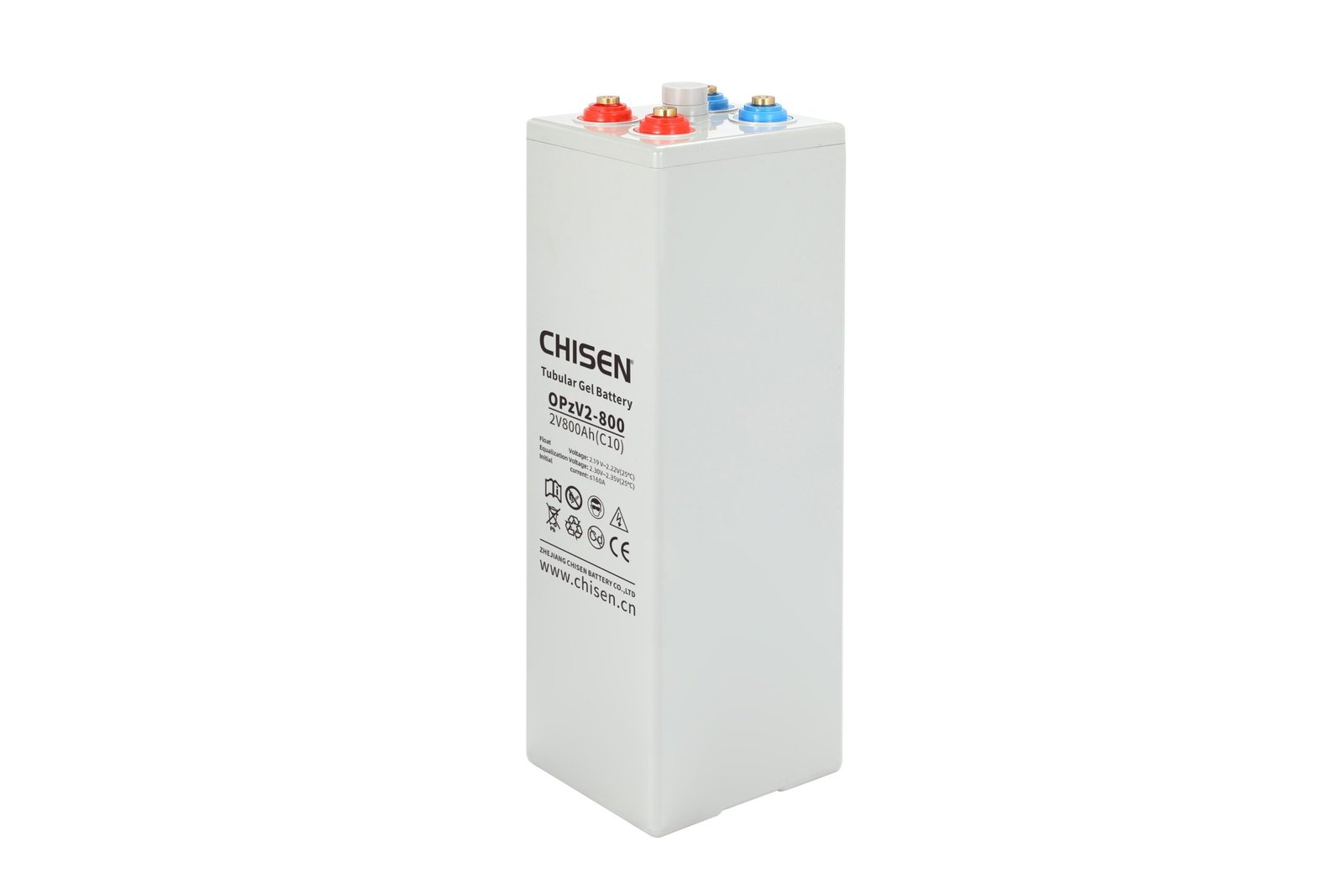
!OPzV 800Ah (Industrial Energy Storage)
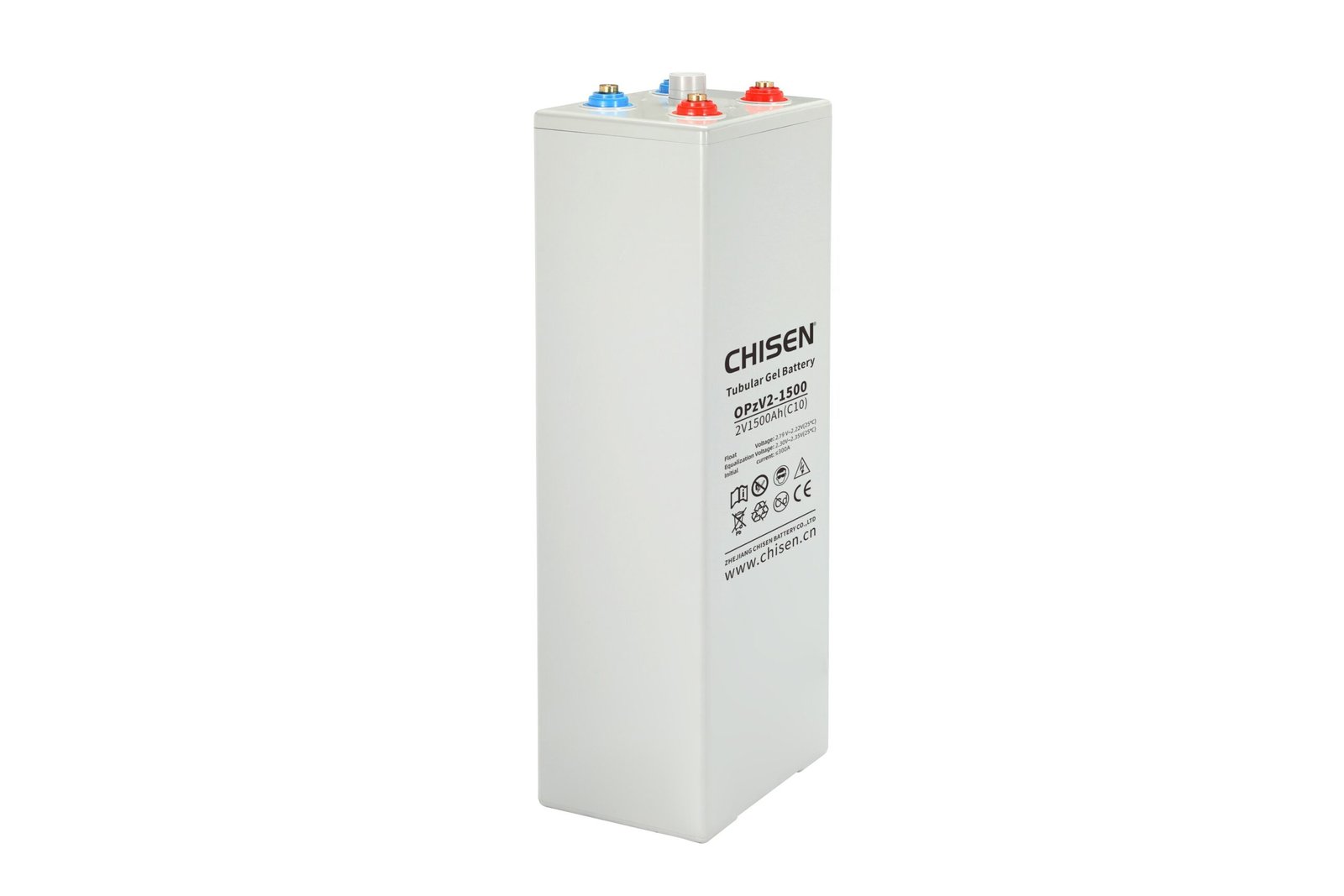
!OPzV 1500Ah (Large-Scale Storage)
CTA
Download the CHISEN Chemistry Selection TCO Worksheet (PDF, 36 pages) — includes 7-year TCO models for 7 application profiles, ambient temperature derating tables, recycling infrastructure comparison, and decision matrix for buyers evaluating lithium vs lead-acid chemistry.
For application-specific quotation including chemistry comparison, send your cycle frequency, ambient temperature profile, available service infrastructure, and first-cost budget to sales@chisen.cn or message WhatsApp +86 131 6622 6999.
Request the CHISEN Industrial Battery Chemistry Selection Guide (PDF) — a 48-page reference for procurement teams evaluating battery chemistries across multiple application profiles.
