Electric Scooter Fleet Battery Management for Businesses and Delivery Companies
The economics of electric scooter fleets look compelling on a spreadsheet — zero fuel costs, minimal maintenance, and low per-kilometer operating expenses — but fleet managers in Jakarta, Bangkok, Lagos, and São Paulo who have run electric delivery operations for more than a year know that the real cost center is the batteries. Battery failure is the leading cause of operational disruption in electric delivery fleets, and businesses that do not implement systematic battery management practices find themselves spending far more on replacements than they ever anticipated. This guide is written specifically for fleet operators in Ho Chi Minh City, Mexico City, and other high-growth delivery markets who want to understand how to manage their battery assets professionally, maximize their return on investment, and build an operation that scales reliably.
Building a Battery Rotation Schedule That Actually Works
The most common mistake made by new fleet operators is treating each scooter’s battery as an isolated unit that charges and discharges independently. In a professional fleet operation, batteries are interchangeable assets that should rotate through a structured schedule designed to distribute wear evenly and maximize the total cycle life extracted from each battery. The foundational rule of fleet battery rotation is this: no single battery should be cycled more than twice per day. Each charge-discharge cycle represents one unit of wear on the battery’s rated cycle life, and a battery that is used three or four times daily in a high-volume delivery operation in Bangkok will reach its end-of-life rating in half the time of a battery used only twice daily. Enforcing this limit across a fleet of 50 or 100 scooters requires not just a schedule but also the physical infrastructure to support it.
The practical implementation of a rotation schedule begins with labeling every battery with a unique identification number and logging each charge and discharge event in a simple tracking system. In operations in Lagos and Ho Chi Minh City where many delivery riders use personal phones for fleet coordination apps, a basic spreadsheet tracking system is sufficient to start. Each battery should be assigned to a specific scooter at the start of each shift, and when the battery reaches 20% state of charge — the recommended minimum discharge depth for lead-acid batteries in high-utilization fleets — it should be swapped with a freshly charged spare. The depleted battery goes into a charging station, and the rider receives a replacement. This system keeps every battery in the 20-100% state-of-charge window, which is the range where lead-acid batteries deliver their longest cycle life.
For a daily fleet operation, maintaining a spare battery inventory equal to approximately 20% of your active battery count is a practical starting point. If you operate 100 scooters, you need approximately 120 batteries — 100 active and 20 in rotation for charging, storage, and replacement of units undergoing inspection or repair. This ratio assumes a two-shift operation where each battery goes through one full cycle per shift. In single-shift operations in Mexico City or São Paulo where batteries may have hours of idle time between shifts, a smaller spare inventory may suffice, but every fleet should have at least enough spare capacity to cover the failure rate predicted by battery lifespan data. Industry experience suggests that a well-managed lead-acid battery fleet should budget for approximately 5-10% annual battery replacement due to end-of-life failures, on top of any batteries lost to damage.
State of Charge Monitoring and Cost Control
Monitoring the state of charge of every battery in a fleet is the difference between professional asset management and reactive firefighting. A battery at 50% state of charge is not the same as a battery at 20% state of charge — the former can safely remain in service while the latter is approaching the depth-of-discharge threshold where lead sulfate damage begins to accumulate. In a fleet without monitoring, operators typically discover a battery problem only when a scooter fails mid-route, stranding a delivery rider and disrupting customer service. With systematic state-of-charge monitoring, battery health becomes predictable and planning becomes possible.
The cost-per-kilometer metric is the most important number for any electric delivery fleet to track, and it directly reflects the quality of your battery management. For lead-acid battery systems, the cost per kilometer typically ranges from $0.02 to $0.05 per kilometer when battery replacement costs, electricity, and charging infrastructure are all factored in. This figure varies significantly based on battery quality, local electricity prices, and utilization rates. A fleet in Jakarta where lead-acid batteries are properly maintained in a structured rotation schedule can achieve costs at the lower end of this range, while a fleet in São Paulo where batteries are routinely deep-discharged and charged without temperature management will sit at the higher end. Tracking this number monthly and breaking it down by individual scooter and battery helps identify underperforming assets before they fail and drag down overall fleet economics.
The return on investment calculation for quality versus budget batteries is one of the clearest in fleet management. A quality lead-acid battery that costs $150 and delivers 400 cycles at 80% depth of discharge will cost $0.03 per kilometer over 5,000 kilometers of annual fleet use — $150 divided by 5,000km equals exactly $0.03/km. A budget battery at $80 that delivers only 250 cycles under the same conditions costs $0.05 per kilometer. Over a year of 5,000km of fleet use, the quality battery saves $0.03 per kilometer times 5,000 kilometers, which equals $150 per battery in annual savings. For a fleet of 100 scooters, that is $15,000 per year — a substantial margin that more than compensates for the higher upfront investment in quality batteries. This is why professional fleet operators in Mexico City and Ho Chi Minh City increasingly view battery quality as a strategic procurement decision rather than a simple cost-cutting exercise.
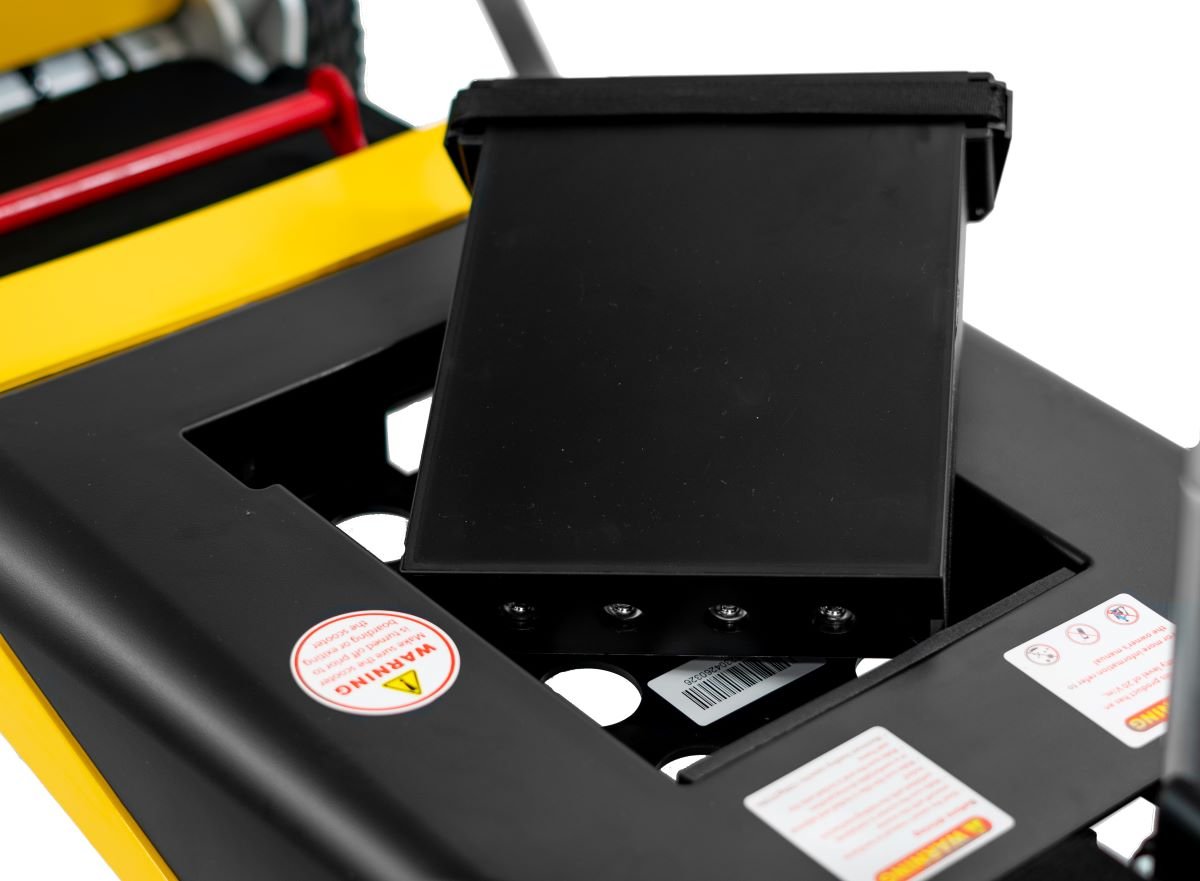
!electric-scooter-lithium-battery-pack-close-up.jpg

Warranty Management, Annual Cost Planning, and Scaling Up
Warranty claim management is a discipline that many small fleet operators neglect until they need it, and then discover they do not have the documentation required to file a successful claim. Every battery purchased for a fleet should come with a written warranty agreement that specifies the warranty period, the conditions that void the warranty, and the claims process. For lead-acid batteries, common warranty-busting conditions include charging below freezing temperatures, exceeding maximum depth of discharge repeatedly, using non-approved chargers, and physical damage from impacts or water ingress. Keeping a simple maintenance log for each battery — dates of charge, depth of discharge events, and any anomalies observed — gives you the documentation needed to defend a legitimate warranty claim with the manufacturer.
Annual fleet battery cost calculation should be a routine exercise performed at the start of each year. Begin with your total fleet kilometers traveled in the previous year, divide by the number of batteries in your active fleet, and compare the resulting average kilometers per battery against the rated cycle life. If your average is significantly below the rated cycle life, your operational practices — not the battery quality — are the problem. For example, if a fleet in Bangkok traveled 180,000km in a year with 60 active batteries, the average utilization was 3,000km per battery. If those are 48V 20Ah batteries rated at 400 cycles with an average of 8km per cycle, the expected annual life per battery is 3,200km, which means the fleet is getting close to expected performance. Batteries averaging only 1,500km per year indicate severe abuse — likely excessive depth of discharge, improper charging, or operation in extreme temperatures.
Scaling an electric delivery fleet requires planning the battery infrastructure alongside the vehicle count. Each additional scooter added to a fleet in Ho Chi Minh City or Lagos requires not just one new battery but also the charging capacity to support it, the storage space for depleted batteries awaiting charge, and the management bandwidth to track the additional assets. CHISEN works with fleet operators to develop battery procurement plans that account for growth trajectories, seasonal demand fluctuations, and the specific utilization patterns of their operation. From initial consultation through ongoing supply and technical support, our team helps delivery companies build electric fleets that are as reliable and cost-effective as they are environmentally responsible.
Need the right replacement battery for your electric scooter? 📧

发表回复