Winter Riding Guide: Electric Scooter Battery in Cold Climates
Every November, the same thing happens across Stockholm, Oslo, Helsinki, Calgary, and the northern reaches of China — electric scooter riders discover that their reliable daily commuter suddenly feels sluggish, drains far faster than usual, and sometimes simply refuses to charge. This is not a malfunction. It is physics. Cold weather riding battery performance is one of the most misunderstood aspects of electric scooter ownership, and riders in Minnesota, Michigan, Moscow, Harbin, and Toronto who understand what is happening inside their battery during winter months can take specific steps to protect their investment and maintain reliable performance. This guide explains the science of cold-weather battery degradation and provides a practical framework for riding through the coldest months without damaging your battery permanently.
What Cold Does to Your Electric Scooter Battery: The Science
A lead-acid battery works by electrochemical reaction between lead dioxide and sponge lead plates immersed in sulfuric acid electrolyte. This reaction is driven by the kinetic energy of the molecules in the electrolyte, and when the temperature drops, those molecules slow down dramatically. At 25°C, a lead-acid battery delivers its rated capacity, and the chemical reactions proceed at full speed. Drop the temperature to 0°C, and available capacity falls to approximately 70-80% of the rated figure — your fully charged 48V battery effectively behaves like a 48V battery with only 60-70% of its stated amp-hour capacity. In Harbin, where winter temperatures regularly plunge to -15°C to -25°C, the practical effect is that a battery rated for 25km of range might realistically deliver only 10-12km on a cold January morning.
The problem becomes significantly more severe when temperatures fall below -10°C, and this is where permanent damage enters the picture. At these temperatures, the sulfuric acid electrolyte in a lead-acid battery begins to approach its freezing point. Charging a battery when the electrolyte is at or near freezing causes the electrical current to drive water molecules toward the negative plates, where they combine to form hydrogen gas that can vent from the battery — a process that permanently reduces electrolyte concentration and damages the plate structure. More critically, the mechanical stress of charging a frozen or near-frozen battery can cause micro-cracks in the battery plates, permanently reducing capacity even after the battery warms up. This damage accumulates silently and is not reversible with any charger or restoration procedure. For riders in Moscow, where -20°C nights are common from December through February, charging a cold battery outdoors or in an unheated garage is one of the most destructive habits possible.
Self-discharge during winter storage is another factor that catches many riders off guard. While self-discharge rates are lower in cold temperatures than in heat — the chemical reactions slow down just like they do in the active battery — the practical consequence is that a battery stored at 0°C for three months may have dropped to 60-70% state of charge by the time spring arrives. For riders in Minneapolis or Toronto who park their scooters for the winter, a battery left at 20% state of charge in freezing temperatures for months can sulfite severely, with lead sulfate crystals growing on the plates in a pattern that is difficult to reverse even with a desulfating charger.
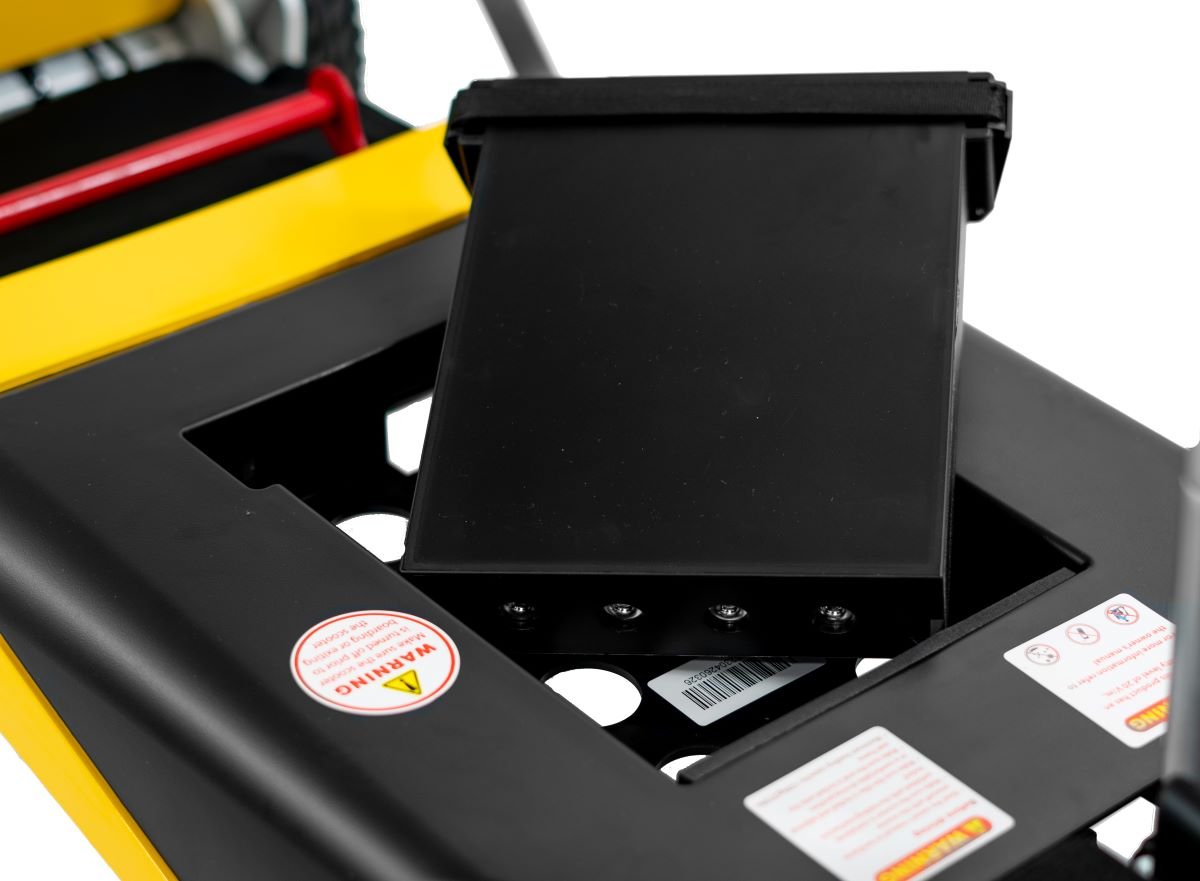
!electric-scooter-lithium-battery-pack-close-up.jpg

The Critical Rules for Charging in Cold Weather
The single most important cold-weather rule for lead-acid battery owners is this: never charge below 0°C. Most quality electric scooters with lead-acid batteries include temperature sensors in the battery management system that will prevent charging below this threshold, but not all budget models include this protection, and riders in Stockholm and Helsinki who own older or entry-level scooters should manually verify that their battery is above freezing before connecting a charger. The practical implication is that if your scooter has been parked outside overnight in January, you must bring the battery inside and wait at least 30 minutes to an hour before plugging in the charger. Some riders in northern Canada and Minnesota report that even two hours at room temperature may be necessary if the battery was deeply frozen, as the thermal mass of a large battery pack takes time to fully warm through.
Pre-warming your battery before charging in cold climates is a practice that professional fleet operators in cities like Harbin and Calgary have adopted as standard procedure. The process is simple: bring the scooter or the battery pack into a heated space, allow it to stabilize at room temperature for at least 30 minutes, then connect the charger. The benefits are tangible — a battery charged at 20-25°C will accept a fuller charge, cycle more efficiently, and suffer no mechanical stress from the charging process. For delivery riders in Moscow who must charge outdoors in winter conditions, investing in an insulated battery blanket or a heated storage locker can mean the difference between a battery that lasts three winters and one that fails before spring. The cost of these accessories is a fraction of the cost of a new battery.
During winter storage, maintaining the correct state of charge is arguably more important than keeping the battery warm. Industry consensus and manufacturer data both indicate that a lead-acid battery stored in cold weather should be maintained at 40-50% state of charge for the winter months. This is the optimal storage range because at this charge level, the plates are neither highly charged (which drives corrosion) nor deeply discharged (which drives sulfation). For a 48V 20Ah battery, this means the resting voltage should be held around 50.4-51.0V during storage. Checking and adjusting the charge level once per month during the winter is a practice that will pay dividends when spring arrives and you want your scooter ready to ride immediately.
Adapting Your Riding and Range Expectations for Winter
If your 15km summer commute requires a 30km-rated battery in winter, you are not experiencing a defect — you are experiencing the predictable outcome of cold-weather capacity reduction. The practical range calculation in cold climates should account for the combined effects of reduced available capacity, increased rolling resistance from cold tires, higher air density creating more drag, and the energy demands of any heated grips or lights that are in use. A 48V 12Ah battery that delivers 20km in August may realistically deliver 10-12km in January at -10°C. Riders in Toronto, Montreal, and the northern USA states who commute through winter should plan their battery selection accordingly, choosing a battery with at least double the summer range rating to ensure reliable winter performance.
For commercial fleet operators in Calgary and Stockholm, cold weather planning should begin before the first snow falls. This means establishing indoor charging protocols, setting up heated storage areas for spare batteries, and adjusting delivery schedules to account for reduced range. Many fleets operating in Scandinavian cities have adopted the practice of rotating batteries through heated charging stations every four hours during winter shifts, which keeps each battery warm, partially charged, and operating within its safe temperature window. The operational overhead is real, but the alternative — replacing fleet batteries every winter season — is far more expensive. A quality lead-acid battery from CHISEN that is properly maintained through a Scandinavian winter will deliver 300+ cycles over its lifespan, while one that is abused with cold charging may fail within 50 cycles.
The message for cold-climate riders is straightforward: cold weather demands respect for your battery’s chemistry and a willingness to adapt your routine. Charging indoors, pre-warming before plugging in, maintaining the correct storage state of charge, and adjusting your range expectations are not optional extras — they are the minimum requirements for preserving battery health through a northern winter. If you have questions about which CHISEN battery is best suited for your climate and riding pattern, our team provides specific technical consultation to ensure you get the right product for your conditions.
Need the right replacement battery for your electric scooter? 📧

发表回复