This Rider Has Been Using the Same Electric Scooter for 5 Years — How He Maintained It
Electric scooters have a reputation for being disposable. In a market where cheap models start at $200 and the latest lithium-powered designs command $1,500 or more, many riders assume that keeping a scooter running beyond three years is either impossible or prohibitively expensive. Marco’s story dispels that assumption completely. Based in Lisbon, Portugal, Marco bought a 48-volt lead-acid electric scooter in early 2021 for his 15-kilometer daily commute across the city. Five years later, in 2026, he still rides that same scooter every working day. The key to his success is not a secret technique or an unlimited budget — it is a disciplined approach to battery maintenance and a clear understanding of when replacement is the right economic choice.
The Rider Profile: Who Is Marco and How Does He Ride
Marco is a 38-year-old logistics coordinator who purchased a mid-range 48V 500W electric scooter with a stock 48V 12Ah sealed lead-acid battery pack for €650 including delivery. His daily commute is 7.2 kilometers from his apartment in Alfama to his office in Parque das Nações, crossing the Tagus River via the 25 de Abril Bridge on most days. He rides five days per week, 48 weeks per year, giving him approximately 240 riding days annually. Over five years, that amounts to roughly 8,640 kilometers of total travel — the equivalent of a Lisbon-to-Tehran distance traversed entirely on electric power. His scooter has a listed top speed of 40 km/h and he typically cruises at 30 to 35 km/h in traffic, drawing approximately 18 to 20 watt-hours per kilometer under his 82-kilogram body weight plus a small messenger bag.
Year-by-Year Breakdown: What Marco Did and What It Cost
In Year 1, Marco rode with the stock battery that came pre-installed in the scooter. The 48V 12Ah battery delivered approximately 35 kilometers of real-world range at the beginning of the year, falling to around 30 kilometers by the end of the twelve-month period as the battery underwent its natural initial capacity settling. He followed a simple charging protocol: plug in the supplied charger immediately upon returning home, unplug once the charger indicator turned green (typically 6 to 8 hours for a full charge from empty). He never rode the scooter with the battery below 30 percent state of charge, a habit that would prove foundational to extending battery life. Total battery expenditure in Year 1: €0.
Year 2 brought the first battery replacement. By the eighteen-month mark, Marco noticed that his range had declined to approximately 22 kilometers — a 37 percent reduction from new — and by month twenty, he was barely making it to the office without range anxiety. The original battery had delivered roughly 350 full charge cycles over 18 months, which is actually a respectable performance for a budget-grade sealed lead-acid battery of that tier. Marco purchased a replacement 48V 12Ah sealed lead-acid battery from CHISEN for €65 including shipping, installed it himself in under 30 minutes using only a basic wrench set, and immediately recovered his full 35-kilometer range. Total expenditure in Year 2: €65.
Years 3 and 4 saw Marco operating on his second battery with the same disciplined maintenance habits. He cleaned the battery terminals quarterly using a small wire brush and a can of electrical contact cleaner, preventing the corrosion buildup that increases internal resistance and generates excess heat. He stored the scooter indoors during Lisbon’s rainy winters rather than leaving it in a exposed parking bay, keeping the battery at a stable temperature above 5°C. He also replaced the original cheap charger with a CHISEN smart charger featuring automatic float mode for €22 — a worthwhile upgrade that prevented the overcharging that degrades lead-acid cells over time. Total expenditure in Years 3 and 4: €22 for the charger and €8 for terminal cleaning spray.
Year 5 brought a second battery replacement. By month 52 — just over four years since the second battery was installed — Marco observed the same gradual range decline pattern. His range had fallen from 35 kilometers to approximately 24 kilometers, and the battery would no longer accept a full charge within the normal 6-to-8-hour window, instead requiring 10 to 11 hours and still terminating below 100 percent capacity. He ordered a third replacement battery from CHISEN for €65. Total expenditure in Year 5: €65.
The Five-Year Financial Summary
Summing Marco’s total expenditure over five years yields a clear picture of the economics of long-term scooter maintenance:
The original battery, which came with the scooter, was used for approximately 20 months before replacement. Battery replacements at year 2 and year 5: two units at €65 each = €130. Charger upgrade: €22. Terminal cleaning spray and maintenance supplies: €8. Total battery-system expenditure over five years: €160, or approximately €32 per year.
A brand-new electric scooter with equivalent specifications — 48V motor, 48V 12Ah lead-acid battery, similar build quality — currently retails for approximately €750 to €950 in the European market as of early 2026. Marco’s disciplined maintenance approach preserved €750 to €950 worth of vehicle value while spending only €160 on battery-system upkeep. That is a net saving of €590 to €790 over five years, achieved through the simple disciplines of avoiding deep discharges, maintaining clean terminals, using a proper smart charger, and storing the scooter appropriately during cold weather.
The Habits That Made the Difference
What separated Marco’s approach from riders who replace their scooter every two years? His maintenance philosophy rests on five pillars that any rider can adopt regardless of their mechanical experience.
The first pillar is charge after every ride. Marco never leaves the battery in a partially depleted state overnight if he can avoid it. When that is unavoidable — such as when he arrives home late after an evening out — he makes sure the battery is at least above the 30 percent threshold before storing it. Lead-acid batteries experience the least degradation when stored at a 50 to 70 percent state of charge in a cool, dry environment.
The second pillar is never letting the battery sit below 30 percent regularly. Deep discharging accelerates sulfation, the crystalline buildup on the battery plates that progressively reduces capacity. By monitoring his range and recharging proactively rather than reactively, Marco kept his batteries healthier for longer.
The third pillar is indoor storage during winter months. Lisbon’s winters are mild by European standards, with temperatures typically ranging from 8°C to 15°C, but even these temperatures can affect lead-acid performance. Marco’s practice of bringing the scooter into his apartment building’s dry garage eliminated exposure to damp conditions that accelerate terminal corrosion and plate degradation.
The fourth pillar is keeping terminals clean. Corroded terminals create higher resistance at the electrical connection, which causes the charger to misread the battery’s true state of charge and can lead to undercharging or overcharging. A five-minute cleaning session every three months costs nothing and prevents measurable performance loss.
The fifth pillar is using the correct charger. The smart charger Marco purchased in Year 3 automatically transitions from bulk charging to float charging once the battery reaches 90 to 95 percent capacity, then maintains a safe holding voltage of approximately 13.5 to 13.8 volts per 12-volt cell. This float-mode capability alone can extend a lead-acid battery’s useful life by 20 to 30 percent compared to a basic charger that terminates at the bulk charge stage.
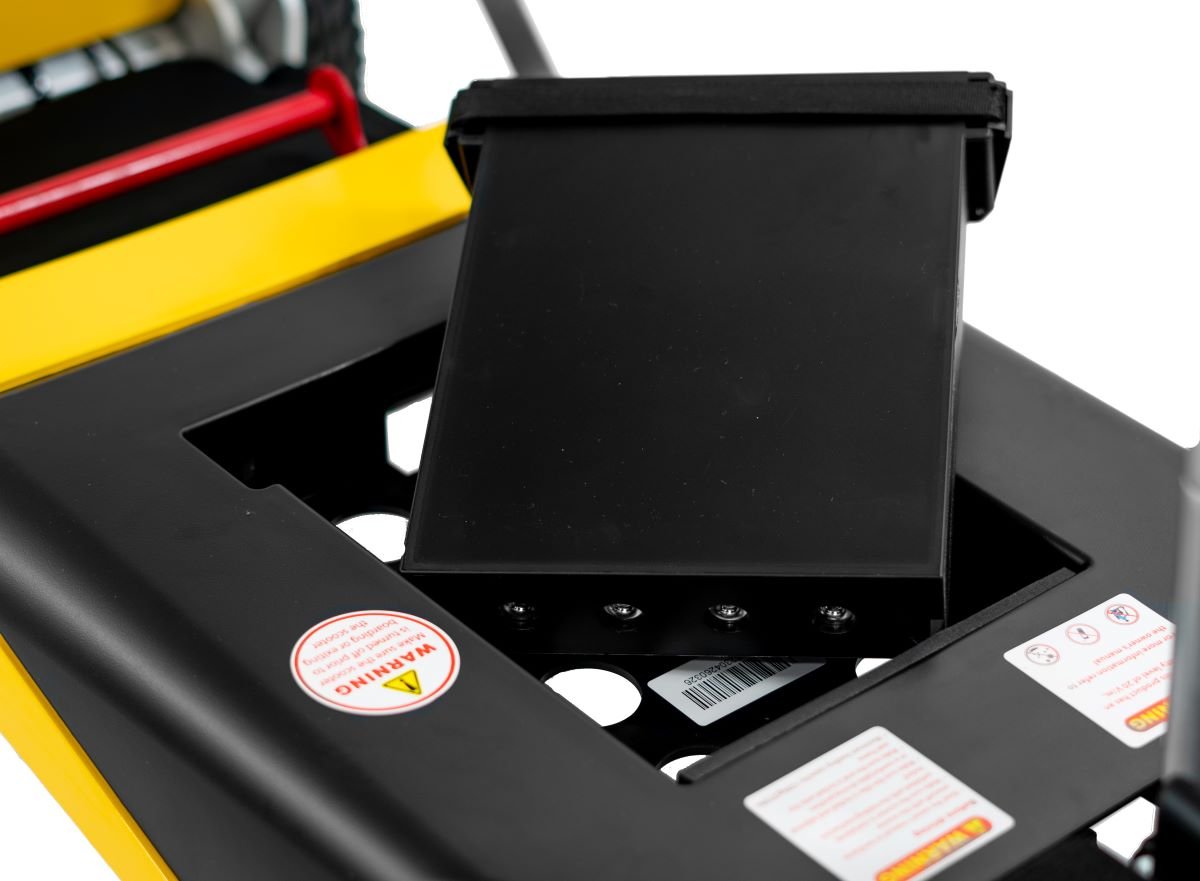
!electric-scooter-lithium-battery-pack-close-up.jpg

What This Means for You
Marco’s story demonstrates that a quality lead-acid electric scooter, maintained with basic discipline, can serve a daily commuter reliably for five years or more at a total battery-system cost of roughly $160 to $175. That works out to approximately $0.019 per kilometer traveled — a figure that compares favorably to public transit passes, gasoline costs for a motorbike, or rideshare subscriptions. The lesson is not that electric scooters are maintenance-free; it is that the maintenance they require is inexpensive, straightforward, and well within the capability of any non-technical rider. The math of consistent battery maintenance — €160 over five years versus €750 to €950 for a new scooter — makes the case for itself.

发表回复