How to Store Your Electric Scooter Battery for Months Without Damage
Every year, as winter arrives or travel plans shift, thousands of electric scooter owners make the same costly mistake: they park their scooter in the garage, leave the battery connected, and forget about it for three or four months. When spring comes, they return to find their battery dead, severely discharged, or so sulfated that it holds only a fraction of its original charge. This entirely preventable damage costs riders hundreds of dollars in premature battery replacements. The solution is a straightforward long-term storage protocol that takes 15 minutes to implement and protects your battery through any length of storage.
Why Long-Term Storage Damages Lead-Acid Batteries
Lead-acid batteries are subject to self-discharge even when not in use, at a rate of approximately 3–5% per month at 25°C. This means a fully charged battery stored for 6 months without attention will self-discharge to approximately 60–70% SOC. Below approximately 50% SOC, lead sulfate crystals begin to form on the plates and harden over time — a process called storage sulfation. If the battery self-discharges below 20% SOC, the sulfation becomes progressively irreversible, and the battery will suffer permanent capacity loss upon reactivation. A battery that is left fully discharged for 6 months will typically recover only 40–60% of its original capacity after recharging, and the remaining capacity will fade rapidly over the next 50–100 cycles.
Temperature accelerates self-discharge dramatically. At 30°C, the self-discharge rate approximately doubles to 6–10% per month. At 40°C, it reaches 10–20% per month. This means a battery stored in a hot garage at 35°C in summer could self-discharge from 100% to below 50% SOC in just 6–8 weeks. Cold temperatures, while slowing self-discharge, create their own risks: if a lead-acid battery freezes while at low SOC, the expansion of the electrolyte can crack the cell housings and permanently damage the plates. The optimal storage temperature range for lead-acid batteries is 10–15°C (50–59°F) — cool enough to minimize self-discharge and grid corrosion, but not cold enough to risk freezing.
The Correct Storage Protocol: Step by Step
Step 1: Clean and inspect the battery before storage. Remove any corrosion from terminals with a baking soda paste, rinse, dry, and apply dielectric grease. Inspect the battery case for cracks, bulges, or leaks — do not store a physically damaged battery. For flooded batteries, check and top off the electrolyte level with distilled water.
Step 2: Charge to 50–60% SOC. This is the critical state of charge for storage. A 12V lead-acid battery at rest should read 12.4–12.6V for 50–60% SOC. Do not store at 100% SOC — at full charge, the float voltage causes slow grid corrosion that gradually reduces capacity even during storage. Do not store below 12.4V per 12V unit.
Step 3: Disconnect the battery from the scooter. Remove the battery from the scooter if possible, or at minimum disconnect the main battery leads from the controller. This eliminates drain from the controller’s standby circuit, the scooter’s display, and any always-on security devices. A connected battery can self-discharge to dangerous levels in half the time of a disconnected one.
Step 4: Store properly. Place the battery on a wooden shelf, workbench, or rubber mat — never on bare concrete. Concrete draws heat from the battery, creating temperature gradients within the cell that accelerate self-discharge. Store in a cool, dry, well-ventilated location at 10–20°C. Avoid sealed enclosures that trap heat. Do not stack heavy objects on top of batteries.
Step 5: Check voltage monthly. Every 4 weeks, measure the resting voltage of each battery. If any 12V unit drops to 12.3V or below, recharge it back to the 50–60% storage level. This 15-minute monthly check is the single most important maintenance action during storage.
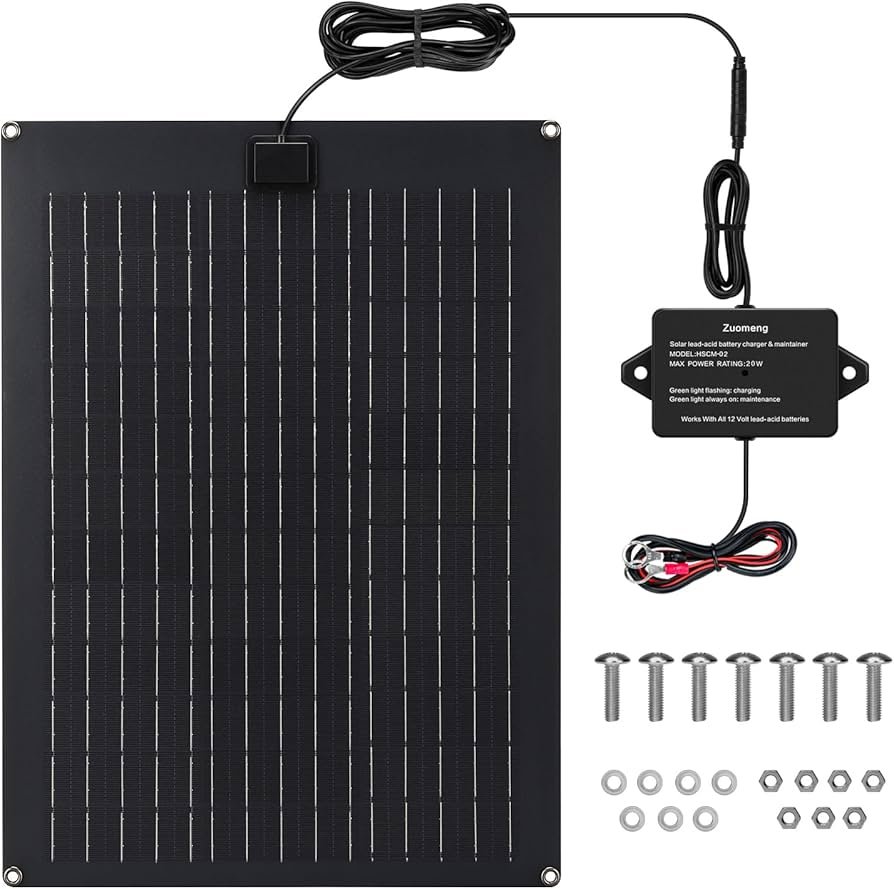
!solar-lead-acid-battery-maintenance-kit.jpg

Flooded vs. Sealed Battery Storage Differences
Flooded (wet) lead-acid batteries require additional attention during long-term storage compared to sealed AGM or gel batteries. Flooded batteries can lose water through slow gassing even at rest, so check electrolyte levels before storage and top off with distilled water. Equalize flooded batteries before storage — apply an equalization charge (2.4–2.5V per cell, 14.4–15.0V for 12V units) for 2–4 hours after reaching full charge. This balances all cells and ensures no individual cell is at significantly lower SOC before storage. For AGM batteries, skip the equalization — the higher absorption voltage can cause excessive pressure buildup in AGM cells. Simply charge to 50–60% SOC and store. Both types follow the same 50–60% SOC rule and same monthly voltage check protocol.
Reactivation Procedure After Storage
When you are ready to use your battery again after long-term storage, follow this reactivation sequence. First, let the battery warm to room temperature for at least 4–6 hours if it was stored in a cold location. Never charge a cold battery — charging below 0°C risks damaging frozen electrolyte. Second, measure the resting voltage — a battery stored at 50–60% SOC for 3 months should read approximately 12.4–12.6V per 12V unit. If it reads below 12.0V, the battery has discharged too deeply and will need assessment for permanent capacity loss. Third, perform a full charge using your standard charger. Note how long the charger runs — if it completes in significantly less time than usual (e.g., a 12-hour charge completing in 6 hours), the battery has lost capacity proportionally. Fourth, after a full charge, perform a discharge test by riding normally and noting the range you get. Compare to the range you had before storage to gauge the battery’s health.
If the battery shows significantly reduced range after storage, try an equalization charge cycle (for flooded batteries only). If capacity remains depressed after equalization, the battery has likely suffered permanent sulfation damage. Some chargers include a desulfation mode that applies controlled high-frequency pulses to break down lead sulfate crystals. Success rates vary, and heavily sulfated batteries may recover only 30–50% of original capacity even with successful desulfation. In such cases, battery replacement is the practical solution.

发表回复