Electric Scooter Battery Wear and Tear: Signs It’s Nearing the End
No battery lasts forever, and the day will inevitably come when your electric scooter battery needs replacing. The frustrating part for many riders is that battery failure rarely announces itself clearly. Instead, it creeps up gradually — range drops slowly over months, charging takes a little longer each time, until one day you realize your 20 km commute has become a 10 km commute and you’re pushing the scooter home.
Understanding the seven key warning signs that your electric scooter battery is nearing the end of its serviceable life lets you plan for replacement rather than being caught off guard. Replacement before total failure also protects you from the safety risks associated with severely degraded batteries — swelling, leakage, and thermal runaway events, though rare in lead-acid chemistry, are not impossible in extreme cases.
Warning Sign 1: Range Drops by 40% or More from Original
This is the clearest, most unambiguous signal that your battery is failing. If your scooter originally delivered 18 km per charge and now struggles to reach 10–11 km under the same riding conditions — same weight load, same route, same temperature — your battery has entered the capacity fade zone. At 40% capacity loss, a lead-acid battery has typically reached its end-of-life threshold.
To get an accurate reading, test under consistent conditions: fully charge the battery, ride the same route you always ride with the same load, and note the distance traveled when the low battery cutoff activates. Compare this to your original range when the battery was new. A 35–40% reduction means your battery has lost most of its usable capacity. A 50%+ reduction means you’re riding on borrowed time — the battery is not far from complete failure.
A quick math check: if your battery is rated at 12Ah and now delivers 7Ah or less, it’s time to replace. This is not a guess — it’s a measurable electrical fact.
Warning Sign 2: Charging Time Increases Past 14 Hours
A healthy 12V 10–14Ah lead-acid battery typically charges fully in 8–12 hours with a standard C/10 charger. If your charging sessions are regularly stretching to 14 hours or beyond — and the battery still doesn’t feel full — the battery’s charge acceptance has declined due to increased internal resistance, typically from sulfation buildup on the plates or grid corrosion.
Elevated internal resistance means the battery voltage rises faster during charging (making the charger think it’s full earlier than it is), but the actual amp-hour replenishment is lower. The result is a battery that “appears” charged at the charger indicator but delivers far less capacity than it should. A simple test: after a full charge indicator, let the battery rest for 1 hour and measure its resting voltage with a multimeter. Below 12.7V for a 12V nominal battery indicates incomplete charge even if the charger shows complete.
Warning Sign 3: Physical Swelling or Bulging of the Battery Case
Swelling in a lead-acid battery is a serious warning sign that demands immediate attention. It indicates one of two things: severe overcharging that has generated excessive internal gas pressure (causing the sealed battery’s case to bulge), or an internal short circuit that is producing gas faster than the recombination system can handle.
Swelling in AGM batteries is particularly concerning because the absorbed electrolyte means there is no free liquid to leak — but the internal pressure can cause the case to split or the pressure relief valve to rupture. A swollen battery should be taken out of service immediately, even if it still appears to charge and deliver some range. Never use, charge, or continue to store a visibly swollen battery.
The most common cause of swelling is chronic overcharging — leaving the charger connected for days at a time. If you see swelling, disconnect the charger immediately, let the battery cool, and handle it with care (wearing gloves and eye protection) during removal and disposal.
Warning Sign 4: Voltage Drops Rapidly Under Load
When you accelerate hard or climb a hill, a healthy battery’s voltage dips slightly — this is normal. What is not normal is a dramatic voltage sag: the battery voltage dropping from 12.8V at rest to 10.5V or lower under load, causing the scooter to stutter, cut out, or lose power intermittently.
This symptom indicates high internal resistance, most commonly from sulfation (reduced electrode surface area) or grid corrosion (increased electrical resistance in the grid structure). Under light load — coasting or low-speed riding — the battery may appear normal. Under high current demand (acceleration, climbing), the voltage collapses. This is dangerous because the sudden power loss at speed can cause loss of control.
A simple load test: with the scooter running at full throttle on flat ground, use a multimeter to check the battery voltage under load. A healthy battery will stay above 11.5V under full load. Below 10.5V indicates serious internal resistance problems.
Warning Sign 5: Battery Gets Hot to the Touch During Charging
A lead-acid battery that is slightly warm during charging is normal — the charging process is not 100% efficient and some heat is generated. But a battery that is hot to the touch (above 40°C at the case surface) during a normal charging session is a red flag. Excessive heat during charging indicates that the charging current is encountering high internal resistance — the same resistance that will prevent the battery from delivering full capacity.
Common causes include chronic overcharging (wrong charger voltage), sulfation, or a battery that has been stored at high temperature or low state of charge for extended periods. If your battery gets hot during charging, stop charging immediately and let it cool. Resume with a properly regulated charger and monitor the temperature. If excessive heat recurs, the battery likely needs replacement.
Warning Sign 6: Physical Damage, Leakage, or Corrosion Beyond Terminals
Any sign of electrolyte leakage — wet or crusty deposits on the battery case, around the terminals, or on the scooter’s battery compartment — indicates that the battery’s sealing has been compromised. In AGM batteries, true leakage is rare but can occur at the terminals or pressure relief valve if the case is cracked. In flooded batteries, leakage is more common and typically results from overfilling before charging (the expanding electrolyte overflows) or from a cracked case.
Leakage also indicates that the battery has been severely overcharged or physically damaged. Even if the battery seems to work, any sign of electrolyte on the exterior means internal damage is likely extensive. Handle leaking batteries with gloves — lead-acid electrolyte is dilute sulfuric acid and causes chemical burns. Neutralize with baking soda solution before cleanup.
Warning Sign 7: Scooter Cuts Out at 20–30% Charge — The Sudden Death Problem
Perhaps the most dangerous warning sign: your scooter works perfectly all day and then suddenly cuts out at what the indicator shows as 20–30% charge, or the indicator jumps erratically between charge levels without any corresponding change in riding distance. This indicates that one or more cells in the battery pack have failed or are severely imbalanced.
In a multi-cell lead-acid battery pack (for example, four 12V batteries in series for a 48V system), a weak cell can bring down the entire pack. When the weak cell reaches 0% capacity while the other cells still have charge, the pack voltage collapses, triggering the scooter’s low-voltage cutoff — even though aggregate pack capacity isn’t truly depleted. A pack that cuts out at 25% may have one cell at 0% and the others at 30%.
This is a safety concern because sudden power loss at speed can cause accidents. If your scooter cuts out unexpectedly, stop riding and have the battery tested by a professional or replace it.
When to Replace vs. When to Repair
The practical rule: if your battery shows two or more of the warning signs above, replacement is the economically sensible choice. Repairing a battery at end-of-life (cell replacement, acid replacement, or professional desulfation) typically costs 50–70% of a new battery and may deliver only 30–50% of the original capacity. For most electric scooter riders, buying a new battery delivers better value and reliability.
The exception is flooded lead-acid batteries in multi-cell packs, where a single weak cell can sometimes be identified with a load test and replaced individually. This requires technical skill and proper cell matching — for most riders, this is not a DIY project.
CHISEN offers a complete range of replacement electric scooter batteries in AGM and sealed lead-acid configurations, with technical specifications available for all major scooter brands and voltage systems. For help identifying the correct replacement battery, contact the CHISEN team with your scooter’s voltage, amp-hour rating, and physical dimensions.
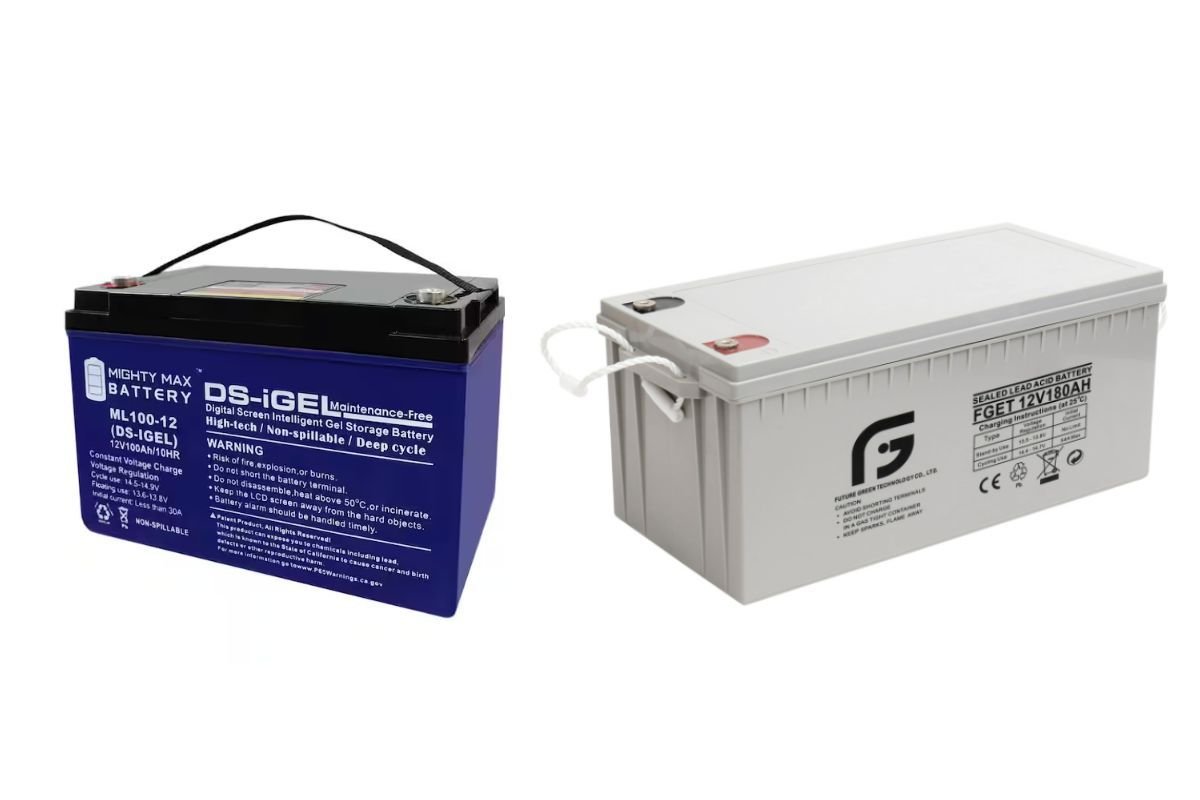
!agm-gel-lead-acid-battery-comparison.jpg


发表回复